Astrological Musings on Mercury – “Stop fidgeting, boy!”

IMG_1309

In astrology Mercury is associated with the signs Gemini, Virgo and the corresponding third and sixth houses of a chart.

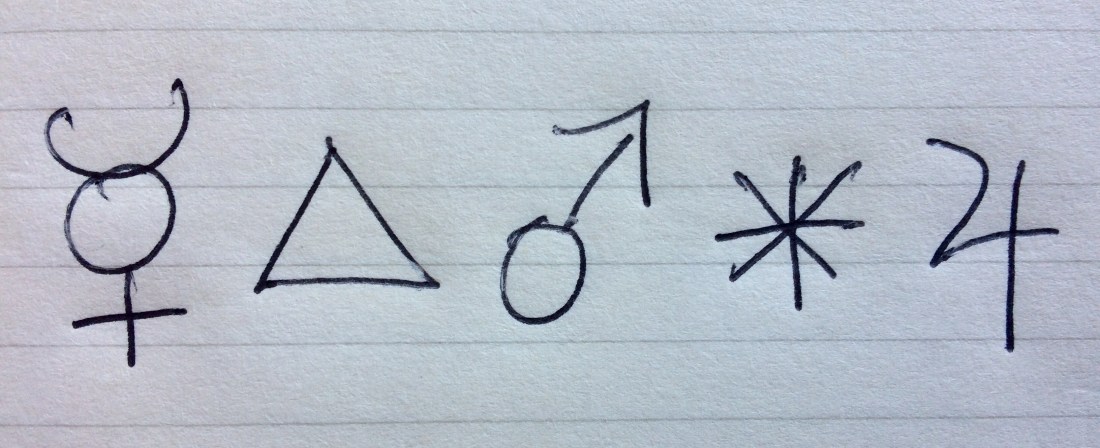
Mercury, closely following the sun at all times, is said to represent the mind, how we think, communicate, our nervous system, their strengths and weaknesses depending its conditioning.

Take Luke (not his real name which is protected), a former teacher who’d taken early retirement a while ago. He came to me wanting to know why he’d become so restless and nervous. He explained that he’d always been a bit restless, but especially of late. He knew his birth time to within about five minutes, so I calculated his birth chart.

Raised Eyebrows

Immediately, one of the ‘reasons’ he described himself as restless leapt out at me from the computer screen. His Mercury was closely conjunct a Capricorn ascendant, trine Mars in Taurus, sextile Jupiter in Scorpio. There were no so-called difficult or hard aspects, no squares or oppositions to Mercury. He seemed curious as to why my eyebrows were raised. At the time he came to see me, transiting Pluto had been lurking with intent around his native Mercury for a few months.

Over the years I’ve found it remarkable (a lot of the time) how people ‘speak’ their charts. In Luke’s case Mercury here was doing all the talking!

Mercury in Capricorn represents a practical mind, that likes to spend its time productively; teaching would be one good outlet. Close to the ascending degree and energised by Mars and Jupiter, one might expect the native to be a little fidgety – he was, constantly scratching his head, re-arranging his seating position. He just had to be doing something!

Positive Energy

So with all that positive energy from Mars in Taurus, which only increases the pressure to ‘do something’ practical like making money, and from Jupiter in Scorpio, encouraging him to go deep, plumb the depths of knowledge, it’s probably not surprising that Luke was a bundle of unresolved, nervous energy which now ceased to have a proper outlet or channel.

“Can you write?” I asked, rather glibly, picking at Mercury’s communicative qualities.

He nodded. “Yeah, I do it all the time.”

“Professionally?”

He shook his head and laughed. “Just jot things down and scribble, you know.”

But I could see something opening in his eyes, some kind of realisation.

“Don’t get me wrong,” I said, tentatively, “I can’t advise you to do anything but what might help is to find a project, a writing project, to really get your teeth into, to fill the gap that teaching filled. Something like that.”

Second Career

He seemed interested, but with all that earthy mental energy, I figured that creative writing might not be the best outlet for him. “Serious themes, perhaps,” I continued, “history, religion, psychology, geography…”

“Ha!” he exclaimed, “I taught geography for thirty five years!”

“OK, apart from teaching it, have you written about it, expressed our own ideas, opinions? Have you done research, for instance?”

“Not since university.”

Chance Meeting

It was around six months later when I met up with him again by chance, not in my house, but in the high street outside a butcher’s shop of all places.

“You were right about the writing, by the way?” he said, smiling nonchalantly.

“Really?”

“I’m a regular contributor to a science magazine now… and I’ve started giving talks on geography and geology for adult education locally. In fact, I’ve been invited up to Sheffield next week to give a talk.”

I tried to disguise my own smirk. It would seem that his native Mercury, which may have given him the impetus to become a teacher in the first place, had now inspired a second career in his retirement, as a writer and speaker. Pluto’s close proximity to his native Mercury at the time, may just have done a little prodding from behind the scenes.

Ultimately, I think this example also shows a need to look for the obvious, stand out features of a birth chart first. “Keep it simple, boy!”

Musings on Pluto’s Mask of Invisibility

Pluto_in_True_Color_-_High-Res
By NASA/Johns Hopkins University Applied Physics Laboratory/Southwest Research Institute/Alex Parker – Public Domain, https://commons.wikimedia.org/w/index.php?curid=71082408

I have done a little research on and off for a few years now regarding the ‘outer planet’ Pluto and his supposed effects. Put it this way, I have not been satisfied with terms like ‘transformation’.

I shall not go into it too much here as it is ongoing, but suffice it to say that I find I’m in agreement with many these days who think that Uranus, Neptune and Pluto, the so-called outer planets, only really come into serious play by their placement, their relationship if you will, by either being angular or in close aspect to the true planets, or both. I don’t believe (yes, it is a belief) that Pluto rules Scorpio, for instance.

Demotion

Of course Pluto was demoted from planet status several years ago, it being essentially classed a kind of minor binary system involving a sibling called Charon (the ferryman of Hades in myth), with whom Pluto does this merry dance in the remote, dark reaches of this solar system. Yet, despite this, there doesn’t seem to be any lack of interest in him in astrological circles.

Pluto was first discovered officially in 1930 and many have attributed the dark, ‘underground’, extreme forces that were appearing in the world at the time to the planet’s arrival in the mainstream.

Does he have a name?

Then of course we have the name of the planet. I mean why call him Pluto? The work of Percival Lowell led to the discovery of Pluto, and of course his initials are the first two letters of the name. Then of course we have Mickey Mouse’s dog, Pluto, named after him.

So the question is, did the recognition of each ‘outer planet’ reflect the time of its discovery?

I have seen it said that Uranus, discovered in the late 18th century, coincided with the American and French revolutions, plus the beginning of the Industrial Revolution. Well, I suppose Uranus has a reputation for turning things over.

Neptune was discovered in the mid 19th century, though it is far less clear what was going on then (spiritualism?) which we could call Neptunian – but maybe that’s just Neptune being Neptune, hard to make out really.

Synchronicity

And then Pluto around 1930 and the rise of fascism, communism: I get the point. Pluto is the Roman name for the Greek Hades, king of the Underworld. In mythology Hades had a helm, cap, or mask, which reputedly made him invisible, sometimes also called the Helm of Darkness. All these are what we might associate with Pluto. Either way, the mask allowed the wearer to disappear, or be undetectable, a bit like Pluto on his 248 year travail around us. I’m not sure I believe in synchronicity.

But the mask of invisibility only belongs to Pluto/Hades, others wore it to become undetectable, it is not Pluto himself. So maybe, to conjecture, in astrological terms Pluto by close aspect lends secrecy to whomever he is masking/aspecting? I don’t know, it’s something I’m looking at.

Can you keep a secret?

Nevertheless, we all know how dangerous and devastating secrecy can be, hiding true intent, a bit like the cloaking device used by the Klingons in Star Trek, or even like a ‘bird of prey’ using extreme speed (peregrine falcon for example) to disguise its final, devastating kill.

As an example, take a native with Mars closely conjunct Pluto, might the interpretation be that the Martian energy has the potential to be hidden, yet also potentially more focused and dangerous as a result? And if that energy is hidden, suppressed even, then there may be deep psychological implications too. If Neptune were conjunct Mars we might expect dissipation of that force; with Uranus we could see sudden, violent outbursts of energy.

I will leave the musings there but I intend to try and use living examples in later posts. I’m trying to keep an open mind, with the understanding that the whole truth can never be known. Thanks for your patience – these are just my musings.