
At last the sun shows
My local friend of the sky
in a hat says, “Hi!”
copyright Leofwine Tanner 2019
copyright Leofwine Tanner 2019

I have to say that it was indeed everything I was expecting, from the cool, wet weather to the very touristy atmosphere.
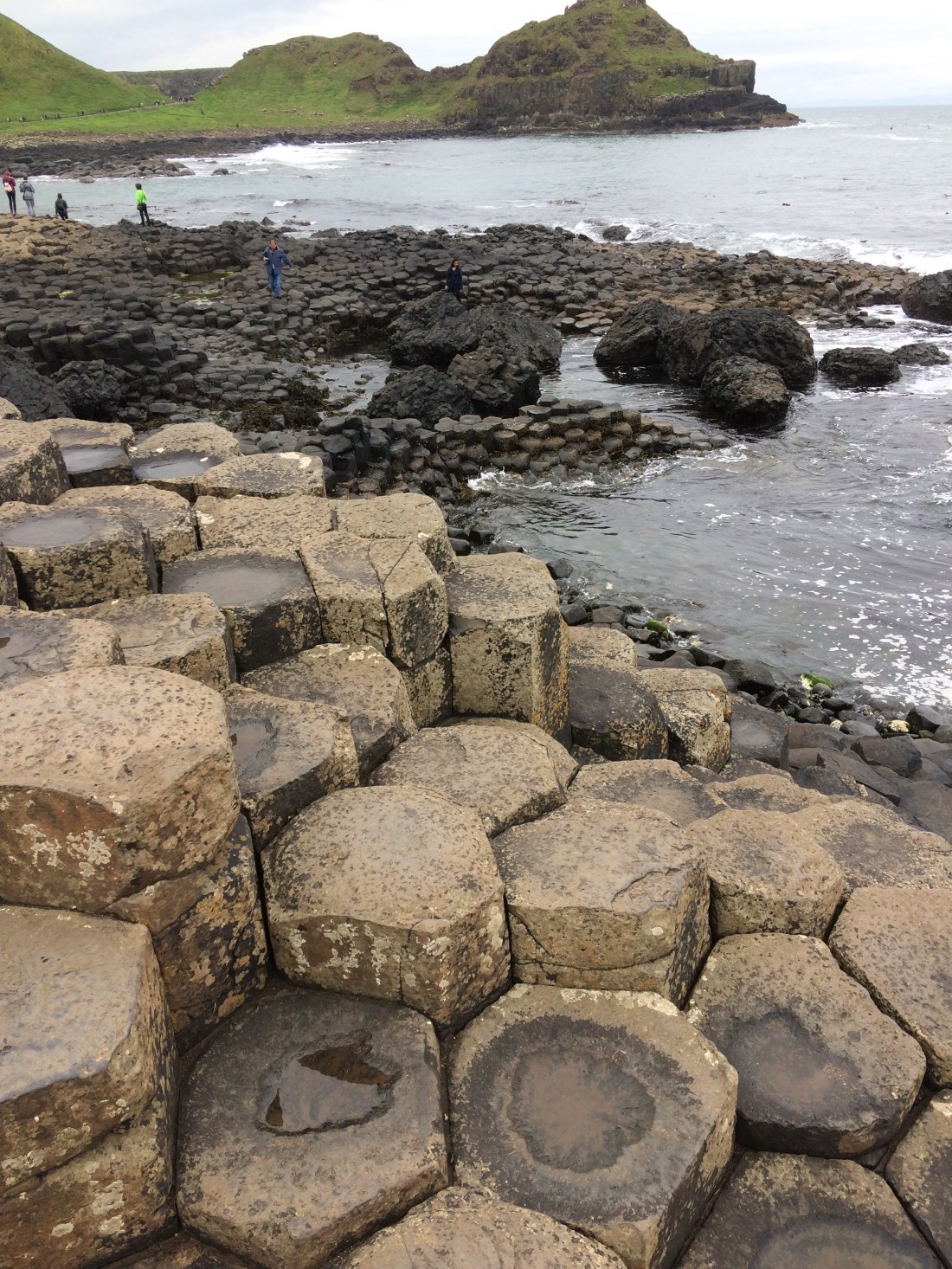
That said, the place is simply stunning. Nothing can prepare you for walking over those truncated basalt columns, watching your step, while eyeing in disbelief that such a place actually exists, spreading out ahead of you towards the sea.
Made a World Heritage Site in 1986, the Giant’s Causeway lies right at the northern end of Northern Ireland.
The official story is that it’s between 50 and 60 million years old. In a nutshell, it’s the result of strong volcanic activity causing lava flows which formed a plateau, cooling relatively quickly, resulting in the distinctive hexagonal columns.
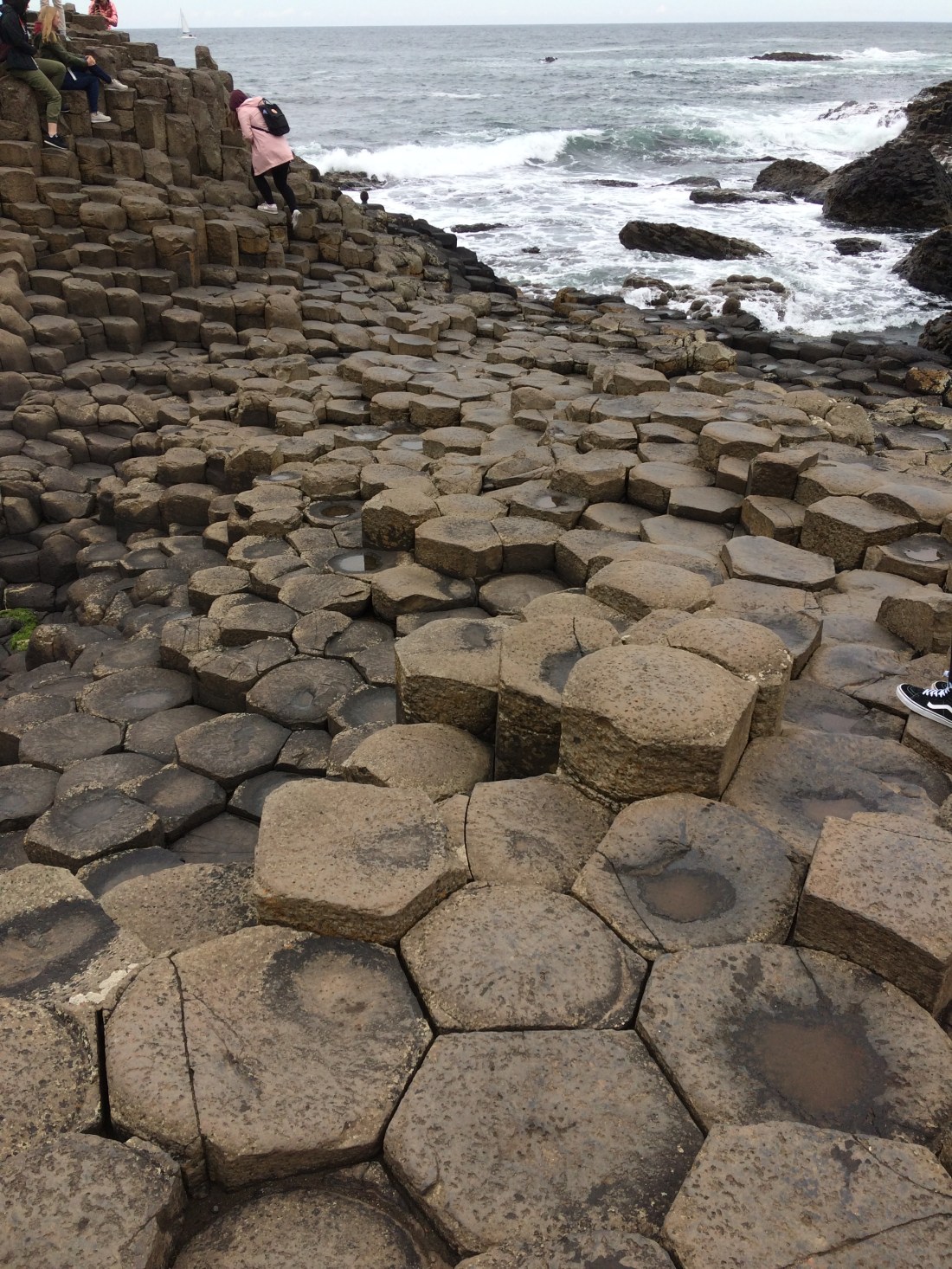
A similar process or effect occurs when mud dries in extreme heat, though you don’t get the height of the columns of course.
So much for the ‘official’ story. Any self respecting local here would tell you that’s all hogwash.
What really happened, perhaps not that many generations ago, is that Finn MacCool, an Irish giant, was confronted by a Scottish giant challenger, called Benandonner. Finn, who couldn’t wait to tackle this upstart, built the causeway to get across the North Channel to Scotland.
There are basically two versions of the story. In one, Finn beats Benandonner conclusively. In the other Finn runs away from Benandonner after realising that he’s even bigger than himself.
So, using some feminine guile, Finn’s wife, called Oonagh, makes out her husband to be a baby, even going to the extent of placing him in a cradle.
Benandonner is fooled by this, thinking that if the baby is this big, then how big is the father? In shock, Benandonner trudges back across the causeway, taking it down on the way so Finn cannot follow him.
Strangely enough, in the corresponding part of Scotland around Fingal’s Cave on the isle of Staffa, there are some very similar columns of basalt.
Now, the scientific community would have us believe that this is merely part of the same lava flow from many millions of years ago. Of course it is.
But I know which explanation I prefer.
copyright Leofwine Tanner 2019

copyright Leofwine Tanner 2019
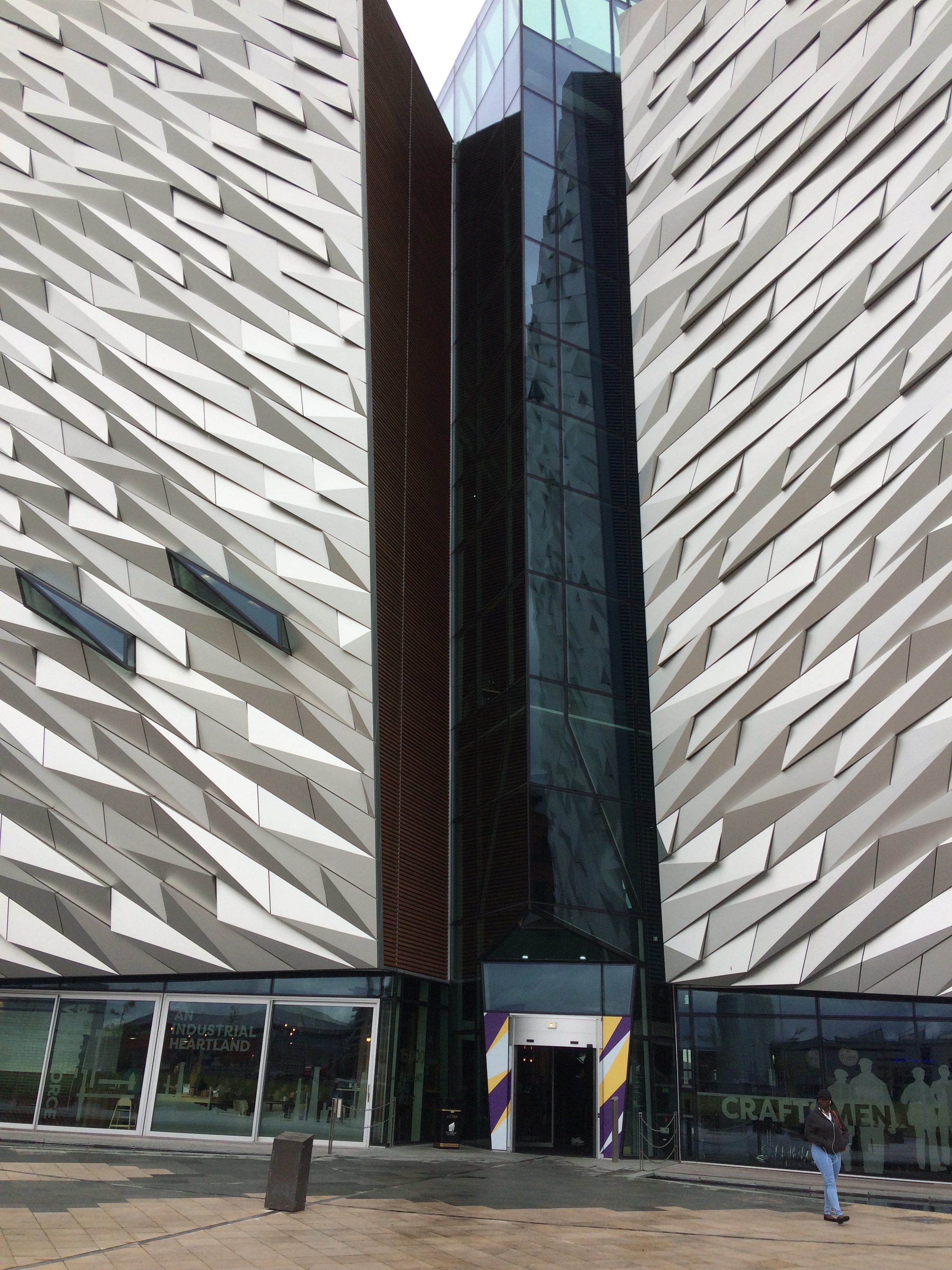
Located a short trip from the city centre, the exhibition lies, quite fittingly, in the old industrial dock area, for so long the life blood of the city.
As you arrive you see the old yellow Harland and Wolff cranes, nicknamed Samson and Goliath; what better sentinels could there be?
The centre itself is of course very modern, the style of the design reflecting a new take on the industrial old.
Inside it is huge, and as ever in Belfast and Northern Ireland in general, the staff were very helpful and kind.

Going around, however, although there were several reconstructions of the kind of cabins that could be had on board the Titanic, we were a little disappointed that we couldn’t ‘interact’ with them more.
For instance, you could not walk into the third class cabin. Everything is behind glass, or perspex. Perhaps they don’t want things to disappear, shall we say, considering the volume of tourists they must get.


And also, considering that this event, which occurred in April 1912, was one of the greatest human tragedies of the 20th century, I don’t think there’s quite enough about that human element. Maybe we’ve seen the film too often.
There is a short automated ride around a kind of reconstruction of the shipyard at its height, with all the noises and sights you might have seen. However, I think this is too short and did not convey enough atmosphere for me.
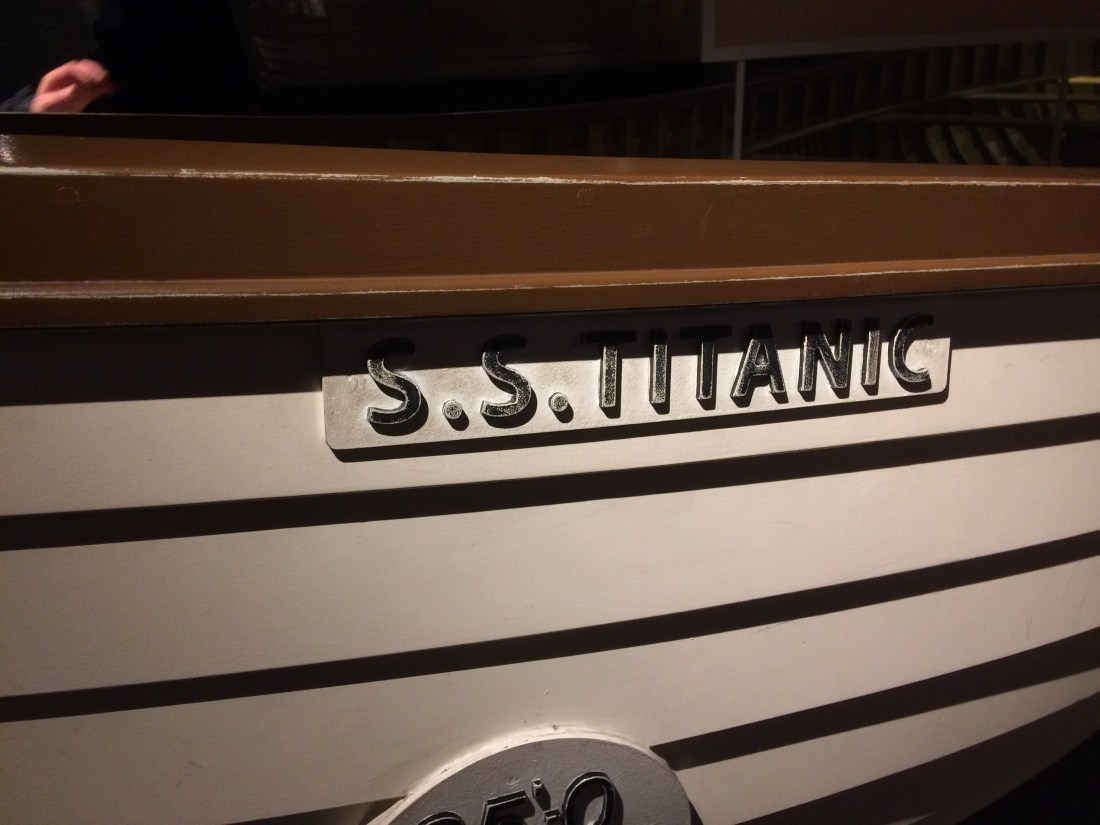
I don’t think it’s quite on a par with the Yorvik museum in York in this regard, for instance, where you get a better sense, I feel, of what Viking York might have been like a thousand years ago – stronger smells and all.
Just across the way in an old dry dock, lies the SS Nomadic, a much smaller ship, but which allows you to explore more of what it must have been like aboard the Titanic on its only voyage. The styling and the sense of the pre-war period is evocative.

So overall, I think the Titanic Experience does a good job. It’s well put together with lots of detail. There is plenty to keep people of all ages occupied for a couple of hours, on several levels. You get a strong sense, too, of how fundamental ship building is to Belfast, the industry which turned a small town into a boom town in the 19th century.
Overall I would give it 7.5 out of 10.
copyright Leofwine Tanner 2019
copyright Leofwine Tanner 2019

