On This Day 1688 – The Battle of Reading, Culmination of the ‘Glorious Revolution’

brown and black windmill
Photo by Aaron Burden on Pexels.com

The only major military engagement of the so-called ‘Glorious Revolution’, the Battle of Reading, took place today in 1688.

James II of England had come to the throne in 1685 despite being a Catholic, a religion which was very much out of favour in Great Britain at the time due to the conflicts over the previous century and a half.

At first his monarchy was tolerated, perhaps because the populace did not want a repeat of the Civil War which had brought such destruction, resulting in the death of King Charles I in 1648/9.

William and Mary

However, probably due to the birth of an heir in 1688 and the possibility of the creation of a Catholic dynasty, public opinion soon began to turn against James II. His daughter Mary, who was married to his nephew William of Orange, were promoted as obvious replacements and this is how it eventually turned out.

The Battle of Reading itself provided the incongruous spectacle on English soil of King James’ Irish troops pitched against the Dutch forces of Prince William of Orange. Even so, the people of Reading did all they could to support the Dutch.

History Repeats – Two Williams from Abroad

Casualties were relatively few despite the decisive victory of William, who was soon to become the second king of his name to win the throne of England via a foreign invasion, albeit a very different one.

King James very quickly saw the impossibility of his position and abdicated, fleeing the country for France and then Ireland, where he was still largely supported.

This was a major turning point for Great Britain, where the superiority of Parliament over the Monarchy was truly established. For good – or ill – the birth of modern Britain, politically, culturally, economically, can be traced to this period, and it relied on a Dutch ruler.

copyright Francis Barker 2019

Born on This Day – Mary Queen of Scots

Today marks the anniversary of the birth of Mary, Queen of Scots, born in Linlithgow, Scotland in 1542.

She became Queen of Scotland only six days after her birth, following the death of her father, James V.

Mary went on to marry the French king Francis II when she was just sixteen, effectively uniting the thrones of Scotland and France. However, Francis died the following year and Mary had to return to Scotland in 1651.

However, the young monarch soon experienced problems back in her homeland; she was, after all, a catholic in an essentially protestant country.

It was Mary’s subsequent marriages, her apparent lack of judgement and bad counsel she received at critical times, which led to great unpopularity and her eventual arrest and abdication in 1567. Although she managed to escape to England the next year, she was soon apprehended and spent the rest of her life in various places of custody.

She was finally executed on February 18 1587, following much intrigue and attempts to install her on the English throne, although right until the end, it was clear that Elizabeth was very reluctant to sign the order of execution on a fellow female monarch.

copyright Francis Barker 2019

Election 2019: Spend, Spend, Spend! Is There a Tomorrow?

woman wearing maroon velvet plunge neck long sleeved dress while carrying several paper bags photography
Photo by bruce mars on Pexels.com

Ever since 2008, when the bottom fell out of the financial markets, we have been living in one of the longest economic downturns ever.

The economies of the ‘western world’ have been largely propped up by printing money and cutting back on services – AUSTERITY! Yes, it was the mantra.

That’s why, as in the UK for example, there’s a manifestation of potholes in the roads which never seem to get repaired.

So why now, in this election, has austerity suddenly been cancelled? Even the Tories, often the champions of cut backs, have promised to spend billions on the NHS and put up the minimum wage above £10 an hour. Conservatives?

Don’t believe it

Naturally, from the evidence of the past, we have to treat each manifesto promise with extreme caution. However, the government of any complexion is promising to spend like there’s no tomorrow – and thereby borrow – billions and more billions to add to the already catastrophic levels of debt….. when there is little or no sign of an economic upturn.

It has been argued that large government spending schemes, like improving the infrastructure, can actually kick start the economy and create many jobs. This may be so, but if so why has it taken so long for this to happen?

Over the previous decade we have all taken hits and cut backs, the medicine of austerity, whilst the economy has been essentially bumping along the bottom, only to be told now that even the Conservatives have ‘seen the light’ and we can spend ourselves out of the doldrums.

The cynic in me says I should not believe a word of it.

copyright Francis Barker 2019

Brexit Precedents No.3: ‘Bad’ King John and the Loss of Normandy

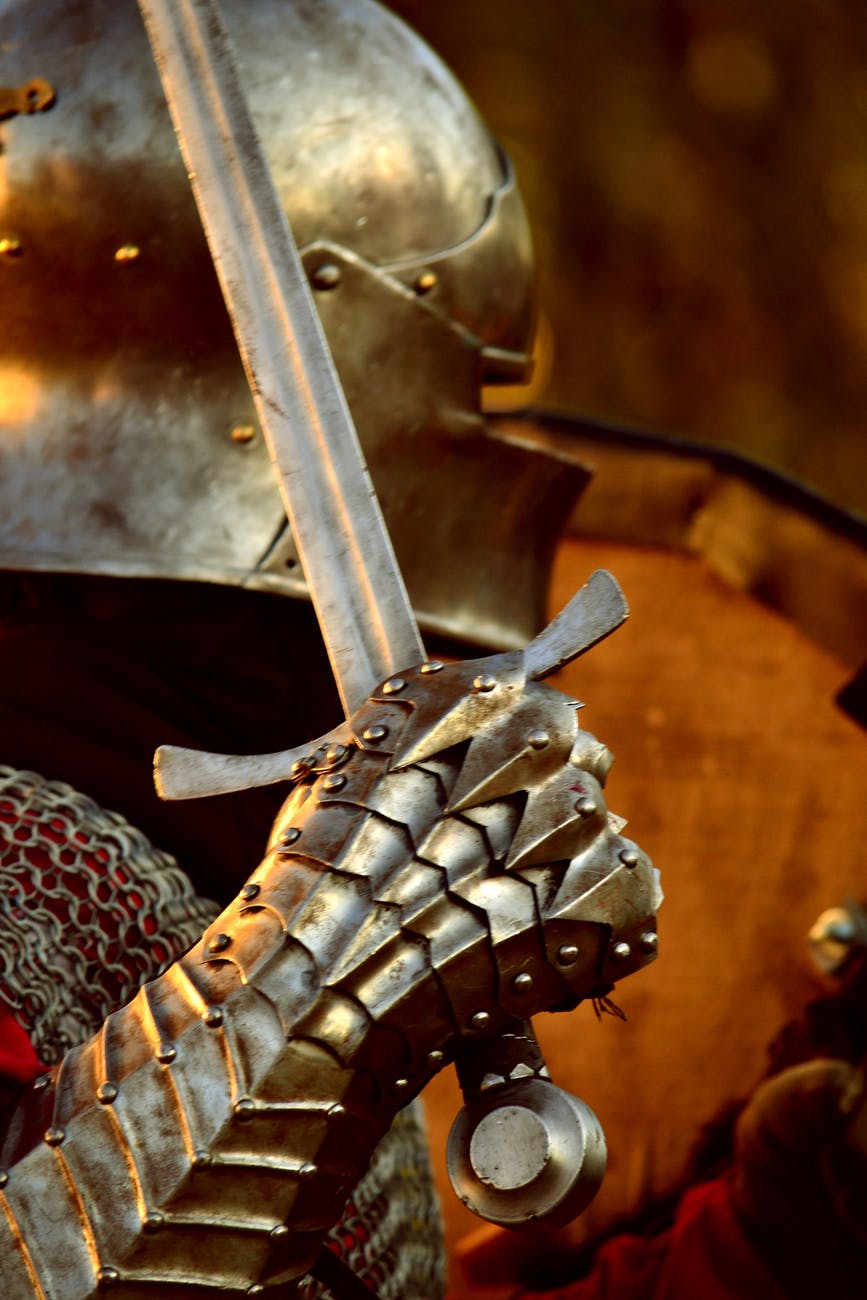
ancient antique armor armour
Photo by Maria Pop on Pexels.com

When King John of England lost Normandy, Anjou and Brittany in northern France in 1204 AD to King Philip II Augustus of France, it was to have great repercussions back home in England.

The territories of Normandy and Anjou had been at the very heart of the great Angevin Empire, which at its zenith during the reign of John’s father, Henry II (1154 – 1189 AD), stretched from the Scottish borders to the Pyrenees.

Although John retained Gascony and Aquitaine in the south west of France after 1204, lands that had come into the possession of his family through his father’s marriage to Eleanor of Aquitaine, the loss of Normandy and Anjou seemed symbolic of a catastrophic failure.

Normandy of course was the dukedom brought into the fold of the English crown with William the Conqueror’s victory at Hastings in 1066. John’s father, Henry II, was from Anjou, meaning that this dukedom also became a crown possession when he acceded to the throne, even though Kings of England still had to swear fealty to the Kings of France for their possession of the dukedoms of Normandy and Anjou.

A sudden sense of separation?

So there was definitely a great sense of sudden separation felt, not merely with John, but also among the vast majority of the ruling aristocracy of England, who were overwhelmingly of Anglo Norman or Anglo Angevin descent, and who had lands and familial ties to these French dukedoms.

Now these barons and other aristocrats had to make a choice: Were they English or French? Whilst the ties between England and northern France remained to some degree, there began to grow a sense of English nationhood from this point in history.

Anglo Normans began to feel increasingly English, often marrying English spouses. Those left in Normandy and Anjou became truly French once more. From 1066 to 1204, the English Channel was a connection between two areas essentially of the same realm: Now it was a great divide between two kingdoms growing apart, who would within a hundred and fifty years embark upon the Hundred Years’ War.

Magna Carta and civil war

Nevertheless, despite the loss of Normandy, for over ten years King John, perhaps foolishly, persisted in trying to regain his lost French territories, causing crippling taxation and making powerful enemies at home and abroad.

This would eventually lead to Magna Carta in 1215, where the barons tried to curtail the power of the king against them.

However, when John began to refuse to follow the new ‘rules’, civil war broke out, ultimately leading to the baron’s inviting Prince Louis, the son of King Philip Augustus, to England with an army of several hundred ships.

A new French conquest

By 1216, much of England was in the control of Prince Louis and the barons and it seemed very likely for a while that the ties between the two kingdoms were about to be even more strongly cemented by this new conquest, exactly one hundred and fifty years since the first one.

Then, in October 1216, King John suddenly died. The English barons who had not supported Louis began to resist and gain more support and the French barons were finally defeated as support for Prince Louis began to slip away.

The barons probably realised that they now had John’s young son, Henry III, to control and get what they wanted without trying to justify the arrival of a young French king and all his staff and the unpopularity that this would undeniably bring.

England’s ‘in out’ relationship with the continent

So within twelve short years, England had effectively been cut off from the continent with the loss of Normandy and Anjou, notwithstanding the retention of distant lands in south west France, then came with a hair’s breadth of being fully subsumed within the sphere of influence of kingdom of France, and then finally reneged on the latter idea altogether, ultimately choosing ‘independence’.

Once more England found itself essentially alone, cut off, though independent and with a growing sense of nationhood, perhaps a little bit like Brexit Britain might be?

copyright Francis Barker 2019

Brexit Precedents No.2 – 410 AD, Roman Emperor Honorius tells Britons to Look After Themselves

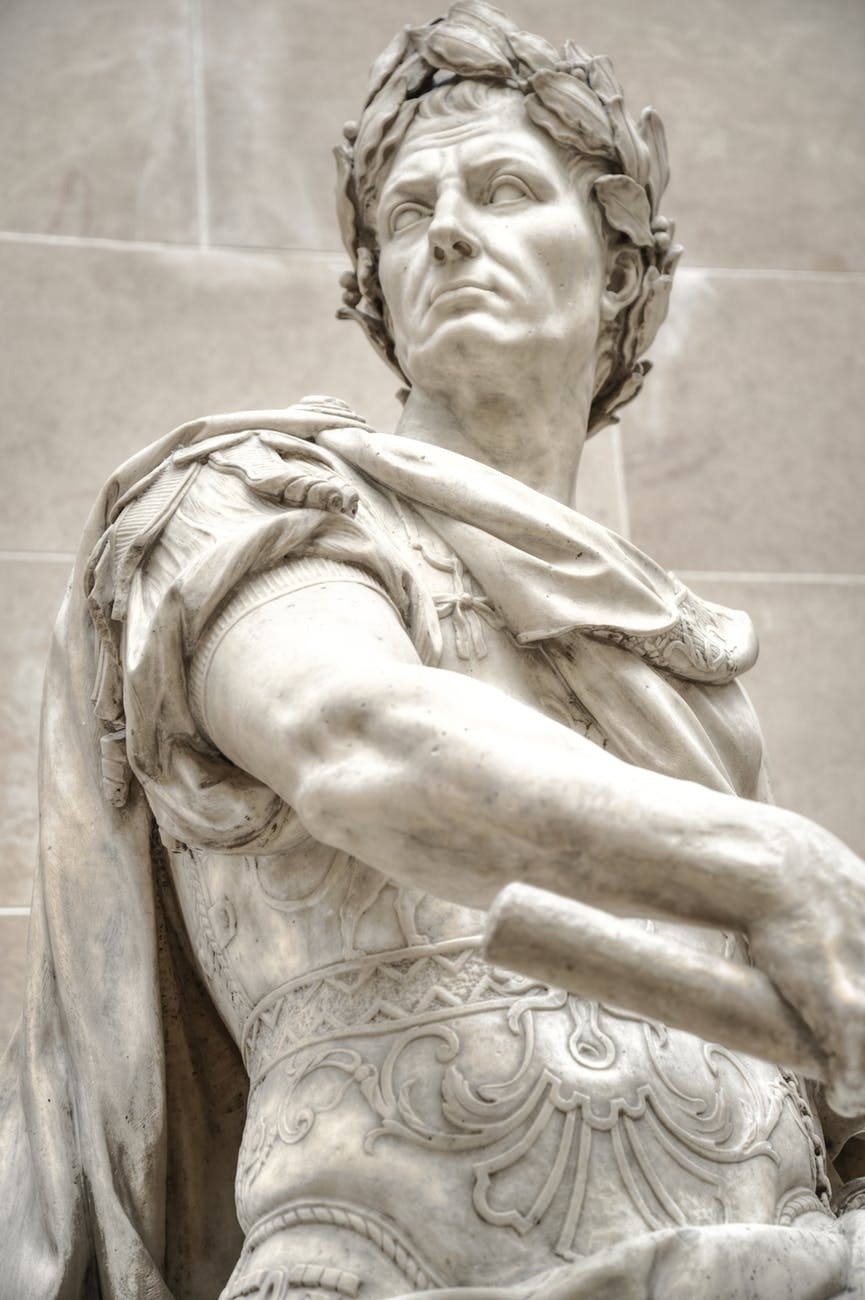
julius caesar marble statue
Photo by Skitterphoto on Pexels.com

The period of Roman rule of Britain is quite clearly defined. Although Julius Caesar had attempted invasion twice a century before, it was the Emperor Claudius who successfully invaded Britain in 43 AD, marking the beginning of the province of Britannia, which, interestingly, did not permanently include what we now call Scotland.

The provincial borders came to be defined by Hadrian’s Wall in the north, created in the early 2nd century AD, and then quite fleetingly by the Antonine Wall in the Scottish midlands.

Boudicca had attempted to destroy the Roman power in the land with her rebellion of 60 – 61AD, but it ultimately failed, although it was a clear sign that Britons were not so easily assimilated into the empire, nor keen on the notion of being ruled by a distant dictator.

A crumbling empire in the west

By the late 4th century, however, several legions had already been withdrawn, leaving the province more open to attack from the Picts to the north and by Germanic raiders, the Anglo Saxons, along the eastern and southern seaboard.

By 410 AD the situation had got so serious that British leaders requested help from the then Roman emperor Honorius. However, due to his ongoing struggles nearer home in Italy and the western empire in general, trying to repulse invasions by other Germanic tribes, he sent his ‘Rescript of Honorius’ back to the Britons, basically telling them that they had to look after themselves, because he was in no position to do so.

Although subsequent Roman leaders probably wanted to re-establish proper links to this far flung province, they never did because the empire in the west was slowly falling apart, finally ending in 476 AD.

So Britain, or at least most of it, had been under Roman rule for over 350 years, a significant time. Now it was cast adrift and largely at the mercy of invasions from the east and north.

The beginnings of England

The Romano British warlords, ‘King’ Arthur quite likely being one of them, did their best to defend the country. However, gradually, as more Angles, Saxons and Jutes (and others) who had been living to the north of the empire, settled over the next two centuries, the foundations of the country we now call England began to take hold, in the form of petty kingdoms ruled by Germanic warlord aristocrats.

Of course, we can’t compare this history too much to what is happening now. For one thing, the Romans left Britain, whereas today’s Brexit is the other way round, Britain leaving the EU, allegedly. And then there’s the duration factor too. For example, the United Kingdom has only been in the Common Market/European Economic Union/European Union since January 1 1973 – not 350 years.

Britain may leave the EU but Romans abandoned Britain

And of course, the Roman takeover was largely hostile, whereas Britain’s deferring of powers to the EU has been granted peaceably, albeit foolishly according to a growing number of British patriots.

Nevertheless, it is an interesting comparison and another example of the island of Great Britain being a part of Europe but always likely to be either less well thought of by central Europeans, abandoned, forgotten, or even seeking to go its own way, looking beyond with an independent spirit.

One can imagine the uneasy feeling of the people of Britain 1600 years ago, knowing that the protection they had known for so long had been withdrawn.

Do those who want to remain in the EU today feel the same? And do Brexiteers, like some of the populace back at the end of Roman Britain, feel more of a sense of opportunity, the chance to create something freer?

copyright Francis Barker 2019