After four and a half years of bitter debate and seemingly endless negotiation, the United Kingdom finally — effectively — leaves the European Union on January 1 2021, quitting both the single market and customs union.
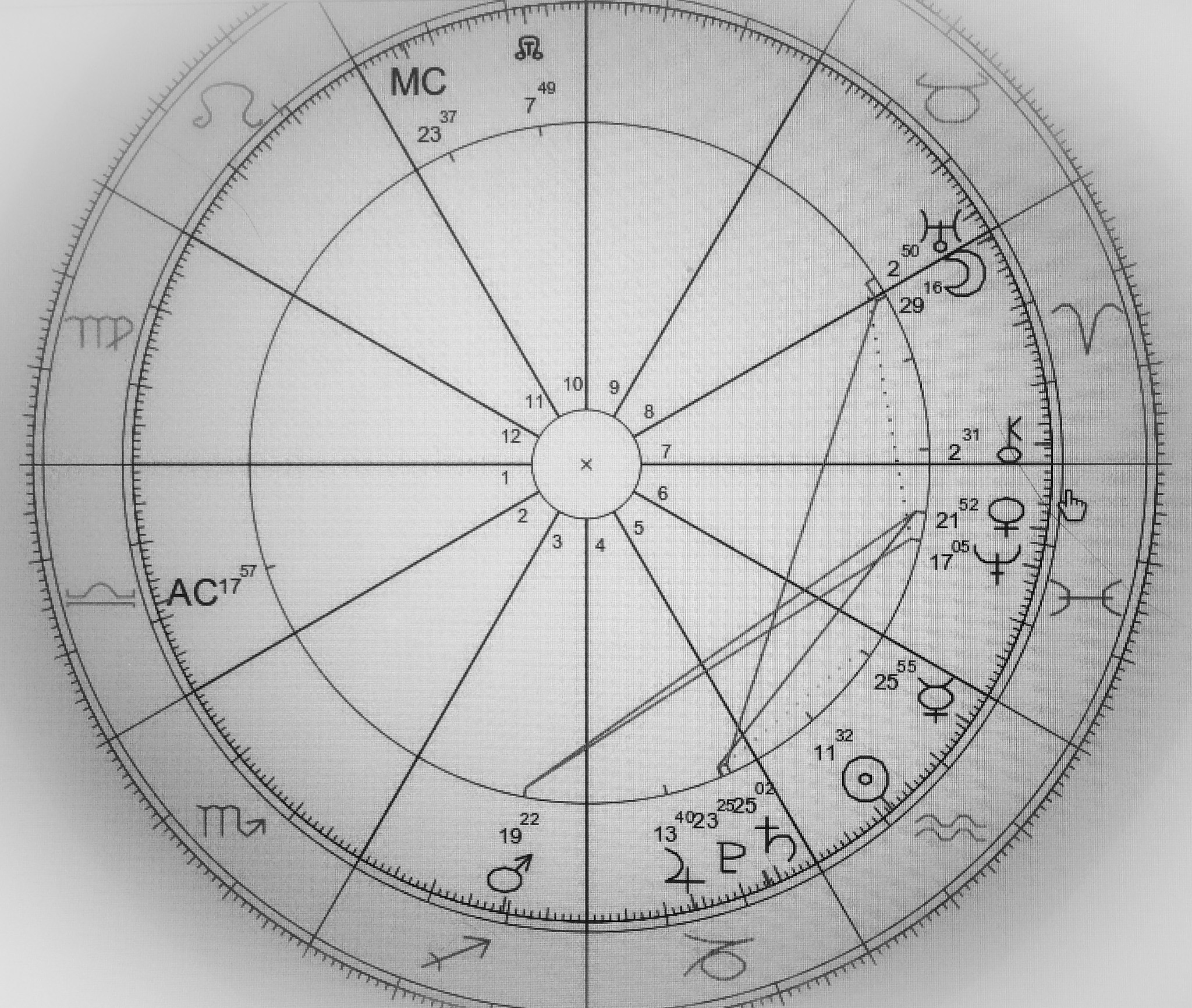
This chart set for midnight on New Year’s Day, the moment the country leaves, to my mind encapsulates the situation and the choices for this newly independent, offshore island.
What stands out is the close opposition between a Leo Moon and the Jupiter Saturn conjunction in Aquarius along the 5th/11th house axis. This is part of a near T square involving Mars but especially Uranus in Taurus in the 8th house.
New Opportunities
The Moon is also the ruler of the MC, another indicator of government and the country’s aims. There is a great amount of tension and pent up energy and dynamism here, which could potentially be explosive politically and economically.
Nevertheless, here too is the opportunity for a new beginning; the people will wish for more self determination as a response to the restrictions of 2020, and the prospect of a fresh approach in regard to our ideals and running our political and financial institutions — ourselves and the way we use money.
New Parties — Politics Transformed?
The country as a whole will begin to feel more confident, speculative and patriotic but in surprising ways.
New, or transformed political parties are likely to emerge and perhaps make an immediate impact, such will be the appetite of the people for a fresh, egalitarian and more local approach to politics. Following 2020, I think the people will trust central government less and will want to run their own affairs more closely.
The journey is clearly not going to be easy, however. With Uranus in Taurus, financial affairs are generally chaotic all over the world. In the 8th house of this chart, the UK’s ability to control the situation and steer a steady course is limited, bringing shocks and surprises through unravelling events the country inherits from other areas out of its control.
Read All The Small Print
Venus, the ruler of the chart, is in Sagittarius in the third house separating from a tricky aspect to dissolute Neptune in the sixth. So whilst there is a clear need for freedom of approach in general terms, there will also be much deception and false hope, which should advise the government and the people to read all the small print of any new deals and alliances.
The trade deal announced with the EU on Christmas Eve, which is due to be debated in Parliament, needs to be examined closely. Other trade deals are likely to be more straightforward and will represent great opportunities for building the foundations of a brighter future, as seen symbolised by the Great Conjunction in Aquarius in the 5th house.
Steady As She Goes
The Sun and Mercury in Capricorn in the fourth house may help to ground the country’s approach with some realism, especially as Mercury is applying to a positive aspect to Neptune, hopefully indicating that the government will have enough wits about it to read the situation more clearly, be forewarned.
However, with Pluto’s continued presence in Capricorn, the overall political situation remains distorted and dangerous, threatening the fabric and foundation of the country and the world.
I think January 1 2021 represents the ‘good ship’ Britannia’s new voyage into uncharted waters. Steady as she goes might be the apt advise to the captain. It will be a bit of a rocky journey, though not without opportunity; we are already seeing this in the number of trade deals in the offing. The future certainly favours the brave, but do we have the right people at the helm?
Whilst Brexit appears to be basically achieved, it is still unclear as to the nature of Britain’s relationship with the EU following our exit.
But of course, this has been an extraordinary year for other reasons. The government’s, and in particular the Prime Minister’s handling of events of this year, have come under much critical scrutiny.
I don’t recall any government with such a majority ever falling from grace so quickly. It is difficult to see it recovering, even in the long term. For whilst there does not have to be another general election for four years, I think that the present paradigm of political parties have run their course.
In my opinion, the winner of the next election, which may not be that far away despite the governments majority, will likely be the leader of new party.
Since the end of June 2016 when the people of the United Kingdom voted to leave the European Union, Brexit has been a gaping wound in Britain’s and Europe’s body politic.
This controversial phenomenon has not only divided opinion and saturated headlines in Great Britain but frequently made the news worldwide too, especially in regard to some of the more unseemly behaviour in Britain’s much vaunted ‘Queen of Parliaments’. Not even the advent of the corona virus in the late winter of this year (2020) could dispel the ongoing saga of Britain’s often toxic negotiations with Brussels from the media. As things stand the United Kingdom will leave the EU at the end of the year — with or without a deal.
What is interesting to students of the extant historical record, is that Brexit marks one more incidence of the British (and particularly the English) people’s often strained relationship with continental European politicians and institutions, a factor which often threatens the unity within the United Kingdom too.
An Island Mentality
Intrigued, I began to look back in history to search for the first incidence of this ‘phenomenon’. When and why did it begin? Is it simply a matter of Britain being an island, physically separated from the continent, creating what is often called an ‘island mentality’? I think this would be a far too simplistic explanation, although clearly one would expect a recognisably different culture to develop in a more remote geographic location such as Britain, especially when travelling was more difficult.
Great Britain became an island some time after the Ice Age or Pleistocene era ended and the Holocene began. One could argue that this was the original geographical Brexit, setting the scenic context upon which all later human political dramas were to play out.
It seems to me that the first popularly known occurrence of a nascent sense of Britishness stems back to the first century AD in the person we now know as Boudica, formerly Boadicea. By Britishness I do not mean it in the modern sense, of course. There was no nation of Britain, no England back then. The idea of the nation state was still more than a millennium into the future.
Freeing the Yoke
However this rather infamous punctuation in British history seems to encapsulate something essentially to do with independence, a sense of wishing to be free from the yoke of abusive foreign rule. To give a more recent example, I am sure that many Americans still look back favourably to the Boston Tea Party as something which epitomized the unacceptable face of colonialism, to the point where feelings boil over, resulting in more drastic measures being taken.
It is often implied that the British of that time were nothing more than some rag tag collection of ‘Celtic’ tribes, wholly inferior militarily and culturally to Caesar and his legions. Obviously this was not true; what the British lacked was not so much cultural sophistication but perhaps Roman political guile and ambition of never ending conquest.
It was the Emperor Claudius who successfully invaded Britain in AD 43, marking the beginning of the province of Britannia, which, interestingly, never permanently included what we now call Scotland.
By AD 60 it would appear that Roman rule was getting well established. The Britain the Romans were occupying constituted a series of kingdoms, perhaps broadly similar to what is called the Heptarchy of later Anglo-Saxon England. The Romans had a long established method of ruling which involved so-called client kingdoms, where the ruler was nominally independent, yet subservient to the Emperor. It was a way of avoiding spending too much time and resources on outright military conquest. Each ruler was encouraged to accept Romanisation and all the cultural benefits this civilisation allegedly brought with it, thereby becoming a beacon for what some called Pax Romana.
The system appeared to be working reasonably well until a certain king, Prasutagus of the Iceni tribe, who were centred around what is now the county of Norfolk in East Anglia, died around AD 60. His will apparently left the kingdom to his two daughters and the Roman Emperor, who happened to be Nero. However, the will appears to have been ignored and the kingdom illegally seized, Prasutagus’ grieving wife and queen, Boudica, was flogged and her two daughters raped, at least according to the Roman historian Tacitus, although Dio Cassius states that the dispute arose through the withdrawal of loans. He also mentions two cities being devastated, not three, which is clearly an error. It is difficult to envisage the sheer swiftness and vehemence of Boudica’s reaction as being in response to a ‘mere’ financial matter.
Brutal Response
So whatever the actual cause of the revolt, it is quite clear the Roman authorities in Britain were not expecting Boudica, the Iceni, the Trinovantes and other British tribes, to respond in the violent and brutal manner they did. Queen Boudica, at least according to Dio Cassius, would seem to have been quite an astonishing presence:
“she was huge of frame, terrifying of aspect, and with a harsh voice. A great mass of bright red hair fell to her knees: She wore a great twisted golden necklace, and a tunic of many colors, over which was a thick mantle, fastened by a brooch. Now she grasped a spear, to strike fear into all who watched her…” – Dio Cassius
Even allowing for a little exaggeration in the above description, she was clearly no pushover. Even today, nearly two millennia later, East Anglia in eastern England has a strong regional identity, a distinct cultural life and accent, not always enamoured with the prognostications of central government only a hundred miles away. Whether East Anglia still produces such women of renown, however, is open to question.
Chariots and Woad
Unfortunately, we do not know the details of how Boudica organised herself militarily, but as a young British noblewoman she would have been familiar in the arts of war. Within a short space of time the sense of injustice and mounting anger against Roman misrule led to the formation of an army of immense size.
We do know that the ancient British had long used the chariot in battle and that they covered themselves in blue woad, to give that distinctive, terrifying appearance. Whilst the Roman army is rightly considered virtually peerless, it is quite clear that the British chariot would have been very effective too.
Very quickly, Boudica appears to have identified key sites for attack, the first being Camulodunum, or present day Colchester, which was the original capital city of the new province. This is where the temple to the Emperor Claudius, the conqueror of Britain, was established and in Boudica’s eyes would surely have represented a strike at the heart of the oppressor.
London Abandoned
Unfortunately for the Romans the then governor, Gaius Suetonius Paulinus, was hundreds of miles away on important campaign against the Druids in what is now north west Wales on the isle of Anglesey, or Mona. Although Suetonius immediately scurried back towards London when he heard of the attack, he had insufficient army numbers to defend the city, toward which Boudica’s huge host was relentlessly heading.
A part of the Roman Legio lX HIspana were the only troops who stood in Boudica’s way and were swiftly dealt with, leaving London resigned to its fate. Those who could escape the newly founded commercial capital would have done so. Those who remained were shown no mercy whatsoever.
Following this, the victorious British army, obviously fired up with bloodlust, marched northward towards Verulamium, present day St. Albans in Hertfordshire, to carry on their serial rape, torture, murder and arson. The city was reduced to ashes like London and Colchester before it. Once again, governor Suetonius could only step aside whilst he began to muster enough troops to face the British rebels in an open pitch battle.
Now whilst it may not be proven, for other sites must be considered, the location of this battle is thought to have been at present day Mancetter in the English West Midlands. Probably luring the now over confident British army to a battlefield of his own choice, Suetonius’ much smaller force were decisively victorious, ending the short but brutal rebellion. Boudica allegedly killed herself, though we can’t be entirely sure. Historian Dio Cassius stated that she died through illness. The number of Britons who died on that day must have been enormous. Those killed in London, Colchester and St. Albans would have been even more.
The Emperor Nero did briefly consider withdrawing Roman troops from the province, yet the decisive nature of Suetonius’s victory prevented this. The revolt, whilst provoking a great deal of initial suppression from the Roman authorities, would also have tempered their rule in the long run.
The Epitome of British Resolve?
Boudica has become the stuff of British legend, with a well known statue of her and her violated daughters now standing in London. Indeed it was the Victorians, who built that statue, who did most to resurrect her memory and status, a reminder that the suppressed will only take so much before taking up arms themselves. When the Roman legions were finally withdrawn, 350 years later, it was at their own behest, not through the forces of insurrection.
Queen Boudica’s rebellion ultimately failed, yet traces of its brutality still remain to this day. Although she must have taken up arms initially to seek revenge for her own and her daughters’ defamation, she has become a British heroine, the epitome of some spirit which is uniquely… well, British. It is a spirit which is continually under threat, yet nevertheless periodically renewed. Brexit, whatever one’s opinion of it, is simply the latest incarnation of that ‘bulldog spirit’ which represents Great Britain — at least in part.
So finally it appears to be happening, the United Kingdom of Great Britain and Northern Ireland is due to formally leave the EU at 11pm GMT on Friday January 31 2020.
Of course, there will be an ongoing debate during 2020 as to the nature of the final ‘deal’ between the two powers, whether it is based on the ‘Canada Free Trade Deal’, or even leaving on WTO terms at the end of the year in the event that no agreement has been made.
Nevertheless the UK is leaving, after much stuttering and fall out and two general elections since the referendum vote in June 2016.
But from my own astrological perspective, what does the leaving time and date signify, if anything?
Libra the balance but will we see justice?
I will start with the ascendant, or rising sign of the chart for 11pm, January 31, set for Westminster, the seat of the UK Parliament. We have Libra rising, a very political sign to do with justice, diplomacy and legality. It is no surprise that Libra has more than its fair share of politicians, lawyers and teachers with the Sun and other important significators in that sign.
Libra rising sets the political character of the moment, the scales, justice, a sense of something being ratified legally and that it has not been an easy course to reach this point. There has been, and there will continue to be, much debate.
However, Venus, the ruler of Libra and thereby ruler of the chart, is in Pisces in the 6th house, close to Neptune and in challenging aspect to an inflammatory Mars in Sagittarius.
Whither the Health Service?
In mundane astrology the 6th house is often seen to signify the nation’s health, perhaps the state of the UK’s health service, and we know how contentious the talk has been in regard to this, with claims that any future deal with the USA might see terms which gives Washington access to and power to ‘meddle’ with what many still regard to be one of the best health systems in the world.
Astrologically at any rate, it seems clear that the state of the health service, plus the Police and armed forces and their future role, will be the source of much angst in months and years to come.
Although Venus is said to be well placed in Pisces, the proximity of Neptune and the aggravation from Mars does indicate weakness, perhaps a continuing debate, encouraged and enflamed by the media, about as to whom can have access to free health care once, and if, free movement ends.
Radical Aquarius – radical government?
The Sun, always a prime factor in any chart, is in Aquarius in the 5th house of speculation, sport and leisure, a very positive placement I feel. Like Libra, Aquarius is an air sign, fitting well with the current Prime Minister Johnson’s air dominated chart.
Aquarius is forward looking, fair minded, radical and so we might well see a strong push towards political reformation, something which probably all sides would concede needs to be done. Just how far this might go is anyone’s guess.
There is much talk about reforming the House of Lords, even to the point of questioning its very existence. The state of the union has also been talked about, with Scotland clearly disaffected with being taken out of the EU as part of the UK.
Will Scotland be able to wave ‘tata’?
One wonders whether one of the reforms might be to do with the constitution of the UK and the relationship between England, Scotland, Wales and Northern Ireland. Could we be heading towards a more federal union? Will Scotland be granted ‘special’ status within the UK to placate its push towards independence?
As the 5th house rules speculation and the stock market, or partly so, we could see changes here too, though the continuing health of it would seem to be assured, depending on world economic trends.
Sport and leisure activities are also likely to be strongly emphasised during the next phase.
Within the next few days, Part 2 in this series will continue to investigate this chart and the changing nature and role of the United Kingdom in the coming years.
copyright Leofwine Tanner 2020
If you would like your own astrological report, or one creating for someone else, please contact me on leoftanner@gmail.com
The long awaited conjunction between Saturn and Pluto becomes exact on January 12 2020, which also includes the Sun and Mercury, increasing its significance.
There is a Saturn Pluto conjunction very 33 to 37 years or so. Examples of others occurred in 1914, 1947 and 1982 and much has been written about these ‘coinciding’ with the beginning of WW1, The Cold War and the economic depression of the early 1980s.
However, this one seems especially dark to me. Put simply, in astrological terms, this planetary activity is taking place in Capricorn.
The goat represents the milieu of the status quo, business and politics. Saturn is in its own sign, very powerful, and represents authority and establishment.
Pluto’s Power
Pluto, so much demeaned by astronomers for now being classed as a ‘minor planet’, shows no signs of having any corresponding minor impact in astrology. Most positively, the Saturn Pluto conjunction could be said to symbolise restructuring.
Pluto is about power and it tears down, exposes, transforms, brings forth what has been long concealed, but also intensifies. From this it isn’t difficult to see that is just the kind of thing that has been happening, particularly in the world of politics and it hasn’t been pretty.
In the UK we have Brexit, Britain’s exit from the EU apparently recently endorsed by the Conservative’s landslide win in the General Election. The country stands to leave at 11pm on January 31 2020.
Political Chaos
There is much corresponding unrest in other European countries, violent protests and people questioning the future of the EU itself.
We have political chaos in America, where the President has been impeached, yet the process has not yet passed fully to the Senate – perhaps because it doesn’t stand a chance of being ratified, although at times the proceedings on all sides seems to beggar belief.
I could go on, but suffice it to say that I think the best outcome from all this is that we shall see the foundation of new political structures in the ensuing weeks, months and years.
I just hope and pray that this process of political transformation occurs as peaceably as possible and that we, the people, come out of it properly represented and wholly informed.



 Ciscography