Brexit Precedents No.2 – 410 AD, Roman Emperor Honorius tells Britons to Look After Themselves

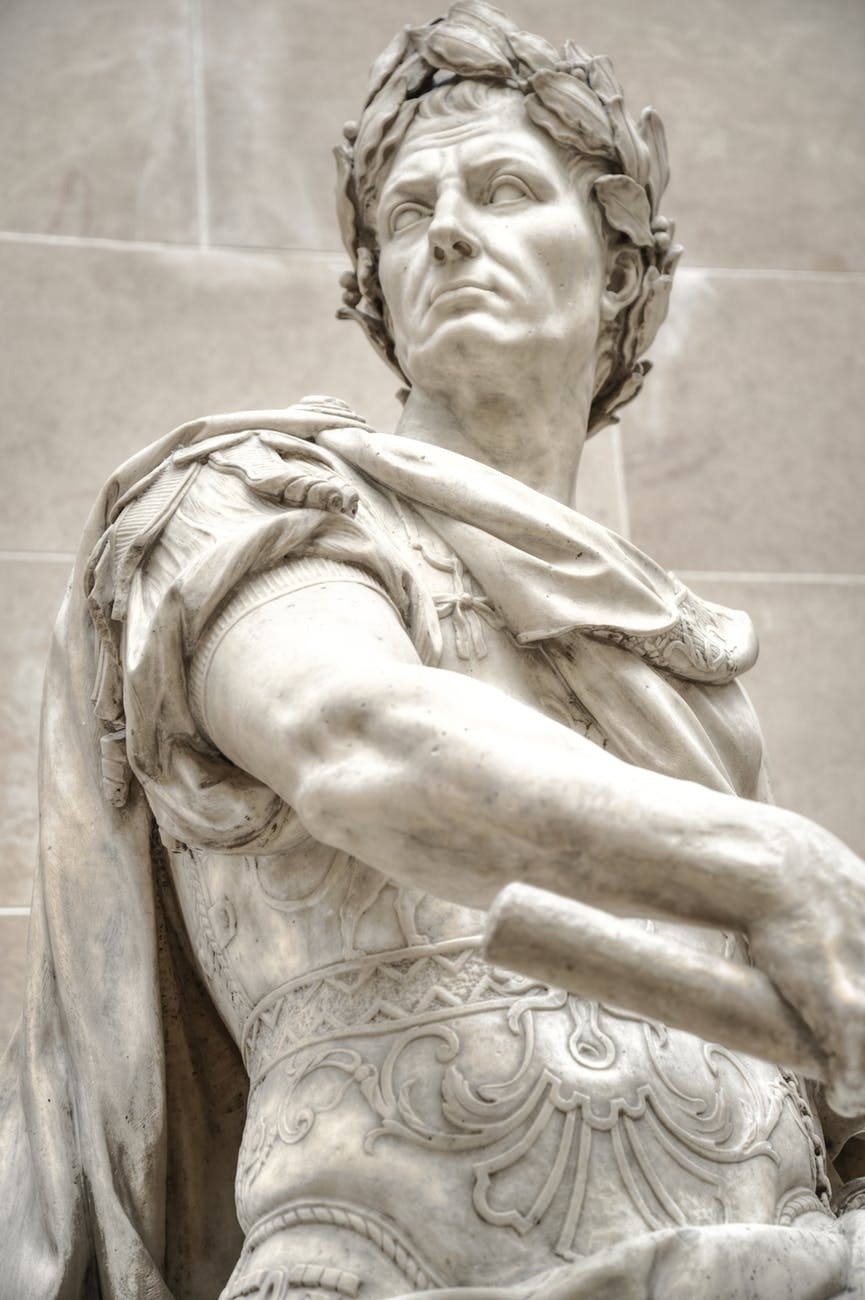
julius caesar marble statue
Photo by Skitterphoto on Pexels.com

The period of Roman rule of Britain is quite clearly defined. Although Julius Caesar had attempted invasion twice a century before, it was the Emperor Claudius who successfully invaded Britain in 43 AD, marking the beginning of the province of Britannia, which, interestingly, did not permanently include what we now call Scotland.

The provincial borders came to be defined by Hadrian’s Wall in the north, created in the early 2nd century AD, and then quite fleetingly by the Antonine Wall in the Scottish midlands.

Boudicca had attempted to destroy the Roman power in the land with her rebellion of 60 – 61AD, but it ultimately failed, although it was a clear sign that Britons were not so easily assimilated into the empire, nor keen on the notion of being ruled by a distant dictator.

A crumbling empire in the west

By the late 4th century, however, several legions had already been withdrawn, leaving the province more open to attack from the Picts to the north and by Germanic raiders, the Anglo Saxons, along the eastern and southern seaboard.

By 410 AD the situation had got so serious that British leaders requested help from the then Roman emperor Honorius. However, due to his ongoing struggles nearer home in Italy and the western empire in general, trying to repulse invasions by other Germanic tribes, he sent his ‘Rescript of Honorius’ back to the Britons, basically telling them that they had to look after themselves, because he was in no position to do so.

Although subsequent Roman leaders probably wanted to re-establish proper links to this far flung province, they never did because the empire in the west was slowly falling apart, finally ending in 476 AD.

So Britain, or at least most of it, had been under Roman rule for over 350 years, a significant time. Now it was cast adrift and largely at the mercy of invasions from the east and north.

The beginnings of England

The Romano British warlords, ‘King’ Arthur quite likely being one of them, did their best to defend the country. However, gradually, as more Angles, Saxons and Jutes (and others) who had been living to the north of the empire, settled over the next two centuries, the foundations of the country we now call England began to take hold, in the form of petty kingdoms ruled by Germanic warlord aristocrats.

Of course, we can’t compare this history too much to what is happening now. For one thing, the Romans left Britain, whereas today’s Brexit is the other way round, Britain leaving the EU, allegedly. And then there’s the duration factor too. For example, the United Kingdom has only been in the Common Market/European Economic Union/European Union since January 1 1973 – not 350 years.

Britain may leave the EU but Romans abandoned Britain

And of course, the Roman takeover was largely hostile, whereas Britain’s deferring of powers to the EU has been granted peaceably, albeit foolishly according to a growing number of British patriots.

Nevertheless, it is an interesting comparison and another example of the island of Great Britain being a part of Europe but always likely to be either less well thought of by central Europeans, abandoned, forgotten, or even seeking to go its own way, looking beyond with an independent spirit.

One can imagine the uneasy feeling of the people of Britain 1600 years ago, knowing that the protection they had known for so long had been withdrawn.

Do those who want to remain in the EU today feel the same? And do Brexiteers, like some of the populace back at the end of Roman Britain, feel more of a sense of opportunity, the chance to create something freer?

copyright Francis Barker 2019

The ‘Brexit’ Election and the Full Moon – Astrology Musings

man and woman holding up a moon like illuminated spherical ball outdoor at night
Photo by Wicliff Thadeu on Pexels.com

In the immediate hours preceding the opening of the polls on the morning of the British election at 7 am, December 12 2019, a full Moon occurs in Gemini.

I find this extraordinary, considering all that the country has been through already over the past three and a half years. What might this mean, other than the fact that it seems to symbolise the huge dichotomy, the split within the nation(s) and the people of the United Kingdom?

The time of the full Moon is a time of tension, opposition between contrary forces: the sun versus the Moon, masculine and feminine, yin and yang, the government (sun) and the people (Moon). There is a huge public distrust of political institutions in general at the moment.

Change in the air

The time of the full Moon is a time of culmination, of change, especially I feel along a mutable (changeful) axis like Sagittarius and Gemini, which are all about knowledge, dissemination and communication. Something has to give.

Equally intriguing is that this sun/Moon opposition occurs along the 1st/7th house axis, which in mundane astrology is to do with the nation as a whole (1st) and agreements, diplomacy and treaties with other nations (7th). Nothing better could encapsulate (at this point in time on election morning) the ongoing impasse, stand off even, there has been between the interests of the nation and the dispute over the nature of the deal or treaty with which the UK finally leaves the EU – if it does at all.

Strange times

The time of the full Moon each month can also be a strange time; animals’ and people’s behaviour can be more unpredictable and unusual, which is a well known fact. The result itself might be difficult to predict.

All of this considered, holding an election at the time of the full Moon is perhaps not ideal, although one thing is clear I think – it will be tense, there will be some kind of surprise, a shock even.

The surprise might be that the opposition parties do much better than expected. At the moment the government has a significant lead in the polls but a lot can change over a long campaign.

A shock result?

Conversely, the ‘shock’ might be that the Conservative government has a landslide, perhaps with the aid of the Brexit party in some kind of electoral pact.

Perhaps the least likely result, because the full Moon in Gemini indicates change, would be another hung parliament, which would essentially mean no change from where we are now, except that Labour, Liberal Democrats and even the Scottish Nationalists could form some kind of coalition government if the Conservatives were not the biggest party. This could, effectively, cancel Brexit entirely.

Could the weather intervene?

It could even be the weather. The full Moon often occurs at the time of a break in the weather. This is the first December election for nearly a century, so what happens if there is significant snowfall, for example? The polls in the cities and towns may well cope, but what about the country areas? Will people be able to vote? Will they want to go out and vote? Will the vote have to be cancelled?

Either way this is going to be very interesting, tense and fraught, especially as the nature of ‘Brexit’ is at stake – even whether there is to be Brexit at all.

I will look more fully into the astrology of polling day 2019 in other posts.

copyright Leofwine Tanner 2019

If you would like your own astrological report creating please contact me at leoftanner@gmail.com


Astrology Musings: Brexit – A Done Deal?

blue and yellow round star print textile
Photo by freestocks.org on Pexels.com

When PM Johnson and EU President both tweeted at 10:35 am this morning, claiming they had secured a deal in the interests of both sides, I couldn’t resist having a look at the chart of that time set for Brussels.

Fascinatingly, a well aspected Mercury planet of communication was found exactly conjunct the ascending degree (AC) in Scorpio. A very apt time to make a communication or statement in the sign of secrecy (which has been a characteristic of  these talks), especially considering all the cloak and dagger machinations that have been going on for days, if not weeks.

Mercury is ruler of the 11th and 8th houses, hinting at more positivity in regard to aims, legislation and further financial arrangements. Jupiter in its own sign in the 2nd house too, encourages economic growth through free trade deals (Sagittarius).

Continuing Combustion

However, I also note that Uranus, planet of disruption and change is in the 7th house (using whole signs) of deals, treaties, diplomacy – not a good sign and may indicate the continuing combustible nature of these protracted negotiations, where the PM is trying to keep all sides on board, a nigh on impossible task.

Financial arrangements are also going to continue to be very volatile, especially in regard to settlements (Taurus is the major money sign). Uranus is also in difficult aspect to Venus in the first house, Taurus’ ruler, a further indication of fallouts about money and security.

Only a quick look and few insights but clearly this is far from over – but I guess we already knew that.

copyright Leofwine Tanner 2019

*If you would like your own personal astrology report please contact me at leoftanner@gmail.com

Britain’s New Prime Minister! – a more positive vibe? Astrology Musings


administration architecture big ben booth
Photo by Pixabay on Pexels.com

While Britain was baking in the searing heat of the afternoon of July 24, Boris Johnson met the Queen in the relative cool of Buckingham Palace to officially become the new Prime Minister.

Within a few short hours, the old Cabinet was gone, and a new team stuffed full of Brexiteers was assembled. But already many are asking if these drastic changes will make any difference at all to the outcome of Brexit and the course of the country in general.

I thought I would take look at the chart for the exact time the Prime Minister met with the Queen, when he officially took over that office of the realm.

Positive dynamism

Well, my first impressions are that this is indeed a more positive chart. Using the ‘whole signs’ house system, the ruler of the chart, Mars, is in Leo in the 10th house along with the Sun. This is a sure sign of positive, dynamic leadership.

Indeed, the 10th house, in mundane terms, is about governing; so this Mars will add great energy, drive, dynamism and determination to the government’s purpose.

A growing economy

Mars is also in good aspect to a retrograde Jupiter in Sagittarius in the 2nd house, perhaps hinting of some good fortune along the way, especially in financial terms, so we might see some interesting trade deals in the offing, too.

Or it could also mean that a so-called ‘no deal’ will not be anywhere as problematic as was once thought – good fortune through the back door, so to speak, as perhaps befits a retrograde Jupiter, a way of counting our blessings.

Either way, this Mars Jupiter link bodes well for the government in general and for the economy.

Difficult decisions

However, the Mercury (retrograde) Venus conjunction in Cancer in the 9th house, although might tend to favour reasonable negotiating possibilities in foreign policy, particularly with Brussels and the EU, is also challenged by an Aries’ Moon in the 6th house.

The retrograde Mercury fixed in this chart is a problem, rendering it difficult to make concrete decisions. Mercury turns direct again on August 2, so this should help, so long as the Johnson premiership continues full steam ahead.

It’s also especially worth remembering that Mercury also rules the midheaven sign of Virgo and the 11th house in this chart, so its being retrograde and in square aspect to the Moon will also bring difficulty to the government’s stance, particularly in regard to legislation and the nature of the House of Commons.

Expect the unexpected

There is also the presence of Uranus in Taurus in the 7th house of diplomacy. All these factors to me suggest, not surprisingly, that the roller coaster ride of Brexit will continue, with delaying tactics, more sudden twists and unexpected turns (Uranus), particularly in relation to the EU’s negotiating stance in regards to financial settlements (Taurus), again making it quite difficult for the government to keep the public on board.

It might be that any compromise deal that is hatched to prevent a no deal, for example, will simply not be enough for most of those who simply want out of the EU. For me this is symbolised by the fiery, impatient Moon in Aries in the 6th house square to the Mercury Venus conjunction.

Brexit before October 31?

The new PM has said that the UK will be leaving on October 31 2019. Can he deliver? Well, he has made a very decisive start, but I think he should remember, as any PM should, to expect the unexpected, as Uranus’ position shows.

It might be that one of the unexpected happenings is beneficial, creating a window of opportunity to leave earlier than expected. The Mars trine Jupiter aspect hints at a luck factor in the government’s favour. Jupiter itself turns direct again on August 11, joining Mercury going forward.

Very interestingly, Mercury turns retrograde again on October 31, so I think the government’s best chance of success is to deliver Brexit before that date, somewhere between August 11 and October 31, possibly around the September new moon on the 28th.

Drastic political changes

If the UK does not leave by October 31, it’s difficult to see when it actually will. The forthcoming Saturn Pluto conjunction in Capricorn early next year is already casting its long term effect on all existing political structures. Capricorn is very important to the UK, as seen 1066 chart for England, for instance, which resonates to this day.

The clear out of the old and the beginning of a new political era could make Brexit seem quite irrelevant going into next year. And as some believe, Pluto could be seen as the co-ruler of this chart, making the next few months and years even more significant.

So, bearing all this in mind, I think the best chance of Brexit ‘success’ has to be carried forward by the positive, dynamic leadership revealed in this chart and to deliver it sooner rather than later.

copyright Leofwine Tanner 2019

Astrology Musings: Mr Brexit… on Fire!

blue and yellow round star print textile
Photo by freestocks.org on Pexels.com

He is sometimes described as the most significant – and most controversial – British politician of the last 20 years.

He has been a sitting MEP in Brussels and Strasbourg for sometime, and has tried also, unsuccessfully so far, to become a Member of Parliament.

And yes, he’s a man who greatly divides opinion, a bit like Marmite, as the British might say, but then he’s been a leading exponent of Britain leaving the EU. Mr Brexit.

Lots of Fire

So what can a little bit of astrology reveal about this controversial character, called Nigel Farage?

Well, his Sun is in Aries, along with Mars and Jupiter (not conjunct), all in the 8th house. His Sagittarius Moon is in good aspect to that Jupiter.

So there’s plenty of fire here, enthusiasm, energy, drive and much high spirits.

All of these qualities are extremely useful for leadership, and the fact that he has led UKIP more than once and is now leading the Brexit Party to electoral success, show that leadership comes quite naturally and successfully to him.

The Sun, Mars and Jupiter in the 8th house points to very strong feelings and an interest in serious investments. This may perhaps also tie in with his former career in the City of London. The positivity of Jupiter trine Moon in fire certainly hints at a liking for speculation.

Hyper Critical Outlook

Also fascinating is his Virgo ascendant exactly conjunt Pluto. The ascendant shows how we project ourselves into the world, our personality.

Virgo here hints at a critical, detailed approach, the ability to analyse, assess quickly what’s in front of him. Pluto will probably only intensify that focus. (Pluto’s actual ‘influence’ is itself controversial).

His ruler Mercury in Taurus, reveals a practical, earthy mentality too. There is constructive thinking here, supported by Saturn, meaning he will want concrete results. Mercury in the 9th house of long distance travel and philosophy, strongly hints at mental interests and involvement in foreign concerns – the EU, for instance.

A Radical

And like all politicians born around this time, there is a Saturn Uranus opposition, albeit a little wide. In his case, it’s close to being angular, too, meaning that he will probably feel strongly that dichotomy between radicalism and conservatism. He might see himself as the radical organiser, opposing a totally inefficient establishment. Some see Pluto’s influence as ‘elimination’, stripping away, clearing out…

Pluto and Uranus close to his ascending degree point to a personal magnetism, an intensity, which is possibly one of the prime indicators as to why he is controversial.

Leadership Ability

So in summary, I think we see here genuine leadership potential (Sun, Mars, Jupiter in Aries), proven more than once in Britain and in the courts Brussels.

Yet he is not all ‘fire’. He’s a practical thinker (Mercury ruler in Taurus), expects results, and has a very strong grasp of detail, plus a flexible, hyper critical approach to everything he does (Virgo ascendant conjunct Pluto).

In a nutshell, there’s an emphasis on fire and earth: he sees something needs doing, setting off with great energy (fire) and a plan to implement it practically (earth). He’s a doer.

All in all, a recipe for success, I think.

copyright Leofwine Tanner 2019


*If you would like a personal astrology report, please contact me at: leoftanner@gmail.com for details.