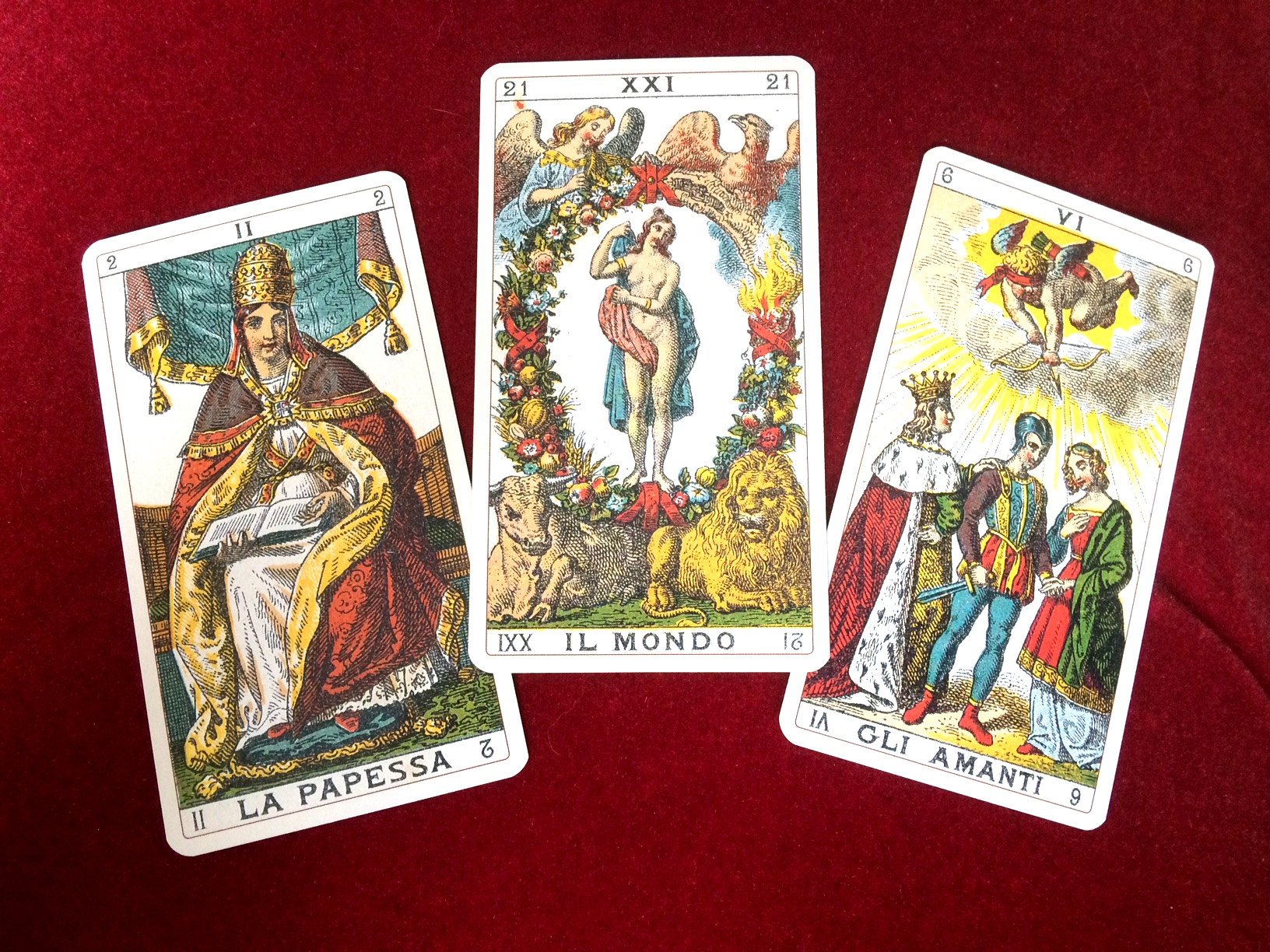
I asked for clarity on the future of the British monarchy. There has been much speculation about this in recent times. I drew 3 cards for the immediate situation, covert situation and outcome.
I wanted to encapsulate it in 3 short phrases, 1 for each card according to my ‘intuition’:
Divine transformation; initiation; new ‘divine’ marriage between the people and ‘the king’.
I have looked at this before and each time, instead of feeling that the monarchy will end completely, I get that it will be truly transformed. The devine feminine energy here seems very strong, hinting of a very different type of institution, perhaps not an institution in any normal sense. The sense of the devine is strong in all 3 of these cards.
Of course, I may be wrong. Maybe this will be a reinstatement of the spiritual relationship between the people and the monarch, I don’t know. I am thinking of a kind of priest king or queen. But watch this space, I think developments are imminent, certainly by spring if not much sooner.
I drew a three card spread for today, Friday November 12.
Card 1 in the centre is the overt energy, card 2 on the left is the covert situation, and card 3 on the right is the resolution or outcome. If you like, these cards represent the Sun, Moon and Saturn. For this spread I used the AGM 1JJ Swiss Tarot (TDM).
Card 1 is the Empress, indicating that today’s energy is feminine, quite fitting for a Friday. Here I see the Empress as an benign authority, understanding, trustful, yet firm when need be, a just arbiter. The Empress is number 3 in the major arcana and is therefore also quite creative when solutions are needed.
Card 2 is the Lovers, number 6 in the MA. It would seem that much can solved quietly today, a good day to spend with that special person and have the night in. In the background, there is a sense of relief, of coming through a problem, a feeling that fences can and are being mended.
Card 3 is the Page of Wands. Today is also a good day to start something new, to reach out and go that extra mile in good faith. There could be good news in regard to spiritual issues.
Overall today feels more positive, therefore. Trust and understanding will go a long way, as long as we don’t bend the rules too much.
I have been fascinated by, if not the greatest practitioner of tarot since I was a teenager.
My love of astrology has generally kept me from continually using tarot over the last thirty years or so. This is no excuse, as both methods of divination are generally complementary.
For a time, somewhere in the 1980s, I did use a deck called ‘astro tarot’, which I think you can still buy, but I ‘lost’ these years ago.
In more recent times, particularly over the last few years, I have been drawn more fully into the mysterious and magical world of tarot, its practise and its disputed history.
Most particularly I have learned to respect and invariably use Tarot de Marseille (TDM), rather than the more well known Rider-Waite style tarot decks.
I much prefer the ‘unillustrated’ pip cards of TDM; I don’t like my intuition being influenced too much by the more illustrative and suggestive Rider-Waite, particularly in the swords suit, where, for example, if one draws the Nine of Swords, this can leave people quite worried!
No, I much prefer to stick to basics: swords is the mind, our thoughts and 9 is attainment. It is up to the tarot reader to interpret this. But more of this in another piece some other time.
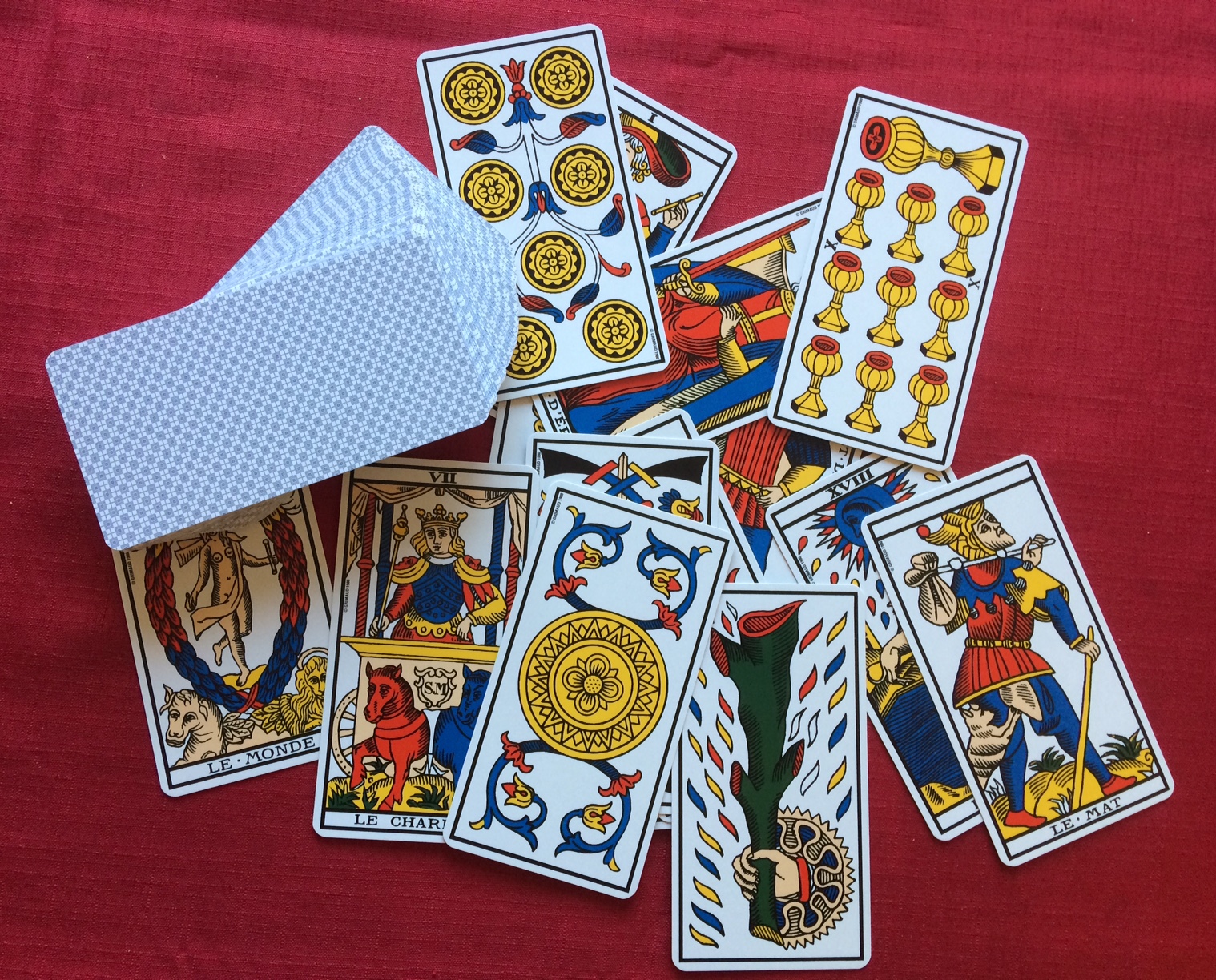
One particular deck I’ve enjoyed for some time is the Grimaud Cartomancie TDM, ‘Ancien Tarot de Marseille’. It comes in a beautifully presented, sturdy box, with the usual mini-book with basic interpretive ideas – in French.
The illustrations are very clear and basic, with strong colours and bold black linework. The word is emphatic, which I like. The card stock is likewise quite sturdy with a grey-blue patterning on the reverse.
The history of TDM, like all tarot, is complex. There are many variations of TDM but this overall style developed, as the name suggests, in the south of France, but also has strong links to northern Italy, Switzerland and even southern Germany over the years.
In other words, this card style does not owe everything to the city of Marseilles, which could be regarded as a name of convenience – and it sounds good too, doesn’t it? After developing from the seventeenth century onwards, it was in 1930 when Paul Marteau of the Grimaud family truly established and perpetuated this particular artistic style of TDM.
I am very glad that he did, as these cards are a particular favourite of mine and I would very much recommend them.



 Ciscography