
Observable facts
Experiments repeated
Ego of science
copyright Francis Barker 2019
copyright Francis Barker 2019
Among the notable people associated with Grantham are Sir Isaac Newton, who was born nearby and former British Prime Minister, Margaret Thatcher, who was raised in the town in her father’s shop.
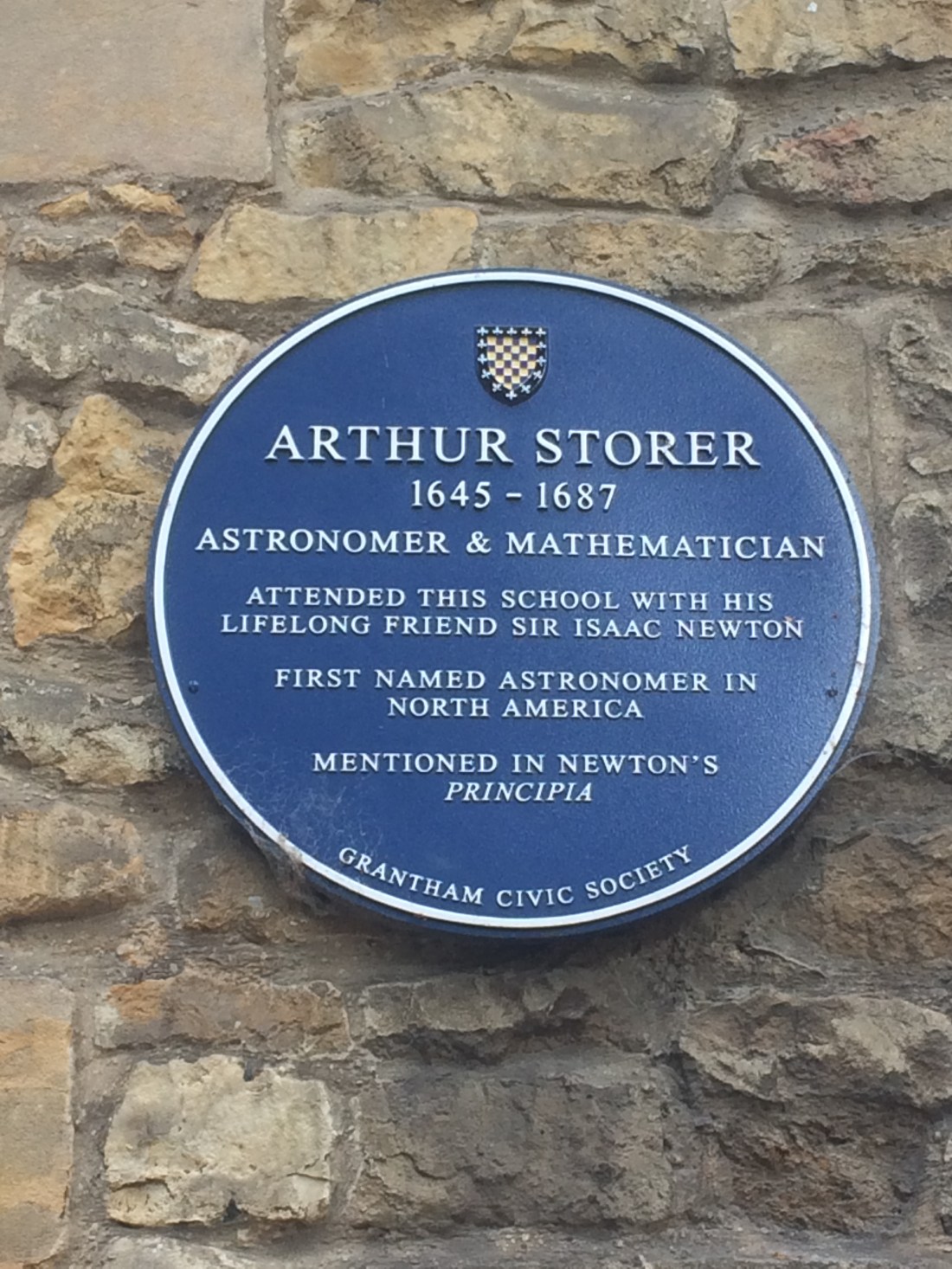
Walking through the town and by the wonderful church, we came across the old school building, upon which is a notice, bearing the name of Arthur Storer, identifying him as an astronomer and mathematician. I have to confess, up to that point, I had never heard of him.
It turns out that he knew Isaac Newton and probably had a fight with him when they were boys. However, the two later became friends and scientific associates, Newton recognising Storer’s contribution in his most famous work Philosophiæ Naturalis Principia Mathematica.
What I did not know was that Storer effectively became the first known astronomer in America and he developed a reputation for accuracy which outlived him.
Storer seems to have initially trained to be an apothecary, the profession of his step father, William Clarke of Grantham. However, it would appear that his real interests lay in the science of astronomy.
He would later travel to Maryland in North America, to observe all astronomical phenomena there. Later he would make a second trip to Maryland to do more astronomical work, sending his calculations to Isaac Newton.
A consequence of this work was that one comet he observed, in 1682, would later turn out to be Halley’s Comet, named after Edmund Halley who became the first to forecast its next appearance.
Sadly, Storer did not live to be an old man, dying in early 1687. He is buried in Maryland.
copyright Francis Barker 2019

I have to say that it was indeed everything I was expecting, from the cool, wet weather to the very touristy atmosphere.
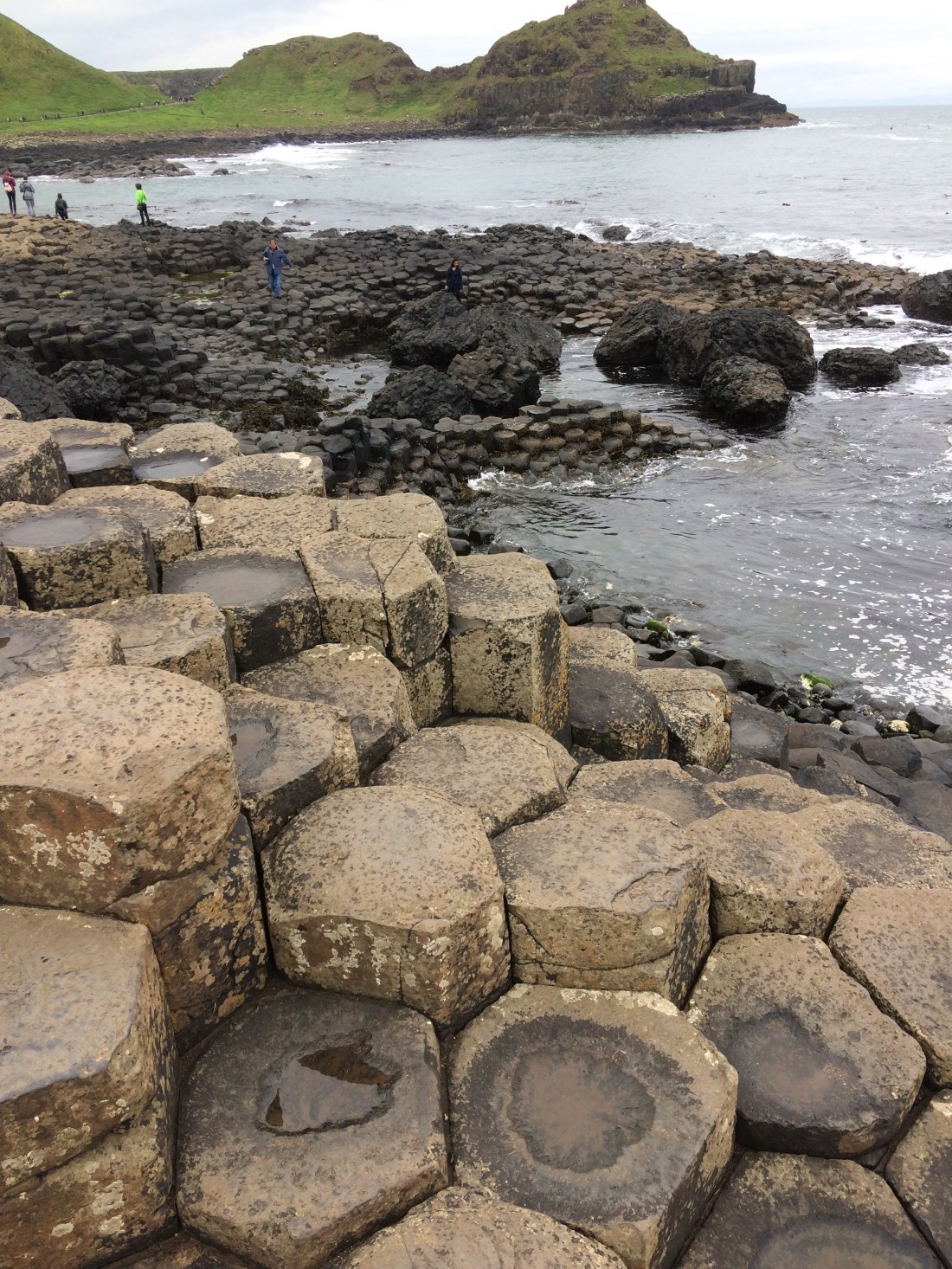
That said, the place is simply stunning. Nothing can prepare you for walking over those truncated basalt columns, watching your step, while eyeing in disbelief that such a place actually exists, spreading out ahead of you towards the sea.
Made a World Heritage Site in 1986, the Giant’s Causeway lies right at the northern end of Northern Ireland.
The official story is that it’s between 50 and 60 million years old. In a nutshell, it’s the result of strong volcanic activity causing lava flows which formed a plateau, cooling relatively quickly, resulting in the distinctive hexagonal columns.
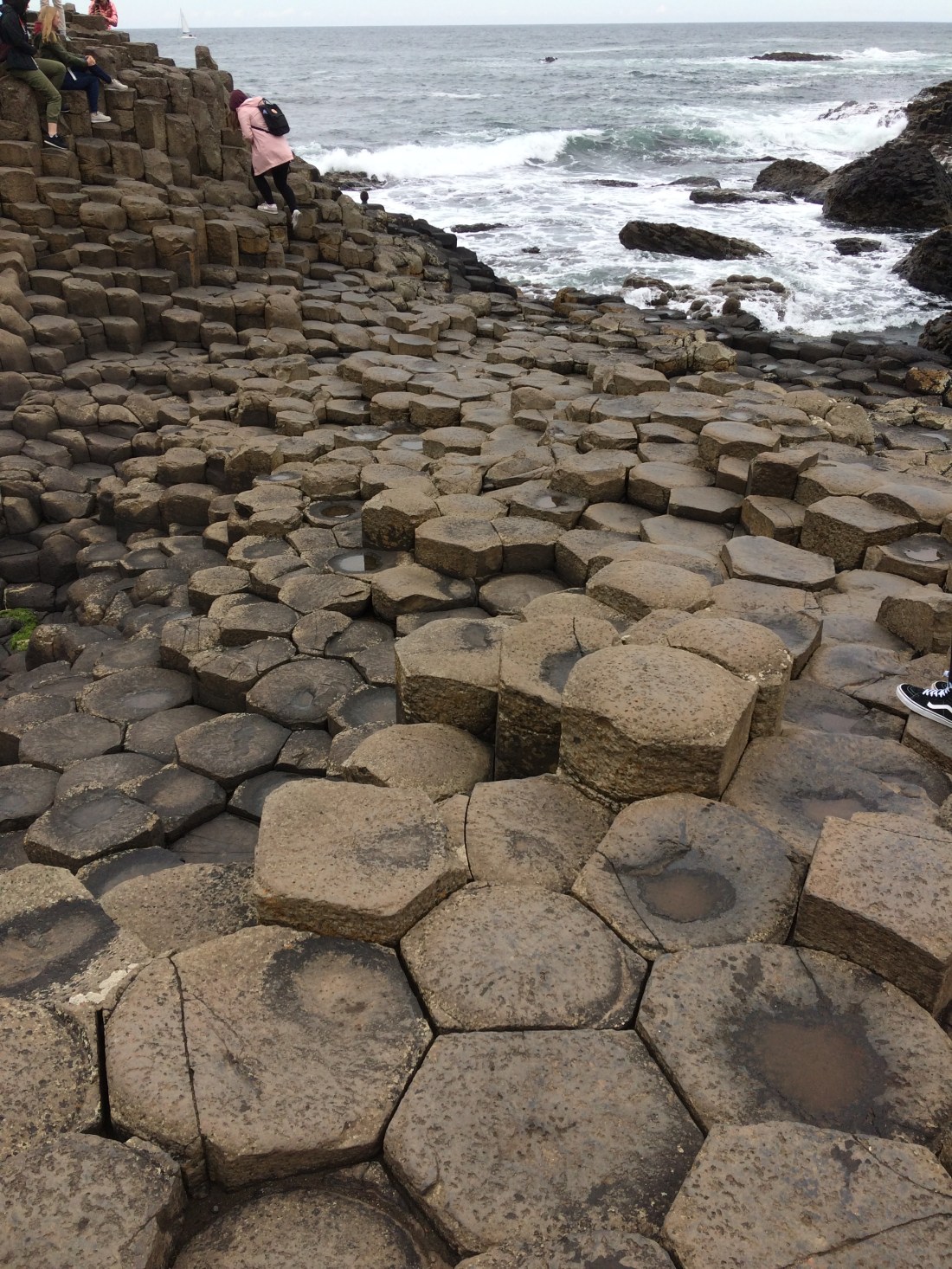
A similar process or effect occurs when mud dries in extreme heat, though you don’t get the height of the columns of course.
So much for the ‘official’ story. Any self respecting local here would tell you that’s all hogwash.
What really happened, perhaps not that many generations ago, is that Finn MacCool, an Irish giant, was confronted by a Scottish giant challenger, called Benandonner. Finn, who couldn’t wait to tackle this upstart, built the causeway to get across the North Channel to Scotland.
There are basically two versions of the story. In one, Finn beats Benandonner conclusively. In the other Finn runs away from Benandonner after realising that he’s even bigger than himself.
So, using some feminine guile, Finn’s wife, called Oonagh, makes out her husband to be a baby, even going to the extent of placing him in a cradle.
Benandonner is fooled by this, thinking that if the baby is this big, then how big is the father? In shock, Benandonner trudges back across the causeway, taking it down on the way so Finn cannot follow him.
Strangely enough, in the corresponding part of Scotland around Fingal’s Cave on the isle of Staffa, there are some very similar columns of basalt.
Now, the scientific community would have us believe that this is merely part of the same lava flow from many millions of years ago. Of course it is.
But I know which explanation I prefer.
copyright Leofwine Tanner 2019
 Ciscography