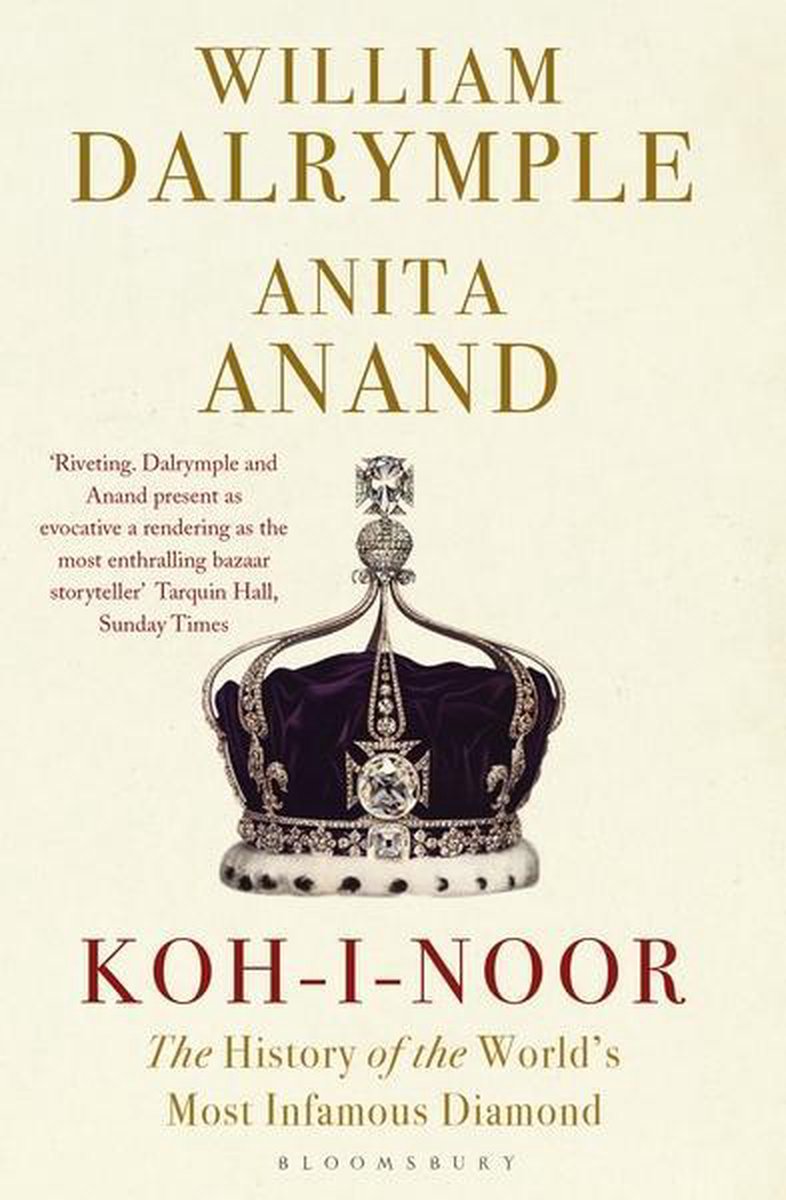
Koh-I-Noor: The History of the World’s Most Infamous Diamond by William Dalrymple
My rating: 4 of 5 stars
Firstly it’s interesting and perhaps partly synchronistic that I have completed this book a few months shy of the first British coronation for seventy years and the imminent installation of the first British Asian PM of the United Kingdom (October 2022).
I have always found Dalrymple’s style captivating, somehow he draws you in, making you feel a part of the narrative. Whilst this book is co authored along with Anita Anand, I do not find it upto William’s usual brilliance – but even below par, it is still a great read.
I certainly had no idea that the Mughals preferred rubies to diamonds but I understand their sensibilities. And whilst the actual history of the Koh-i-Noor is not proven prior to 1739, one does suspect that it was probably one of those previously described jewels from the earlier Mughal empire.
I did find that Anand’s section was a little less interesting, yet still perfectly readable. There is a sense (conveyed to me at least) that the Mughal/Persian invasions of the subcontinent, although equally as brutal as the British and the Company’s conquests, are somehow more ‘acceptable’ because of their greater artistic and even poetic prowess. I suppose it’s broadly similar to many historians forgiving the Normans for their brutal subjection of England from 1066, with the Harrying of the North etc, purely because they built such incredible cathedrals and brought strong government. That said, I would concede that the British rule of India was far from being a simple case of a superior culture forcing itself on to an inferior one; in many ways Indian culture was more advanced than that of the so called West.
However, this aside, I do think this book adds another important element in the understanding of Anglo Indian relations and the history of the merging of these two and more cultures.
Copyright Francis 2022
View all my reviews

 Ciscography