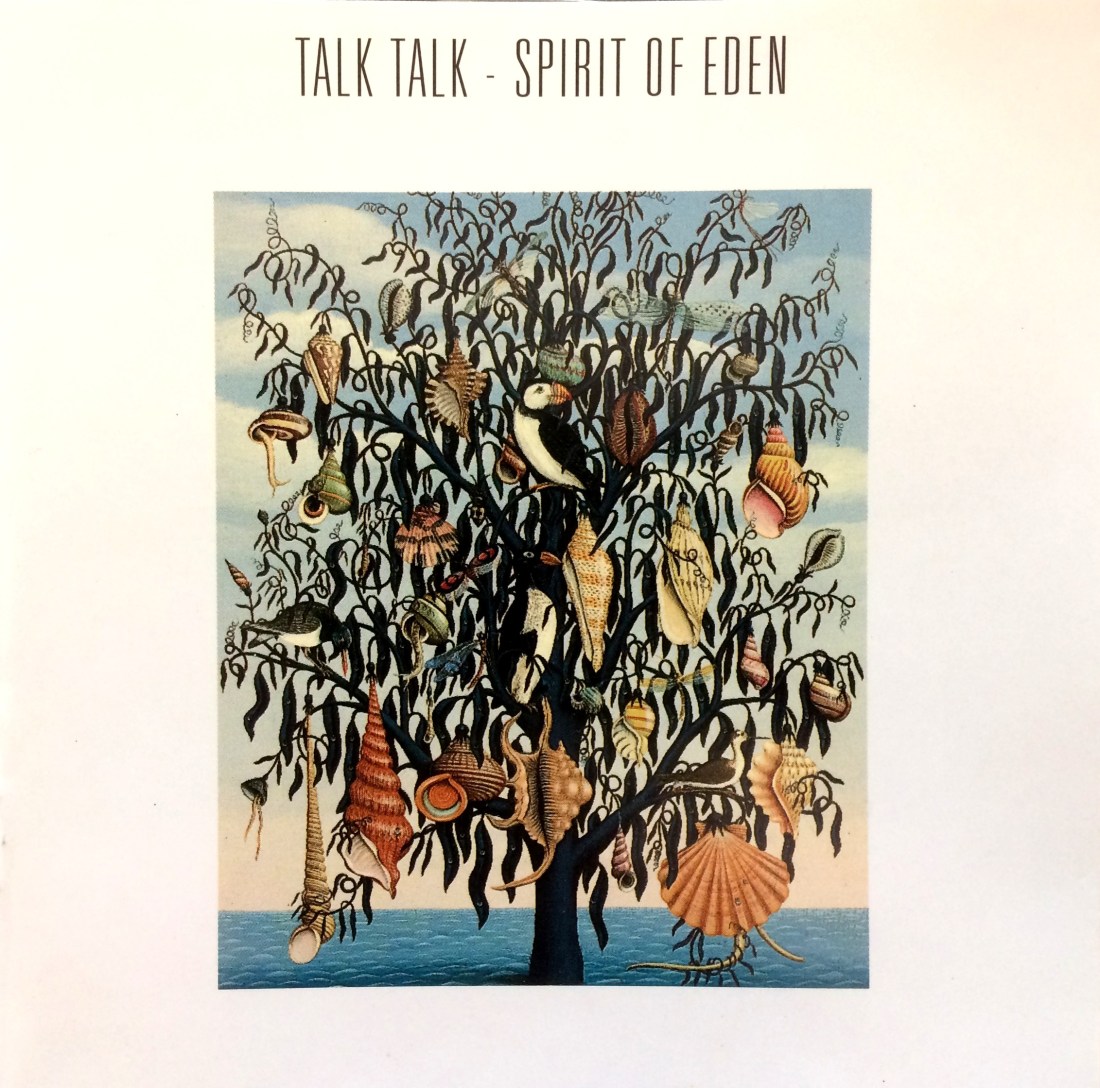
Favourite Album Reviews: ‘Spirit of Eden’ by Talk Talk

IMG_1338 - Edited

Few British bands changed so radically during the 1980s as Talk Talk.

Their early albums and singles were very much of their time, like their eponymously named single and ‘Today’, for instance. The early sound featured a strong, driving electronica dominated by synths and hooks.

However, even on those earlier pieces, there were hints of what was to come, that this was no ordinary, shallow 1980s band.

Veering Away

‘Life’s What You Make It’, their best remembered song, though still synth oriented, is beginning to veer away from ‘established’ sound and subject matter.

Yet, despite such progress and change, I don’t think anyone was ready for the 1988 release, ‘Spirit of Eden’ (EMI).

At the time it left many fans and critics dumbfounded with its often improvised, expansive, moody, melancholic, spiritual soundscapes. Then there was the use of a wide variety of session musicians, playing an array of instruments – brass, wind, harmonica. And there were only six tracks.

Unconventional

Then there is the Choir of Chelmsford Cathedral, even an obscure electronic device called a Shozygs to add to the eclectic, unconventional nature of the album.

But if the initial reaction might in some circles have been termed ‘puzzled’, or ‘underwhelmed’, over the years this album has achieved true iconic status, a literal masterpiece of modern music with many fans, myself included.

In some ways it’s a hard album to describe, or to breakdown in to what it’s really about. Yes, there’s an unconventional spiritual element to it, as the name ‘Spirit of Eden’ suggests. You just have to listen to it. It’s perfect background music, good to concentrate on, good to talk about amongst friends.

Sparse Ambiguity

What’s more, the lyrics, though relatively sparse, have enough ambiguity to allow you interpret things your own way, to lead you back in again and again.

Take Track 1, ‘The Rainbow’ which sets things off as they are to carry on. It’s sparse to begin, wonderfully atmospheric with great usage of piano and organ in solitaire mode. An electric guitar pitches in suddenly with a bluesy riff, over the top of a simple drum beat – the latter a feature throughout the album until the last track. And the harmonica is something else too.

And what can one say about the late Mark Hollis’ vocals? I would’ve gladly listened to them on their own, without lyrics; they sound just like an instrument which complements all the others. He is forceful, thoughtful, emotional, tender, a kaleidoscope of feeling in one voice: no better British singer in the past forty years, in my opinion.

Sublime Torture

Then there’s ‘Eden’, another soundscape beginning with brass and wind. There is a particular melancholy here, but a beautiful one, like some sublime torture as each chorus leads up to a desperate statement of faith, or maybe the lack of it. But there’s hope here too.

I particularly like the electric guitar cameo, almost ‘Beatles-esque’ in its playing, to take you off in some beautiful diversion. An extraordinary song which I still don’t fully understand, but I love it.

‘Inheritance’ carries on with the improvisational sense, evoking space, yet might seem a little more conventional sounding.

Gospel Edge

Track 5, ‘I Believe In You’ might seem even more conventional to start with, with a regular, gentle beat. And there’s a soulful, gospel edge to this one too.

This leads us on to the use of The Choir of Chelmsford Cathedral. It’s not overdone, it accents everything tastefully, merely to illustrate the song, finally taking you out into the ethereal at the end.

‘Wealth’ ends this collection of sounds, with another understated sense of melancholic peace, with a twist of gospel. We’re back to the gentle minimalism of the organ and piano, with no percussion at all. It evokes a rare sense of space, reflection, the general feel throughout the album.

After all these years, I still can’t truly say I understand what this album is about. But it doesn’t matter, it’s all the better for it and will remain one of my ‘go to’ albums.

copyright Leofwine Tanner 2019


*If you would like personal astrology report, please contact me at: leoftanner@gmail.com for details.

Poem: At Cromer

boatsoffcromer©dfbarker

When I look down toward the beach,
the distant pier seems to stride
forward from the shining sea.
I like to look beyond,
to the bands of turquoise and blue,
an ocean painted in bold,
abandoned strokes.

Why are we drawn to the waves?
Those elemental rhythms,
sounds and colours
of a primary world,
where sparse pointillist spots
busy themselves on
yellow-ochre sands.

Some days the morning
unfolds through mists,
groynes spacing out
the distances along the strand,
until a final fade-out,
well before the sea
can meet the sky.

Overhead, pterodactyl shapes
patrol against fresh patches
of blue. As I approach,
the blurred semblances
of buildings appear, rectangles
feathered violet or grey,
as if stepping off the cliff.

copyright Leofwine Tanner 2019, 2011

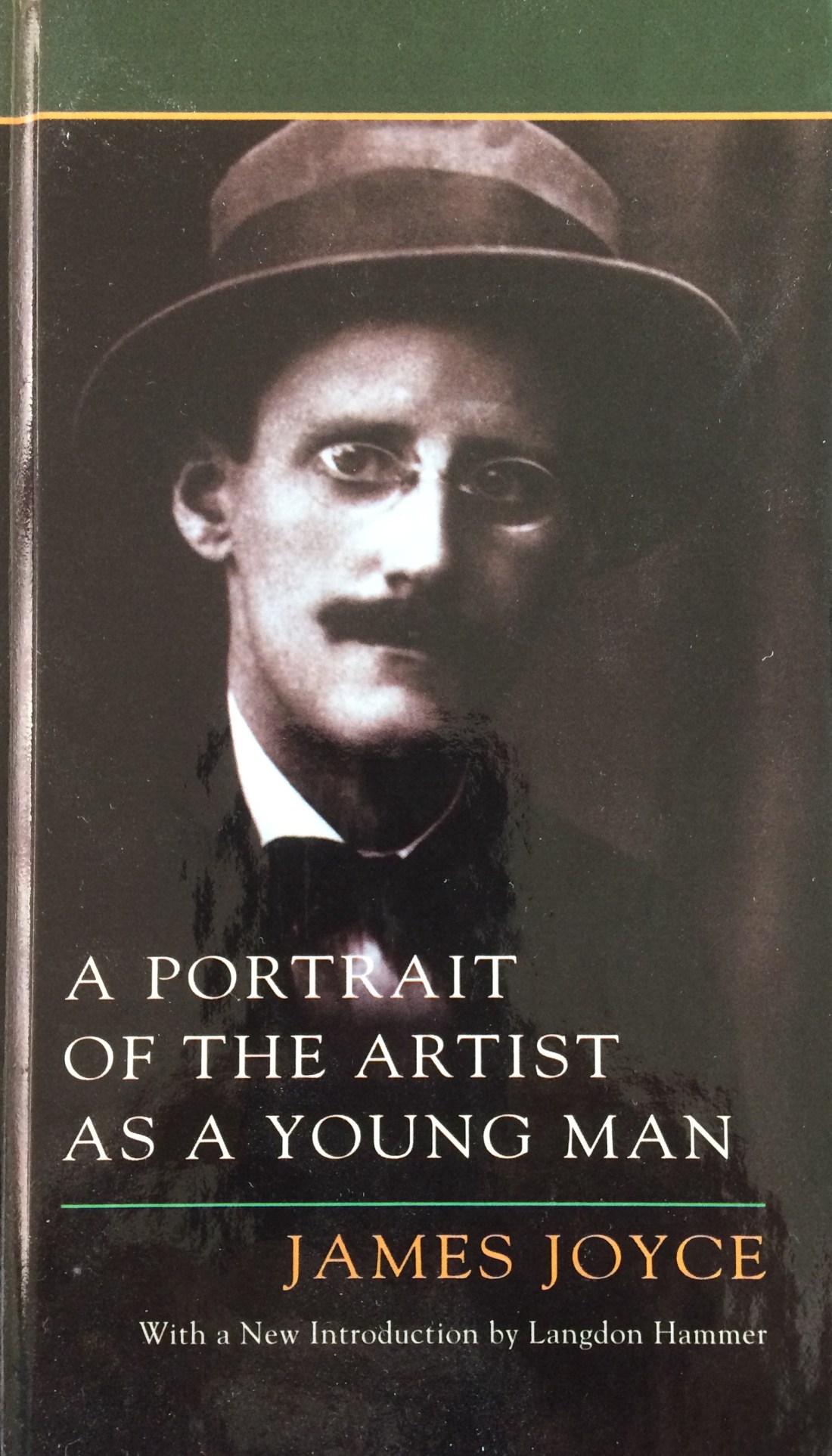
Book Review: Musings on ‘A Portrait of the Artist As A Young Man’ – James Joyce

IMG_1337

Of course, much has been written about this novel since it was first published in 1916. To call ‘A Portrait Of The Artist As A Young Man’ (Penguin – this publication) a landmark, would be grossly understating its impact.

So I’m not attempting to go into great depth, all that has already been done. I merely want to convey my own recollections of first reading it, way back in school.

For me, it was this book and D.H. Lawrence’s ‘Sons and Lovers’ that first truly opened my eyes to what we sometimes call serious literature. Both of them are, in their own way, semi-autobiographies and broke the mould of novel writing.

Story Teller

Naturally though, Lawrence and Joyce wrote in very different ways. I think Joyce wrote more intuitively, in a way which conjured up for me a wholly different milieu of imagery. He is a natural narrator, a story teller like many of his countrymen.

For example, when he describes Stephen Dedalus’ childhood, I get drawn into that world through the use of evocative child-like language; I become that child. I can remember endless classroom discussions about this part of the book.

Living Imagery

And the world of Dublin in the late 19th century, was a very different world from that of the industrial Nottingham area, where Lawrence sets his book.

Although Joyce was to reject almost everything about his upbringing, his beliefs, his writing is nevertheless suffused with that imagery, bringing it alive, like new music as some describe.

So what are we to make of the criticism of those who first rejected his manuscript? The book is, when compared to more classic literature, without doubt somewhat formless and unconventional.

Like God

Yet, those of an artistic nature tend to be like this, especially over the last hundred years or so. I think Joyce, whose approach was understood and encouraged by none other than Ezra Pound, was simply bold enough to open up the taps of his creativity. The artist himself almost becomes like God, a creator in his own right, a bit like the Daedalus of legend, who built wings for himself and his son so that they could fly.

Joyce’s upbringing within the strict bounds of Catholicism, his training for the priesthood, was in retrospect the perfect grounding for such free artistry, once it was released from its captivity.

Ironically, Joyce’s world never seems to lose the colour of his Catholic upbringing, even though he ultimately rejected it. With Lawrence, the harsh, English Protestant world, seems altogether more grim, enlightened by the writer’s love of nature.

Native Genius

Joyce’s innate creativity, held back for so long, could only emerge later like a succession of Michelangelo masterpieces, hewn by the craft and intelligence of a native genius.

Unlike his other classics, Finnegan’s Wake and Ulysses, I have successfully completed reading his first great novel.

Even so, one day I intend to finish the former two, although I suspect I will read ‘Portrait’ again before I do that.

copyright Leofwine Tanner 2019

West Lindsey Church Festival 2019 – Minting St. Andrew in Pictures, Part 2

DSC_0064 - Edited
A collection of old Bibles.

DSC_0061 - Edited

DSC_0068 - Edited

copyright Leofwine Tanner 2019

Bardney Church, Lincolnshire – A Celebration in Pictures, Part 2

DSC_0045 - Edited

Inside the church there are echoes of Bardney’s former glory as the place of an important monastery. This whole region of Lincolnshire was at one time littered with abbeys, priories and nunneries.

DSC_0048 - Edited

DSC_0049.JPG

copyright Leofwine Tanner 2019