Favourite Album Reviews: ‘Aja’, Steely Dan (Part 1, Side 1)

IMG_1328
Steely Dan’s 1977 album (MCA)

I think I can say without qualification that Steely Dan’s 1977 album release, ‘Aja’ (MCA), changed my life. This is part one – I feel there’s simply too much to say in one piece.

At the time I was at college and it became the soundtrack of my time. It was a tape (I got the vinyl later) and I must have worn it out. On that tape ‘Josie’ was the opening track, swapping places with ‘Black Cow’ from the vinyl.

Of course, I was already a big fan of their previous five albums, beginning with the 1972 release of ‘Can’t Buy A Thrill’ and the singles, ‘Reeling In The Years’ and ‘Do It Again’. That was some entry into the mainstream.

Put simply, anyone who tries to play guitar or any instrument, like me, or just appreciates music, simply couldn’t help but be impressed, not merely with the virtuoso playing of various band and session guys over the years, but with the whole jazz infused rock style which is all their own.

Peerless Songwriting

And to say that the songs of Walter Becker and Donald Fagen are well-crafted would be a great understatement; they are simply peerless – witty, sarcastic, intellectual, moving, all in a wonderfully constructed, painstakingly produced package that is, nevertheless, often hard to define. The element of doubt I’m sure is deliberate, lyrically and musically, so that the listener can make up their own mind, take them to places they never thought they would go. And I’ve been everywhere.

But to the album. Is it their best? Probably, a classic certainly, released when punk rock was at its height, which makes its success all the more remarkable. Great music is great music in any age and will find its way.

New York night life

The opening track, ‘Black Cow’, is the name of a mixed alcoholic drink of New York origin, apparently, though as is sometimes the case, the name of the song is incidental to the main message: that there’s a relationship ending, badly, and one of them isn’t taking it too well. Pretty straightforward really. The song to me simply oozes New York night life, with a slow, steady, ‘catchy’ beat which has been sampled at least once since then. Great piano solo, superb de rigueur saxophone on the outro.

The title track is next and quite unlike anything the band had attempted before. ‘Aja’ is a girl’s name, quite a girl by the sound of it. The lyrics are concise, perfect, simply to illustrate the song, leaving the stage open for the incredible musicianship. The song is complex, evocative of sensory pleasures, Asian themes. I feel sunshine every time I hear it. Denny Diaz’s extended guitar solo is wonderful, almost like glints of sunlight on the Pacific Ocean, or maybe a boat bobbing up and down.

Atmospheric Synth

And then the saxophone solo (yes, another one, and why not!), seems to take you into the evening, more busy night life, romance. If this wasn’t enough there is, in my opinion, the most incredible outro ever, consisting of sensational drumming, a single piano chord repeat pattern and atmospheric synths all around it, taking you into the heady early hours of the morning. Quite wonderful.

‘Deacon Blues’ is the next track, completing side one of vinyl. The story of a loser? More than once I’ve toyed with the idea that it could be about me. The subject is resigned, yet determined to play saxophone, to drink Scotch all night and go out driving (no, I don’t do that).

Inspirational

Once more I sense the night, this time dark alleys, jazz clubs, New York street life. The saxophone illustrates the song beautifully (naturally), a long track of nearly seven and half minutes, but it’s over before you know it – a sign of quality, that not a second is wasted in creating these mental pictures. Great lyrics, great playing, great song. Just great.

It even inspired the name of a band, but that’s another story.

So that completes side one. Only three tracks, but all different. Quite simply the best first side of an album, period.

copyright Leofwine Tanner 2019
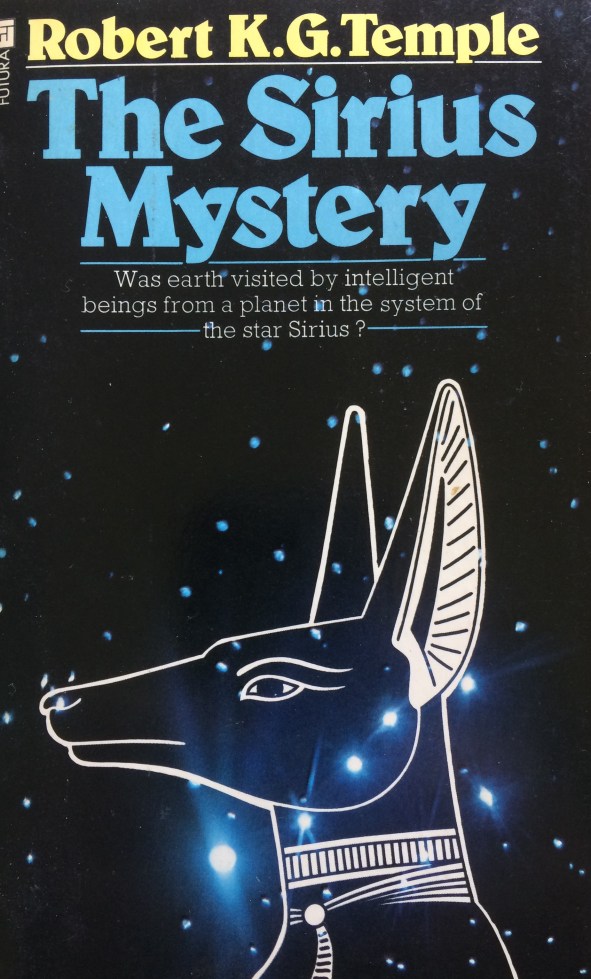
Book Review: ‘The Sirius Mystery’ by Robert K. G. Temple

IMG_1319

Was this planet really visited by space travellers from the star Sirius in the ancient past?

This is the question posed by author Robert K. G. Temple. His book, ‘The Sirius Mystery’ (Futura 1977) is another of my favourite books from yesteryear. I remember the day I bought it, in a train station, the arresting cover drawing me to it. I still thoroughly recommend it to anyone interested in the possibility of ‘ancient aliens’ and human culture in general.

It’s a complicated book that you have to persist with, though it’s well worth it, and this paperback has very small type, which these days would not add to the reading enjoyment. Nevertheless, although several decades old now, it’s still in very good condition. I’m kind of good with books that way.

Sophisticated

The starting point of the book is that it seems the Dogon tribe of Mali (former French Sudan) in west Africa, have sophisticated astronomical knowledge of the star Sirius, which is in fact a binary star, that is, two stars spinning around each other; it takes Sirius B (the dense smaller, actually invisible companion to Sirius A) around fifty years to orbit its larger, very bright sibling. Sirius itself is important to mythology in general, particularly in ancient Egypt, where its rising was used in the timing of the flooding of the Nile; it is often called ‘The Dog Star’.

The work of French early twentieth century anthropologists Griaule and Dieterlen forms the basis of the main evidence for the book. They spent much time with the Dogon, unravelling their art, culture and mythology which embody this knowledge. It’s from this that the startling information about the Dogon’s knowledge came.

Simples

But to boil it down here for simplicity’s sake, how is it possible for the Dogon, in fact any people on earth, to have what appears to be complex, accurate knowledge of far off star systems, without telescopes, or without going there themselves? After all, it was only in the twentieth century that knowledge of Sirius’ invisible companion star came about, using modern, sophisticated telescopic technology.

Ruling out co-incidence, or that the Dogon could somehow remotely see Sirius B orbiting Sirius A light years away, what possible conclusions can we come to, apart from someone else giving them that information?

Ancient spacecraft?

It transpires from the work of the anthropologists that the Dogon do describe what we might today call aerial craft, possibly spacecraft, their various states of ascent and descent as seen from the ground. There are even suggestions that the being(s) on board these possible aerial ships, was called ‘Nommo’ and that he might be semi-aquatic, due to tribal drawings.

Interestingly, this description and knowledge does appear to link up with ancient Mesopotamian/Middle Eastern mythology, which describes similar ‘craft’ and ‘beings’, who imparted their knowledge to ‘primitive’ mankind.

So, as the saying goes, there’s a lot of smoke here, but where’s the fire? The evidence, such as it is, is highly persuasive. But do we need to re-examine it? Are we in danger of being guilty of imposing our own (modern Western) notions and sensibilities on to different cultures?

Keeping an open mind

The truth is, I don’t know. Twenty years ago, I was pretty much a full on believer in extraterrestrials and this was one of the best ‘go to’ books for ‘proof’ of them and their hand in humanity’s development.

Now, having re-read the book again in recent years, it’s still one of the best in this category you can find. Even so, as fascinating and well written as it is, I keep an open mind about it all.

I suppose it’s asking a little too much to demand aliens to disclose themselves, but if they’ve always been here, with us, then there’s nothing to disclose, is there?

Leofwine Tanner 2019

Astrological Musings on Mercury – “Stop fidgeting, boy!”

IMG_1309

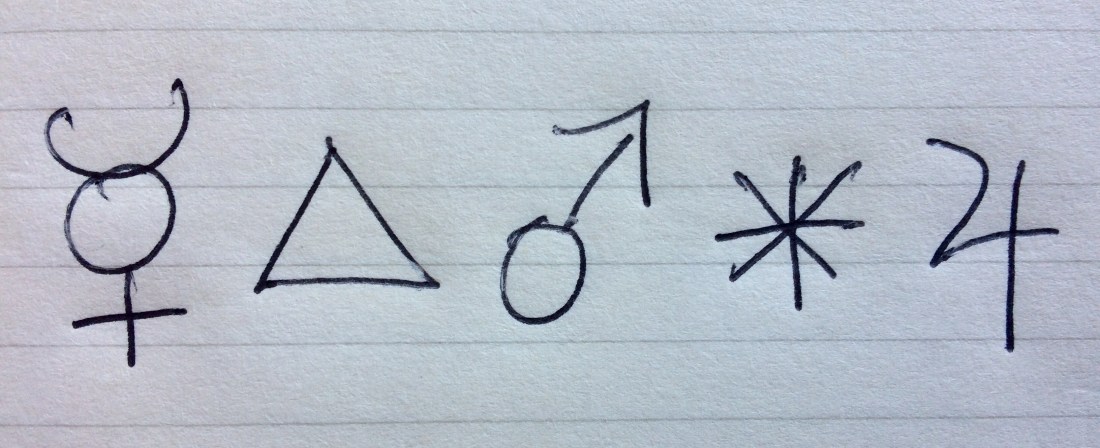
In astrology Mercury is associated with the signs Gemini, Virgo and the corresponding third and sixth houses of a chart.

Mercury, closely following the sun at all times, is said to represent the mind, how we think, communicate, our nervous system, their strengths and weaknesses depending its conditioning.

Take Luke (not his real name which is protected), a former teacher who’d taken early retirement a while ago. He came to me wanting to know why he’d become so restless and nervous. He explained that he’d always been a bit restless, but especially of late. He knew his birth time to within about five minutes, so I calculated his birth chart.

Raised Eyebrows

Immediately, one of the ‘reasons’ he described himself as restless leapt out at me from the computer screen. His Mercury was closely conjunct a Capricorn ascendant, trine Mars in Taurus, sextile Jupiter in Scorpio. There were no so-called difficult or hard aspects, no squares or oppositions to Mercury. He seemed curious as to why my eyebrows were raised. At the time he came to see me, transiting Pluto had been lurking with intent around his native Mercury for a few months.

Over the years I’ve found it remarkable (a lot of the time) how people ‘speak’ their charts. In Luke’s case Mercury here was doing all the talking!

Mercury in Capricorn represents a practical mind, that likes to spend its time productively; teaching would be one good outlet. Close to the ascending degree and energised by Mars and Jupiter, one might expect the native to be a little fidgety – he was, constantly scratching his head, re-arranging his seating position. He just had to be doing something!

Positive Energy

So with all that positive energy from Mars in Taurus, which only increases the pressure to ‘do something’ practical like making money, and from Jupiter in Scorpio, encouraging him to go deep, plumb the depths of knowledge, it’s probably not surprising that Luke was a bundle of unresolved, nervous energy which now ceased to have a proper outlet or channel.

“Can you write?” I asked, rather glibly, picking at Mercury’s communicative qualities.

He nodded. “Yeah, I do it all the time.”

“Professionally?”

He shook his head and laughed. “Just jot things down and scribble, you know.”

But I could see something opening in his eyes, some kind of realisation.

“Don’t get me wrong,” I said, tentatively, “I can’t advise you to do anything but what might help is to find a project, a writing project, to really get your teeth into, to fill the gap that teaching filled. Something like that.”

Second Career

He seemed interested, but with all that earthy mental energy, I figured that creative writing might not be the best outlet for him. “Serious themes, perhaps,” I continued, “history, religion, psychology, geography…”

“Ha!” he exclaimed, “I taught geography for thirty five years!”

“OK, apart from teaching it, have you written about it, expressed our own ideas, opinions? Have you done research, for instance?”

“Not since university.”

Chance Meeting

It was around six months later when I met up with him again by chance, not in my house, but in the high street outside a butcher’s shop of all places.

“You were right about the writing, by the way?” he said, smiling nonchalantly.

“Really?”

“I’m a regular contributor to a science magazine now… and I’ve started giving talks on geography and geology for adult education locally. In fact, I’ve been invited up to Sheffield next week to give a talk.”

I tried to disguise my own smirk. It would seem that his native Mercury, which may have given him the impetus to become a teacher in the first place, had now inspired a second career in his retirement, as a writer and speaker. Pluto’s close proximity to his native Mercury at the time, may just have done a little prodding from behind the scenes.

Ultimately, I think this example also shows a need to look for the obvious, stand out features of a birth chart first. “Keep it simple, boy!”

Celebrate Lincolnshire Churches – Cherry Willingham

PHOTO-2019-05-11-16-39-17
Cherry Willingham Church of St. Peter and St. Paul.

One of the most fascinating churches we visited during the West Lindsey Churches Festival this May, was at Cherry Willingham, dedicated to Saints Peter and Paul, a Grade 1 listed Georgian building.

Sitting at the highest point of the village, there are steep steps to the entrance. Suddenly you are confronted by a terrific example of Georgian architecture. From the west door entrance, you can see right through to a wonderful reredos resplendent behind the altar.

PHOTO-2019-05-11-16-39-18 (2)
The quality of light was wonderful.

Once more we were greeted by very pleasant local people, who filled us in with all the salient historical and current facts.

Home made cakes and refreshments were on offer and there was a display of the charities the church supports.

IMG_1315
Inside it was simply stunning.

Although quite small, what the building lacks in size it more than makes up for in style and detail.

It opened in 1753, its founder a certain Thomas Becke, who had bought an estate in the village. Inside there is a large marble monument to Mr Becke. The church is built with local Ancaster limestone, infused with fossils.

IMG_1317

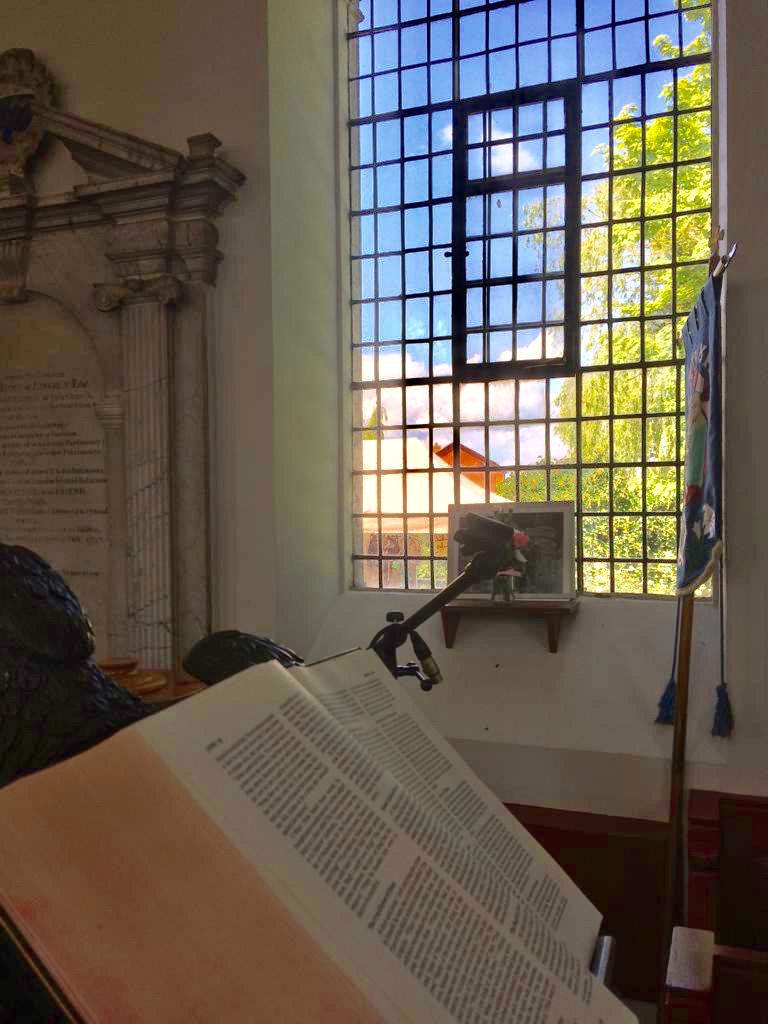
Most pleasing about the design of this small church is the quality of the light afforded by the style of windows (although our photographs possibly don’t quite do that justice), aided certainly by it being a sunny spring day, yet these large windows would surely afford good natural lighting on any cloudy day.

10CBCEA2-198B-4072-BE45-95F755B52C15
The reredos.

The volunteers told us that at present there is no toilet in the church – though that particular facility is arriving very soon. In the meanwhile, the very kind and courteous vicar took us to her nearby house so that we could perform that particular function!

This typifies the whole spirit we felt within the church, that of community and care. Thank you Cherry Willingham.

IMG_1318

Leofwine Tanner 2019

Celebrating West Lindsey Churches: Fiskerton

IMG_1269
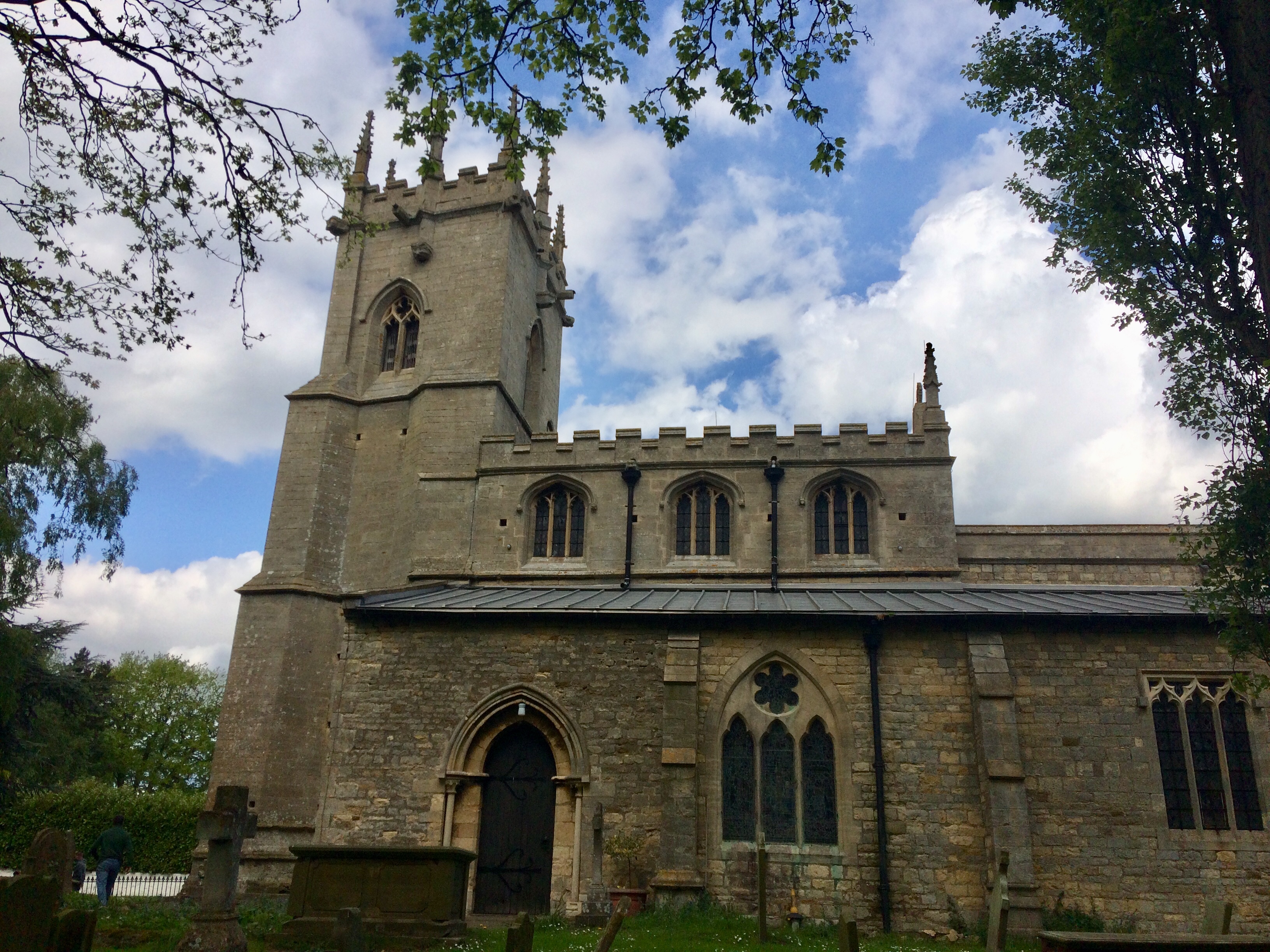
Fiskerton church, dedicated to St. Clement of Rome.

Every May in West Lindsey in northern Lincolnshire, there are nearly a hundred churches open to the public over two weekends.

Of course, you may say that churches are always open – and you would be right. What I mean is, this diverse array of architectural and cultural gems, have items such as exhibitions, old books, games and crafts on display and for sale, plus food and drink of course, the proceeds going to the upkeep of the churches. There will always be a warm welcome too.

Fiskerton’s name means enclosure or farm of fishermen, its name stemming from Anglo-Saxon times. The church is dedicated to St. Clement of Rome, a dedication I do not recall coming across too often, especially not in Lincolnshire.

Like many villages in this area of Lincolnshire, there are strong connections to the RAF, particularly in relation to World War 2.

PHOTO-2019-05-11-16-38-32 (2)

In fact there were remembrance books and links with RAF squadrons in the Lady Chapel, a testimony to the fact that Lincolnshire during World War 2 became essentially ‘Bomber County’, due to the preponderance of bomber squadrons.

Elsewhere in the church there are some notable features, including remaining Norman architecture.

PHOTO-2019-05-11-16-38-32 (3)

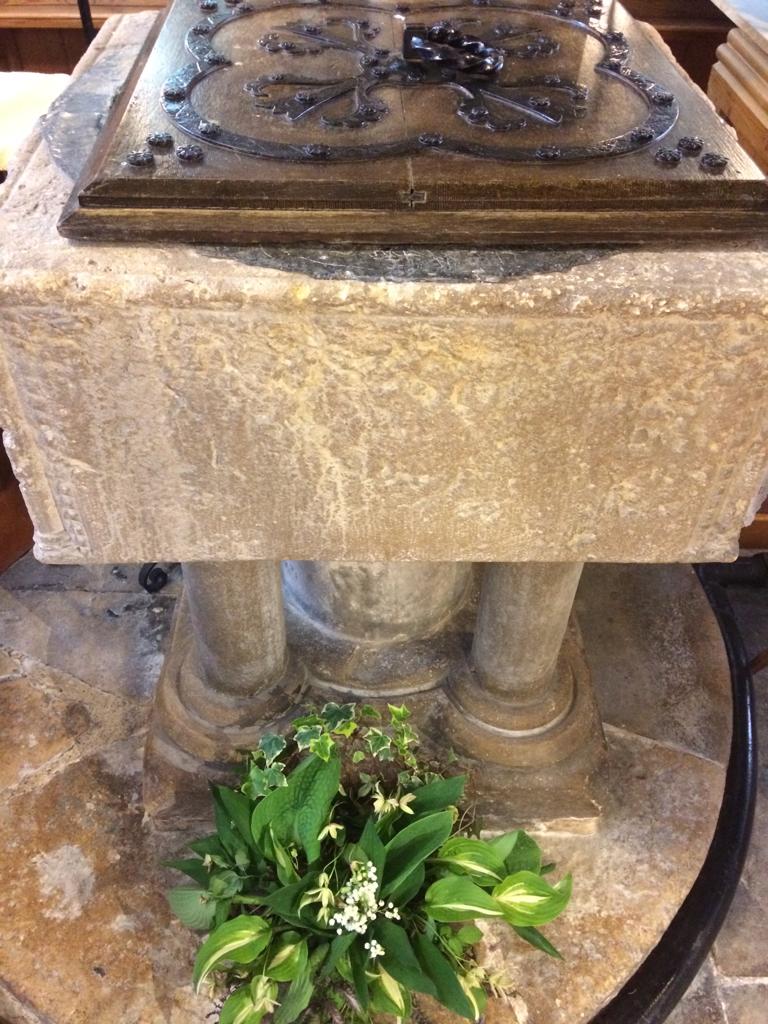
The font is especially interesting. Note the markings on the stone and the work on the ornate cover below:

PHOTO-2019-05-11-16-38-32
The font, which looks very old, bearing interesting markings.
PHOTO-2019-05-11-16-38-32 (1)
Painting of Madonna and Child, Fiskerton church.
PHOTO-2019-05-11-16-38-31
Stained glass windows at the east end were particularly beautiful.
IMG_1270
Looking east along the nave.

Once again, the most overriding memory of our visit to this lovely church was the friendliness of everyone, volunteers who seemingly can never do too much for you.

Thank you people of Fiskerton.