
The Irby Tomb – one of the most impressive features of this south Lincolnshire church at Whaplode, Lincolnshire, England.
copyright Leofwine Tanner 2019
copyright Leofwine Tanner 2019
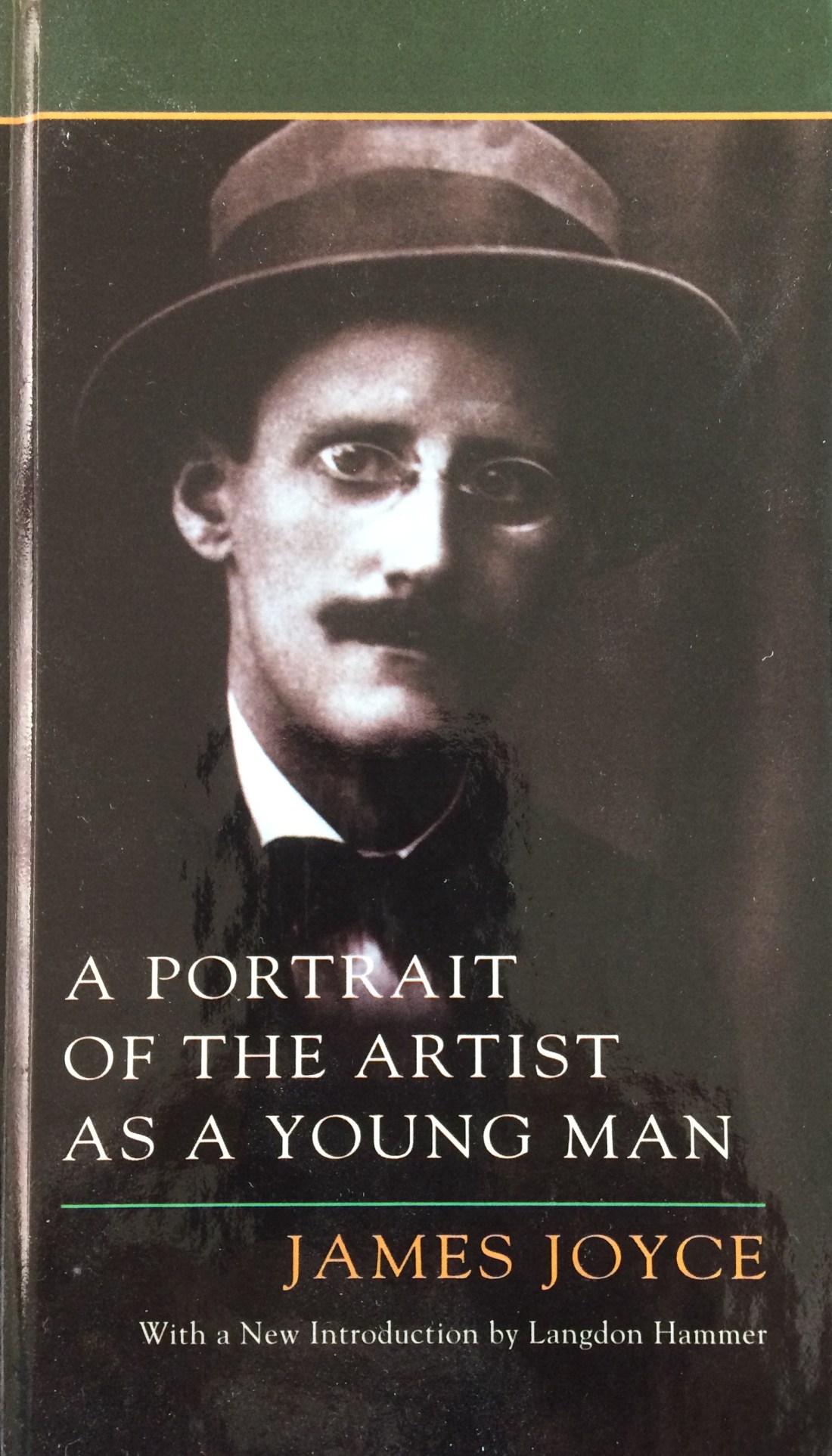
So I’m not attempting to go into great depth, all that has already been done. I merely want to convey my own recollections of first reading it, way back in school.
For me, it was this book and D.H. Lawrence’s ‘Sons and Lovers’ that first truly opened my eyes to what we sometimes call serious literature. Both of them are, in their own way, semi-autobiographies and broke the mould of novel writing.
Naturally though, Lawrence and Joyce wrote in very different ways. I think Joyce wrote more intuitively, in a way which conjured up for me a wholly different milieu of imagery. He is a natural narrator, a story teller like many of his countrymen.
For example, when he describes Stephen Dedalus’ childhood, I get drawn into that world through the use of evocative child-like language; I become that child. I can remember endless classroom discussions about this part of the book.
And the world of Dublin in the late 19th century, was a very different world from that of the industrial Nottingham area, where Lawrence sets his book.
Although Joyce was to reject almost everything about his upbringing, his beliefs, his writing is nevertheless suffused with that imagery, bringing it alive, like new music as some describe.
So what are we to make of the criticism of those who first rejected his manuscript? The book is, when compared to more classic literature, without doubt somewhat formless and unconventional.
Yet, those of an artistic nature tend to be like this, especially over the last hundred years or so. I think Joyce, whose approach was understood and encouraged by none other than Ezra Pound, was simply bold enough to open up the taps of his creativity. The artist himself almost becomes like God, a creator in his own right, a bit like the Daedalus of legend, who built wings for himself and his son so that they could fly.
Joyce’s upbringing within the strict bounds of Catholicism, his training for the priesthood, was in retrospect the perfect grounding for such free artistry, once it was released from its captivity.
Ironically, Joyce’s world never seems to lose the colour of his Catholic upbringing, even though he ultimately rejected it. With Lawrence, the harsh, English Protestant world, seems altogether more grim, enlightened by the writer’s love of nature.
Joyce’s innate creativity, held back for so long, could only emerge later like a succession of Michelangelo masterpieces, hewn by the craft and intelligence of a native genius.
Unlike his other classics, Finnegan’s Wake and Ulysses, I have successfully completed reading his first great novel.
Even so, one day I intend to finish the former two, although I suspect I will read ‘Portrait’ again before I do that.
copyright Leofwine Tanner 2019

Many years ago, I did a series of watercolour reconstructions of one priory, how it may have looked at its height (see above).
To think that these places, which became so criticised and demonised, especially in the reign of Tudor King Henry VIII, were the centres of education not only of the monks and nuns who lived there, but were also enriching the local communities, providing jobs, education, lodging, medical care too.
To have these dissolved, stripped bare and taken down, the monks or nuns dismissed at the behest of ‘Good King Henry’ and Thomas Cromwell – well, it must have been truly catastrophic for the communities that were left without them. That doesn’t quite seem to come across in most of the accepted history of what we call The Reformation.
There are always at least two sides to any story.

How would the local accent have sounded then, say in 1500? Would I have understood them? More to the point, would they understand me? I doubt it, but I have a liking for old church doors.
This north facing example bears all the marks of being very old, probably late medieval, but I could be wrong. Look
at the tracery… perpendicular style?

Today in 1610, King Henry the Fourth of France was assassinated.
Henri, although baptised as a Catholic, was brought up as a Protestant. Due to the inflammatory religious situation in France and his background, he was at times considered an enemy by both Catholics and Protestants alike. As a result, there were many previous assassination attempts.
Despite often being unpopular during his reign, he was nevertheless considered a successful king, in economic, cultural, military and diplomatic terms, but only achieved his current status as a great king posthumously, when a virtual cult arose in his memory.
He was assassinated on May 14 1610 by a fanatic called Ravaillac in the Rue de la Ferronnerie, Paris.
 Ciscography