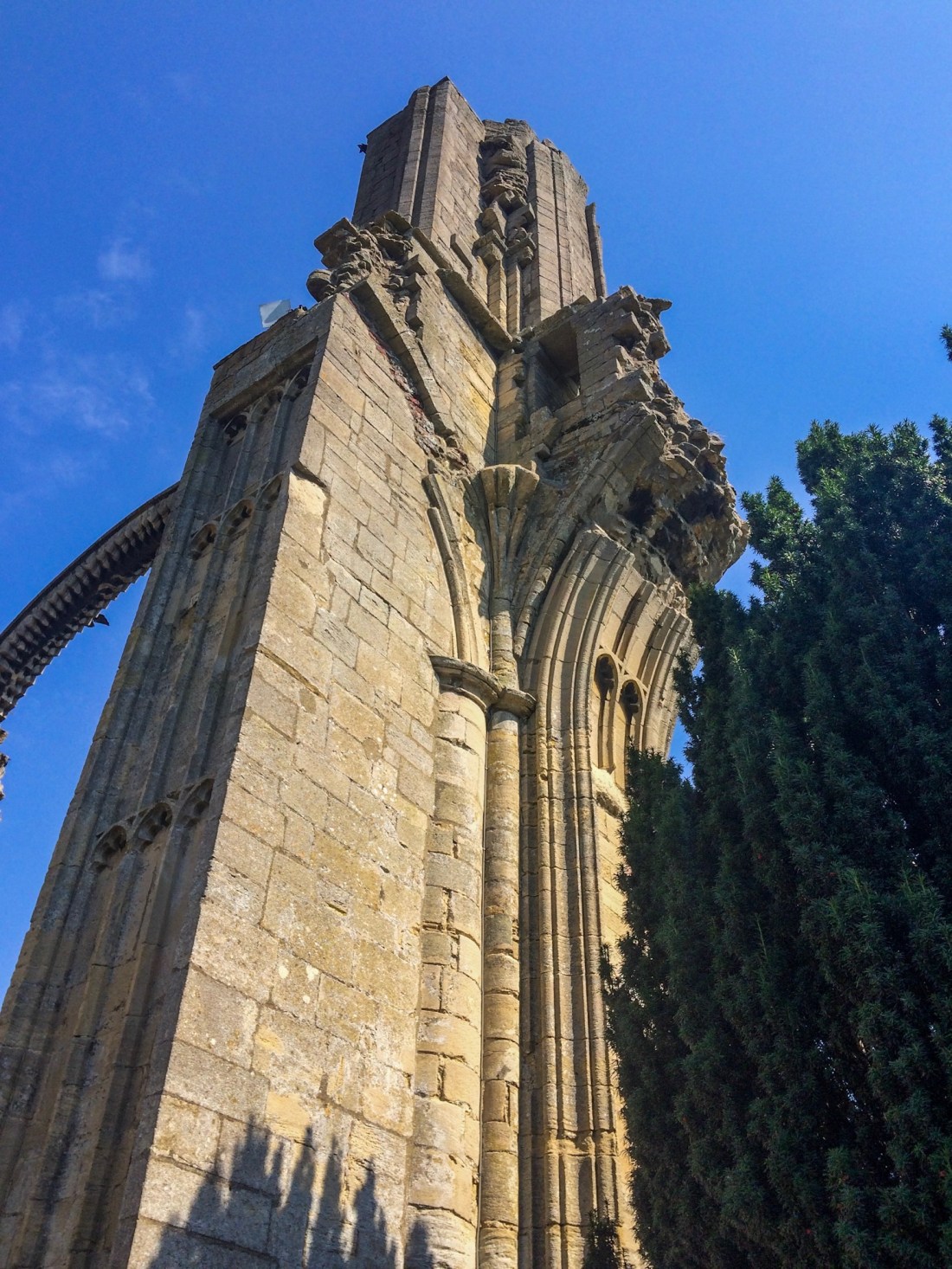
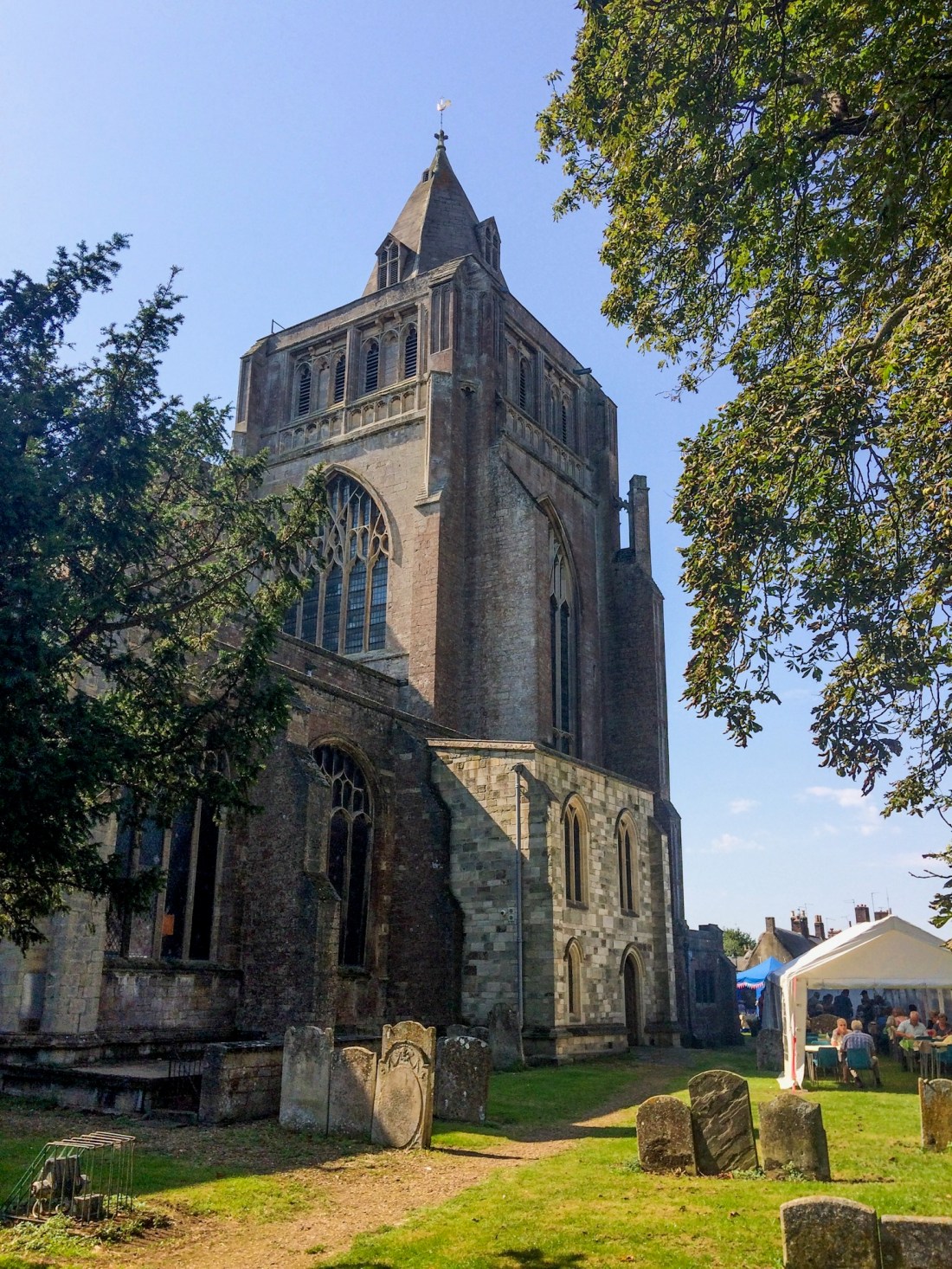
Crowland Abbey was dissolved in the 1530s during the Reformation, part of Henry VIII’s restructuring of the England church. However, unlike many monasteries at that time, significant parts of the buildings did remain.
However, during the English Civil War of the 1640s, the rebellious forces of Oliver Cromwell finally took the what remained of the abbey in a siege against the Royalists in 1643. It was at this time that the structure appears to have sustained much more serious damage, as some of the remaining architecture testifies.
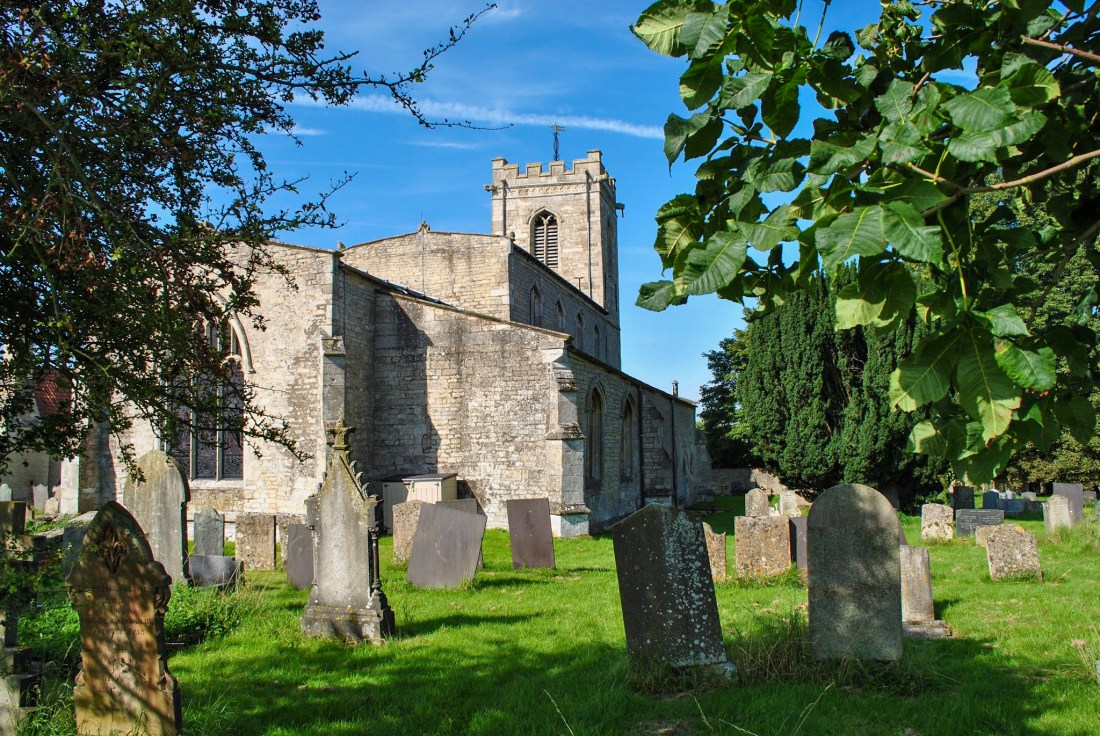
Lincolnshire in the east of England has some wonderful, often underrated medieval churches.
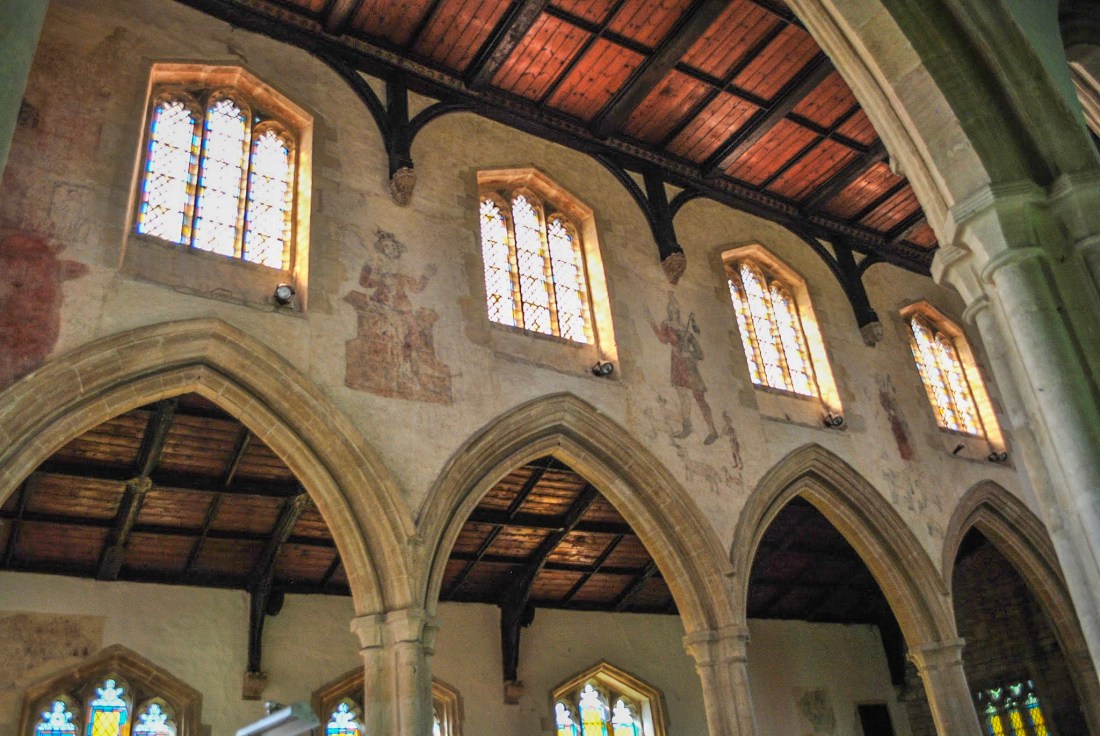
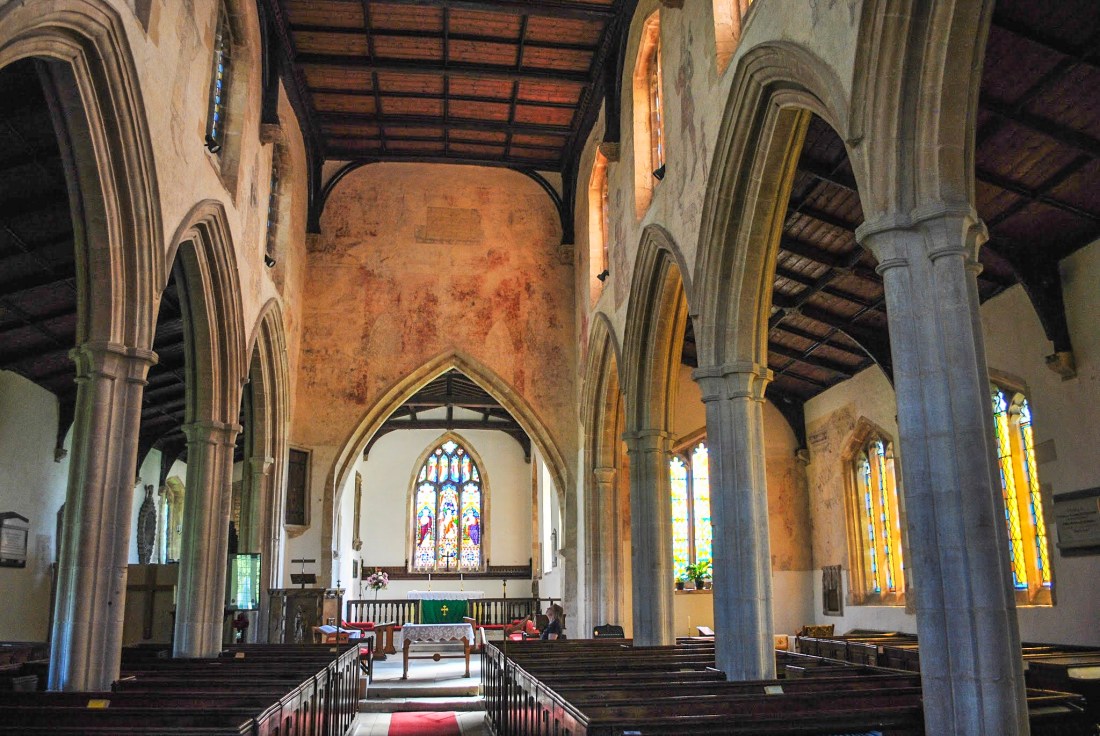
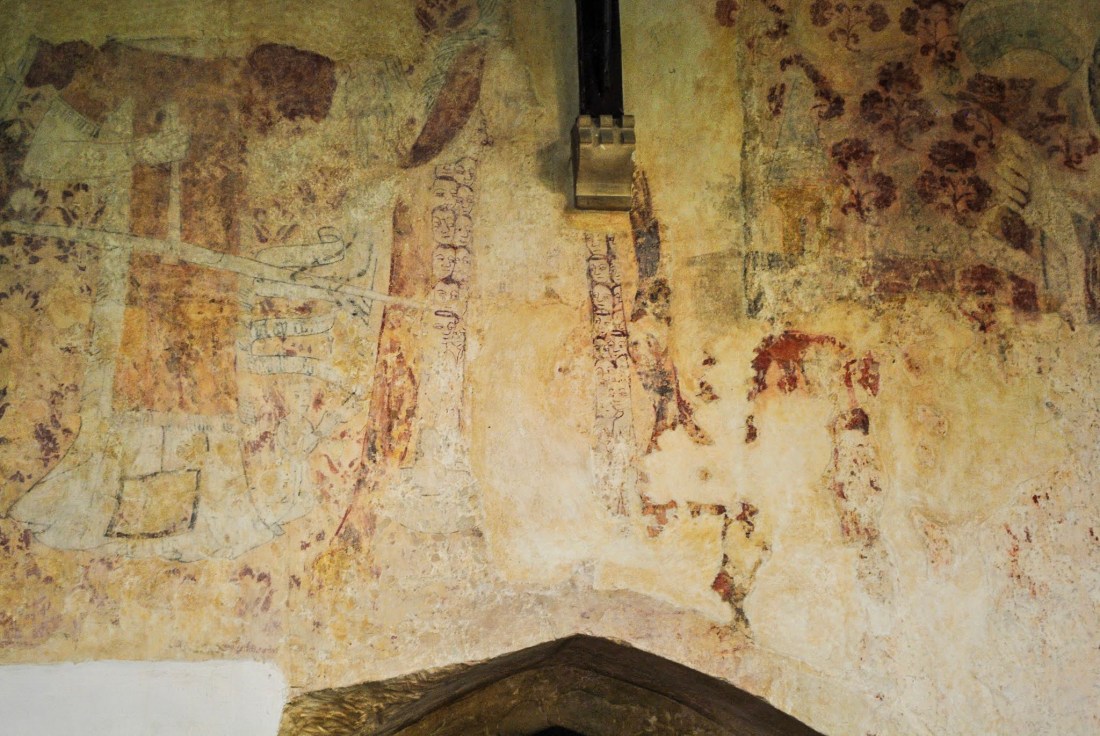
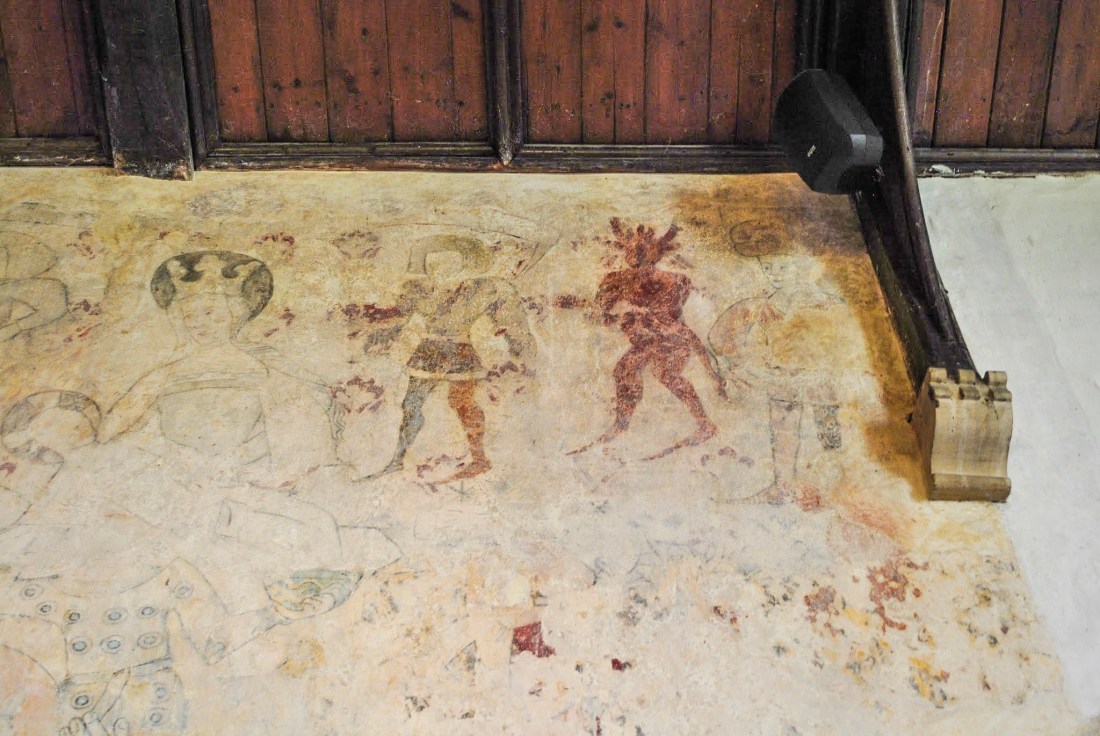
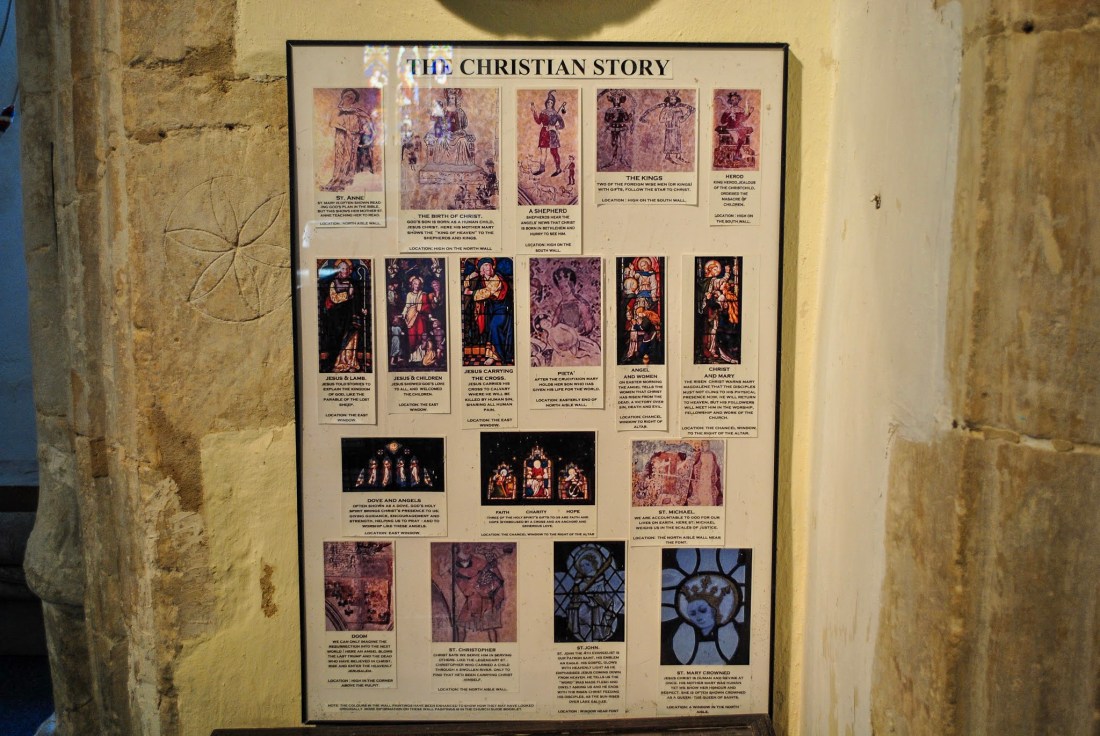
One such is in the south west of the county, in the lovely village of Corby Glen. Here on many of the walls of the church you can see paintings and illustrations of religious and spiritual imagery, representing stories from the Bible and the faith and beliefs in general of the later medieval period.
If you look carefully, you can make out several layers of art, where older ones have been superseded with new work.
During the Reformation in the 1500s, all of this art was whitewashed over, part of the process of removing all imagery, which also meant stripping out idols and even rood screens which separated the nave from the chancel.
It was only in more recent times that this treasure trove of art was rediscovered through church restoration.
Today this art represents some of the most important medieval imagery not only in the county of Lincolnshire, but also in the whole of England.
Devil in the detail.Explanation of the imagery inside the church.The beautiful setting of the church of Saint John the Evangelist, Corby Glen, Lincolnshire.
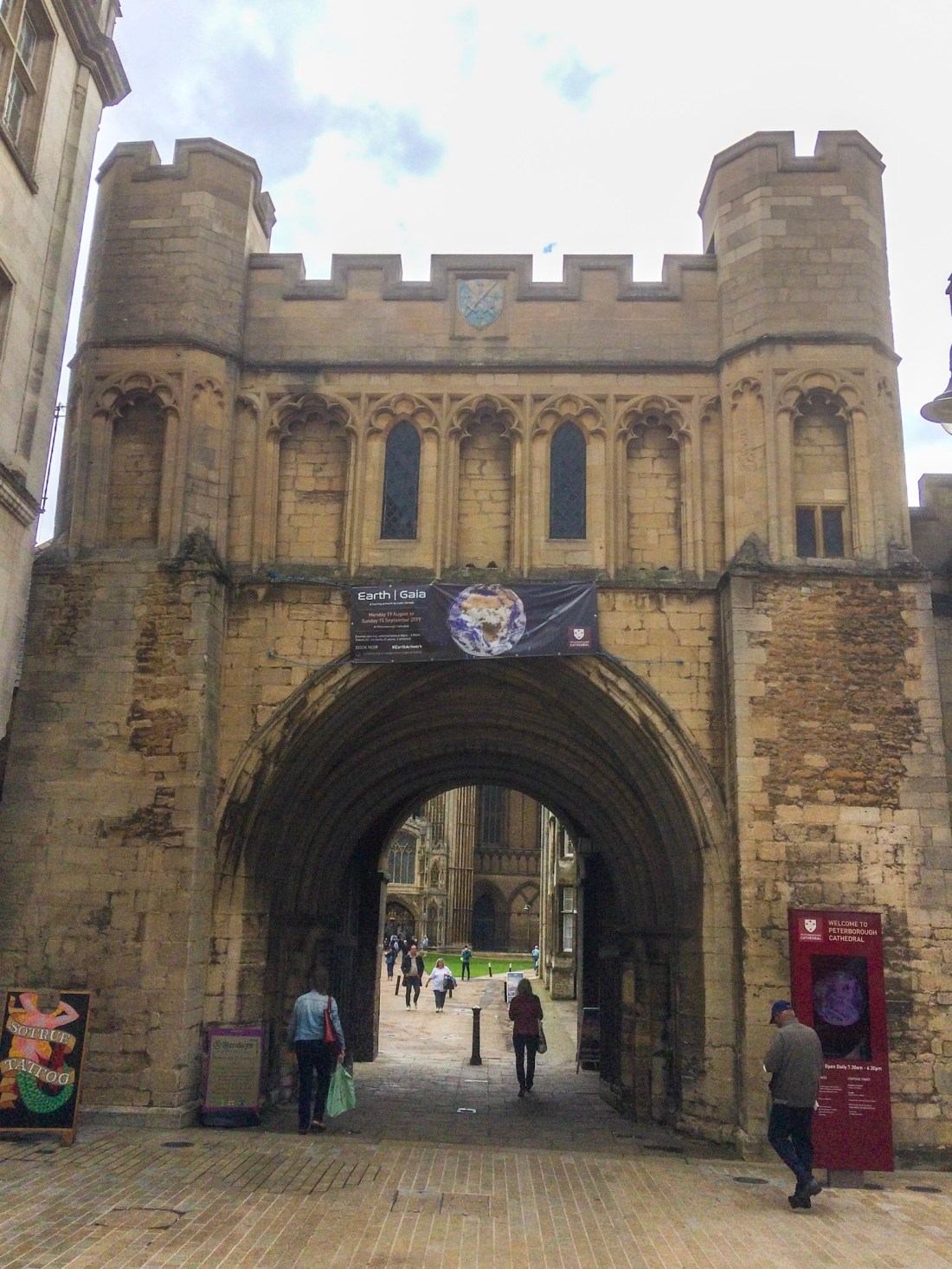
Put simply, Peterborough Cathedral is one England’s best churches, though it is often not as well regarded as some others, like Lincoln, Ely and York.
This might be due in part to Lincoln’s prominent setting, Ely’s architectural distinctiveness and York’s admitted supreme grandeur.
Peterborough, by comparison, lies on the edge of the flat fens, yet in one of the primary areas of England for monastic development because of the remoteness of location. In its day, Peterborough Abbey was one of the most prominent in the whole of eastern England.
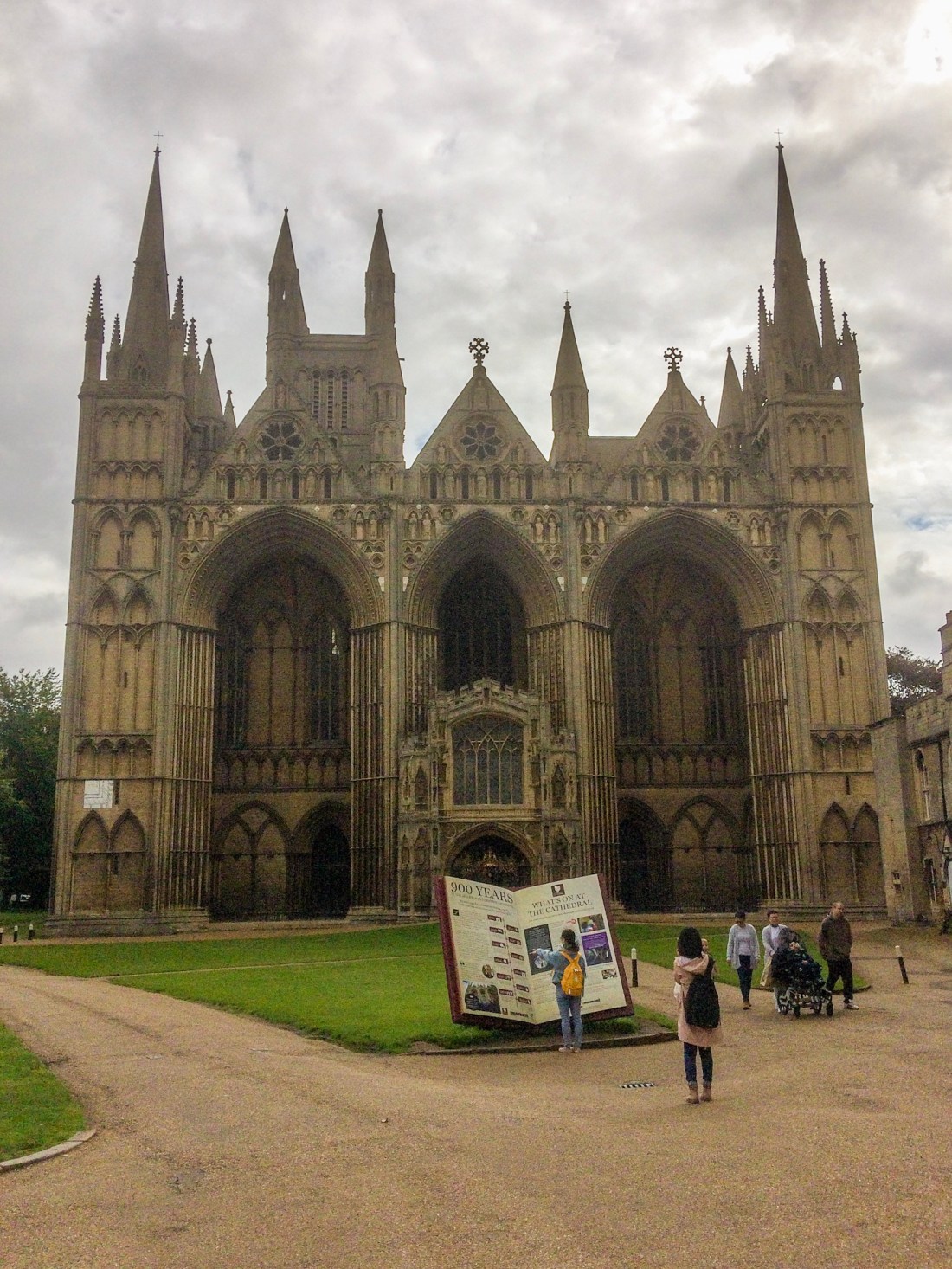
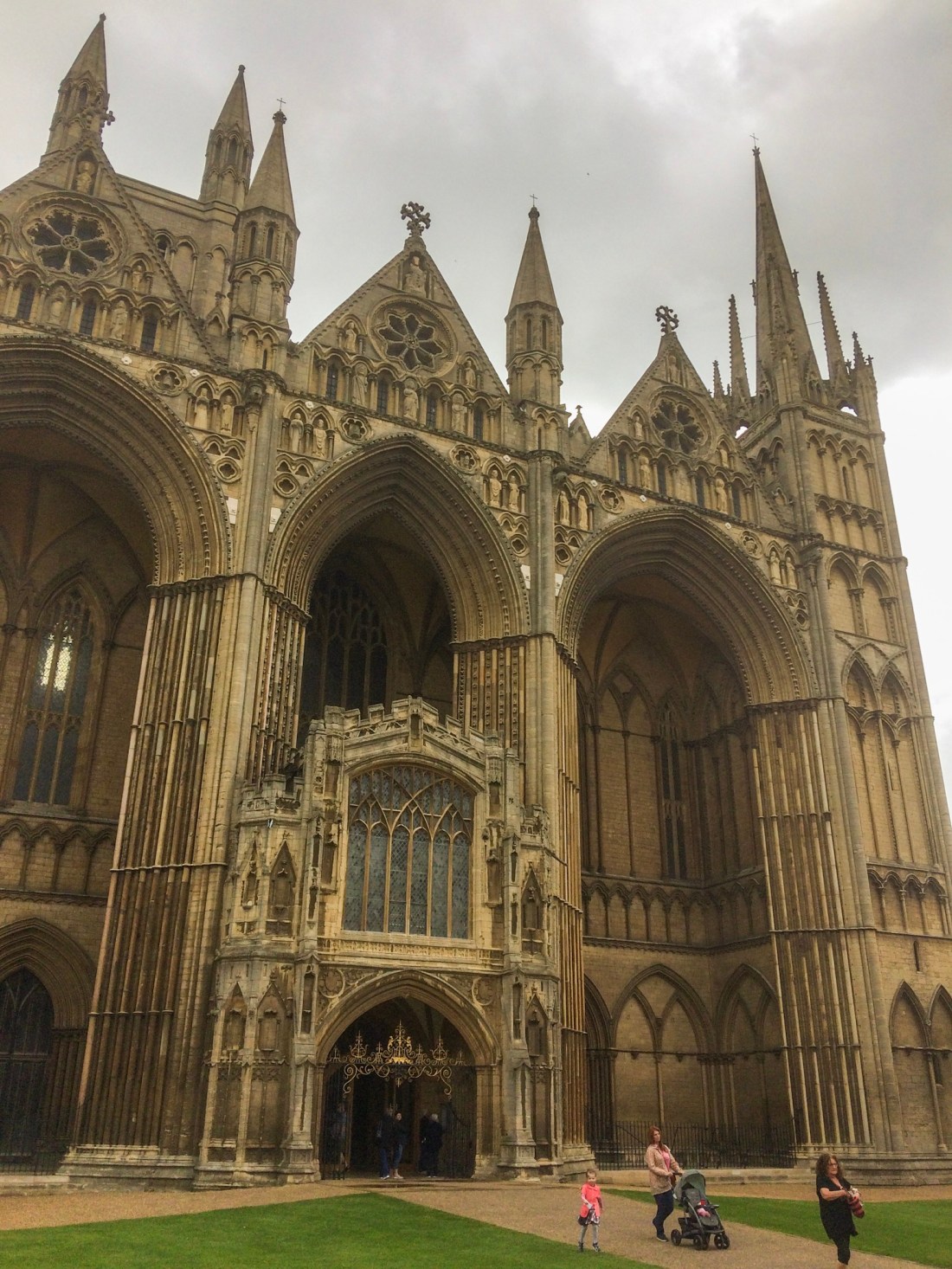
The wonderful west front of Peterborough Cathedral, completed in the 13th century.
Originally the abbey church of Saint Peter’s Abbey, Peterborough, in the east of England, the present church was granted cathedral status (and thereby preserved) by Henry VIII, self appointed head of the Church of England, during the Reformation in the 1530s, which saw many former monastic buildings taken down and sold off. For this at least we should be grateful to England’s most notorious monarch.
words and photographs copyright Francis Barker 2019
Queen Mary the First of England, popularly known as ‘Bloody Mary’, because of the great numbers of Protestants she had executed by burning at the stake, is one the country’s most notorious monarchs.
She became Queen after the attempt to install the unfortunate Protestant Lady Jane Grey on the throne failed.
Mary proceeded to turn England back to the Catholic faith, a religion which was, however, still very much ingrained in most of English society, particularly in the shires and in the north.
What does her birth chart reveal?
Autocratic, reactionary personality
We must remember, especially in the days of absolute monarchism, that the ruler’s influence was all pervasive and so their personality (birth chart) would have imposed itself upon the character of the country.
When she was born Capricorn was rising with Mars and Pluto close by on either side of the ascending degree.
In many ways, this symbolises her reputation as ‘Bloody Mary’, Mars (representing fire) rising in Capricorn suggests a powerfully autocratic and rather conservative personality and with Pluto working in tandem, she wasn’t afraid of implementing drastic changes, even if they were ‘reactionary’ in nature, namely the burning of over 300 Protestant martyrs.
Ingrained sense of spirituality
What we must remember is that even though her father Henry VIII broke with the church of Rome, he remained essentially a Catholic.
Her brother’s rule over the ensuing six years did see a full blown attempt to make England a Protestant country – but it was only six years. As said earlier, most of the country would have probably welcomed a reversion to the old faith, at least at the beginning of her reign.
Mary’s ruling planet was Saturn and was found in Sagittarius (sign of religion) in house 12 (inner life), in good aspect to a Mercury (mind) Neptune (spirituality) conjunction in Aquarius.
Impressionable and sensitive
Mary had this sense of spiritual sensitivity ingrained within her mentality and obviously had a very intimate connection to the numinous, quite clearly inherited from her mother, Catherine of Aragon, the former queen.
To strongly underline this, she was a Sun Piscean too, with Venus also in that sign in house 3 (also mind). She was highly sensitive and impressionable with an instinctive love of deeper, spiritual, ritualistic things which she liked to talk about and to simply be around.
Dichotomy in the character
However, most importantly, she was born at the exact time of the full Moon, which was found in Virgo in house 9. Here is an essential dichotomy in her nature.
Her deeply spiritual essence was at odds with her naturally fastidious manner, a strong tendency to be critical and to analyse.
This must have made her a very difficult person to deal with at times and this must have contributed to her increasing unpopularity among her underlings and the people at large at the reign went on.
Controversy everywhere
One of the most controversial things she did was to marry King Philip II of Spain, another staunchly Catholic monarch ten years her junior, which brought England very strongly under the influence of this great emerging world power.
Many thought that this would undermine England’s independence, but Mary would have seen this a natural consequence of the marriage, which, had she lived another fifteen years, might well have guaranteed England’s future under what she would see as the wing of Catholicism.
False opportunities – castles made of sand
Looking at Mary’s house 7 of marriage, she has an exalted Jupiter (but retrograde) in Cancer in good aspect to the tension created by her Sun and Moon opposition. This hints at good opportunities through marriage and alliance.
Here we can perhaps see symbolised a way out of her predicament of being one of the first female monarchs, with Jupiter representing an opportunity through marriage not only to secure her throne because of her apparent inability to deal with the situation she was in, but to also produce a Catholic heir and secure the faith within the country.
Sadly for her, none of this came to fruition. With Jupiter retrograde, she was only ever likely to ‘succeed’ inwardly in some more roundabout or spiritually satisfying way, not in the grand manner of marrying the most powerful man in the world at that time.
Her reign lasted just five years and with the accession of her canny sister, Elizabeth, England began the long, slow road to becoming a truly protestant nation.
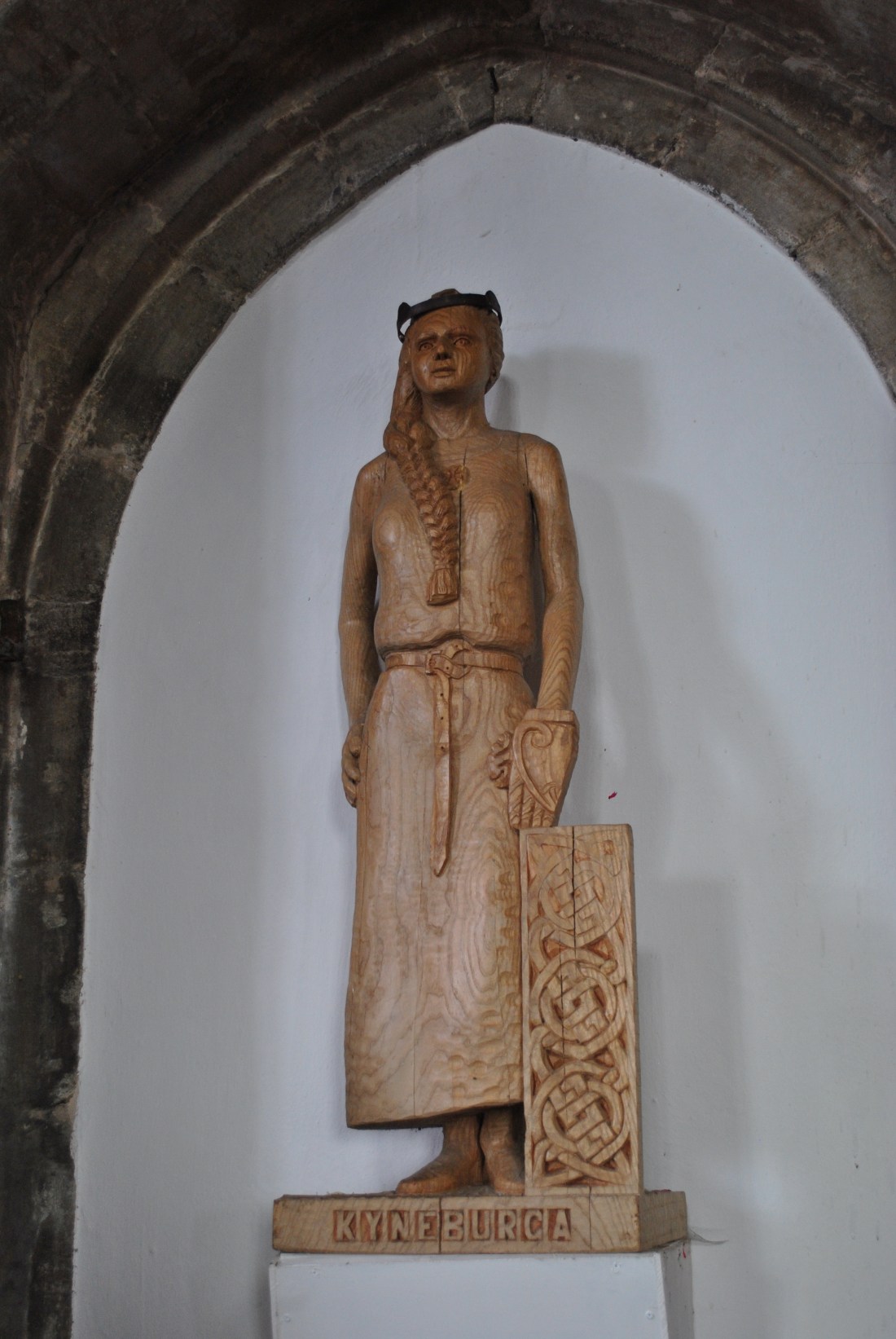
We recently visited the beautiful church of Saint Kyneburgha, near Peterborough in the English midlands.
The church stands beautifully on a hill, on the site of an old Roman settlement and palace.
In fact, the name of Castor is derived directly from the Roman/Latin name for a fort or castle. This village is situated near to an important Roman settlement called Durobrivae, or Water Newton in Egnlish, just a few miles west of present day city of Peterborough.
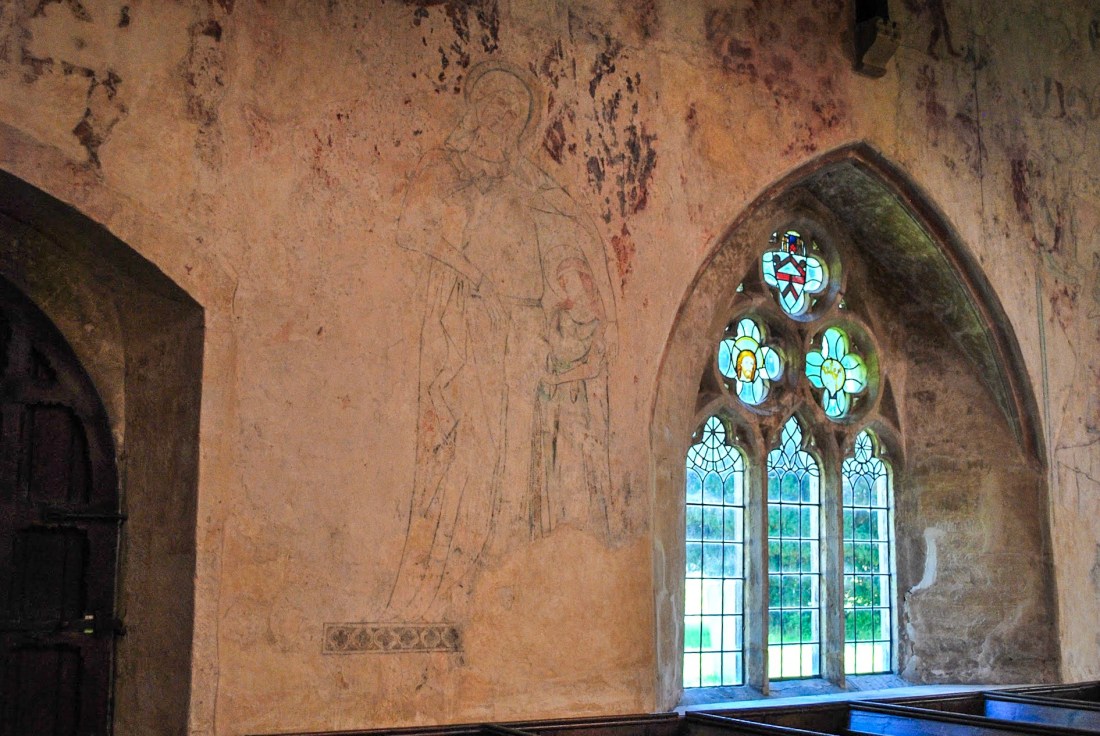
The church is noted for its surviving medieval wall art. Before the Reformation in the 16th century, all churches had such wall art, which was then whitewashed over. More recently, as in this example above, some of these illustrations have been revealed during restoration.
Castor church’s appellation is Saint Kyneburgha, who was the daughter of King Penda of Mercia, the last pagan king of that English kingdom in the midlands.






 Ciscography