Queen ‘Bloody Mary’, A Short but Infamous Reign – Astrology Musings

card dark floating focus
Photo by Leo Cardelli on Pexels.com

Queen Mary the First of England, popularly known as ‘Bloody Mary’, because of the great numbers of Protestants she had executed by burning at the stake, is one the country’s most notorious monarchs.

She became Queen after the attempt to install the unfortunate Protestant Lady Jane Grey on the throne failed.

Mary proceeded to turn England back to the Catholic faith, a religion which was, however, still very much ingrained in most of English society, particularly in the shires and in the north.

What does her birth chart reveal?

Autocratic, reactionary personality

We must remember, especially in the days of absolute monarchism, that the ruler’s influence was all pervasive and so their personality (birth chart) would have imposed itself upon the character of the country.

When she was born Capricorn was rising with Mars and Pluto close by on either side of the ascending degree.

In many ways, this symbolises her reputation as ‘Bloody Mary’, Mars (representing fire) rising in Capricorn suggests a powerfully autocratic and rather conservative personality and with Pluto working in tandem, she wasn’t afraid of implementing drastic changes, even if they were ‘reactionary’ in nature, namely the burning of over 300 Protestant martyrs.

Ingrained sense of spirituality

What we must remember is that even though her father Henry VIII broke with the church of Rome, he remained essentially a Catholic.

Her brother’s rule over the ensuing six years did see a full blown attempt to make England a Protestant country – but it was only six years. As said earlier, most of the country would have probably welcomed a reversion to the old faith, at least at the beginning of her reign.

Mary’s ruling planet was Saturn and was found in Sagittarius (sign of religion) in house 12 (inner life), in good aspect to a Mercury (mind) Neptune (spirituality) conjunction in Aquarius.

Impressionable and sensitive

Mary had this sense of spiritual sensitivity ingrained within her mentality and obviously had a very intimate connection to the numinous, quite clearly inherited from her mother, Catherine of Aragon, the former queen.

To strongly underline this, she was a Sun Piscean too, with Venus also in that sign in house 3 (also mind). She was highly sensitive and impressionable with an instinctive love of deeper, spiritual, ritualistic things which she liked to talk about and to simply be around.

Dichotomy in the character

However, most importantly, she was born at the exact time of the full Moon, which was found in Virgo in house 9. Here is an essential dichotomy in her nature.

Her deeply spiritual essence was at odds with her naturally fastidious manner, a strong tendency to be critical and to analyse.

This must have made her a very difficult person to deal with at times and this must have contributed to her increasing unpopularity among her underlings and the people at large at the reign went on.

Controversy everywhere

One of the most controversial things she did was to marry King Philip II of Spain, another staunchly Catholic monarch ten years her junior, which brought England very strongly under the influence of this great emerging world power.

Many thought that this would undermine England’s independence, but Mary would have seen this a natural consequence of the marriage, which, had she lived another fifteen years, might well have guaranteed England’s future under what she would see as the wing of Catholicism.

False opportunities – castles made of sand

Looking at Mary’s house 7 of marriage, she has an exalted Jupiter (but retrograde) in Cancer in good aspect to the tension created by her Sun and Moon opposition. This hints at good opportunities through marriage and alliance.

Here we can perhaps see symbolised a way out of her predicament of being one of the first female monarchs, with Jupiter representing an opportunity through marriage not only to secure her throne because of her apparent inability to deal with the situation she was in, but to also produce a Catholic heir and secure the faith within the country.

Sadly for her, none of this came to fruition. With Jupiter retrograde, she was only ever likely to ‘succeed’ inwardly in some more roundabout or spiritually satisfying way, not in the grand manner of marrying the most powerful man in the world at that time.

Her reign lasted just five years and with the accession of her canny sister, Elizabeth, England began the long, slow road to becoming a truly protestant nation.

copyright Leofwine Tanner 2019
 

King Edward VI, The Tragic Boy King with a Mind of His Own – Astrology Musings

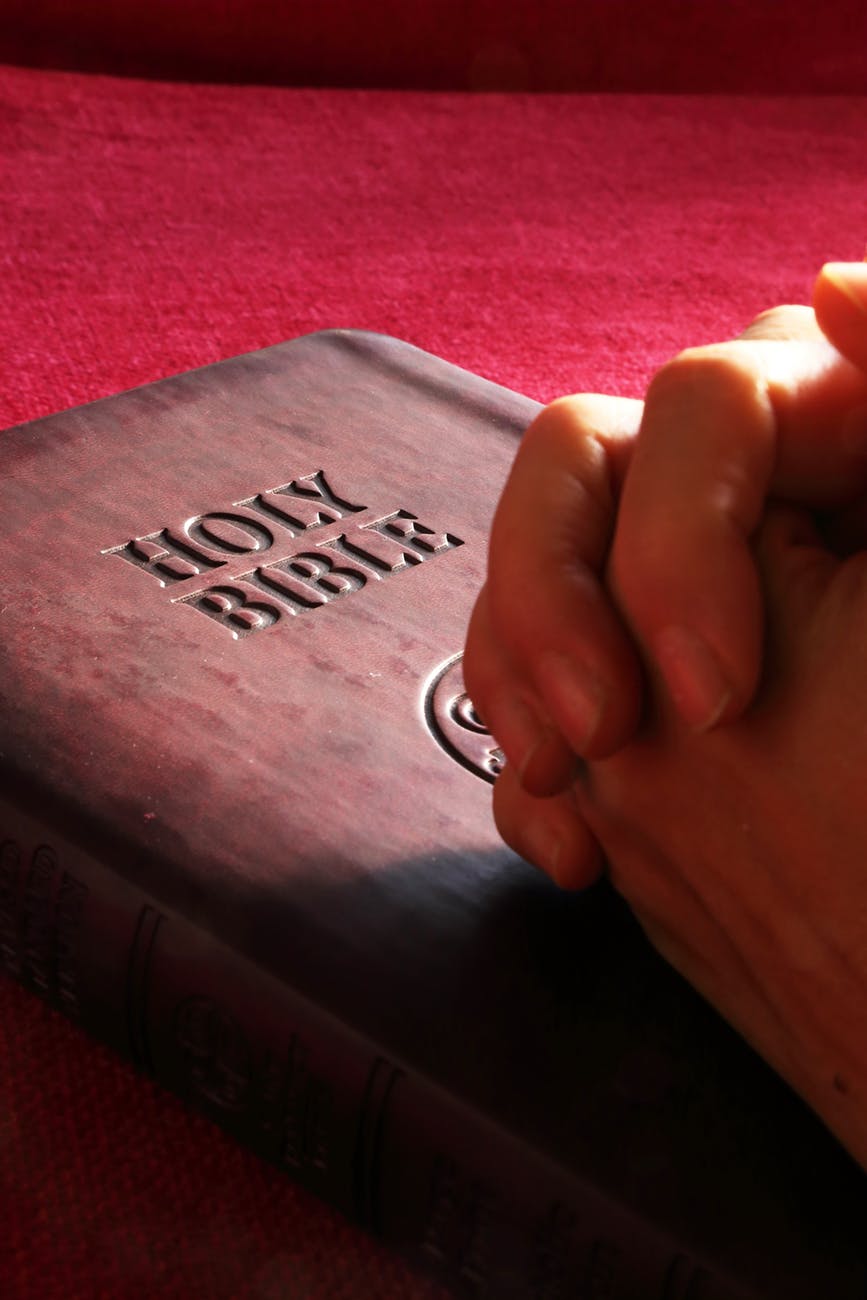
belief bible book business
Photo by Pixabay on Pexels.com

King Edward VI had the misfortune to succeed his famous father on the throne of England, aged just 9.

Unlike his father, Edward was an avowed reformer and protestant, having been tutored by leading religious reformers of the day.

Staunch Protestant

What is more, Edward appears to have very much embraced the new religion, as well as being a keen student of it.

Astrologically, Edward was born with Virgo rising, with Venus and Saturn close to the ascendant. This reveals a very analytical, even highly exacting approach to life, a love of study and detail. Although not too much is known of him, he does appear to have had a somewhat ‘humourless personality’, yet it is difficult to be critical of someone so young.

A Serious Student with Strong Opinions

His ruling planet Mercury is in Scorpio in house 3, which deepens the mind considerably. Here is a penetrating mind, and probably a very good student who would get absorbed in his subjects. Like his father and sisters, he was very good at languages.

However, this Mercury is also square Mars in Leo in house 12, indicating that although he had a lot of mental energy for areas like intellectual debate, there was also tendency for it to show itself through excessive stubbornness or perhaps fits of anger, a tendency he may have inherited from his father.

Courteous

However, we must also bear in mind that he was a Sun Libran in house 2, so at heart he did have strong sense of companionship and courtesy.

It is known that despite the differences between himself and his eldest sister, Mary, especially in regard to her staunch Catholicism as opposed to his avowed Protestantism, he did show concern for her and wished they could at least get along, even though ultimately this proved to be extremely difficult.

Reticent, but Calculating

His Moon was in Capricorn square his Sun, which gave him a cool, even calculating disposition, which may have come across initially as reticence or shyness. This would underline the rather analytical and fastidious personality.

Once people got to know him, the essential charm would have become more obvious. This tendency might not have helped his reputation for being rather exacting and humourless, however, as mentioned above, and if he had lived to adulthood, he would almost certainly have had a ruthless, autocratic streak, capable of making difficult, unpopular decisions.

Practical Application of Philosophy 

Jupiter in Taurus in house 9 loosely trine his house 1 Saturn, implies an expansive, if rather conservative and very practical interest in philosophy.

After all, we have to remember that Protestantism, though in one sense revolutionary, was in essence a stripping away, an ultra conservative, radical approach to Christianity which resorted to scripture rather than saints.

He was keen to make sure that England’s Protestant transformation became permanent and took a keen interest on the detail, so much so that he agreed to the idea that Lady Jane Grey should succeed him and not his virulently Catholic sister Mary.

Social Upheaval Personally Felt

Around the time Edward was born, the Uranus Pluto cycle was in opposition, both in positive aspect to Neptune (spirituality).

This cycle is all about social change and around 1537, the fallout from the Dissolution of the Monasteries was beginning, with large numbers of monks and nuns being released into the communities and the former monasteries falling into the hands of the king.

Edward’s ruling planet Mercury and Mars are loosely connected to the Uranus Pluto opposition, forming a tense T-square, another strong indication that he was personally connected to (and took a strong interest in) the changing times he was born into the continuing change after that which enveloped the whole country.

What Might Have Been

Edward died aged only 15, probably from tuberculosis, although there were rumours of poisoning.

Had he reached maturity and lived a reasonably long life, say to around 56 like his father, it seems clear that England would have become a fully Protestant country much earlier, even though large parts of the country would remain strongly Catholic for a few generations more. This would almost certainly have led to religious turmoil.

What is more, judging from his birth chart, Edward would have taken a strong leading role in to seeing to the imposition of this new religion and would have been as vehemently Protestant as his sister was Catholic.

copyright Leofwine Tanner 2019

Henry VI, King of England and France, Castles Made of Sand – Astrology Musings

the greek statues
Photo by Pixabay on Pexels.com

His father was one of England’s most legendary monarchs, the victor of Agincourt in northern France in October 1415. Henry V went on to re-conquer Normandy, to officially become heir to the French throne and win the hand in marriage of the French king’s daughter, Catherine.

But alas for England, Henry V was dead by 1422, aged just 35, too famous to live long, as Shakespeare was to put it nearly two centuries later.

A fated inheritance?

However, he left behind a son aged just one, also called Henry, sixth of that name, who on his father’s death inherited two kingdoms, England and France.

Young Henry remains the only monarch to be crowned king of England and France, yet it was to be an illusive and tragic inheritance.

By 1453, a generation later, the English were effectively all but thrown out of France, only little Calais remaining.

Lancaster versus York

Back in England, the kingdom began to implode through the strong rivalry between the houses of Lancaster and York. Henry VI, unlike his famous father, was no military leader, becoming a powerless pawn during the shifting circumstances of war and intrigue. He was dethroned and eventually died in captivity, probably murdered.

It was an ignominious end to a reign which, at its start, promised the uniting of two kingdoms and a golden age.

Pluto transforms

So, according to the birth data, Henry was born with Pluto rising in Gemini, within a degree of the ascending point. Of course, Pluto was unknown back in the 15th century and therefore no astrologer could have pointed this out to his parents or guardians.

However, with the benefit of our hindsight, Pluto on sensitive points of a birth chart, and they don’t come much more sensitive than the ascending degree, can cast a very strong influence on the individual. Pluto is said to be transformative, a bringer of drastic change, almost like a finger of fate over which we have no control.

It’s worth remembering, too, that when Henry was king, the monarch was all powerful when he was of ruling age, say from his late teens.

The English kicked out of France

But because he became king aged 1, both England and France were ruled by others, essentially his uncles and their cohorts.

And because the figure head’s birth chart is, by its very nature, said to be symbolic of the ‘destiny’ of the whole nation beneath it, this Pluto conjunct the ascendant, exactly describes what happened over the next generation: a complete transformation, the English ending up being kicked out of France (except Calais), France setting its long course to become the dominant power in western Europe. England, on the other hand, went into meltdown.

Draining the swamp?

This is very much Plutonian, the draining of the swamp, a drastic, though perhaps necessary change which completely disrespects the individual.

Poor Henry probably never had a chance, not helped by the fact that he was no warrior, and in fact appeared to prefer religious study to the involvement in power politics. Some said that he had inherited his grandfather’s (Charles VI of France) supposed madness.

A life led through others

Returning to Henry’s chart, his chart ruler, Mercury and his Sun are both in Sagittarius in his 7th house of partnerships. This means that, although he was mentally expansive, his life was usually led through others, that he was always likely to be under the influence of more powerful people than he, even though he was king of two kingdoms. This was probably a result of inheriting so young.

His Mercury in Sagittarius in beneficial aspect to Jupiter in the 3rd house, strongly hints of a keen interest in the higher mind, the areas of philosophy and religion, and I suspect that this tendency became almost like an escape for him as the full magnitude of his personal situation revealed itself to him as he grew up.

An escape in philosophy and religion

His Sagittarian Sun is also ruler of that 3rd house, underlining the idea that thinking is a good way to travel philosophically, if not physically for him, though Sagittarius in itself suggests foreign involvement – he was king and the inheritor of two countries and cultures.

Saturn is ruler of the 9th house, the planet being found in Libra in the 5th house. I think he had a keen sense of justice too and was probably very knowledgeable of the law.

Also interesting, for those who think Uranus is ruler or co-ruler of Aquarius, Uranus is found in the 10th house in Pisces. Uranus in this house more than hints of sudden changes in the ‘career’ and if Uranus is indeed the MC (midheaven point) ruler too, then we have another tie up in regard to his experience of the vicissitudes of kingship.

Spiritual solace

His Moon in Taurus in the 12th house, might have added a touch of stability to his life. The Moon is said to be exalted in Taurus, so if he ever had time to engage in activities such as gardening, he might have found some quiet solace, especially as the Moon is in good aspect to Neptune, which would tend to add a spiritual, or unworldly edge to his character.

Mars is also involved in this configuration, nicely trining Neptune from the 6th house in Scorpio, adding energy and, I should imagine, some religious zeal to his already mentioned philosophical interests.

However, the Moon Mars opposition, would have also been a source of much psychological irritation, too, which would always tend to find release through this Neptune – this may have been one of the key indications of his love of religion and spiritual issues.

A victim of circumstance

Finally, his Chiron is in the 8th house of inheritance, almost exactly in aspect (quincunx) to Pluto on his ascendant and loosely opposite Neptune. Here is a very strong indication of his early circumstances, inheriting so young the newly founded empire of his father, plus his difficulty in coming to terms with it later on as circumstances began to change beyond his control. In his more lucid moments, he might have been able to give others some succinct advice about death and inheritance.

Looking at this chart, I do genuinely feel sorry for Henry, for there are few better examples of a king being a victim of circumstance.

copyright Leofwine Tanner 2019

Tanka: By The Sea

sunset beach people sunrise
Photo by Pixabay on Pexels.com

A few summer weeks
Punters head for crowded coasts
Overindulgence!
The sun, sea and sand play games
Make September quite daunting

copyright Leofwine Tanner 2019

Britain’s New Prime Minister! – a more positive vibe? Astrology Musings


administration architecture big ben booth
Photo by Pixabay on Pexels.com

While Britain was baking in the searing heat of the afternoon of July 24, Boris Johnson met the Queen in the relative cool of Buckingham Palace to officially become the new Prime Minister.

Within a few short hours, the old Cabinet was gone, and a new team stuffed full of Brexiteers was assembled. But already many are asking if these drastic changes will make any difference at all to the outcome of Brexit and the course of the country in general.

I thought I would take look at the chart for the exact time the Prime Minister met with the Queen, when he officially took over that office of the realm.

Positive dynamism

Well, my first impressions are that this is indeed a more positive chart. Using the ‘whole signs’ house system, the ruler of the chart, Mars, is in Leo in the 10th house along with the Sun. This is a sure sign of positive, dynamic leadership.

Indeed, the 10th house, in mundane terms, is about governing; so this Mars will add great energy, drive, dynamism and determination to the government’s purpose.

A growing economy

Mars is also in good aspect to a retrograde Jupiter in Sagittarius in the 2nd house, perhaps hinting of some good fortune along the way, especially in financial terms, so we might see some interesting trade deals in the offing, too.

Or it could also mean that a so-called ‘no deal’ will not be anywhere as problematic as was once thought – good fortune through the back door, so to speak, as perhaps befits a retrograde Jupiter, a way of counting our blessings.

Either way, this Mars Jupiter link bodes well for the government in general and for the economy.

Difficult decisions

However, the Mercury (retrograde) Venus conjunction in Cancer in the 9th house, although might tend to favour reasonable negotiating possibilities in foreign policy, particularly with Brussels and the EU, is also challenged by an Aries’ Moon in the 6th house.

The retrograde Mercury fixed in this chart is a problem, rendering it difficult to make concrete decisions. Mercury turns direct again on August 2, so this should help, so long as the Johnson premiership continues full steam ahead.

It’s also especially worth remembering that Mercury also rules the midheaven sign of Virgo and the 11th house in this chart, so its being retrograde and in square aspect to the Moon will also bring difficulty to the government’s stance, particularly in regard to legislation and the nature of the House of Commons.

Expect the unexpected

There is also the presence of Uranus in Taurus in the 7th house of diplomacy. All these factors to me suggest, not surprisingly, that the roller coaster ride of Brexit will continue, with delaying tactics, more sudden twists and unexpected turns (Uranus), particularly in relation to the EU’s negotiating stance in regards to financial settlements (Taurus), again making it quite difficult for the government to keep the public on board.

It might be that any compromise deal that is hatched to prevent a no deal, for example, will simply not be enough for most of those who simply want out of the EU. For me this is symbolised by the fiery, impatient Moon in Aries in the 6th house square to the Mercury Venus conjunction.

Brexit before October 31?

The new PM has said that the UK will be leaving on October 31 2019. Can he deliver? Well, he has made a very decisive start, but I think he should remember, as any PM should, to expect the unexpected, as Uranus’ position shows.

It might be that one of the unexpected happenings is beneficial, creating a window of opportunity to leave earlier than expected. The Mars trine Jupiter aspect hints at a luck factor in the government’s favour. Jupiter itself turns direct again on August 11, joining Mercury going forward.

Very interestingly, Mercury turns retrograde again on October 31, so I think the government’s best chance of success is to deliver Brexit before that date, somewhere between August 11 and October 31, possibly around the September new moon on the 28th.

Drastic political changes

If the UK does not leave by October 31, it’s difficult to see when it actually will. The forthcoming Saturn Pluto conjunction in Capricorn early next year is already casting its long term effect on all existing political structures. Capricorn is very important to the UK, as seen 1066 chart for England, for instance, which resonates to this day.

The clear out of the old and the beginning of a new political era could make Brexit seem quite irrelevant going into next year. And as some believe, Pluto could be seen as the co-ruler of this chart, making the next few months and years even more significant.

So, bearing all this in mind, I think the best chance of Brexit ‘success’ has to be carried forward by the positive, dynamic leadership revealed in this chart and to deliver it sooner rather than later.

copyright Leofwine Tanner 2019