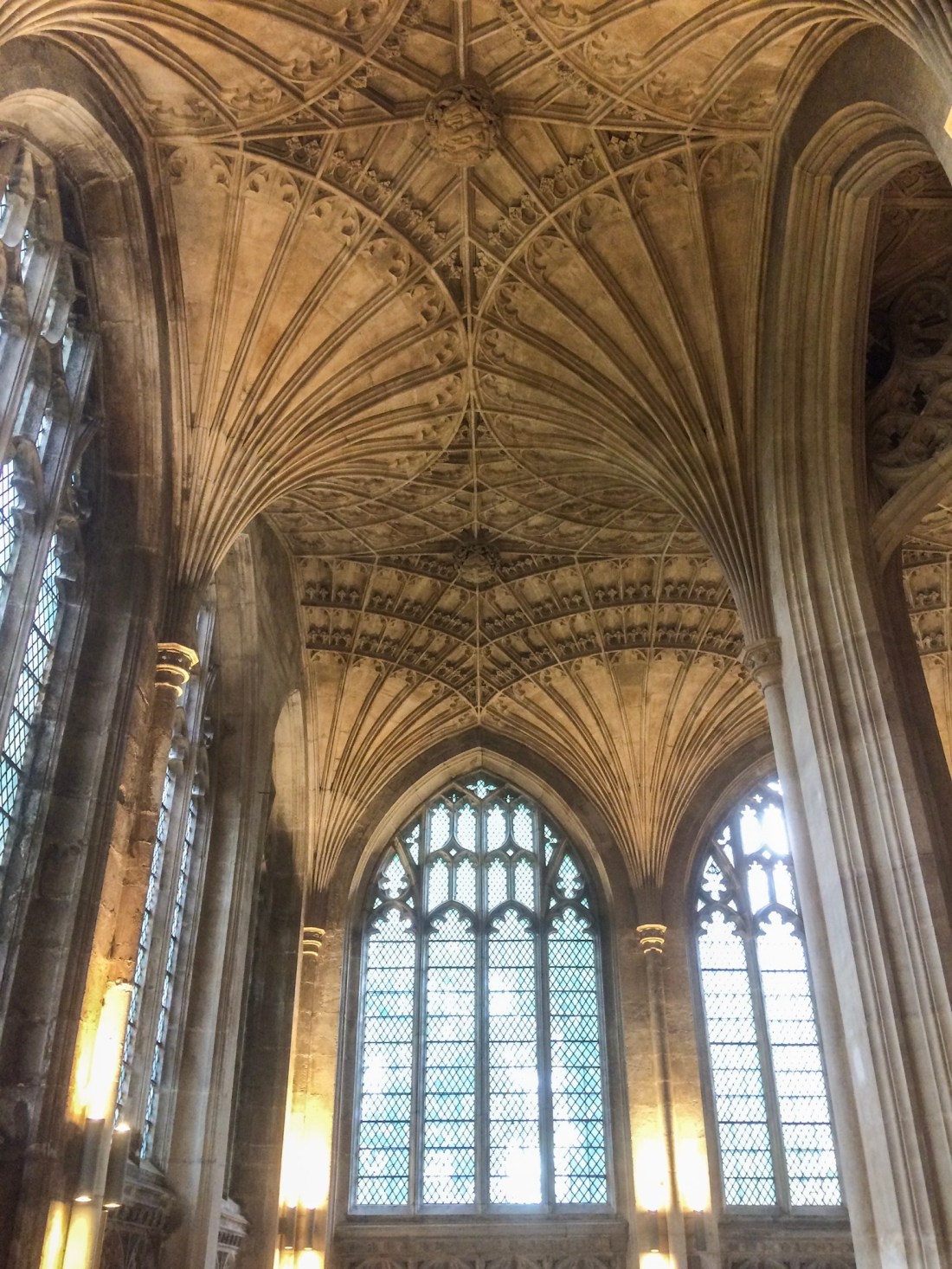
Peterborough Cathedral is probably one of the most underrated churches in England.
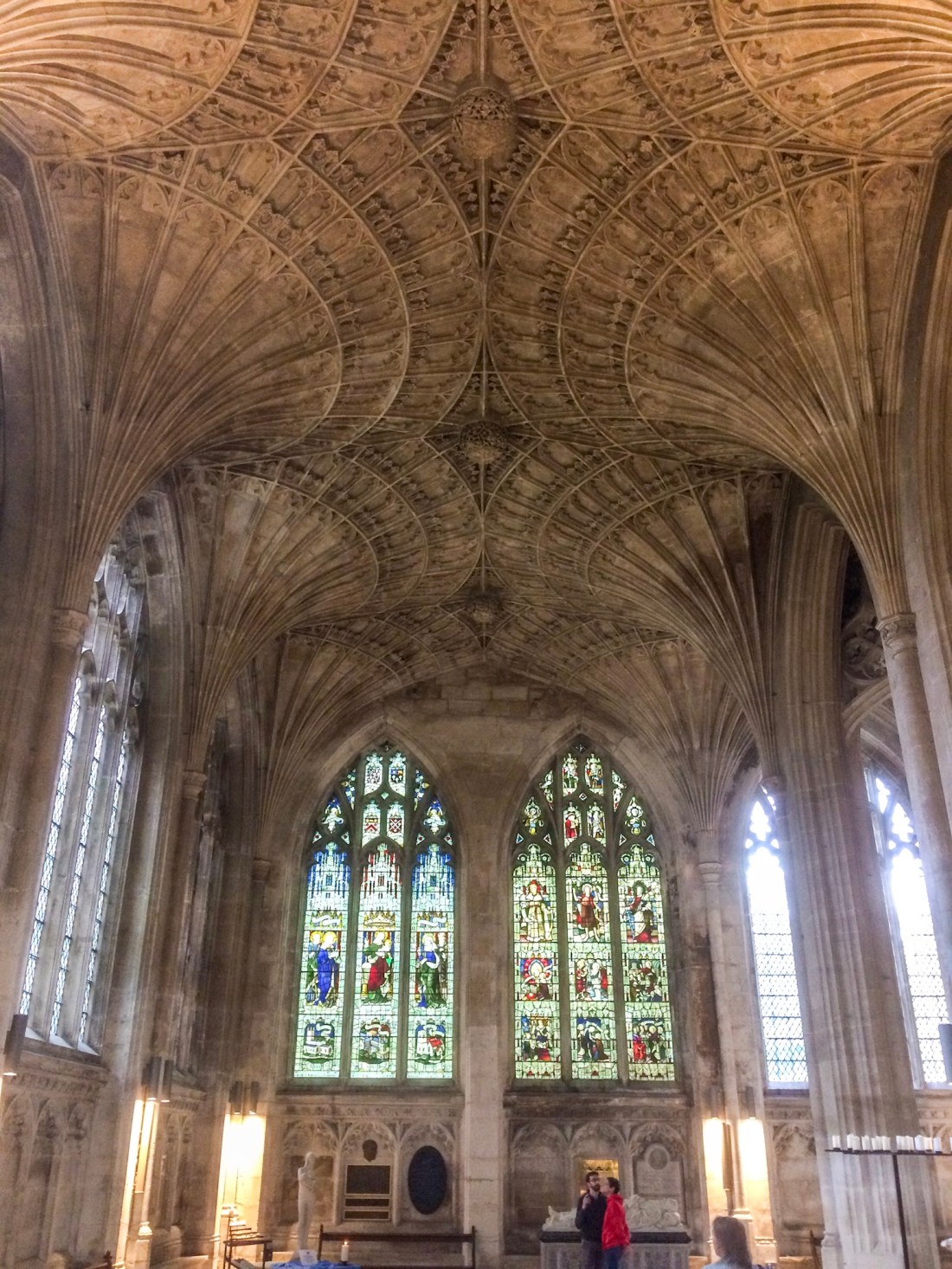
The Gothic fan vaulting at the east end of the cathedral is remarkable.
The cathedral also has three notable shrines to saints. The one above is Saint Oswald’s chapel, an old English saint, whose remains (reputedly an arm) were brought here.
There is also a shrine to Saint Benedict with a beautiful wood carving at the entrance. Peterborough Cathedral is in fact the Abbey church of the former Benedictine Abbey, dissolved by Henry VIII when he became head of the Church of England.
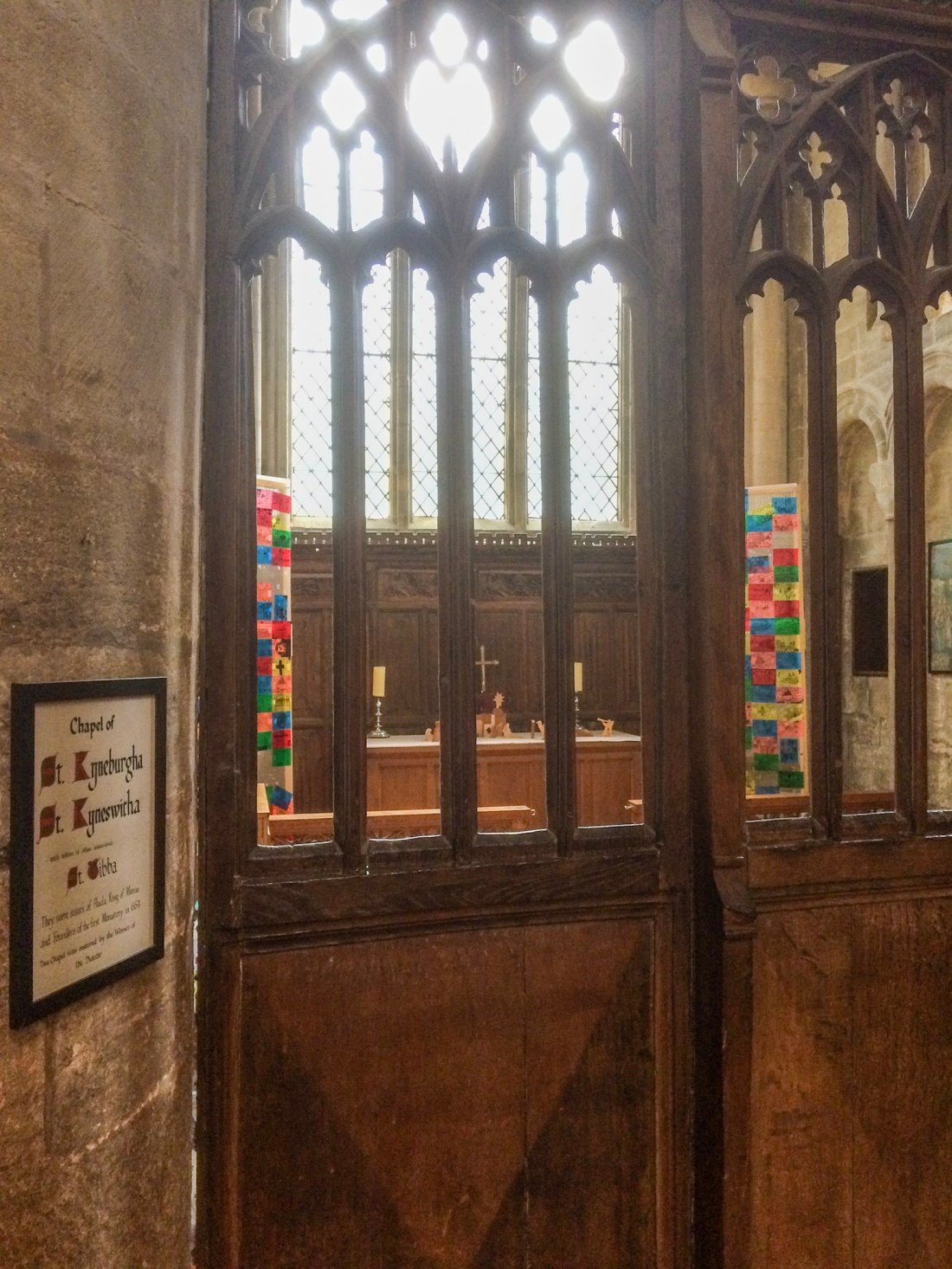
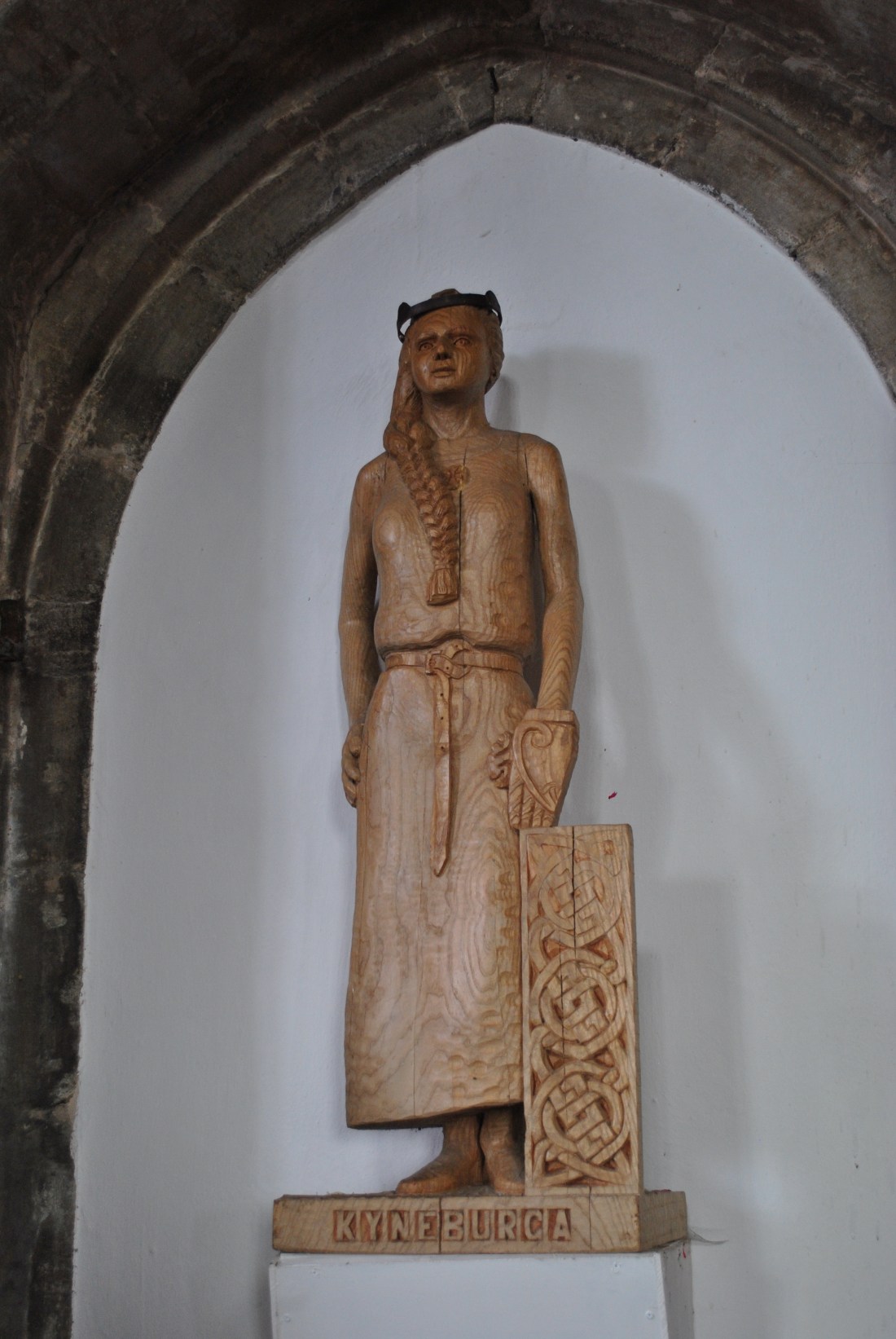
Most interestingly, there is a shrine to three old English (Anglo-Saxon) saints, Kyneburgha, Kyneswitha (spelling varies) and Tibba, unusual but fascinating names of a largely forgotten era.
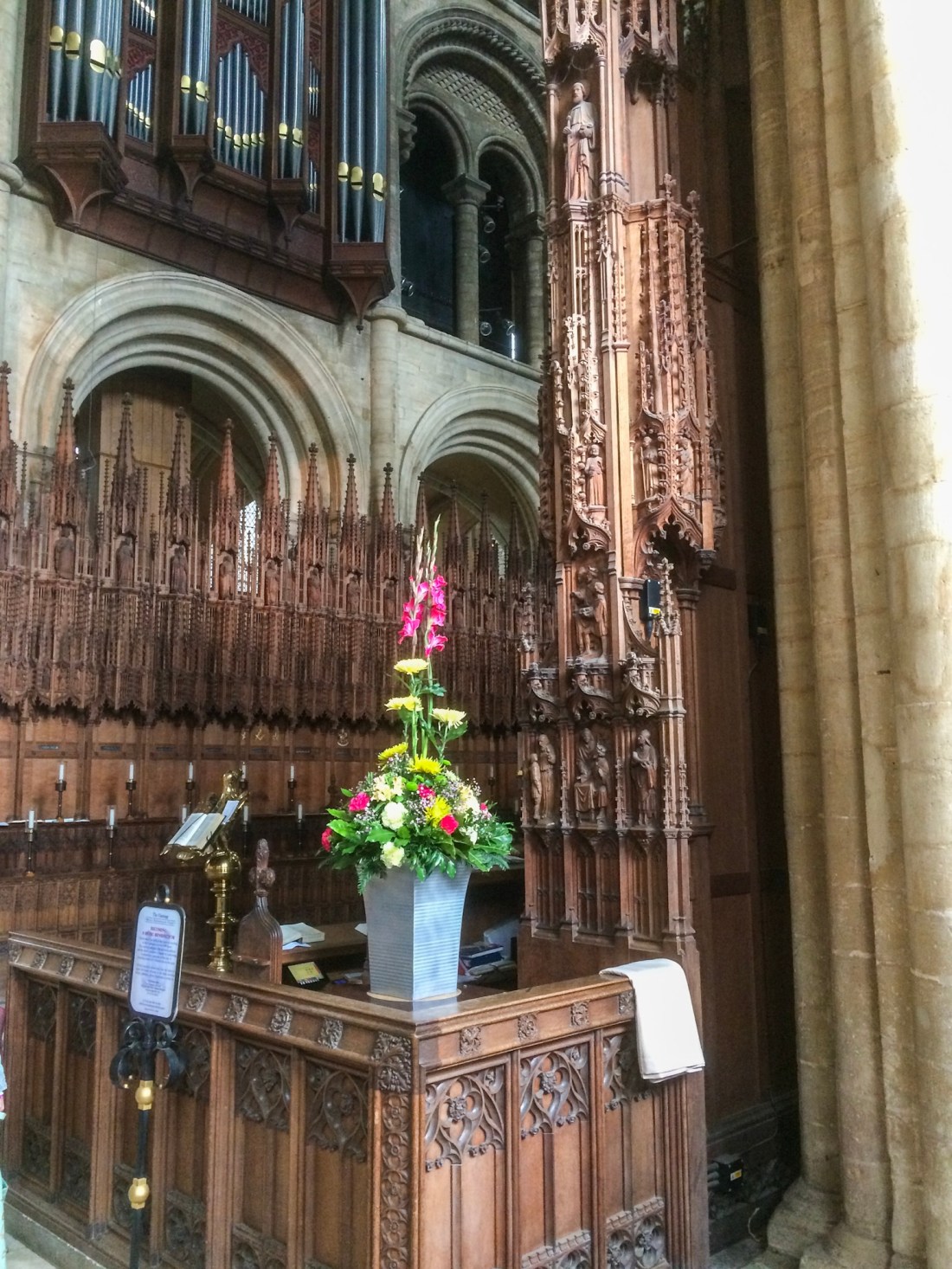
The spacious choir has some wonderful wood carving.
words and photographs copyright Francis Barker 2019
We recently visited the beautiful church of Saint Kyneburgha, near Peterborough in the English midlands.
The church stands beautifully on a hill, on the site of an old Roman settlement and palace.
In fact, the name of Castor is derived directly from the Roman/Latin name for a fort or castle. This village is situated near to an important Roman settlement called Durobrivae, or Water Newton in Egnlish, just a few miles west of present day city of Peterborough.
The church is noted for its surviving medieval wall art. Before the Reformation in the 16th century, all churches had such wall art, which was then whitewashed over. More recently, as in this example above, some of these illustrations have been revealed during restoration.
Castor church’s appellation is Saint Kyneburgha, who was the daughter of King Penda of Mercia, the last pagan king of that English kingdom in the midlands.
The Proms begin today, July 19, perhaps the quintessential British cultural event, held each year in several venues in London between July and September, though most notably at The Royal Albert Hall.
The word proms is in fact a shortening of the term Promenade Concerts, a cultural phenomena which had its origins in 18th century London, which took place in pleasure gardens where the spectators were allowed to move around the orchestras. The word promenade is a borrowing from the French language, meaning to walk.
Music for the masses
In the 19th century this style of concert moved indoors as well, leading eventually to the establishment of ‘The Proms’ on August 10 1895 at the Queens Hall, Langham Place by the well known impresario, Robert Newman.
The idea was to offer the experience of classical music to the general public, with lower ticket prices in an informal setting. It has to be said that the idea worked, with a comprehensive schedule of performances spanning over two months.
Too English?
However, the Proms do have their detractors. For instance, I have heard it said more than once that they are too English. Whilst there is certainly a great deal of flag waving, a cursory look at the famous ‘Last Night of the Proms’, will reveal flags from all over the world.
What is more, much time and energy has been put in to diversifying the content, with the inclusion of world music, as well as folk music from all over Great Britain and Ireland.
A few days ago I received my long awaited DNA results from 23andme.com.
The process was relatively easy; they kept me up to date with how it was going with regular emails. In total it took around five weeks from ordering the kit to receiving the results.
So it was with a little excitement, and a some trepidation, when my finger finally clicked the email link which took me to the website login.
It has long been contended within my family that there might be some more, shall we say, far flung genes within our pool. What might they be?
Geordies
All of the family I’ve known have been British, mostly, though not exclusively, English. My Geordie (Newcastle area born) Grandmother, for instance, had a Scottish maiden name, which nevertheless did not prevent her from occasionally casting one or two harsh words aimed at her genetic cousins just a short distance north of the border. Borders are always areas of contention.
My mother’s side of the family were largely dark haired, often with dark eyes too. I myself have dark brown hair with hazel-green eyes, which appear to come from my father.
Pure Speculation
On top of this there was some speculation that there might be Irish, or perhaps Romany blood. I don’t know where such speculation might have started though.
To put it another way though, I would not have been surprised to find some such significant traces in our family history.
Imagine my surprise then when I read down the composition of my ancestry according to the research based on my sample of saliva. Here it is in basic terms:
100% European.
97.9% Northwest European.
59.8% British and Irish – the strongest hits being Greater London and Glasgow, with lesser ones in the north midlands, north west and north eastern England, perhaps Cornwall. In Ireland it was found that Limerick, Dublin, Roscommon and County Wexford also represent some significance.
The above is to be found mostly within the last 1-3 generations, down to my great grandparents.
12.1% French and German. No actual place name hits could be found here, though looking at some of those within 23andme.com (my ‘relatives’ or possible distant cousins) with small percentages of similar DNA, Germany seems to come up quite often, whereas France does not. This may be misleading, however.
This DNA would most likely be found in generations 4-7, from my great great grandparents backwards.
‘Viking Blood’
3.6% Scandinavian. No actual place name hits here either, though once more this is a large area, with the best chance of finding it within generations 4-7.
22.5% Broadly Northwestern European. This generality is explained by significant migrations over longer periods of time which might ‘smooth over’ more specific areas of placement.
Maybe these ancestors tended to live in or around seaports (where there’s more influx of people – my speculation), anywhere from Germany to Iceland, from Norway to France. This is a significant percentage, almost a quarter of my DNA, so it would be nice to narrow this down, if possible.
1.6% Southern European. Another generality.
0.5% Broadly European.
All the other tested populations came up with zero percentages.
Irish Eyes
I knew of the Scottish connection, though not of Glasgow, I assumed it was more to do with Edinburgh, the Lothians or the Borders. I had speculated about the Irish. It would be great to follow up both of these with more investigation.
The London connection is a great surprise, however. I know of only one family member, a great grandmother on my father’s side, who was born anywhere near London, South Weald in Essex. I don’t think this would be enough to score the highest hit. So there might be one or two things to investigate here – maybe the London connection is indeed stronger than I think.
Exciting
And as for the French, German, Scandinavian, and southern European links I simply have no idea, so that’s exciting in itself. It’s at times like this I wish I’d asked my parents or grandparents more questions about family related matters.
However, one of the great things you can do with 23andme is link up with others of similar DNA strands and share information, if both parties are willing to do so. You can display as much or as little information as you wish. This can and does often lead to revelation, I am told.
Is It Worth It?
So is it worth around the ninety pounds I paid in all? If you are seriously interested in family history, then yes, definitely.
And don’t think these results are the end – this is only the beginning. They are continually updated; if you’re prepared to participate with other members, plus also to join up for further research, such as in health, then this process should keep you intrigued and consumed for many years to come.
In the future, I hope to visit some of the places my DNA has been linked to, to visit Scotland and Ireland again, to go to parts of France, Germany and Scandinavia I’ve never seen.







 Ciscography