Karlheinz Stockhausen, one of the most important composers of the 20th century, was also one its most controversial. The outer planets, Uranus, Neptune and Pluto are generational in influence, but if one or more of them touch sensitive parts of our birth chart, they can put us in touch with powerful trans-personal energy.
According to his known birth data, he was born with Leo rising, with a Leo Sun exactly conjunct Neptune.
A fount of inspiration
Here is a powerful, creative individual, with a personal connection to the numinous through Neptune, with all the inspirational, spiritual qualities associated with that planet. He was certainly a major visionary in musical terms and has had a huge influence on jazz and popular music as well as classical.
As we have seen previously, Neptune is invariably prominent in some way in the birth charts of creative artists, but he was clearly no idle dreamer.
Practical application
With Mercury and Venus in Virgo in house 2, the latter trine Jupiter in Taurus in house 10, he was very keen to apply his undoubted inspiration practically, effectively, in detail, and to disseminate it, not only in way to earn a living, but in building a successful career out of it. Indeed, he was also a fine writer and communicator too, teaching his ideas successfully. Without this grounding effect, his genius may well have been lost to the world.
What is more, revolutionary Uranus was very close to the MC (midheaven) in Aries in house 9.
The shock of the new
This midheaven point is traditionally associated with the career or life direction and with Uranus in Aries activating this very personal angle of his chart, we can see the unusual, avant-garde, revolutionary and pioneering qualities he brought to bear in his career. Revolutionary literally means turning upside down: he essentially did this, being a pioneer in the sphere of electronic music.
More than once, his music has been described as ‘disruptive’ (Uranus) and unfathomable (Neptune). He also has Mars in good aspect to Uranus, bringing much supportive, instigating energy and (in Gemini) variability to his repertoire.
English classical composer Gustav Holst’s most famous work, The Planets, is a testimony to his lifelong fascination for and interest in astrology.
From an early age, his step mother’s involvement with theosophy, inspired him to look beyond perceived reality and examine philosophy. Apart from being a composer, he was primarily a teacher and a trombonist.
Aquarius and astrology
When Gustav was born he had the Moon and Saturn rising in Aquarius. I think this says so much about him. Aquarius tends to be the individualist of the zodiac and anyone with a strong showing of this sign can be somewhat unusual. Holst’s fascination for astrology is quite typical in this regard.
Interestingly, in The Planets Suite, which was completed towards the end of the First World War, it is Saturn which I think is the most successful.
Saturn’s pain and peace
When I was younger I was an avid listener to this work and it was Saturn which most moved me, and I sense that it moved Holst too. This piece is composed like a musical poem and is subtitled ‘The Bringer of Old Age’.
It begins slowly, bleakly, mournfully, then panic sets in to a point of acceptance, which is followed by an unexpected peace as death approaches. It is still quite stunning to my ears, and I think Holst felt this very strongly – fitting then that Saturn should be so prominent in its own sign and on the ascendant. He was ‘in tune’ with Saturn.
Powerful higher mental capacity
That he was very much into philosophy and the higher mind is shown by the powerful Mercury Jupiter conjunction in Libra in house 9, nicely trine his Saturn rising in Aquarius. From this too, I think we can see the composing potential, the all round mental functioning of seeing the small intricacies, and also the big, full picture, plus the hard graft needed to succeed.
Jupiter also rules the midheaven, showing that the above qualities can be chanelled into his life path and career too.
Teacher and composer
His Sun in Virgo gives him a strong central dose of analytical and critical ability too, of course, which would certainly have aided him in composition and Virgoans in general make excellent teachers and worriers.
Venus in Scorpio in house 10 hints at an in depth career in the arts. This Venus is square Uranus and although it may have interrupted his career and relationships with sudden changes from time to time, here too with this tense link, I suspect, lies another indication of a leaning towards astrology; Uranus in some sense ‘rules’ astrology, although personally, I think Saturn is just as important.
Saturn and Pluto probably have the darkest associations in astrology.
In mythology Saturn or Chronos (Ancient Greek), devoured his own children for his own protection. Yet it didn’t help him in the end.
Saturn was, until the discovery of Uranus in 1781, the outermost known planet. He sat on the limit, marking time, he was perhaps the ‘lord of karma’, taking nearly 30 years to return to the same part of our birth charts. This is the Saturn return, probably a testing time, but also one of re-evaluation, growing up, taking stock – and looking forward too.
Underworld
Pluto or Hades, has obvious associations with the underworld of myth, leading astrologers to signify such words as ‘deep working’. Further analysis has led many to associate Pluto with Scorpio, the 8th house, though there is still much debate.
In recent years Pluto has been demoted astronomically to minor planet status, along with his twirling sibling, Charon. Yet, despite this there does not seem to be any lessening in the interest and conjecture on Pluto’s astrological significance.
Generational
Like a growing number, I stick to Mars being the ruler of Scorpio. I think the outer planets, so called, are significant but not as fundamental as the Sun to Saturn. They are generational influences.
Yet if Uranus, Neptune or Pluto are prominent by aspect or placement, then these apparently deeper influences come in to play and can be hard to understand and difficult to come to terms with.
Unsettling
Take Pluto’s present transition through Capricorn. At the very least, Pluto’s ‘influence’ can be unsettling, wherever he is found. And right now Saturn is in Capricorn too, approaching conjunction in January 2020.
In mundane astrology, as Capricorn is all about culmination, the establishment, politics, so we perhaps should not be surprised with the political chaos we witness all over the world at the moment. Established parties and political structures do seem to be under threat. In the final analysis, they either change – or die.
Pluto may also be asking us fundamental questions about what politics is for. Who does it serve? Isn’t it all just a charade, a game? If so, get rid of it.
The up and coming conjunction next year might well signify that most of the political crises will reach their apogee early next year, though it will all take years to fully work out, like it has taken years to get to this particular point.
Revolutionary Times?
It is interesting to note that the last time Pluto was in Capricorn was in the lead up to the American Revolution.
But what about Pluto in personal birth charts?
I know someone who was born when Saturn and Pluto were exactly trine, that is, in a harmonious 120 degree aspect. Saturn happens to be her ruling planet too and is angular, strongly placed.
Transformation
We could say that she was born with the potential to harness practically Pluto’s deeply ‘transformative’ influence in her life. Pluto is in her 9th house, so there is a deep interest in different cultures, philosophical matters, like religion and spirituality, a yearning for the quest, so to speak.
Nevertheless, right now, both Pluto and Saturn are transiting together in Capricorn, in her first house. I have explained to her about the forthcoming conjunction next year. Here we see symbolised the coming together of the stock taking nature of Saturn and the deep seated need for change, as represented by Pluto.
This has not been easy for her. Some astrologers use words like ‘elimination’ for Pluto; politicians may use phrases like ‘draining the swamp’. But who is to judge?
Existential Need
Yet, I have talked to her about this ‘existential need’ (as she describes it) for readjustment in her life. Saturn is cautious, especially in Capricorn, the sign it rules; Pluto, it would seem, insists on change. So what gives?
Is Pluto really about necessary change? This person is uncomfortable, every avenue that seems open to her appears daunting. So if we do ‘drain the swamp’ in our lives, it is likely to be most uncomfortable. Even bad things, like bad habits, can give us comfort. Routines are Saturnian. The tried and tested.
Have you noticed how quickly time goes with a routine? When you go on holiday for a few days, somewhere different, where you’re doing different things, notice how slow the time appears to go those first few days.
Pluto won’t leave Capricorn until around the middle of the next decade. Our world will be quite different by then. And so will the world of the person I’ve mentioned here. But it will probably be a better world for her and all of us.
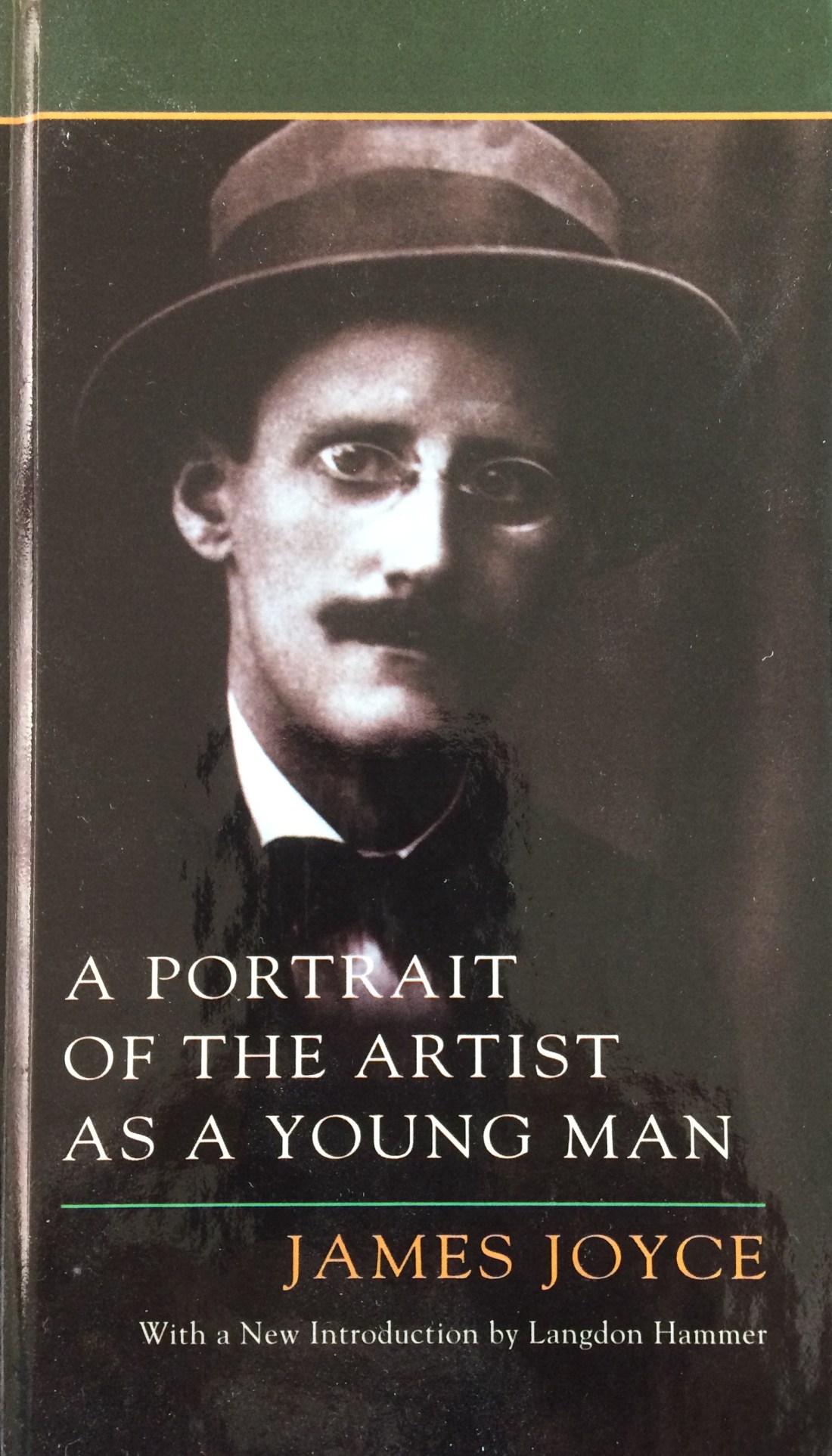
Of course, much has been written about this novel since it was first published in 1916. To call ‘A Portrait Of The Artist As A Young Man’ (Penguin – this publication) a landmark, would be grossly understating its impact.
So I’m not attempting to go into great depth, all that has already been done. I merely want to convey my own recollections of first reading it, way back in school.
For me, it was this book and D.H. Lawrence’s ‘Sons and Lovers’ that first truly opened my eyes to what we sometimes call serious literature. Both of them are, in their own way, semi-autobiographies and broke the mould of novel writing.
Story Teller
Naturally though, Lawrence and Joyce wrote in very different ways. I think Joyce wrote more intuitively, in a way which conjured up for me a wholly different milieu of imagery. He is a natural narrator, a story teller like many of his countrymen.
For example, when he describes Stephen Dedalus’ childhood, I get drawn into that world through the use of evocative child-like language; I become that child. I can remember endless classroom discussions about this part of the book.
Living Imagery
And the world of Dublin in the late 19th century, was a very different world from that of the industrial Nottingham area, where Lawrence sets his book.
Although Joyce was to reject almost everything about his upbringing, his beliefs, his writing is nevertheless suffused with that imagery, bringing it alive, like new music as some describe.
So what are we to make of the criticism of those who first rejected his manuscript? The book is, when compared to more classic literature, without doubt somewhat formless and unconventional.
Like God
Yet, those of an artistic nature tend to be like this, especially over the last hundred years or so. I think Joyce, whose approach was understood and encouraged by none other than Ezra Pound, was simply bold enough to open up the taps of his creativity. The artist himself almost becomes like God, a creator in his own right, a bit like the Daedalus of legend, who built wings for himself and his son so that they could fly.
Joyce’s upbringing within the strict bounds of Catholicism, his training for the priesthood, was in retrospect the perfect grounding for such free artistry, once it was released from its captivity.
Ironically, Joyce’s world never seems to lose the colour of his Catholic upbringing, even though he ultimately rejected it. With Lawrence, the harsh, English Protestant world, seems altogether more grim, enlightened by the writer’s love of nature.
Native Genius
Joyce’s innate creativity, held back for so long, could only emerge later like a succession of Michelangelo masterpieces, hewn by the craft and intelligence of a native genius.
Unlike his other classics, Finnegan’s Wake and Ulysses, I have successfully completed reading his first great novel.
Even so, one day I intend to finish the former two, although I suspect I will read ‘Portrait’ again before I do that.
So, finally, the British PM has decided to call it a day. It was sad to see her so upset though – she’s done her best.
But from an astrological angle, what did the mundane chart of the time of her public resignation show?
Positive
Well, for a start, it’s a more positive chart than some I’ve seen during this protracted Brexit process.
There’s a Leo ascendant and an Aries midheaven. Decisions! Albeit in the negative – she’s leaving.
Leo declares publicly, dramatically. An Aries midheaven, the ‘government’ sector of the chart, shows decisive leadership. Its ruler, Mars, is in Cancer, which may reveal something of the emotive and patriotic nature of the statement.
Open Declaration
The Moon, now in Aquarius in the seventh house, exactly and positively trine Mercury in Gemini, indicates the open declaration to the public, the outside world.
Uranus in the tenth house may reveal a change at the top, though this was hardly unexpected.
In all, this chart to me seems to symbolise a clearing of the air, maybe the chance of a new start, of sorts.
A very interesting quick look – but who might her successor be?




 Ciscography