Poem ‘Molehill’

Molehill

Scafell Pike was a few miles distant.
Not visible.
But this was England’s highest point.
“A molehill!” he said, while we sat
laughing at each other from our tatty
old sleeping bags.

You should have met my Swedish
friend, a cabinet maker
resident somewhere in Switzerland,
accustomed to real
mountains and the exuberant air.
We got on like the proverbial house,
cooling it down with his wit, my
natural reserve, but we had
Abba and Borg and now the Buddha
in common – what was there not to like?

“But who is this Borg?” he said.
“Didn’t you know? Back home we say ‘Bory’.”
Really? Well I thought that wouldn’t do, shocked
out of my anglo-centric world.
But I trusted my sudden blond friend,
this infectious alpine Swede.

“And watch out for the snails!” he said, leading
us to the huge white tent.
Yes, weren’t they lives, too? just
not with our potential
to love and to care – though how often do we choose?

“Maybe on a clear day?” I said, pausing
by the entrance, pointing towards
where Scafell Pike might be.
He laughed. “Not in a billion years!” he said,
with his arresting smile

© copyright David F. Barker 2012
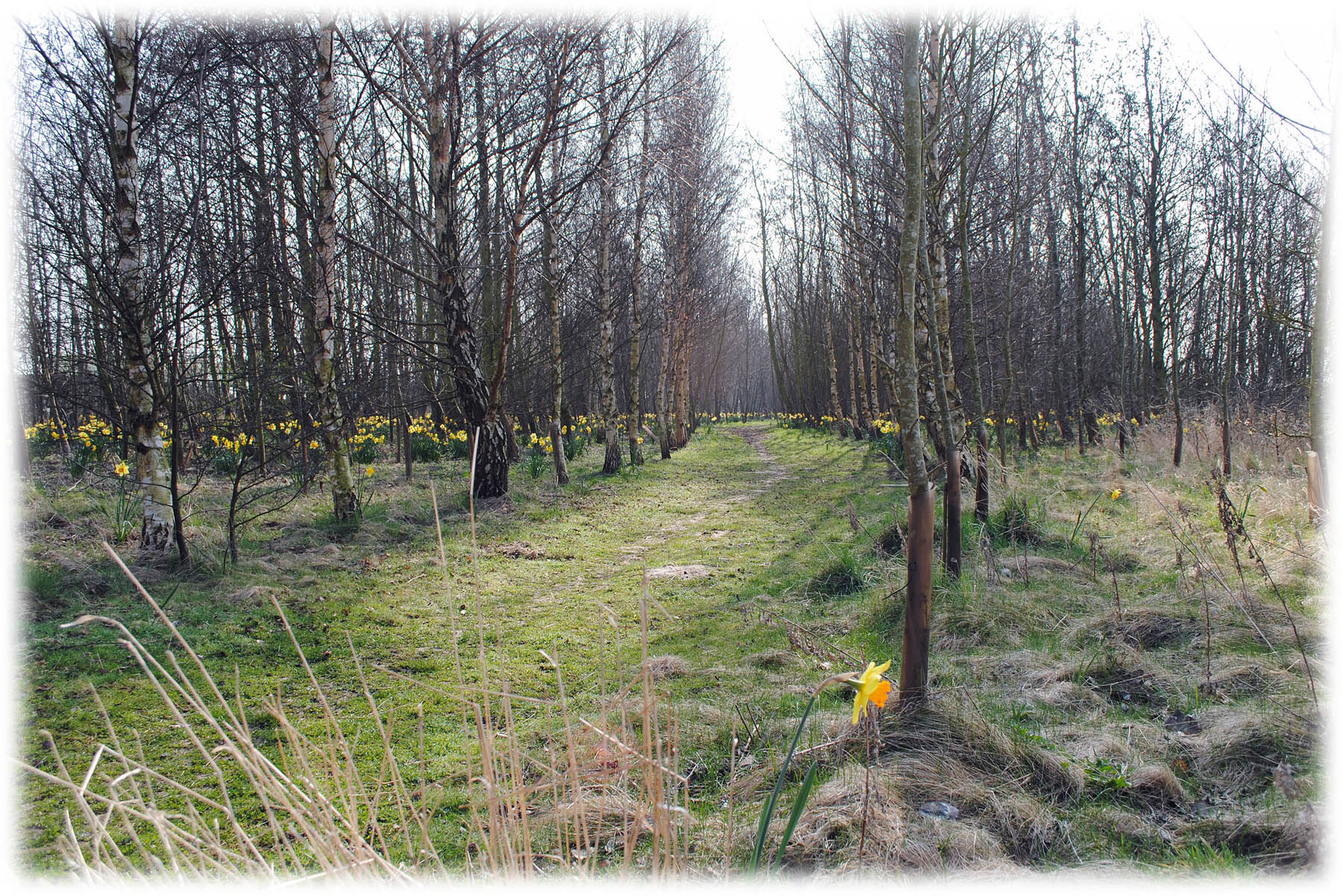
Poem ‘Hurricane’s Grave’

Hurricane’s Grave

A copse can be an intimate
friend. Most days he roamed there, always
finding something to love, a life of
reasonable expectation.
Late winter was a favourite time; tree tops
took on reddish hues and
there were further signs other
than snowdrops
and blue tits’ brighter songs, of the
burgeoning spring

Today was different. Large boots
had been this way,
their wearer, like
a stump line of grey, stood
barely seen by an old fence, through straight
saplings in sunlight.
He approached the figure, which seemed
to dissipate like mist in the sun, something
he’d mistaken for form
and life

But it was more than
a notion that had led him there. The fence
overlooked a rolling field, familiar lumps
and bumps of pasture unchanged
for decades,
where lords in their demesnes might
still rule for all he knew.
He leant on the fence, it
gave way in his hand. A piece of torn
grey cloth freed from a nail, flopped to
the damp ground.
He held it,
felt its old thick weave— like a uniform

He pondered the scene in front
of him, gave space to wartime tales,
the remembered lumps and
bumps which might easily hide a
hurricane’s grave

image and poem © copyright david f. barker 2012

* The Hurricane here, is a British WWII fighter plane

Poem ‘Heat’

English: A map of the British Empire in 1921 w...
English: A map of the British Empire in 1921 when it was at its height with British Raj indicated when it too was at its height as well. (Photo credit: Wikipedia)

Heat

When stepping off the ship, heat
hit him,
something heavy and palpable, his duty drawn
out into an exile
stuffing the bank accounts
of far-off millionaires, stuffing
him and the natives from Melbourne
to Manitoba.
Such a relief to be on the train,
officers hankering in rigid
silence for the cool heights of Shimla,
Home Counties in miniature once bleeding
the big world dry, where spinsters
of Little England began to
watch their gingham fade

He favoured his mother’s
side, whose pale skin and eyes were
more fondly remembered
than appreciated, now more than
a world away,
spattered freckles on his face
where the sweat ran
free in that searing carriage;
sights of displaced women
wrapping up in their shawls, children
standing and sitting, staring
and sleeping, heading on to homes they’d
never seen (or ever see), leaving him
to watch the scorched earth slide
by like some weary sentence,
his mind hanging on
to the boney cattle half
hidden in mud, in the channels
of sometime rivers
gaping for monsoon

poem © copyright df barker 2012

Poem ‘Bede’

Bede

It wasn’t at Jarrow where I sensed you
but on Bamburgh’s raging shore,
among the seaweed and razor shells
on gull peppered sands,
its castle brooding behind me
like a huge chiseled tomb.

North waves were scrambling,
spilling memories of guttural voices
disguised in flushing sound;
cries of songs, harps and old tales lost,
fragments I could almost hear
when I turned my head into the wind.

And who was the black figure
bent against the breeze,
absorbing sharp light
on that blinding beach?
I struggled through the dunes,
the little islands of sparse grass
and pygmy flowers —
but you were gone,
extant only in memory,
my boundless imagination,
and in your books
which carry me through centuries
on a primal wave,
each time I read your words

Poem and image © copyright df barker 2012

Poem ‘Sea Wall’

The Wash, as seen looking west from Heacham, i...
The Wash, as seen looking west from Heacham, in Norfolk, just south of Hunstanton (Photo credit: Wikipedia)

Sea Wall

Stand and look from here,
you can see the earth’s curve,
a sea-levelled land
bereft of its mother.

Shells we have found
while the silt blew away,
powdered by droughts
and the pitiless wind.

Stand here with me
at the high spring tide—
you know the stark sea
will swell all over this again

poem © copyright df barker 2012