The Titanic Exhibition, Belfast

IMG_1504 (1).JPG

On a recent trip to Belfast, we visited the Titanic Experience.

Located a short trip from the city centre, the exhibition lies, quite fittingly, in the old industrial dock area, for so long the life blood of the city.

As you arrive you see the old yellow Harland and Wolff cranes, nicknamed Samson and Goliath; what better sentinels could there be?

New Meets Old

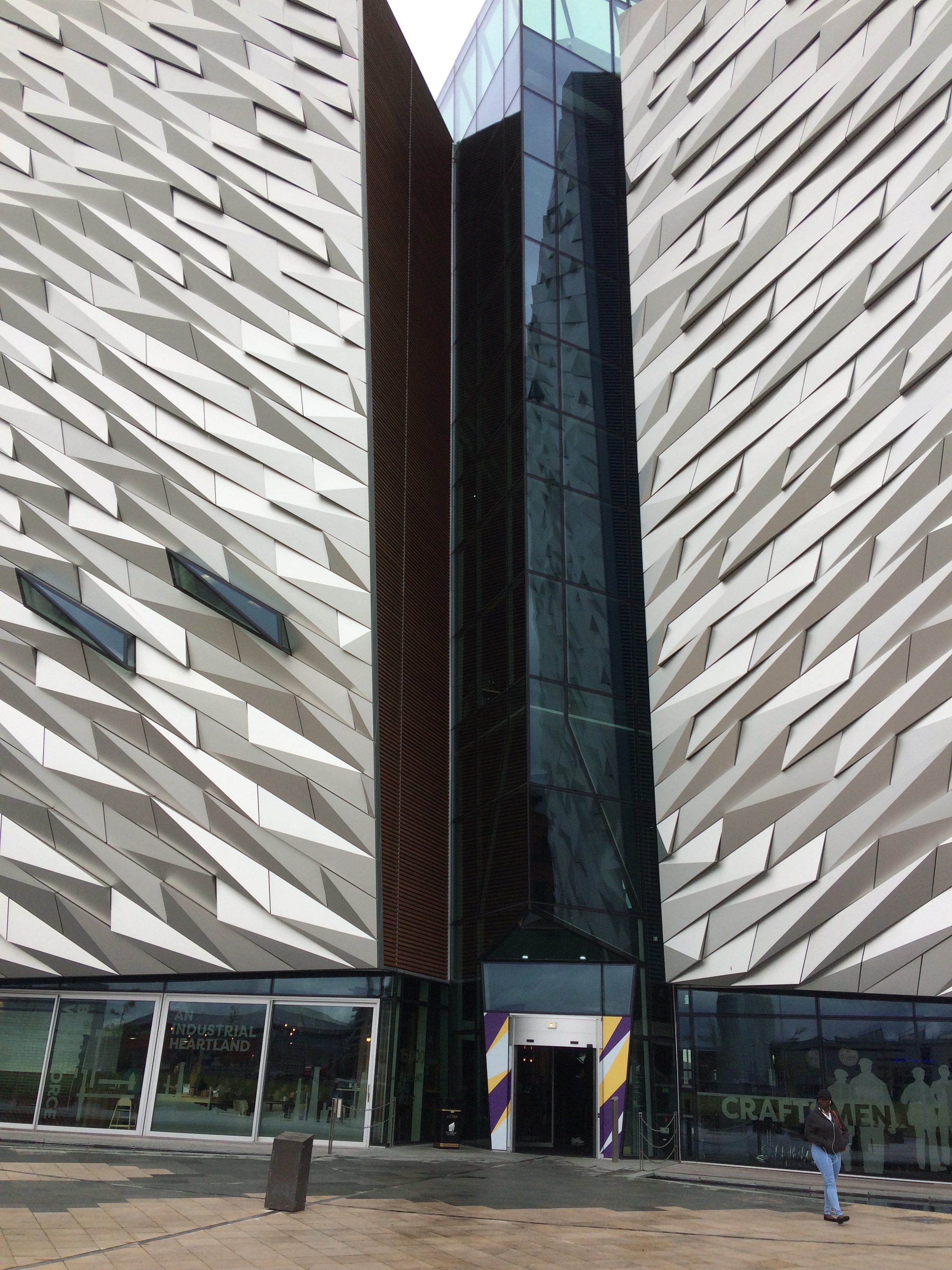
The centre itself is of course very modern, the style of the design reflecting a new take on the industrial old.

Inside it is huge, and as ever in Belfast and Northern Ireland in general, the staff were very helpful and kind.

IMG_1500

Going around, however, although there were several reconstructions of the kind of cabins that could be had on board the Titanic, we were a little disappointed that we couldn’t ‘interact’ with them more.

Lack of Interaction

For instance, you could not walk into the third class cabin. Everything is behind glass, or perspex. Perhaps they don’t want things to disappear, shall we say, considering the volume of tourists they must get.

And also, considering that this event, which occurred in April 1912, was one of the greatest human tragedies of the 20th century, I don’t think there’s quite enough about that human element. Maybe we’ve seen the film too often.

Short Ride

There is a short automated ride around a kind of reconstruction of the shipyard at its height, with all the noises and sights you might have seen. However, I think this is too short and did not convey enough atmosphere for me.
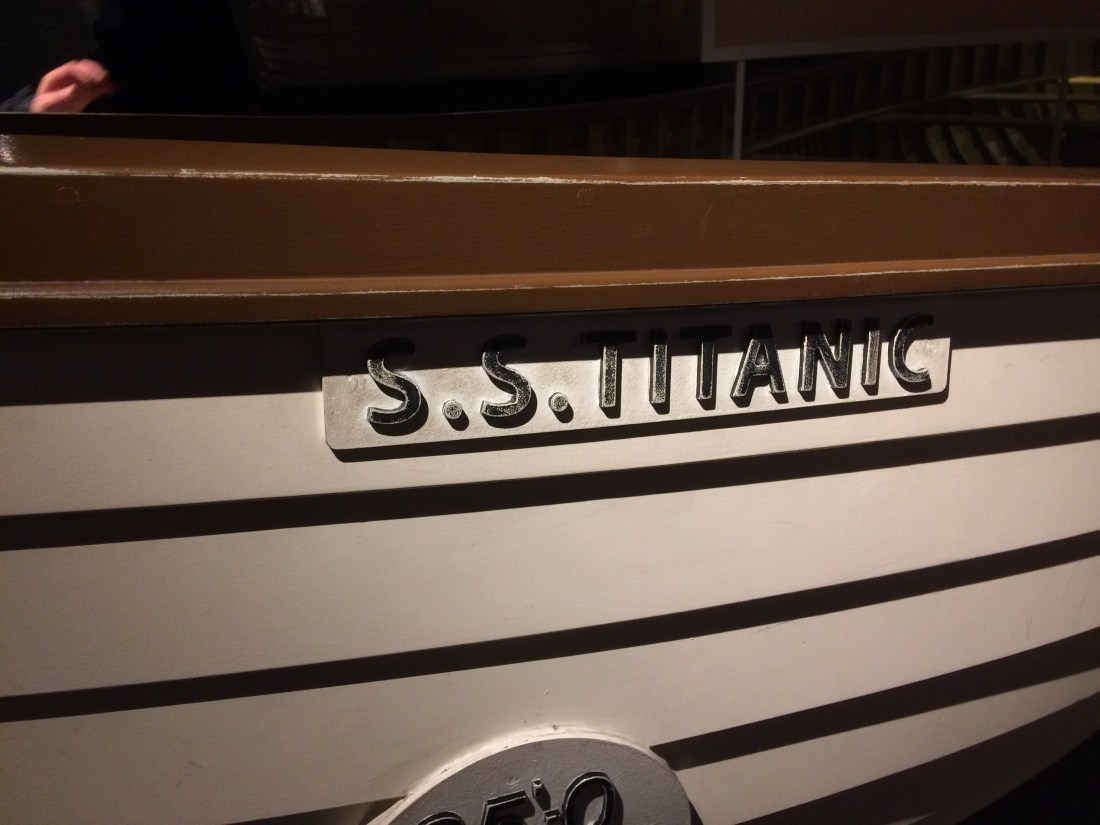
IMG_1503

I don’t think it’s quite on a par with the Yorvik museum in York in this regard, for instance, where you get a better sense, I feel, of what Viking York might have been like a thousand years ago – stronger smells and all.

Evocative Style

Just across the way in an old dry dock, lies the SS Nomadic, a much smaller ship, but which allows you to explore more of what it must have been like aboard the Titanic on its only voyage. The styling and the sense of the pre-war period is evocative.

IMG_1506

So overall, I think the Titanic Experience does a good job. It’s well put together with lots of detail. There is plenty to keep people of all ages occupied for a couple of hours, on several levels. You get a strong sense, too, of how fundamental ship building is to Belfast, the industry which turned a small town into a boom town in the 19th century.

Overall I would give it 7.5 out of 10.

copyright Leofwine Tanner 2019

The Game of Thrones Exhibition, Belfast

IMG_1523

We recently visited Belfast, the capital of Northern Ireland, and one of the venues on our list was The Game of Thrones Exhibition.

It appears relatively new and situated outside the city centre, about a 15 minute bus ride. The Titanic exhibition centre is also close by.

Not the Biggest Fan

So what did we think? Well, I did watch the show, although I’m not the biggest fan. It would be pointless for me to enter a quiz about it, for example.

PHOTO-2019-06-05-16-24-12

The GOT exhibition centre is about another ten minute walk from the Titanic exhibition. From the outside it has the appearance of a large warehouse in an industrial quarter.

Nearby are some of the scene constructions from the show, though these are partly hidden from view behind a fence which you can’t get through.

IMG_1521

Not Very Busy

On the day we went, it wasn’t very busy. It was wet and the school holidays are still a little way off. We were greeted by friendly, enthusiastic young people, most of whom we were told, were either extras in the filming or had been involved in some other way.

IMG_1516

In fact, it turns out that a significant percentage of the Belfast population have had some involvement in the making of the biggest TV show ever.

Boon for the Local Economy

Many millions of pounds have been generated for the local economy and one of the largest and continuing benefits is tourism.

IMG_1522

Once we had got our tickets – £17 pounds each, I might add – we were shown a short film, like a precis for the whole 8 series. We were the only people watching it.

Large – and Dark

Then we were ushered through and entered the exhibition itself. Inside it’s large and dark, so dark that taking pictures (allowed) is not easy, as they don’t like flash photography.

IMG_1518

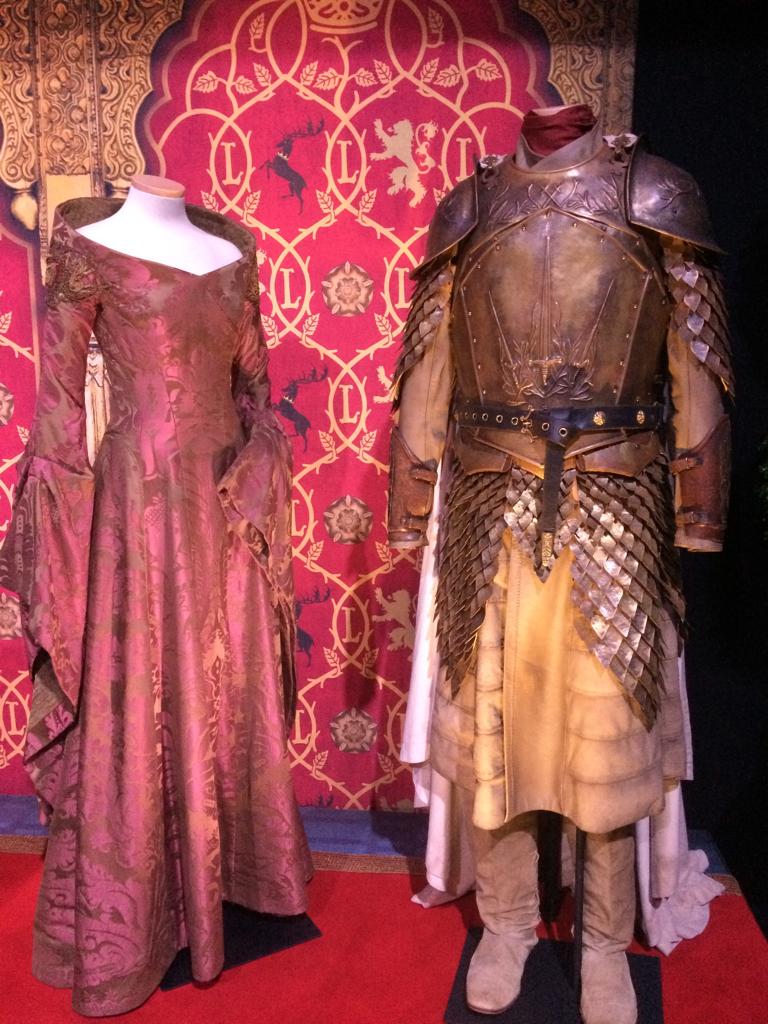
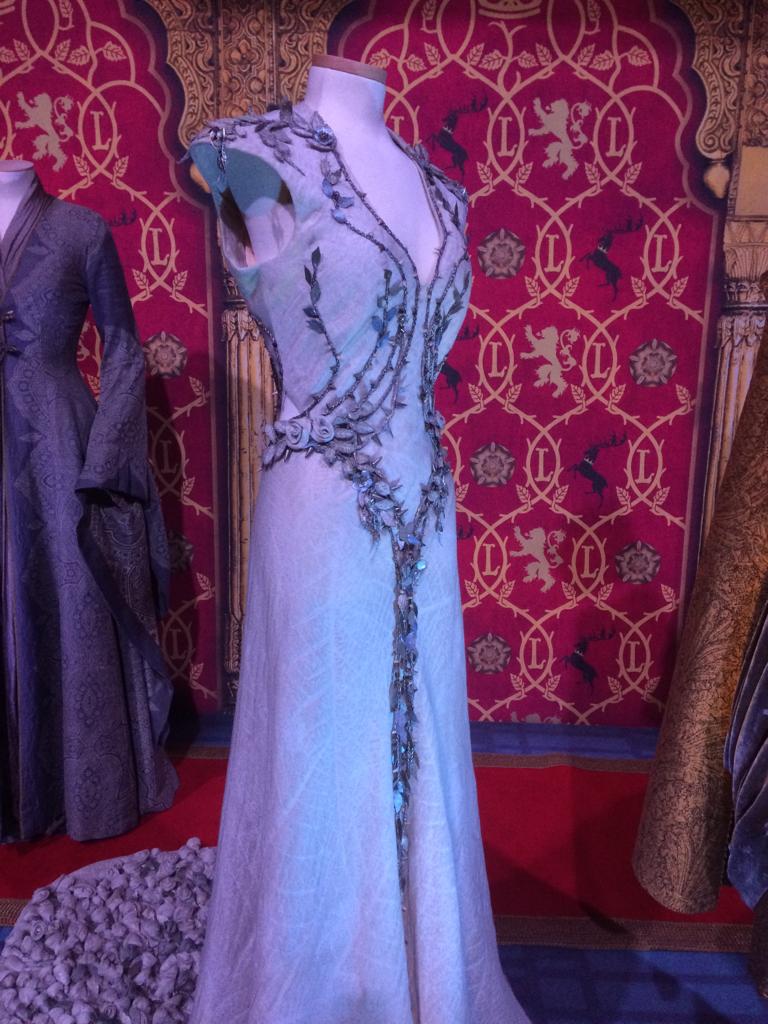
What we saw were basically numerous sets of costumes of the individual characters of the show, from the white walkers to Daenerys.

There were also large dragon skulls, which made the best use of the darkness within the huge hall; there were reconstructions of scenes from the Stark crypt and also interactive areas where you could, for instance, have your picture taken on the Iron Throne – at extra cost, of course.

PHOTO-2019-06-05-16-23-04

Fantasy Map

What I enjoyed best, however, was the map. I’ve always been fascinated by maps and spent a significant proportion of my youth making up fantasy islands or lands – maybe I should have had a pitch at writing a story about them!

IMG_1522

We got around the whole exhibition in around half an hour, though a real enthusiast, which I’m not, might take 45 minutes. At the end there was the usual gift shop with the inflated prices which we quickly bypassed.

Underwhelmed

So, overall, what did I think? It was OK, but I think we both left feeling a little underwhelmed.

Don’t get me wrong, Belfast and Northern Ireland in general deserves all the benefits this show has brought, the employment, the massively increased tourism, but I had the feeling that the exhibition had been put together quickly and it showed.

IMG_1526

That said, how elaborate should it be? It could be argued that the large dark space of the centre/warehouse was the perfect setting, complementing the dark mood of the show.

Ultimately though, having been around it now, I don’t think it’s worth what we paid. Ten pounds would have been more reasonable, I think.

If you are a real fan, however, then I’m sure you’ll enjoy it – whatever the cost.

copyright Leofwine Tanner 2019

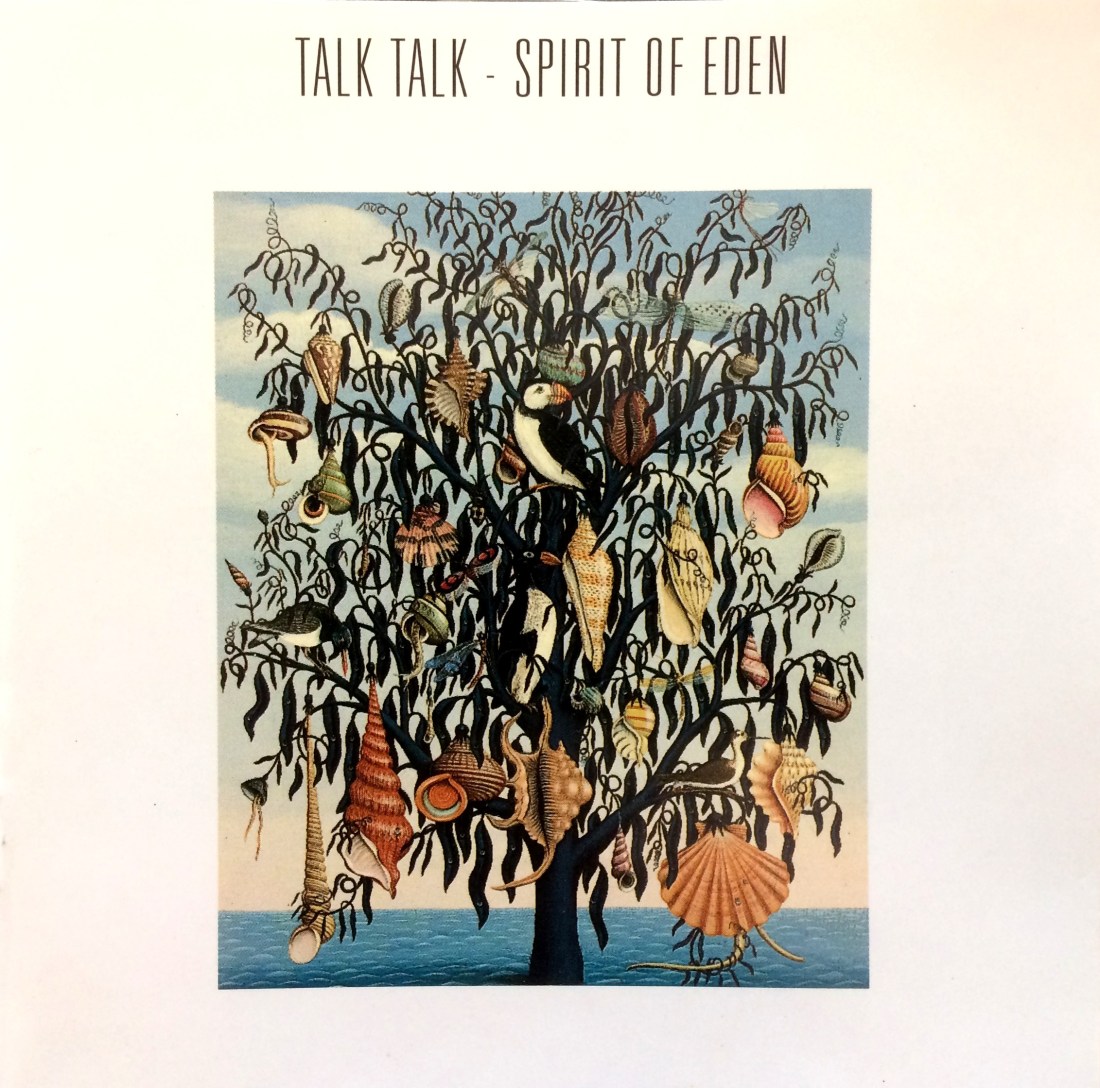
Favourite Album Reviews: ‘Spirit of Eden’ by Talk Talk

IMG_1338 - Edited

Few British bands changed so radically during the 1980s as Talk Talk.

Their early albums and singles were very much of their time, like their eponymously named single and ‘Today’, for instance. The early sound featured a strong, driving electronica dominated by synths and hooks.

However, even on those earlier pieces, there were hints of what was to come, that this was no ordinary, shallow 1980s band.

Veering Away

‘Life’s What You Make It’, their best remembered song, though still synth oriented, is beginning to veer away from ‘established’ sound and subject matter.

Yet, despite such progress and change, I don’t think anyone was ready for the 1988 release, ‘Spirit of Eden’ (EMI).

At the time it left many fans and critics dumbfounded with its often improvised, expansive, moody, melancholic, spiritual soundscapes. Then there was the use of a wide variety of session musicians, playing an array of instruments – brass, wind, harmonica. And there were only six tracks.

Unconventional

Then there is the Choir of Chelmsford Cathedral, even an obscure electronic device called a Shozygs to add to the eclectic, unconventional nature of the album.

But if the initial reaction might in some circles have been termed ‘puzzled’, or ‘underwhelmed’, over the years this album has achieved true iconic status, a literal masterpiece of modern music with many fans, myself included.

In some ways it’s a hard album to describe, or to breakdown in to what it’s really about. Yes, there’s an unconventional spiritual element to it, as the name ‘Spirit of Eden’ suggests. You just have to listen to it. It’s perfect background music, good to concentrate on, good to talk about amongst friends.

Sparse Ambiguity

What’s more, the lyrics, though relatively sparse, have enough ambiguity to allow you interpret things your own way, to lead you back in again and again.

Take Track 1, ‘The Rainbow’ which sets things off as they are to carry on. It’s sparse to begin, wonderfully atmospheric with great usage of piano and organ in solitaire mode. An electric guitar pitches in suddenly with a bluesy riff, over the top of a simple drum beat – the latter a feature throughout the album until the last track. And the harmonica is something else too.

And what can one say about the late Mark Hollis’ vocals? I would’ve gladly listened to them on their own, without lyrics; they sound just like an instrument which complements all the others. He is forceful, thoughtful, emotional, tender, a kaleidoscope of feeling in one voice: no better British singer in the past forty years, in my opinion.

Sublime Torture

Then there’s ‘Eden’, another soundscape beginning with brass and wind. There is a particular melancholy here, but a beautiful one, like some sublime torture as each chorus leads up to a desperate statement of faith, or maybe the lack of it. But there’s hope here too.

I particularly like the electric guitar cameo, almost ‘Beatles-esque’ in its playing, to take you off in some beautiful diversion. An extraordinary song which I still don’t fully understand, but I love it.

‘Inheritance’ carries on with the improvisational sense, evoking space, yet might seem a little more conventional sounding.

Gospel Edge

Track 5, ‘I Believe In You’ might seem even more conventional to start with, with a regular, gentle beat. And there’s a soulful, gospel edge to this one too.

This leads us on to the use of The Choir of Chelmsford Cathedral. It’s not overdone, it accents everything tastefully, merely to illustrate the song, finally taking you out into the ethereal at the end.

‘Wealth’ ends this collection of sounds, with another understated sense of melancholic peace, with a twist of gospel. We’re back to the gentle minimalism of the organ and piano, with no percussion at all. It evokes a rare sense of space, reflection, the general feel throughout the album.

After all these years, I still can’t truly say I understand what this album is about. But it doesn’t matter, it’s all the better for it and will remain one of my ‘go to’ albums.

copyright Leofwine Tanner 2019
 

*If you would like personal astrology report, please contact me at: leoftanner@gmail.com for details.

Favourite Album Reviews: ‘Aja’ by Steely Dan (Part 2, Side 2)

IMG_1328

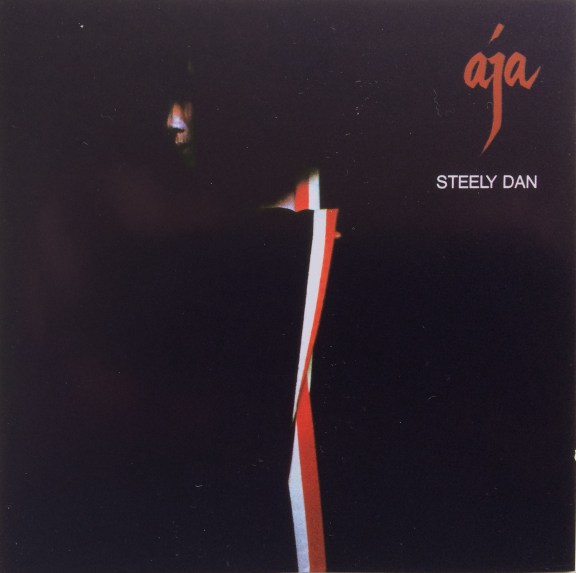
The continuing story of what I consider to be one of the greatest albums ever, Steely Dan’s ‘Aja’ (MCA) from 1977. If you haven’t seen part 1, check in my blog first.

If side 1 was a tour de force, then side 2 continues slightly differently, with four songs which are in their own way, equally impressive.

‘Peg’ gets going with a much lighter disco feel, compared to side one. It’s fairly typical of the time but done in Steely Dan’s own inimitable way, with attention to detail. It turns out the guitar solo which made it onto the album took some time to finalise, with numerous guitarists auditioning for the ‘role’. Listening to it, I think they made the right choice. This is probably the most ‘commercial’ track on the album.

Classical References

With Track 2, ‘Home At Last’, we’re suddenly, though not surprisingly, in the realms of Homer (the ancient Greek writer, not the cartoon character) and Ulysses (Odysseus), with references to danger on the rocks and being tied to a mast over a bluesy jive that gets your foot a-tapping nicely. Once again the instrumentation, particularly the use of brass, I feel, is second to none. Very much of its time, almost ‘Starsky and Hutch’ in feel.

‘I Got The News’, the second to last track is an ‘angular’ sounding disco number, with those enigmatic, yet fitting lyrics full of innuendo and direct references which are so much a feature of the Dan’s music. There’s a great guitar break too, which belies the track’s disco setting, a feature first perfected I think on their previous album, ‘The Royal Scam’. It’s like they’re letting you know how sophisticated they are – and why not?

Hell Raiser

And so to the last, and certainly not least track on this classic album. ‘Josie’ is one of Steely Dan’s most celebrated songs, a fine R&B number, about a girl the guys simply can’t do without, it would seem, a bit of a hell raiser by the sound of it, who evidently could’ve been present when Nero set fire to Rome in AD 64. This has all the feel of LA and sophistication, the place Becker and Fagen made their home for some time.

Once again though, it’s the jazz inspired elements, like the rather haunting, minimalistic guitar riff/section sandwiching the main part of the track, which sets it apart from what anyone else was doing before or since.

‘Aja’ will always be a classic. Was it the peak of their success? Most definitely, which doesn’t mean you shouldn’t listen to ‘Gaucho’, or ‘Two Against Nature’, nor indeed the older back catalogue. It’s just that if I was to recommend one album of this band, it would have to be ‘Aja’. It gets an A+++.

copyright Leofwine Tanner 2019


Book Review: ‘The Sirius Mystery’ by Robert K. G. Temple

IMG_1319

Was this planet really visited by space travellers from the star Sirius in the ancient past?

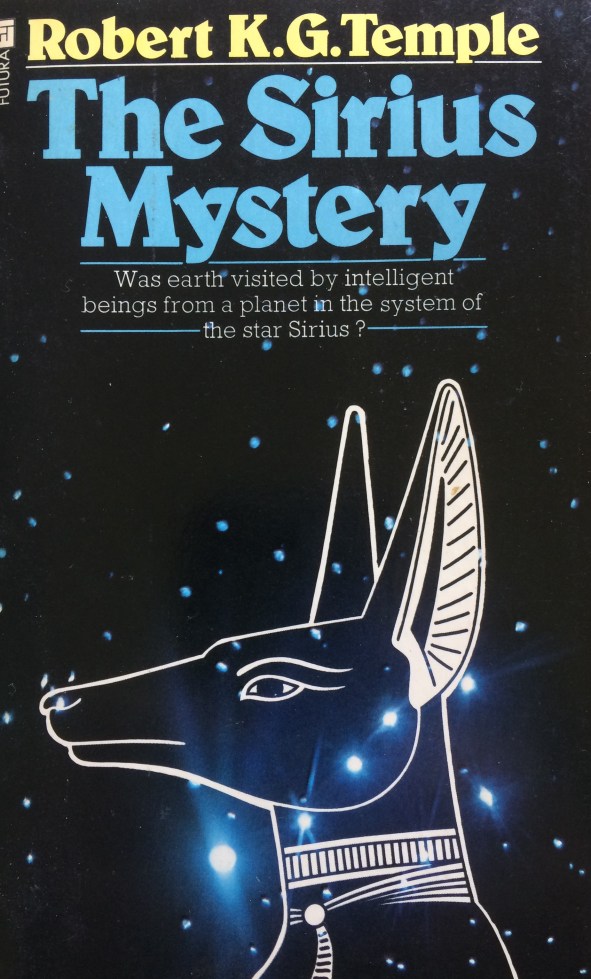
This is the question posed by author Robert K. G. Temple. His book, ‘The Sirius Mystery’ (Futura 1977) is another of my favourite books from yesteryear. I remember the day I bought it, in a train station, the arresting cover drawing me to it. I still thoroughly recommend it to anyone interested in the possibility of ‘ancient aliens’ and human culture in general.

It’s a complicated book that you have to persist with, though it’s well worth it, and this paperback has very small type, which these days would not add to the reading enjoyment. Nevertheless, although several decades old now, it’s still in very good condition. I’m kind of good with books that way.

Sophisticated

The starting point of the book is that it seems the Dogon tribe of Mali (former French Sudan) in west Africa, have sophisticated astronomical knowledge of the star Sirius, which is in fact a binary star, that is, two stars spinning around each other; it takes Sirius B (the dense smaller, actually invisible companion to Sirius A) around fifty years to orbit its larger, very bright sibling. Sirius itself is important to mythology in general, particularly in ancient Egypt, where its rising was used in the timing of the flooding of the Nile; it is often called ‘The Dog Star’.

The work of French early twentieth century anthropologists Griaule and Dieterlen forms the basis of the main evidence for the book. They spent much time with the Dogon, unravelling their art, culture and mythology which embody this knowledge. It’s from this that the startling information about the Dogon’s knowledge came.

Simples

But to boil it down here for simplicity’s sake, how is it possible for the Dogon, in fact any people on earth, to have what appears to be complex, accurate knowledge of far off star systems, without telescopes, or without going there themselves? After all, it was only in the twentieth century that knowledge of Sirius’ invisible companion star came about, using modern, sophisticated telescopic technology.

Ruling out co-incidence, or that the Dogon could somehow remotely see Sirius B orbiting Sirius A light years away, what possible conclusions can we come to, apart from someone else giving them that information?

Ancient spacecraft?

It transpires from the work of the anthropologists that the Dogon do describe what we might today call aerial craft, possibly spacecraft, their various states of ascent and descent as seen from the ground. There are even suggestions that the being(s) on board these possible aerial ships, was called ‘Nommo’ and that he might be semi-aquatic, due to tribal drawings.

Interestingly, this description and knowledge does appear to link up with ancient Mesopotamian/Middle Eastern mythology, which describes similar ‘craft’ and ‘beings’, who imparted their knowledge to ‘primitive’ mankind.

So, as the saying goes, there’s a lot of smoke here, but where’s the fire? The evidence, such as it is, is highly persuasive. But do we need to re-examine it? Are we in danger of being guilty of imposing our own (modern Western) notions and sensibilities on to different cultures?

Keeping an open mind

The truth is, I don’t know. Twenty years ago, I was pretty much a full on believer in extraterrestrials and this was one of the best ‘go to’ books for ‘proof’ of them and their hand in humanity’s development.

Now, having re-read the book again in recent years, it’s still one of the best in this category you can find. Even so, as fascinating and well written as it is, I keep an open mind about it all.

I suppose it’s asking a little too much to demand aliens to disclose themselves, but if they’ve always been here, with us, then there’s nothing to disclose, is there?

Leofwine Tanner 2019