Book Review: ‘Beyond The Time Barrier’, by Andrew Tomas

IMG_1289

Aliens, Atlantis, Ancient Astronauts… I’m not sure I believe in any of that these days.

However, time was, when once a green teenager, that books like Andrew Tomas’ ‘Beyond The Time Barrier’ published in 1974 by Sphere Books Ltd., fired my imagination, which is no bad thing.

What first drew me to the book was the cover, naturally. The connection between flying saucers and the sphinx, or Egyptian civilisation as a whole is intriguing, and there have been many books written since which hint, if not exactly prove, that human civilisation owes its origin to alien interference.

However, once you get into the core of this short book (160 pages), Tomas’ thesis, as far as I understand it, is that time may not be what it seems, that the so-called rules of time might be broken, or that the past and future can be seen by sensitive individuals using various mediums.

The Meaning of Tarot

Most intriguing for me, however, is his interpretation of the Tarot cards, which he thinks may have originated in Egypt. He seems to say that they do not merely predict what happens in an individual’s future through divination, but perhaps could also encapsulate the essential meaning of each century from the first century BC to our own twenty first century.

How is this? He takes the traditional images of the cards, ‘The Emperor’, ‘The Hermit’, ‘The Devil’ etc., and sees a summation of each century’s character. For instance, take the card called ‘The Pope’. If we are counting from the first card, ‘Il Bagattel’ standing for the first century BC, then ‘The Pope’ coincides with the fourth century AD – the most significant event (most might agree) of that century being the Emperor Constantine making Christianity the state religion of the Roman Empire.

It’s all very interesting, especially when one looks at the card standing for the twentieth century, ‘Il Matto’ (The Fool), who seems to be blindly walking towards a precipice, despite a dog’s futile attempts to prevent him falling over. I think you can see that such a symbol might very well fit when describing the tragedy of two world wars and all the other conflicts of that time.

However, it could also be argued that it’s easy to find events which match the pictures on the cards. This may be true.

Saint Malachy

Similarly, he takes a look at the prophecies of Saint Malachy, the twelfth century Irish Bishop of Armagh, who allegedly predicted future popes from his time using allegory and symbols, each pontiff given an epithet, like Pope John the Twenty Third who died in 1963.

One rather imaginative interpretation of Malachy’s description of Pope John, ‘Pastor et Nauta’, or Shepherd and Pilot, is that it’s meant to be ‘Astor et Nauta’, or Astronautics, which certainly did begin during his reign.

The End of Time?

One worrying aspect of these prophecies is that we are now, as of 2019, apparently living in the time of the last Pope that Saint Malachy gave an epithet to, namely Pope Francis, ‘Petrus Romanus’. Some have interpreted this as to mean that we are living at the end of the age, but people have been saying this for hundreds of years… so who really knows?

There are also references to Nostradamus, Edgar Cayce, Jeane Dixon and Nicholas Roerich, the latter whom he believes made prophecies through the medium of painting rather haunting landscapes. He is certainly one of my favourite painters.

However, like I said above, I do not subscribe to all this conjecture, except to say that it was books like this which set me on the path of ‘free thinking’, not necessarily believing anything I was told, nor ruling anything out. I believe we should be open to anything. Uncertainty is the usual state of affairs and is actually quite good in the long run – the truth will probably never be known.

Leofwine Tanner 2019

Fabulous Fairport Convention – Folk Rock at its Best

An Evening of Brilliant Music, Humour and Poignancy in Spalding.

On the Saturday evening of May 11, ‘folk rock’ band Fairport Convention once more graced the stage at Spalding’s Civic Centre.

Although the auditorium was not quite full, there was a good, convivial atmosphere, helped by the band members’ laid back approach, great sense of humour and also by the timeless quality of the music aided by a back catalogue of over fifty years, even though the subject matter of these songs is often anything but genteel.

Take the song ‘Matty Groves’, described by founder member Simon Nicol as having two chords and nineteen verses. The song itself is a traditional, lascivious and violent tale, originally adapted for Fairport’s landmark album, ‘Liege and Lief’ in 1969, and is delivered with a rocky, cutting edge, one of the best examples of ‘folk rock’ in my opinion.

Cutting Edge Rhythm Section

Throughout the performance, that cutting edge was amply provided by the deft skills of the highly experienced rhythm section, namely Gerry Conway on percussion and Dave Pegg, the latter’s dexterous familiarity with all of the neck of his bass guitar being a wonder to behold, as was the light hearted attitude he exuded. I have seldom seen a more lyrical example of great bass playing.

Not to be outdone, however, Gerry gave a stunning, virtuoso percussive performance which combined his conventional, rather minimal electronic set with what I understand to be a traditional Peruvian drum called a Cajon (Spanish for box) on which he actually sat all night. Simply remarkable.

And the evening was not all about the band’s older back catalogue either. For example, there were lovely performances of songs written more recently by multi-instrumentalist Chris Leslie, whose easy transition from fiddle to mandolin to guitar to tin whistle… was amazing.

Conversely, yet equally impressive, was the fiddle-dedicated Ric Sanders, whose unconventional, at times jazz influenced, reverb infused playing style, perfectly complemented the rest of the band.

What is more, there were the fantastic vocal harmonies too, adding to the overall richness and quality of the sound.

Leader of the Band

However, the undoubted leader of the band is founder member Simon Nicol, whose precise, often understated guitar playing could not be overlooked, especially by amateur guitarists like myself who appreciate exactly how well he does it.

Furthermore it was Simon who provided the most poignant parts of the evening. The band’s rendition of Sandy Denny’s ‘Fotheringay’ was a particular highlight, sung with deep feeling by Simon, the story of Mary Queen of Scots final hours in 1587.

IMG_1280
‘The Hiring’. Statue recently erected in Hall Place, Spalding

Equally moving and with some local interest too, was Ralph McTell’s beautiful song ‘The Hiring Fair’. Simon had clearly seen the statue ‘The Hiring’ recently erected in Hall Place in the town centre, giving a precis of how hiring fairs used to work throughout the country.

And so to the encore, which had to be the anthemic ‘Meet on the Ledge’, one of the band’s best known songs. It’s exactly fifty years since the tragic road accident which took the life of drummer Martin Lamble and Jeannie Franklyn, who was Richard Thompson’s girlfriend.

In the aftermath of the tragedy the band nearly split up. Thankfully for us and to continually honour those who died, they decided to carry on, though it was clear that the anniversary of the event was leaving its mark on what was a very enjoyable evening.

Finally, there is the Cropredy Convention which takes part every year in August over three days. If you missed them this year on their spring tour, why not try to catch them at Cropredy? There are many other bands and musicians to see and a good time will be had by all, that’s for sure.

Keeping My Faith

IMG_1232.JPG
My Faith Mercury – in all its parlour beauty. Note the lovely rosewood binding.

I’ve had my Faith Mercury parlour guitar for nearly four years now. I remember that it wasn’t a very easy purchase.

So OK, let me explain. I love electric guitars too; I’d had my American Stratocaster for number of years but it simply wasn’t getting played. It wasn’t that I didn’t like it, far from it. I don’t gig so it’s far easier sitting around with an acoustic. I just wanted something smaller, lighter, easier in my lap – a ‘sofa guitar’ you might say.

Look, I’d got other acoustics (I’ll come back to them another time) but not a genuine 12 fret join-at-the-neck acoustic. They are usually called parlour guitars due to the fact that they were originally made in more genteel times for ladies to strum in their parlours. How quaint, I thought. I’ve seen plenty of women who can handle much bigger guitars than this, but again that’s another story.

You actually traded in the Strat?

So, once I’d come to terms with the knowledge that parlour guitars weren’t necessarily the exclusive property of women, I had to make a decision. Yes, I was going to trade in the Strat! What? It was hard to let it go: Heck, even the smell of it was great.

Yet, when I first took hold of that light Faith Mercury parlour it was the perfect fit for noodling, fingerstyle playing which is basically where I’m at these days. You might call it the quintessential songwriters’ guitar and I’ve been known to write a few.

IMG_1235
Nice touch.

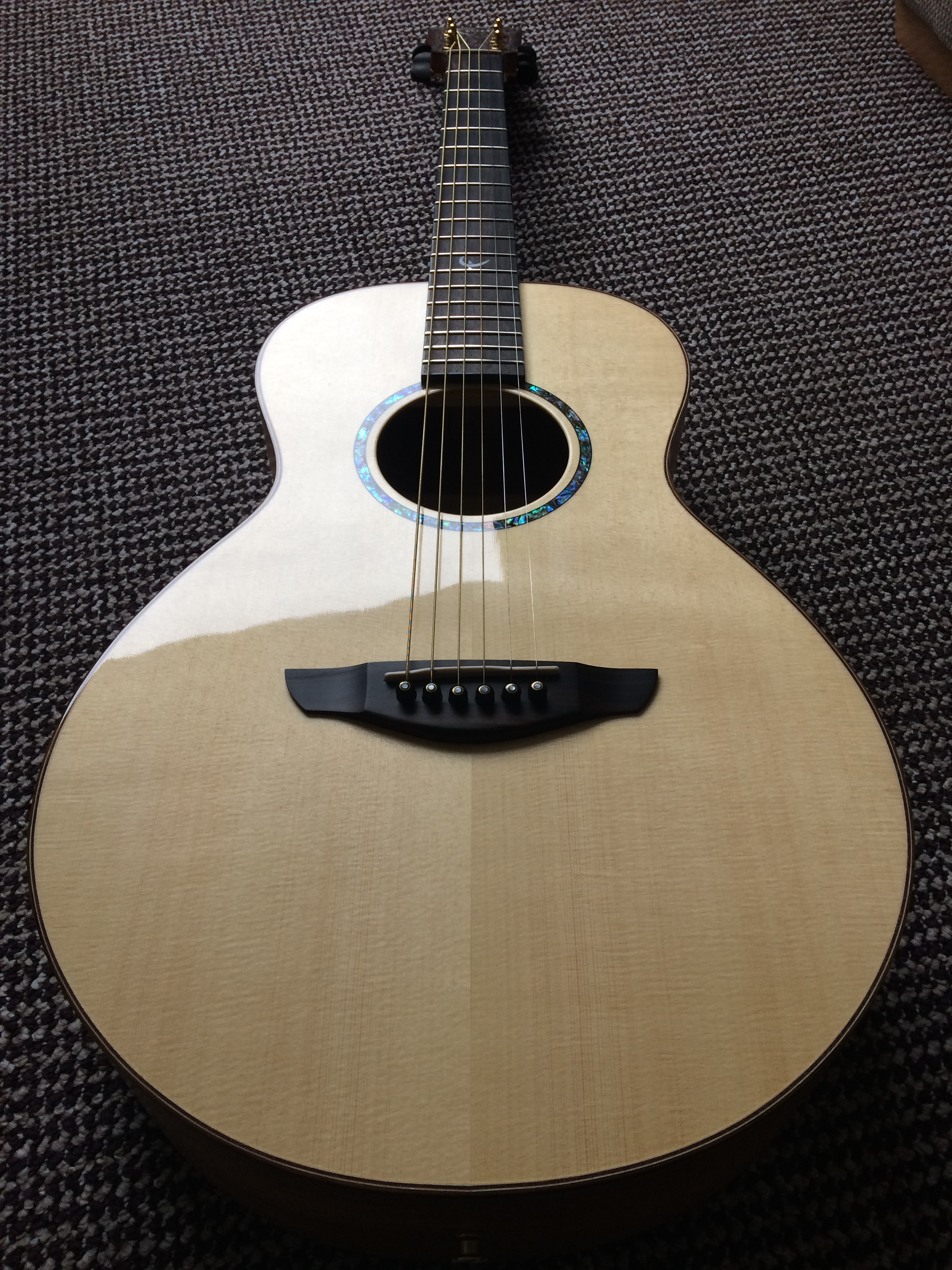
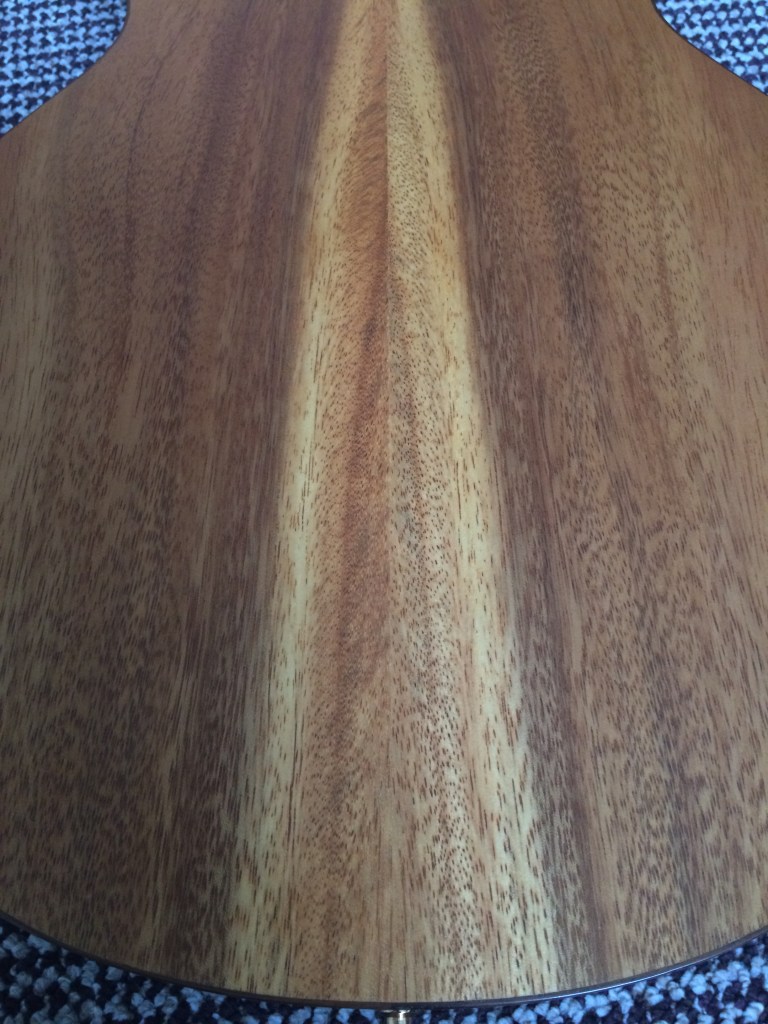
The Faith Mercury is a perfect wee beastie: The simple Faith logo on the headstock, solid woods all round with a spruce top, trembesi back and sides and some beautiful rosewood binding to boot, which I really love. Mine has the glossy top, with matt finish back and sides. The solid trembesi, I am told, sits tonally somewhere between rosewood and mahogany. Sounds great.

Not boxy out of the box

However, perhaps the most surprising thing, considering it’s a parlour guitar, is that it’s not that boxy sounding; in fact there’s a fair amount of bass and thus a fuller, richer sound than I was expecting. It was in tune ‘right out of the box’ as the saying goes, and it’s so easy to play, the action just right for me. And by the way, it wasn’t actually a box but rather a very nice case emblazoned with the Faith logo.

My only ‘quibble’ is the fact that it doesn’t smell like a Martin (Martin owners will know what I mean) – but you can’t have everything, I suppose. Faith make some fantastic, great value guitars and I wouldn’t hesitate buying another. The only problem is making a choice. I’ve always fancied another Faith Mercury with the scoop and pick up. Equally I’d like a Venus, but which one?

IMG_1237
The grain of the solid trembesi wood is particularly impressive.

Bog oak – is that a thing?

Then there’s the one made with that ancient bog oak, was it? Actually I think they’ve made several by now. One day I will make my mind up. I just hope I don’t have to trade in another to get one.

But get this. About a month ago my wife said, “can you teach me to play guitar?” After getting up off the floor and saying “yes, of course, Darling,” I wondered which of my several acoustics she would prefer to learn on. Absolute no brainer, the Faith Mercury won hands down. “It’s just the right shape for me,” she said, having struggled just a little with the others. Now she’s already trying to pick out the ‘Game of Thrones’ theme tune and I can’t get a look in!

IMG_1238
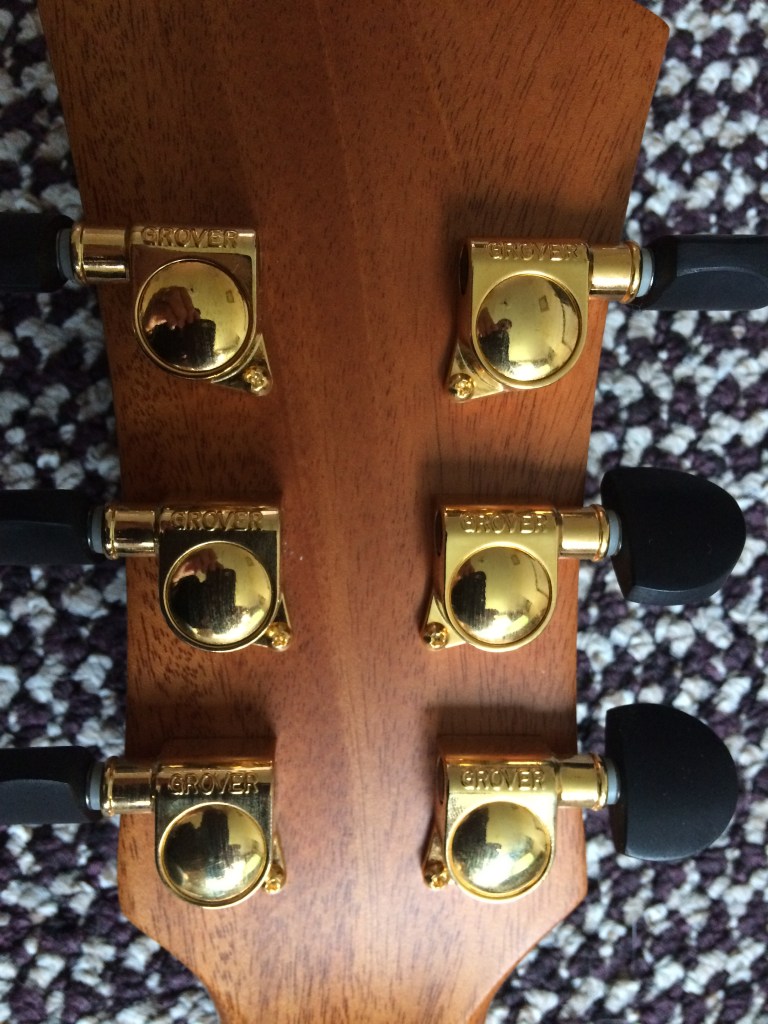
Oh, did I say Grovers too?

It looks like parlour guitars are indeed very suitable for women and most especially the Faith Mercury. I’ll just have to remind her that it’s actually my guitar!

Leo Tanner 2019

http://www.faithguitars.com