King Edward VI, The Tragic Boy King with a Mind of His Own – Astrology Musings

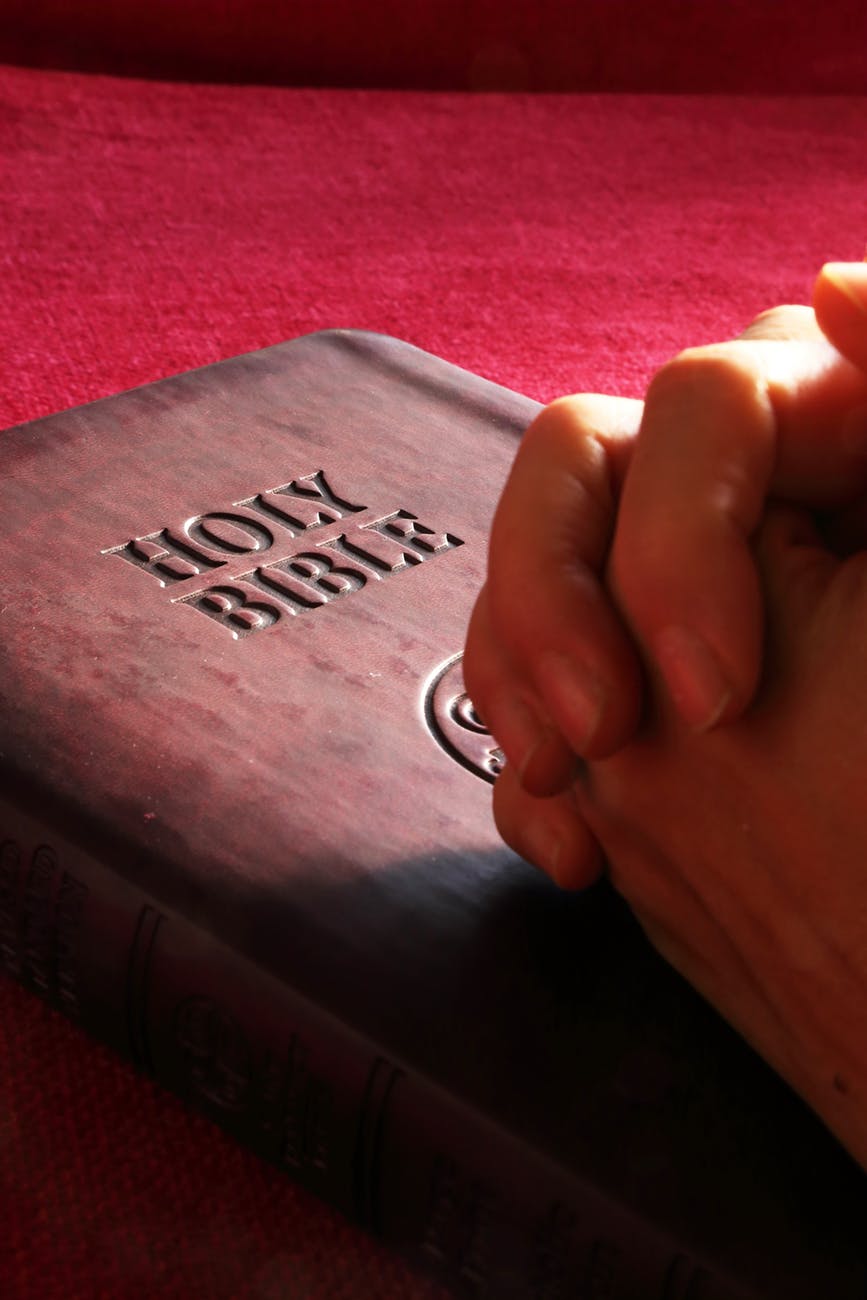
belief bible book business
Photo by Pixabay on Pexels.com

King Edward VI had the misfortune to succeed his famous father on the throne of England, aged just 9.

Unlike his father, Edward was an avowed reformer and protestant, having been tutored by leading religious reformers of the day.

Staunch Protestant

What is more, Edward appears to have very much embraced the new religion, as well as being a keen student of it.

Astrologically, Edward was born with Virgo rising, with Venus and Saturn close to the ascendant. This reveals a very analytical, even highly exacting approach to life, a love of study and detail. Although not too much is known of him, he does appear to have had a somewhat ‘humourless personality’, yet it is difficult to be critical of someone so young.

A Serious Student with Strong Opinions

His ruling planet Mercury is in Scorpio in house 3, which deepens the mind considerably. Here is a penetrating mind, and probably a very good student who would get absorbed in his subjects. Like his father and sisters, he was very good at languages.

However, this Mercury is also square Mars in Leo in house 12, indicating that although he had a lot of mental energy for areas like intellectual debate, there was also tendency for it to show itself through excessive stubbornness or perhaps fits of anger, a tendency he may have inherited from his father.

Courteous

However, we must also bear in mind that he was a Sun Libran in house 2, so at heart he did have strong sense of companionship and courtesy.

It is known that despite the differences between himself and his eldest sister, Mary, especially in regard to her staunch Catholicism as opposed to his avowed Protestantism, he did show concern for her and wished they could at least get along, even though ultimately this proved to be extremely difficult.

Reticent, but Calculating

His Moon was in Capricorn square his Sun, which gave him a cool, even calculating disposition, which may have come across initially as reticence or shyness. This would underline the rather analytical and fastidious personality.

Once people got to know him, the essential charm would have become more obvious. This tendency might not have helped his reputation for being rather exacting and humourless, however, as mentioned above, and if he had lived to adulthood, he would almost certainly have had a ruthless, autocratic streak, capable of making difficult, unpopular decisions.

Practical Application of Philosophy 

Jupiter in Taurus in house 9 loosely trine his house 1 Saturn, implies an expansive, if rather conservative and very practical interest in philosophy.

After all, we have to remember that Protestantism, though in one sense revolutionary, was in essence a stripping away, an ultra conservative, radical approach to Christianity which resorted to scripture rather than saints.

He was keen to make sure that England’s Protestant transformation became permanent and took a keen interest on the detail, so much so that he agreed to the idea that Lady Jane Grey should succeed him and not his virulently Catholic sister Mary.

Social Upheaval Personally Felt

Around the time Edward was born, the Uranus Pluto cycle was in opposition, both in positive aspect to Neptune (spirituality).

This cycle is all about social change and around 1537, the fallout from the Dissolution of the Monasteries was beginning, with large numbers of monks and nuns being released into the communities and the former monasteries falling into the hands of the king.

Edward’s ruling planet Mercury and Mars are loosely connected to the Uranus Pluto opposition, forming a tense T-square, another strong indication that he was personally connected to (and took a strong interest in) the changing times he was born into the continuing change after that which enveloped the whole country.

What Might Have Been

Edward died aged only 15, probably from tuberculosis, although there were rumours of poisoning.

Had he reached maturity and lived a reasonably long life, say to around 56 like his father, it seems clear that England would have become a fully Protestant country much earlier, even though large parts of the country would remain strongly Catholic for a few generations more. This would almost certainly have led to religious turmoil.

What is more, judging from his birth chart, Edward would have taken a strong leading role in to seeing to the imposition of this new religion and would have been as vehemently Protestant as his sister was Catholic.

copyright Leofwine Tanner 2019

King Henry VIII – Tyrant? Astrology Musings

adorable-baby-child-929435
Photo by Alexey Makhinko from Pexels

Anyone brought up in Great Britain, or in fact anywhere in the world, is probably familiar with the character and the life of King Henry VIII, probably England’s most famous and notorious sovereign – he of the six spouses. Does his birth chart reflect this personality and what else might it reveal?

Henry had the Sun in Cancer, Moon in Aries, with a Virgo ascendant. His Cancer Sun gave him an essentially caring, protective, yet sensitive nature, often inflamed, however, by his ardent, fiery, direct and often impatient Aries Moon loosely square to the Sun.

Discriminatory approach

Even filtered through his Virgo ascendant, which would provide him with a highly discriminatory approach to life, this could not prevent this basic dichotomy of his character from manifesting from time to time. We can see this at various times in his life, his impatience and anger.

Furthermore, his ruling planet Mercury is in Leo in the 12th house, exactly opposing Saturn.

Here is a psychologically ingrained mental pride and implacability, which except under the rarest of circumstances, finds it difficult to envisage that it can ever be wrong.

Implacable

In any everyday personality, who would have little influence beyond his family, such a mentality would not constitute a wider threat. However, when you are talking about a monarch of a powerful country, such an attitude can become epoch making, even downright lethal for many people.

It is worth remembering that Henry was no radical, but a true conservative, despite his ‘reputation’ for encouraging the Reformation in England.

Conservative

Quite early in his reign the Pope conferred on him the title ‘Defender of the Faith’, something which Henry was extremely proud of, and a quite fitting title for a monarch with such a stubborn and conservative mentality as symbolised by the quality of his Mercury. The young Henry put up a strong, reactionary resistance to reformers like Martin Luther.

However, whilst this configuration gave him the mental capacity to defend an argument to the hilt and often with great success, as he grew older this same tendency developed into an extreme implacability, far beyond mere stubbornness. This is one of the characteristics that gave him the reputation for being a tyrant.

Jupiter Neptune spiritual cycle personalised

Henry’s chart also has a fairly tight T-square involving Mars at the apex in Virgo in the 1st house, square to both Jupiter and Neptune on the Gemini/Sagittarius 10th/4th axes.

I think this is most revealing. A first house Mars in Virgo in itself represents a diverse, yet practical energy, which would probably sometimes manifest as great irritability when things were not going his way.

Add to this the tension in the Jupiter Neptune opposition, however, which in historic and transpersonal terms is related to the human religious and spiritual cycle (something which would be in all charts for those born around 1491 but made personal here through the contact with a first house Mars) and you can see what might tend to be irritable to him.

Love of scripture

Henry was the second son of Henry VII. Had his brother Arthur lived to become king, Henry might well have a pursued a religious path in some way. Henry clearly had a very strong interest in religion and spirituality, he was very knowledgeable, yet in many ways it proved to be his undoing because it conflicted with his desires as a monarch.

The fact that Mars rules the 3rd house of the mind and the 10th house Venus in Gemini is the ruler of the 9th house, only underlines this. He had a natural love of literature, particularly religious literature, plus a great ability at languages.

King versus Pope

But of course, Henry is most famous for having the six wives. Jupiter is the 7th house ruler, the house of relationships and as we have seen, his 10th house of career Jupiter is involved in a tight T-square, which appears to symbolise the constitutional crises arising from his wife’s ‘inability’ to produces a living male heir. Here we see the needs of the king vying with the fundamentals of religion.

One way around this, was to find an appropriate quotation from the Bible, in Leviticus, in regard to a man marrying his late brother’s wife and the impurity which would result from it; Henry had indeed married his late brother Arthur’s wife, Catherine of Aragon.

Head of the church

It was this argument which was used, stubbornly and vehemently by Henry, though equally opposed by the Papacy and his wife, Catherine. Henry eventually got around the impasse by declaring himself the head of the Church of England, surely equally symbolised by this tight Jupiter Neptune opposition in houses 10 and 4.

But it was something which must have weighed down his conscience for the rest of his life. For despite the break with Rome, Henry remained staunchly conservative in his religious beliefs, as befits that strong Mercury opposite Saturn in the Leo/Aquarius and 12/6 axes.

Vicissitudes in love

So moving on to his love life, we have already noted that his Venus is in Gemini, making him something of a natural flirt (not that all Venus Geminians are like this!), but when we also look at his 5th house of love, we have Uranus present and Saturn is the 5th house ruler.

Uranus would tend to bring sudden, unexpected changes in his love life and Saturn, being ruler of this house, as we have already seen, is in close opposition to Mercury, bringing to bear all his stubborn, arrogant mentality in this area of his life too.

The continual vicissitudes after his first divorce, the sudden demise of Anne Boleyn, the death of his third wife, Jane Seymour, after giving birth to a son, the farce of the ‘courtship’ and marriage to Anne of Cleves etc… are all shown by this 5th house Uranus and the tense quality of the 5th house ruler Saturn.

Sympathy for Henry?

At the end of the day, I have some sympathy for Henry. He never quite came to grips with the circumstances that he was presented with.

His deep sense of faith, his natural conservatism, were tested to the utmost by the needs of his dynasty, the difficulty he and his wives had in producing a living male heir.

This was the classic conflict between church and state, something which he thought he had solved by ‘marrying’ the two together by becoming head of the church in England. I am quite sure, at the end of his life, he never dreamed his life would turn out the way it did.

copyright Leofwine Tanner 2019


The Day in History – Henri the Fourth of France Assassinated

Henri-Pourbus
By Frans Pourbus the Younger – from web, Public Domain, https://commons.wikimedia.org/w/index.php?curid=8918292

Today in 1610, King Henry the Fourth of France was assassinated.

Henri, although baptised as a Catholic, was brought up as a Protestant. Due to the inflammatory religious situation in France and his background, he was at times considered an enemy by both Catholics and Protestants alike. As a result, there were many previous assassination attempts.

Despite often being unpopular during his reign, he was nevertheless considered a successful king, in economic, cultural, military and diplomatic terms, but only achieved his current status as a great king posthumously, when a virtual cult arose in his memory.

He was assassinated on May 14 1610 by a fanatic called Ravaillac in the Rue de la Ferronnerie, Paris.

Christian Confession! – Where Did All The Saints Go?

IMG_1285
Which saint, one wonders, once stood here in this empty space?

The empty church spaces now vacated, were once inhabited by colourful saints, or other such noble individuals. These days it makes me sad.

I am not a Catholic, yet, somehow our culture seemed to be somewhat lessened by their disappearance during the Reformation.

I think we lost more than just colour and ceremony in our lives at the time; these events seriously hastened in the modern materialistic world, which despite its obvious benefits, has stripped us of all our innocence now.

Just like the monasteries, creators and supporters of communities, were dissolved and stripped of all their wealth which was then reduced to its base monetary value, we too over time seem to have been stripped to the core, spiritually.

That’s how I feel. I’m not saying I wish to convert – there are reasons why I would not – but we need to reclaim something from our past, to move one step back, if you will, before we can go two forward.

Sure it was a long time ago, I’ve never known anything different from bare stone and whitewashed walls – but just think how colourful our English churches once were, how rich the lives of the faithful must have been.

copyright Leo F. Tanner 2019