‘The Kissing Game’ – Short Story Serialisation, Chapter 1

Here is my partner in crime‘s latest short story, a romantic mystery spanning the centuries.
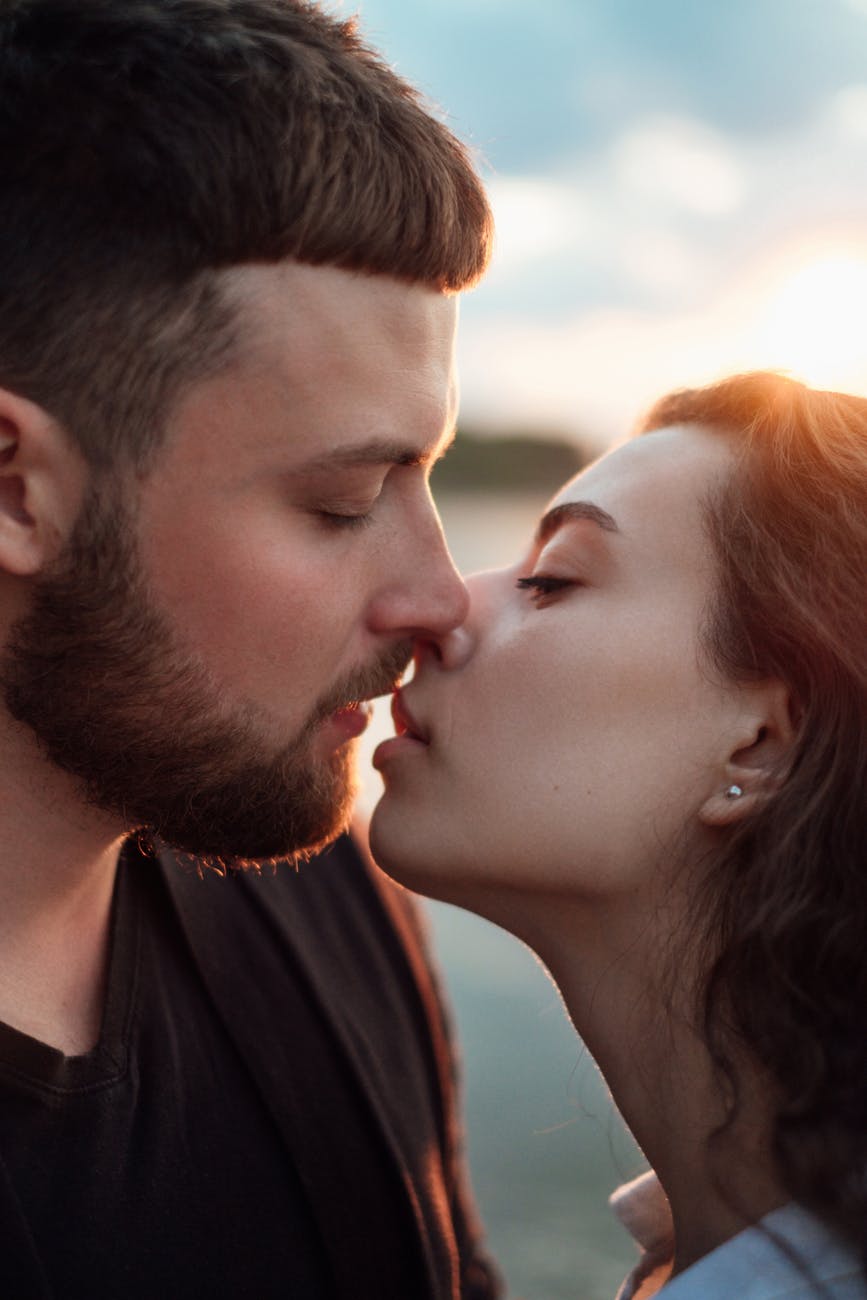
couple kissing
Photo by Сергей Гладкий on Pexels.com

The Kissing Game

By Milly Reynolds

Chapter One

Elena Trimble awoke with a fright. “What was that all about?”
Michael, her husband, was stirring beside her. “What’s up? Bad dream?”
Elena wiped the sweat from her face. “No. I mean, maybe.”
Michael hauled himself upright, blinking rapidly. “Do you want to talk about it?”
Did she? Elena wasn’t too sure.
Michael was watching her. “Ok, so you’ve had a dream about some other guy. It happens, I get that.”
Elena felt herself blushing. “Well, it wasn’t anyone I know, if that’s what you mean.”
Michael swung his legs around and gazed at the clock. “Look, it’s only half five, and it’s Sunday. What chance of getting back to sleep now?”
Elena reached for the notebook, if she wrote it all down she might be able to make more sense of it later. They said that recording your dreams was important.
“So what was he like, this guy? I presume it was a guy…”
Of course it was a man! Sorry, for shouting.”
“That’s alright. What was he like though?”

Elena found it difficult to explain, in words. The dream took place somewhere with
quite poor lighting. He was young, charming, powerful in some odd way. And his eyes,
she could remember them, quite dark.

“He kissed me.”
Michael laughed spontaneously. “Did he now. And was this Lothario a good kisser?”
“Yes, he knew what he was doing, if you know what I mean. He had these nice lips.”
Michael smirked. “Was he as good as me?” He reached across, kissing Elena full on the lips, lingeringly.
“Mn, that was nice.”
He looked into her lovely blue-green eyes. “You are so beautiful, did you know that?”
“Get away.”
“Actually, I was wondering – is all this kind of..?”
She pushed him firmly from her. “Not at five thirty on a Sunday morning! And besides, I feel a little queasy.”
“Hm, it must be the shock.” Michael flopped back onto his side of the bed. “Ok, so did this Romeo have anything to say?”
Elena flinched at his question. “Romeo.”
“Yes? Juliet?”
“Shut up. It was just you, calling him Romeo, that’s all. I don’t know.”
“What are you scribbling?”
She was trying to draw Romeo’s face. She had already been doodling some things which had come to her.
“What does that mean?” Michael asked, leaning across.
“What’s the date today? The twenty third?”
“Yes, is it important?”
Elena breathed in and sighed. “I think it might be.”

more follows next week

copyright Milly Reynolds 2020

Support Us

I Didn’t Know That About Lincoln… Actually I Did!

body of water
Photo by Sunyu Kim on Pexels.com

Its strange what you forget and then remember, years afterwards.

Place names, particularly English place names can be pretty strange sometimes, testimony to all the tribes who have invaded this fair isle over the millennia.

Take Lincoln, capital city of Lincolnshire in eastern England, for example. The name that has come down us is composed of two elements, one Celtic or Ancient British, the other Roman.

Lyn or Lindum means a settlement near a pool, in this case what we now call the Brayford Pool, where the university is situated. King’s Lynn in Norfolk probably refers to a pool also.

Then the last element, coln… what is that? It’s a condensed version of the Roman word Colonia, which were settlements dotted throughout the empire where retired soldiers would go to live – Lincoln being one them. So the full Roman or latin name would have been Lindum Colonia. In later times the name got shortened to its present form.

There are other examples too, of course, the most famous one being Koln in Germany, usually referred to as Cologne in English and French.

Very often a place name can tell you quite a lot about the origin of the settlement and can make travelling and map reading so fascinating.

copyright Francis Barker 2020

Lincolnshire Places and People

IMG_1719
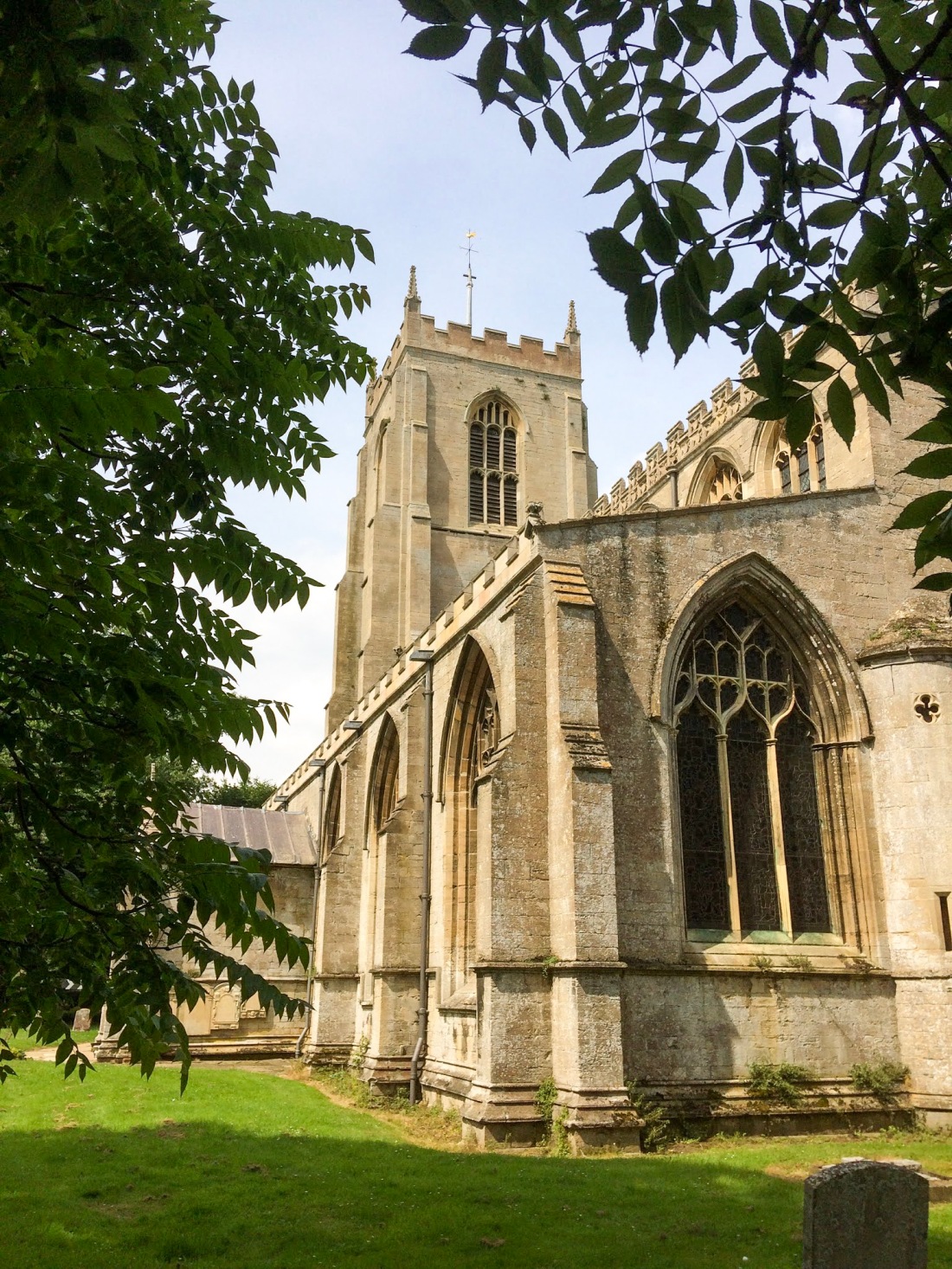
Lincolnshire churches are quite stunning and varied.

Lincolnshire people are indeed unique – I should know, being one of them!

I sometimes think we do suffer from being ‘in-betweenies’, that is neither northern or southern. Well, the simple answer to that is that we are East Midlanders, of course.

I certainly don’t mind being called a ‘yellowbelly’ and, in all honesty, my part of the county in the south is admittedly extremely flat.

That said, I am very fond of the north of Lincolnshire; the Wolds are gorgeous, reaching as high as 500 feet around Normanby le Wold, and the coast has some of the finest beaches you will ever see.

But perhaps one of the greatest glories of Lincolnshire as a whole, is the quality and diversity of our ecclesiastical heritage. The range of churches is stunning and the county town of Lincoln has, in my opinion, the best cathedral in the whole of England.

copyright Francis Barker 2019

On This Day 1688 – The Battle of Reading, Culmination of the ‘Glorious Revolution’

brown and black windmill
Photo by Aaron Burden on Pexels.com

The only major military engagement of the so-called ‘Glorious Revolution’, the Battle of Reading, took place today in 1688.

James II of England had come to the throne in 1685 despite being a Catholic, a religion which was very much out of favour in Great Britain at the time due to the conflicts over the previous century and a half.

At first his monarchy was tolerated, perhaps because the populace did not want a repeat of the Civil War which had brought such destruction, resulting in the death of King Charles I in 1648/9.

William and Mary

However, probably due to the birth of an heir in 1688 and the possibility of the creation of a Catholic dynasty, public opinion soon began to turn against James II. His daughter Mary, who was married to his nephew William of Orange, were promoted as obvious replacements and this is how it eventually turned out.

The Battle of Reading itself provided the incongruous spectacle on English soil of King James’ Irish troops pitched against the Dutch forces of Prince William of Orange. Even so, the people of Reading did all they could to support the Dutch.

History Repeats – Two Williams from Abroad

Casualties were relatively few despite the decisive victory of William, who was soon to become the second king of his name to win the throne of England via a foreign invasion, albeit a very different one.

King James very quickly saw the impossibility of his position and abdicated, fleeing the country for France and then Ireland, where he was still largely supported.

This was a major turning point for Great Britain, where the superiority of Parliament over the Monarchy was truly established. For good – or ill – the birth of modern Britain, politically, culturally, economically, can be traced to this period, and it relied on a Dutch ruler.

copyright Francis Barker 2019

Born on This Day – Mary Queen of Scots

Today marks the anniversary of the birth of Mary, Queen of Scots, born in Linlithgow, Scotland in 1542.

She became Queen of Scotland only six days after her birth, following the death of her father, James V.

Mary went on to marry the French king Francis II when she was just sixteen, effectively uniting the thrones of Scotland and France. However, Francis died the following year and Mary had to return to Scotland in 1651.

However, the young monarch soon experienced problems back in her homeland; she was, after all, a catholic in an essentially protestant country.

It was Mary’s subsequent marriages, her apparent lack of judgement and bad counsel she received at critical times, which led to great unpopularity and her eventual arrest and abdication in 1567. Although she managed to escape to England the next year, she was soon apprehended and spent the rest of her life in various places of custody.

She was finally executed on February 18 1587, following much intrigue and attempts to install her on the English throne, although right until the end, it was clear that Elizabeth was very reluctant to sign the order of execution on a fellow female monarch.

copyright Francis Barker 2019