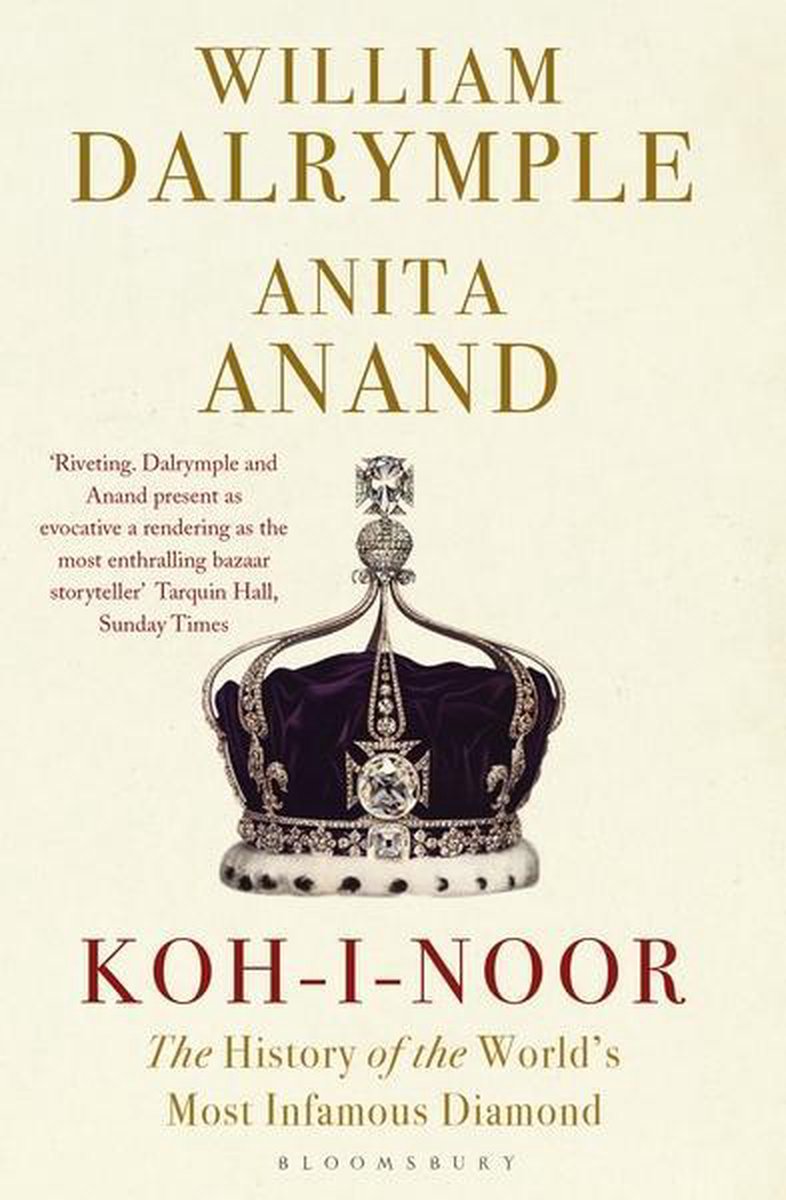
‘Koh-I-Noor – The History of the World’s Most Infamous Diamond’ (Bloomsbury) Book Review

Koh-I-Noor: The History of the World’s Most Infamous Diamond by William Dalrymple

My rating: 4 of 5 stars


Firstly it’s interesting and perhaps partly synchronistic that I have completed this book a few months shy of the first British coronation for seventy years and the imminent installation of the first British Asian PM of the United Kingdom (October 2022).
I have always found Dalrymple’s style captivating, somehow he draws you in, making you feel a part of the narrative. Whilst this book is co authored along with Anita Anand, I do not find it upto William’s usual brilliance – but even below par, it is still a great read.
I certainly had no idea that the Mughals preferred rubies to diamonds but I understand their sensibilities. And whilst the actual history of the Koh-i-Noor is not proven prior to 1739, one does suspect that it was probably one of those previously described jewels from the earlier Mughal empire.
I did find that Anand’s section was a little less interesting, yet still perfectly readable. There is a sense (conveyed to me at least) that the Mughal/Persian invasions of the subcontinent, although equally as brutal as the British and the Company’s conquests, are somehow more ‘acceptable’ because of their greater artistic and even poetic prowess. I suppose it’s broadly similar to many historians forgiving the Normans for their brutal subjection of England from 1066, with the Harrying of the North etc, purely because they built such incredible cathedrals and brought strong government. That said, I would concede that the British rule of India was far from being a simple case of a superior culture forcing itself on to an inferior one; in many ways Indian culture was more advanced than that of the so called West.
However, this aside, I do think this book adds another important element in the understanding of Anglo Indian relations and the history of the merging of these two and more cultures.

Copyright Francis 2022


View all my reviews
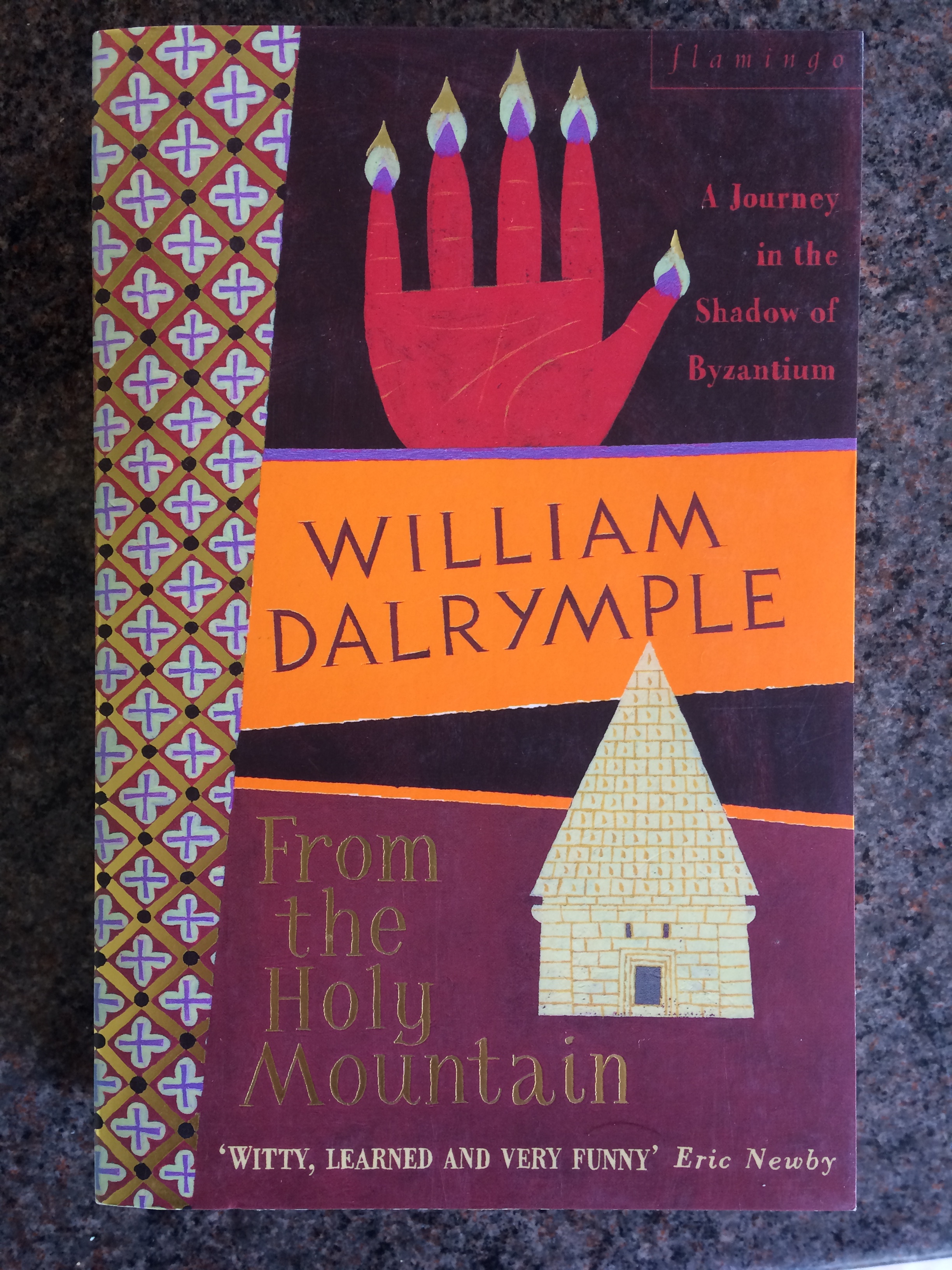
Leo’s Book Review: ‘From the Holy Mountain’

IMG_1248

‘A Journey in the Shadow of Byzantium’. By William Dalrymple.

I can’t tell how inspirational I found this book when I first read it.

At the time, around 1997, I was virtually reading nothing new beyond a few books on astrology or Buddhism, two subjects I was heavily into at the time.

Then one chance visit to a bookshop and this title seemed to shout out from the shelves, saying ‘Read Me!’ The cover and illustrations are simply stunning, produced by Dalrymple’s wife, Olivia Fraser. They fit hand in glove with the content in a way which leads you in with all the colourful and sensual allure of a Bazaar… but that would perhaps be an ironic observation, in that this book is a travelogue revealing the long slow demise of Orthodox Christianity in the Middle East.

Essentially the book is based on the journey of a Byzantine monk and historian, John Moschos, in 578 AD along the Silk Route which the author retraces, only to find that much of that culturally rich and colourful Christian soaked world has now gone and in further more rapid decline.

Humour and Grief

There are strong elements of humour, similar to Dalrymple’s earlier work ‘In Xandadu’ (which still leaves me in stitches when I re-read it), but ‘Holy Mountain’ is a much more serious, haunting book, leaving you practically grieving for the lost world of Byzantium, the continuation of the Roman Empire in the East.

From the first sentence, where the author describes in plain yet evocative prose the cell in which he is staying at the start of his journey from Mount Athos in Greece, you are led into another world, not only the rather fraught one of today within the author’s mind, but also this lost, remoter world, which somehow seems much more wholesome and meaningful than our own despite all the technology which allows me to write this.

Similarly his all-round historical knowledge of Byzantine and Islamic culture, plus his understanding of architectural detail are stunning, yet written succinctly in such a way as to not put you off with complication. It is a great gift.

Vestiges

In places he finds these vestiges of Orthodox Christianity, monasteries and churches barely holding on, plus apocalyptically minded priests, and his description of the characters he meets fills you with both hope and resignation too, a feeling that his generation might be the last to witness such places and people.

By the end, the author seems like a forlorn character, reminding me of Paul Morel in DH Lawrence’s ‘Sons and Lovers’, as he walks away after his mother had died. The sense of loss and hopelessness are overbearing at times.

In doing this review I have realised I must re-read this wonderful book once again. It was first published in the mid 1990s; I wonder how much of the world he describes is still there 22 years on?

So I can’t recommend this book enough, it brought back my love of reading.