The Outer Planets – To Use, or Not to Use

mountain and sky
Photo by Aviv Perets on Pexels.com

I may have touched upon this before, but I have been experimenting leaving out the outer planets in astrological interpretation.

I have to confess it has not been easy. The school which I studied with thirty years ago fully incorporated Uranus, Neptune and Pluto, if not some asteroids and Chiron.

So when I began to leave out these outer planets, it felt a little bit like riding bare back. It felt uncomfortable, as if I was missing something. Right now I’m not entirely sure which way to go, which isn’t good, because I want to affirm my astrological philosophy after all these years. But it is good to remain open minded.

Deleting?

However, I think I am gradually coming around to the decision to leave them out. What is the reason for this?

I have never been comfortable with the interpretation of the outer planets, their supposed influence. Of course, as far as we know, the ancients did not know about them, so they were not used.

Then boom! Uranus (called Herschel at first after the astronomer who had been tracking him) was discovered in the late 18th century, around the time of the American, French and Industrial Revolutions. Hm, so Uranus is associated with revolution, sudden change, right? Well, perhaps.

Revolution, Mysticism, Extremism

Then in the mid 19th century, Neptune was found, around the time of further revolutions around 1848 to do with socialism and what is now called Marxism. There was also a sudden surge of interest in the area of mysticism. Around 1850, it really did seem like a new world was being born.

Come 1930, little Pluto was discovered. And we know what was to follow after that. Pluto has ever since had dark, underground associations of hidden extreme power and violence.

Gradually each of these new planets were seen by many astrologers as higher octaves of the planets. Uranus was thought to be the higher octave of Mercury, the planet nearest the sun on our solar system model. Uranus was therefore was about mental breakthrough, inspiration, invention.

Higher Octaves

Similarly Neptune was seen as the higher octave of Venus (love, unity) through meditation and Pluto was associated with Mars (energy) in a more transformative pose. I have never been completely comfortable with this thinking.

For one thing, we know these luminaries are there but they are not visible to the human eye. Are we not in danger of ascribing them too much astrological influence? Yes, invisible things can be very powerful. But astrology is about luminaries, things you CAN see. Simplicity can be a blessing.

Some use the outer planets in a lesser way, see them as purely negative, revealing by sign and house position where we will experience problems, perhaps a bit like a negative fixed star. For example, Uranus might reveal where we feel alone, isolated; Neptune warns us of deception and confusion; Pluto where we might be in danger of self destruction. The difference, of course, is that you can see a fixed star.

Bad Influences

If we return to the time of the discovery of each of these planets, we could strongly argue that if the finding corresponded with a major shift in human activity as seen through the accepted historical narrative, such as revolution, then maybe these planets’ ‘influences’ are indeed negative.

And as well as all the above, didn’t the old ‘system’ with seven luminaries have a certain beauty, balance or resonance about it? The discovery of Uranus in 1781 and its incorporation into astrology, did indeed disrupt everything.

What is more, it is my contention that Uranus is not the ruler or even co-ruler of Aquarius. The nature of this sign has been subjugated over the last two hundred years, from a serious minded forward thinker, to a wacky professor or flower power hippy – all because of the so called cranky ruler Uranus. Aquarius is traditionally the sign of hopes, dreams and wishes and group objectives. How are these Uranian?

Difficult Associations

Similarly, mystical Neptune has been associated with ‘dreamy’ Pisces and powerful Pluto with the much maligned Scorpio. The tradition of assigning two signs each to the planets, Mercury through Saturn, is ancient. I now believe it should stay that way. Tradition is important whilst remaining open minded.

So at this juncture my purpose is to leave out the outer planets, including Chiron (which is what… a comet?), along with the asteroids.

With each interpretation, if any outer planet does indeed form a major aspect, I will consider mentioning it, but will not include it on the chart. Treating the outer planets a bit like fixed stars might indeed be the way to go – but that is not decry those clearly visible luminaries, which have had a place in many forms of astrology for millennia.

Nevertheless, I feel the outer planets do seem to have influence on us all in a transpersonal sense – though not necessarily in a benevolent fashion. I intend to highlight this is in a number of forthcoming articles.

Copyright Francis Barker 2020
 

Today’s Astrology Musings: The sign of Cancer

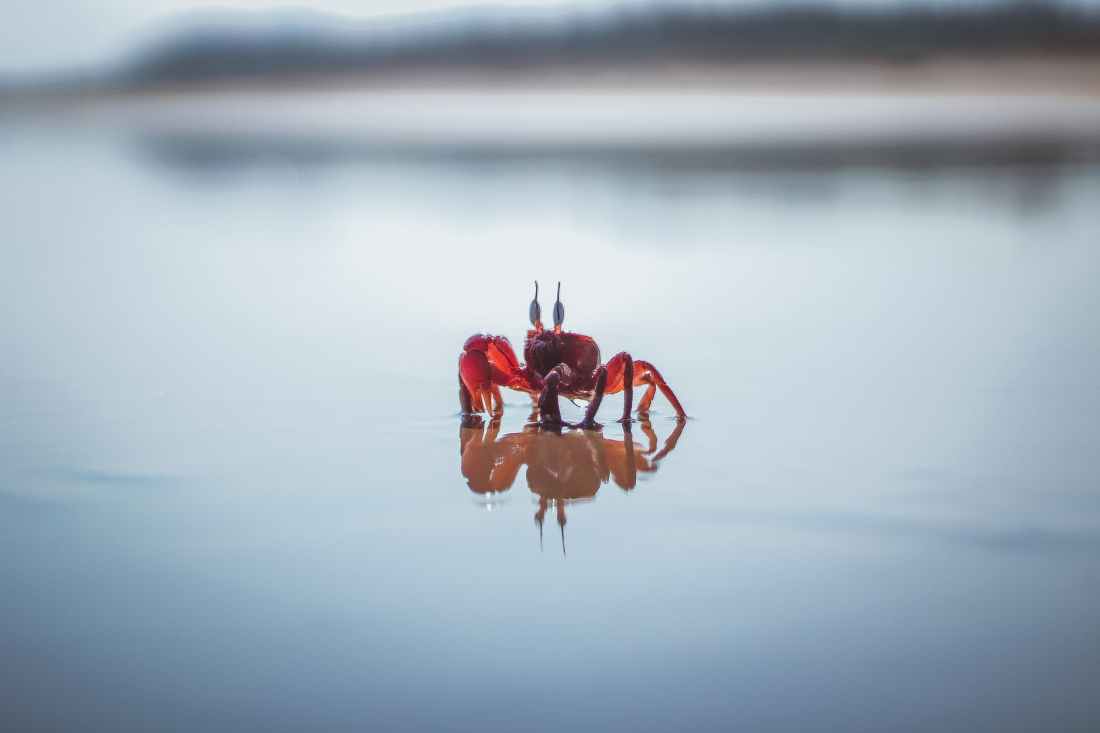
red crab on white water
Photo by rompalli harish on Pexels.com

I feel the water signs get a pretty bad deal in general, that there is, somehow, something uncool about them.

Even Cancer, the cardinal or dominant water sign, is often described as overly emotional or ‘touchy’. All of this is unfair. Maybe it is to do with the fact that they are all classed, traditionally, as ‘negative’.

So what is the sign of Cancer, the first of the water signs? I see it in its clear relation to the fourth house, which sits visually at the bottom of the birth chart.

Foundations

Cancer is associated with home and family and the protection of them. How is this ‘negative’? It is fundamental, the foundations of our whole existence; very little can be achieved or sustained without it.

We all need a base to our lives and Cancer and the fourth house gives indications as to the quality of that in our birth charts.

Cancer, because of its associations with the family, is also about our roots and the past, another very important base of our lives. Look at the huge interest in genealogy and DNA analyses these days. Yes, of course, they’ve been marketed, but for a good reason: we all want to know where we come from. It’s important to us.

Spirituality

And this has spiritual connotations too, all to do with the Cancer/Capricorn axis and its association with birth and rebirth, reincarnation. Cancer can be see as the gateway into life, in human form, Capricorn the way out.

Of course we can also see this mapped out on the earth, if you will, in the two tropics of Cancer in the north, and Capricorn in the south, the two extremes of the path of apparent path of the Sun around the earth.

The summer solstice, which traditionally marks the beginning of summer in the north, also marks the start of the sign of Cancer, the beginning of the Sun’s fall southward, symbolically showing the soul’s descent into matter.

Glyphs and symbols

But why the crab symbol? I think it’s all to do with protection, the hard outer shell. In earlier medieval astrology, Cancer was often represented by a crayfish, which would have been much more evident in the streams and rivers of Europe back then.

Maybe the Cancer glyph, the 69, represents the crab’s pincers. And the Moon’s rulership of Cancer is beyond doubt, its phases and associations with water being key here.

Walking on the Moon

It’s also interesting to note that the first Moon Landing hit our screens in the year 1969, co-incidentally incorporating a suggestion of the Cancer glyph – and on July 20-21, as the Sun was leaving Cancer for Leo.

My own musings lead me to speculate that the 69 glyph may represent the Sun’s turnaround at the summer solstice (which means sun standstill); in other words, the 6 flips over to become 9, symbolising the beginning of the return south for the Sun. Just a thought and I’m probably not the first to say this.

Associations

If Cancer is ruled by the Moon, Jupiter is said to be exalted in the sign, bringing out the best of the Jupiterian positivity in nurturing ways.

However, Saturn the ruler of Capricorn, is said to ‘fall’ in Cancer, and Mars is in his detriment because Mars is exalted in Capricorn.

So, here in a few words we can see that Cancer (and the water signs) are far more interesting we realise. And Cancer due to its prominent placing on the ecliptic (the zodiac), is in fact most fundamental – literally.

copyright Francis Barker 2020

*if you would like your own personal astrological chart, or one for a family member or friend email me at: leoftanner@gmail.com


Walking Meditation: Does it Work?

man-walking-near-body-of-water-1466852
Photo by Yogendra Singh from Pexels

Over the years I have read many accounts about doing walking meditation. Here is my own, which I sometimes carry out whilst walking alone.

Walking by its very nature can be rhythmic and relaxing. But is it possible to meditate at the same time?

Let’s be clear, one thing I have found is that a walking meditation is quite different from standard meditation. The latter requires you to sit comfortably and still the mind, to allow the excessive chatter of the left brain to dissipate and allow the more creative right brain to come into its own. You are allowing stillness and silence to enter your mind.

One of the best simple methods of standard meditation is to simply follow the breath, in and out, sensing the subtle changes of pressure on the nostrils. Your breathing will naturally slow down, your body will relax.

Whilst walking even at a relatively easy pace, depending on your level of fitness, your breathing will be deeper. Nevertheless, so long as you can maintain a steady pace, you can still concentrate on that breath.

My method is as follows:

  1. Allow at least half an hour for a walk. Forty five minutes is probably around the optimum time period.
  2. Pick a route you know, one you are either fond of, or find peaceful, or both. It doesn’t necessarily have to been in a quiet country setting or on a beach, for example. One can find solace even in a crowd if you control your breath and remain mindful.
  3. Set off at an easy pace, one you can maintain for the time period. Swing those arms gently too to maintain a rhythm in the walk.
  4. Set your eyes about eight to ten feet (three metres) ahead of you so you can see what’s ahead of you – intersperse this with occasional glances around so that you become aware of the environment you are in – obviously you do not want to walk into any one or any thing. This is not meant to be a day dream. Be careful. Accept everything around you as it is, don’t try to shut it out.
  5. After a minute or so, begin to focus on your breath, that sense of pressure in and out of your nostrils, the rise and fall of your chest.
  6. Now, if you wish, after around five minutes, you can then introduce calming key words, either to say or whisper out loud, or in your mind; I use ‘stillness’ to begin, with each inward breath. Then I bring in ‘tranquility’, ‘serenity’ and finally ‘peace’, the idea being that these words represent different levels of relaxation, each one getting calmer. You should begin to feel more at one not only with yourself but also within the environment you are walking. Effectively you are not trying to shut out the world as you would in your home, you are walking more peaceably within it.
  7. Equally, you don’t have to introduce any words, you can simply keep purely concentrating on the breath. In time you will probably find your own method; the key is the controlling of the breath. The idea is that not only can you have good exercise but you can also relax your mind more fully in the process. Once complete, try to maintain that sense of wholeness. How does your environment feel now? Afterwards, you may also become of aware of new ideas, new insights you never imagined before.

Naturally, there is always the risk that you may come across people you know, so you may have to interrupt the process. If you are walking in a town or city, then naturally you will have to regularly stop, look around. Even so, you can still maintain a strong sense of mindfulness with the breath. Just like in general meditation, if you find your mind wandering elsewhere for whatever reason, just bring it back to the breath.

Be easy on yourself and enjoy your freedom. After a period of time you may find that this little space becomes restorative, a little ‘you time’. And don’t you deserve it?

* Always remain mindful whilst walking, be careful.

Copyright Francis Barker 2020

Rethinking Astrology: A Yearning for Simplicity

blue-blue-sky-beautiful-sky-puffy-clouds-4423022
Photo by franpics from Pexels

Whilst there are long existing schools of astrology, most astrologers tend to be very individual with their own particular nuances and practices.

I have been fascinated by astrology since my mum brought home a women’s magazine from the sad clear out of grandma’s house back in the 1970s. The publication contained one of those very basic sun sign forecasts which we are all familiar with. The slight difference with this one, was the little write up at the top of the piece regarding ruling planets. From that point I was hooked.

Thanks Grandma

I’ve often thought it was Grandma who led me down this winding path, even if it was through her death. I did go on to study astrology in many varied ways, with two schools and digesting countless books and manuals. However, it is true to say that especially in later years, I too have developed my own approach, which does bear certain similarities to other modern astrological trends.

Firstly, I have become more interested in ‘traditional’ astrology, which is largely based on Hellenistic or Ancient Greek astrology. The reason for this is the often confusing plethora of house systems on offer these days, the use of fixed stars, asteroids etc. I crave simplicity. This is not to say that various house systems don’t have relevance, or that fixed stars and asteroids have no place. All I’m saying is they are not necessarily for me.

Whole Sign System

So today I invariably use the Whole Sign house system, which is in fact pretty much the original house system. This means that if Aries, for instance, is rising, the WHOLE of that sign becomes the first house beginning at 0 degrees. From that point each house proceeds in 30 degree segments. The actual ascending degree, let’s say 15 degrees Aries, remains an important point in the chart within that first house, as will the the other angles in theirs.

Now I did say that I did not utilise asteroids or minor planets. That said, I have come to realise Chiron’s usefulness as the ‘wounded healer’, so I usually use him.

birthcharttemplate (7)

Similarly, the Moon’s nodes certainly are a strong karmic pointer. And I still use Pluto, even though he has been degraded astronomically to the status of minor planet. That said, with the three outer planets, Uranus, Neptune and Pluto, I do not regard them as serious rulers of the signs Aquarius, Pisces and Scorpio. I still tend to favour the traditional rulers, purely because of the beauty of the original system of rulership, from the intimacy of the Moon ruling Cancer, to the far out, impersonal Saturn ruling Capricorn and Aquarius on the outer limits.

Orbs

And as far as the orbs of aspects, I tend to restrict them to a few degrees. For the sun and Moon, no more than five and for the planets no more than three. After all, the tighter the aspect the more powerful and obvious it will be.

I generally use this approach for both individual interpretations and for events, such as general elections and their like. Once again, if other astrologers wish to explore the use of minor planets, fixed stars etc to much greater levels, then so be it.

I also like to produce (although not always) the square ‘medieval’ or Renaissance looking charts. I don’t know why but there is something artistically comforting in displaying the information this way, even though it may not be technically or visually as accurate as a round one.

You see, my own particular Aquarian mind yearns for more simplicity the older it gets, a life that’s stripped down and straight forward. That to me seems like a good pointer to the future.

copyright Francis Barker 2020

Milly Reynolds – Crime Fiction Author

An interview done ‘across the pond’ from a while ago.