Astrological Musings on Mercury – “Stop fidgeting, boy!”

IMG_1309

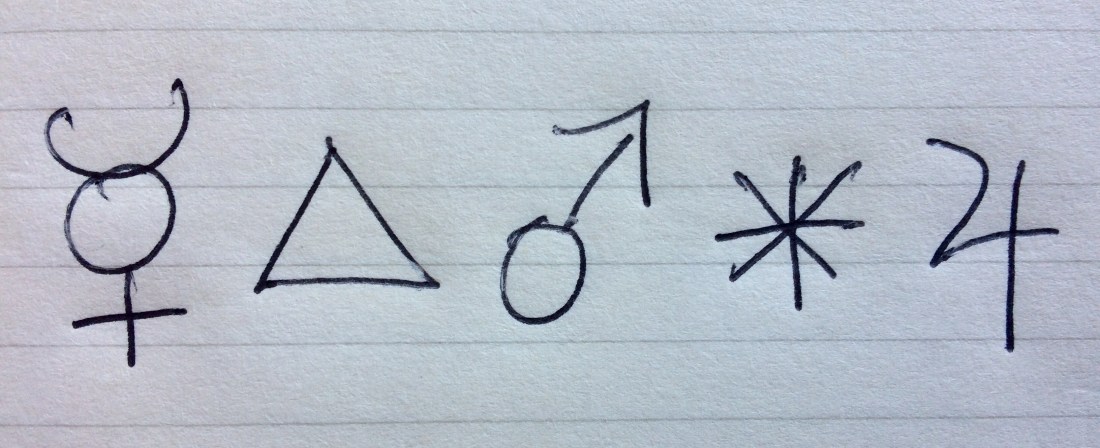
In astrology Mercury is associated with the signs Gemini, Virgo and the corresponding third and sixth houses of a chart.

Mercury, closely following the sun at all times, is said to represent the mind, how we think, communicate, our nervous system, their strengths and weaknesses depending its conditioning.

Take Luke (not his real name which is protected), a former teacher who’d taken early retirement a while ago. He came to me wanting to know why he’d become so restless and nervous. He explained that he’d always been a bit restless, but especially of late. He knew his birth time to within about five minutes, so I calculated his birth chart.

Raised Eyebrows

Immediately, one of the ‘reasons’ he described himself as restless leapt out at me from the computer screen. His Mercury was closely conjunct a Capricorn ascendant, trine Mars in Taurus, sextile Jupiter in Scorpio. There were no so-called difficult or hard aspects, no squares or oppositions to Mercury. He seemed curious as to why my eyebrows were raised. At the time he came to see me, transiting Pluto had been lurking with intent around his native Mercury for a few months.

Over the years I’ve found it remarkable (a lot of the time) how people ‘speak’ their charts. In Luke’s case Mercury here was doing all the talking!

Mercury in Capricorn represents a practical mind, that likes to spend its time productively; teaching would be one good outlet. Close to the ascending degree and energised by Mars and Jupiter, one might expect the native to be a little fidgety – he was, constantly scratching his head, re-arranging his seating position. He just had to be doing something!

Positive Energy

So with all that positive energy from Mars in Taurus, which only increases the pressure to ‘do something’ practical like making money, and from Jupiter in Scorpio, encouraging him to go deep, plumb the depths of knowledge, it’s probably not surprising that Luke was a bundle of unresolved, nervous energy which now ceased to have a proper outlet or channel.

“Can you write?” I asked, rather glibly, picking at Mercury’s communicative qualities.

He nodded. “Yeah, I do it all the time.”

“Professionally?”

He shook his head and laughed. “Just jot things down and scribble, you know.”

But I could see something opening in his eyes, some kind of realisation.

“Don’t get me wrong,” I said, tentatively, “I can’t advise you to do anything but what might help is to find a project, a writing project, to really get your teeth into, to fill the gap that teaching filled. Something like that.”

Second Career

He seemed interested, but with all that earthy mental energy, I figured that creative writing might not be the best outlet for him. “Serious themes, perhaps,” I continued, “history, religion, psychology, geography…”

“Ha!” he exclaimed, “I taught geography for thirty five years!”

“OK, apart from teaching it, have you written about it, expressed our own ideas, opinions? Have you done research, for instance?”

“Not since university.”

Chance Meeting

It was around six months later when I met up with him again by chance, not in my house, but in the high street outside a butcher’s shop of all places.

“You were right about the writing, by the way?” he said, smiling nonchalantly.

“Really?”

“I’m a regular contributor to a science magazine now… and I’ve started giving talks on geography and geology for adult education locally. In fact, I’ve been invited up to Sheffield next week to give a talk.”

I tried to disguise my own smirk. It would seem that his native Mercury, which may have given him the impetus to become a teacher in the first place, had now inspired a second career in his retirement, as a writer and speaker. Pluto’s close proximity to his native Mercury at the time, may just have done a little prodding from behind the scenes.

Ultimately, I think this example also shows a need to look for the obvious, stand out features of a birth chart first. “Keep it simple, boy!”

Book sniffing note: Slanguage, by Bernard Share — Sesquiotica

Look, I don’t think I’m weird about this. I really don’t. I think lots of you sniff your books. And probably other people’s too. The way books smell matters. The cheap hard white academic institutional paper of tenure books and reheated dissertations has a smell that tells you from the beginning that you will learn a […]

via Book sniffing note: Slanguage, by Bernard Share — Sesquiotica

The Matthew Flinders Connection: May Church Flower Festivals in South Lincolnshire, England

PHOTO-2019-05-10-08-36-28

There used to be an event, commencing in the late 1950s, famously called ‘The Spalding Tulip Parade’ in south Lincolnshire, England.

Every year much time and money was spent on creating a series of floats decorated with tulips to parade around the small Lincolnshire town, sponsored by local and national businesses. Tourists flocked there every year from many parts of the country and beyond.

Sadly those days have long gone now. However a ‘vestige’ of this former glory still remains in the numerous church flower festivals which still take place in early May.

I was particularly impressed this year by Donington’s flower festival. The explorer and cartographer who essentially mapped Australia, Matthew Flinders, was born in Donington in 1774. Recently his remains were discovered and there is a move to bring them back to Donington – you could almost feel the air of anticipation at this prospect.

Strong Links

Today many strong links remain with Australia; there are numerous visits from ‘down under’ too, both sides very keen to keep up and improve the cultural associations.

Let’s hope his remains return home soon and that a tasteful setting is created for the memory and legacy of the great Matthew Flinders of Donington, Lincolnshire.

Toussaint_Antoine_DE_CHAZAL_DE_Chamerel_-_Portrait_of_Captain_Matthew_Flinders,_RN,_1774-1814_-_Google_Art_Project (1)
By Toussaint Antoine DE CHAZAL DE CHAMEREL (1770 – 1822) (Mauritius)Details of artist on Google Art Project – XQFjQ8PX1C_hwA at Google Cultural Institute maximum zoom level, Public Domain, https://commons.wikimedia.org/w/index.php?curid=23601763

May 1092 Lincoln Cathedral Consecrated

Wenceslas_Hollar_-_Lincoln_Cathedral_from_the_west
By Wenceslaus Hollar – Artwork from University of Toronto Wenceslaus Hollar Digital CollectionScanned by University of TorontoHigh-resolution version extracted using custom tool by User:Dcoetzee, Public Domain, https://commons.wikimedia.org/w/index.php?curid=6241265

One of my favourite places, Lincoln Cathedral, was consecrated this month way back in 1092.

To put that into perspective, King William (Rufus) the Second of that name, son of the mighty Conqueror, had been on the throne since 1087. It was only a quarter of a century after the Normans’ hostile (in fact rather brutal) take over of the board of the richest kingdom in western Europe, but already their introduction of Romanesque architecture was changing the landscape of the country for ever.

However Lincoln Cathedral’s early history was blighted by disasters. A fire destroyed the roof in 1124, an earthquake destroyed most of it in 1185.

Nevertheless despite this the structure was rebuilt in magnificent fashion to become effectively the tallest building in the world, thanks to its huge central spire. The triple spire configuration as it was during the late medieval and early modern period must have been an incredible sight. Then, tragically, in February 1549 the central spire collapsed during a storm. The two smaller spires remained for some time until they were taken down for safety reasons.

Even so, Lincoln Cathedral still remains high on its hill, and is at least to my mind, the best cathedral in England and therefore one of the best anywhere. If you are in the region it’s well worth a visit.

There is much more I could say about the cathedral and the city but I will leave that for future posts.


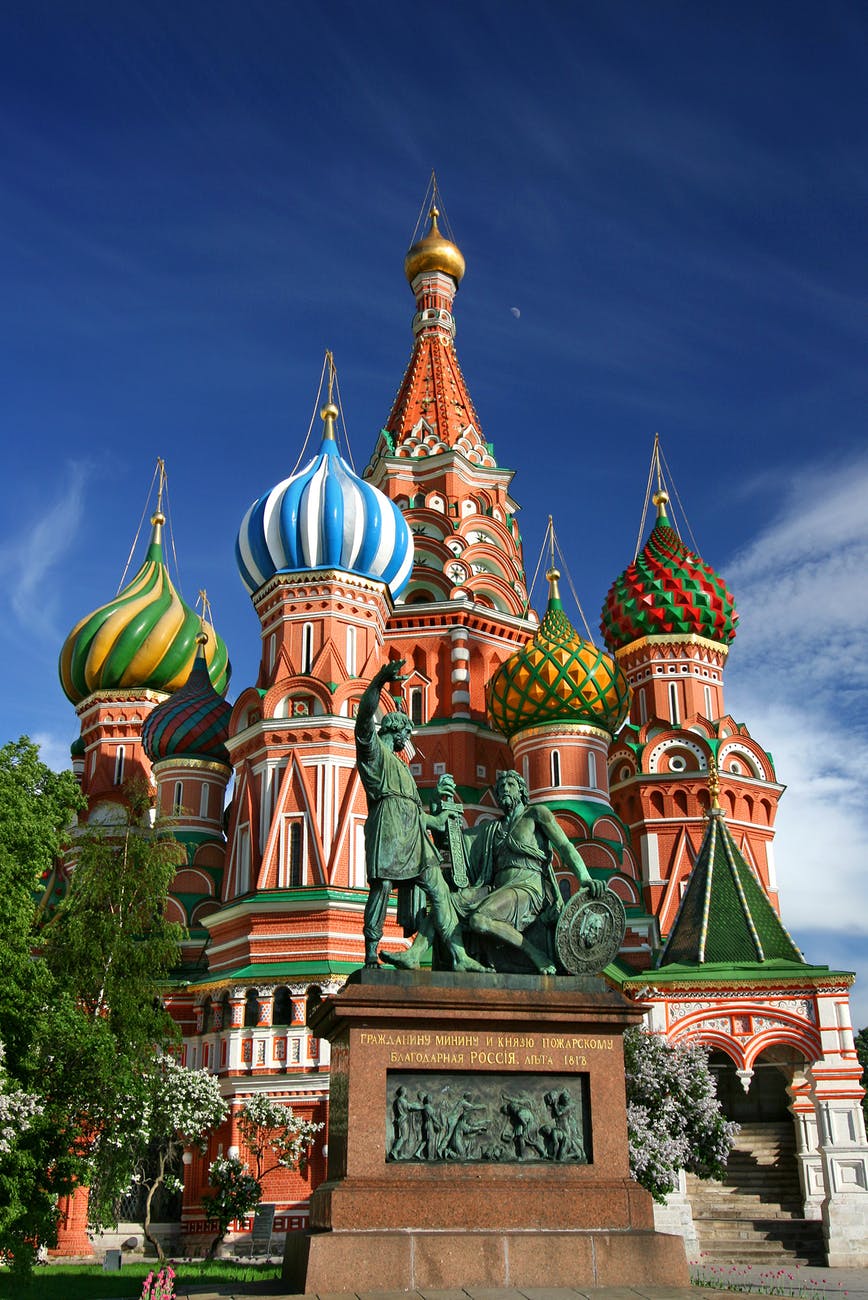
Putin as President

saint basil s cathedral
Photo by Julius Silver on Pexels.com

It’s interesting to note that it’s 19 years to the day since Vladimir Putin was first elected to the Russian presidency.

I don’t believe it’s been continuous, I think Medvedev spent four years as President too, but few western politicians have spent so long in high office, or achieved such levels of popularity, which he appears to retain to this day and Russia has certainly been transformed in those years, the Orthodox Church being reinvigorated, for example.

Naturally though, he remains a controversial figure in the West.