I was astonished when I first saw T. S. Eliot’s birth chart, one of the leading modernist poets of the 20th century.
When he was born, the Sun, Mercury and Venus were all in his Libra first house along with Uranus. In fact, the Mercury Venus conjunction closely straddles the ascending degree.
A Lover of words
With all this activity in air, here is a natural thinker, communicator, writer, a lover of the beauty of language and literature, words in all their forms. Here too is natural charm and easy, and probably quite lengthy, conversation.
His Libran Sun forms easy trines to both Neptune and Pluto in Gemini in house 9 of the higher mind and a nice sextile to Jupiter in house 3. He clearly was a very deep thinker with an expansive mind, a lover of spiritual, hidden matters, of foreign culture and philosophy; he did go to great lengths to learn Sanskrit as an aid to his development as a poet and writer, always encouraged by his mentor, Ezra Pound.
Outside of the box
The Gemini Moon in house 9 is trine his first house Uranus. He is quick witted too, with an unusual manner and ability to think outside the box, a prerequisite for a modernist writer.
If we look to his third and ninth houses, indicators of his mental functions more fully, we see that Jupiter not only rules house 3 but is present in it along with Mars. He has a naturally open, well developed and forceful everyday mentality.
However, I also notice that Jupiter forms a close opposition to Neptune in house 9. This difficult aspect, though bringing a certain confusion, possibly between the everyday functioning as a writer and his passion for expansive thinking, was probably actually a spur to greater achievement in the end, being a source of imagination and inspiration, especially as it is part of the configuration with the Sun mentioned above.
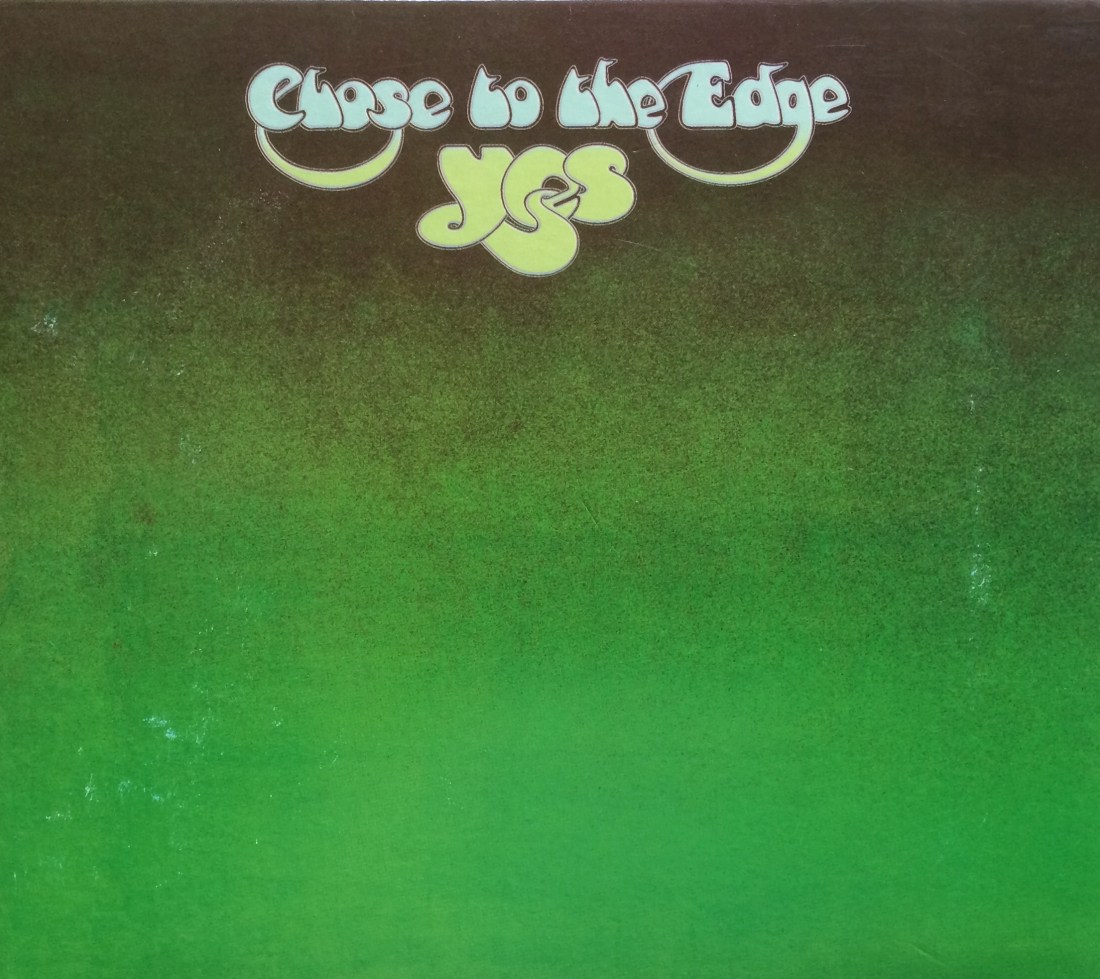
Probably my favourite all time prog rock album, ‘Close to the Edge’ (Elektra/Rhino CD) by Yes.
I was quite young when this came out in 1972 and didn’t actually hear it until later in the following year, when my elder brother brought it home. I think I had heard ‘Fragile’ by then too, the band’s 1971 release, which kicked off with ‘Roundabout’, one of Yes’ more ‘accessible’ numbers for a young boy. Nevertheless, I remember being pretty impressed by the whole album.
Spiritual sound
However, when my brother put ‘Close to the Edge’ on our family hi-fi, at first I wasn’t sure what to make of it. The slow start of planetary, naturalistic sound, the incredible weaving together of all the different movements of side one, took some time for me to appreciate, but now it’s like one epic poem, a vast spiritual movement of sound that is hard to describe, in words. It just has to be experienced, let it take you somewhere.
I still particularly like the ‘I Get Up I Get Down’ section, so beautiful, bringing together all the singing talents of the band, not just Jon Anderson, but also Steve Howe and Chris Squire.
Five virtuosos
Which leads me to a major point. Has there ever been a better example of five incredible talents working together, at the top of their game, producing such a masterpiece? I would doubt it.
Jon Anderson’s unique voice and inspirational lyricism; Bill Bruford’s peerless percussion; Steve Howe’s sheer virtuosity on six and twelve strings; Chris Squire’s uniquely lyrical bass and underrated singing; Rick Wakeman’s pure genius and dexterous flair.
It would prove to be a small window, sadly. Very soon, Bill Bruford would be on his way, followed soon after by Rick Wakeman. But what a beautiful, ornately made window it was. It was of its time.
Woven together
Side Two for me is equally impressive. I can still quite easily listen to ‘And You And I’ on repeat. I love the start, with Steve Howe hitting the harmonics on his twelve string, the way Rick’s synth plays over the top is so joyful, full of life. And like all Yes tracks, it’s difficult to envisage how they all put this together, so differing are the elements, but they come to together beautifully, woven by lyrics which are both hard to fathom, yet totally fitting – a Yes trademark.
And the final track, ‘Siberian Khatru’. Heaven knows what it’s about but if I had just one track to take to my desert island, I think it would be this.
Atmospheric
Great, catchy guitar riffs to start off and great rock playing by the whole band, but soon the wonderful group singing harmonies come in to play, adding a great atmospheric and naturalistic feel.
Then all the virtuosity of the band kicks in – indescribable. Especially, towards the end when they sing pairs of mysterious words with lots of reverb, which may, or may not, be related… but it works, it means something, though I don’t know what it is. And did I mention Steve Howe’s jazzy guitar on the outro?