The AA and The Royal Mail are two mainstays of British cultural life, services that, generally speaking, can be relied upon.
We still belong to the AA and the number of times they have ‘dug us out of a hole’ are too many to count. Yes, it is perhaps fairly expensive if you go for bells and whistles membership, but is it worth it? Yes, I think it is. I love the emphatic yellow of the organisation and particular that of this toy.
If anything The Royal Mail is just as iconic and with that special monarchical and historic link, coloured by a similarly strident red. I think the two vans go well together.
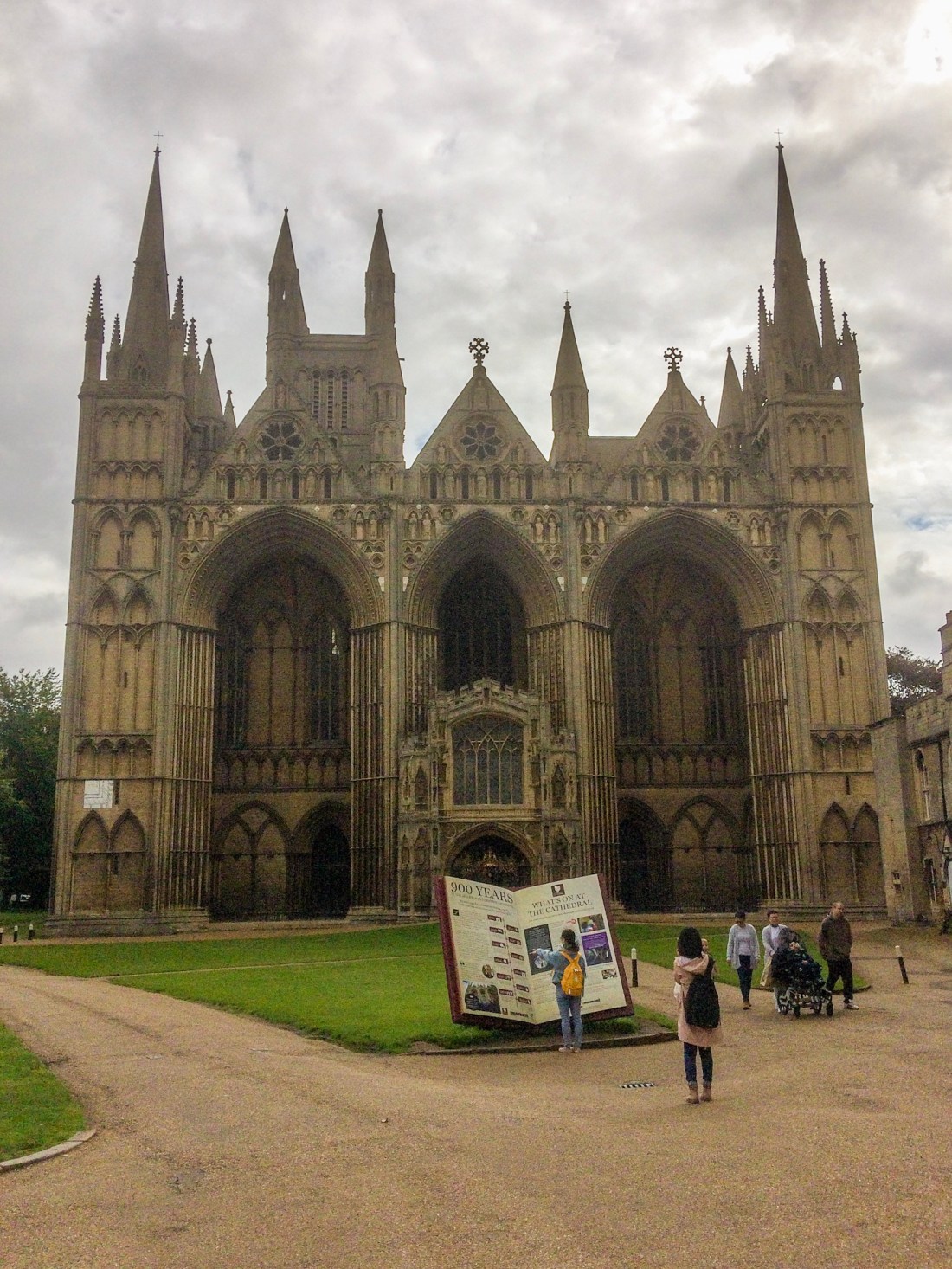
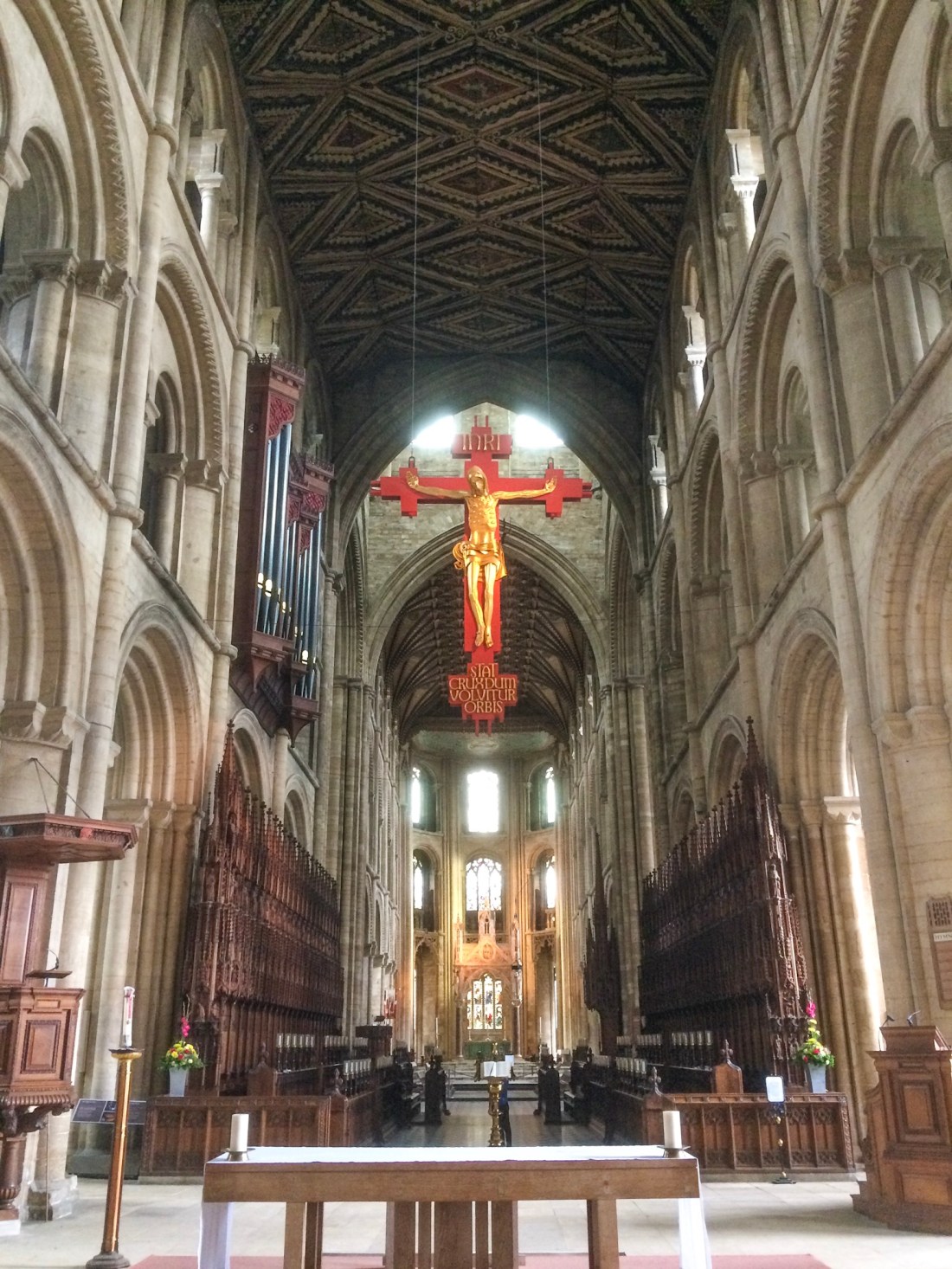
Put simply, Peterborough Cathedral is one England’s best churches, though it is often not as well regarded as some others, like Lincoln, Ely and York.
This might be due in part to Lincoln’s prominent setting, Ely’s architectural distinctiveness and York’s admitted supreme grandeur.
Peterborough, by comparison, lies on the edge of the flat fens, yet in one of the primary areas of England for monastic development because of the remoteness of location. In its day, Peterborough Abbey was one of the most prominent in the whole of eastern England.
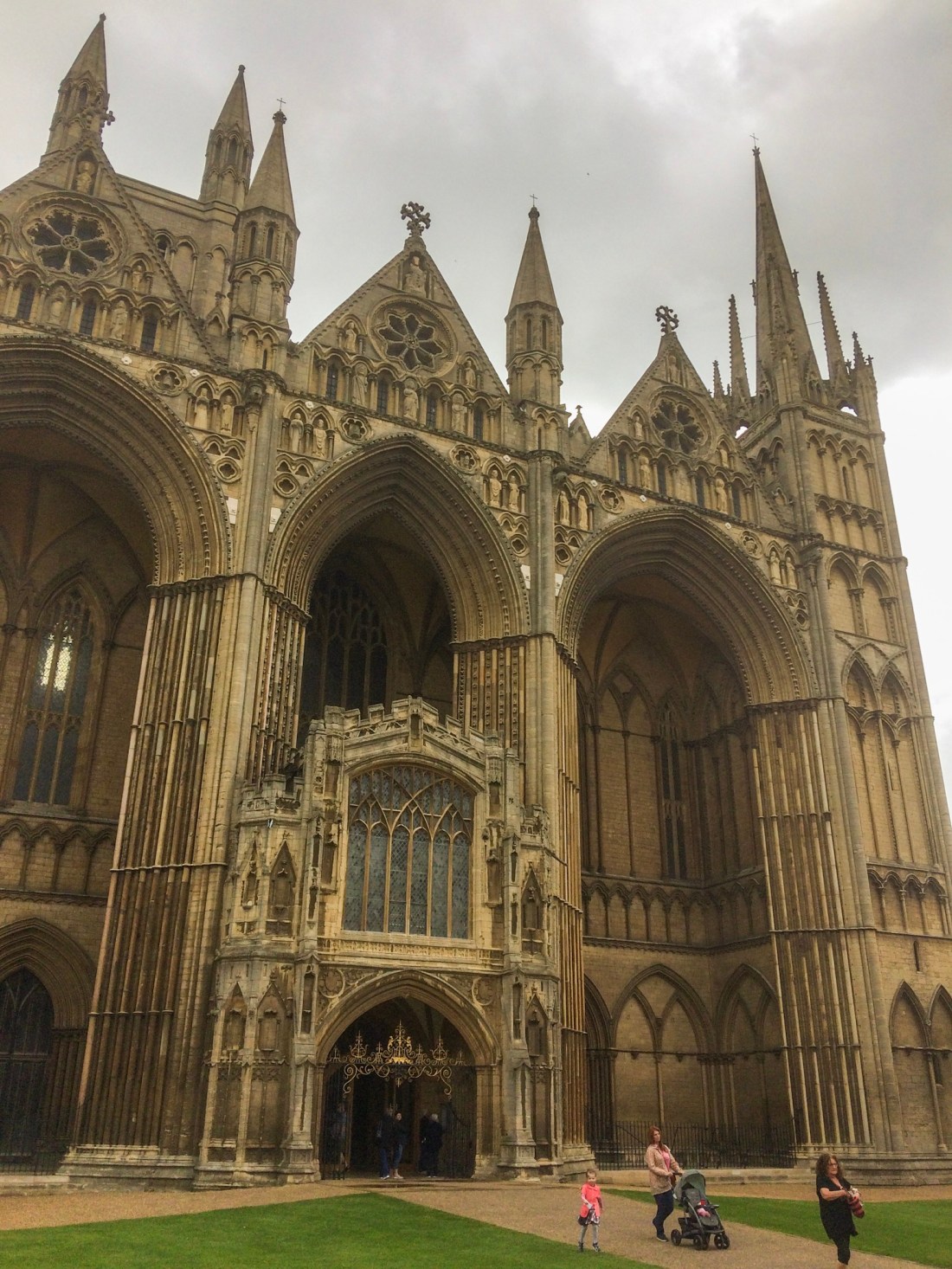
The wonderful west front of Peterborough Cathedral, completed in the 13th century.
Originally the abbey church of Saint Peter’s Abbey, Peterborough, in the east of England, the present church was granted cathedral status (and thereby preserved) by Henry VIII, self appointed head of the Church of England, during the Reformation in the 1530s, which saw many former monastic buildings taken down and sold off. For this at least we should be grateful to England’s most notorious monarch.
words and photographs copyright Francis Barker 2019
They smile when I shut the heavy, creaking door,
from behind their neat wooden kiosks
stuffed with pamphlets and insipid books.
Smiles of recognition, a nodding
acceptance as if to say –
‘Oh, it’s you!’ Volunteer women serving Christ
better than those above them in Church.
I walk along the emphatic southern aisle under
uber-Norman arches, at the far end of which
hangs a limp flag of Saint Andrew,
in honour of Mary Queen of France, Scotland
and some say of England, too.
Glancing to my left a young man kneels,
wringing hands beneath a life-size figure
of a crucified Jesus, hanging high in space.
He stares upwards, rocking gently back and forth,
as if imploring Him to be real,
to writhe, sweat, bleed, perhaps to save Himself
and then, somehow, to save him as well.
I’m here to light a candle outside
Saint Oswald’s shrine and to sit for a time
in silence inside the tidy chapel,
to pray for a poor boy in pain,
perhaps to ponder on those relics,
those bits of bodies and other things,
worshipped once and then dispersed,
despised in fractured minds,
to us now mostly objects of indifference.
Oswald’s arm must lie hereabouts,
known to someone who still believes
in its restorative power, like the monks
who consumed this place, where Domesday
came and went without event,
where the Chronicle of a people faded to grey
in an undrying ink. Still it awaits the next line.
In this fossil the dead are lucky.
They are dead but in faith, whereas I roam
restlessly among echoes of whispers,
a heartless void. I cut across through the choir
to find I’m not alone, where the true
Queen of Hearts lies. Letters of gold spell
her name to all, but for me she smiles
brighter than anyone alive,
a smile from scorched Iberian lands,
her fate to end up on this drab island
where fashioned pomegranates mark her spot,
from which she expects to rise
at some glorious hour, where, until then,
the anonymous faithful lay fresh fruit
and flowers to mark her special days.
I watch a tourist, a German tricolour sewn
onto his rucksack, as he reads
the commemorative words. A sudden,
unexpected pride washes over me
while he pauses on her ground to think –
where I was once intrigued.
Almost believing.
Resting place of Catherine of Aragon, Queen of England. Peterborough Cathedral. Featured image at top of page are of pomegranates on her tomb.







 Ciscography