

copyright Leofwine Tanner 2019
*If you would like a personal astrology report, please contact me at: leoftanner@gmail.com for details.
copyright Leofwine Tanner 2019
*If you would like a personal astrology report, please contact me at: leoftanner@gmail.com for details.
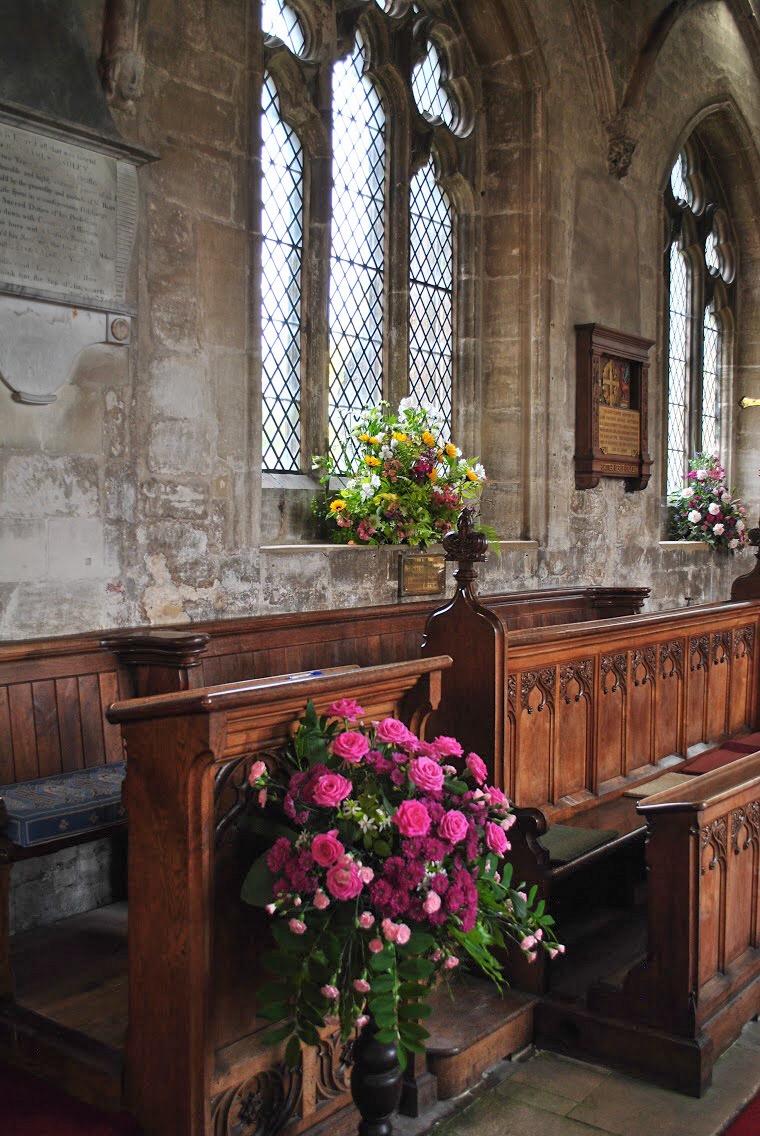
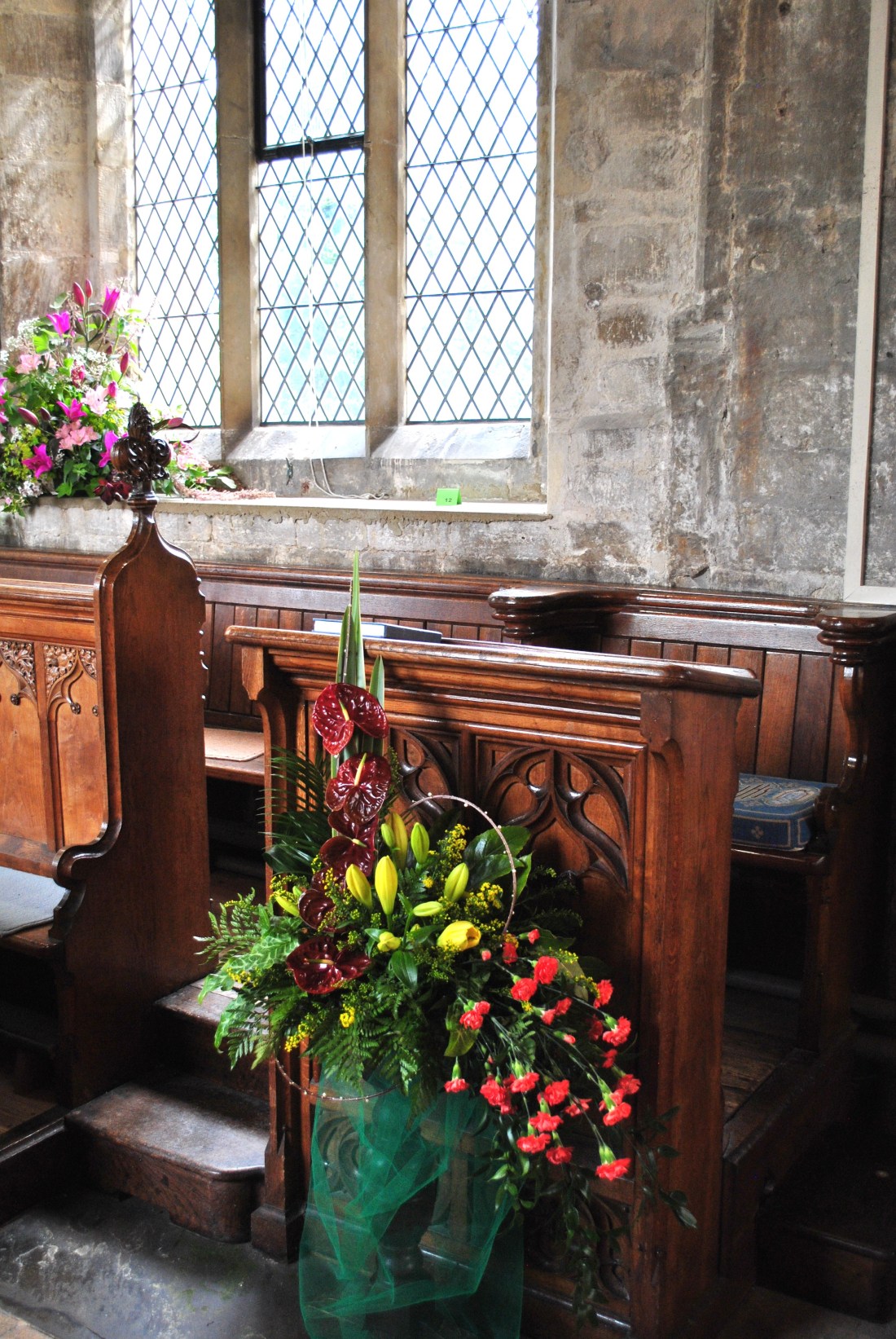
Inside one of the most beautiful churches in South Lincolnshire, Fleet.
copyright Leofwine Tanner 2019
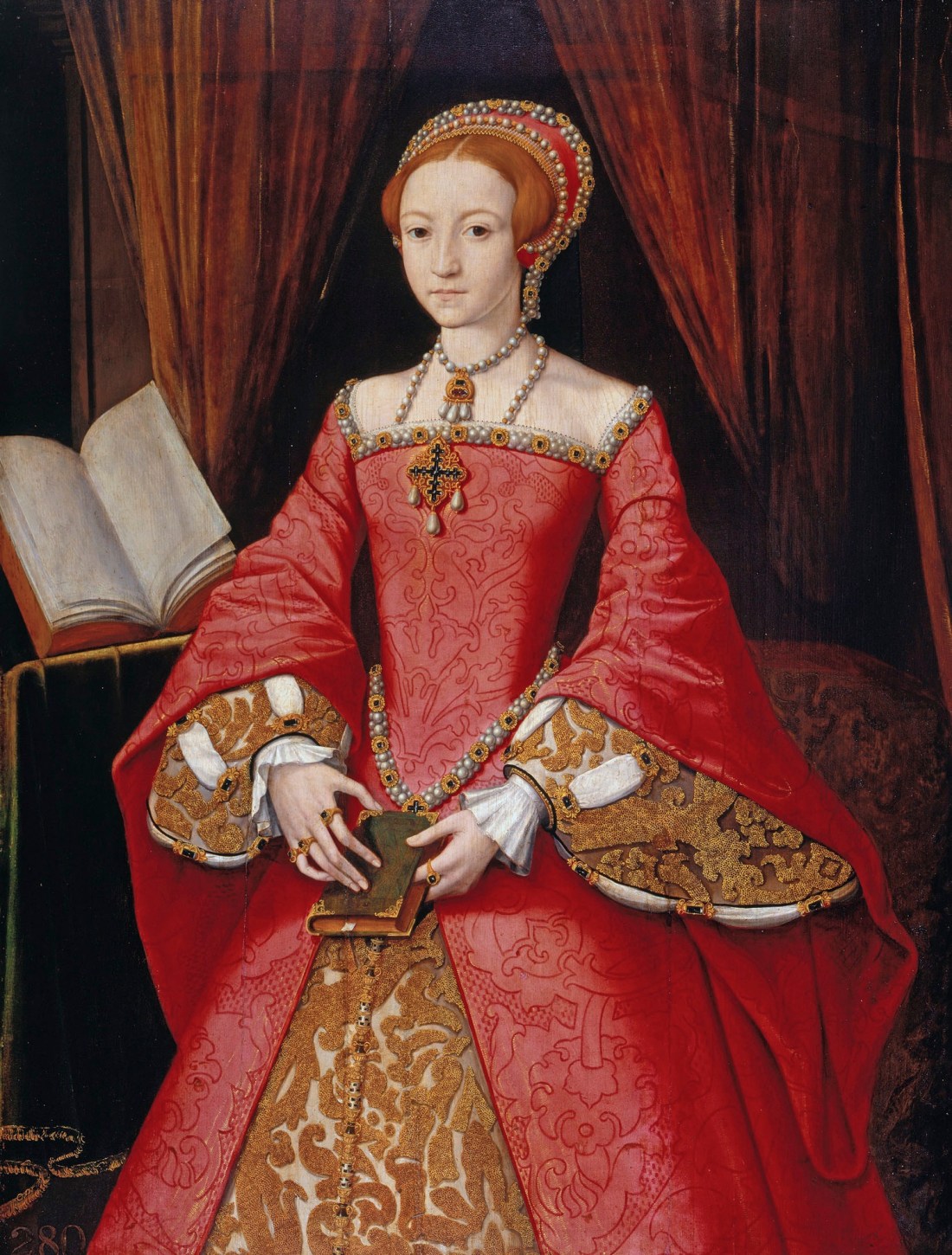
After all, the time of her coronation was decided upon by none other than Dr John Dee, magus, diviner, astrologer, the inventor of what came to be known as the British Secret Service. He was also the instigator of the notion of ‘The British Empire’. More of that in another piece.
But what of ‘The Virgin Queen’s’ nativity, her birth chart. Being a royal princess, her birth time was duly noted, even though Henry VIII was reputedly less than happy that Queen Anne Boleyn had dared to give birth to a daughter.
Quite fittingly, the Virgin Queen, as she became known later, was indeed born under the sign of Virgo, the Virgin. It was right up high in the ninth house, so she was always likely, thanks to her birth, to be well known abroad (ninth house foreign affairs), often notoriously amongst her enemies.
The Moon in Taurus in the fourth house, close to the nadir of the chart, also comes into play here, I feel. Taurus is fertile and the Moon is well placed here. Is this the origin of the myth of her fecundity? I think it certainly stands for her popularity with her own people.
She was also portrayed as Astraea, queen of the heavens from ancient pagan myth – not Christian at all, but this was very much in vogue at the time with the likes of John Dee and other Renaissance men plucking the strings, through their magical science and the giants of creative literature, such as Marlowe and Shakespeare.
Her ascendant is Capricorn, and therefore her ruling planet is Saturn, the great taskmaster. Capricorn rising brings responsibility, often hardship, privation, a willingness to see things through for some greater prize; in this case, we are told, it was England itself, its preservation from outside rule.
Saturn in Cancer in the seventh house reveals the equally serious and responsible attitude she had in her dealings, diplomatically, but also in her relationships. Saturn in Cancer is in its ‘detriment’, its not a happy place.
It symbolises a potential lack of family, caring, loving, nurturing – but it also creates a dogged hardness of spirit, purely through harsh experience, a resigned sense of making do emotionally.
Here we see also the coldness that was dealt her when she was a princess. Her mother was executed when she was little more than a toddler. She was imprisoned and came pretty close to being executed herself, it would seem, during the reign of her half sister, Mary.
So in many ways it’s surprising she ever made it to the throne.
It transpires too that Elizabeth was one of the most intelligent rulers England has ever had. She could debate with the best of men, speak and write several languages fluently.
For this we should look at Mercury and Venus high up in Libra in the tenth house of career. Mercury is trine Mars in Gemini and this creates a ready wit, mental versatility, a charming, diplomatic manner and intellectual potential, all of which could be put to good use in her reign, as it was. She was the epitome of pragmatism, which became her method of survival in a man’s world.
Venus in Libra is all about love, diplomacy and indecision. She was in love with love, if you like, and so high up in the chart, there was also a danger that it might get out to the public. At times the love and diplomacy melded into one, sometimes in the most bizarre ways. In the end she could not decide.
Nevertheless, the harsh screening of that Capricorn ascendant, Saturn in Cancer in the seventh house too, would always manage, somehow, to keep some kind of reign on her romantic flirtations and dalliances. In her heart, we are told, she devoted herself to her people and to England: that’s Venus in Libra.
And Saturn in the seventh house could mean of course, a lacking in the marriage, or even the denial of it.
*If you would like a personal astrology report, please contact me at: leoftanner@gmail.com for details.

The Prime Minister of the United Kingdom. I mean, who would want it – really?
One of the names touted around for some time is the former Lord Mayor of London, former British Foreign Secretary, leader of the Brexit campaign in 2016, prominent journalist, editor and author, Mr Boris Johnson MP.
Does he have what it takes, astrologically speaking, to lead United Kingdom PLC? Well now he’s thrown his hat in the ring, here’s my take on it, my musings.
Let’s begin with the chart basics. There’s lots of air: Libra on the ascendant; Sun, Mercury, Venus (the chart ruler) and Mars in Gemini in a pretty full ninth house; Moon in early Scorpio in second house, but still trine the Sun and Venus conjunction.
There is a lack of the fire element.
So what might all this mean?
Obviously the birthchart of any leader will necessarily apply itself to the fortune’s of that nation. So who do we have here?
Libra rising and all that Gemini; the affable, likeable, quick-witted, humorous fellow we all see. Nevertheless, this outer affability should not disguise the significant substance within: this is no ‘shallow’ Gemini.
He’s obviously great company, as well as a serious intellectual, with a penchant for foreign matters and history, especially classical history – all ninth house affairs.
He is a particular operator from the higher mind, though always approachable (Libra, Gemini), intelligent, able to give full, well argued, discursive answers, probably without notes, all delivered with humour (lots of Gemini), argumentative fervour if need be (Mars in Gemini ninth house) but with grace (Libra rising).
He’s charming, a naturally enthusiastic communicator, who could make you be interested in virtually anything. He might have been a salesman in another life.
But he’s also a diplomat, a negotiator (Libra) and probably a very good one, too.
And at the end of the day, that Sun conjunct Venus in Gemini will always make him likeable, even to many of his political enemies. The Sun Venus trine the Moon also means he’s pretty much at peace with himself, too, I think.
But let’s look at that lack of fire. As a potential leader, I would be happier to see some Aries or Leo, or a prominent Mars, so this may be a problem. I don’t see here a natural leader, but he understands both sides of an argument, with persuasive, intellectual power in droves. He’s very comfortable in the heady world of intellectual debate (Air signs, ninth house): He may have to rely on it.

So what might a Johnson premiership be like?
Well, with all that ninth house activity, he will naturally gravitate towards foreign affairs, and this area of UK policy is not going to change very soon. No surprise there, you might say. The difference being, I’m pretty sure, is that the EU negotiators this time would know they’ve been danced with, so to speak. He’s no pushover when it comes to arguing over a point.
Libra (on his ascendant) has a reputation for indecision, yet it is often prominent in charts of leaders and generals. The key factor here is weighing up, literally the balancing of options, a fundamental part of deciding on any action.
His ruler (Venus) in Gemini might even seem to exacerbate this tendency for fence sitting; maybe this is why he’s waited until now for what he sees as the appropriate time, rather than trying to oust the incumbent premier earlier.
With the emphasis on Gemini and the ninth house, he would be able to respond quickly to events, have a broad grasp of any situation. These are good qualities.
In recent times he’s published a biography about Winston Churchill. Most interestingly both men have a prominent Saturn Uranus opposition, Boris Johnson’s almost exact.
Here we might see the fundamental problem that would face any leader at the present time though, and perhaps particularly a Johnson premiership. Saturn represents the existing order, Uranus stands for a radically new one that may be thrust upon us without warning. They are fighting each other, and we can see similar situations in Europe and the world, as well as within individuals.
In his own chart, this plays out in the sixth/twelfth house axis, but could be highly significant for the country’s health if he’s leading it, how it functions as a nation, and whether it can face the deep psychological rifts that may be going on with Britain’s changing status in the world.
There is another near exact opposition also between Jupiter and Neptune in the second/eighth house axis. This hints at financial and security instability, confusion.
So to summarise, he’s not a firebrand, inspirational type leader. He leads with reasoned argument, persuasion and oodles of wit and charm.
And sometimes luck comes strongly into play. If Mrs May could be described as being unlucky, maybe taking the job at precisely the wrong time, perhaps Mr Johnson’s timing is spot on. We shall see.
copyright Leofwine Tanner 2019
*If you would like a personal astrology report, please contact me at: leoftanner@gmail.com for details.
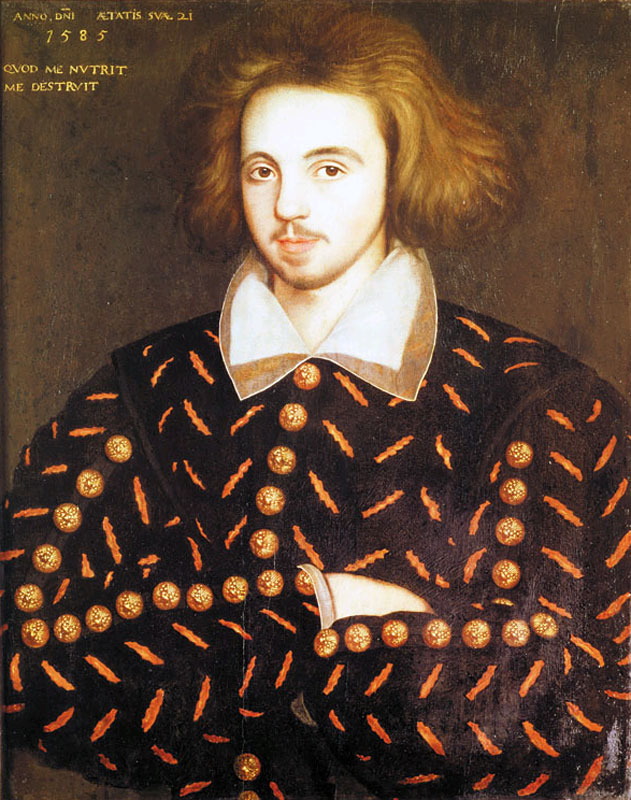
Marlowe was born in Canterbury, Kent, England, sometime in mid to late February 1564. There is an extant record showing that he was baptised on February 26 of that year.
In those days babies were usually christened quite quickly because of high mortality rates among infants. Therefore Marlowe was probably born just two to three days before this date.
Although born to a cobbler, it would seem that young Christopher was quite a precocious child. He went to The King’s School in Canterbury.
It’s worth remembering that then, as still now, Canterbury is the seat of England’s premier archbishop, a very important place.
Later, though perhaps at a relatively late juncture in his early life, he went to Corpus Christi College, Cambridge on a Parker scholarship.
In 1584 he got his BA degree and an MA in 1587, although the university was reluctant to award him the latter because of certain, irregular, though quite lengthy absences from the college.
Suffice it to say, that much has been written and speculated about these absences, as well as what he purportedly believed. Some say he was an atheist, despite spending years studying divinity.
Nevertheless, Marlowe went on to a meteoric literary career as a poet and playwright. He is often credited with inventing blank verse, poetry which doesn’t rhyme but written usually in iambic pentameter.
His play ‘Tamburlaine the Great’, was a huge success in London in 1587, so much so that he wrote a second part to it the following year.
There followed a string of ‘hit’ plays; ‘The Jew of Malta’, ‘Edward the Second’, ‘The Massacre at Paris’ and, probably his most famous play, ‘Doctor Faustus’.
The subject matter of his plays was often controversial, as was his apparent second career as a spy, or ‘intelligencer’ for the Elizabethan government. He seems to have been recruited for this whilst still at university.
Such controversy finally caught up with him in May 1593, when, after apparently being arrested on charges of ‘blasphemy’, released on bail, and then spending a whole day in an obscure house or pub with some rather shady ‘friends’ – he ended up being infamously murdered, during an argument about the bill, the ‘reckoning’.
The circumstances of this too are endlessly speculated on. Incredibly, the inquest of this murder was discovered as recently as 1925.
Even Shakespeare may allude to this in his play, ‘As You Like It’, where he seems to have known some of the details of Marlowe’s premature death.
So Marlowe’s meteoric rise and fame lasted about six years. After this, his reputation, maybe because of the controversy he courted, fell away dramatically.
Today, however, his reputation is back on the rise. He is seen as the true forerunner to Shakespeare, someone who ‘set the scene’ for The Bard’s longer career.
copyright Leofwine Tanner 2019
Soon I intend to do another piece speculating Marlowe’s birthdate and time for my ‘Astrology Musings’ section.
*If you would like a personal astrology report, please contact me on: leoftanner@gmail.com or details.
 Ciscography