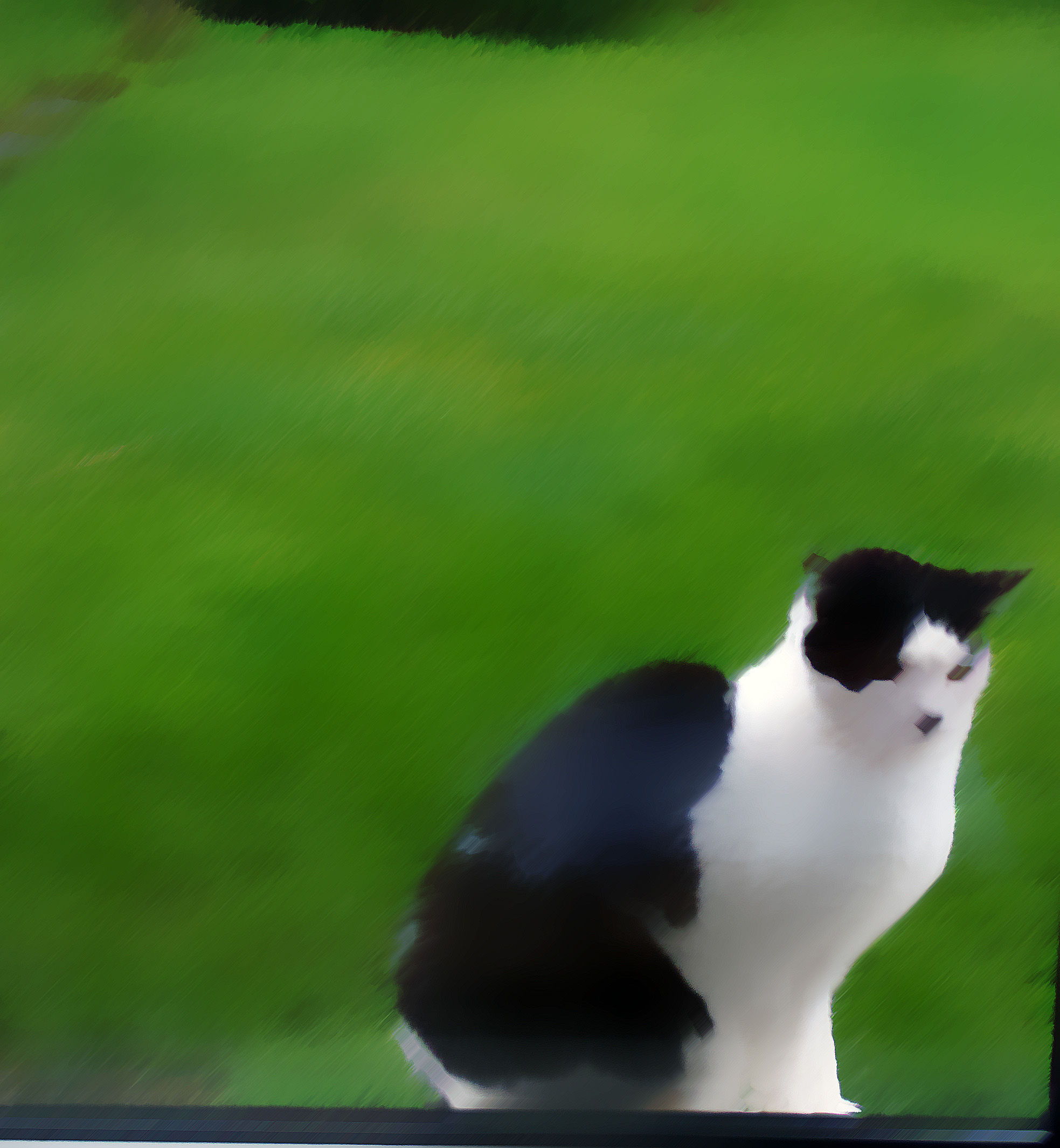
Poem ‘Rain’

Rain

He was looking at the rivulets
stuttering down the glass,
ignoring the sodden cat on the windowsill
and the puddles in the grass.

Sitting down, I braced myself:
He’d say it wouldn’t do any harm.
I suppose it was his way of seeing things
when in the safe and warm.

Never mind that spring was passing,
never mind that I’d forked the grass over

for five darn days on end,
to drain away the numerous ponds.
Yet still there are some who insist
that we are the lucky ones!

So I put on my best April gear,
braving the cold and the wet.
I had to get out of his face, you see,
to hear some pessimism instead,

about the weather, the world,
or the state of this or that.

Sadly though, I have to say,
rain makes even the shy ones talk,
though they’d better watch out —
because I’ll be stabbing with my fork!

poem and image © copyright df barker 2012

Poem ‘Mrs Wright’

Holland Cemetery: A rural cemetery in northeas...
(Photo credit: Wikipedia)

Mrs Wright

We approached her, standing stiffly
outside her cottage on the corner,
while she tended those remaining roses.

The sun was in his fall
with Michaelmas giving way to cooler winds.
She turned with some difficulty,

but still greeted us with a bespectacled smile.
She always had time, especially for me
and her roses, her world seeming slow

and certain, just like the green bus
we caught that hour on the bridge.
By the time we got back,

tired and ladened with groceries,
the sun was still out, sinking intensely
over the evergreen cemetery.

We saw no sign of the ambulance,
or the policeman’s bicycle.
Not even her son’s hastily parked car.

There was only a flutter
in the curtains across the road
as we struggled on by.

Such had been her last afternoon
upon which we had paused.
We hurried home having no idea,

doing up our light coats
in the stiffening breeze.

poem © copyright df barker 2012, first published in poetry collection ‘Anonymous Lines’, available digitally at amazon.co.uk and amazon.com (latter for the book itself).

Poem ‘Hitch’

Hitch

A throbbing disco bass
callously pounding my chest,
turning symptoms of flu
into something feeling serious.
I’d dragged myself there
against good advice,
that trashy little down in Drab County
whose only claim to fame
was its fine timber spire,
which made historians
and architects alike, drool;
the sort of town which made
the English feel proud of their past,
even if the present bore no hope,
no prospect of colour. A future

And pride! What was I doing
knocking back gin like tomorrow
did not exist?
Barely able to stand—
but still lord of the dance!
But it was you who held the cards,
the full deck.
You knew what you wanted
and how to get it.
I was the hopeless case,
a clueless pawn in your set up
with worldly guys from the Smoke
who were waiting by the door,
(forever waiting by that door!)
deriding us country boys—

but
this
country boy
knew enough about language
of the body, its gestures.
The cold morning brought eerie clarity,
despite pain in my head
to match the dagger in the heart. Oh—
you could keep your magnanimous lift.
I was hitching back.
The full seventeen miles,
even if only the bravest of drivers
would dare stop to pick up
this jerk
in the sick stained jeans

poem and image © copyright df barker 2012

Poem ‘The Country’ (for England)

“Smile at us, pay us, pass us; but do not quite forget;
For we are the people of England, that never have spoken yet.”

from ‘The Secret People’ by G. K. Chesterton

The Country

It’s all around them, though they never see it,
like Jesus said about the Kingdom of Heaven.

Some, even a poet, say it cannot be defined,
even though they are immersed in it,
like fishes swimming blind to the sea.

They take it for granted, spurn it,
but they are born in it and nurtured by it,
educated and employed by it,
and then nursed to the very end.

They say the language is not ours,
that it belongs to the world,
or to the oppressed,
to anyone with a cause
except our own.

Countless cocks have crowed,
but each time its existence is denied,
its very future put up for discussion
by people who owe it everything –
yet who would rather die than accept it
for what it is.

poem and image © copyright df barker 2012

*** For Saint George’s Day on April 23, patron Saint of England (and other places) for around 700 years, at least. William Shakespeare (1564-1616), a candidate surely for ‘Greatest Ever Englishman’, was born, and apparently died, on this day. This is not meant to be overtly nationalistic, but to simply, starkly, re-iterate that the feeling that poets and people in the past saw as a reality, is still clearly evident today.

* First published, without the quotation, in poetry collection ‘Anonymous Lines’, available at amazon.

**The image is reproduced from a painting based on a scene at Southwold, Suffolk, a quintessentially English seaside town.

Poem ‘Doing the Work’

Doing the Work

I thought of someone
scrunching up pink paper tissues
and sticking them randomly
to scanty trees. I paused outside,
beguiled by fresh horse chestnut leaves
like little green squids,
poised in the crossing sun

When finally I sat down inside—
sustained sounds in A
all around the unravelling dark
—I knew how much sweat
went into this, his sweetest symphony.
Oh, there would be tears, applause,
cries of ‘bravo!’ and the house
might well be brought down— eventually.
None of them saw the bitter tears
or heard the harsh cussing.
And they never had to sit
through the long silences
or watch him toss batons aside
and wipe that heavy brow.
More than once he must’ve wished
to be somewhere else—
in the grip of a glacier, perhaps?

At the break
I stumbled out into an evening
among smokers, a kerfuffle of gulls.
We watched a lone magpie emerge,
sneaking off with leftovers,
the keener eye winning
with the merest effort

poem and image © copyright df barker 2012