Lincolnshire in the east of England has some wonderful, often underrated medieval churches.
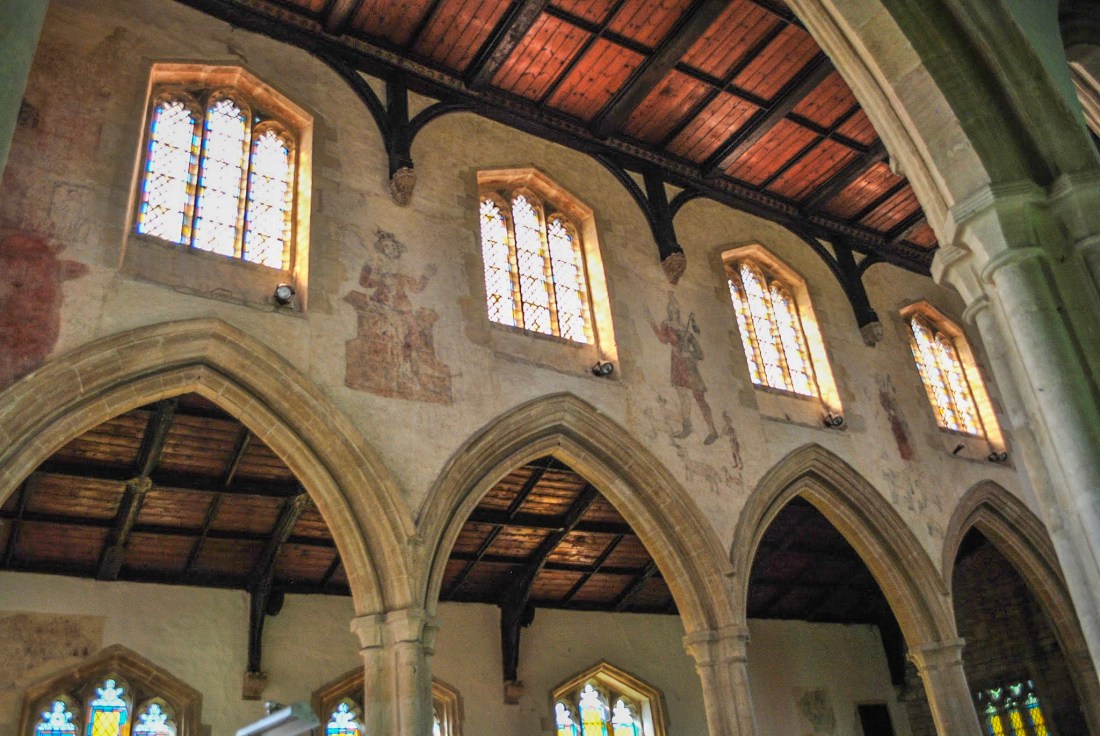
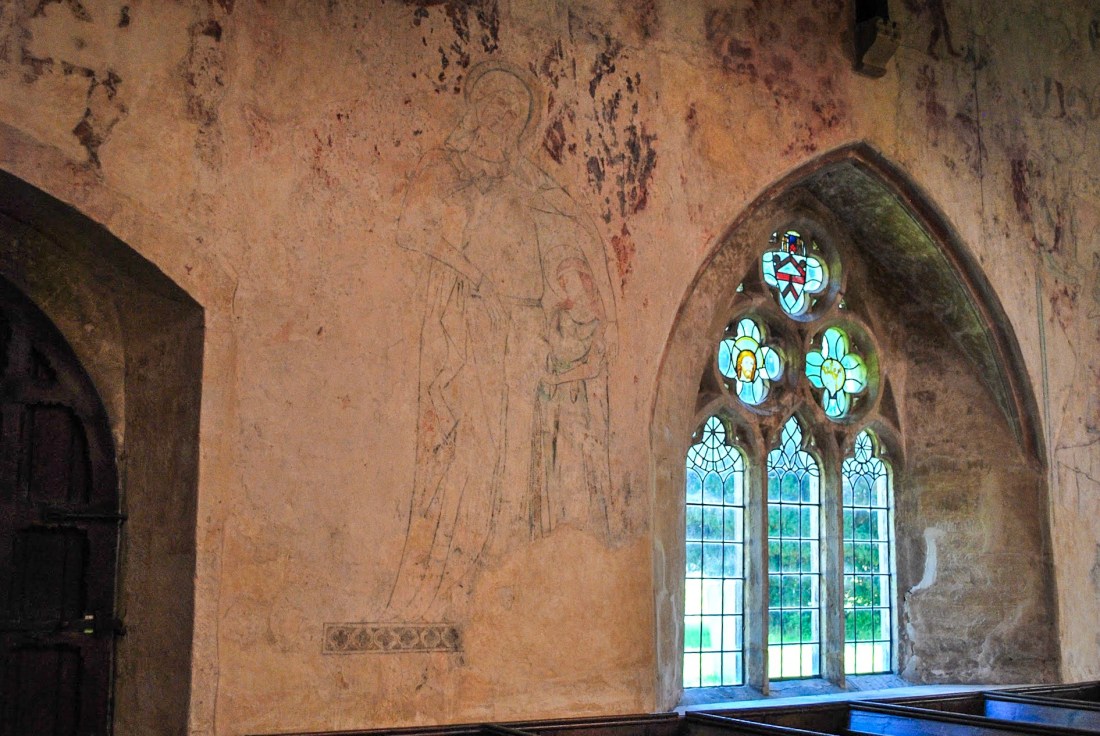
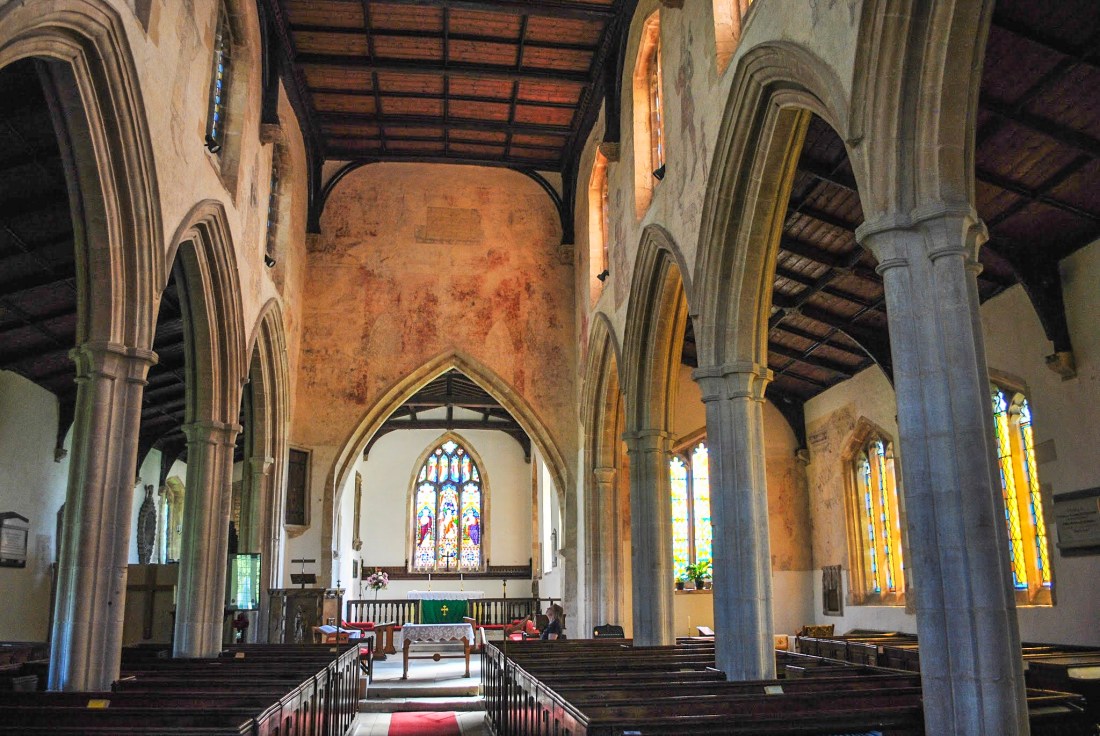
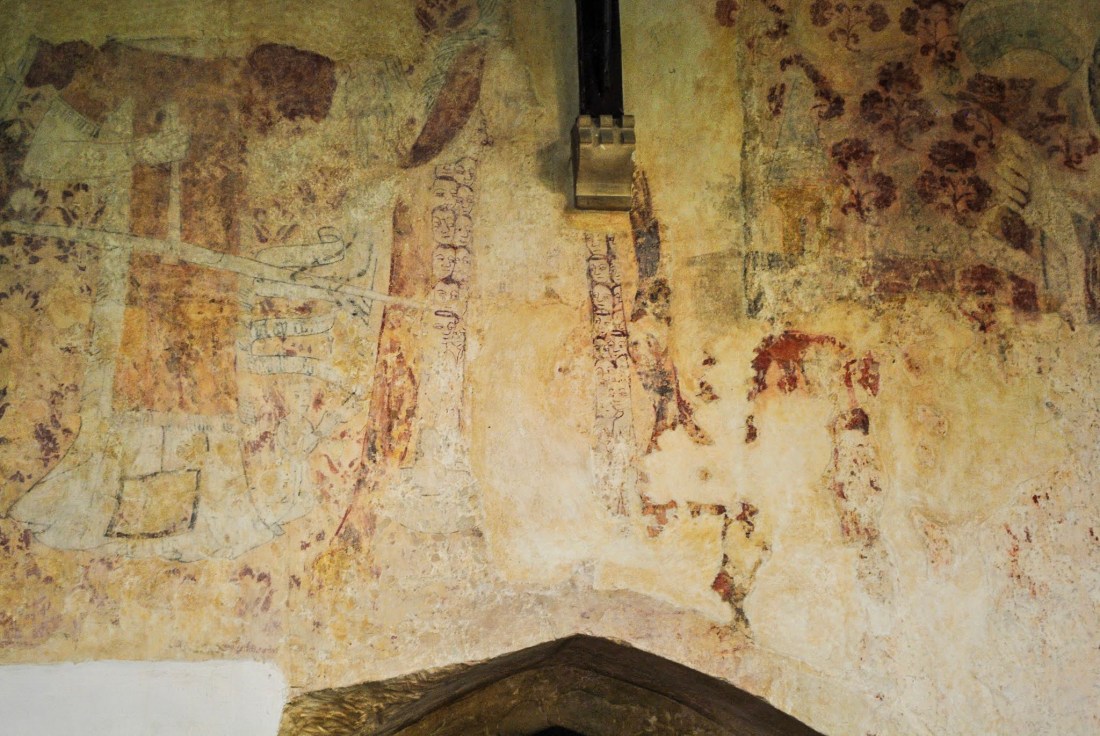
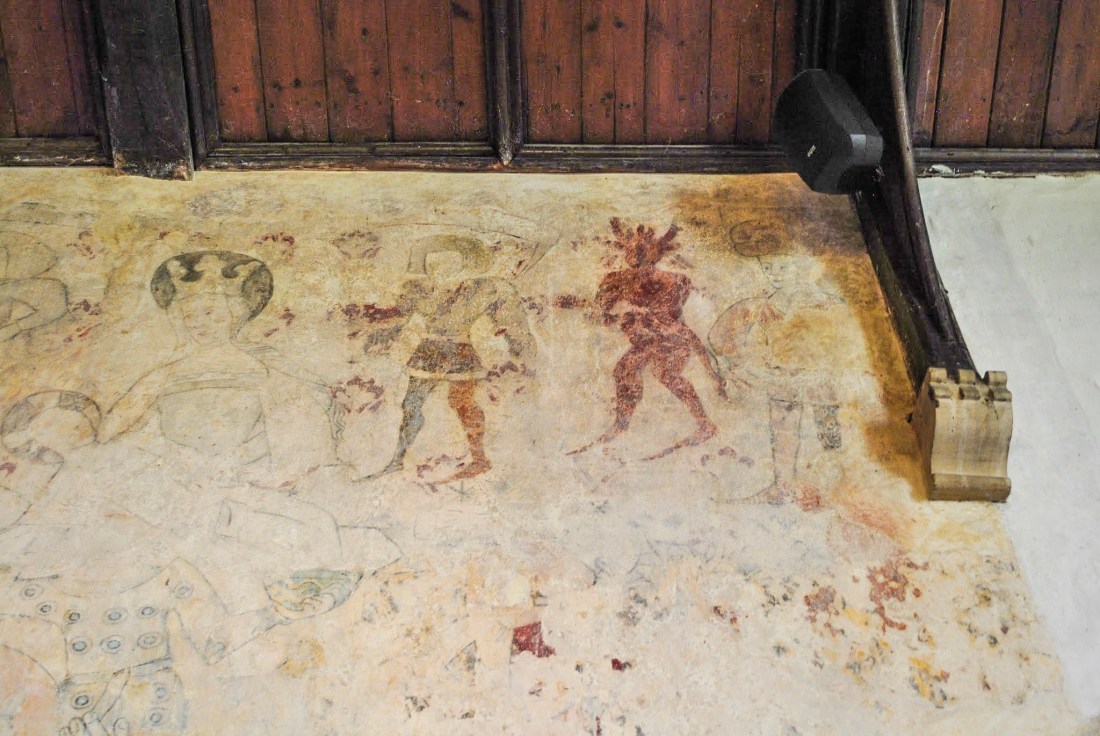
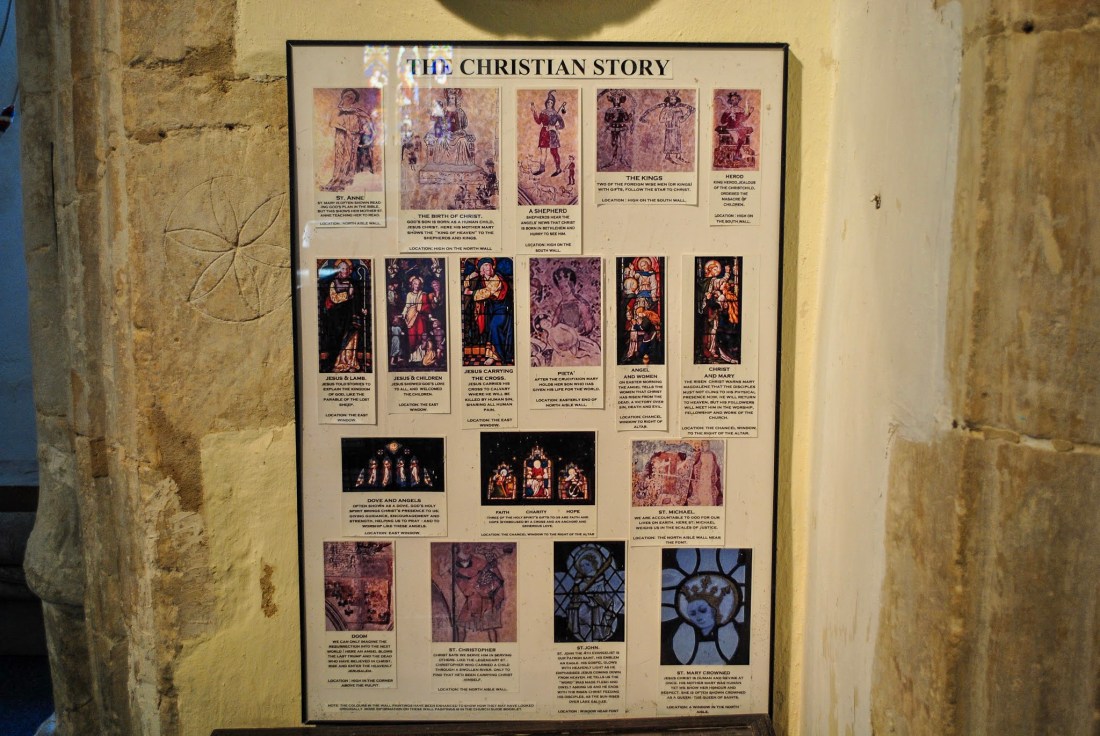
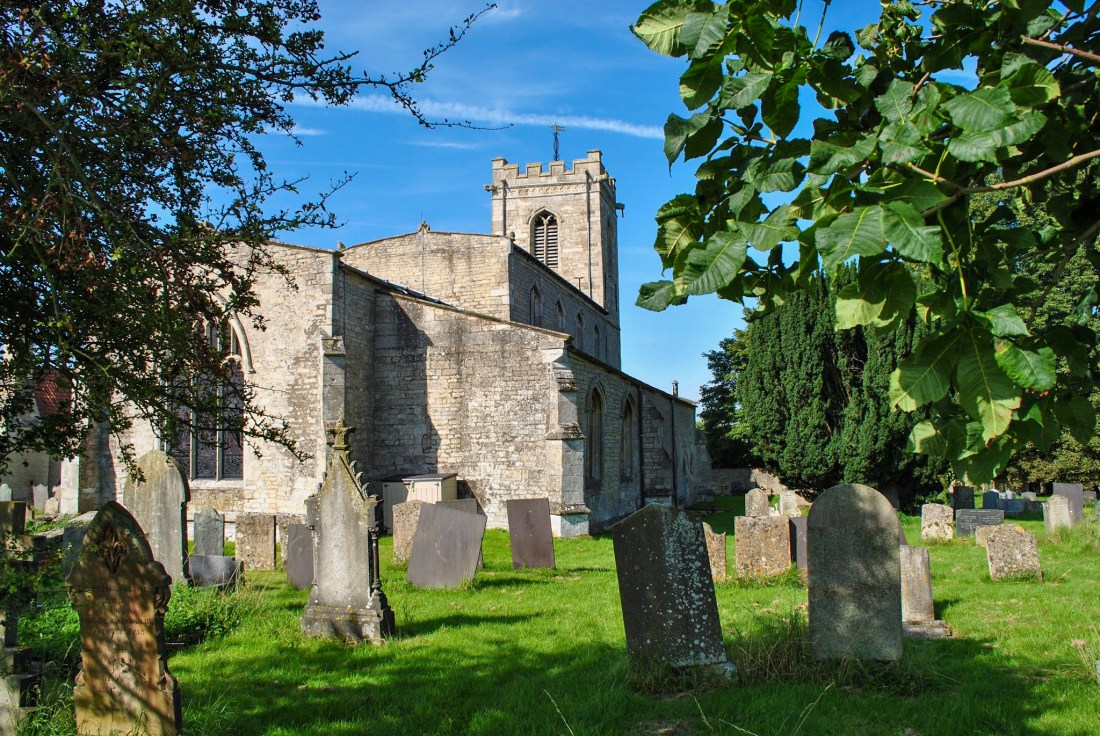
One such is in the south west of the county, in the lovely village of Corby Glen. Here on many of the walls of the church you can see paintings and illustrations of religious and spiritual imagery, representing stories from the Bible and the faith and beliefs in general of the later medieval period.
If you look carefully, you can make out several layers of art, where older ones have been superseded with new work.
During the Reformation in the 1500s, all of this art was whitewashed over, part of the process of removing all imagery, which also meant stripping out idols and even rood screens which separated the nave from the chancel.
It was only in more recent times that this treasure trove of art was rediscovered through church restoration.
Today this art represents some of the most important medieval imagery not only in the county of Lincolnshire, but also in the whole of England.
Devil in the detail.Explanation of the imagery inside the church.The beautiful setting of the church of Saint John the Evangelist, Corby Glen, Lincolnshire.
There were few more dynamic and controversial figures during the reign of Elizabeth I than the daring, swashbuckling, and, some might say, reckless Robert Devereux, the second Earl of Essex.
Having arrived at court in the 1580s, he soon became a favourite of the Queen due to his charm, wit and dashing, distinctive good looks, eventually replacing the Earl of Leicester as Master of the Horse in 1587. He went on to capture Cadiz 1596, an achievement which sealed his reputation as a military commander.
Abortive campaign
He was made Lord Lieutenant of Ireland in 1599, but led an abortive campaign against the Irish Rebellion. Two years later he was executed for treason for leading an attempted coup d’etat, despite Elizabeth’s painful indecision over her former favourite.
So what made this larger than life man tick astrologically?
To begin with, he had Sagittarius on the ascendant, with Uranus close to the ascending degree. His ruling planet, Jupiter, is in Libra just beyond the MC or midheaven and loosely conjunct Venus.
Larger than life personality
Here is an expansive, confident, magnanimous and very ambitious personality and with Uranus involved, he would display a certain amount of eccentricity, probably manifesting like a loose canon at times, stemming perhaps from a certain confident belief in his own infallibility.
However, also involved with his angular Uranus are Pluto, Neptune and Saturn, making a loose grand cross. The involvement of all three ‘transpersonal’ planets here suggests that here is a man who believed, despite continual challenges, that he had a destiny, and much of his subsequent behaviour only confirmed this.
This grand cross in mutable (changeable) signs, though fluid by nature, would have brought him serious problems in key areas of his life, challenges and crises within himself, his relationships, his home life and in his career. Yet his indomitable belief in himself remained, even though at times he must have felt as if his ultimate destiny was being thwarted.
Hugely resourceful
Moving on, he had a lot of activity in Scorpio, with the Sun, Moon, Mars, Mercury and Venus (plus the north node) in house 12.
So beneath the bravado and charisma of his personality, he had the intense power, determination and resourcefulness of Scorpio to back it up, mentally, physically and emotionally.
The Sun conjunct Mars in Scorpio is a very powerful vibration, revealing the deep, forceful intensity of his being. Here is a brave man, willing to put himself in danger, almost relishing it at times. The Sun and Mars rule houses 5, 9 and 12, showing that he was a great speculator, a purposeful and brave traveller in mind as well as body.
Great depth of feeling
His Scorpio Moon is also exactly conjunct the Moon in Scorpio in house 12. He had a deeply emotional mentality and though he was probably quite secretive, once he expressed himself verbally, few could match him for feeling. Like many, he was also a competent poet and writer.
I come out of this actually admiring his character. There is something endearing about someone with an implacable spirit, who is loyal to his followers, who had this incredible sense of adventure about him.
Even so, his life perhaps epitomises the ultimate tragedy of the pursuit of power, particularly in that most iconic Elizabethan age, which still manages to capture our imagination.
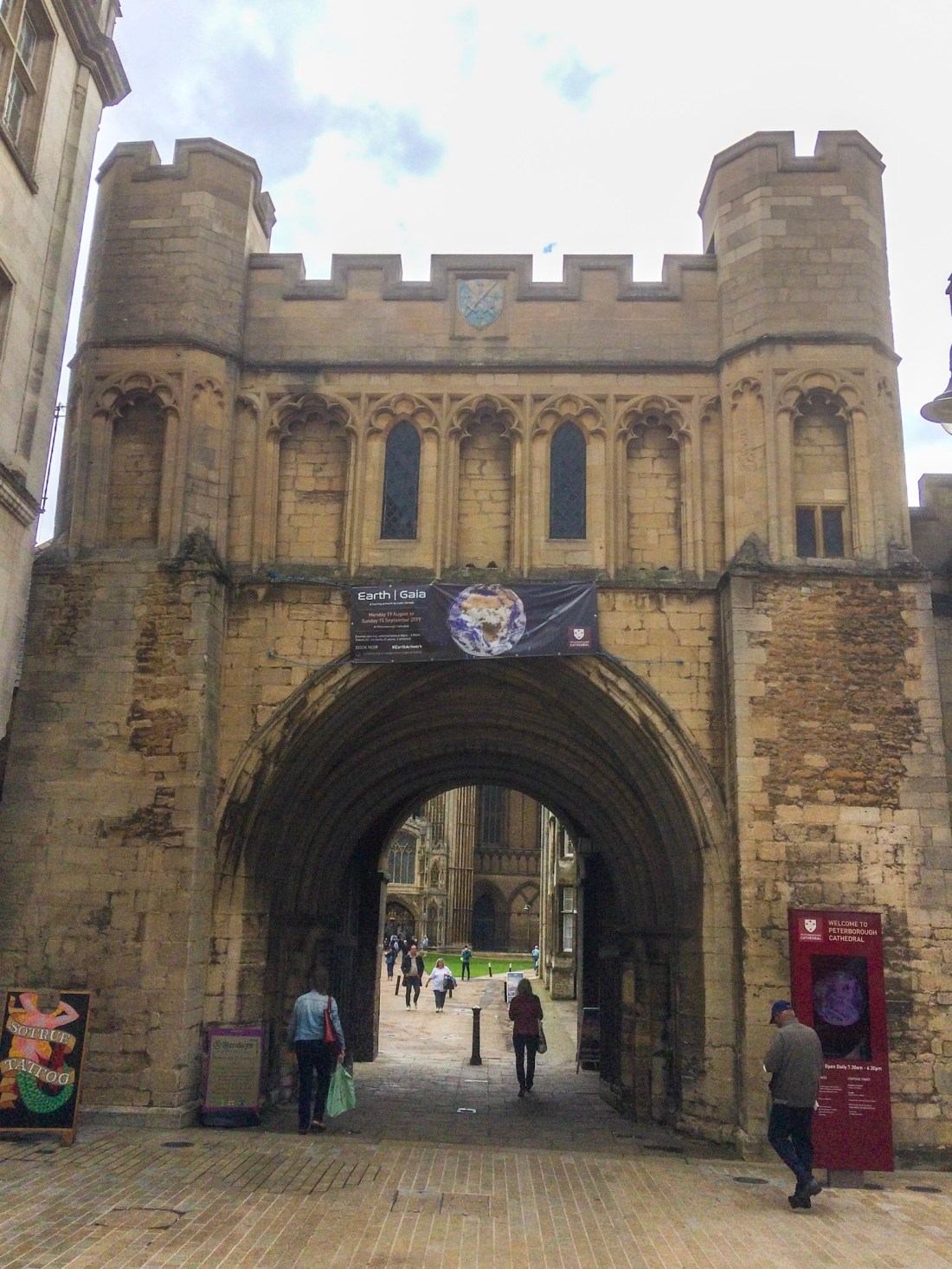
Peterborough Cathedral in the east of England is one of the country’s biggest and most beautiful churches, with an association with two famous queens.
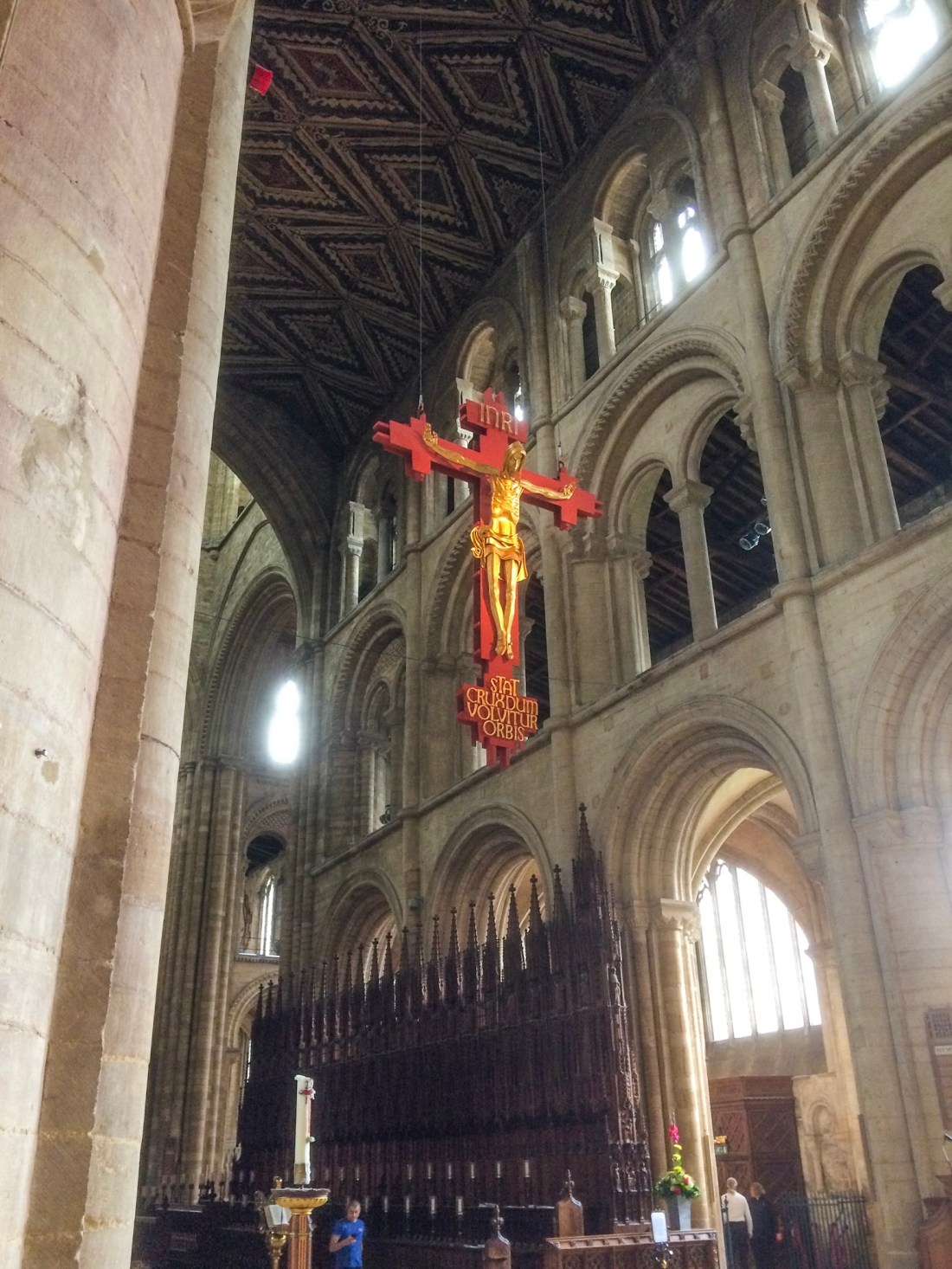
The long nave is quite stunning, with a beautiful roof and with a modern golden image of Christ suspended high as a focal point.
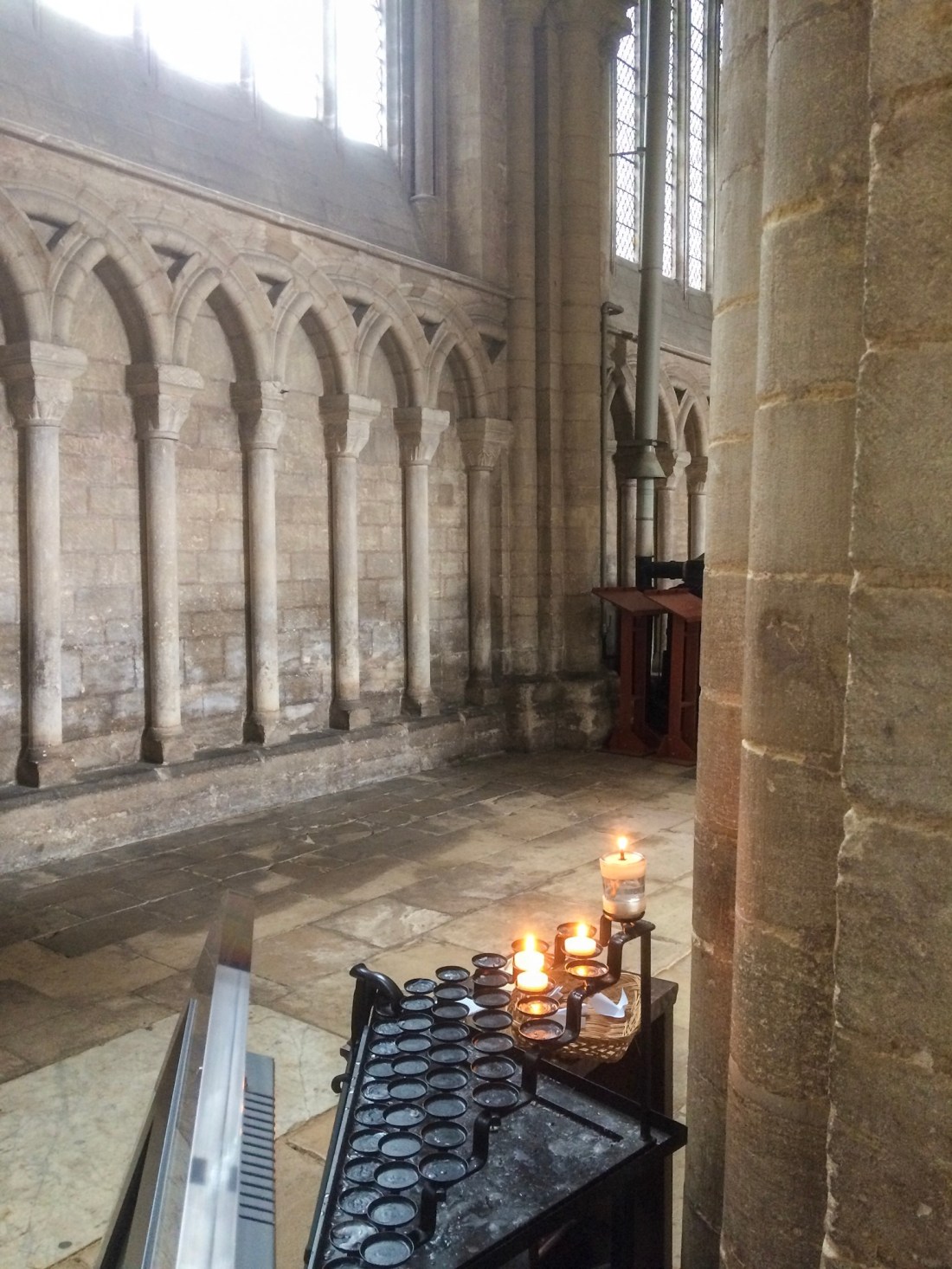
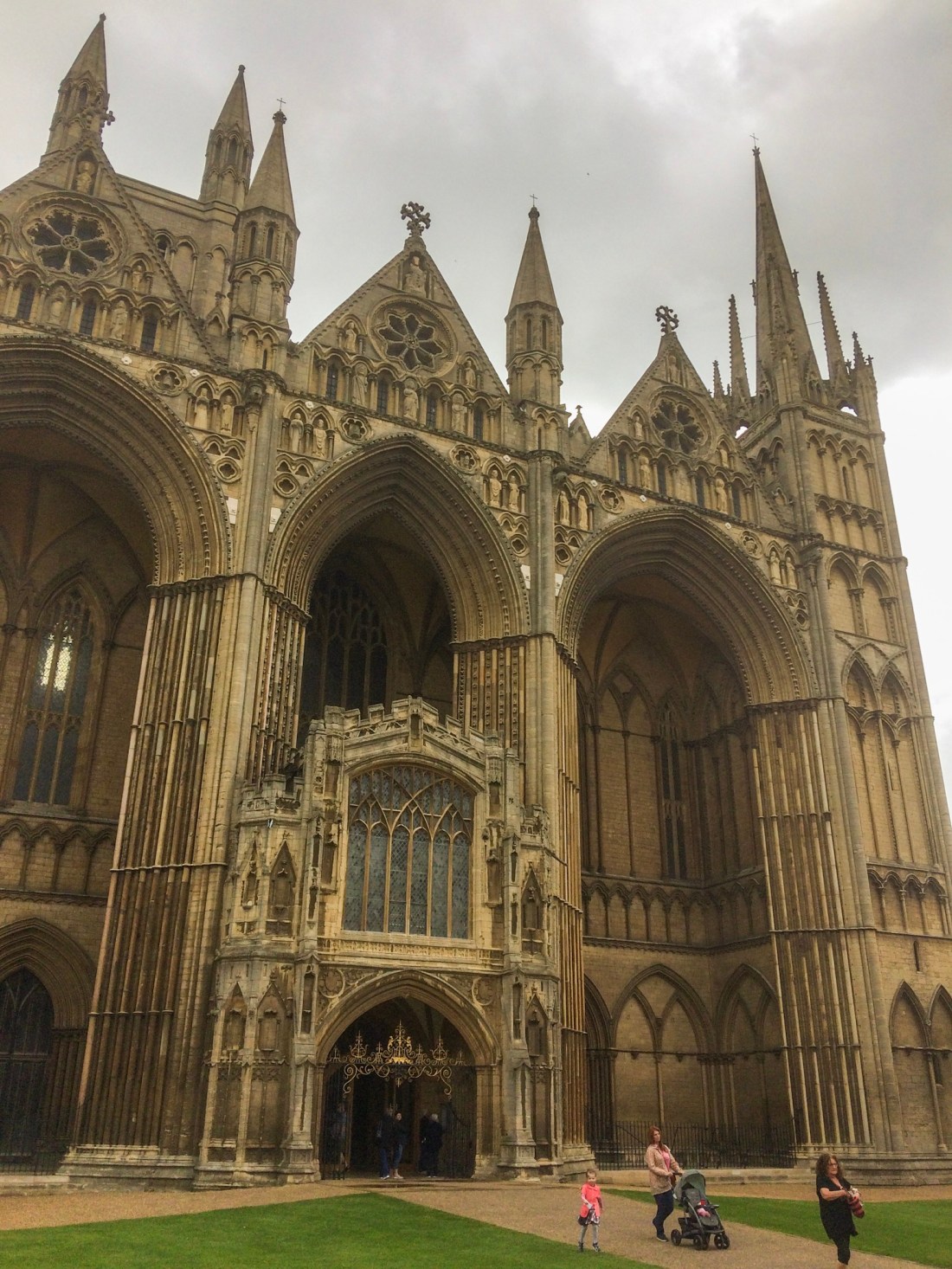
The cathedral is dominated by Norman and early English architecture, with numerous examples of Norman arches, such as these interlacing examples above.
Catherine of Aragon, Queen of England, is buried here.
The cathedral is also notable for its association with two famous queens.
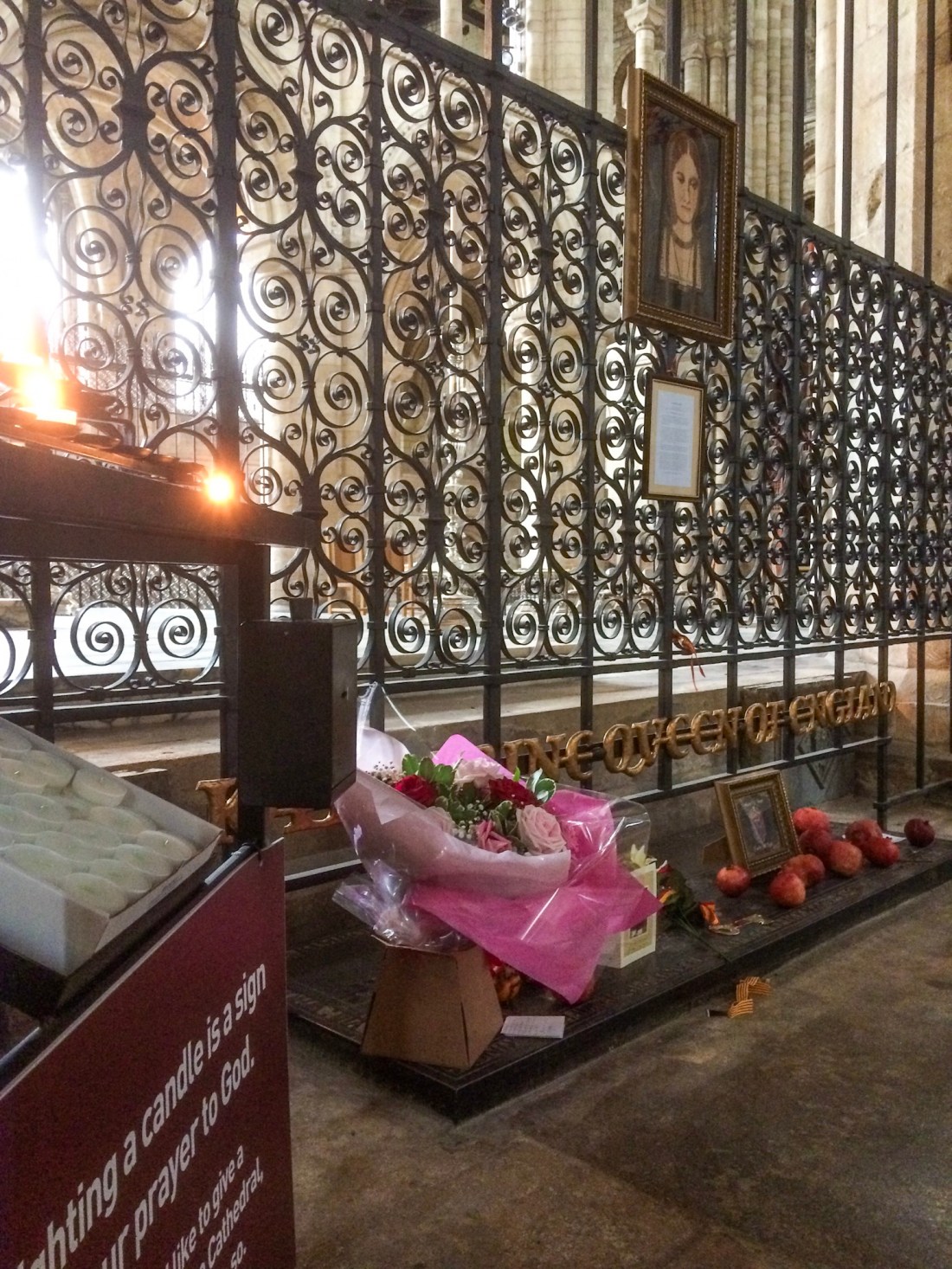
The first was Catherine of Aragon, Queen of England when she was married to Henry VIII. Catherine was buried here in 1536 and her tomb is still something of a shrine to her memory, with pomegranates very prominent as her symbol because the fruit appears on her badge. Pomegranates are an ancient symbol for fecundity and regeneration.
Catherine certainly suffered much during her husband’s long and protracted break with Rome, in which she was the innocent victim, her only crime it would seem was not being able to produce a living male heir for Henry to perpetuate the Tudor dynasty. This was how she was treated after being completely dutiful to the king, but Henry had to have his way. Her motto, which translates as ‘humble and loyal’, is a phrase she very much lived up to.
There is a portrait of Catherine by her tomb.Pomegranates have had a long association with Catherine of Aragon.
The second queen associated with Peterborough Cathedral is Mary Queen of Scots.
Mary inherited the Scottish throne after only a few days of being born, thrusting her into a world of political intrigue and shenanigans which she was never able to control.
She essentially became a pawn of more powerful rulers and some despicable characters. However, in 1559 she duly became Queen Consort to Francis II of France, solidifying Scotland’s long alliance with France.
Scottish symbols hang in honour of Mary who was initially buried here in 1587.
Sadly within 18 months the young kind died prematurely. Had he lived, Mary’s life would have turned out entirely differently. As it was, she became a teenage widow and a long series of political and personal disasters ensued when she returned to Scotland. Eventually she fled to England and came under Elizabeth’s control.
After many years’ imprisonment in England, during which the still substantial Catholic faction within England with aid from Spain continually conspired to depose Elizabeth and put Mary on the English throne, she was finally executed at nearby Fotheringhay Castle in 1587.
She was initially buried in Peterborough Cathedral, but her son, James I of England, had her remains transferred to Westminster Abbey in London.
words and photographs copyright Francis Barker 2019
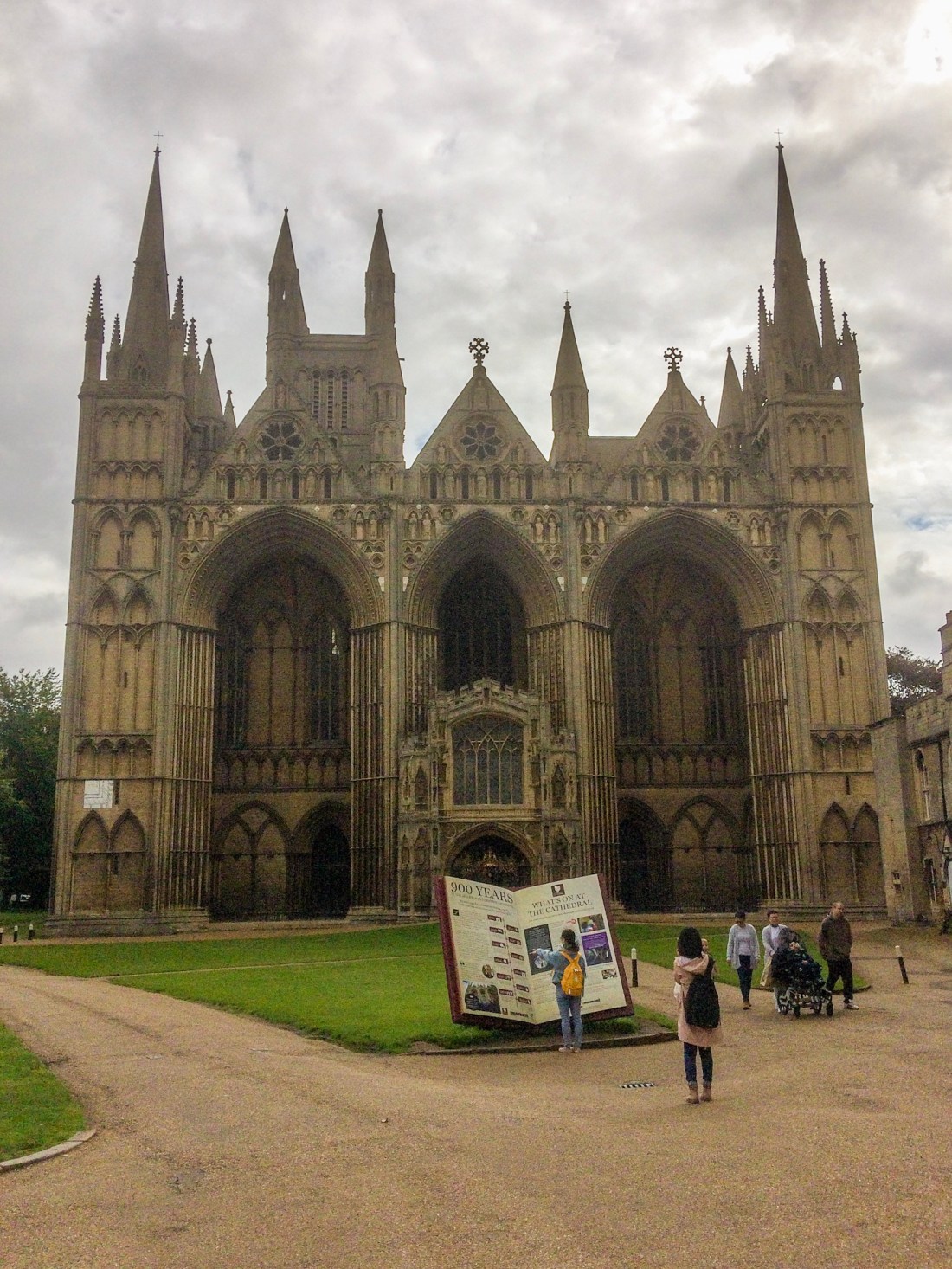
Put simply, Peterborough Cathedral is one England’s best churches, though it is often not as well regarded as some others, like Lincoln, Ely and York.
This might be due in part to Lincoln’s prominent setting, Ely’s architectural distinctiveness and York’s admitted supreme grandeur.
Peterborough, by comparison, lies on the edge of the flat fens, yet in one of the primary areas of England for monastic development because of the remoteness of location. In its day, Peterborough Abbey was one of the most prominent in the whole of eastern England.
The wonderful west front of Peterborough Cathedral, completed in the 13th century.
Originally the abbey church of Saint Peter’s Abbey, Peterborough, in the east of England, the present church was granted cathedral status (and thereby preserved) by Henry VIII, self appointed head of the Church of England, during the Reformation in the 1530s, which saw many former monastic buildings taken down and sold off. For this at least we should be grateful to England’s most notorious monarch.
words and photographs copyright Francis Barker 2019








 Ciscography