
Recently, there was a flower festival in Crowland Abbey church in the extreme south of the county of Lincolnshire. The theme was decades over the past one hundred years.


copyright words and pictures Francis Barker 2019
Recently, there was a flower festival in Crowland Abbey church in the extreme south of the county of Lincolnshire. The theme was decades over the past one hundred years.
copyright words and pictures Francis Barker 2019
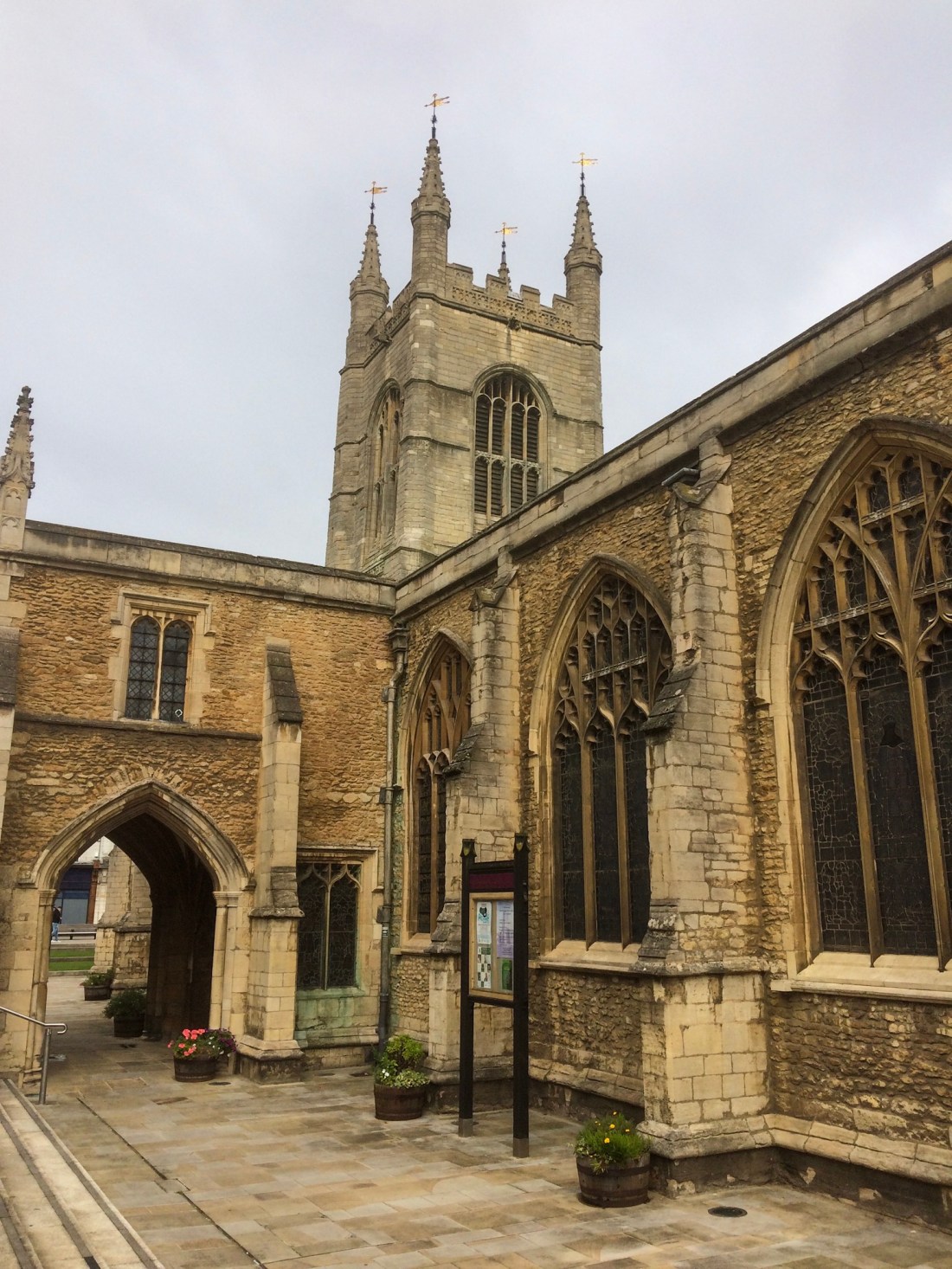
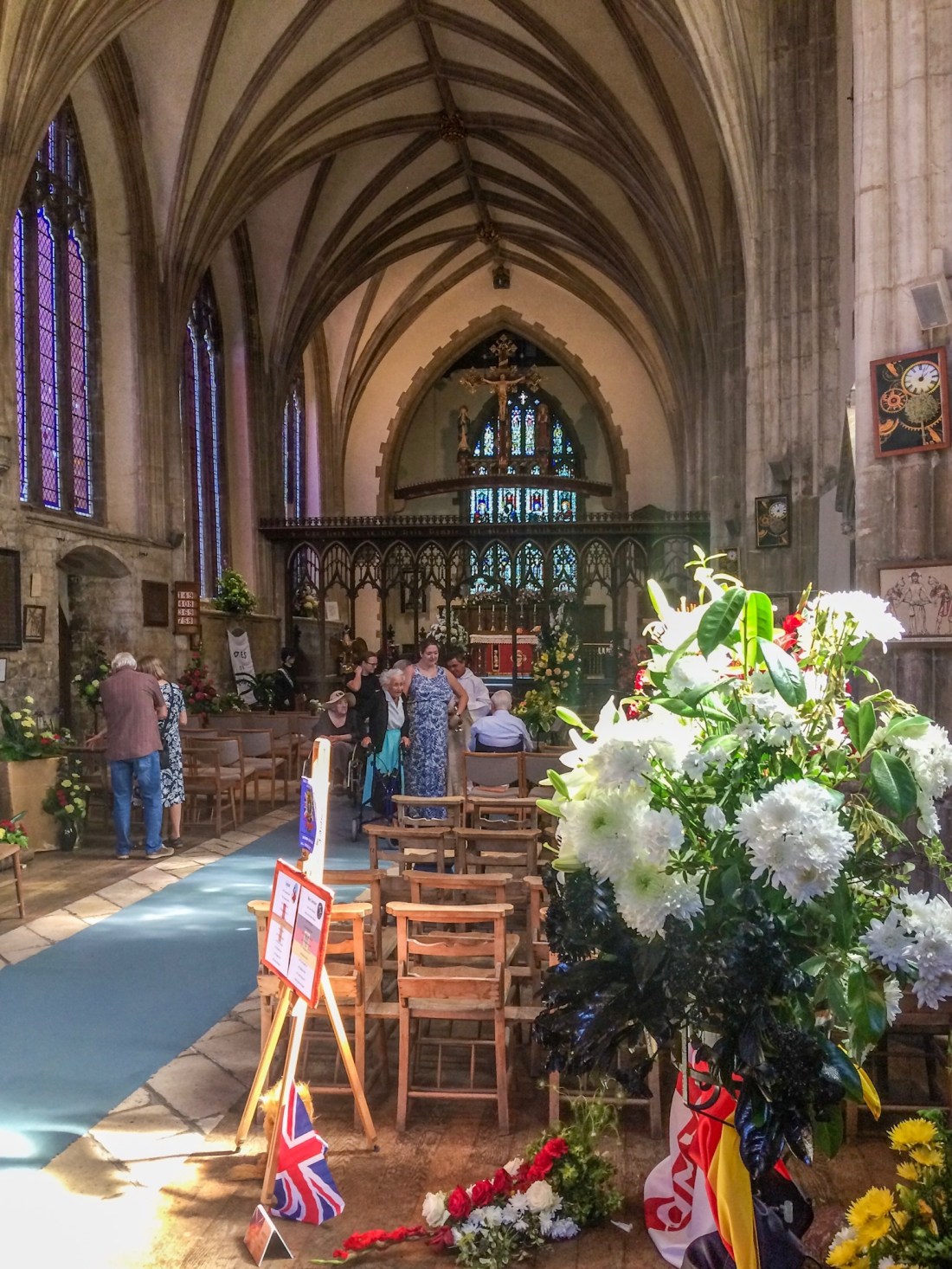
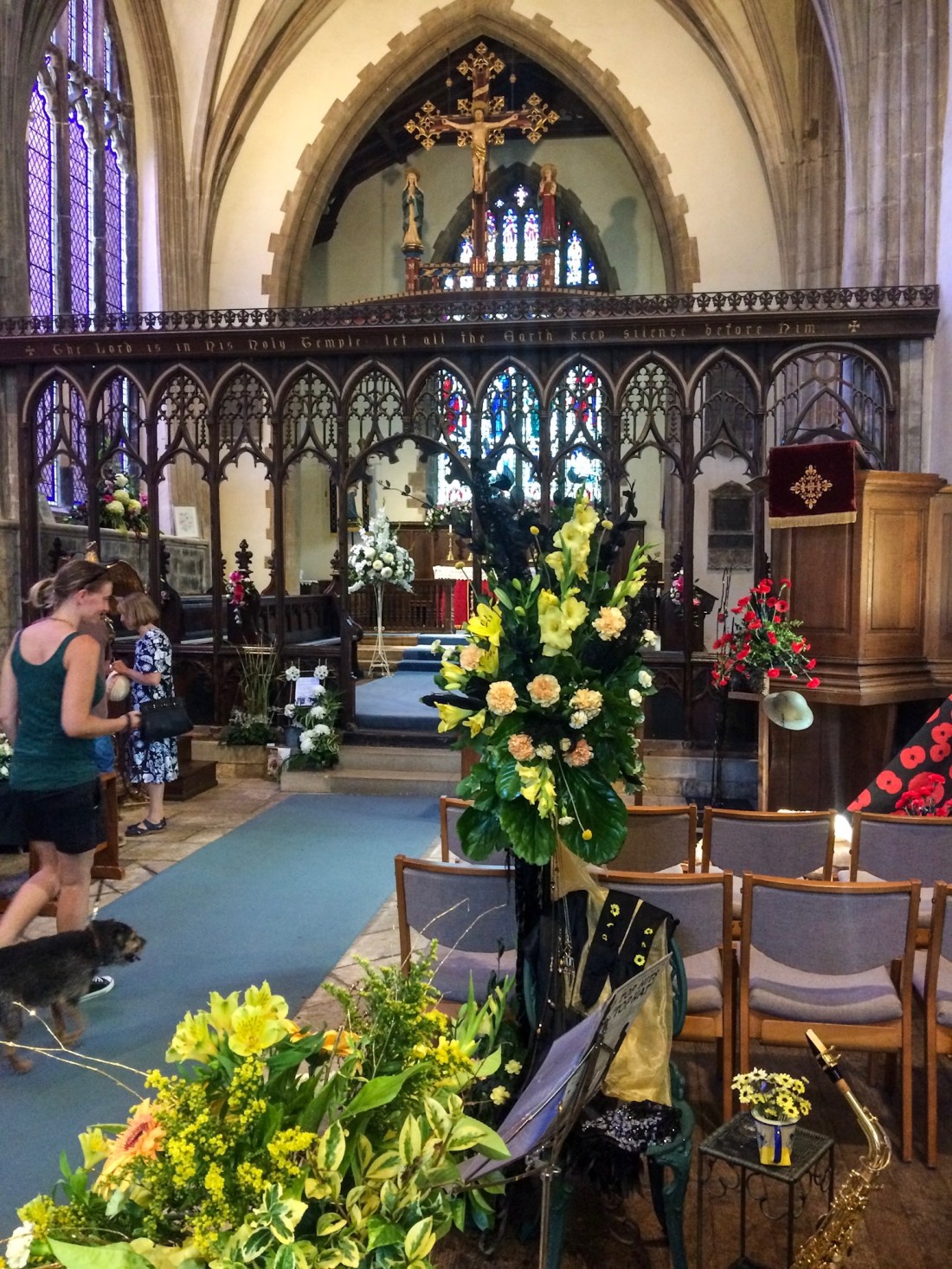
One of the overlooked features of Peterborough, a growing city in the east of England, is the Parish church of Saint John the Baptist around the cathedral square.
Consecrated in 1409 during the reign of Henry IV, its close proximity to the cathedral and the modern shopping mall attraction of Queensgate, probably detracts large numbers of visitors. However, it is well worth a visit, and as is quite usual in England’s medieval heritage buildings, there are often some wonderful ‘hidden’ gems.
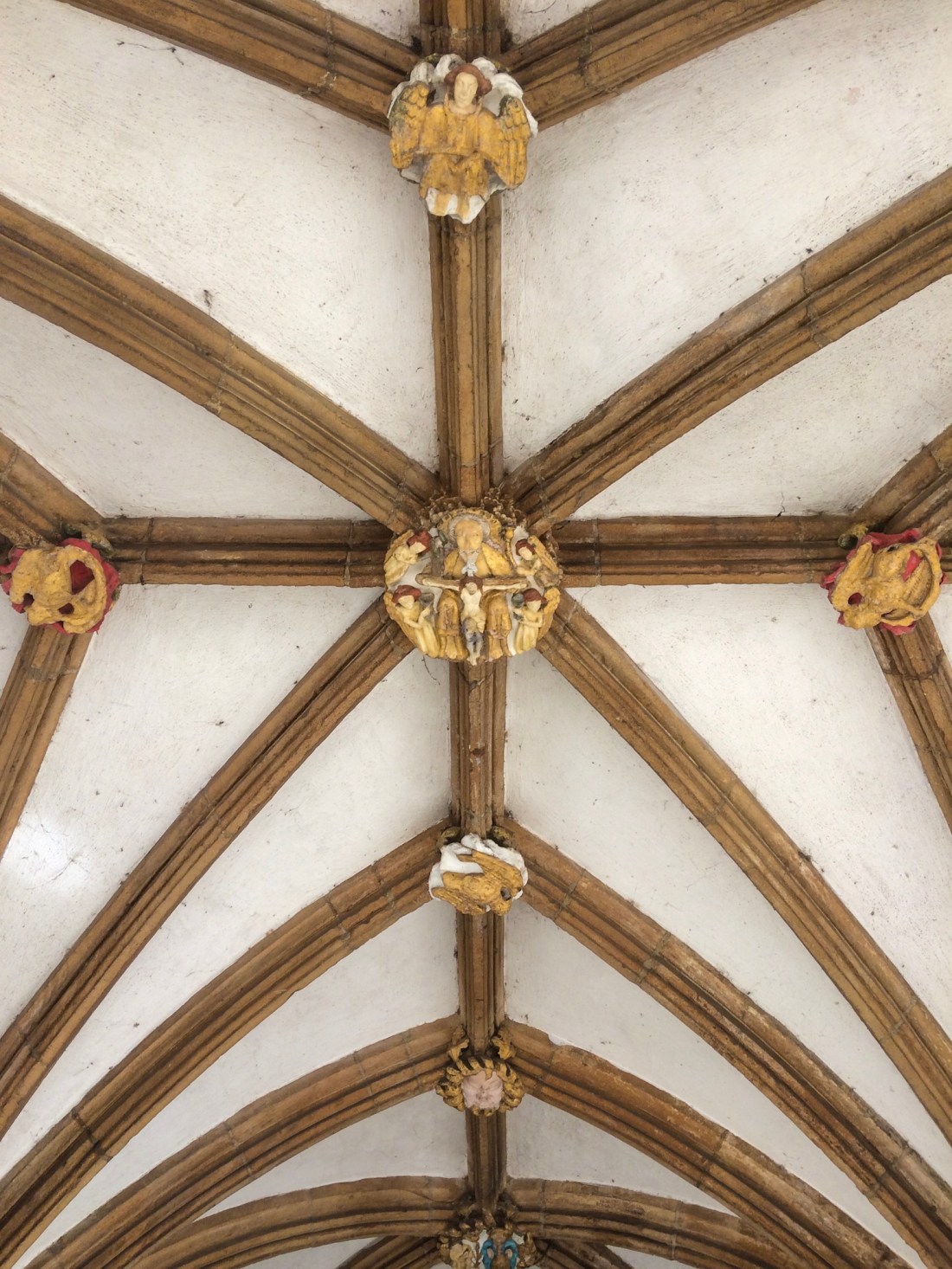
The south porch entrance is most interesting, particularly the roof in the above photograph.


The nave is very large and light with a rood screen.

There is also a wonderful reredos.
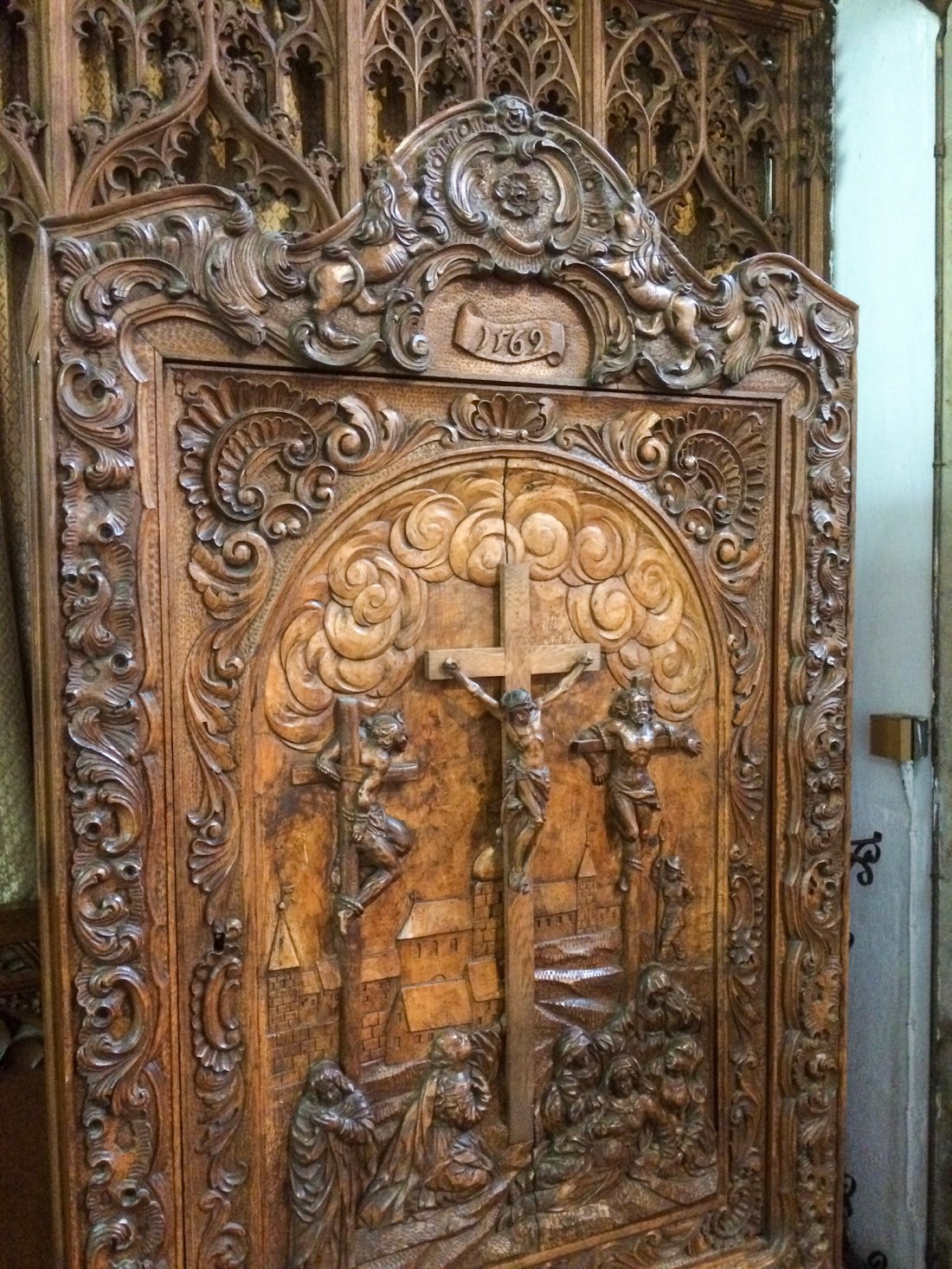
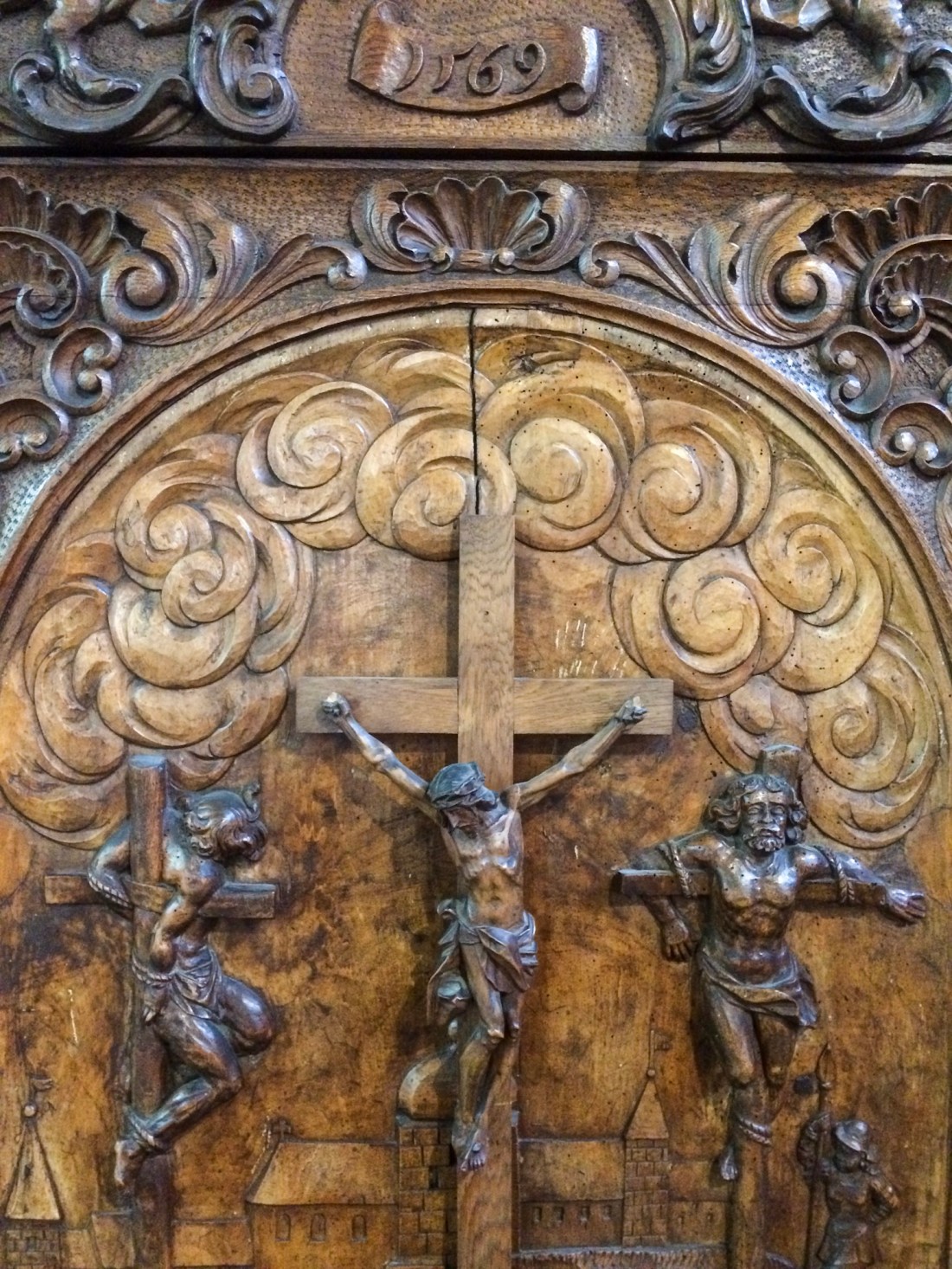
One of the most interesting features is this probable vestments cupboard, dated 1569, a wonderful piece of woodcarving, which I would think is limewood, similar in style to the plethora of such art produced in Germany during the same period.

The pulpit too had some intricate woodcarving, probably oak by the look of it, although I did not find a date on it, but I would assume it is later than the earlier piece.

There are even a couple of examples of medieval embroidery by the door.
words and photographs copyright Francis Barker 2019

They smile when I shut the heavy, creaking door,
from behind their neat wooden kiosks
stuffed with pamphlets and insipid books.
Smiles of recognition, a nodding
acceptance as if to say –
‘Oh, it’s you!’ Volunteer women serving Christ
better than those above them in Church.
I walk along the emphatic southern aisle under
uber-Norman arches, at the far end of which
hangs a limp flag of Saint Andrew,
in honour of Mary Queen of France, Scotland
and some say of England, too.
Glancing to my left a young man kneels,
wringing hands beneath a life-size figure
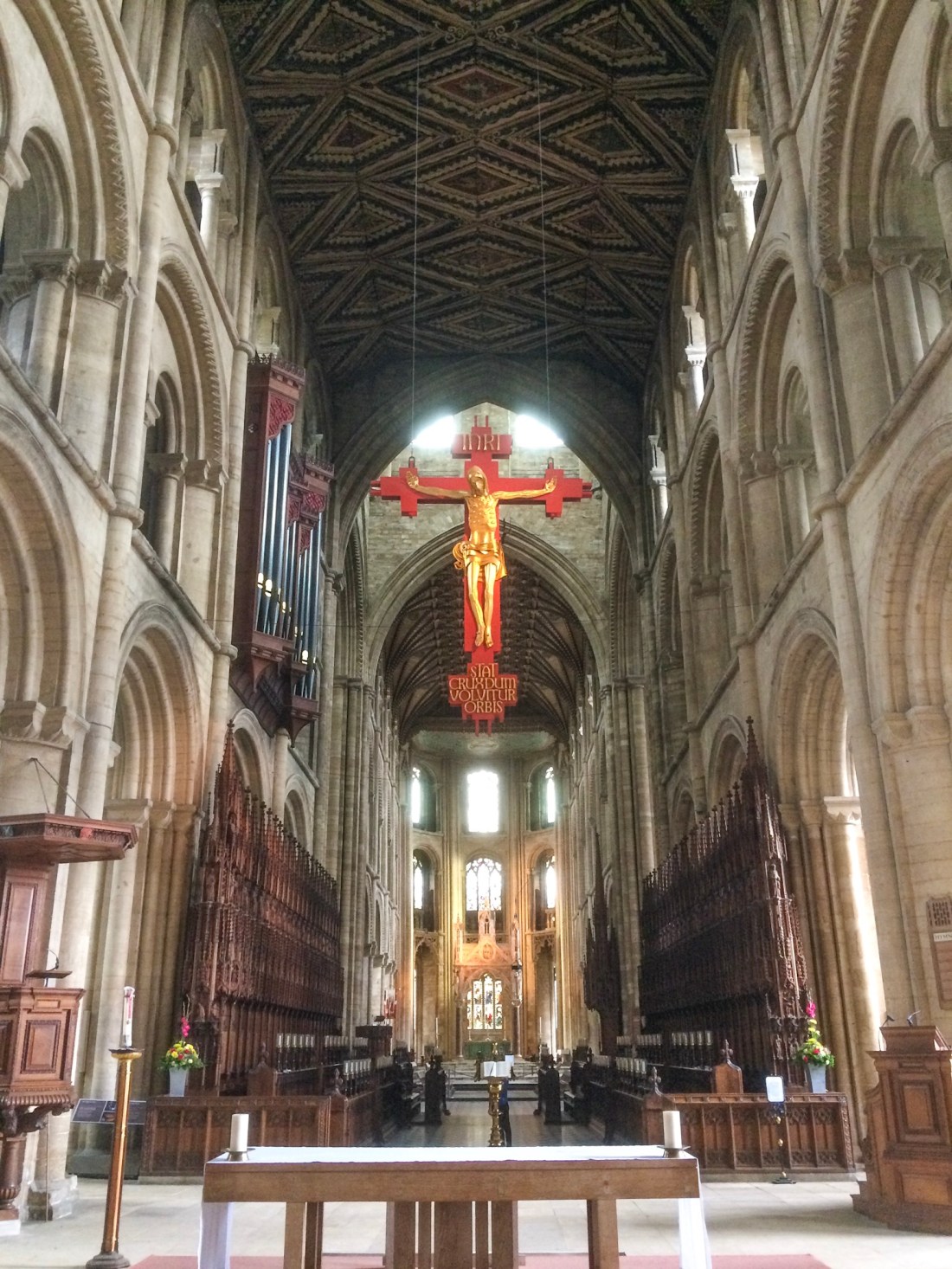
of a crucified Jesus, hanging high in space.
He stares upwards, rocking gently back and forth,
as if imploring Him to be real,
to writhe, sweat, bleed, perhaps to save Himself
and then, somehow, to save him as well.
I’m here to light a candle outside
Saint Oswald’s shrine and to sit for a time
in silence inside the tidy chapel,
to pray for a poor boy in pain,
perhaps to ponder on those relics,
those bits of bodies and other things,
worshipped once and then dispersed,
despised in fractured minds,
to us now mostly objects of indifference.
Oswald’s arm must lie hereabouts,
known to someone who still believes
in its restorative power, like the monks
who consumed this place, where Domesday
came and went without event,
where the Chronicle of a people faded to grey
in an undrying ink. Still it awaits the next line.
In this fossil the dead are lucky.
They are dead but in faith, whereas I roam
restlessly among echoes of whispers,
a heartless void. I cut across through the choir
to find I’m not alone, where the true
Queen of Hearts lies. Letters of gold spell
her name to all, but for me she smiles
brighter than anyone alive,
a smile from scorched Iberian lands,
her fate to end up on this drab island
where fashioned pomegranates mark her spot,
from which she expects to rise
at some glorious hour, where, until then,
the anonymous faithful lay fresh fruit
and flowers to mark her special days.
I watch a tourist, a German tricolour sewn
onto his rucksack, as he reads
the commemorative words. A sudden,
unexpected pride washes over me
while he pauses on her ground to think –
where I was once intrigued.
Almost believing.

copyright Francis Barker 2019
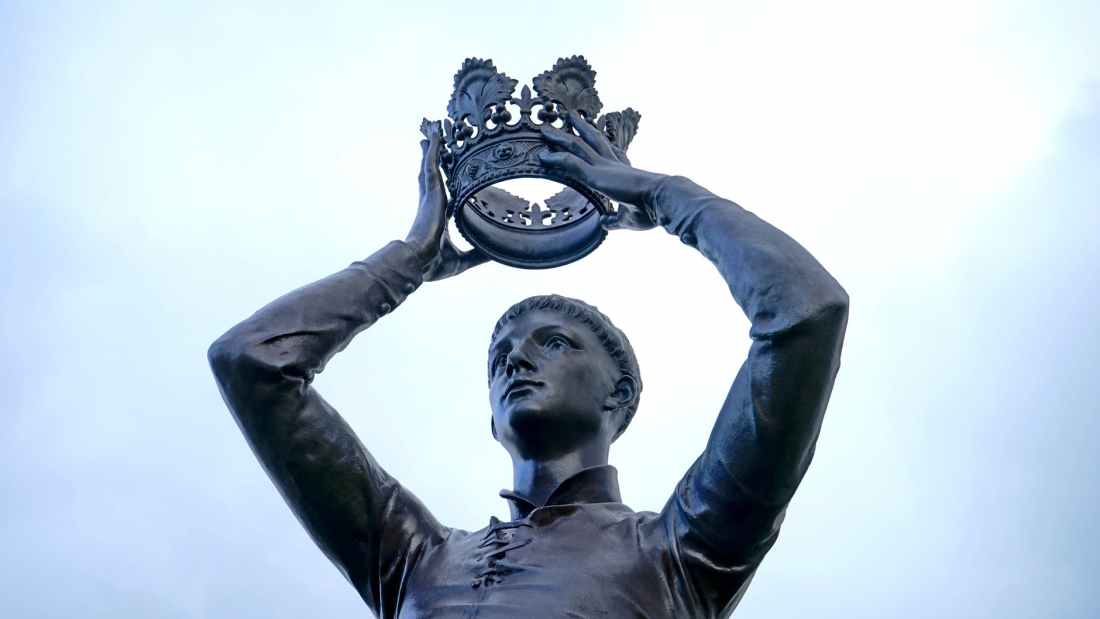
His motto was ‘method and order’, and he pretty much lived up to that. He was a daring and quite capable military commander, honing his skills as a young man in the early years of what we now know as ‘The Wars of the Roses’, an often bitter dynastic struggle between the two competing factions of the same Plantagenet family, the houses of York and Lancaster.
Edward was not only a handsome and popular king, he was also a fine administrator, a shrewd businessman and merchant. His royal court developed into one of the most splendid England has seen, thanks in part to the general stability which his strong reign brought in that turbulent era.
However, one weakness he had was an occasional tendency for poor judgement and a lack of foresight. At times it could have devastating consequences.
So what does his birth chart reveal about him?
Firstly he had Aquarius rising with his ruling planet Saturn conjunct Mercury and Uranus in Gemini in house 5.
This indicates quite a distinguished, if unconventional personality with a gift for purposeful communication and also thinking ‘out of the box’. This house 5 probably links to the fine nature of the royal court which developed during his reign. Here too his fine administrative and business abilities are indicated.
However, Saturn and Mercury are also in challenging aspect to Neptune in house 8. Negative Neptune contacts can confuse and befuddle, which may relate to the poor judgement he displayed from time to time, a potentially fatal flaw in a monarch of course. He should have taken more counsel from his associates.
One example of his lack of foresight was his rather impetuous marriage to Elizabeth Woodville, which offended many of his supporters.
Despite this, he showered the Woodville family with honours. This type of behaviour might be seen in his Taurus Venus conjunct Jupiter in house 4, symbolising a tendency for over generosity, especially towards family members. His Sagittarian Moon also indicates a naturally generous nature. (Ultimately, this would have tragic consequences for his young son, the future Edward V, who would be deposed his uncle Richard after only a few days due to doubts regarding his legitimacy to be king).
The Wars of the Roses soon began again and his enemies, the Lancastrians, won several battles. Edward found himself politically outmaneuvered and in a weak military position – he had to quickly flee his kingdom and seek refuge in Flanders.
However, despite his poor judgement, six months later, thanks to his alliance with Charles the Bold Duke of Burgundy, he was back in England with an army and won his throne back at the Battle of Tewkesbury in 1471 in typical swashbuckling fashion. This was his strength.
But where is this strength in his chart? Firstly, his Sun in Taurus is loosely square Mars in Leo. Here is a physically strong, stubborn and probably quite prickly character when push came to shove, which is probably also a prerequisite for any good warrior. However, his Mars in house 7 is also an indication of forceful, stubborn enemies too, such as the Lancastrians and Louis XI of France.
But he also had his Moon in Sagittarius in house 11 but close to his MC of career, in good aspect to Mars, but quincunx (or inconjunct 150 degree aspect) to his Sun. Here is a man of quick response, a sense of daring, of a never say die attitude, of going beyond the call of duty and, most importantly, being able to take the majority of the people with him. He was a leader by example, despite some serious flaws.
However, the challenging aspect between his Sun and Moon, hints at a compartmentalisation in his character. Maybe this daring aspect revealed in his career seemed somewhat divorced from his private life (Sun Taurus house 4).
An example of his daring attitude (Moon in Sagittarius conjunct MC), plus his more positive planning and ‘out of the box’ mental capacities as shown in his Mercury Saturn Uranus conjunction, can be seen by his often overlooked invasion of France in 1475.
Although this incursion did not lead to any decisive battles, mainly thanks to the lack of support from Edward’s allies Charles the Bold of Burgundy and Francis II of Brittany, he did manage to secure the very lucrative Treaty of Picquigny, where the French king Louis XI generously paid him off.
This may be another example of the influence of his Venus Jupiter conjunction, a certain luck factor in his favour, as these two planets are often termed the lesser and greater benefic. This conjunction too indicates his ability to remain quite popular – the people liked him, so we have to assume that he had something about him. Also, his Moon in Sagittarius close to the midheaven point, would not do his popularity any harm.
However, another by product of this conjunction could be his apparent tendency to seriously overindulge in food and drink; he did become rather corpulent in towards the end of his life and this may well have led to his early death in 1483. Venus in Taurus loves the good things of the earth and Jupiter close by (but in Aries) would certainly tend to potentially exaggerate.
It is perhaps sad that Edward did not live another ten years, for England might have been spared the return of the Wars of the Roses which led to the downfall of the house of York. Edward VI might by then have become one of England’s greatest monarchs.
*If you are interested in getting your own astrological report, or would like one created for a loved one or a friend, please contact me at leoftanner@gmail.com.
copyright Leofwine Tanner 2019

copyright Francis Barker 2019
 Ciscography