Solstice

solstice

I stood alone
with you,
like it was the end of our world, an
eerie glowing sky reflecting my heart, with
the solstice on its way. You
turned to look at me, that smile
I knew so well, your gracious nod
I’d never seen in real life. My hand
went through you – you were not
there anymore, just an echo like the
sonorous bells over pantiles, made
uniform by the morning rime. You said
I looked ‘frit!’ in the dialect
brought across to your city,
the voice of your
distinction. ‘Your life is not
your own,’ you said, ‘even the sun
never stands still, only seems to.’
So you told me not to worry, not
even care, to let it all go
now, that it’s better to die trying
than do nothing,
a short life
with meaning and all its
tortuous crosses borne, can become
a pilot light of inspiration. You
walked towards the sea, smiling
once more and unafraid, before vanishing
out of time into the
low glinting sun, a promise
of far off warmth
and the revelation to come

image and poem © copyright Dave Barker 2012

Sad Songs

sadsong

Where have all the sad songs
gone? When I was young I sang
the saddest songs; there was

a depth, a yin as well as
yang, like the love
of a minor chord, or a melancholy

walk by the sea –
and it was all so much bigger
than me. Something

tells me that I can’t be
ageing well, not when
all the songs sound the same,

where the tide never rises again

© copyright Dave Barker 2012

Grieving


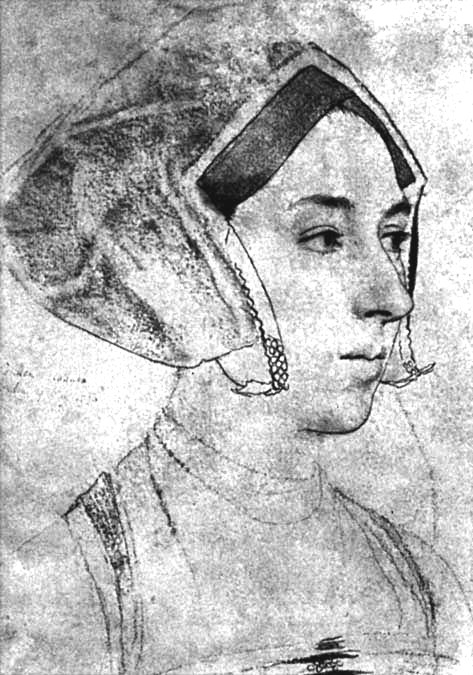
Anne Boleyn? Hans Holbein the Younger [Public domain], via Wikimedia Commons

(a response to Holbein’s sketch,
purportedly of Anne Boleyn)

So, is this really you? Those full lips
well kissed, I have no doubt,
your pretty duckys hidden, fit for ravagers
we call kings. Holbein’s profile, it
simply shines your intelligence, courts
with language, love and ideas,
perhaps a little too much for kings
and enemies to take, at a time
when your sex are meant to be
little more than slaves and vessels
for petulant princes.

But no one can stop me grieving:
I imagine you blink, turn
and smile at me. Oh,
you are strong and keen, yet tender
and kind like all mothers
and lovers should be. No wonder
other men may have dreamed
on those lips, carried away
by your verve, which only victors
ever get to call treason. Now I wish
I could touch your fine chin
and whisper: “Elizabeth—
remember Elizabeth!” My words
vanish into air like justice, while you
stare blankly through Traitor’s Gate;
but this little girl takes the better part
of you, better than any king before
or since, of this abject state

poem © copyright David F. Barker

Poem ‘A Tale of Love’

I first fell in love with you in a map,
a sort of pentagon, sacré, teased out
a touch like a stretched piece of dough. Then
it was the names, the easy non-phonetics
conjuring visions and colour through
Fontainebleau and Versailles. But then,
of course, it’s the history that defines me
and you, those first tragic lines etched
large, bold and bloody by le Bâtard, a family
dispute of a single culture cleaved
by hatred and greed, melded by chivalry.
For so long la Manche was not a divide
(and never la différence), more a conduit
of ideas flowing north, longbows sailing
south. Oh, we have divided since; your gift
for re-invention, dispensing with kings, that’s
something I cannot conceive, even though
we did have a go. But I only have to
look at Claude and Edouard, Paul
and Vincent, to get it, to understand— there’s
a love neither can openly express, though
look more closely, you will find it in our eyes

© copyright David F. Barker 2012

Poem ‘Pat 1.0’

Marlene Dietrich photograph
Marlene Dietrich photograph (Photo credit: Wikipedia)

Pat 1.0

A girl from the future, she’d said,
a real chic-chic-whirr!
Pat was her name, dark high heels and
clinging pink dress, a row of
little red buttons before me
which (the paperwork said), would ‘lead
to other worlds’.
So I pressed the bottom button, a thirty
second hologram projected from her eye,
a précis
from my time to hers: “My god!”
I said, all-a-gaga,
she really makes President?”
Button two appealed to my
sense of history. “I can be
any figure you like,” she giggled. So
I thought of Genghis Khan and
recoiled, I mean
I fell to the ground—
the stench of his breath and
bloody blade! so real,
but even he had a human eye.
Button three was ‘anywhere, anytime’,
so there we were in a darkening
Berlin bar, surrounded by
art deco, lots of nods and smiles;
I felt the spirit keenly, the zeitgeist
over my shoulder, whispering: ‘seize
the moment, this
brief,
precious time’.
And then she stood and sang for me
like Piaf, posed
like Dietrich, sizzled
like Kitt, singing how old fashioned she was but
I just wasn’t a millionaire, although
“zat, darlink,” she purred, with a brush
of mink on my cheek, “vill be easily
fixed!”
I felt
a little like Faustus before
Helen of Troy, though
she was no Mephistopheles;
more legion, everything rolled into one app.
All this time her top
button had intrigued the most.
“Go on— pat it!” she said, smoking
cross legged.
“You see?” She kicked
off a heel, letting
down her futured hair.
“Yes,” she whispered, pulling me
close, “and I, my sweet,
am just the beta version.” I looked
briefly
down on Metropolis
from floor 159, so brave,
so new.
Some things, clearly,
would never change

Poem © copyright David F. Barker 2012