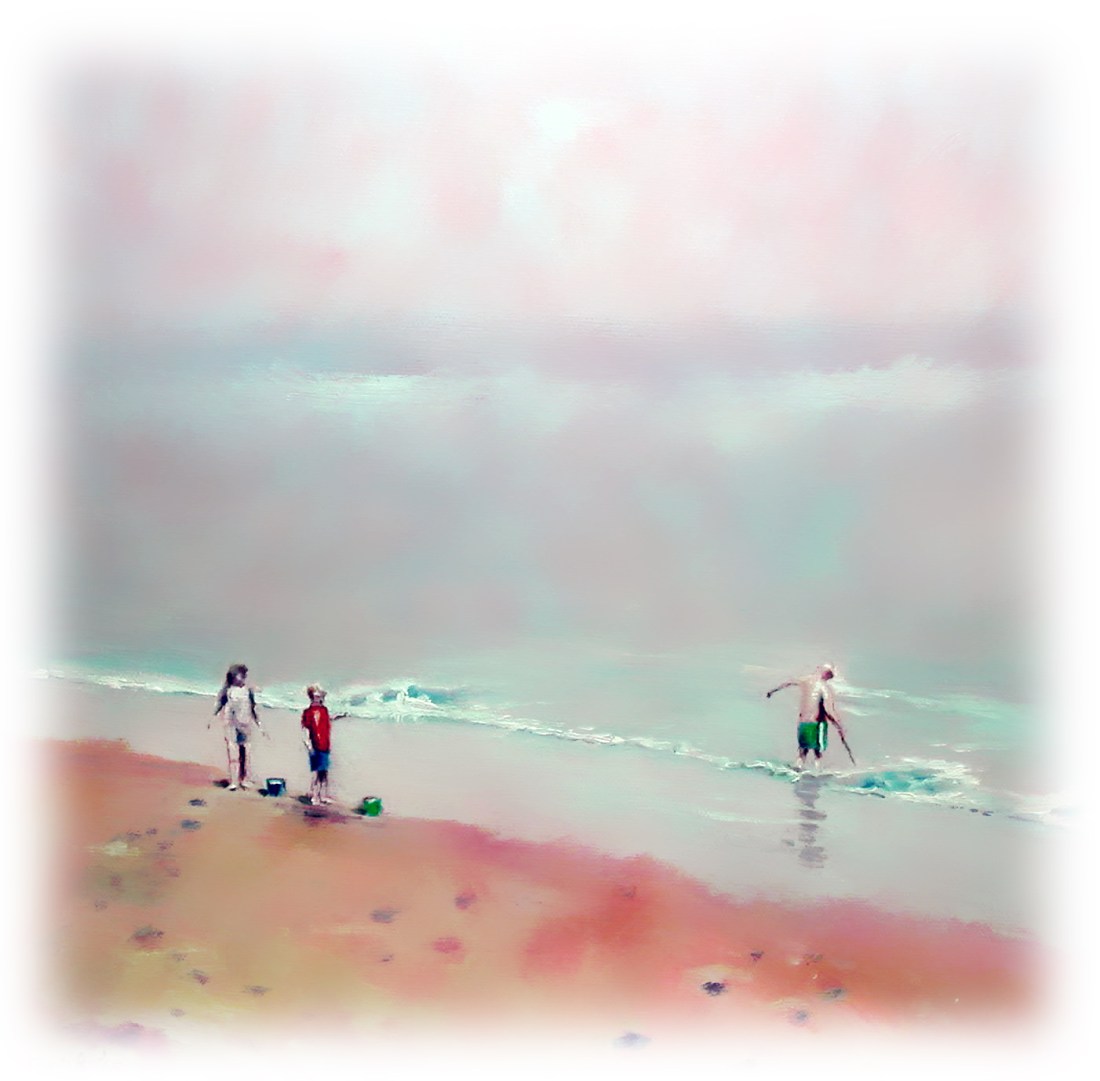
Why Do I Paint? Cezanne – that’s why
This is the question which I often ask myself. It’s not that I have dedicated my life to painting or art. I have had to hold down jobs, most of which I have not liked. There have been long periods when I haven’t picked up a pencil, let alone a brush.
Some people went to art college, got a degree, forged a career which seems to have had a defined course throughout. That wasn’t my experience. Yes, I went to art college for around a year, but I didn’t like it. I tried to get on to degree courses but such work I had produced was not impressive, I have to admit. Yet, periodically, I knew I wanted to paint. Even as a child, I knew painting or art or writing poems were a part of my make-up, however strange that make-up was.
However, another growing realisation was that I was essentially a loner. Yes, I am married, have a son, but despite all that, aren’t we still alone? The greatest struggle is with ourselves.
Perhaps painting cannot be taught. Looking back, I don’t feel I picked up anything useful from all those years learning about how to paint or draw. They can teach you about techniques, styles, movements, the lives of great painters. Nevertheless, I have always found the latter the most interesting and inspiring.
The great southern French painter Cezanne was always a firm favourite of mine. I remember reading a biography of him when I was doing A-level art. It fascinated me, his character, his mentality, which despite our very differing backgrounds, seemed oddly familiar. I was also intrigued by his friendship with the French writer Emile Zola and their eventual estrangement.
Cezanne, like me, often felt isolated, something which does afflict creatives. Looking at his work from its dark, tentative beginnings, you can see a man struggling with himself, his father, his friends, his contemporaries, seemingly the whole world (although it has to be said that perhaps Van Gogh’s life is the most extreme example of this). For me, it was Cezanne’s life which encapsulated my own artistic experience. We are all alone, all of us, whatever we do, but the creative person, whether he paints or writes, feels this most deeply. It’s almost as if you turn in on yourself — and what I see isn’t always very pretty. Too much self-examination, I have heard it said, is not good for us. For me, the act of creation is the happiest and also the most depressing place to be, where you stare yourself directly in the face, which is sometimes good, sometimes bad. No doubt there are creative people out there who do find it easy to socialise, who are fun to be with, who can interact successfully. Despite my growing interest in the social media environment, which is often engaging and helpful, I am not one of these people. It is a realisation which comes to me time and time again. A truth about facing the fact of who I am.
So, it is only in the last few years, in my middle-age, where I have really taken up the brush with any gusto, or confidence. Yet the doubts persist. Memories of parents saying you can’t earn a living from painting or writing. And of course, their words were true. Then there’s the look in people’s faces when you tell them what you do, or what you intend to do. At such times, like now, I see a picture of myself, alone. It is an image that I have grown accustomed to, yet even after all this time, I am never comfortable with it.
I would never compare myself to any great painter in terms of ability. I can only stand back and admire Cezanne, Monet or Turner. Yet I can identify intimately with their interior struggles.
© article and image copyright Francis 2012


 Ciscography