Book Review: ‘The Sirius Mystery’ by Robert K. G. Temple

IMG_1319

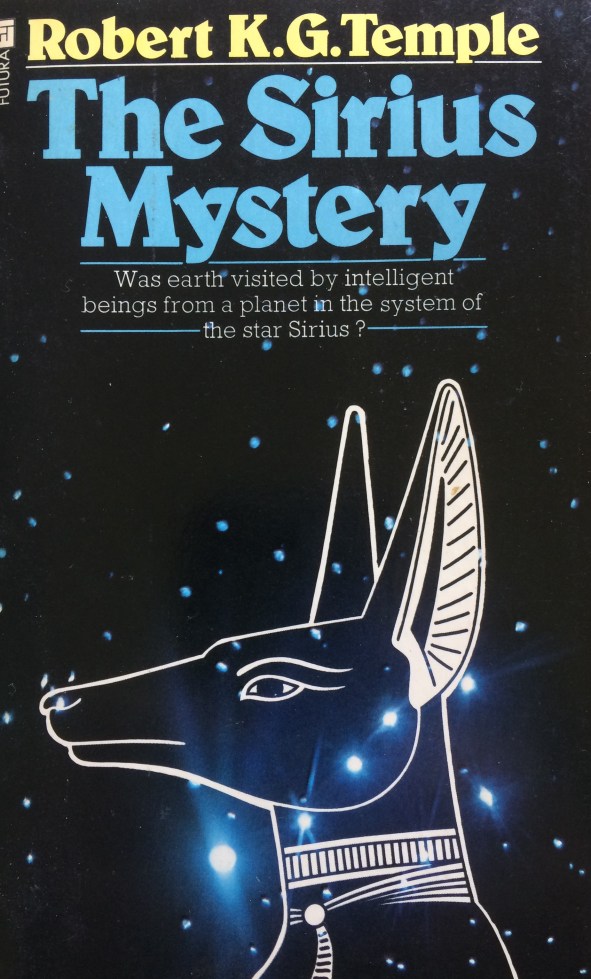
Was this planet really visited by space travellers from the star Sirius in the ancient past?

This is the question posed by author Robert K. G. Temple. His book, ‘The Sirius Mystery’ (Futura 1977) is another of my favourite books from yesteryear. I remember the day I bought it, in a train station, the arresting cover drawing me to it. I still thoroughly recommend it to anyone interested in the possibility of ‘ancient aliens’ and human culture in general.

It’s a complicated book that you have to persist with, though it’s well worth it, and this paperback has very small type, which these days would not add to the reading enjoyment. Nevertheless, although several decades old now, it’s still in very good condition. I’m kind of good with books that way.

Sophisticated

The starting point of the book is that it seems the Dogon tribe of Mali (former French Sudan) in west Africa, have sophisticated astronomical knowledge of the star Sirius, which is in fact a binary star, that is, two stars spinning around each other; it takes Sirius B (the dense smaller, actually invisible companion to Sirius A) around fifty years to orbit its larger, very bright sibling. Sirius itself is important to mythology in general, particularly in ancient Egypt, where its rising was used in the timing of the flooding of the Nile; it is often called ‘The Dog Star’.

The work of French early twentieth century anthropologists Griaule and Dieterlen forms the basis of the main evidence for the book. They spent much time with the Dogon, unravelling their art, culture and mythology which embody this knowledge. It’s from this that the startling information about the Dogon’s knowledge came.

Simples

But to boil it down here for simplicity’s sake, how is it possible for the Dogon, in fact any people on earth, to have what appears to be complex, accurate knowledge of far off star systems, without telescopes, or without going there themselves? After all, it was only in the twentieth century that knowledge of Sirius’ invisible companion star came about, using modern, sophisticated telescopic technology.

Ruling out co-incidence, or that the Dogon could somehow remotely see Sirius B orbiting Sirius A light years away, what possible conclusions can we come to, apart from someone else giving them that information?

Ancient spacecraft?

It transpires from the work of the anthropologists that the Dogon do describe what we might today call aerial craft, possibly spacecraft, their various states of ascent and descent as seen from the ground. There are even suggestions that the being(s) on board these possible aerial ships, was called ‘Nommo’ and that he might be semi-aquatic, due to tribal drawings.

Interestingly, this description and knowledge does appear to link up with ancient Mesopotamian/Middle Eastern mythology, which describes similar ‘craft’ and ‘beings’, who imparted their knowledge to ‘primitive’ mankind.

So, as the saying goes, there’s a lot of smoke here, but where’s the fire? The evidence, such as it is, is highly persuasive. But do we need to re-examine it? Are we in danger of being guilty of imposing our own (modern Western) notions and sensibilities on to different cultures?

Keeping an open mind

The truth is, I don’t know. Twenty years ago, I was pretty much a full on believer in extraterrestrials and this was one of the best ‘go to’ books for ‘proof’ of them and their hand in humanity’s development.

Now, having re-read the book again in recent years, it’s still one of the best in this category you can find. Even so, as fascinating and well written as it is, I keep an open mind about it all.

I suppose it’s asking a little too much to demand aliens to disclose themselves, but if they’ve always been here, with us, then there’s nothing to disclose, is there?

Leofwine Tanner 2019
Spalding’s Unique Ayscoughfee Hall

IMG_1279

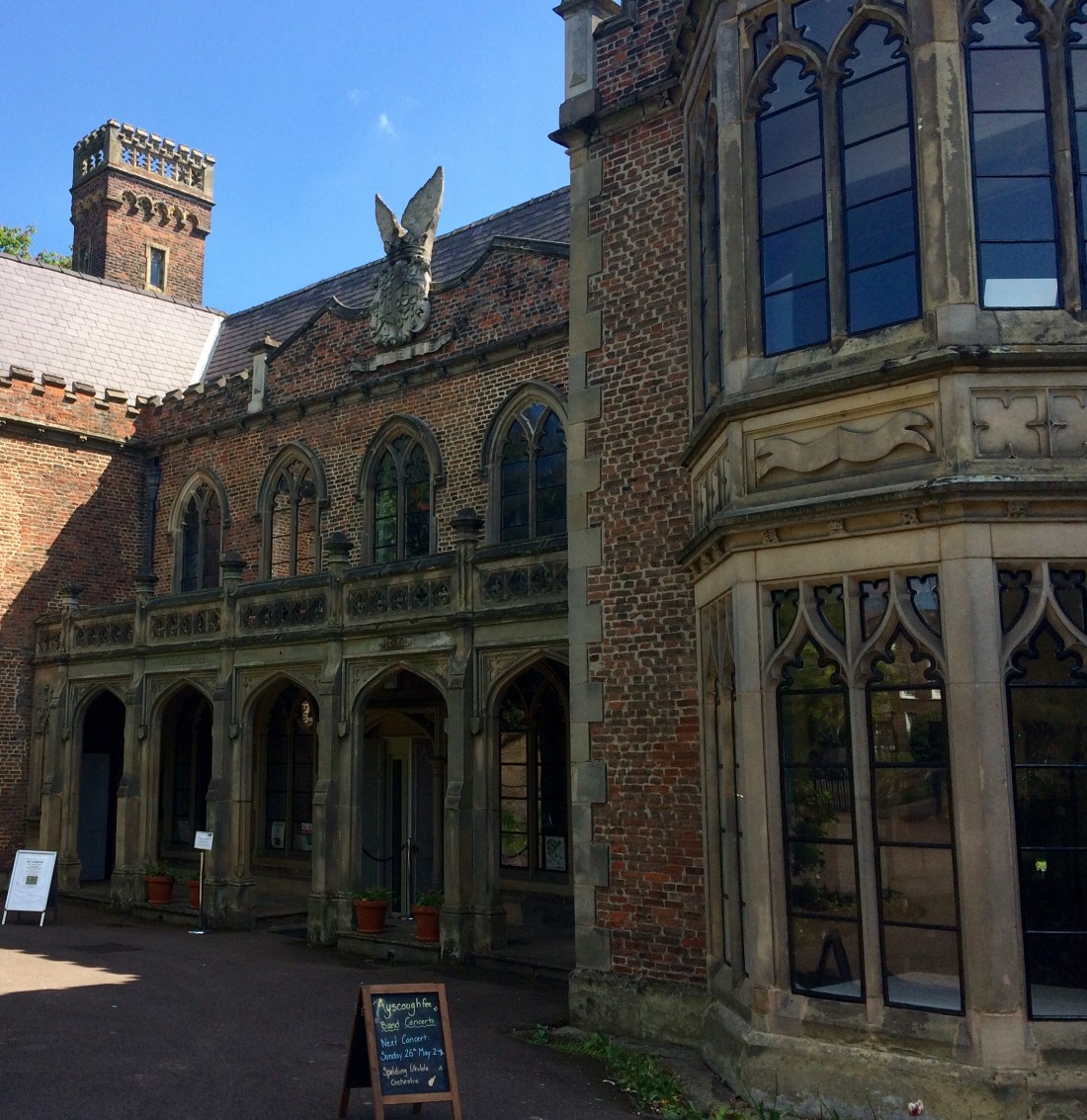
Ayscoughfee Hall in Spalding Lincolnshire is simply an architectural gem.

However, I don’t believe it’s known for sure how it got its name (it’s pronounced ‘Ascoffey’ folks).

Nevertheless, recent archaeology has discovered much that was once hidden; stairs, passageways, tiles… all of which are included in the comprehensive museum illustrating the history, not only of Spalding, but of the whole South Holland region and its wonderful agricultural heritage.

Leofwine Tanner 2019

Book Review: ‘Beyond The Time Barrier’, by Andrew Tomas

IMG_1289

Aliens, Atlantis, Ancient Astronauts… I’m not sure I believe in any of that these days.

However, time was, when once a green teenager, that books like Andrew Tomas’ ‘Beyond The Time Barrier’ published in 1974 by Sphere Books Ltd., fired my imagination, which is no bad thing.

What first drew me to the book was the cover, naturally. The connection between flying saucers and the sphinx, or Egyptian civilisation as a whole is intriguing, and there have been many books written since which hint, if not exactly prove, that human civilisation owes its origin to alien interference.

However, once you get into the core of this short book (160 pages), Tomas’ thesis, as far as I understand it, is that time may not be what it seems, that the so-called rules of time might be broken, or that the past and future can be seen by sensitive individuals using various mediums.

The Meaning of Tarot

Most intriguing for me, however, is his interpretation of the Tarot cards, which he thinks may have originated in Egypt. He seems to say that they do not merely predict what happens in an individual’s future through divination, but perhaps could also encapsulate the essential meaning of each century from the first century BC to our own twenty first century.

How is this? He takes the traditional images of the cards, ‘The Emperor’, ‘The Hermit’, ‘The Devil’ etc., and sees a summation of each century’s character. For instance, take the card called ‘The Pope’. If we are counting from the first card, ‘Il Bagattel’ standing for the first century BC, then ‘The Pope’ coincides with the fourth century AD – the most significant event (most might agree) of that century being the Emperor Constantine making Christianity the state religion of the Roman Empire.

It’s all very interesting, especially when one looks at the card standing for the twentieth century, ‘Il Matto’ (The Fool), who seems to be blindly walking towards a precipice, despite a dog’s futile attempts to prevent him falling over. I think you can see that such a symbol might very well fit when describing the tragedy of two world wars and all the other conflicts of that time.

However, it could also be argued that it’s easy to find events which match the pictures on the cards. This may be true.

Saint Malachy

Similarly, he takes a look at the prophecies of Saint Malachy, the twelfth century Irish Bishop of Armagh, who allegedly predicted future popes from his time using allegory and symbols, each pontiff given an epithet, like Pope John the Twenty Third who died in 1963.

One rather imaginative interpretation of Malachy’s description of Pope John, ‘Pastor et Nauta’, or Shepherd and Pilot, is that it’s meant to be ‘Astor et Nauta’, or Astronautics, which certainly did begin during his reign.

The End of Time?

One worrying aspect of these prophecies is that we are now, as of 2019, apparently living in the time of the last Pope that Saint Malachy gave an epithet to, namely Pope Francis, ‘Petrus Romanus’. Some have interpreted this as to mean that we are living at the end of the age, but people have been saying this for hundreds of years… so who really knows?

There are also references to Nostradamus, Edgar Cayce, Jeane Dixon and Nicholas Roerich, the latter whom he believes made prophecies through the medium of painting rather haunting landscapes. He is certainly one of my favourite painters.

However, like I said above, I do not subscribe to all this conjecture, except to say that it was books like this which set me on the path of ‘free thinking’, not necessarily believing anything I was told, nor ruling anything out. I believe we should be open to anything. Uncertainty is the usual state of affairs and is actually quite good in the long run – the truth will probably never be known.

Leofwine Tanner 2019

Fabulous Fairport Convention – Folk Rock at its Best

An Evening of Brilliant Music, Humour and Poignancy in Spalding.

On the Saturday evening of May 11, ‘folk rock’ band Fairport Convention once more graced the stage at Spalding’s Civic Centre.

Although the auditorium was not quite full, there was a good, convivial atmosphere, helped by the band members’ laid back approach, great sense of humour and also by the timeless quality of the music aided by a back catalogue of over fifty years, even though the subject matter of these songs is often anything but genteel.

Take the song ‘Matty Groves’, described by founder member Simon Nicol as having two chords and nineteen verses. The song itself is a traditional, lascivious and violent tale, originally adapted for Fairport’s landmark album, ‘Liege and Lief’ in 1969, and is delivered with a rocky, cutting edge, one of the best examples of ‘folk rock’ in my opinion.

Cutting Edge Rhythm Section

Throughout the performance, that cutting edge was amply provided by the deft skills of the highly experienced rhythm section, namely Gerry Conway on percussion and Dave Pegg, the latter’s dexterous familiarity with all of the neck of his bass guitar being a wonder to behold, as was the light hearted attitude he exuded. I have seldom seen a more lyrical example of great bass playing.

Not to be outdone, however, Gerry gave a stunning, virtuoso percussive performance which combined his conventional, rather minimal electronic set with what I understand to be a traditional Peruvian drum called a Cajon (Spanish for box) on which he actually sat all night. Simply remarkable.

And the evening was not all about the band’s older back catalogue either. For example, there were lovely performances of songs written more recently by multi-instrumentalist Chris Leslie, whose easy transition from fiddle to mandolin to guitar to tin whistle… was amazing.

Conversely, yet equally impressive, was the fiddle-dedicated Ric Sanders, whose unconventional, at times jazz influenced, reverb infused playing style, perfectly complemented the rest of the band.

What is more, there were the fantastic vocal harmonies too, adding to the overall richness and quality of the sound.

Leader of the Band

However, the undoubted leader of the band is founder member Simon Nicol, whose precise, often understated guitar playing could not be overlooked, especially by amateur guitarists like myself who appreciate exactly how well he does it.

Furthermore it was Simon who provided the most poignant parts of the evening. The band’s rendition of Sandy Denny’s ‘Fotheringay’ was a particular highlight, sung with deep feeling by Simon, the story of Mary Queen of Scots final hours in 1587.

IMG_1280
‘The Hiring’. Statue recently erected in Hall Place, Spalding

Equally moving and with some local interest too, was Ralph McTell’s beautiful song ‘The Hiring Fair’. Simon had clearly seen the statue ‘The Hiring’ recently erected in Hall Place in the town centre, giving a precis of how hiring fairs used to work throughout the country.

And so to the encore, which had to be the anthemic ‘Meet on the Ledge’, one of the band’s best known songs. It’s exactly fifty years since the tragic road accident which took the life of drummer Martin Lamble and Jeannie Franklyn, who was Richard Thompson’s girlfriend.

In the aftermath of the tragedy the band nearly split up. Thankfully for us and to continually honour those who died, they decided to carry on, though it was clear that the anniversary of the event was leaving its mark on what was a very enjoyable evening.

Finally, there is the Cropredy Convention which takes part every year in August over three days. If you missed them this year on their spring tour, why not try to catch them at Cropredy? There are many other bands and musicians to see and a good time will be had by all, that’s for sure.

Discover Spalding’s Ayscoughfee Hall No.1

IMG_1273

So how do you pronounce that?

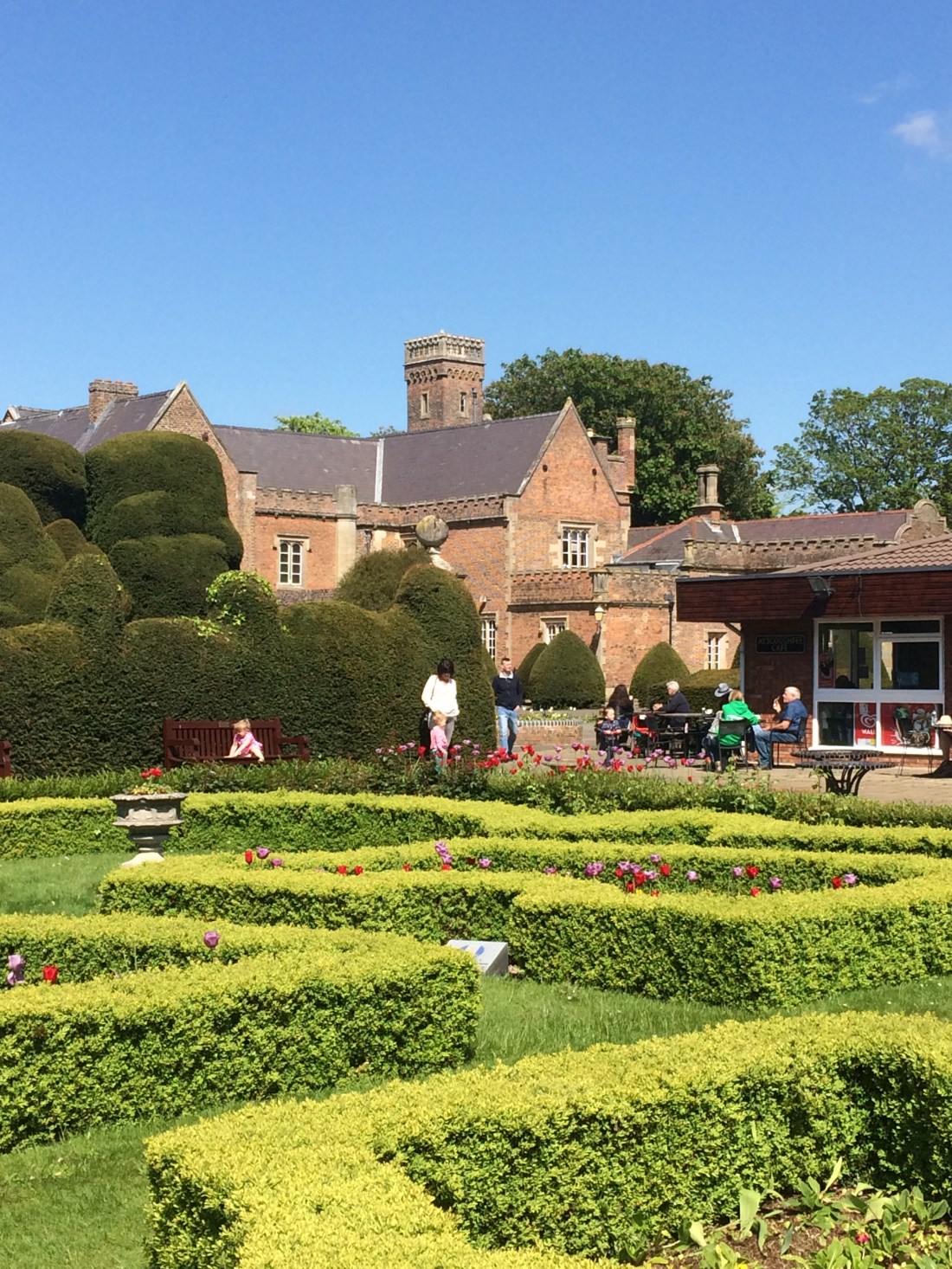
Visitors to Spalding in south Lincolnshire usually do a double take when they see the name, ‘Ayscoughfee’, relating to the wonderful late medieval building in the town centre.

Locals naturally all know it’s pronounced ‘Ascoffey’!

Once you get over that hurdle, there is much to admire in this Lincolnshire gem. There are wonderful gardens, monuments, an aviary, a museum and a cafe.

More pictures will follow soon.