Grieving


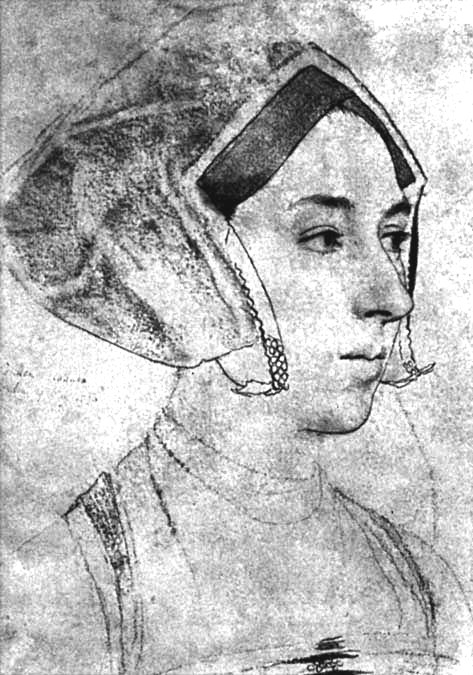
Anne Boleyn? Hans Holbein the Younger [Public domain], via Wikimedia Commons

(a response to Holbein’s sketch,
purportedly of Anne Boleyn)

So, is this really you? Those full lips
well kissed, I have no doubt,
your pretty duckys hidden, fit for ravagers
we call kings. Holbein’s profile, it
simply shines your intelligence, courts
with language, love and ideas,
perhaps a little too much for kings
and enemies to take, at a time
when your sex are meant to be
little more than slaves and vessels
for petulant princes.

But no one can stop me grieving:
I imagine you blink, turn
and smile at me. Oh,
you are strong and keen, yet tender
and kind like all mothers
and lovers should be. No wonder
other men may have dreamed
on those lips, carried away
by your verve, which only victors
ever get to call treason. Now I wish
I could touch your fine chin
and whisper: “Elizabeth—
remember Elizabeth!” My words
vanish into air like justice, while you
stare blankly through Traitor’s Gate;
but this little girl takes the better part
of you, better than any king before
or since, of this abject state

poem © copyright David F. Barker

Poem ‘A Tale of Love’

I first fell in love with you in a map,
a sort of pentagon, sacré, teased out
a touch like a stretched piece of dough. Then
it was the names, the easy non-phonetics
conjuring visions and colour through
Fontainebleau and Versailles. But then,
of course, it’s the history that defines me
and you, those first tragic lines etched
large, bold and bloody by le Bâtard, a family
dispute of a single culture cleaved
by hatred and greed, melded by chivalry.
For so long la Manche was not a divide
(and never la différence), more a conduit
of ideas flowing north, longbows sailing
south. Oh, we have divided since; your gift
for re-invention, dispensing with kings, that’s
something I cannot conceive, even though
we did have a go. But I only have to
look at Claude and Edouard, Paul
and Vincent, to get it, to understand— there’s
a love neither can openly express, though
look more closely, you will find it in our eyes

© copyright David F. Barker 2012

Poem ‘Fugitive’

fugitive

for so long you said nothing,
you let it all well-up inside.
It swelled like some geyser beneath you,
or some vast unstoppable tide

but clearly the choice was yours;
to sit quietly and safe in silence,
or face the dangers of disclosure.
what use was there in pretence?

so you told those cowards straight,
to carry on with ignominious lies,
because you knew the whole truth –
heck, you saw it with your own eyes!

so now you ride trains in the night,
mingle quietly in busy queues;
the world doesn’t want to see you
nor cares of the state of your shoes

and then one day, maybe quite soon,
you’ll vanish with barely a trace;
at least you knew your rabid enemy
defined the justice of your case

© copyright David F. Barker 2012

Poem ‘Wordspiller’

The Old English epic poem Beowulf is written i...
The Old English epic poem Beowulf is written in alliterative verse and paragraphs, not in lines or stanzas. (Photo credit: Wikipedia)

Wordspiller (for Christopher Marlowe)

So you are the spiller of words, almost
as far from me as
Beowulf is to you.

Wordspiller, your crosspose outstands me,
but I backthink
the falling choirs where you sadwalked

your summerwaiting mind, to
when your glories were mere
airthought,

like the Greathallow who once
shorestepped there
to see for himself

your forliving Angles (he oncebethought
angels) and their saxon King
Ethelbert redeemed to newspells that

you mindweighed as truthless.
Now I meet your clearstead gaze; for
the muse which stretchfed you

has not alleaten you yet

poem © copyright david f. barker 2012

Poem ‘City Nights’

London

City Nights

Though your faces
change these same streets
remain. Same high
sights in floodlit stone,
city nights abased
by brawls and chilli fights
in queues

Where were you when
I was this green
and victim?
Your fashion is the masque
of fools, disguises nothing;
your life like mine is
still waste

But somehow you’re
preoccupied.
Laugh in my face and deride
my reticence— won’t you!
So it always
was, for soon the dreaming
is done

© copyright df barker 2012