Book Review – The Mars Room by Rachel Kushner

*Milly’s not quite sure about this book, ‘The Mars Room’.

Fable by Adrienne Young (ARC Review) — Pages Unbound | Book Reviews & Discussions (Reblog)

Information Goodreads: FableSeries: Fable #1Source: ARC from publisher giveawayPublished: September 1, 2020 Summary Left years ago by her father on an island of thieves, seventeen-year-old Fable has had to fend for herself. But she has a plan. She is going to work her way off the island, find her father, and reclaim what is hers. […]

Fable by Adrienne Young (ARC Review) — Pages Unbound | Book Reviews & Discussions

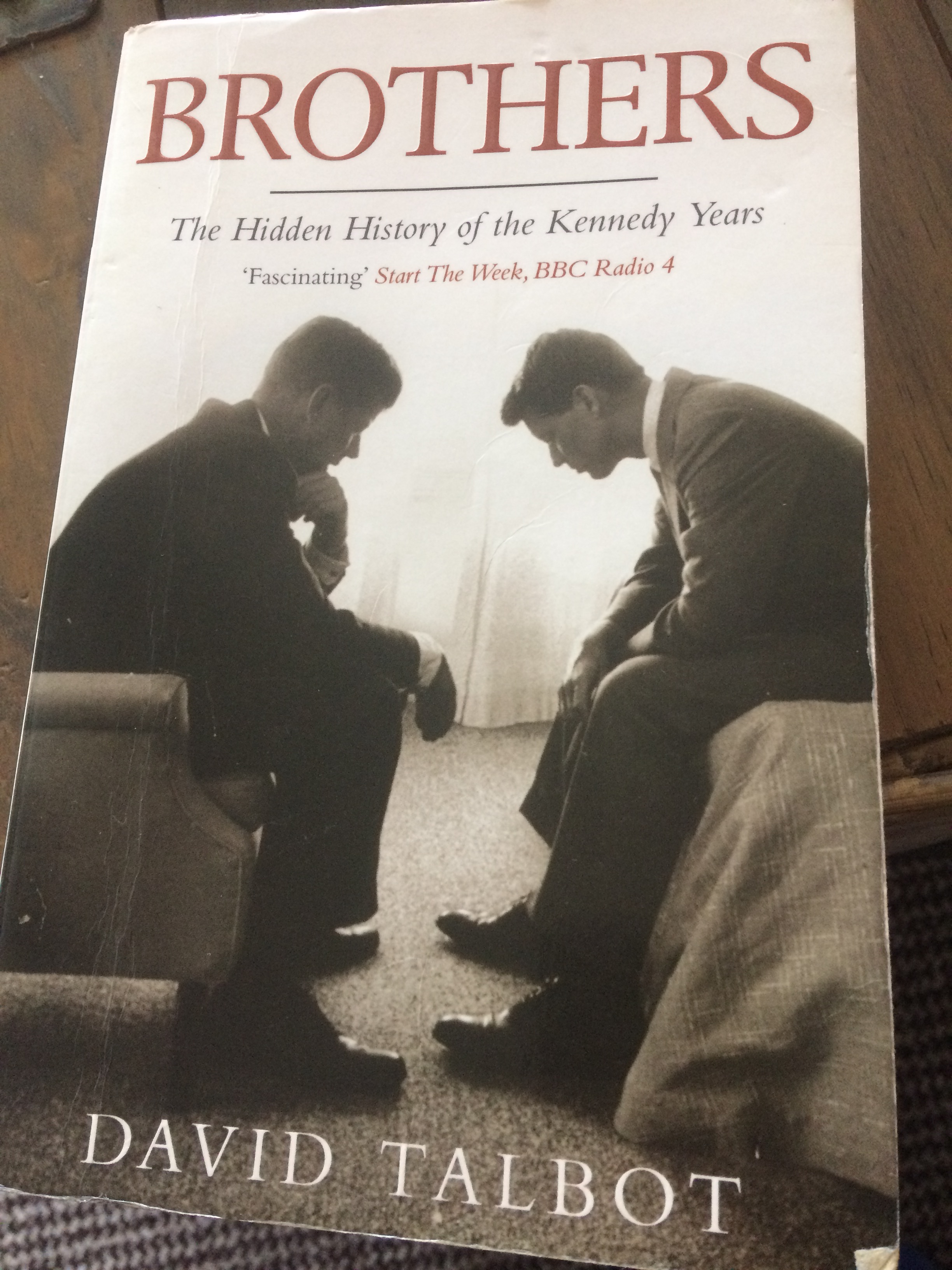
JFK and RFK: ‘The Brothers’ by David Talbot – Book Review

IMG_3070

There have been many books written about John Fitzgerald Kennedy and his brother, Robert Francis Kennedy, both victims of assassination. In my opinion this is one of the best.

Impeccably researched, this book, ‘The Brothers’ (Pocket Books/Simon & Schuster), written by David Talbot, roughly covers that roller coaster period from JFK‘s inauguration on January 20 1961 to the assassination of RFK on June 6 1968. It was a relatively short period of nearly seven and a half years, yet the whole world had been transformed — and mostly not for the better in my opinion.

Disaster and Tragedy

For me what makes this book stand out is the sheer number of interviews (150+) the author has carried out, with people who were there and in the know. For example, leaders like Fidel Castro of Cuba and Che Guevara seem to emerge like more rounded figures, not merely the one dimensional characters often portrayed in most media over the last sixty years.

More than this, the author tells is it how it was: from the disaster of the Bay of Pigs in 1961 and the sheer hatred generated among those who felt the newly elected president had let their side down by refusing to provide air cover, to the short, fraught, heroic, yet ultimately ill-fated and tragic presidential campaign of Robert Kennedy in the early summer of 1968.

IMG_3071

Conspiracies Galore

The author does not hold back on analysing the myriad conspiracy theories either, which began to emerge largely as a result of the voluminous criticism which gradually amassed after the publication of the Warren Commission Report in September 1964. And there were other doubters from the word go.

Most intriguing of all is his description of the torture Robert Kennedy went through following his brother’s death. Attorney General to JFK, he remained in his position until August 1964 when he decided to run for Senator of New York. It’s possible that RFK may have thought he was somehow responsible for not protecting his brother more during his presidency.

Treading a Very Fine Line

What is more, for the next four and a half years, up until his own death, Bobby too harboured strong suspicions that the whole truth about his brother’s death had not yet been told.

Nevertheless, in public he always retained a consistent front in support of the conclusions of the Warren Report. He was, in effect, seemingly keeping his powder dry until such a time he could investigate further from a position of strength – namely as President of the United States.

We all know this was not to be, that the so-called ‘Kennedy Curse’ was to strike once again. However, this is a very fine book and I was left feeling that a lot more light had been cast on those often dark, crazy, tempestuous, tortuous years into which I too had been thrown.

Copyright Francis Barker 2020

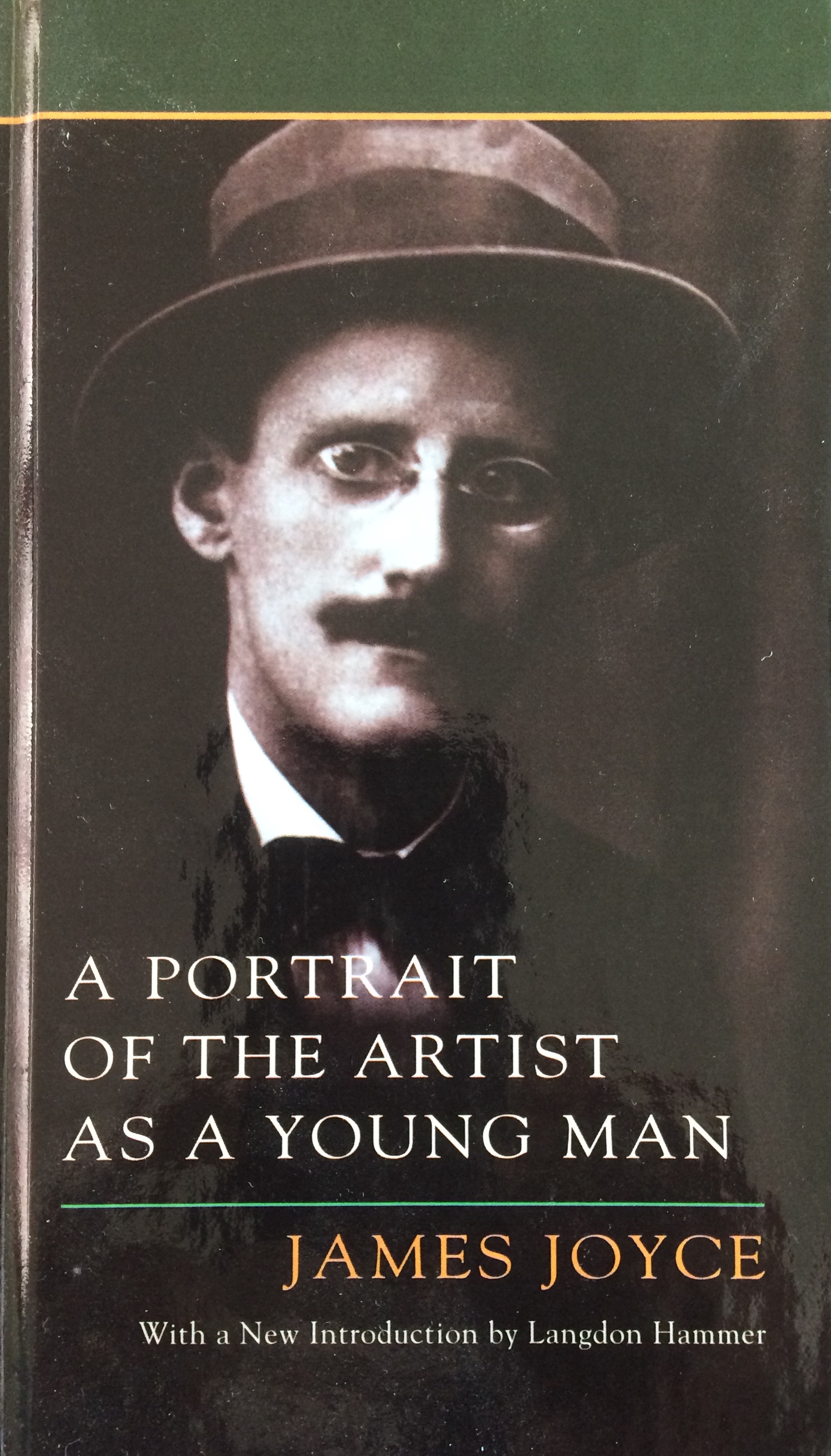
Book Review: Musings on ‘A Portrait of the Artist As A Young Man’ – James Joyce

IMG_1337

Of course, much has been written about this novel since it was first published in 1916. To call ‘A Portrait Of The Artist As A Young Man’ (Penguin – this publication) a landmark, would be grossly understating its impact.

So I’m not attempting to go into great depth, all that has already been done. I merely want to convey my own recollections of first reading it, way back in school.

For me, it was this book and D.H. Lawrence’s ‘Sons and Lovers’ that first truly opened my eyes to what we sometimes call serious literature. Both of them are, in their own way, semi-autobiographies and broke the mould of novel writing.

Story Teller

Naturally though, Lawrence and Joyce wrote in very different ways. I think Joyce wrote more intuitively, in a way which conjured up for me a wholly different milieu of imagery. He is a natural narrator, a story teller like many of his countrymen.

For example, when he describes Stephen Dedalus’ childhood, I get drawn into that world through the use of evocative child-like language; I become that child. I can remember endless classroom discussions about this part of the book.

Living Imagery

And the world of Dublin in the late 19th century, was a very different world from that of the industrial Nottingham area, where Lawrence sets his book.

Although Joyce was to reject almost everything about his upbringing, his beliefs, his writing is nevertheless suffused with that imagery, bringing it alive, like new music as some describe.

So what are we to make of the criticism of those who first rejected his manuscript? The book is, when compared to more classic literature, without doubt somewhat formless and unconventional.

Like God

Yet, those of an artistic nature tend to be like this, especially over the last hundred years or so. I think Joyce, whose approach was understood and encouraged by none other than Ezra Pound, was simply bold enough to open up the taps of his creativity. The artist himself almost becomes like God, a creator in his own right, a bit like the Daedalus of legend, who built wings for himself and his son so that they could fly.

Joyce’s upbringing within the strict bounds of Catholicism, his training for the priesthood, was in retrospect the perfect grounding for such free artistry, once it was released from its captivity.

Ironically, Joyce’s world never seems to lose the colour of his Catholic upbringing, even though he ultimately rejected it. With Lawrence, the harsh, English Protestant world, seems altogether more grim, enlightened by the writer’s love of nature.

Native Genius

Joyce’s innate creativity, held back for so long, could only emerge later like a succession of Michelangelo masterpieces, hewn by the craft and intelligence of a native genius.

Unlike his other classics, Finnegan’s Wake and Ulysses, I have successfully completed reading his first great novel.

Even so, one day I intend to finish the former two, although I suspect I will read ‘Portrait’ again before I do that.

copyright Leofwine Tanner 2019

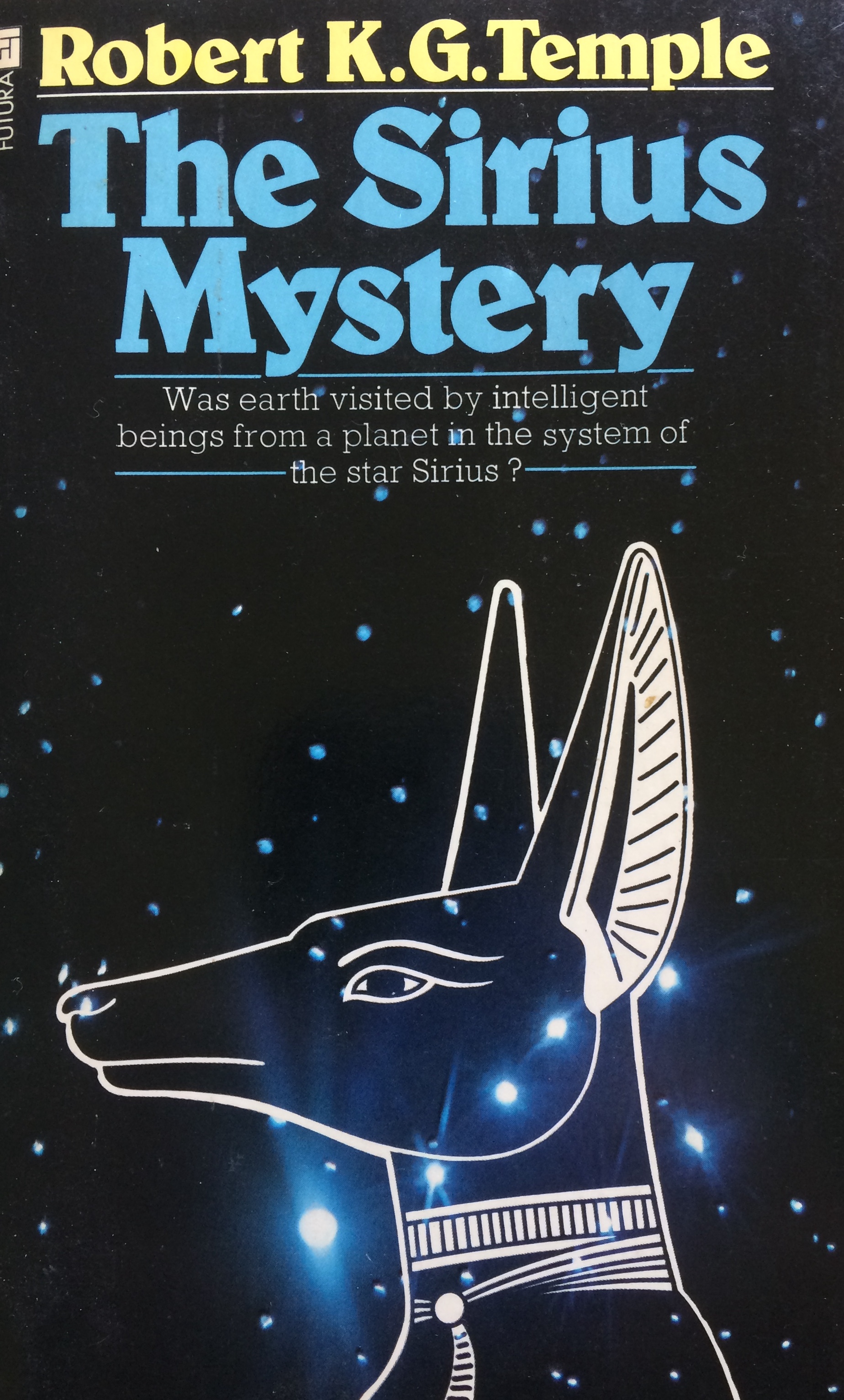
Book Review: ‘The Sirius Mystery’ by Robert K. G. Temple

IMG_1319

Was this planet really visited by space travellers from the star Sirius in the ancient past?

This is the question posed by author Robert K. G. Temple. His book, ‘The Sirius Mystery’ (Futura 1977) is another of my favourite books from yesteryear. I remember the day I bought it, in a train station, the arresting cover drawing me to it. I still thoroughly recommend it to anyone interested in the possibility of ‘ancient aliens’ and human culture in general.

It’s a complicated book that you have to persist with, though it’s well worth it, and this paperback has very small type, which these days would not add to the reading enjoyment. Nevertheless, although several decades old now, it’s still in very good condition. I’m kind of good with books that way.

Sophisticated

The starting point of the book is that it seems the Dogon tribe of Mali (former French Sudan) in west Africa, have sophisticated astronomical knowledge of the star Sirius, which is in fact a binary star, that is, two stars spinning around each other; it takes Sirius B (the dense smaller, actually invisible companion to Sirius A) around fifty years to orbit its larger, very bright sibling. Sirius itself is important to mythology in general, particularly in ancient Egypt, where its rising was used in the timing of the flooding of the Nile; it is often called ‘The Dog Star’.

The work of French early twentieth century anthropologists Griaule and Dieterlen forms the basis of the main evidence for the book. They spent much time with the Dogon, unravelling their art, culture and mythology which embody this knowledge. It’s from this that the startling information about the Dogon’s knowledge came.

Simples

But to boil it down here for simplicity’s sake, how is it possible for the Dogon, in fact any people on earth, to have what appears to be complex, accurate knowledge of far off star systems, without telescopes, or without going there themselves? After all, it was only in the twentieth century that knowledge of Sirius’ invisible companion star came about, using modern, sophisticated telescopic technology.

Ruling out co-incidence, or that the Dogon could somehow remotely see Sirius B orbiting Sirius A light years away, what possible conclusions can we come to, apart from someone else giving them that information?

Ancient spacecraft?

It transpires from the work of the anthropologists that the Dogon do describe what we might today call aerial craft, possibly spacecraft, their various states of ascent and descent as seen from the ground. There are even suggestions that the being(s) on board these possible aerial ships, was called ‘Nommo’ and that he might be semi-aquatic, due to tribal drawings.

Interestingly, this description and knowledge does appear to link up with ancient Mesopotamian/Middle Eastern mythology, which describes similar ‘craft’ and ‘beings’, who imparted their knowledge to ‘primitive’ mankind.

So, as the saying goes, there’s a lot of smoke here, but where’s the fire? The evidence, such as it is, is highly persuasive. But do we need to re-examine it? Are we in danger of being guilty of imposing our own (modern Western) notions and sensibilities on to different cultures?

Keeping an open mind

The truth is, I don’t know. Twenty years ago, I was pretty much a full on believer in extraterrestrials and this was one of the best ‘go to’ books for ‘proof’ of them and their hand in humanity’s development.

Now, having re-read the book again in recent years, it’s still one of the best in this category you can find. Even so, as fascinating and well written as it is, I keep an open mind about it all.

I suppose it’s asking a little too much to demand aliens to disclose themselves, but if they’ve always been here, with us, then there’s nothing to disclose, is there?

Leofwine Tanner 2019