Lincolnshire in the east of England has some wonderful, often underrated medieval churches.
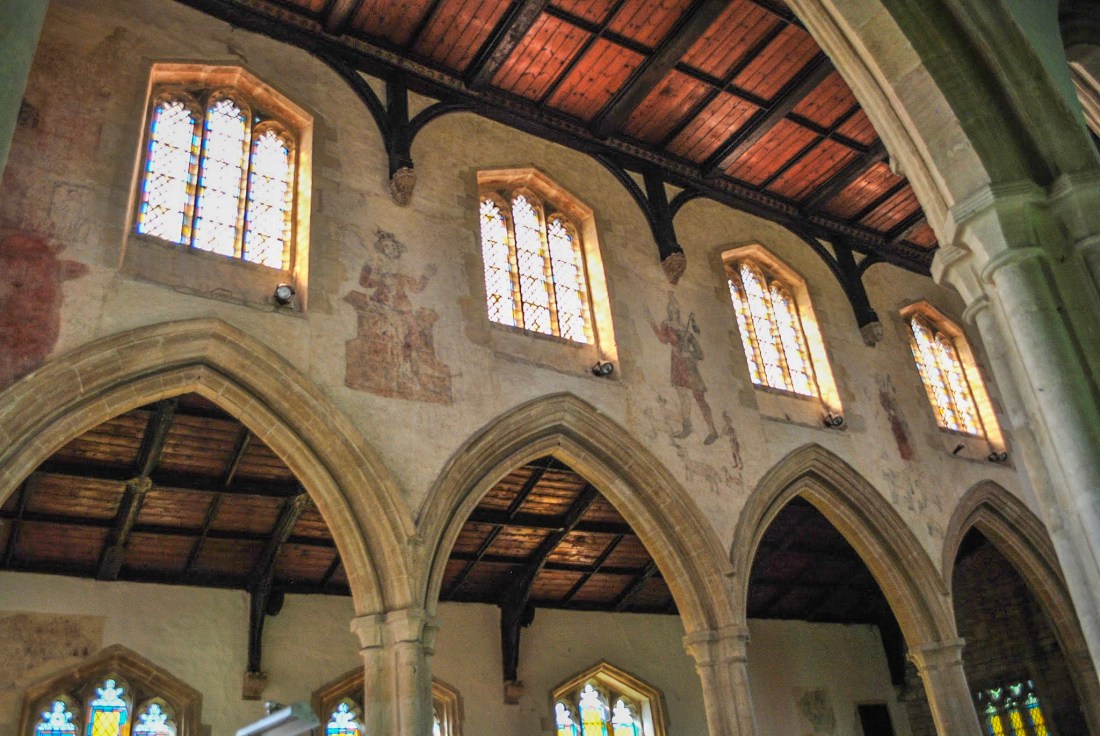
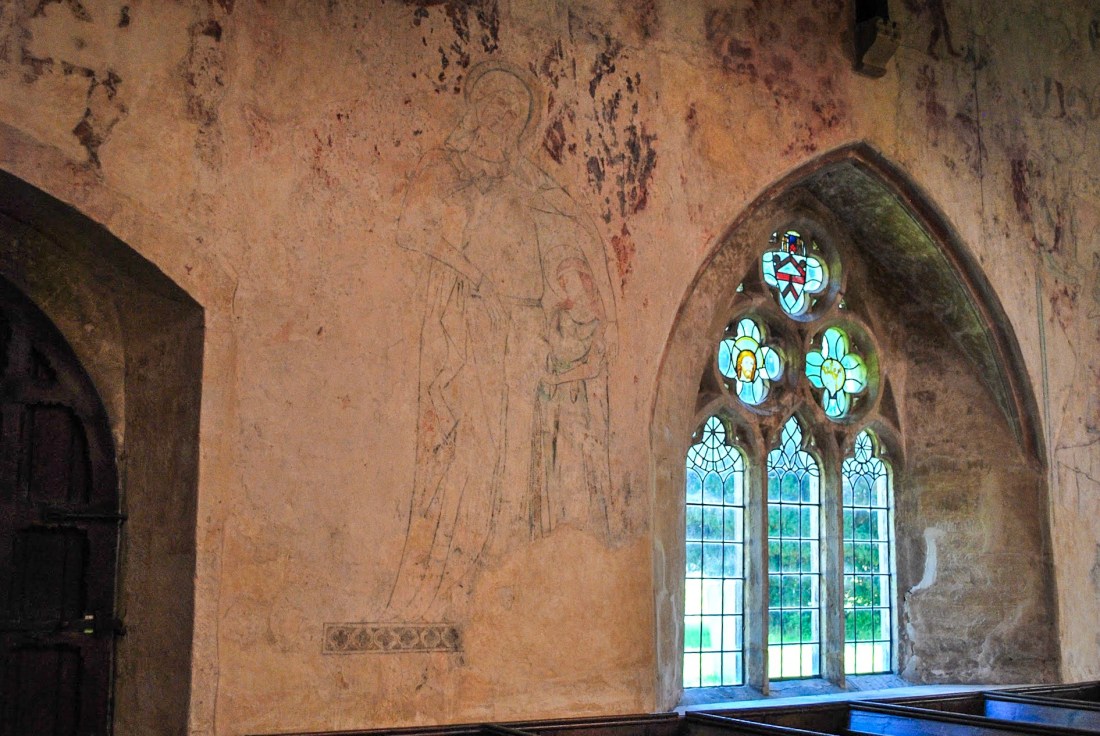
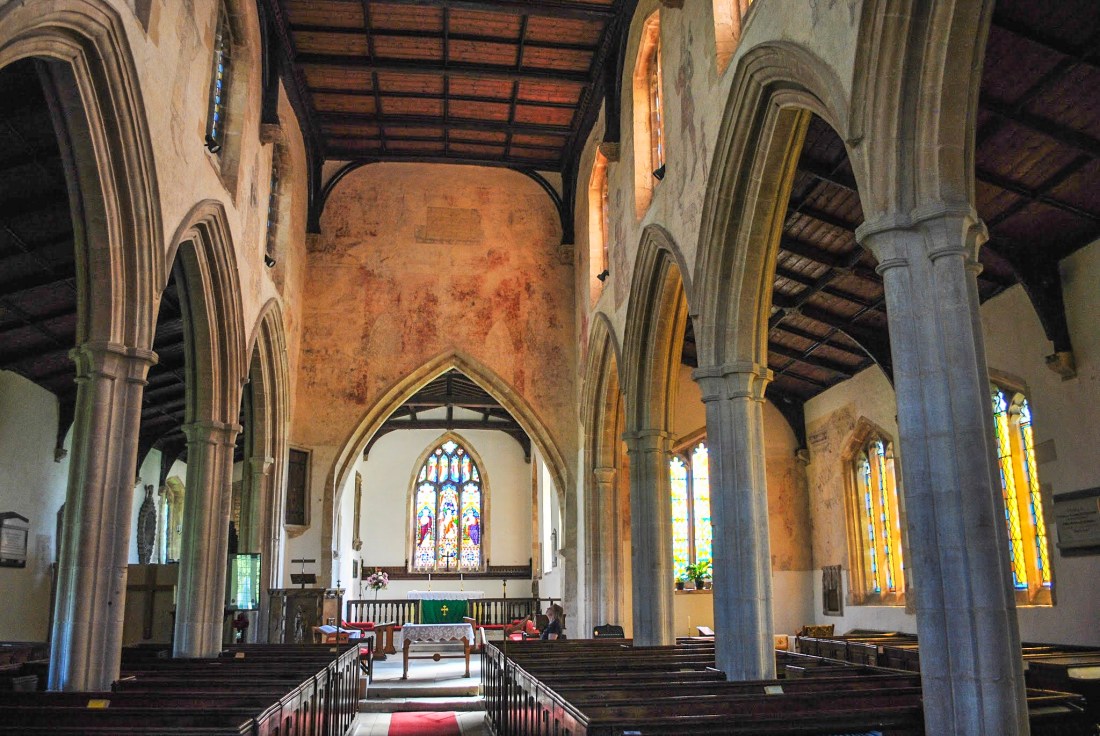
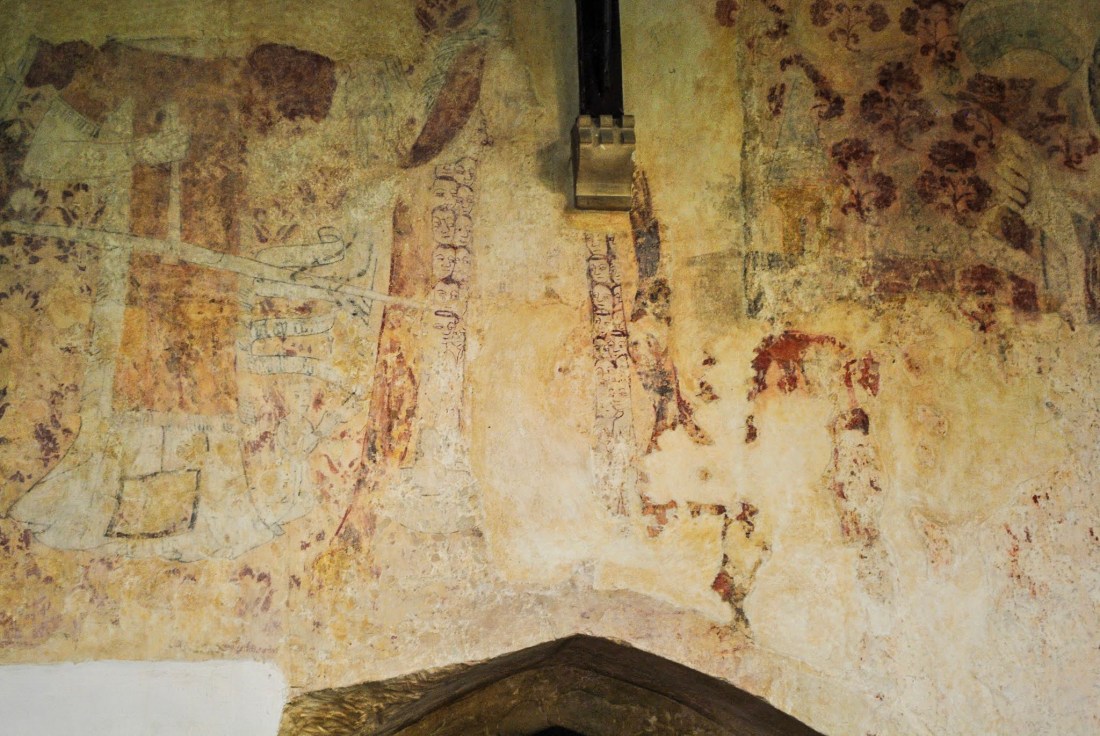
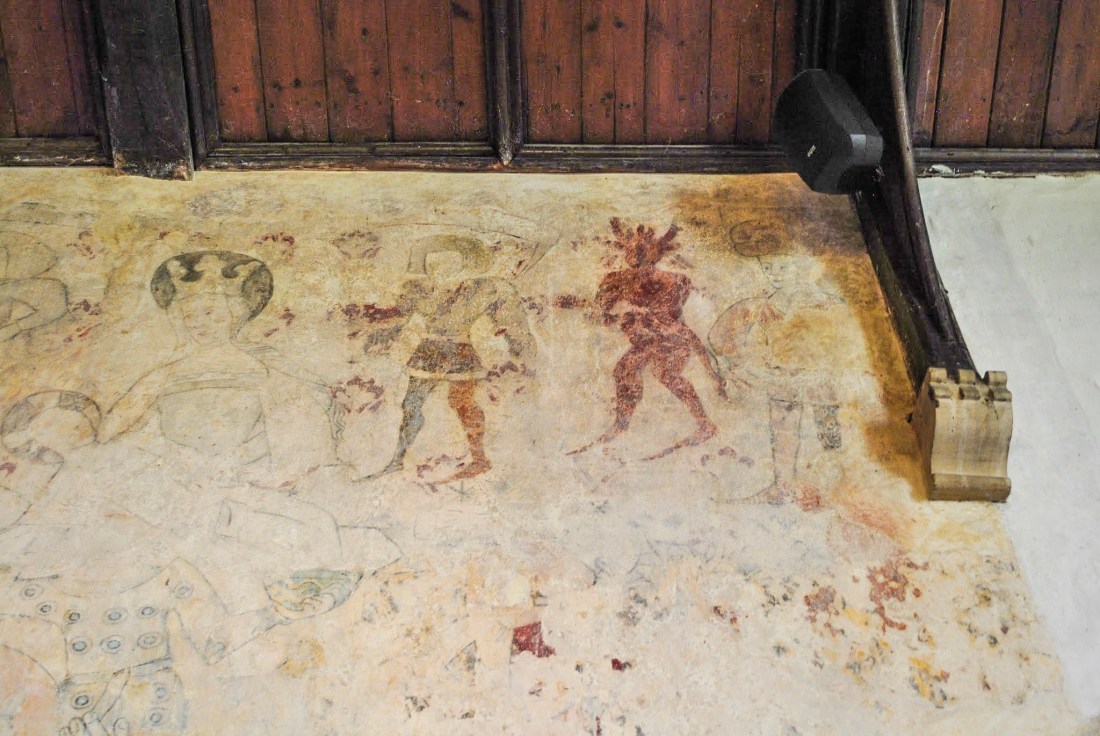
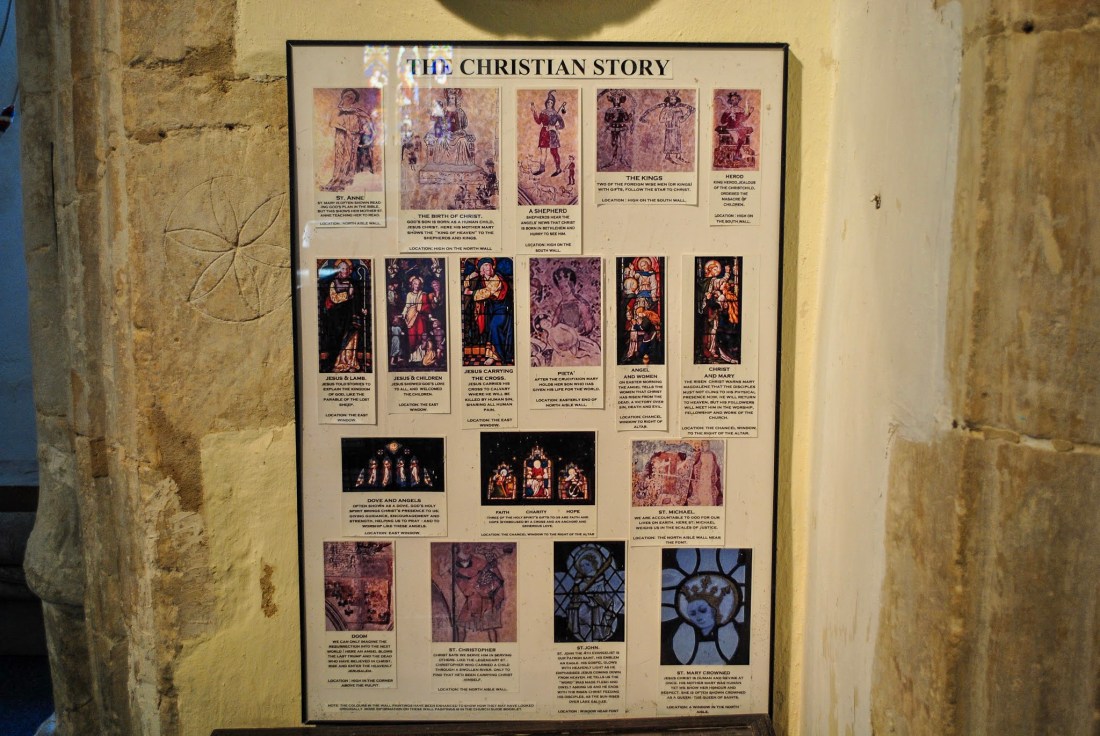
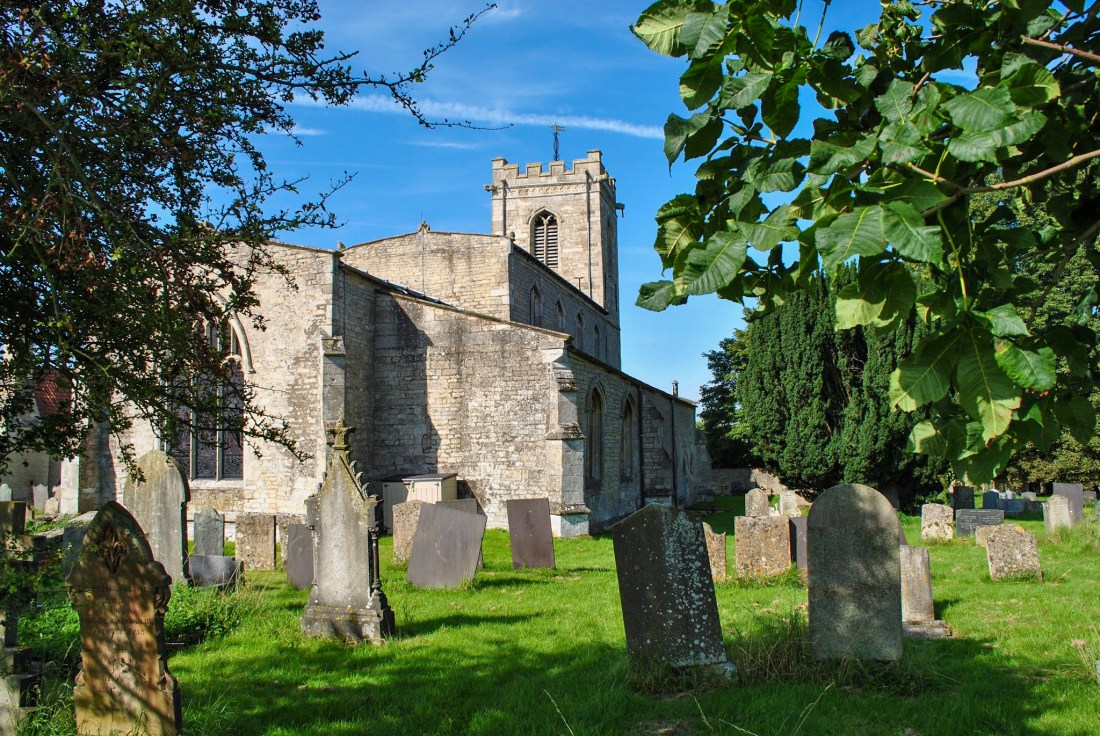
One such is in the south west of the county, in the lovely village of Corby Glen. Here on many of the walls of the church you can see paintings and illustrations of religious and spiritual imagery, representing stories from the Bible and the faith and beliefs in general of the later medieval period.
If you look carefully, you can make out several layers of art, where older ones have been superseded with new work.
During the Reformation in the 1500s, all of this art was whitewashed over, part of the process of removing all imagery, which also meant stripping out idols and even rood screens which separated the nave from the chancel.
It was only in more recent times that this treasure trove of art was rediscovered through church restoration.
Today this art represents some of the most important medieval imagery not only in the county of Lincolnshire, but also in the whole of England.
Devil in the detail.Explanation of the imagery inside the church.The beautiful setting of the church of Saint John the Evangelist, Corby Glen, Lincolnshire.
Peterborough Cathedral is probably one of the most underrated churches in England.
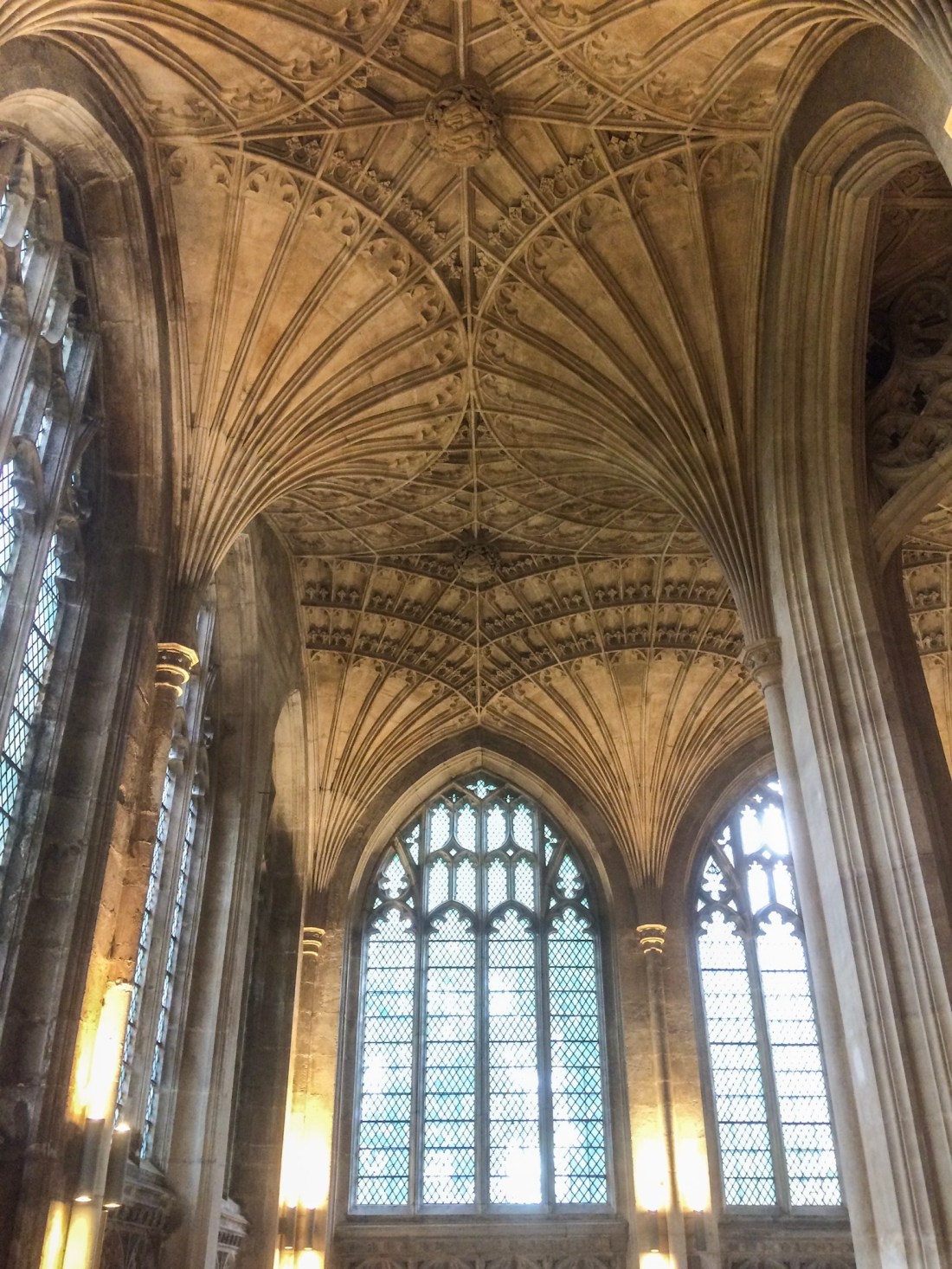
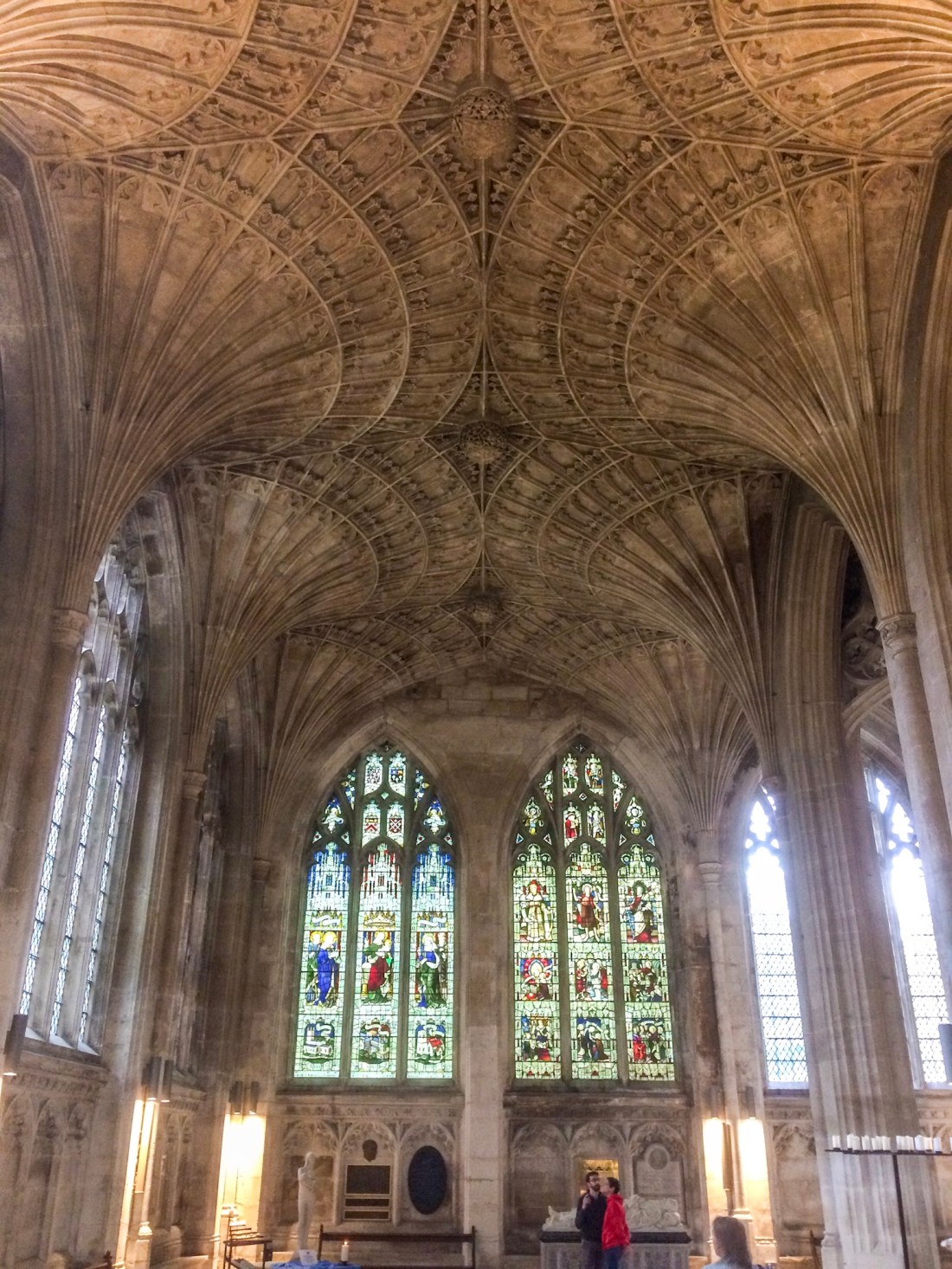
The Gothic fan vaulting at the east end of the cathedral is remarkable.
The cathedral also has three notable shrines to saints. The one above is Saint Oswald’s chapel, an old English saint, whose remains (reputedly an arm) were brought here.
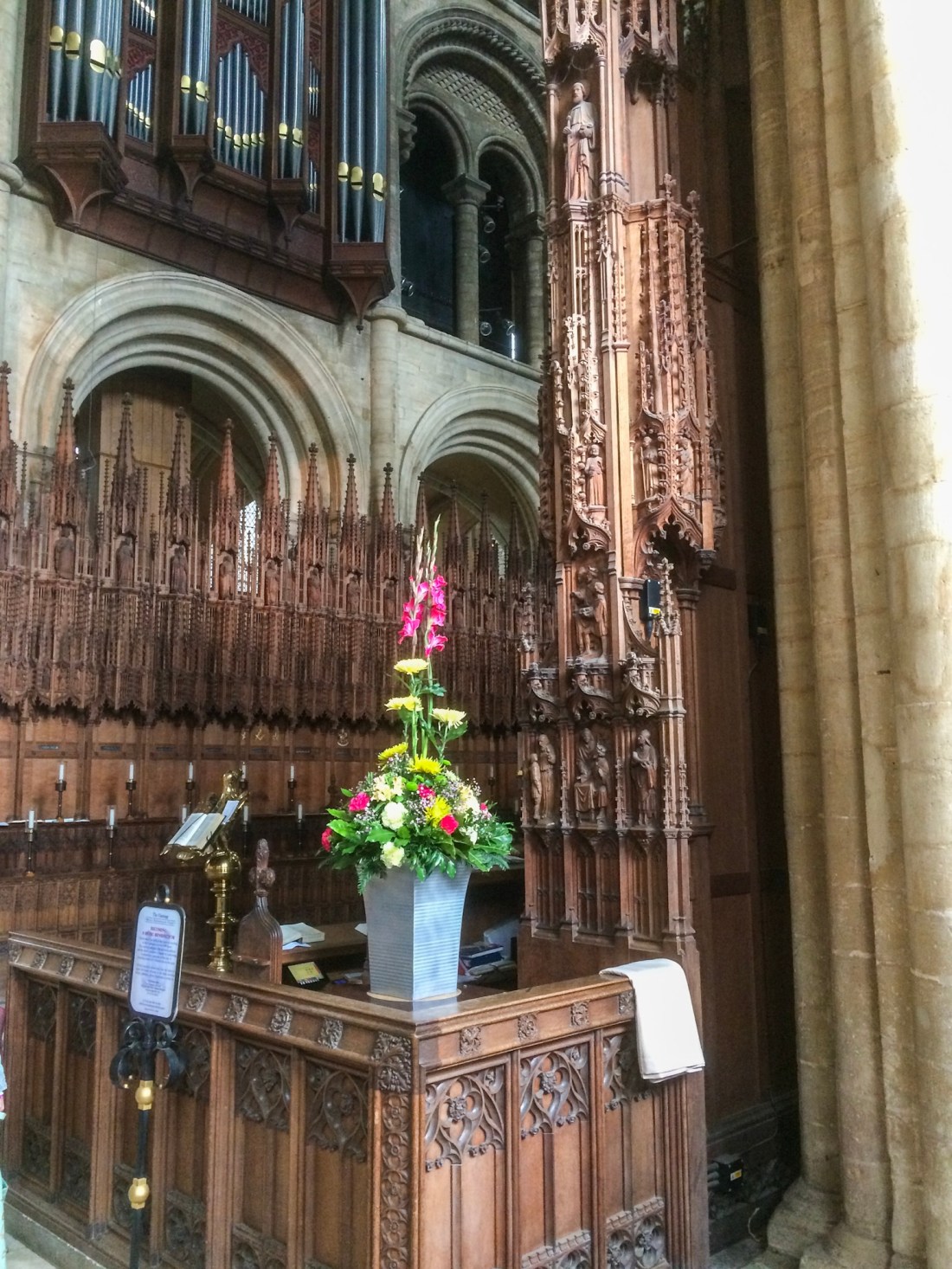
There is also a shrine to Saint Benedict with a beautiful wood carving at the entrance. Peterborough Cathedral is in fact the Abbey church of the former Benedictine Abbey, dissolved by Henry VIII when he became head of the Church of England.
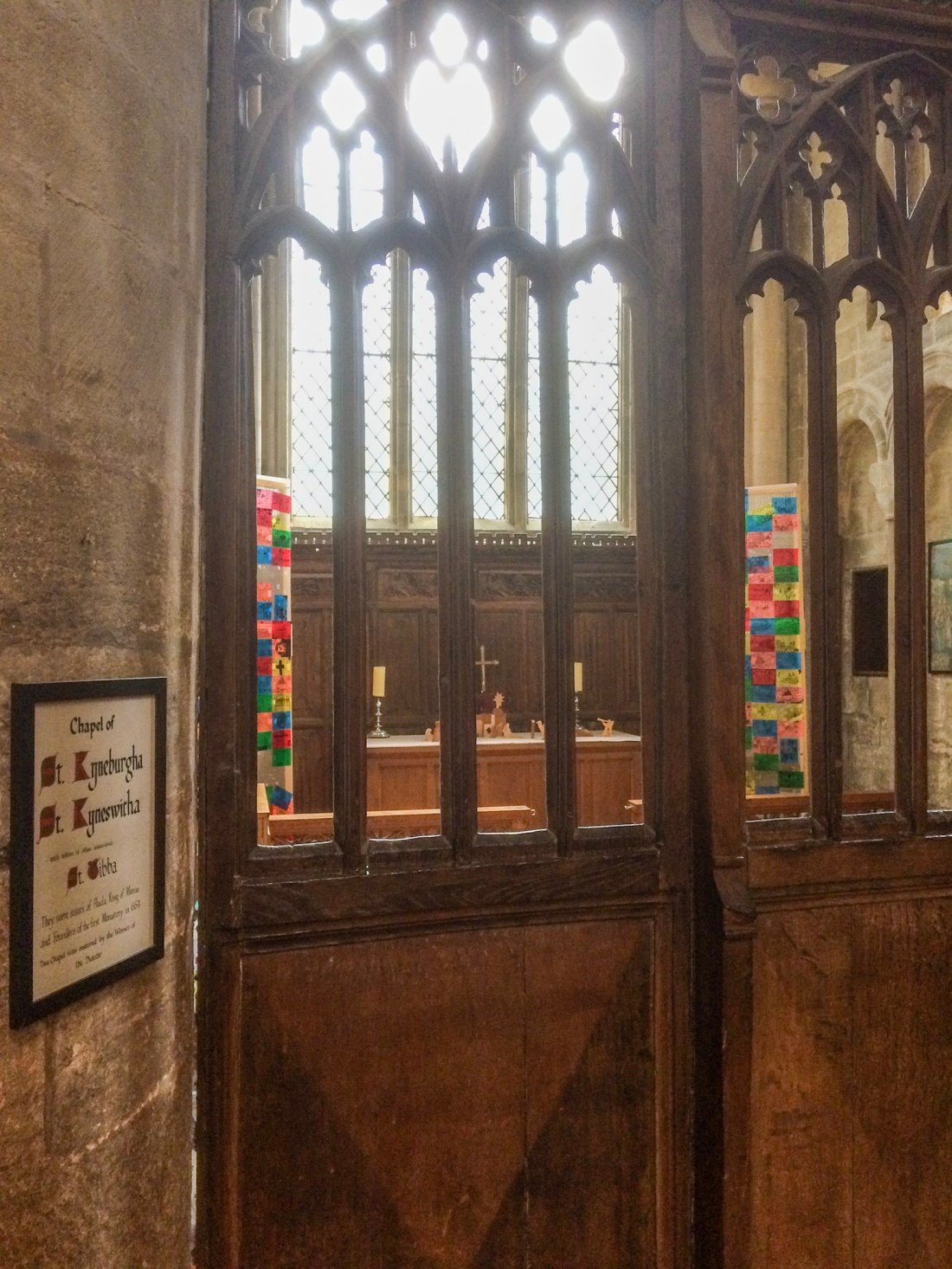
Most interestingly, there is a shrine to three old English (Anglo-Saxon) saints, Kyneburgha, Kyneswitha (spelling varies) and Tibba, unusual but fascinating names of a largely forgotten era.
The spacious choir has some wonderful wood carving.
words and photographs copyright Francis Barker 2019
Of course, the city of Peterborough’s greatest glory is its amazing cathedral, but that subject deserves a full article of its own.
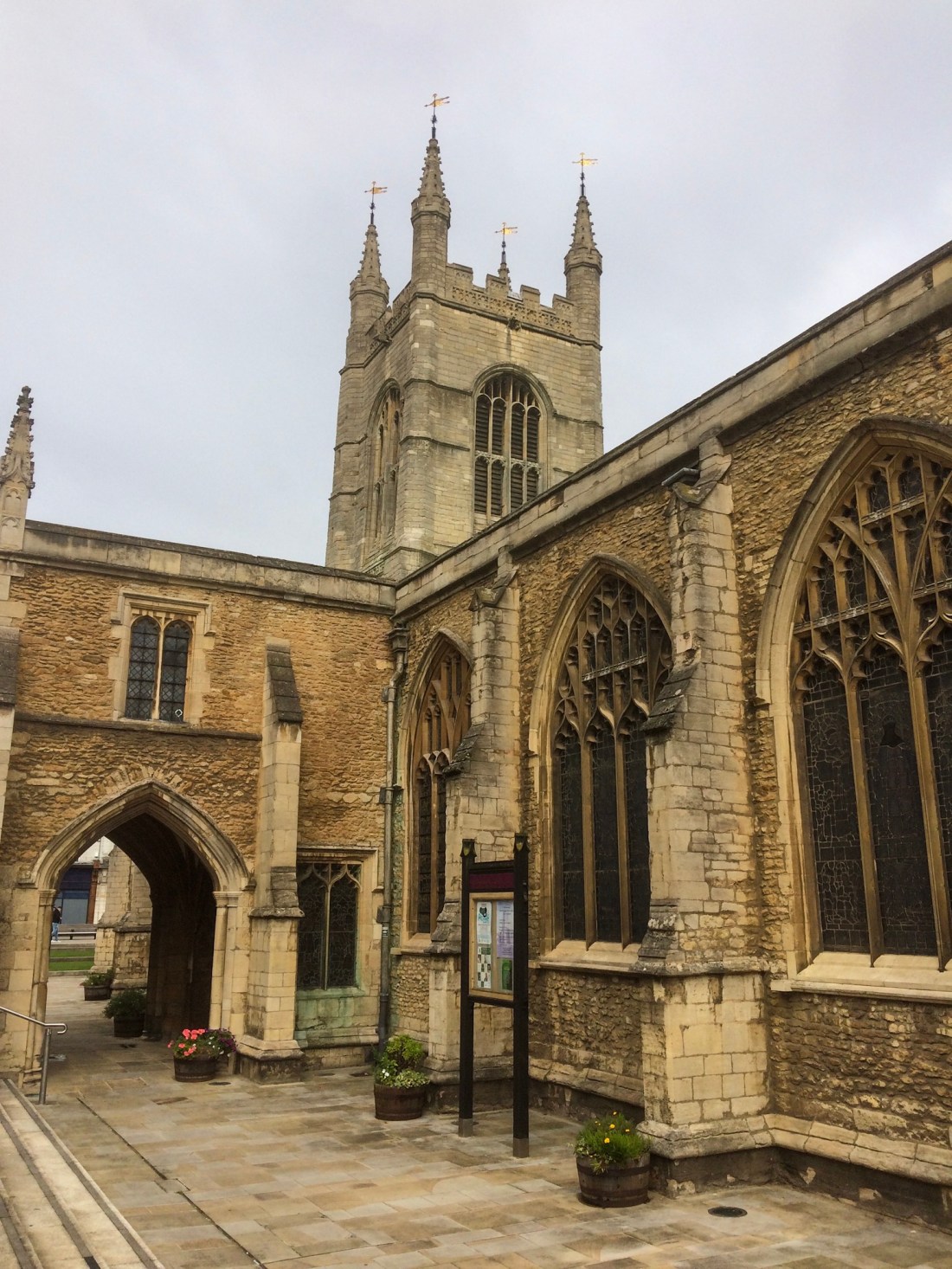
One of the overlooked features of Peterborough, a growing city in the east of England, is the Parish church of Saint John the Baptist around the cathedral square.
Consecrated in 1409 during the reign of Henry IV, its close proximity to the cathedral and the modern shopping mall attraction of Queensgate, probably detracts large numbers of visitors. However, it is well worth a visit, and as is quite usual in England’s medieval heritage buildings, there are often some wonderful ‘hidden’ gems.
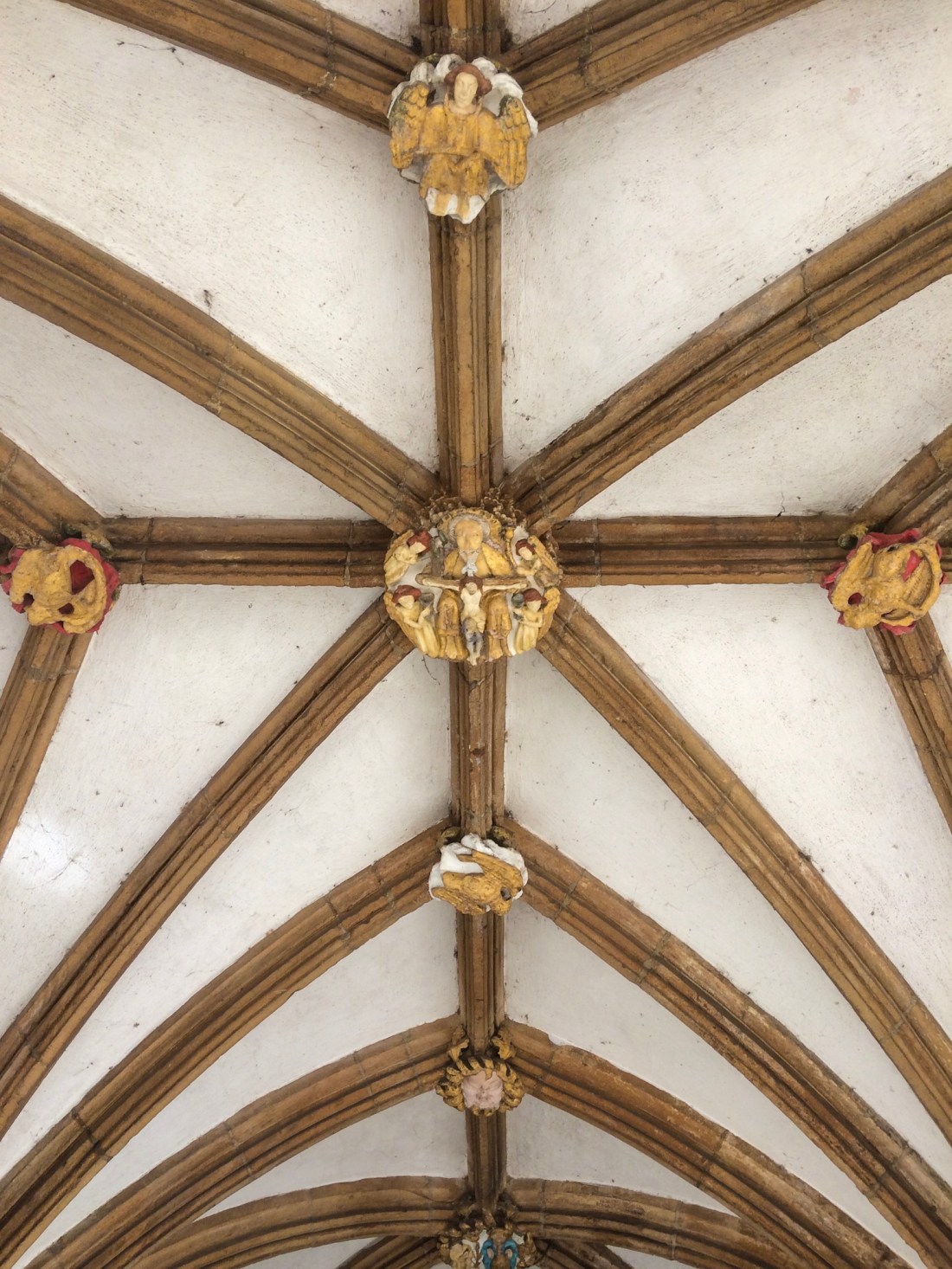
The south porch entrance is most interesting, particularly the roof in the above photograph.
The nave is very large and light with a rood screen.
There is also a wonderful reredos.
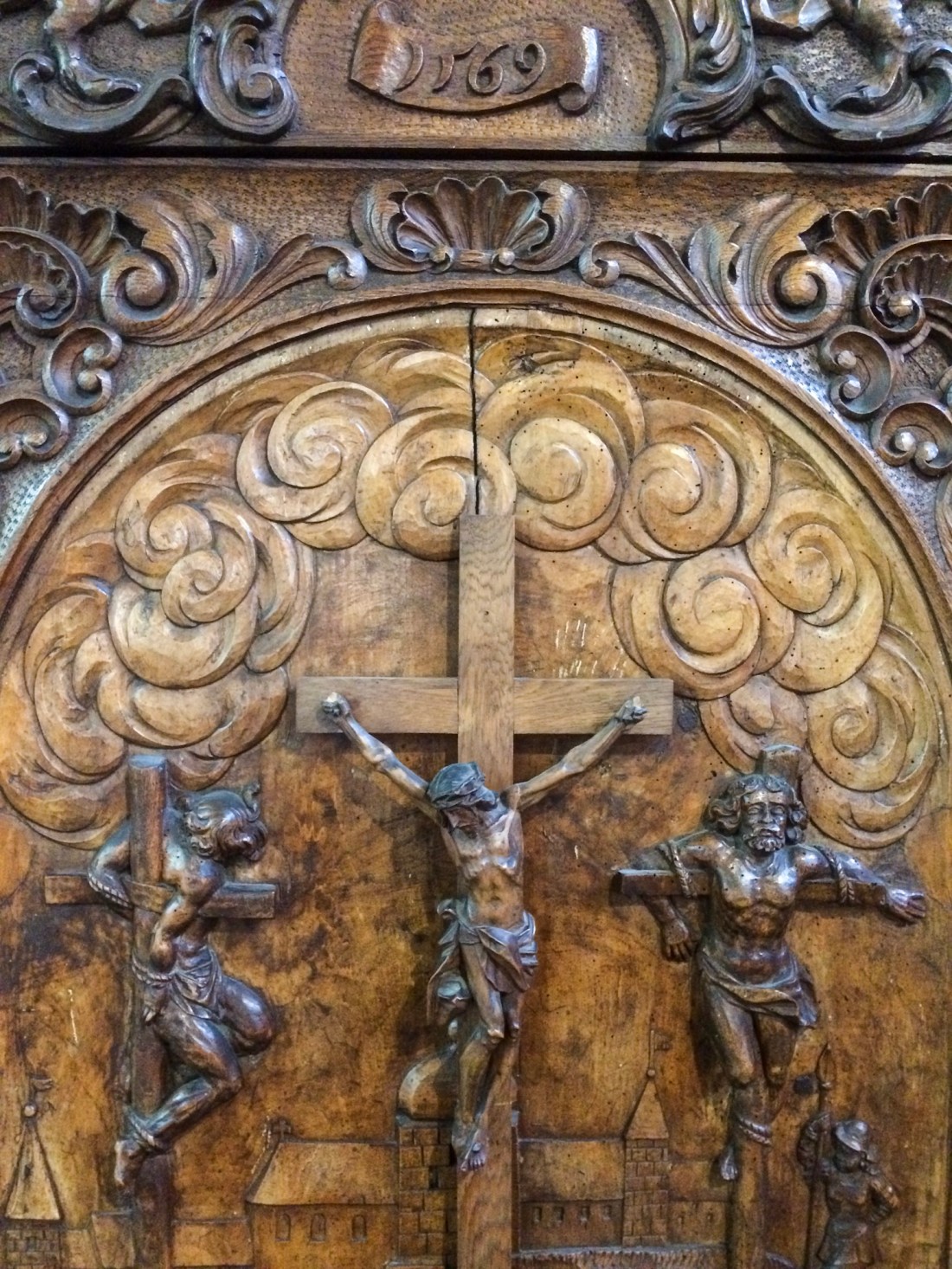
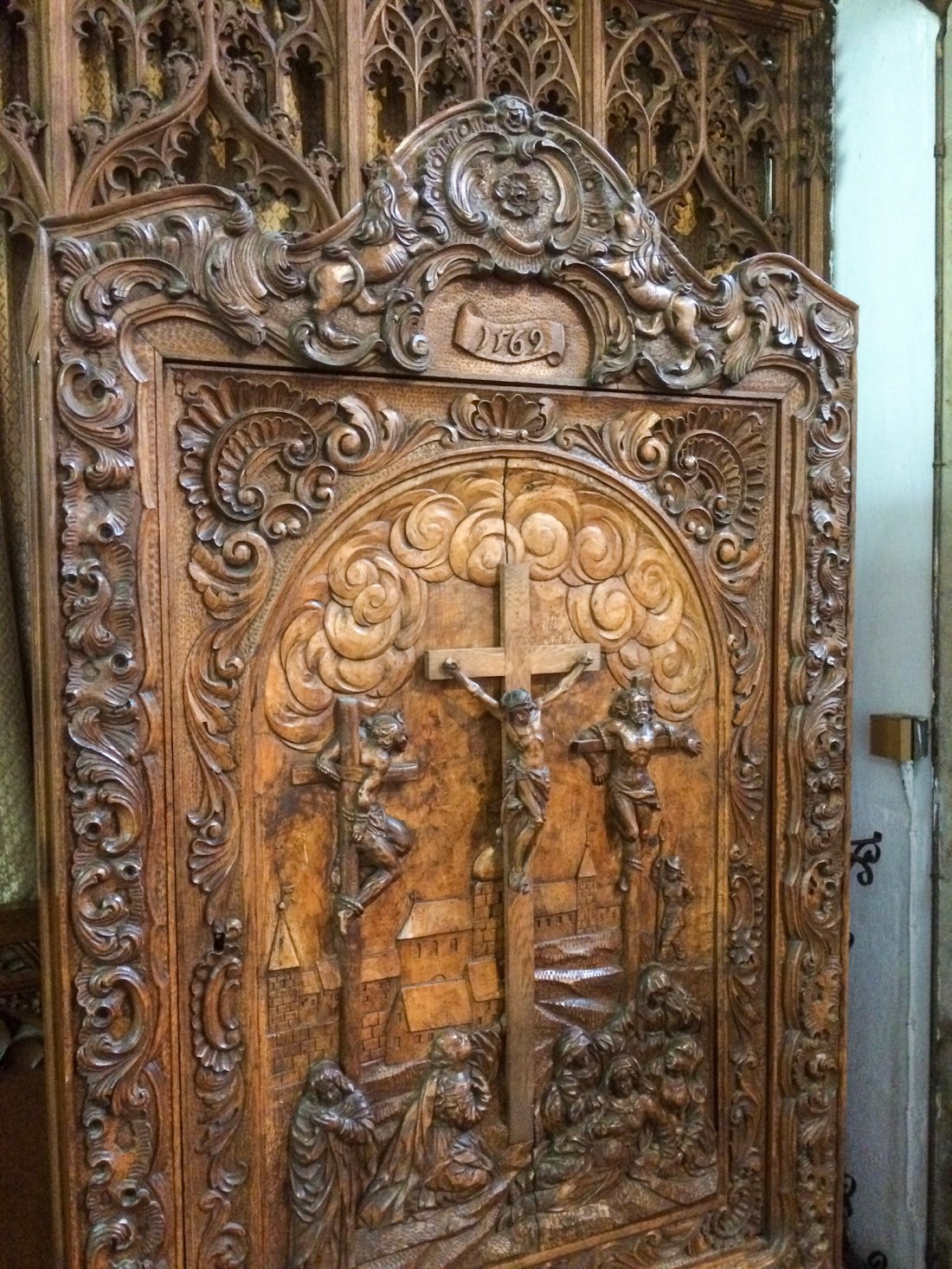
One of the most interesting features is this probable vestments cupboard, dated 1569, a wonderful piece of woodcarving, which I would think is limewood, similar in style to the plethora of such art produced in Germany during the same period.
The pulpit too had some intricate woodcarving, probably oak by the look of it, although I did not find a date on it, but I would assume it is later than the earlier piece.
There are even a couple of examples of medieval embroidery by the door.
words and photographs copyright Francis Barker 2019
Edward the Fourth was England’s first Yorkist king and ruled, with one short intermission of six months roughly half way through, for over twenty years.
His motto was ‘method and order’, and he pretty much lived up to that. He was a daring and quite capable military commander, honing his skills as a young man in the early years of what we now know as ‘The Wars of the Roses’, an often bitter dynastic struggle between the two competing factions of the same Plantagenet family, the houses of York and Lancaster.
Able, handsome and popular
Edward was not only a handsome and popular king, he was also a fine administrator, a shrewd businessman and merchant. His royal court developed into one of the most splendid England has seen, thanks in part to the general stability which his strong reign brought in that turbulent era.
However, one weakness he had was an occasional tendency for poor judgement and a lack of foresight. At times it could have devastating consequences.
So what does his birth chart reveal about him?
Firstly he had Aquarius rising with his ruling planet Saturn conjunct Mercury and Uranus in Gemini in house 5.
A fine administrator – but with one fatal flaw
This indicates quite a distinguished, if unconventional personality with a gift for purposeful communication and also thinking ‘out of the box’. This house 5 probably links to the fine nature of the royal court which developed during his reign. Here too his fine administrative and business abilities are indicated.
However, Saturn and Mercury are also in challenging aspect to Neptune in house 8. Negative Neptune contacts can confuse and befuddle, which may relate to the poor judgement he displayed from time to time, a potentially fatal flaw in a monarch of course. He should have taken more counsel from his associates.
One example of his lack of foresight was his rather impetuous marriage to Elizabeth Woodville, which offended many of his supporters.
Impetuous generosity
Despite this, he showered the Woodville family with honours. This type of behaviour might be seen in his Taurus Venus conjunct Jupiter in house 4, symbolising a tendency for over generosity, especially towards family members. His Sagittarian Moon also indicates a naturally generous nature. (Ultimately, this would have tragic consequences for his young son, the future Edward V, who would be deposed his uncle Richard after only a few days due to doubts regarding his legitimacy to be king).
The Wars of the Roses soon began again and his enemies, the Lancastrians, won several battles. Edward found himself politically outmaneuvered and in a weak military position – he had to quickly flee his kingdom and seek refuge in Flanders.
However, despite his poor judgement, six months later, thanks to his alliance with Charles the Bold Duke of Burgundy, he was back in England with an army and won his throne back at the Battle of Tewkesbury in 1471 in typical swashbuckling fashion. This was his strength.
Strong but with powerful enemies
But where is this strength in his chart? Firstly, his Sun in Taurus is loosely square Mars in Leo. Here is a physically strong, stubborn and probably quite prickly character when push came to shove, which is probably also a prerequisite for any good warrior. However, his Mars in house 7 is also an indication of forceful, stubborn enemies too, such as the Lancastrians and Louis XI of France.
But he also had his Moon in Sagittarius in house 11 but close to his MC of career, in good aspect to Mars, but quincunx (or inconjunct 150 degree aspect) to his Sun. Here is a man of quick response, a sense of daring, of a never say die attitude, of going beyond the call of duty and, most importantly, being able to take the majority of the people with him. He was a leader by example, despite some serious flaws.
However, the challenging aspect between his Sun and Moon, hints at a compartmentalisation in his character. Maybe this daring aspect revealed in his career seemed somewhat divorced from his private life (Sun Taurus house 4).
A man of ‘luck’ and daring who invaded France
An example of his daring attitude (Moon in Sagittarius conjunct MC), plus his more positive planning and ‘out of the box’ mental capacities as shown in his Mercury Saturn Uranus conjunction, can be seen by his often overlooked invasion of France in 1475.
Although this incursion did not lead to any decisive battles, mainly thanks to the lack of support from Edward’s allies Charles the Bold of Burgundy and Francis II of Brittany, he did manage to secure the very lucrative Treaty of Picquigny, where the French king Louis XI generously paid him off.
This may be another example of the influence of his Venus Jupiter conjunction, a certain luck factor in his favour, as these two planets are often termed the lesser and greater benefic. This conjunction too indicates his ability to remain quite popular – the people liked him, so we have to assume that he had something about him. Also, his Moon in Sagittarius close to the midheaven point, would not do his popularity any harm.
Overindulgence
However, another by product of this conjunction could be his apparent tendency to seriously overindulge in food and drink; he did become rather corpulent in towards the end of his life and this may well have led to his early death in 1483. Venus in Taurus loves the good things of the earth and Jupiter close by (but in Aries) would certainly tend to potentially exaggerate.
It is perhaps sad that Edward did not live another ten years, for England might have been spared the return of the Wars of the Roses which led to the downfall of the house of York. Edward VI might by then have become one of England’s greatest monarchs.
*If you are interested in getting your own astrological report, or would like one created for a loved one or a friend, please contact me at leoftanner@gmail.com.
Prince Arthur was Henry VII’s eldest son and heir to the throne of England. Sadly, he was to die aged only 15 in the year 1502, just months after marrying Catherine of Aragon and taking up residence at Ludlow Castle as Prince of Wales.
If his birth data is accurate, and I have no reason to doubt it, I think England might well have missed out on a new golden age, something which his father the king had truly hoped for, which is why he had his eldest son christened after the legendary British ruler, Arthur.
Lots of Potential
Why do I say this? The personality of rulers, especially monarchs who wielded virtual absolute power, would obviously affect the destiny of the nations over which they ruled. So what does Prince Arthur’s birth chart reveal? He was apparently born a month premature but there are not many indications that he was at all sickly at birth, or during his short life.
He was born with Royal Leo rising with his ruler, the Sun, in Libra in house 3 in good aspect to Saturn in Sagittarius in house 5, in challenging aspect to Jupiter in Capricorn in house 6. Venus is also in Leo in house 1 of personality, in good aspect to Mercury and Mars.
Attractive Personality
Dying so young, Arthur’s character would not have been fully developed, but this suggests an attractive, strong, generous, confident, courteous, diplomatic and responsible person with plenty of charm and probable wit. In what records we do have of him, he was described as very tall, handsome, amiable and gentle.
What is more, his Moon in Gemini in house 11 loosely conjunct Mars, would only strengthen his sociable and witty tendencies. He would have been great company, I feel. However, the Moon is opposite Uranus in Sagittarius, indicating that he could have a sudden, fragile, perhaps nervous temperament, too, which could have seriously affected his friendships.
A Glittering Royal Court in Waiting?
Looking at his mental potential, is seems to have been excellent, boding well for his future royal court, which might have become legendary, in a similar manner in which we talk of Richard II’s or even Louis XIV’s of France in a future age.
Libra is on house 3 cusp and Aries on house 9. These house rulers, Venus and Mars, are in good aspect to each other in ‘positive’ signs and houses, both in good aspect to Mercury in Libra in house 3. Add his Libran Sun in house 3 and it doesn’t get much better than this, the only things missing being Jupiter (higher mind), who is not exactly in this mix, in Capricorn in house 6.
Kingly Ambitions
I am quite certain that he would have been as adept in languages as his brother Henry VIII and Elizabeth I, and probably would have exceeded them. He would have been a patron of the arts and literature too, one of the prime considerations when we are talking about cultural significance.
His ambitions as king look equally well starred because Venus and Mars rule the 10th house and MC respectively. I think he would have been a great success in foreign diplomatic matters – he’d already had the good fortune to marry Catherine of Aragon, an important diplomatic move for the English crown and would have surely been the bedrock of his career as King of England.
What might have been
However, his tendency to overreach himself, as shown by the Sun’s square aspect to Jupiter, perhaps through overconfidence at times, might have presented some problems, especially in military matters.
However, with Saturn in good aspect to the Sun and in mutual reception to Jupiter in Capricorn, this might have somewhat stemmed his potential for over confidence.
Had he lived, I am certain that we are looking here at a great historic personality who would have been much loved by his people, the kind of person who could have introduced a new golden age to England, set the country on a very different course from the one his brother, the future Henry VIII.
*If you are interested in getting your own astrological report, or would like one created for a loved one or a friend, please contact me at leoftanner@gmail.com.










 Ciscography