
Celt Angle and Dane
Norman and Angevin too
Family branches
copyright Francis Barker 2019

copyright Francis Barker 2019

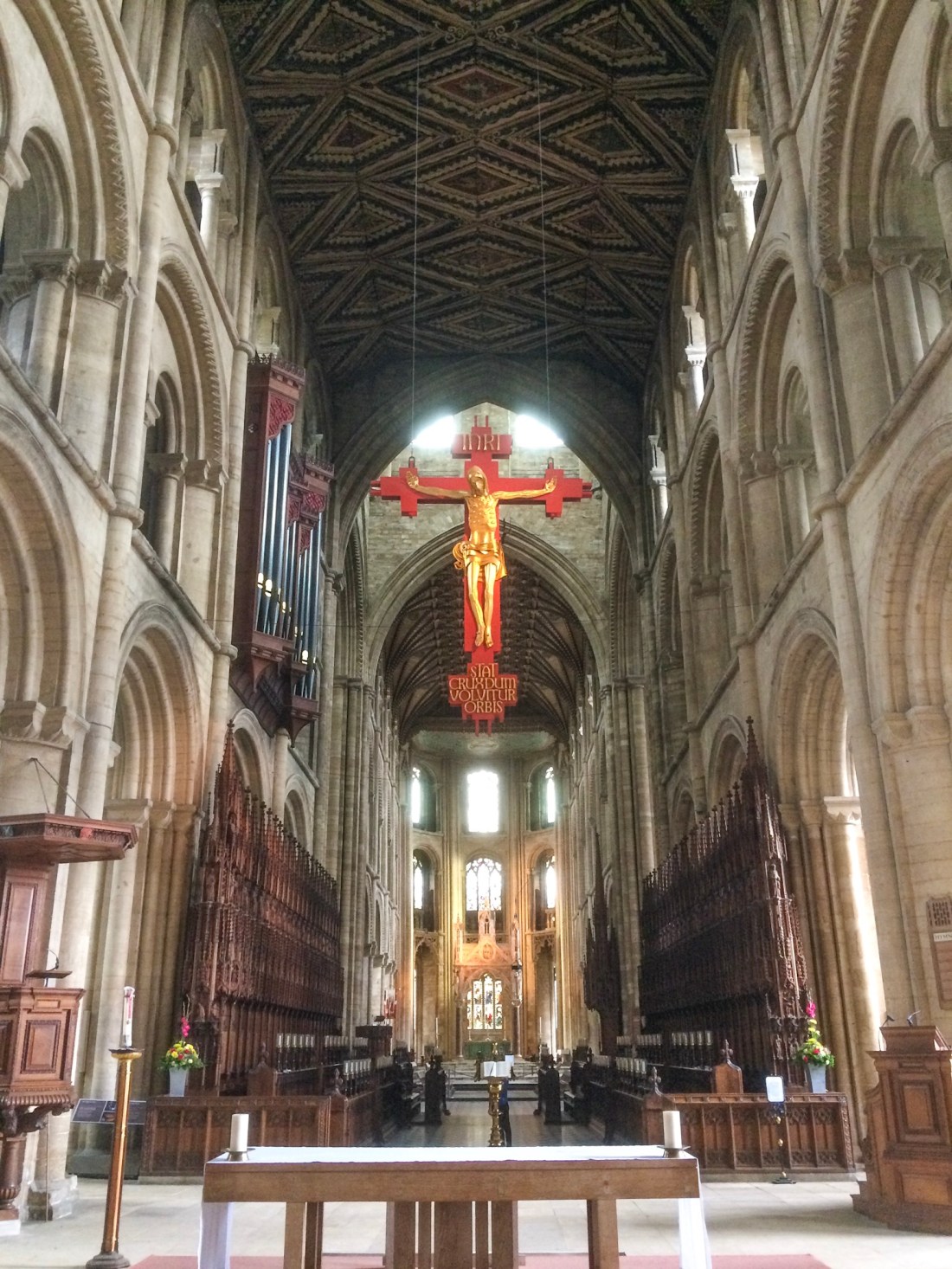
They smile when I shut the heavy, creaking door,
from behind their neat wooden kiosks
stuffed with pamphlets and insipid books.
Smiles of recognition, a nodding
acceptance as if to say –
‘Oh, it’s you!’ Volunteer women serving Christ
better than those above them in Church.
I walk along the emphatic southern aisle under
uber-Norman arches, at the far end of which
hangs a limp flag of Saint Andrew,
in honour of Mary Queen of France, Scotland
and some say of England, too.
Glancing to my left a young man kneels,
wringing hands beneath a life-size figure
of a crucified Jesus, hanging high in space.
He stares upwards, rocking gently back and forth,
as if imploring Him to be real,
to writhe, sweat, bleed, perhaps to save Himself
and then, somehow, to save him as well.
I’m here to light a candle outside
Saint Oswald’s shrine and to sit for a time
in silence inside the tidy chapel,
to pray for a poor boy in pain,
perhaps to ponder on those relics,
those bits of bodies and other things,
worshipped once and then dispersed,
despised in fractured minds,
to us now mostly objects of indifference.
Oswald’s arm must lie hereabouts,
known to someone who still believes
in its restorative power, like the monks
who consumed this place, where Domesday
came and went without event,
where the Chronicle of a people faded to grey
in an undrying ink. Still it awaits the next line.
In this fossil the dead are lucky.
They are dead but in faith, whereas I roam
restlessly among echoes of whispers,
a heartless void. I cut across through the choir
to find I’m not alone, where the true
Queen of Hearts lies. Letters of gold spell
her name to all, but for me she smiles
brighter than anyone alive,
a smile from scorched Iberian lands,
her fate to end up on this drab island
where fashioned pomegranates mark her spot,
from which she expects to rise
at some glorious hour, where, until then,
the anonymous faithful lay fresh fruit
and flowers to mark her special days.
I watch a tourist, a German tricolour sewn
onto his rucksack, as he reads
the commemorative words. A sudden,
unexpected pride washes over me
while he pauses on her ground to think –
where I was once intrigued.
Almost believing.

copyright Francis Barker 2019

He could not be called a true politician in the modern sense of the word, but proceeded always with extreme caution and wisdom. Perhaps this is how he, and Elizabeth, usually avoided danger.
So what made him tick, astrologically speaking?
I was not at all surprised to find that this very careful and deliberate man had Capricorn rising. Not only that, his ruling planet, Saturn, is found in Capricorn (its own sign) in house 1 (approach/personality), in good aspect to a Sun in Libra in house 10 (career) and also to Venus in Virgo (love of detail, method) in house 9 (higher mind).
So here we see a courteous, though cautious, calculating, highly responsible and dutiful person but with also a high degree of ambition, with the patience and prudence to reach the top, regardless of time. He did indeed reach the top, both politically and academically, being also a principal individual at Cambridge university.
Not only that, his Moon also in Libra in house 10 indicates his natural, innate sense of courtesy and diplomacy, put to good use in his career.
He would tend to see both sides of any argument to the nth degree and come the most reasoned, conservative solution possible, in an attempt not to offend anyone.
I am quite sure that at times he would have come across as a tiresome person, and if Shakespeare is to be believed, where in the play ‘Hamlet’ the character of Polonius is thought by some to be a kind of caricature of Cecil, then the ‘tedium’ of his personality might have become quite legendary or notorious at Elizabeth’s court.
Saturn’s difficult aspect to Mercury in house 10 might have only added even more weight to the mental caution (fussiness), a primary trait of Polonius, exhibited throughout the play ‘Hamlet’.
His Moon is also square Mars in Cancer in house 7, indicating that diplomatic and marital affairs were often difficult and emotional to deal with and would have caused much emotional disturbance for him.
So if his well developed house 10 implies success in his political and diplomatic ambitions, Jupiter close to his midheaven puts the seal on this, aided by supportive aspects from Venus and Mars.
However, Jupiter is also closely opposed by Uranus hovering around the nadir (bottom angle) of the chart, indicating, I am sure, some of the horrific decisions and sudden changes he had to make working with his queen, namely dealing with the ups and downs regarding Mary Queen of Scots, her eventual execution, the Spanish Armada, and all the secrecy, intrigue and espionage involved throughout her tumultuous reign. His home and family life would also have been deeply affected.
Nevertheless, the good aspects from this tight opposition to Venus in Virgo in house 9, I am sure, would have led him to find an easy release of this tension and upheaval through greater involvement in his love of detail and efficiency, something in which he excelled.
*If you are interested in getting your own astrological report, or would like one created for a loved one or a friend, please contact me at leoftanner@gmail.com.
copyright Leofwine Tanner 2019
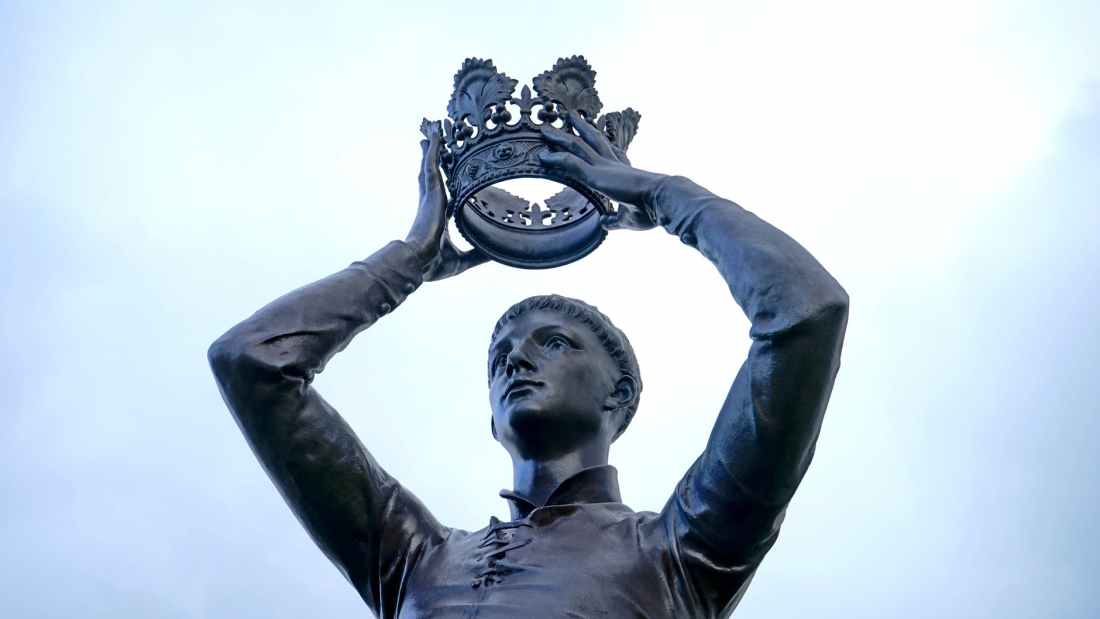
His motto was ‘method and order’, and he pretty much lived up to that. He was a daring and quite capable military commander, honing his skills as a young man in the early years of what we now know as ‘The Wars of the Roses’, an often bitter dynastic struggle between the two competing factions of the same Plantagenet family, the houses of York and Lancaster.
Edward was not only a handsome and popular king, he was also a fine administrator, a shrewd businessman and merchant. His royal court developed into one of the most splendid England has seen, thanks in part to the general stability which his strong reign brought in that turbulent era.
However, one weakness he had was an occasional tendency for poor judgement and a lack of foresight. At times it could have devastating consequences.
So what does his birth chart reveal about him?
Firstly he had Aquarius rising with his ruling planet Saturn conjunct Mercury and Uranus in Gemini in house 5.
This indicates quite a distinguished, if unconventional personality with a gift for purposeful communication and also thinking ‘out of the box’. This house 5 probably links to the fine nature of the royal court which developed during his reign. Here too his fine administrative and business abilities are indicated.
However, Saturn and Mercury are also in challenging aspect to Neptune in house 8. Negative Neptune contacts can confuse and befuddle, which may relate to the poor judgement he displayed from time to time, a potentially fatal flaw in a monarch of course. He should have taken more counsel from his associates.
One example of his lack of foresight was his rather impetuous marriage to Elizabeth Woodville, which offended many of his supporters.
Despite this, he showered the Woodville family with honours. This type of behaviour might be seen in his Taurus Venus conjunct Jupiter in house 4, symbolising a tendency for over generosity, especially towards family members. His Sagittarian Moon also indicates a naturally generous nature. (Ultimately, this would have tragic consequences for his young son, the future Edward V, who would be deposed his uncle Richard after only a few days due to doubts regarding his legitimacy to be king).
The Wars of the Roses soon began again and his enemies, the Lancastrians, won several battles. Edward found himself politically outmaneuvered and in a weak military position – he had to quickly flee his kingdom and seek refuge in Flanders.
However, despite his poor judgement, six months later, thanks to his alliance with Charles the Bold Duke of Burgundy, he was back in England with an army and won his throne back at the Battle of Tewkesbury in 1471 in typical swashbuckling fashion. This was his strength.
But where is this strength in his chart? Firstly, his Sun in Taurus is loosely square Mars in Leo. Here is a physically strong, stubborn and probably quite prickly character when push came to shove, which is probably also a prerequisite for any good warrior. However, his Mars in house 7 is also an indication of forceful, stubborn enemies too, such as the Lancastrians and Louis XI of France.
But he also had his Moon in Sagittarius in house 11 but close to his MC of career, in good aspect to Mars, but quincunx (or inconjunct 150 degree aspect) to his Sun. Here is a man of quick response, a sense of daring, of a never say die attitude, of going beyond the call of duty and, most importantly, being able to take the majority of the people with him. He was a leader by example, despite some serious flaws.
However, the challenging aspect between his Sun and Moon, hints at a compartmentalisation in his character. Maybe this daring aspect revealed in his career seemed somewhat divorced from his private life (Sun Taurus house 4).
An example of his daring attitude (Moon in Sagittarius conjunct MC), plus his more positive planning and ‘out of the box’ mental capacities as shown in his Mercury Saturn Uranus conjunction, can be seen by his often overlooked invasion of France in 1475.
Although this incursion did not lead to any decisive battles, mainly thanks to the lack of support from Edward’s allies Charles the Bold of Burgundy and Francis II of Brittany, he did manage to secure the very lucrative Treaty of Picquigny, where the French king Louis XI generously paid him off.
This may be another example of the influence of his Venus Jupiter conjunction, a certain luck factor in his favour, as these two planets are often termed the lesser and greater benefic. This conjunction too indicates his ability to remain quite popular – the people liked him, so we have to assume that he had something about him. Also, his Moon in Sagittarius close to the midheaven point, would not do his popularity any harm.
However, another by product of this conjunction could be his apparent tendency to seriously overindulge in food and drink; he did become rather corpulent in towards the end of his life and this may well have led to his early death in 1483. Venus in Taurus loves the good things of the earth and Jupiter close by (but in Aries) would certainly tend to potentially exaggerate.
It is perhaps sad that Edward did not live another ten years, for England might have been spared the return of the Wars of the Roses which led to the downfall of the house of York. Edward VI might by then have become one of England’s greatest monarchs.
*If you are interested in getting your own astrological report, or would like one created for a loved one or a friend, please contact me at leoftanner@gmail.com.
copyright Leofwine Tanner 2019
Among the notable people associated with Grantham are Sir Isaac Newton, who was born nearby and former British Prime Minister, Margaret Thatcher, who was raised in the town in her father’s shop.
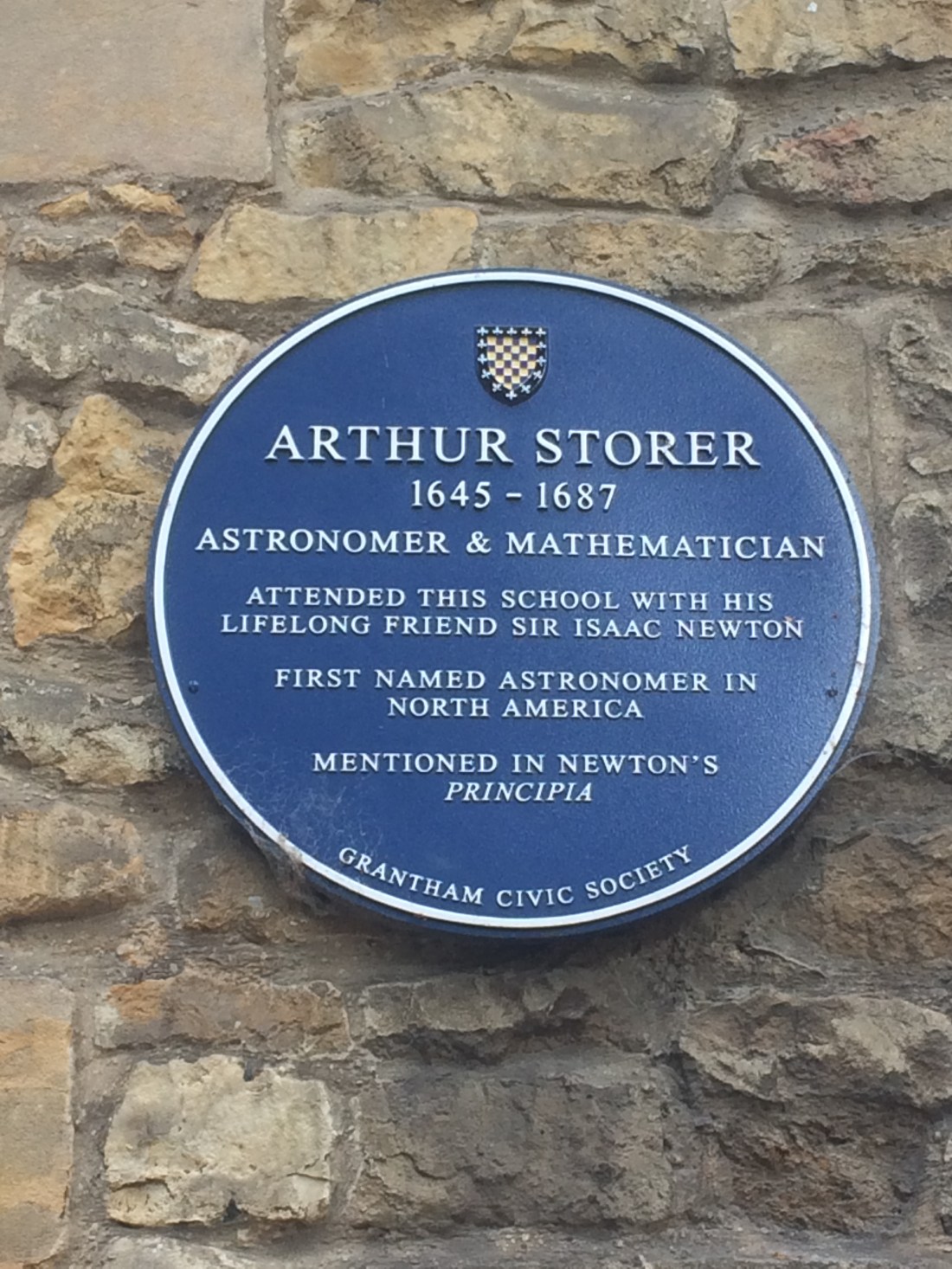
Walking through the town and by the wonderful church, we came across the old school building, upon which is a notice, bearing the name of Arthur Storer, identifying him as an astronomer and mathematician. I have to confess, up to that point, I had never heard of him.
It turns out that he knew Isaac Newton and probably had a fight with him when they were boys. However, the two later became friends and scientific associates, Newton recognising Storer’s contribution in his most famous work Philosophiæ Naturalis Principia Mathematica.
What I did not know was that Storer effectively became the first known astronomer in America and he developed a reputation for accuracy which outlived him.
Storer seems to have initially trained to be an apothecary, the profession of his step father, William Clarke of Grantham. However, it would appear that his real interests lay in the science of astronomy.
He would later travel to Maryland in North America, to observe all astronomical phenomena there. Later he would make a second trip to Maryland to do more astronomical work, sending his calculations to Isaac Newton.
A consequence of this work was that one comet he observed, in 1682, would later turn out to be Halley’s Comet, named after Edmund Halley who became the first to forecast its next appearance.
Sadly, Storer did not live to be an old man, dying in early 1687. He is buried in Maryland.
copyright Francis Barker 2019
 Ciscography