Poem ‘The Country’ (for England)

“Smile at us, pay us, pass us; but do not quite forget;
For we are the people of England, that never have spoken yet.”

from ‘The Secret People’ by G. K. Chesterton

The Country

It’s all around them, though they never see it,
like Jesus said about the Kingdom of Heaven.

Some, even a poet, say it cannot be defined,
even though they are immersed in it,
like fishes swimming blind to the sea.

They take it for granted, spurn it,
but they are born in it and nurtured by it,
educated and employed by it,
and then nursed to the very end.

They say the language is not ours,
that it belongs to the world,
or to the oppressed,
to anyone with a cause
except our own.

Countless cocks have crowed,
but each time its existence is denied,
its very future put up for discussion
by people who owe it everything –
yet who would rather die than accept it
for what it is.

poem and image © copyright df barker 2012

*** For Saint George’s Day on April 23, patron Saint of England (and other places) for around 700 years, at least. William Shakespeare (1564-1616), a candidate surely for ‘Greatest Ever Englishman’, was born, and apparently died, on this day. This is not meant to be overtly nationalistic, but to simply, starkly, re-iterate that the feeling that poets and people in the past saw as a reality, is still clearly evident today.

* First published, without the quotation, in poetry collection ‘Anonymous Lines’, available at amazon.

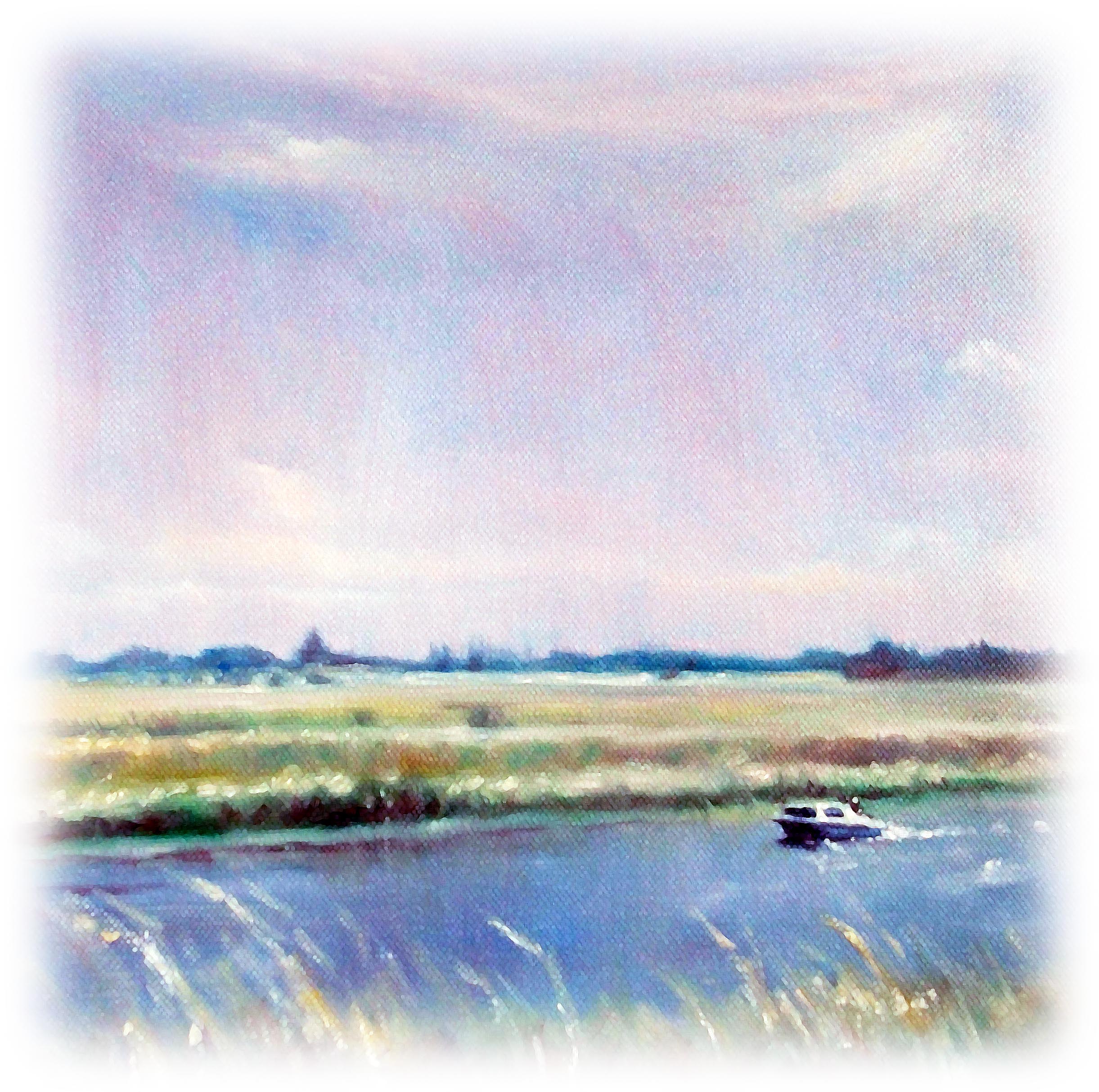
**The image is reproduced from a painting based on a scene at Southwold, Suffolk, a quintessentially English seaside town.
Poem ‘Weapon Take’

Weapon Take

No rusty blade
ever turns up here,
no shadow of a ship
or bejewelled belt;

no iconic helm
to add credence
to our wounded identity.
Not even signs

of a mystery hillock
rising in hugging mists
to excite or intrigue
those metal detector men.

Merely one vast industrial
scar, scoured of feature,
almost of life, tamed,
or destroyed,

depending on your view,
turned inside out
by Angevin priors
and inscrutable Dutchmen.

I come from a long
line of diggers
and dark-eyed women,
grown out of this morass,

hardened to sweat
and pitiless Ural winds.
People who made-do,
though never in

any doubt they
were the subjected
men of their Hundred,
the brave new Wapentake,

where the councillors
still speak in a
double-Dutch behind
tall, timbered walls.

poem and image © copyright dfbarker 2012
*poem first published in collection ‘Anonymous Lines’, available at amazon.

** Wapentake was the Danish word for the English Hundred (a small, political unit, originally meaning a hundred homes). This word is still used in the ‘Danelaw’ counties of eastern England.

Poem ‘Abstract’

Abstract

Duty is an abstraction
reality something else
It requires open eyes
a vision without frontiers
a heart of kindness, acceptance
of nature’s prevalence
not some token paradise
where we are an aberration

*

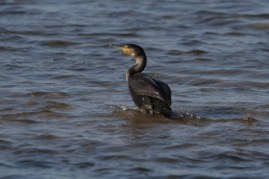
20,000 cormorants are too many
‘they’re eating all the fish’
Seven billion humans
are sustainable, though
not everyone has enough food

poem © copyright dfbarker 2012

***image © copyright Neil Smith

Poem ‘Poor Things’

Poor Things

At some stage or another
we all become poor things

The man who once
pulled trucks and trains for fun

in a gown
and listening to a nurse

image and poem © copyright df barker 2012