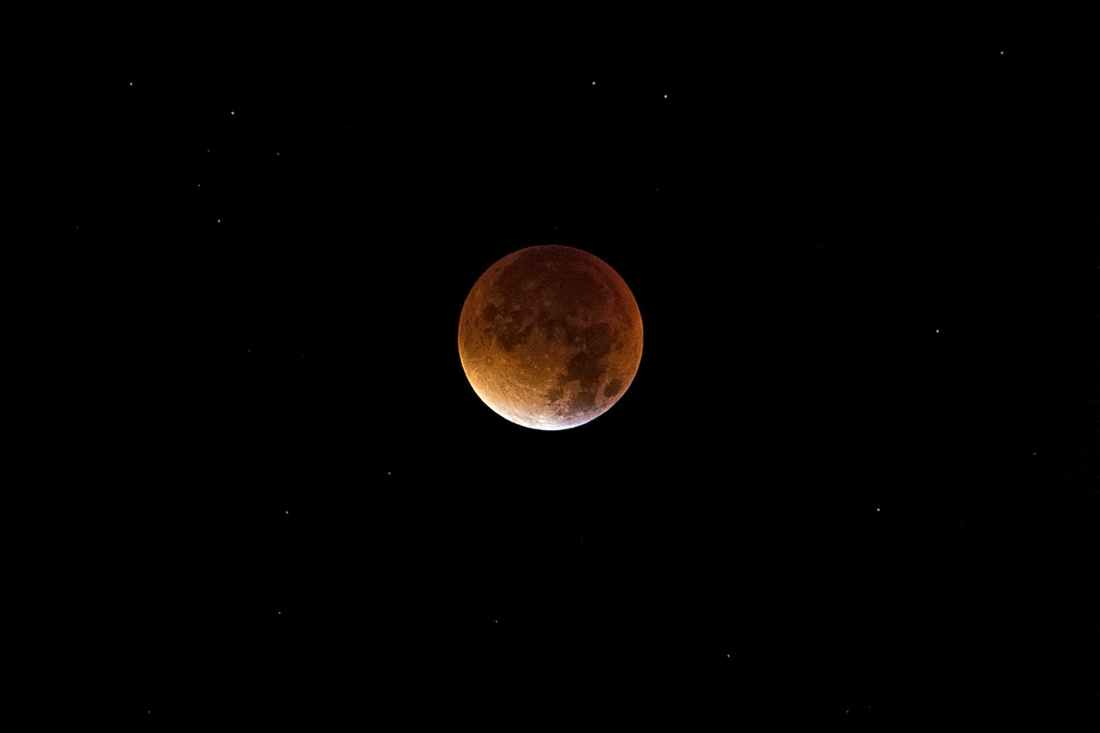
The up and coming lunar eclipse on Sunday July 5 falls on a very sensitive point of the USA independence chart.
This will be almost exactly conjunct the Sun’s position in the eighth house in that 1776 chart, activating the important second and eighth house axis, which is all about national security, money, finance, investment, banking. The USA would appear to be at a significant point of change in these affairs.
Intriguingly, the Sun at this time is exactly conjunct the fixed star Sirius, Canis Major, or the ‘dog star’, which is thought to be largely beneficial, his effects ranging from guardianship (protection), honour, perhaps even to spiritual healing and rebirth, some believe. Sirius is obscured by the Sun from early July until the second week of August, these are the so called ‘dog days’.
This might be highly significant, especially as this period will last until Sirius’ rising at the beautifully termed Lion’s Gate in August. We could all do with some spiritual, mental and physical protection and healing right now.
Dichotomy
In the chart for the eclipse itself, set for Washington DC, the tenth and fourth houses are particularly activated, highlighting the dichotomy between the government and opposition in the United States, the Sun and Moon also squaring the ascending degree of the chart.
And talking of ascendants, Aries is rising and therefore Mars is the chart ruler, who happens to be powerfully placed in his own sign. The whole situation is therefore energised, even bellicose, so we might expect some ‘fireworks’. Mars is in difficult aspect to Mercury, so expect caustic commentary and irritation too.
Energised
That said, Mars is in positive aspect to Venus in Gemini the third house – potential here for some ‘good news’ – we could do with some of that.
Interestingly, the Sun and Moon make a positive aspect to Uranus in Taurus in the second house, indicating the potential for positive change in regard to the economy, money, finance and banking. There are likely to be a few surprises here.
It certainly has the potential to be a weekend we won’t easily forget.
The ancient art of astrology appears to be as old as human civilisation.
But from the 18th century with the beginning of The Enlightenment, there was a concerted effort among the so-called scientific community to discredit astrology (and other ancient holistic beliefs) as if it represented something outdated and superstitious, a hangover from the days when all cosmic models of the universe depicted a flat earth.
At various times the astrological community, if it can be called that, has also contributed to its own poor reputation. For example, to my mind in the present age the preponderance of Sun sign astrology has weakened and cheapened its standing. ‘I’m an Aquarian so I don’t get along with a Scorpio’ – this is often the kind of conversation you will hear.
So with the Enlightenment and its subsequent change of philosophy, which claimed to rely upon observation alone, scientists effectively became the new priests, a factor which we still see today when we read the news, especially where the word ‘scientists’, or ‘scientists say’ appears. This phraseology has become almost like a trigger to make us sit up and take note, like some new prognostication from a priest. If a scientist says so it must be true. In most cases this may well be true, but we also need to do our own research, rely and trust our own discernment.
Decrying the Sacred
And whilst scientists began to look intently out into ‘the heavens’ with an increasing disregard for its sublimity inregard to God, they also too decried the idea that the Sun, Moon and planets could have any significant psychological and spiritual effect upon us, either in a real, or symbolic fashion. The sky ceased to be sacred and the whole of creation gradually turned into the result of one big ‘happy accident’, beginning roughly 14 billion years ago.
Until around ten years ago, I would have generally concurred with the general scientific explanation for our existence. I do not anymore. Increasingly, I have come to realise that we do indeed live in a sacred space, where nature is the outward expression of the creator, otherwise called the Mind of God. As to the actual nature and age of the ‘universe’ I am not at all sure anymore. However, I do know that astrology works when applied correctly.
As Above, So Below
We need to get a true understanding of what astrology is and how it works. I believe the earth and all things within it do indeed resonate with the stars, the movements of the planets. Each represents a function within us, and depending on sign, house and aspect, describes how we work, what we may well have brought with us into this life, either by inheritance or perhaps from former lives.
Suddenly, astrology and the birth chart assumed a much more sacred significance for me. Everyone was the centre of their own universe, truly important and here for a specific reason. We are not irrelevant because we are told we inhabit this ordinary planet, in an ordinary solar system, on the outer limb of an ordinary galaxy, which, along with many others, is hurtling through a vacuum at an incredible speed as a result of the biggest explosion ever.
The Universe Within Us
In the final analysis, whatever the nature of reality and our universe, all of us can only experience life through our own senses. It was Christ after all who said:
“The kingdom of God is within you” (Luke 17:21)
We cannot take for granted that any other individual sees life in the same way. By that token, then the individual birth chart truly assumes a sacred importance: with accurate interpretation it can cast light upon who we are, why we are here – and perhaps, where we are going. With that in mind, every individual birth chart is a new challenge to explore. The greatest minority of all is the individual but together, in true understanding of our life’s purpose, we become a new transcendent whole.
copyright Francis Barker 2020
***If you would like your own birth chart interpreting, or perhaps that of a loved one, please feel free to contact me at: francisbarkerart@gmail.com
English classical composer Gustav Holst’s most famous work, The Planets, is a testimony to his lifelong fascination for and interest in astrology.
From an early age, his step mother’s involvement with theosophy, inspired him to look beyond perceived reality and examine philosophy. Apart from being a composer, he was primarily a teacher and a trombonist.
Aquarius and astrology
When Gustav was born he had the Moon and Saturn rising in Aquarius. I think this says so much about him. Aquarius tends to be the individualist of the zodiac and anyone with a strong showing of this sign can be somewhat unusual. Holst’s fascination for astrology is quite typical in this regard.
Interestingly, in The Planets Suite, which was completed towards the end of the First World War, it is Saturn which I think is the most successful.
Saturn’s pain and peace
When I was younger I was an avid listener to this work and it was Saturn which most moved me, and I sense that it moved Holst too. This piece is composed like a musical poem and is subtitled ‘The Bringer of Old Age’.
It begins slowly, bleakly, mournfully, then panic sets in to a point of acceptance, which is followed by an unexpected peace as death approaches. It is still quite stunning to my ears, and I think Holst felt this very strongly – fitting then that Saturn should be so prominent in its own sign and on the ascendant. He was ‘in tune’ with Saturn.
Powerful higher mental capacity
That he was very much into philosophy and the higher mind is shown by the powerful Mercury Jupiter conjunction in Libra in house 9, nicely trine his Saturn rising in Aquarius. From this too, I think we can see the composing potential, the all round mental functioning of seeing the small intricacies, and also the big, full picture, plus the hard graft needed to succeed.
Jupiter also rules the midheaven, showing that the above qualities can be chanelled into his life path and career too.
Teacher and composer
His Sun in Virgo gives him a strong central dose of analytical and critical ability too, of course, which would certainly have aided him in composition and Virgoans in general make excellent teachers and worriers.
Venus in Scorpio in house 10 hints at an in depth career in the arts. This Venus is square Uranus and although it may have interrupted his career and relationships with sudden changes from time to time, here too with this tense link, I suspect, lies another indication of a leaning towards astrology; Uranus in some sense ‘rules’ astrology, although personally, I think Saturn is just as important.
Around twenty years ago, I completed an astrology correspondence course. I had long been fascinated with the subject and this school stood out for me because of its distinctive approach, combining astrology with psychology, with a very holistic way of looking at individual birth charts.
Now, of course, astrology to most people is merely the sun sign nonsense we consume every day in papers, magazines, on TV and online. This too was my understanding of it until my grandmother died. I remember some of her magazines came to our house, and in the astrology section at the back of one, the astrologer discussed the position of other planets and in particular, the Moon, which, among others things, was considered to be a major significator of the mother in an individual’s chart. From this point I was hooked, and read all I could despite the derision from those who thought they were more logical than me.
Maybe for this reason, it wasn’t until I was well into my thirties that I decided to study the subject more seriously. Once my decision of school and which Diploma to study was taken, I became aware of their different stance in regard to the mother significator. They believed that Saturn and not the Moon was important in regard to the mother. The Moon was in fact the child, Saturn the mother and the Sun, perhaps logically, was the father.
Image via Wikipedia
At first, I was a little perplexed. The Moon, with its associations with the menstrual cycle and its ever changing nature, is perhaps more obviously feminine and thereby ‘motherly’. And then Saturn (Greek Chronos), who according to mythology was the lame god who devoured his own children! Yet, when I fully digested what was said, I saw the ‘logic’ of this stance, because it was all about the mother’s traditional and perceived role in our upbringing and not necessarily to do with gender at all.
Saturn, we must remember, until the late 18th century with the discovery of Uranus, was the farthest known planet and represented, to the ancient and medieval mind, a boundary, a necessary restriction of our universe and therefore our psyche, hence its often very grave and baleful astrological reputation, as the English composer Gustav Holst’s take on the planet elucidates. The ancients’ saying ‘as above, so below’ typifies this belief that outer events mirror our inner worlds.
Gustav Holst. Image via Wikipedia
If we think of the mother’s traditional role, she (or this function she performs) is the fundamental teacher, our first contact with the world, as well as nourisher and provider. She makes us see and feel – experience – a version of reality. So, if we forget the gender of myth, which after all, has a lot to do with astrology in its grand summation of all the world’s mythology, we can equate the understood Saturnian role with the mother.
I realised that this so-called ‘gender bending’ wasn’t exclusive to astrology. The German language, for instance, sees the Sun as feminine (die Sonne), the Mother as masculine (der Mond). And we should also remember that Old English (Anglo-saxon) being a germanic language, also reflected this in regard to the Sun and Moon until the three genders melded into one in Middle English. Incidentally, quite what this might mean for the ‘collective psyche’ of the English and German nations, I’m not sure.
Unfortunately, Sun sign astrology has only cheapened what is a very old (the oldest!) science based art. A planet, let’s say Saturn and its association with the mother, must be understood by sign, house position, quadrant of the chart and its aspects. Nothing can be taken out of context with the interpretation.
The astrological glyph for Saturn. Image via Wikipedia
One extreme example I thought of, using this methodology, would be Saturn in Cancer, said to be in its ‘fall’ because it would be opposite the sign it rules, Capricorn. Wherever Saturn appears in a chart by sign, house and aspect, we might impute that’s where there is a sense of lacking, restriction or difficulty. In Cancer, one interpretation might be that there is a problem dealing with emotion or maybe the family.
If Saturn was also found high up in the chart, not considered too helpful as it is a grounding, formative principle, then this person might feel very exposed and insecure through his life. If Saturn was also unaspected, that is, it had no relationships by degrees with other planets in the chart, then this would only compound the sense of isolation and vulnerability.
Now this would be where the good psychologically attuned astrologer would come in. If we accept that Saturn stands for the mother, then he/she could tentatively ask question about the his/her relationship to the mother, and thereby, a relationship of understanding and exploration could be formed between the astrologer and client. They could explore avenues, looking at the birth chart as a whole, ways of compensating perhaps, if indeed the experience of the mother was difficult for the individual. It might well be found, that this person did indeed have a very difficult (perhaps wholly absent) experience of the mother and that this led him/her onto high achievements through much hard work as compensation for this feeling of something missing.
A fully cast birth chart. Image via Wikipedia
This is the key, taking the chart as a whole, and not as a guessing parlour game. To create an individualised birth chart, an astrologer needs the exact (if known) time, date and place of birth, so it is a commitment from the client.
So, in the final analysis, do I believe that Saturn represents the mother more closely than the Moon? Perhaps. Of course, there are many who’d say that it’s all nonsense. To be honest, after completing the course, I have only occasionally delved into astrology. It’s a matter of frustration for me. The media have a lot to answer for, leading the ‘public’ to wrong expectations. ‘Tell me what I’m like, what is going to happen?’ – this was what I found most of the time and I don’t believe astrology can predict the future with any certainty. I firmly believe it does have a role to play in helping people as an aid to their mentality. Even the great Carl Jung thought it might have a role in this regard and others since have thought so, too.
*In my next piece, I shall attempt to self-analyse, astrologically, my artistic tendencies.




 Ciscography