Over the course of the next day the Moon in Virgo will trine — that’s a 120 degree aspect considered positive in astrology — three planets moving retrograde in Capricorn: Jupiter, Pluto and Saturn.
In astrology Capricorn is perhaps the political sign par excellence. The fact that three heavyweights are occupying the cardinal earth sign for most of this year, along with disruptive Uranus in financial Taurus, bears testimony to the political, economic and cultural maelstrom which we are witnessing.
Earth Signs and Structure
Capricorn, and earth signs in general, are about structure. Uranus moving through Taurus is forcing us think of money and security in different ways. Delving and transformative Pluto in Capricorn is digging deep into the political quagmire and pulling up a whole host of frightening truths we scarcely knew existed.
Restrictive Saturn has returned to its own sign until the end of the year, trying to hold on, sometimes desperately, to the status quo. Soon the greater malefic (so-called) will team up with Jupiter and both will shuffle through the threshold –into Aquarius, but that’s another story.
Jupiter in Capricorn is in the sign of its detriment, it doesn’t sit well. How can his need to expand be easily accommodated into the sign of restrictions? Nevertheless his generally benevolent presence there does mean that there are signs of hope and support, to maintain some kind of structural coherence.
Some Better News?
So over the next day, the Moon will contact these inhabitants of Capricorn from Virgo, hinting to me that we may see some slightly more beneficial news, even though all three planets are retrograde. This ‘better’ news, whilst being political and economic, may also involve good news in regard to some health issues or even be related to work and employment — all Virgoan issues.
That said, soon after making contact with Jupiter, the Moon opposes confusing Neptune in Pisces, indicating that we need to take heed of the fact that not all of the news we are getting today is going to be clear or indeed trustworthy. As ever we are going to have to use our own discernment and apply it vigorously.
Gratitude for conversations that sustain the soul! In the Cosmic Connection podcast, astrologer Rick Levine talks to Amanda “Pua” Walsh of Astrology Hub about Saturn and Pluto and reincarnation and disincarnation and the nature of consciousness.
*** This is a fascinating piece about subjects which also intrigue me, astrology (I am an astrologer) and Buddhism (I used to be more deeply involved than I am now).
In part one of this topic I commented on the social and cultural changes instigated around the mid 1960s, breaking off my narrative around the end of 1965 with the supremacy of The Beatles. I argued that the deep, fundamental astrological influence of the outer planets, most particularly the conjunction of Uranus and Pluto in 1965/6 was symbolic of these changes.
The first meeting of Uranus and Pluto was in October 1965, followed by two more conjunctions on April 6 and June 30 1966. The changes were truly worldwide, seemingly polarised in nature, all enhanced by media manipulation and/or the growing promotion of drugs like LSD. The latter is symbolised by Neptune’s positive sextile aspect to the other two outer planets at this time. Even sex was liberalised with the introduction of the pill, pushing the idea that women could be as ‘free’ as men.
At the same time we may have viewed the Cultural Revolution in China as being the opposite of the ‘liberation’ going on the ‘West’, perhaps seen in ‘reactionary’ Saturn being in opposition to the Uranus Pluto synod.
Yet when we analyse the rather divergent political systems, the actual processes were the same – revolution fostered by a saturation of propaganda, all to gain maximum power and control. Uranus upturns, Pluto grabs the reins, with Neptune providing a little deceitful cover in the form of film and other media propaganda as a way to persuade and ultimately deceive.
Pivotal London
China aside, just like the Uranus Pluto conjunctions of 1850/1, London and England once again seemed to be pivotal to the cultural changes, with the so called ‘British Invasion‘ and London becoming the hub of the new fashion scene, epitomised by such manifestations as Carnaby Street.
Interestingly the Beatles landmark album ‘Revolver’ (that is, revolution) was released in August 1966, a summation in music of what was going on. It was indeed a very revolutionary catalogue of songs, utilising unusual, highly sophisticated writing and recording techniques. This was truly one of the cultural icons of the age, symbolising innovation and change (Uranus) in music (Neptune), to instigate a change in the guard (Pluto).
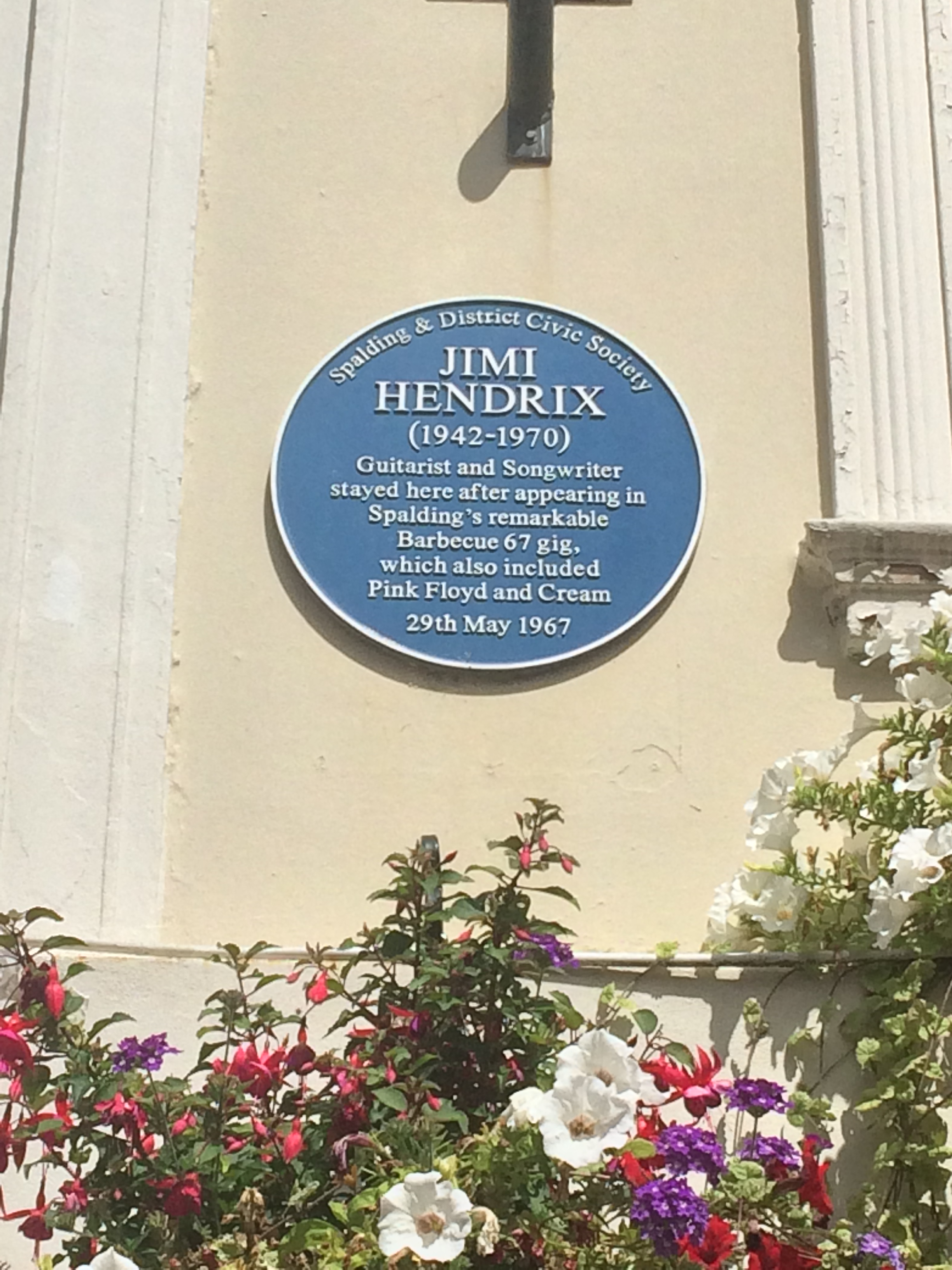
Back in September 1966 JimiHendrix, arguably the most brilliant and influential guitarist ever, was brought to England, a step which was to propel him to superstardom at rocket speed within weeks. Although he would be dead within four years, Hendrix typifies the period of sudden change and vast, worldwide influence – a meteoric career indeed. Yet his star still burns bright in the minds of many today.
’68 – Year of Revolution
If 1966 really was the pivotal year, it led directly to the ‘Summer of Love‘ in 1967 and the explosion of creativity in art and culture, transcendental meditation et al. Accepted paradigms were being questioned, which in turn led to the 1968 year of revolution, which came very close to bringing down the French government, for example.
1968 was probably the most tense and tragic year of the decade. The Vietnam War was at its height, as were the protests against it. The call for change, positive or otherwise, was reaching a crescendo. Political leaders who might have been able to bring about such change, such as Martin Luther King Jr and Senator Robert Kennedy, were assassinated in the melee of confusion and hate.
Trying to assess the situation is difficult because of its complexity and the benefit of hindsight is indeed a valuable thing. It does not appear to be a simple case of left versus right, or even right and wrong.
Collective Uranus
Astrologically, Uranus has often been seen as ‘right wing’, but I disagree. I think Uranus simply represents the force for change, revolution, literally turning things over, as in the name ‘Revolver’. I therefore see Uranus as more what we might call ‘left wing’.
Pluto is fundamental, often the hidden power behind the scenes. As I have said, Neptune working in tandem provided the medium (music, art, film) through which such changes could be started in that 1965/6 period.
Yet behind the passion play which was the 1960s narrative, was another, the so called ‘Space Race’, ultimately won by the USA when America landed a spacecraft visibly on a lunar surface.
Race to Oblivion?
The date was July 20 1969. Intriguingly, on this very day Uranus, planet of change and breaking barriers, was exactly conjunct the Greater Benefic Jupiter at 0 degrees Libra. To me this symbolised a conquest, not merely through the fact of the news headlines which followed, but in the long term reconfiguring of humanity at a global level. The lunar missions would peter out by the end of 1972 in a climate of disinterest: few would have predicted that.
Uranus is often credited in creating ‘individual’ tendencies when strong by position or aspect; it can manifest in individual personalities in traits like eccentricity. Nevertheless, Uranus is ultimately trans-personal and collective.
Continual Revolution – and Disillusion
It is no surprise all three outer planets were ‘discovered’ at times of great, revolutionary change; 1781, 1846 and 1930. The political manifesto most associated with all three the outer planets is socialism, a collective philosophy which has now spread to the entire world in various forms.
The 1960s began as an era of much promise, with a young American president taking office. The mid 1960s witnessed a vast cultural revolution, manifesting in various ways, depending on the political milieu of each country, though the same radical tactics were used. These were based on disruption and chaos (Uranus), confusion and deception through promotion of drugs and media (Neptune in aspect to both) and surreptitious power grabs (Pluto).
It is a sobering thought that the 1960s symbolically ended with the tragedy of the Altamont Festival on December 6. What had it all been for? Yet we are still living with the effects of the 1965/6 synod of Uranus and Pluto. The opposition will not be for a couple of decades. What kind of world will it be by then?
Of course, the mid 1960s cultural revolution is the stuff of legend. I am just about old enough to remember significant parts of it.
I started school in January 1964, less than two months after the Kennedy Assassination, a matter of weeks before the Beatles made their first iconic appearance on the Ed Sullivan Show in the United States in February.
The world really was changing and although few may have suspected it at the time, we had just got on board a big roller coaster. By the end of the decade the world really was a very different place.
Shaking Up
As someone who has had a long standing interest in astrology, I thought it was about time I had a look as to what was happening during this period.
Better astrologers than me, such as the great Dane Rudhyar, were assessing the situation with true vision around the time of the mid 1960s. They realised the significance of the Uranus Pluto conjunction in Virgo of 1965/6, that human culture and society was about to be seriously shaken up.
I have recently posted a couple of other pieces in regard to the important 127 years Uranus Pluto cycle, and in particular the conjunction. I believe that this has encapsulated symbolically the vast cultural changes of humanity, particularly since 1710-11 and most especially with the 1850-1 and 1965-6 cycle inceptions.
Generational Influence
The power of the outer planets, Uranus, Neptune and Pluto have emerged significantly into human consciousness since the discovery of Uranus 1781. I think they represent concepts which can be ‘utilised’ for generational effect.
Uranus brings the idea of thinking differently, revolution, turning things upside down, often for the sake of it. Neptune brings new beliefs, new ways to ‘unite’, concepts but also accompanying delusion, confusion. Pluto is fundamental power which is often hidden and all the potential danger that can bring.
The two planets Uranus and Pluto were drawing relatively close by late 1963. The shock of the Kennedy Assassination on November 22 1963 cast a long shadow over the entire world, but particularly in the United States of course, the most powerful country militarily and culturally.
Counter Culture
This awful event acted almost like a psychological primer for the emergence of the so-called Swinging Sixties and counter culture. Maybe here was evidence of the foreshadowing effect of the Uranus Pluto conjunction, the urge for change merges with fundamental power – a cultural revolution fostered at all levels of society.
I think we should also briefly examine the sign in which the conjunction was to occur, namely Virgo, the mutable earth sign. Virgo and the sixth house represent many totally practical facets of everyday life, our efficiency, work and health. In other words, this conjunction was potentially going to turn upside down all of that, it would be felt by everyone in their everyday lives.
And certainly from early 1964, with the cultural phenomenon that was the Beatles, the ensuing ‘British Invasion’ and everything that went with it, to important events like the true beginning of the Vietnam War in August with the Gulf of Tonkin incident, began to set the scene for the rampant cultural dichotomy of the period.
Very interestingly, Uranus Pluto were first exactly conjunct on John Lennon’s twenty fifth birthday, on October 9 1965. By this time the Beatles had virtually conquered the world through their music and films.
The conjunction in Virgo was roughly opposed by Saturn in Pisces, but was in easy aspect to Neptune in Scorpio. I think this is highly significant. Saturn represents the conservative (often religious) reaction to the societal changes, whilst Neptune essentially being in step with both from watery Scorpio cast an other worldly veneer over all of the growing melee.
Although I contend that the three outer planets do not rule any signs, and do not have personal influence – unless they are brought into the equation either through being angular or in strong aspect – I think they do have a transpersonal effect which needs to be carefully examined, even warned against.
Sex, Drugs and Rock n Roll
Although drink and drug abuse are often associated with this planet, I think Neptune also has much to do with music, particularly modern, sometimes formless, chaotic music. Neptune in Scorpio could be said to epitomise that ‘sex, drugs and rock n roll’ culture which developed at this crazy time.
Neptune’s transition through Scorpio from 1957 to 1970 witnessed this whole period of world in transformation and the planet’s sextile (60 degree) aspect to the Uranus Pluto conjunction in the mid 1960s particularly allowed mediums like music and also art to manipulate the masses into general acceptance. Music, after all, has a profound effect on the emotions.
Perhaps it was almost like an escape valve in which we were all invited, through the words of Timothy Leary, to ‘turn on, tune in, drop out’ – all very ‘druggy’ and Neptunian.
It was a concept which was to mushroom with all the power of a nuclear explosion in the ensuing years, encapsulated astrologically and symbolically by the transformative meeting of Uranus and Pluto in Virgo. The changes instigated at that time have only cast stronger ripples in our world since then.
It is remarkable when one looks at a map of the entire earth and notice how insignificant the island of Great Britain appears, hovering as it does off the north west coast of Europe, neither separate from that continent, nor totally attached to it. Perhaps there is something prophetic about that island’s geographic position, looking westward out to the bleak Atlantic Ocean.
According to the historical narrative, relatively small nations had formed huge empires previously. Taking the accepted history of Rome being founded in 753 BC, this small city state expanded to rule much of the then known world by the second century AD. It is said that the influence of this empire is still strongly conspicuous today, especially in language, culture and government.
Spanish Gold
More recently, towards the end of the fifteenth century, the unification of the two Iberian kingdoms of Aragon and Castille, formed the more powerful kingdom of Spain, which went on to prosper the most from the ‘discovery’ of America by Christopher Columbus (Cristóbal Colón) in 1492. Within a mere few decades the Spanish empire dominated the new continent, north and south. Spain became very wealthy indeed during the sixteenth century.
Similarly and perhaps even more remarkably, Portugal, Spain’s feisty neighbour and rival on the western fringes of the Iberian peninsula, not only carved out an empire in South America (Brasil), but went on to dominate trade in the East Indies and to extend its empire to that part of the world and into Africa and its influence as far as Japan.
There are other examples, like ‘Holland’, more accurately called the Netherlands, or The United Provinces at one time, which also was an early beneficiary of trade and settlement in the Americas and the Far East.
Colouring the World Pink
However, no empire was ever as grand as the British Empire. By the end of the nineteenth century it was the empire upon which the sun never set. A schoolboy of the time could look at a map of the world and reflect upon the predominant colour of pink – all those lands, as far afield as Canada and New Zealand, where the British flag flew and the English language was spoken.
It is easy to think of empire building as organic, though this is never the case. A nation, or a people, often have a common purpose, though the vast majority are unaware of it. Nations and empires are steered, often by a few notable individuals and families with ambition and vision.
John Dee, Queen Elizabeth I’s astrologer who chose the timing of her coronation in January 1559, was one such man. I will merely allude to him here, but suffice it to say that he the first to talk in terms of a British Empire, even though technically the notion Britain was only a geographic, not political reality when he was alive.
Tentative Steps
Nevertheless, it was during Elizabeth’s reign that the first tentative steps were taken by English explorers to establish an empire in the name of the queen. Sir Walter Raleigh was one such remarkable individual who made attempts at settling in North America.
By 1707, the crowns of England and Scotland were legally united, officially creating the Kingdom of Great Britain. At the same time a highly significant war was being fought in large parts of Europe. This was a result of Charles II of Spain dying without an heir in November of 1700. The ensuing war is called The War of the Spanish Succession.
The British fought this war essentially to prevent either France or Austria uniting with Spain, and thereby creating a European superpower. Such an eventuality would have been clearly detrimental to Britain’s ‘interests’. It is an early example of a way of maintaining the balance of power – at least that’s the official line.
After ten years of warfare, the Holy Roman Emperor Joseph I died in April 1711 and was succeeded by the Archduke Charles, which effectively ‘solved’ the succession crisis, at least in the eyes of the British who began peace talks. This eventually resulted in the Treaty of Utrecht in 1713, which established Great Britain as a naval and European economic superpower. Out of all the belligerents, only Britain could be said to have emerged from this conflict financially intact.
1710-11 – A Major Turning Point
This period centering around 1710 to 1711 was clearly a major turning point in British, European and world history. Astrologically too, we can see clear signs of the turning of a page, or the planting of a seed.
I draw your attention to the three then still undiscovered planets, Uranus, Neptune and Pluto, all representing other (perhaps higher) dimensional (invisible to the naked eye) aspects of the mind, unity and power. As far as we know, these forces were not known at this time, remaining hidden somewhere in the collective human unconsciousness.
Nevertheless when Uranus met Pluto in September of 1710 and remained close, especially during the spring of 1711 when the Emperor Joseph I died, we see the beginning of a new historical cycle, with Great Britain seizing the initiative at an important time of opportunity. Uranus brings new ideas, change, Pluto the idea of collective power.
The Seed of Power Planted
This Uranus Pluto conjunction happened to be in late Leo, also conjunct the fixed star Regulus, which has had a long association with royalty and royal power.
Equally fascinating, the other remaining undiscovered outer planet, Neptune, was for a time in conjunction with the benefic Venus and in very good aspect to Uranus and Pluto from Aries. I think this gave a kind of other worldly blessing to the birth of the new enterprise. It’s fascinating to think that the god Neptune traditionally ruled the seas and from this point on Britannia certainly did rule the waves.
I think the relationship of the three outer planets at this juncture perfectly symbolise the sign of the times, the changing of the guard and setting the scene for the next century or so.
Other significant events at around the same time were, among others, the founding of The South Sea Company on March 3 1711. This was a public/private company created to consolidate and reduce British national debt, something which none of the other participants in the War of the Spanish Succession would have. Remember that important conjunctions are good for starting something new.
The Origins of Steam Power?
Another intriguing development was the invention and application of what was called the ‘atmospheric engine’ by Thomas Newcomen in 1712. This steam driven device was initially used to successfully pump out water from tin wines in the south west of England, particularly Cornwall. It is not difficult to grasp the significance of this invention and its later use in the first steam locomotives later on.
There were also reports of the first successful hot air balloon flight at this time by a certain Bartolomeu de Gusmao. Although this occurred indoors, the fact that it happened at all is highly significant. Uranus, after all, is said to rule the air and scientific invention.
I think there is evidence here of the burgeoning ‘power’ of the three outer planets and their generational influence on human culture, an influence which would gain in impetus as each one was subsequently discovered over the next two hundred years.





 Ciscography