
Brooding dark power
The daunting mask of Hades
Underworlds draining
Copyright Francis Barker 2020
Copyright Francis Barker 2020
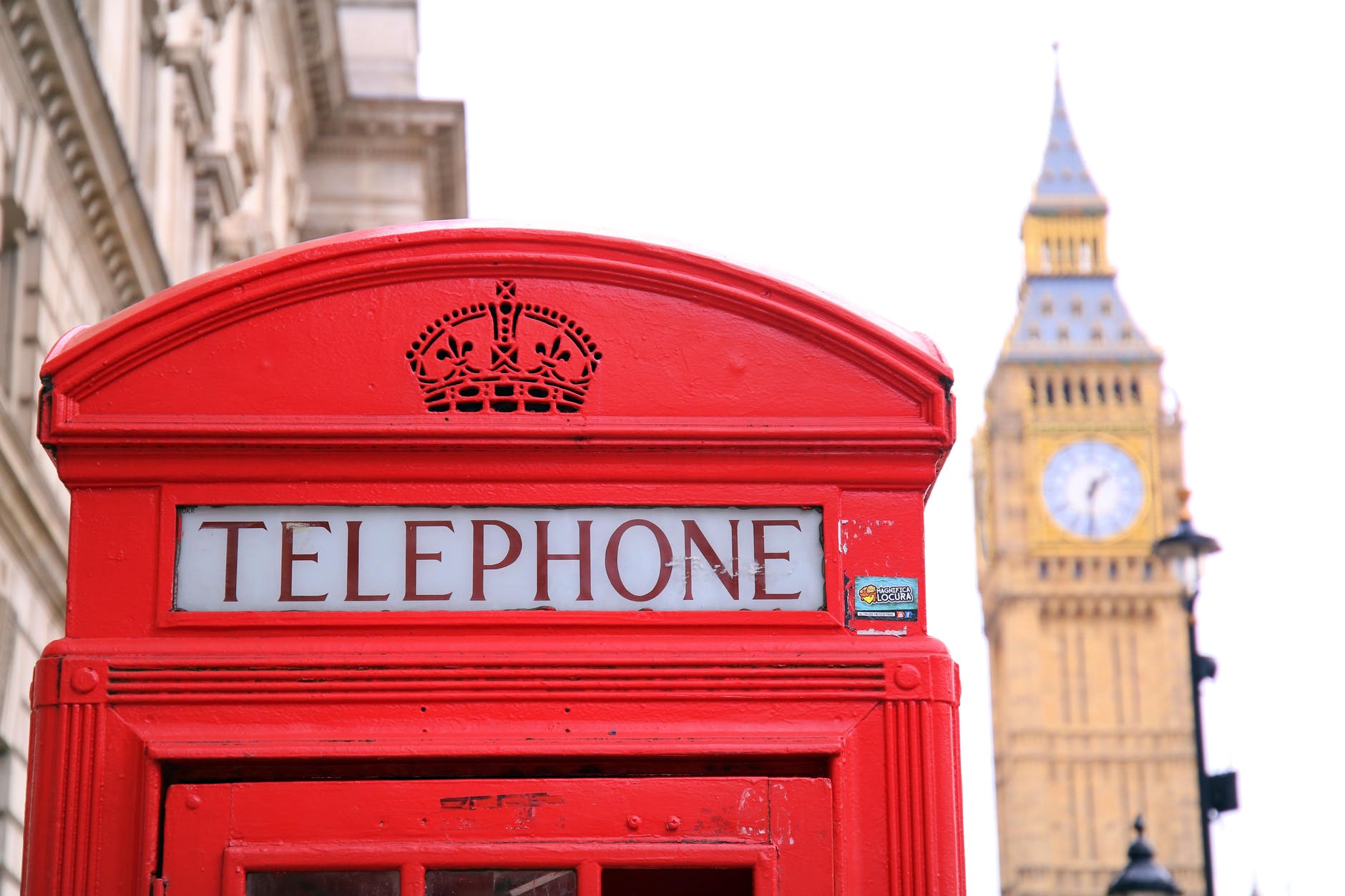
We need not be surprised by this. Astrologers had for centuries been consulted as to the most propitious time, astrologically, to begin a new project, a marriage, business, government, reign, or even country.
One of the most well known examples is John Dee’s choice of day and time for the Coronation of Queen Elizabeth I of England on January 15 1559. We can speculate as to the wisdom of his choice, although historians have certainly been highly favourable when writing about the so called ‘Virgin Queen’ ever since.
When I found out the the date and timing of the opening of the Great Exhibition, I immediately looked at the chart – and was astounded, though not entirely surprised.

I will begin with the date itself, May 1. May Day has long had traditional pagan associations. In fact it would appear that this date was considered the most important of the year until fairly recent times, so we are told. The festival of Beltane celebrated the turning of spring into summer, usually involving fertility rites, bonfires, even sacrifices.
Then during the 19th century this same date became associated with international workers rights and the advance of international socialism. So at the very least, the choosing of this date is most intriguing. Even Queen Victoria herself made reference to “strengthening the bonds of union among the nations of the earth.” There was an internationalist flavour to this and all world’s fair events like it.
So let’s get into the meat here. By all accounts the exhibition opened around midday, soon after Queen Victoria, Prince Albert and their entourage entered the Crystal Palace. At this juncture the Taurus New Moon was only a few hours old, with both of the major luminaries conjunct the Taurean Midheaven of the chart, the part of the chart signifying goals and ambition.
A new Moon, or the ensuing hours after it, are traditionally thought to be the best time for new beginnings of any kind. In Taurus, anything to do with money or construction will be favoured, as long as it is also well aspected. The Moon is said to be exalted in Taurus, at her most fecund, promising further success.
This is highly symbolic timing for the beginning of this exhibition. It was not only to exhibit to the world the technological, economic and cultural hegemony of Great Britain for the next six months, but was meant to set the course for the remainder of this very ‘British century’, John Bull (Taurus) literally at the apogee, if you will. Taurus loves to establish and have firm footings.

Appropriately enough too, royal Leo is on the ascendant loosely conjunct the fixed royal star Regulus. This makes the Sun ruler of the chart, as befits this very royal, if not imperial project. Although Queen Victoria was to lose her consort Prince Albert in 1861, she went on to become probably Britain’s most famous monarch – and Empress of India.
Interestingly, there is also a Venus Mars conjunction in Aries in the 9th house of philosophy, enterprise and long distance travel. The thrust of Mars is given a certain belligerence in his own sign, plus carte blanche to take it to the furthest corners of the earth.
The presence of Venus here adds a kind of benevolence too, maybe even the idea of Pax Britannica, the British Empire on which the sun never set. Great Britain ruling the waves (and pretty much everything else) indeed, as she proceeded to do for the next seventy five years.
However, this chart works on many layers, some of them quite deep. Around six weeks earlier in late March 1851, Uranus and the then undiscovered Pluto made the last contact of their recent coming together in Aries, a sign which is also strongly associated with England and Great Britain.
For example, the Christmas Day chart of 1066 set for the coronation of William I of England, has Aries on the ascendant. Many astrologers believe this chart still has much resonance today, and the Venus Mars conjunction in Aries in the Exhibition chart also links up with the 1066 chart’s action oriented Aries ascendant.
Now Uranus and Pluto meet up around every 172 years, so this represents a highly significant time astrologically. On the face of it, no one knew about the existence of Pluto at the time. Both Uranus and Pluto are still close together in the 1851 exhibition chart, straddling the Aries Taurus boundary. What is more, around the same time Saturn passed over both of these outer planets in late Aries and early Taurus.
With this I believe we get into some pretty deep territory. Since the discovery of Uranus in 1781, this planet became associated with sudden change and upheaval. Hence the revolution in France and the so-called Industrial Revolution, for example. It is as if an awareness of or need for change had suddenly entered our collective consciousness – the notion of ‘progress’, technologically and culturally.
However, if we think of this new discovery as a higher octave, or rather a superconscious (transpersonal) aspect of communicative Mercury, we might also get a better understanding of principles like insight, breakthrough and invention.
Maybe we have here the ability to draw on transpersonal energies – Uranus representing the initial breakthrough beyond the limiting boundary of Saturn, even if Ouranos, the old sky god which the new planet was named after, is in fact, ironically, the father of Saturn in myth.
Perhaps the discovery, or even rediscovery of Uranus, is symbolic of the return of the magical power of the older gods.
If we consider the then undiscovered Pluto to be transpersonal power, as opposed to the personal expression of energy as seen in Mars, and all the potential danger that represents, then I think we get some idea as to the real significance of this new cycle which took place in Taurus in 1850 and into 1851.
It is almost like the magician Uranus utilising the deep power of Pluto for future use without mankind being aware of such subterranean force. Saturn passing over both just afterwards is acting like a coalescing agent of this transformative energy in the material world, a changing of the guard and setting the scene for decades ahead.
Every conjunction of Uranus and Pluto marks the beginning of a new cycle which appears to manifest in our world as a force for social and cultural change, but especially since 1851. The energies of transpersonal change and power come together as an almost irresistible force. People will argue as to the benevolence, or otherwise, of this energy.
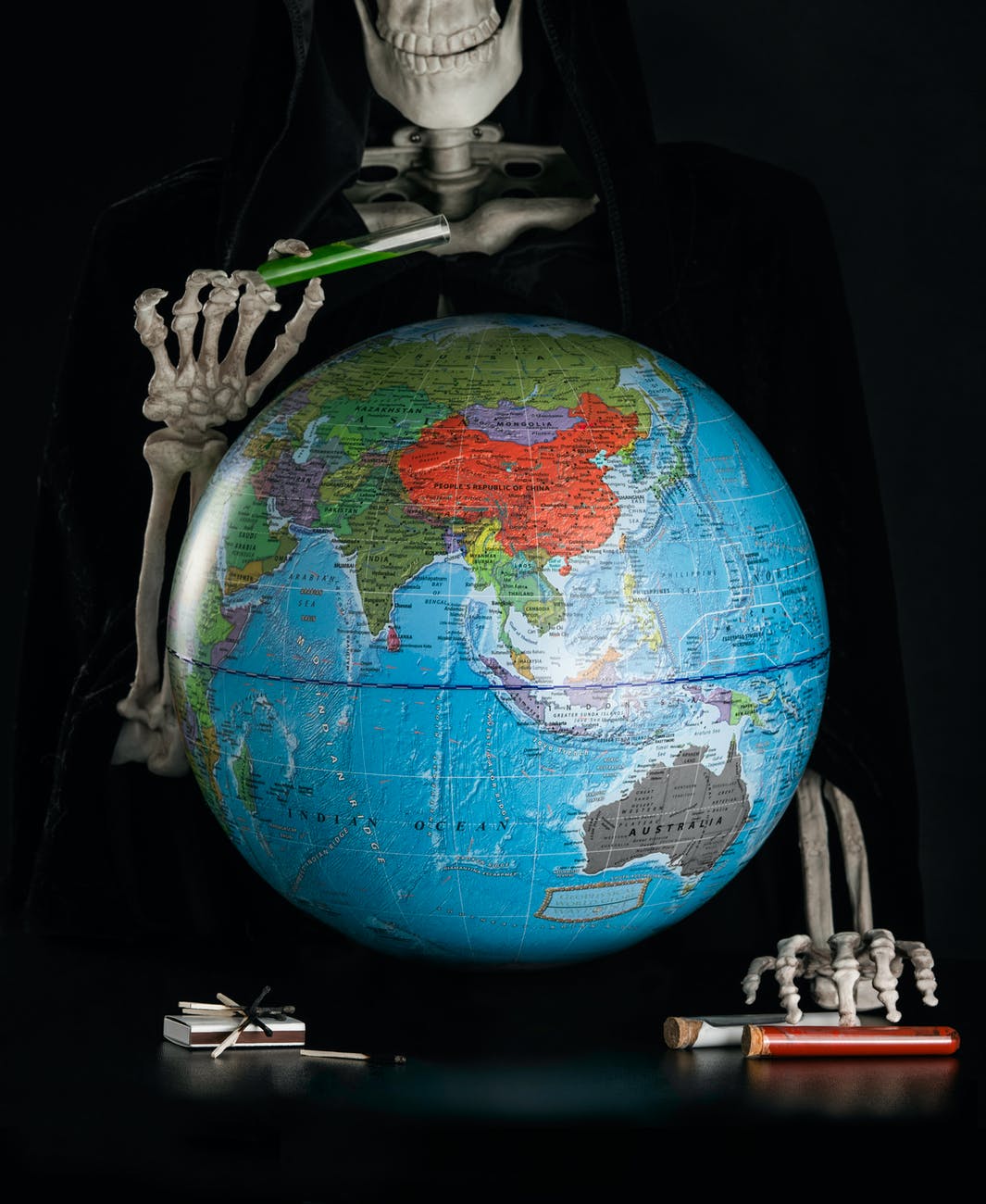
It would appear the power of this conjunction was being felt at least a year or so beforehand too. Look at the revolutions of 1848, for example, the biggest uprisings Europe as a whole had ever known, at least according to the known history. And even though little political change actually transpired as a result, the cultural significance in the long run was indeed manifest.
We can therefore see that the Great Exhibition of 1851 did indeed set the symbolic seal of the times, showcased in the almost unbelievably magnificent Crystal Palace. The exhibition closed in October 1851. Then, remarkably, the great cast iron and glass edifice was transferred to another site in London. It seems little was beyond these Victorian engineers.
So ultimately, I believe the chart set for the inauguration of this important event is indeed highly symbolic. The next six months encapsulated Britain’s inheritance from the old world, yet more importantly, presaged her empire’s predominance in the world and the true beginning of ‘globalism’.
Significantly, in the same year of 1851, we also see the establishment of the prime meridian of Greenwich, making London the de facto capital of the world.
It was around this same juncture too that one of the most important French literary figures, Victor Hugo, made a prophetic speech in regard to the idea of a united Europe. Even though such a ‘dream’ has never quite come to fruition, we can perhaps see the germ of this idea developing around this time, those first steps toward a global world.
The superpower which was Great Britain at the time was only nominally patriotic, in my opinion. Yes, Britons at the time could be proud of their empire, yet the real reach and purpose of this manifestation was to create a global world where the nation state, ultimately, would become redundant. The pros and cons of this movement are debatable.
The next meeting of Uranus and Pluto was in the mid 1960s. By then the idea of Pluto’s transformative power had entered our mainstream consciousness, having been discovered in 1930. This foreshadowed the next stage of social and cultural change – but that’s another article.
Copyright Francis Barker 2020

I have to confess it has not been easy. The school which I studied with thirty years ago fully incorporated Uranus, Neptune and Pluto, if not some asteroids and Chiron.
So when I began to leave out these outer planets, it felt a little bit like riding bare back. It felt uncomfortable, as if I was missing something. Right now I’m not entirely sure which way to go, which isn’t good, because I want to affirm my astrological philosophy after all these years. But it is good to remain open minded.
However, I think I am gradually coming around to the decision to leave them out. What is the reason for this?
I have never been comfortable with the interpretation of the outer planets, their supposed influence. Of course, as far as we know, the ancients did not know about them, so they were not used.
Then boom! Uranus (called Herschel at first after the astronomer who had been tracking him) was discovered in the late 18th century, around the time of the American, French and Industrial Revolutions. Hm, so Uranus is associated with revolution, sudden change, right? Well, perhaps.
Then in the mid 19th century, Neptune was found, around the time of further revolutions around 1848 to do with socialism and what is now called Marxism. There was also a sudden surge of interest in the area of mysticism. Around 1850, it really did seem like a new world was being born.
Come 1930, little Pluto was discovered. And we know what was to follow after that. Pluto has ever since had dark, underground associations of hidden extreme power and violence.
Gradually each of these new planets were seen by many astrologers as higher octaves of the planets. Uranus was thought to be the higher octave of Mercury, the planet nearest the sun on our solar system model. Uranus was therefore was about mental breakthrough, inspiration, invention.
Similarly Neptune was seen as the higher octave of Venus (love, unity) through meditation and Pluto was associated with Mars (energy) in a more transformative pose. I have never been completely comfortable with this thinking.
For one thing, we know these luminaries are there but they are not visible to the human eye. Are we not in danger of ascribing them too much astrological influence? Yes, invisible things can be very powerful. But astrology is about luminaries, things you CAN see. Simplicity can be a blessing.
Some use the outer planets in a lesser way, see them as purely negative, revealing by sign and house position where we will experience problems, perhaps a bit like a negative fixed star. For example, Uranus might reveal where we feel alone, isolated; Neptune warns us of deception and confusion; Pluto where we might be in danger of self destruction. The difference, of course, is that you can see a fixed star.
If we return to the time of the discovery of each of these planets, we could strongly argue that if the finding corresponded with a major shift in human activity as seen through the accepted historical narrative, such as revolution, then maybe these planets’ ‘influences’ are indeed negative.
And as well as all the above, didn’t the old ‘system’ with seven luminaries have a certain beauty, balance or resonance about it? The discovery of Uranus in 1781 and its incorporation into astrology, did indeed disrupt everything.
What is more, it is my contention that Uranus is not the ruler or even co-ruler of Aquarius. The nature of this sign has been subjugated over the last two hundred years, from a serious minded forward thinker, to a wacky professor or flower power hippy – all because of the so called cranky ruler Uranus. Aquarius is traditionally the sign of hopes, dreams and wishes and group objectives. How are these Uranian?
Similarly, mystical Neptune has been associated with ‘dreamy’ Pisces and powerful Pluto with the much maligned Scorpio. The tradition of assigning two signs each to the planets, Mercury through Saturn, is ancient. I now believe it should stay that way. Tradition is important whilst remaining open minded.
So at this juncture my purpose is to leave out the outer planets, including Chiron (which is what… a comet?), along with the asteroids.
With each interpretation, if any outer planet does indeed form a major aspect, I will consider mentioning it, but will not include it on the chart. Treating the outer planets a bit like fixed stars might indeed be the way to go – but that is not decry those clearly visible luminaries, which have had a place in many forms of astrology for millennia.
Nevertheless, I feel the outer planets do seem to have influence on us all in a transpersonal sense – though not necessarily in a benevolent fashion. I intend to highlight this is in a number of forthcoming articles.
Copyright Francis Barker 2020

(on January 12 2020, the long awaited meeting or conjunction of Saturn and Pluto becomes exact in Capricorn…)
copyright Francis Barker 2020

There is a Saturn Pluto conjunction very 33 to 37 years or so. Examples of others occurred in 1914, 1947 and 1982 and much has been written about these ‘coinciding’ with the beginning of WW1, The Cold War and the economic depression of the early 1980s.
However, this one seems especially dark to me. Put simply, in astrological terms, this planetary activity is taking place in Capricorn.
The goat represents the milieu of the status quo, business and politics. Saturn is in its own sign, very powerful, and represents authority and establishment.
Pluto, so much demeaned by astronomers for now being classed as a ‘minor planet’, shows no signs of having any corresponding minor impact in astrology. Most positively, the Saturn Pluto conjunction could be said to symbolise restructuring.
Pluto is about power and it tears down, exposes, transforms, brings forth what has been long concealed, but also intensifies. From this it isn’t difficult to see that is just the kind of thing that has been happening, particularly in the world of politics and it hasn’t been pretty.
In the UK we have Brexit, Britain’s exit from the EU apparently recently endorsed by the Conservative’s landslide win in the General Election. The country stands to leave at 11pm on January 31 2020.
There is much corresponding unrest in other European countries, violent protests and people questioning the future of the EU itself.
We have political chaos in America, where the President has been impeached, yet the process has not yet passed fully to the Senate – perhaps because it doesn’t stand a chance of being ratified, although at times the proceedings on all sides seems to beggar belief.
I could go on, but suffice it to say that I think the best outcome from all this is that we shall see the foundation of new political structures in the ensuing weeks, months and years.
I just hope and pray that this process of political transformation occurs as peaceably as possible and that we, the people, come out of it properly represented and wholly informed.
copyright Francis Barker 2020
 Ciscography