There’s an old joke about the Moon landing hoax conspiracy. You know: “Sure it was a hoax, but they got Stanley Kubrick to direct and he insisted that they had to be on location.” I thought everybody knew that one. It’s an oldie but a goodie that suitably lampoons the lunatic fringe who imagine the […]
It is remarkable when one looks at a map of the entire earth and notice how insignificant the island of Great Britain appears, hovering as it does off the north west coast of Europe, neither separate from that continent, nor totally attached to it. Perhaps there is something prophetic about that island’s geographic position, looking westward out to the bleak Atlantic Ocean.
According to the historical narrative, relatively small nations had formed huge empires previously. Taking the accepted history of Rome being founded in 753 BC, this small city state expanded to rule much of the then known world by the second century AD. It is said that the influence of this empire is still strongly conspicuous today, especially in language, culture and government.
Spanish Gold
More recently, towards the end of the fifteenth century, the unification of the two Iberian kingdoms of Aragon and Castille, formed the more powerful kingdom of Spain, which went on to prosper the most from the ‘discovery’ of America by Christopher Columbus (Cristóbal Colón) in 1492. Within a mere few decades the Spanish empire dominated the new continent, north and south. Spain became very wealthy indeed during the sixteenth century.
Similarly and perhaps even more remarkably, Portugal, Spain’s feisty neighbour and rival on the western fringes of the Iberian peninsula, not only carved out an empire in South America (Brasil), but went on to dominate trade in the East Indies and to extend its empire to that part of the world and into Africa and its influence as far as Japan.
There are other examples, like ‘Holland’, more accurately called the Netherlands, or The United Provinces at one time, which also was an early beneficiary of trade and settlement in the Americas and the Far East.
Colouring the World Pink
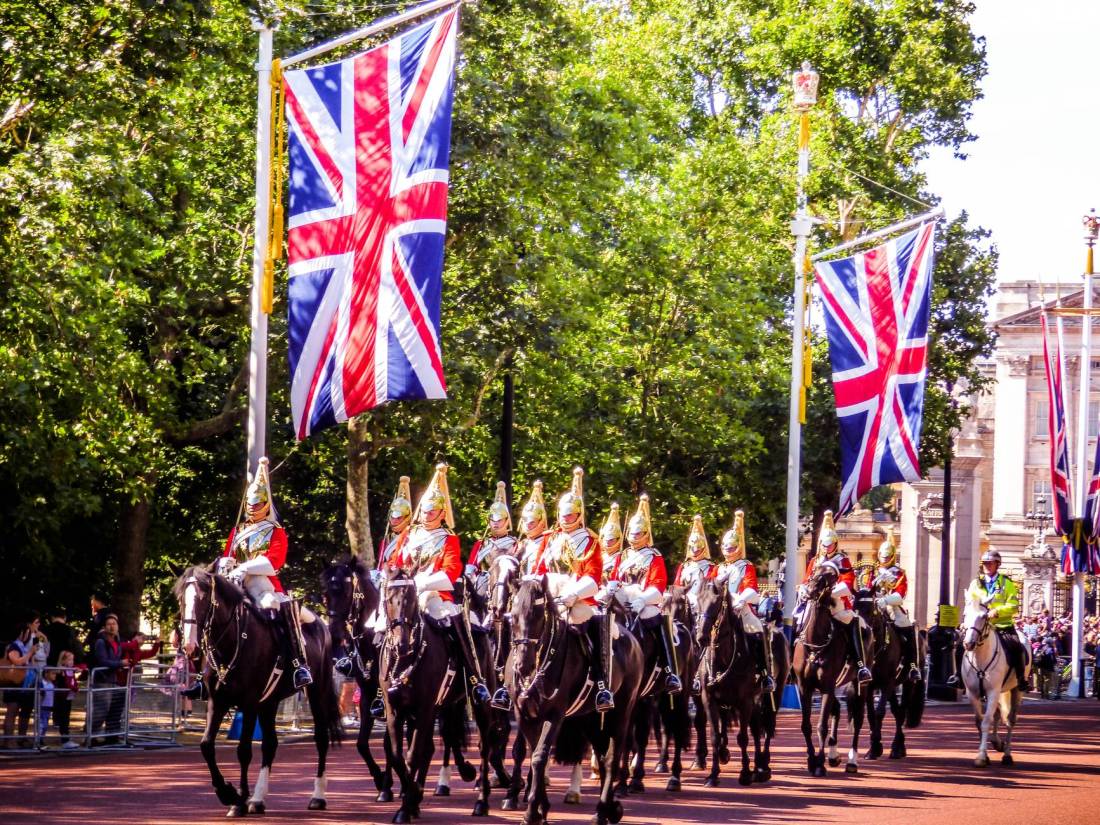
However, no empire was ever as grand as the British Empire. By the end of the nineteenth century it was the empire upon which the sun never set. A schoolboy of the time could look at a map of the world and reflect upon the predominant colour of pink – all those lands, as far afield as Canada and New Zealand, where the British flag flew and the English language was spoken.
It is easy to think of empire building as organic, though this is never the case. A nation, or a people, often have a common purpose, though the vast majority are unaware of it. Nations and empires are steered, often by a few notable individuals and families with ambition and vision.
John Dee, Queen Elizabeth I’s astrologer who chose the timing of her coronation in January 1559, was one such man. I will merely allude to him here, but suffice it to say that he the first to talk in terms of a British Empire, even though technically the notion Britain was only a geographic, not political reality when he was alive.
Tentative Steps
Nevertheless, it was during Elizabeth’s reign that the first tentative steps were taken by English explorers to establish an empire in the name of the queen. Sir Walter Raleigh was one such remarkable individual who made attempts at settling in North America.
By 1707, the crowns of England and Scotland were legally united, officially creating the Kingdom of Great Britain. At the same time a highly significant war was being fought in large parts of Europe. This was a result of Charles II of Spain dying without an heir in November of 1700. The ensuing war is called The War of the Spanish Succession.
The British fought this war essentially to prevent either France or Austria uniting with Spain, and thereby creating a European superpower. Such an eventuality would have been clearly detrimental to Britain’s ‘interests’. It is an early example of a way of maintaining the balance of power – at least that’s the official line.
After ten years of warfare, the Holy Roman Emperor Joseph I died in April 1711 and was succeeded by the Archduke Charles, which effectively ‘solved’ the succession crisis, at least in the eyes of the British who began peace talks. This eventually resulted in the Treaty of Utrecht in 1713, which established Great Britain as a naval and European economic superpower. Out of all the belligerents, only Britain could be said to have emerged from this conflict financially intact.
1710-11 – A Major Turning Point
This period centering around 1710 to 1711 was clearly a major turning point in British, European and world history. Astrologically too, we can see clear signs of the turning of a page, or the planting of a seed.
I draw your attention to the three then still undiscovered planets, Uranus, Neptune and Pluto, all representing other (perhaps higher) dimensional (invisible to the naked eye) aspects of the mind, unity and power. As far as we know, these forces were not known at this time, remaining hidden somewhere in the collective human unconsciousness.
Nevertheless when Uranus met Pluto in September of 1710 and remained close, especially during the spring of 1711 when the Emperor Joseph I died, we see the beginning of a new historical cycle, with Great Britain seizing the initiative at an important time of opportunity. Uranus brings new ideas, change, Pluto the idea of collective power.
The Seed of Power Planted
This Uranus Pluto conjunction happened to be in late Leo, also conjunct the fixed star Regulus, which has had a long association with royalty and royal power.
Equally fascinating, the other remaining undiscovered outer planet, Neptune, was for a time in conjunction with the benefic Venus and in very good aspect to Uranus and Pluto from Aries. I think this gave a kind of other worldly blessing to the birth of the new enterprise. It’s fascinating to think that the god Neptune traditionally ruled the seas and from this point on Britannia certainly did rule the waves.
I think the relationship of the three outer planets at this juncture perfectly symbolise the sign of the times, the changing of the guard and setting the scene for the next century or so.
Other significant events at around the same time were, among others, the founding of The South Sea Company on March 3 1711. This was a public/private company created to consolidate and reduce British national debt, something which none of the other participants in the War of the Spanish Succession would have. Remember that important conjunctions are good for starting something new.
The Origins of Steam Power?
Another intriguing development was the invention and application of what was called the ‘atmospheric engine’ by Thomas Newcomen in 1712. This steam driven device was initially used to successfully pump out water from tin wines in the south west of England, particularly Cornwall. It is not difficult to grasp the significance of this invention and its later use in the first steam locomotives later on.
There were also reports of the first successful hot air balloon flight at this time by a certain Bartolomeu de Gusmao. Although this occurred indoors, the fact that it happened at all is highly significant. Uranus, after all, is said to rule the air and scientific invention.
I think there is evidence here of the burgeoning ‘power’ of the three outer planets and their generational influence on human culture, an influence which would gain in impetus as each one was subsequently discovered over the next two hundred years.
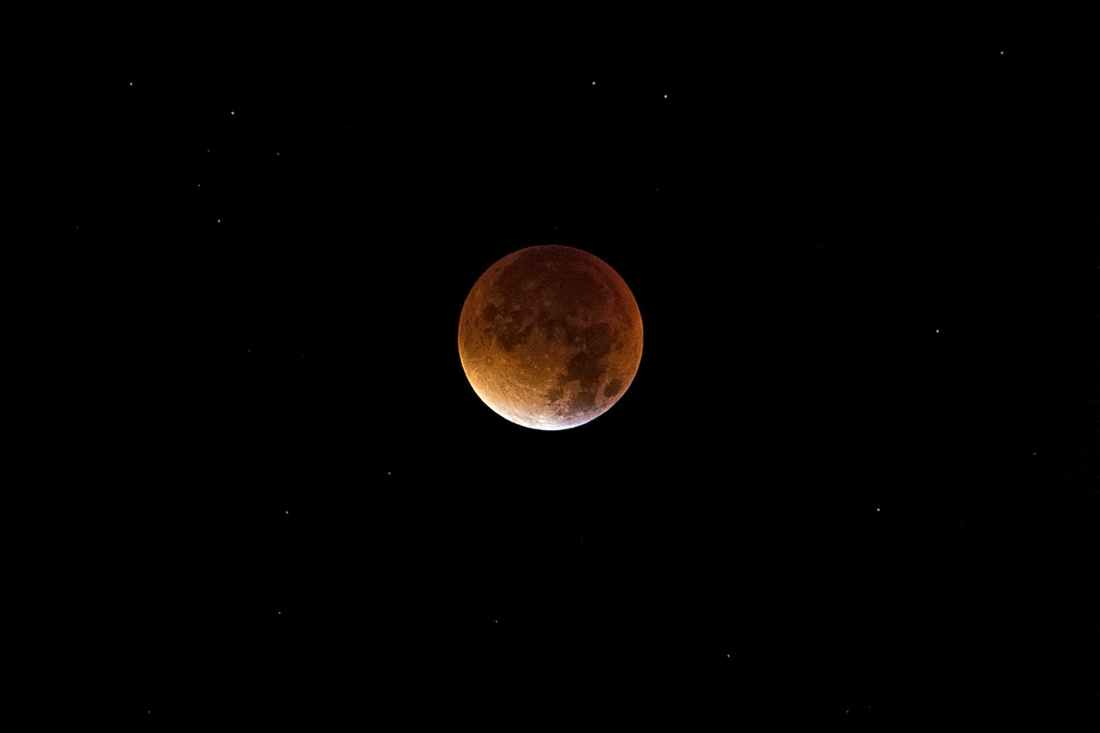
The up and coming lunar eclipse on Sunday July 5 falls on a very sensitive point of the USA independence chart.
This will be almost exactly conjunct the Sun’s position in the eighth house in that 1776 chart, activating the important second and eighth house axis, which is all about national security, money, finance, investment, banking. The USA would appear to be at a significant point of change in these affairs.
Intriguingly, the Sun at this time is exactly conjunct the fixed star Sirius, Canis Major, or the ‘dog star’, which is thought to be largely beneficial, his effects ranging from guardianship (protection), honour, perhaps even to spiritual healing and rebirth, some believe. Sirius is obscured by the Sun from early July until the second week of August, these are the so called ‘dog days’.
This might be highly significant, especially as this period will last until Sirius’ rising at the beautifully termed Lion’s Gate in August. We could all do with some spiritual, mental and physical protection and healing right now.
Dichotomy
In the chart for the eclipse itself, set for Washington DC, the tenth and fourth houses are particularly activated, highlighting the dichotomy between the government and opposition in the United States, the Sun and Moon also squaring the ascending degree of the chart.
And talking of ascendants, Aries is rising and therefore Mars is the chart ruler, who happens to be powerfully placed in his own sign. The whole situation is therefore energised, even bellicose, so we might expect some ‘fireworks’. Mars is in difficult aspect to Mercury, so expect caustic commentary and irritation too.
Energised
That said, Mars is in positive aspect to Venus in Gemini the third house – potential here for some ‘good news’ – we could do with some of that.
Interestingly, the Sun and Moon make a positive aspect to Uranus in Taurus in the second house, indicating the potential for positive change in regard to the economy, money, finance and banking. There are likely to be a few surprises here.
It certainly has the potential to be a weekend we won’t easily forget.
The older among us may remember the clarion calls of the late Sixties, the so-called cultural revolution, pronouncements that the New Age of Aquarius was dawning, an age of peace, love and freedom. So what happened?
Furthermore, speaking as an Aquarian sun native myself, although I strongly recognise certain accepted traits of the fixed air sign within myself, such as detachment and forward thinking, I have never felt comfortable with some of the more eccentric and bizarre character associations of Aquarius and this supposed Aquarian Age.
In reality, no one knows when this Aquarian Age will begin. Maybe it already has. The dates suggested have ranged from late medieval times to anywhere as far ahead as 2300 AD. Not so precise, is it?
What’s It All About?
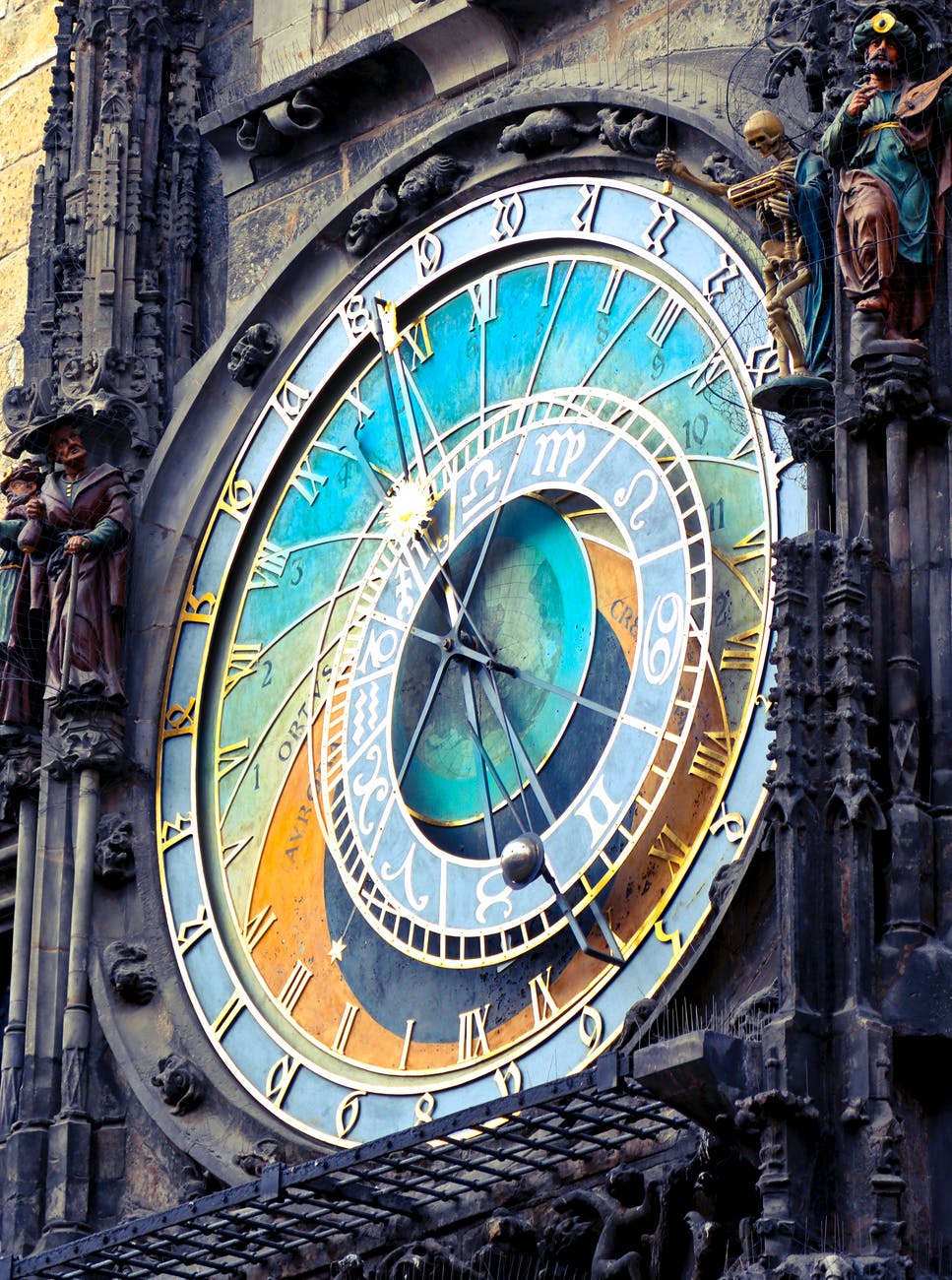
And what is it all about anyway? It’s all to do with the phenomena called the Precession of the Equinoxes. Each zodiac sign is a thirty degree segment of the ecliptic, which is the apparent path of the sun around the earth. There is a zodiac sign behind the very slowly receding point of the Vernal Equinox around March 21 every year. This is all part of The Great Year, a period of time of almost 2600 years, where each sign takes a bit over 2000 years to recede behind this Equinoctal point. This is caused by the earth’s ‘wobble’ as the sky spins at an angle of 23.4 degrees around the pole star, from our perspective.
At this present time, we are said to be somewhere around the transition of the sign of Pisces, the fishes, into Aquarius, the male watercarrier. The past 2000 years of the Age of Pisces have been dominated by the sign of the fishes, Christianity. Christ has often been symbolised by the fish, ichthys in ancient Greek, where each letter encapsulates the divinity of the Saviour. The fish symbol was important to early Christians hiding from authorities who regarded them as a danger, even subversives.
Controversial
Naturally, such a supposition of astrological signs ‘affecting’ human culture is controversial. Admittedly, there were plenty of other events going on in the world over the past 2000 years that were not tied to Christianity. Considering this, and the massive time window given to the threshold of this Aquarian Age, I have long since been cynical about this particular astrological theory.
But I am willing to concede I may be wrong. I am a practising astrologer. I am also a realist. To make prognostications as to whether we are in, or are about to enter the Age of Aquarius, we should surely be clear as to what we should expect to see. Firstly, I do not agree with all people’s interpretations as to the character of the sign of Aquarius. Peace, love, freedom and understanding may be all fine ideals, but are they Aquarian? And have we seen any of this since the late Sixties, for example? I will let you be the judge of that.
Uranian Upheaval
One of the problems is that since around 1781, with the discovery of Uranus, most astrologers have come to put this outer planet at least equal to, or above that of Aquarius’ traditional ruler, Saturn. I think this is a mistake. I concur that Uranus certainly does have a revolutionary influence, causes sudden changes, often turning things upside down in the process. But is this in any way Aquarius, the Fixed Air sign? I strongly contend it is not.
So I don’t believe Uranus has ‘rulership’ of any sign and neither do Neptune and Pluto. They are generational influences because they move slowly through the signs, Pluto taking around 248 years, influences we have become consciously aware of since their discovery (or perhaps rediscovery).
The Two Faces of Saturn
For me Saturn has two sides. After all, apart from the sun and Moon, every planet down to Saturn was given rulership over two signs: Mercury rules Gemini and Virgo, for instance. So on one level Saturn may be Satan, the Greater Malefic, virtually evil personified as in the ancient myth of Cronos (Saturn) devouring his own children. On another level, he is the symbol of limitation, for ages considered to be the outermost planet and therefore symbolising a kind of barrier, the furthest reach, where all things are stopped, crystalised and slowly brought back. He is a kind of brake, bringing things down to solid earth so they can be accounted for. The latter I suggest is the Capricornian Saturn, a necessary function of life.
The other side of Saturn is the one which has rulership of Aquarius, the more ‘positive’ side. Aquarius is traditionally the sign of hopes, dreams and wishes, in other words objectivity as opposed to Leo’s subjectivity of sheer life enhancement. If Leo is artistic, Aquarius is scientific, liking to rationalise, codify. The same fundamentally materialistic Saturn, which is associated with the cardinal earth sign of Capricorn, shows this more ‘positive face’ in Aquarius. He is objective, the planner of the future, a practical idealist, as befits the fixed air sign of serious communication and association. Aquarius is fundamentally human. The outright eccentricity often tagged to Aquarius is wrong in my opinion. Strong aspects from Uranus to the planets or angles in a personal chart, would most likely explain any eccentricities of nature.
So, if this indeed be the case, any age of Aquarius would reflect the serious, objective and associative qualities of that sign. These are conspicuous by their absence at the present time.
The Grand Conjunction
That said, what we do have towards the end of this year, 2020, is the Grand Conjunction of Jupiter and Saturn occurring at 0 degrees Aquarius. The Grand Conjunction of these two planets represents a cultural correction point every twenty years, setting a general theme for the up and coming period. This on top of the ‘earth shattering’ Saturn Pluto conjunctions earlier in the year, so symbolic of the nadir of political and economic turmoil and you have a year of major significance, a year of historic transition and migration, if you will. I feel this has nothing to do with entering any new astrological age ruled by Aquarius, with all the ill defined thresholds of each sign within the Great Astrological Year of about 2600 years.
The occurrence of this Grand Conjunction every twenty years or so, invariably, although not necessarily wholly, migrates from one element to another every 150 to 200 years. For the last 180 years, apart from 1980/1, the GC has occurred in earth signs. From this year of 2020, it will be within the air signs of Gemini, Libra and Aquarius for around 140 years. This will be a major transition, marking a cultural shift, a probable explosion of philosophical and spiritual thought and technological progress, as befits the communicative and expansive air signs.
So from 2020 right through well into next century, we will undoubtedly undergo a vast, and, I truly hope, positive transformation, perhaps akin to what we are told about in the Renaissance. Precursing that time, during the 13th and early 14th centuries, there was a similar preponderance of Grand Conjunctions occurring in air signs.
Momentous Times
I believe that right now, in 2020, as we are currently living through one of the most momentous times in ‘history’. We are indeed at the threshold of a new age, a new cycle, which bears much renewed hope for humanity. At a time in the near future, we will be able to look back at this hiatus point with a bit more Aquarian objectivity.
What is more, bearing in mind that by the middle of this decade we will see all the outer planets in ‘positive’ signs too, the world of 2025 and beyond is going to feel wholly different than right now. By then, Uranus will be in Gemini, bringing great invention to technology and all forms of communication. Neptune will be in Aries and Pluto will move in Aquarius, both lengthy transits forever changing our ideas about humanity and spirituality, who we are as individuals and how we relate to the collective ‘universe’ – and revealing the truth as to what that universe and this reality actually are.
The Age of Air
What I don’t believe is that this is the much vaunted Age of Aquarius. If anything, we are entering the Age of Air Signs and everything to do with that element, which on the face of it is far more positive than all the earth energy we have been experiencing over the last 180 years, a truly extended period of denseness and negativity. The Saturn Pluto conjunction of 2020 represents the death knell of this ‘dark age’, where gross materialism has ruled outright and brought us literally to our knees.
The Grand Conjunction’s cycle in Air signs from December 21 2020, marks the beginning of the free – freer, more candid, fairer communication and justice as expressed through Libra; the rolling out of advanced technology for the benefit of humanity and the planet, as expressed through Gemini; and, firstly, a more planned, objective approach to administering the world and its resources, as expressed through Aquarius and positive Saturn. Let’s make it so.


 Ciscography