Lincolnshire in the east of England has some wonderful, often underrated medieval churches.
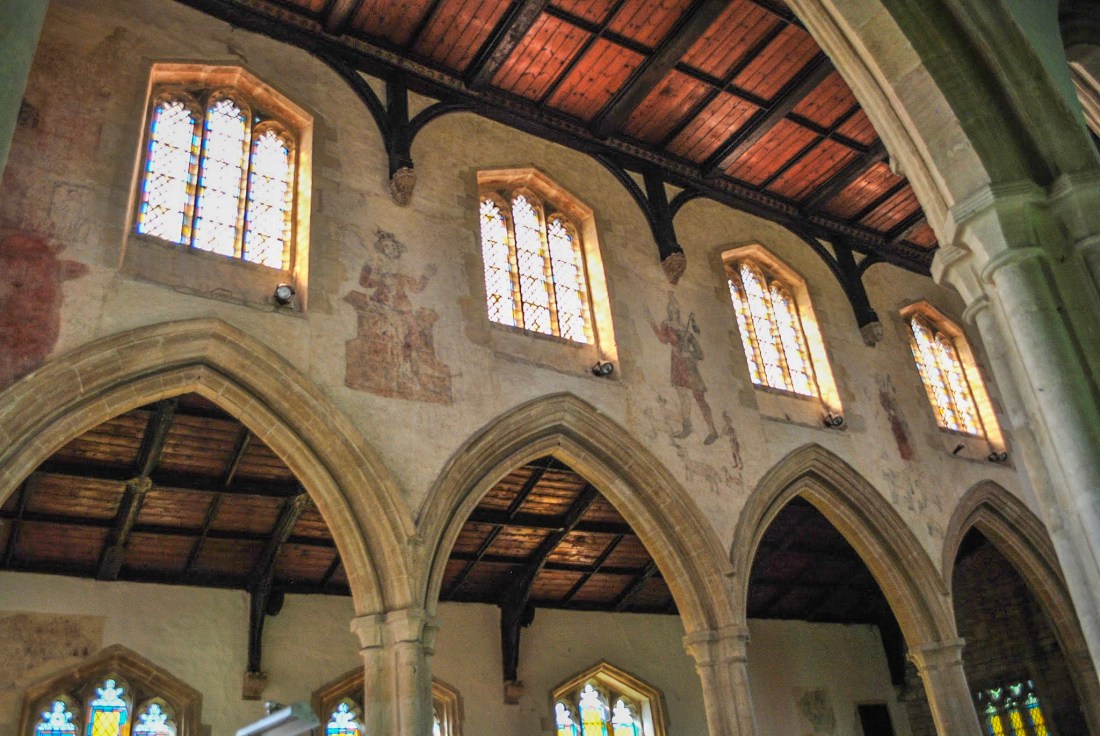
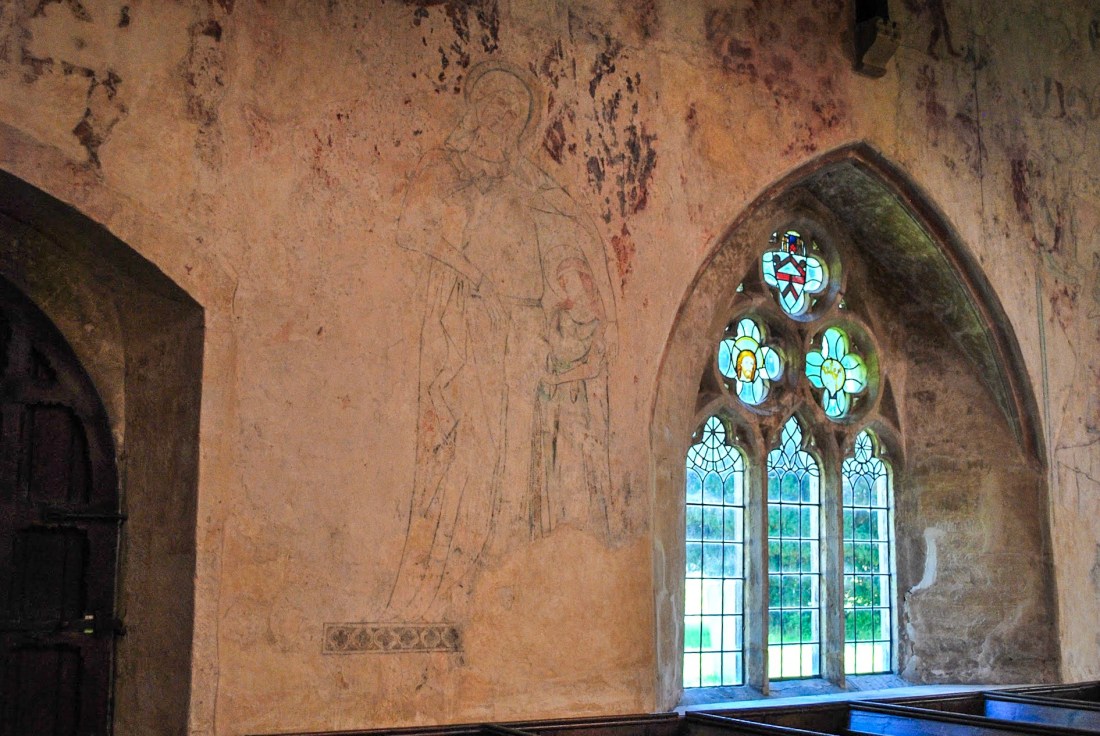
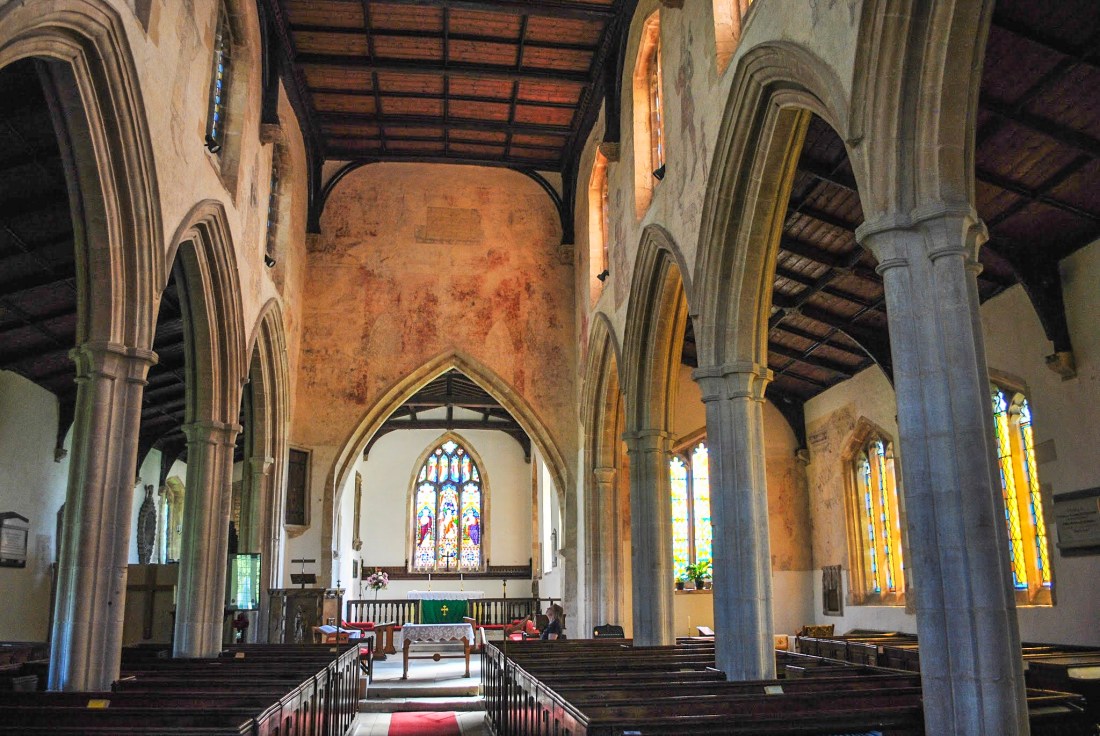
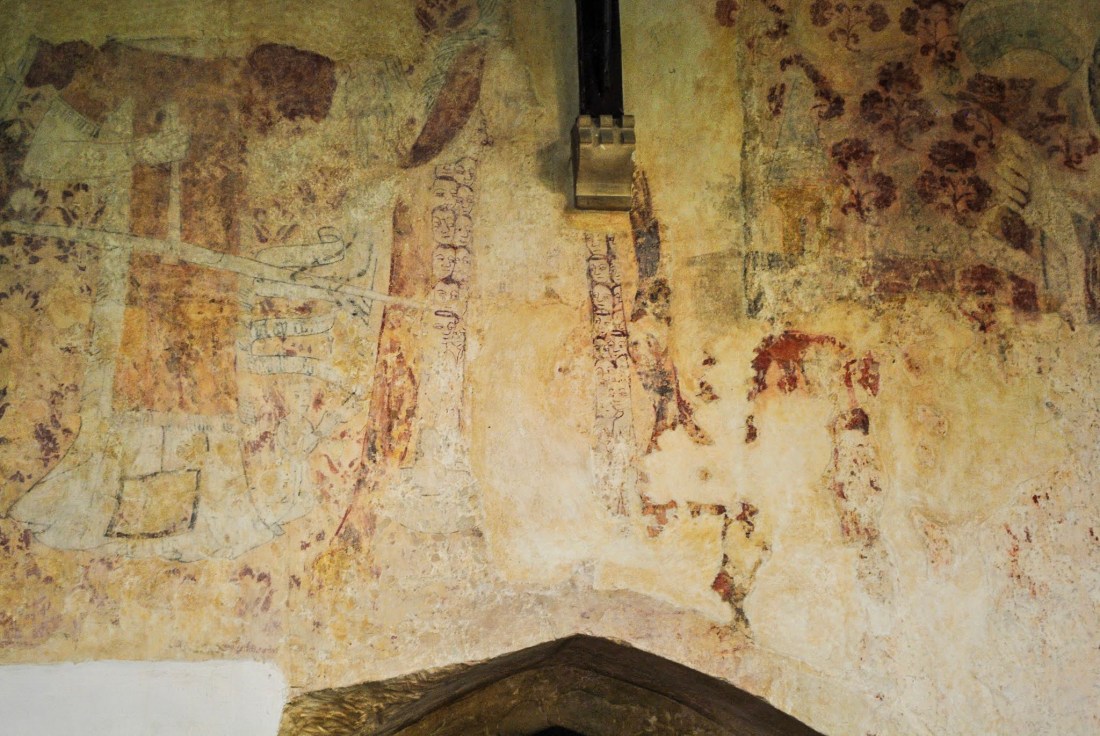
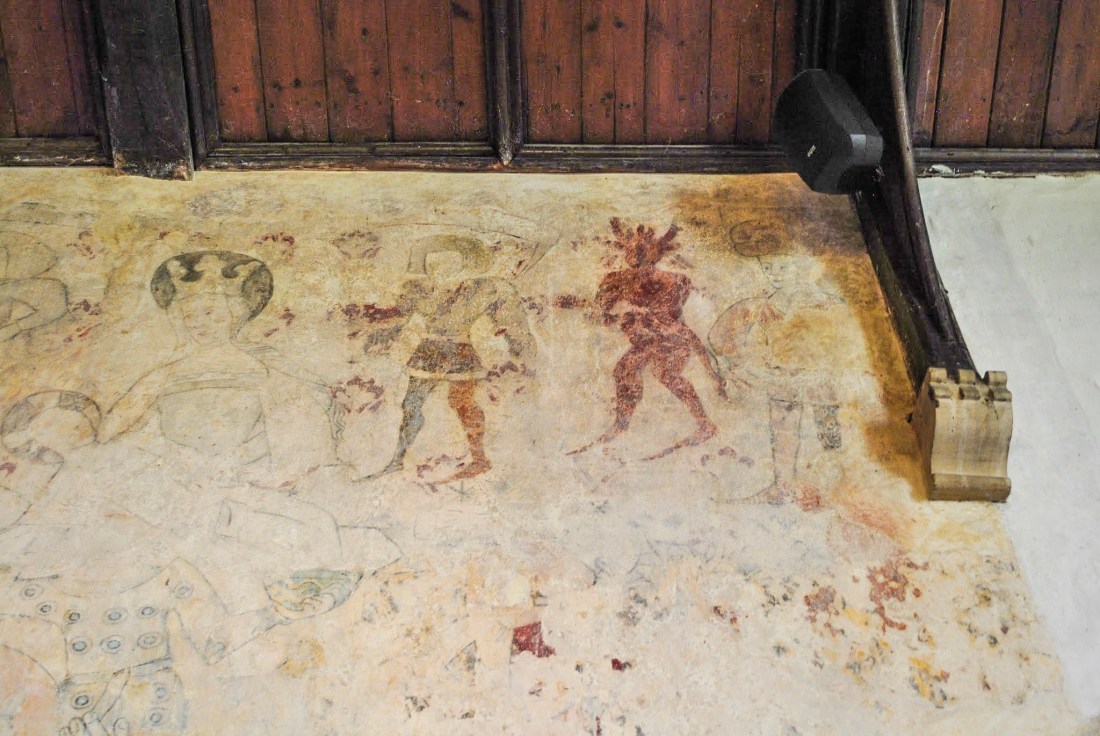
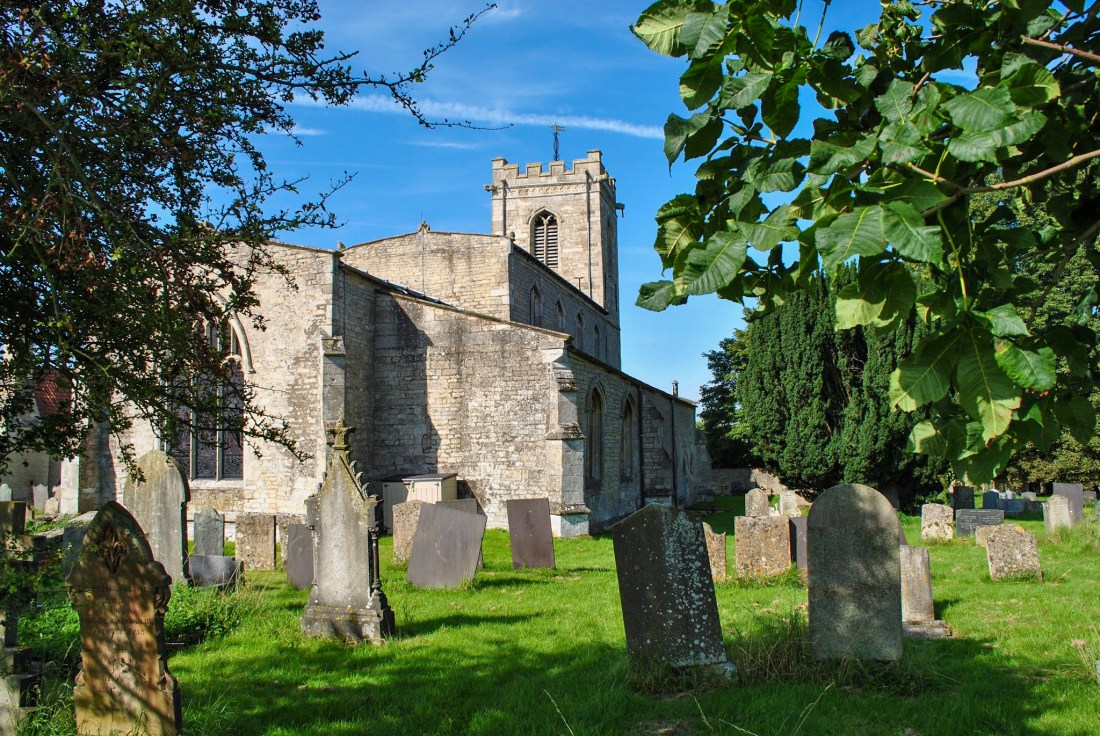
One such is in the south west of the county, in the lovely village of Corby Glen. Here on many of the walls of the church you can see paintings and illustrations of religious and spiritual imagery, representing stories from the Bible and the faith and beliefs in general of the later medieval period.
If you look carefully, you can make out several layers of art, where older ones have been superseded with new work.
During the Reformation in the 1500s, all of this art was whitewashed over, part of the process of removing all imagery, which also meant stripping out idols and even rood screens which separated the nave from the chancel.
It was only in more recent times that this treasure trove of art was rediscovered through church restoration.
Today this art represents some of the most important medieval imagery not only in the county of Lincolnshire, but also in the whole of England.
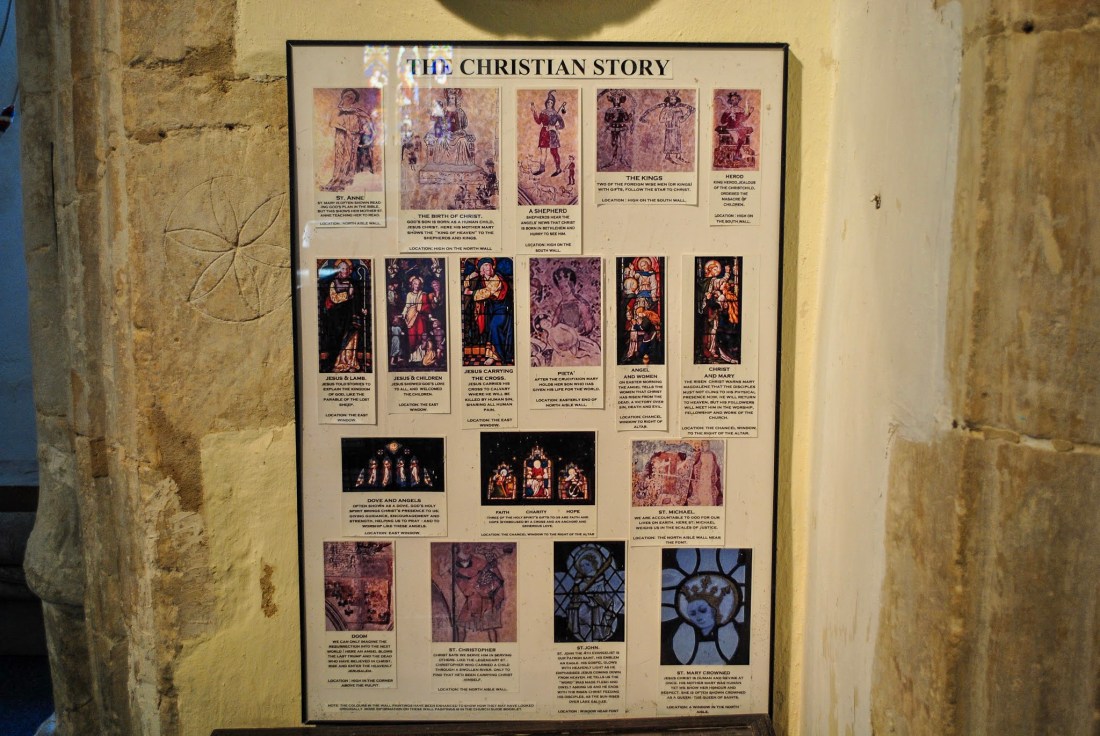
Devil in the detail.Explanation of the imagery inside the church.The beautiful setting of the church of Saint John the Evangelist, Corby Glen, Lincolnshire.
Peterborough Cathedral is probably one of the most underrated churches in England.
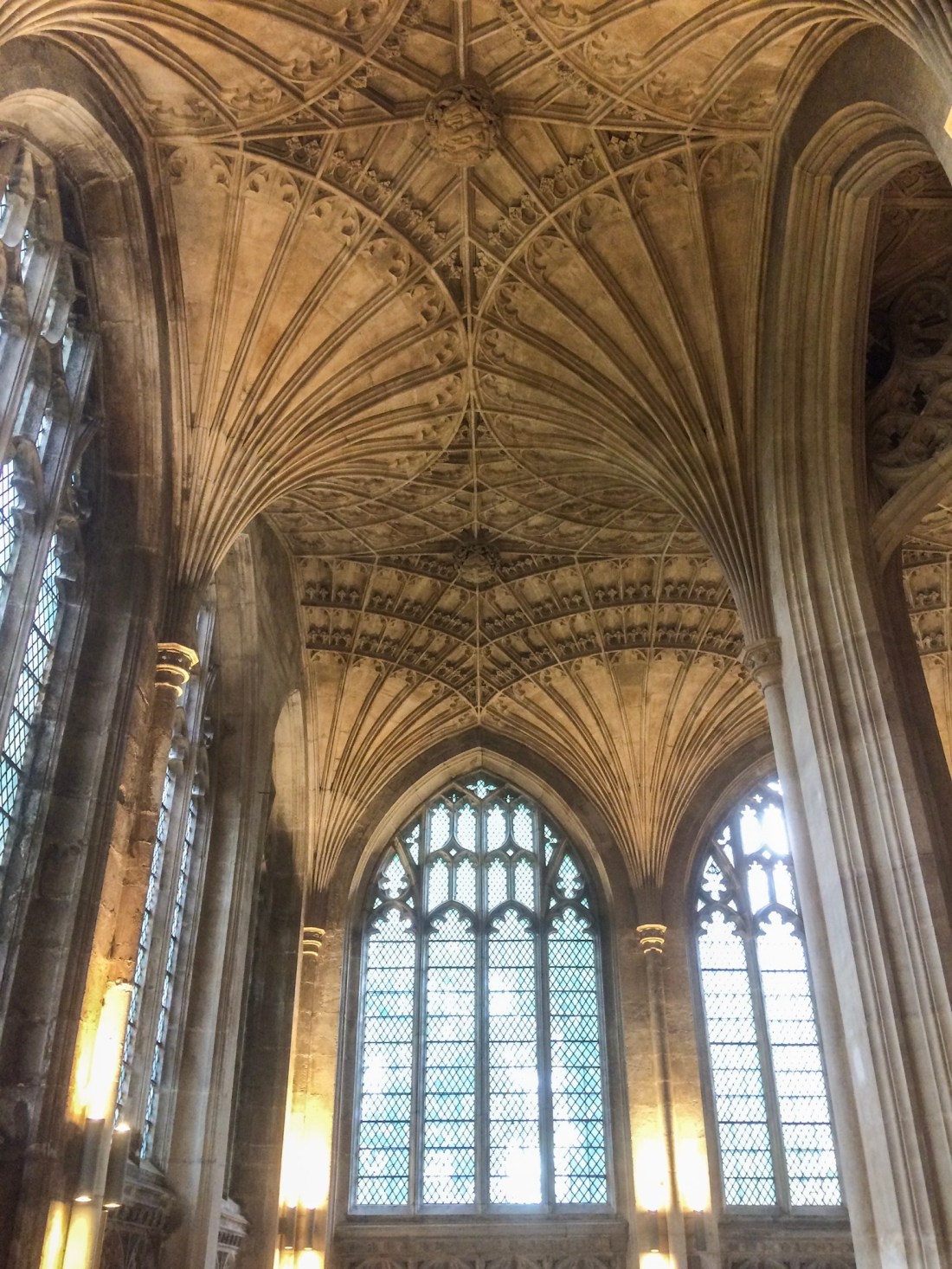
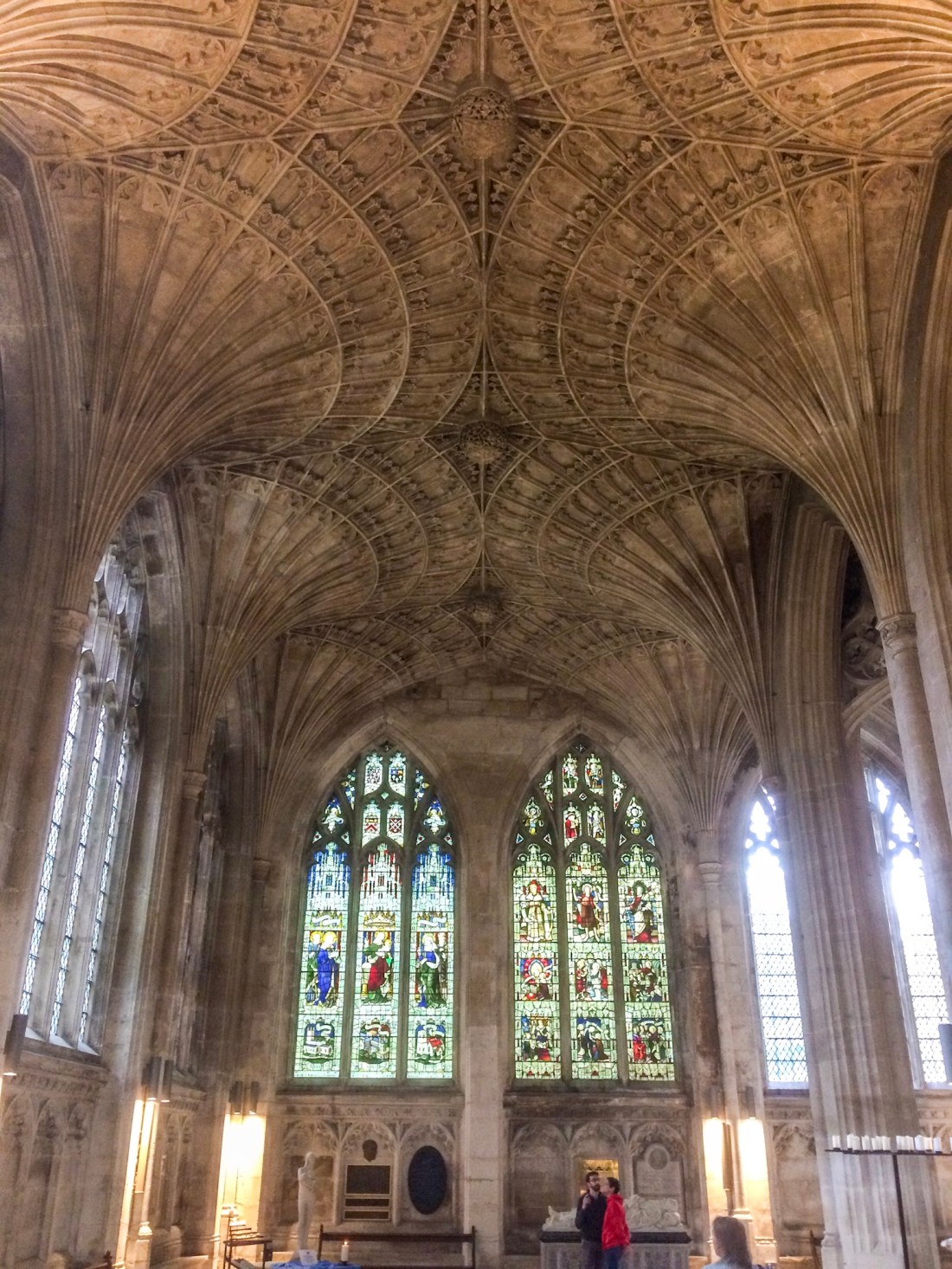
The Gothic fan vaulting at the east end of the cathedral is remarkable.
The cathedral also has three notable shrines to saints. The one above is Saint Oswald’s chapel, an old English saint, whose remains (reputedly an arm) were brought here.
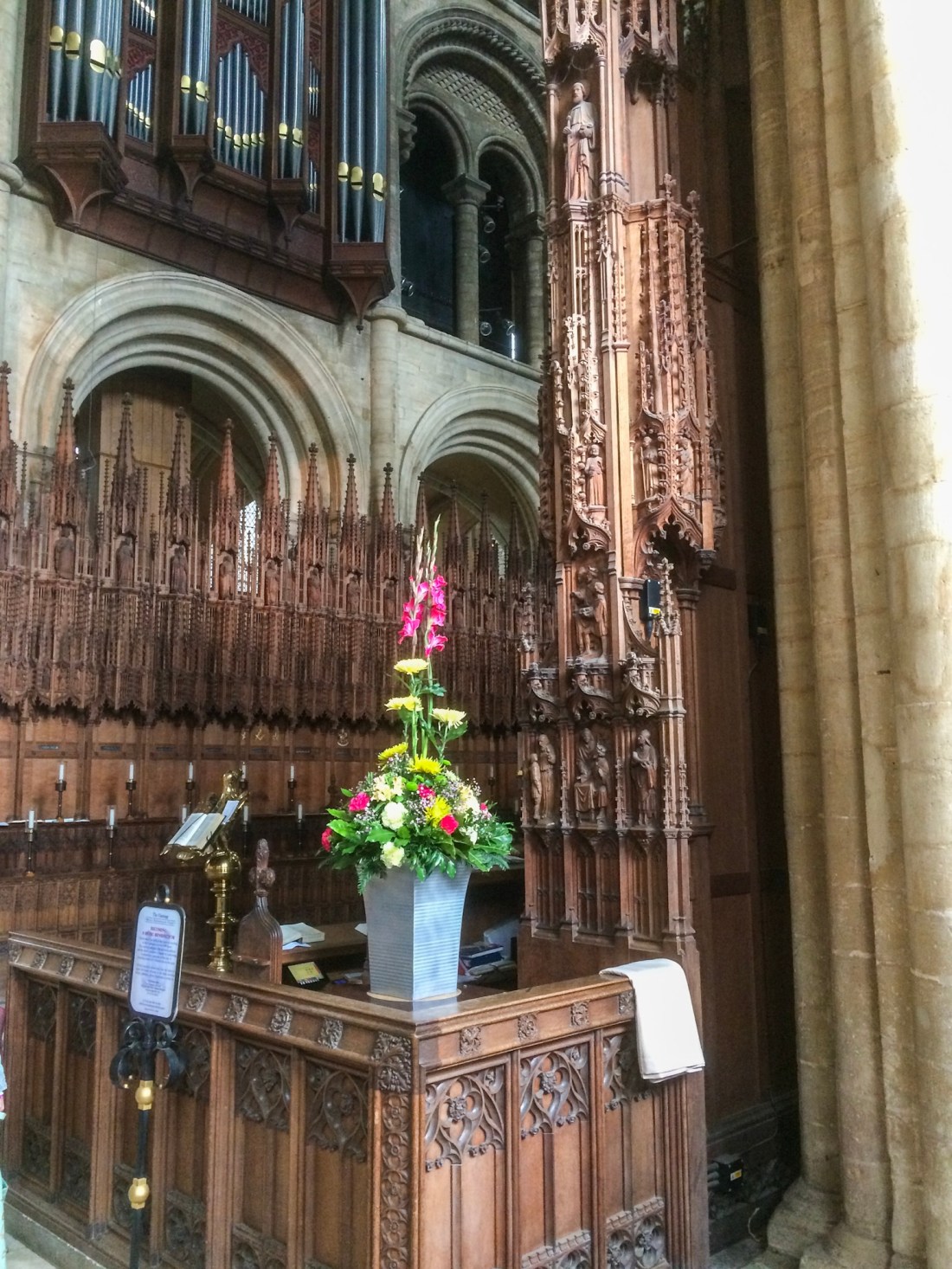
There is also a shrine to Saint Benedict with a beautiful wood carving at the entrance. Peterborough Cathedral is in fact the Abbey church of the former Benedictine Abbey, dissolved by Henry VIII when he became head of the Church of England.
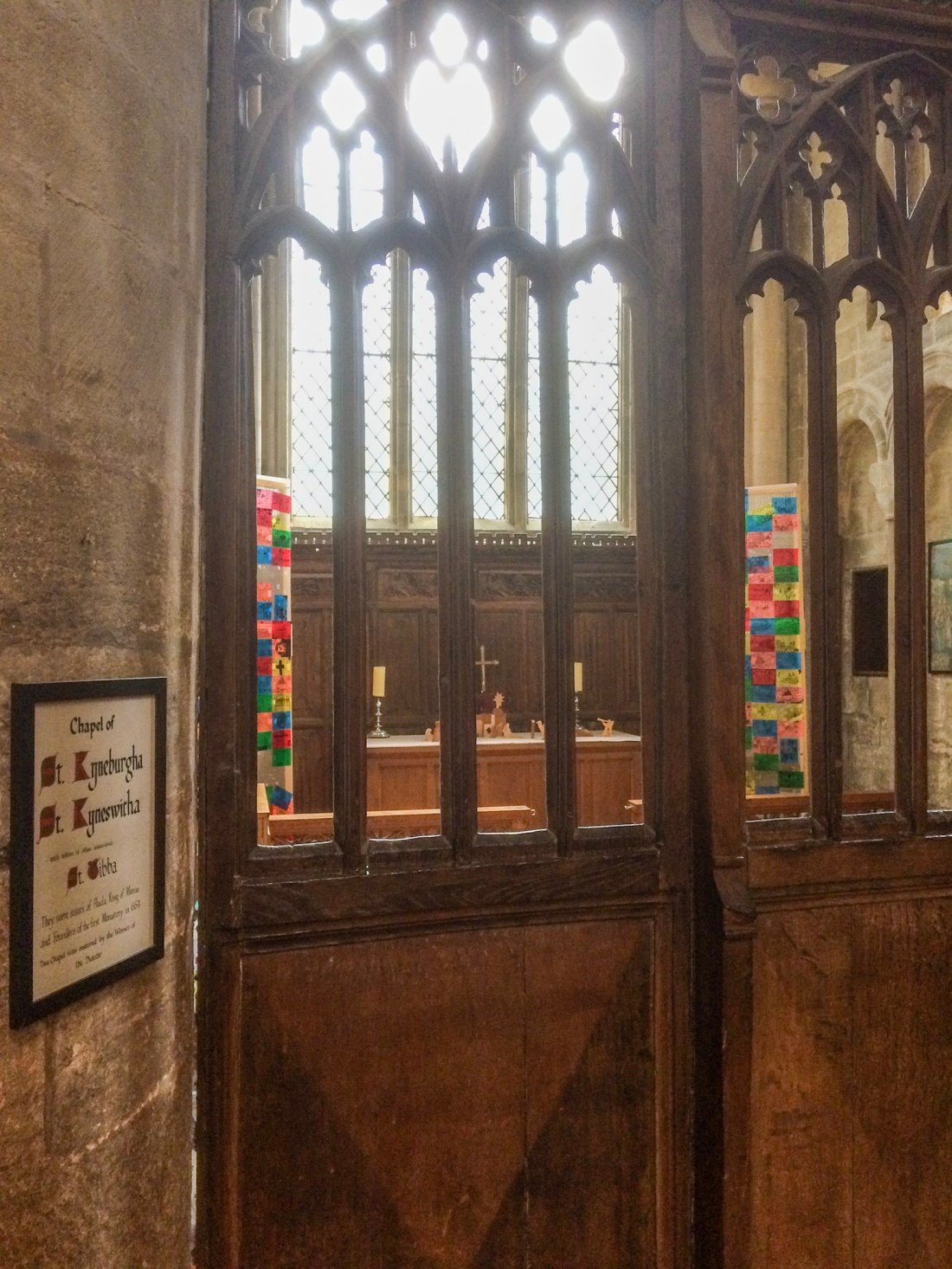
Most interestingly, there is a shrine to three old English (Anglo-Saxon) saints, Kyneburgha, Kyneswitha (spelling varies) and Tibba, unusual but fascinating names of a largely forgotten era.
The spacious choir has some wonderful wood carving.
words and photographs copyright Francis Barker 2019
Peterborough Cathedral in the east of England is one of the country’s biggest and most beautiful churches, with an association with two famous queens.
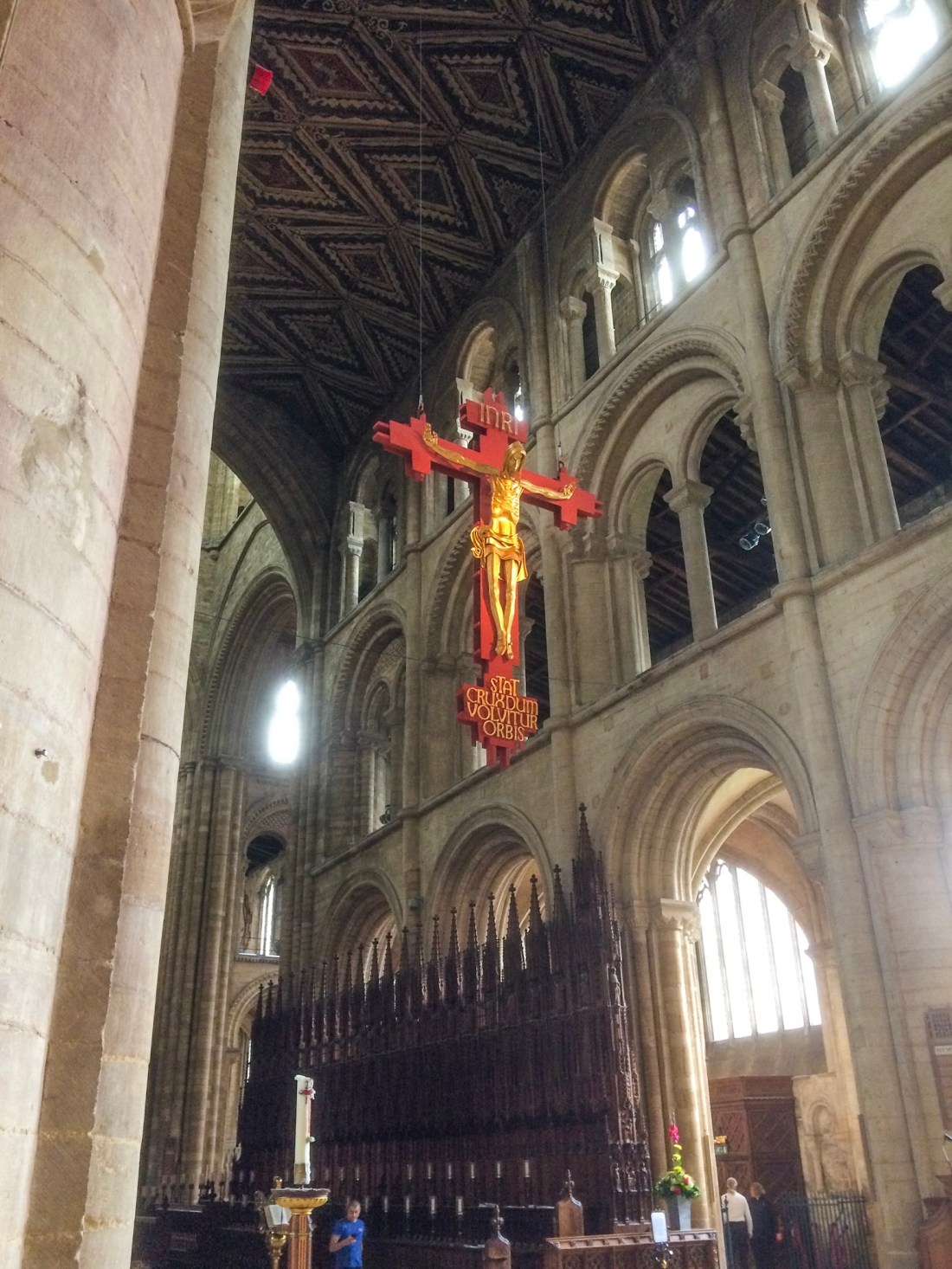
The long nave is quite stunning, with a beautiful roof and with a modern golden image of Christ suspended high as a focal point.
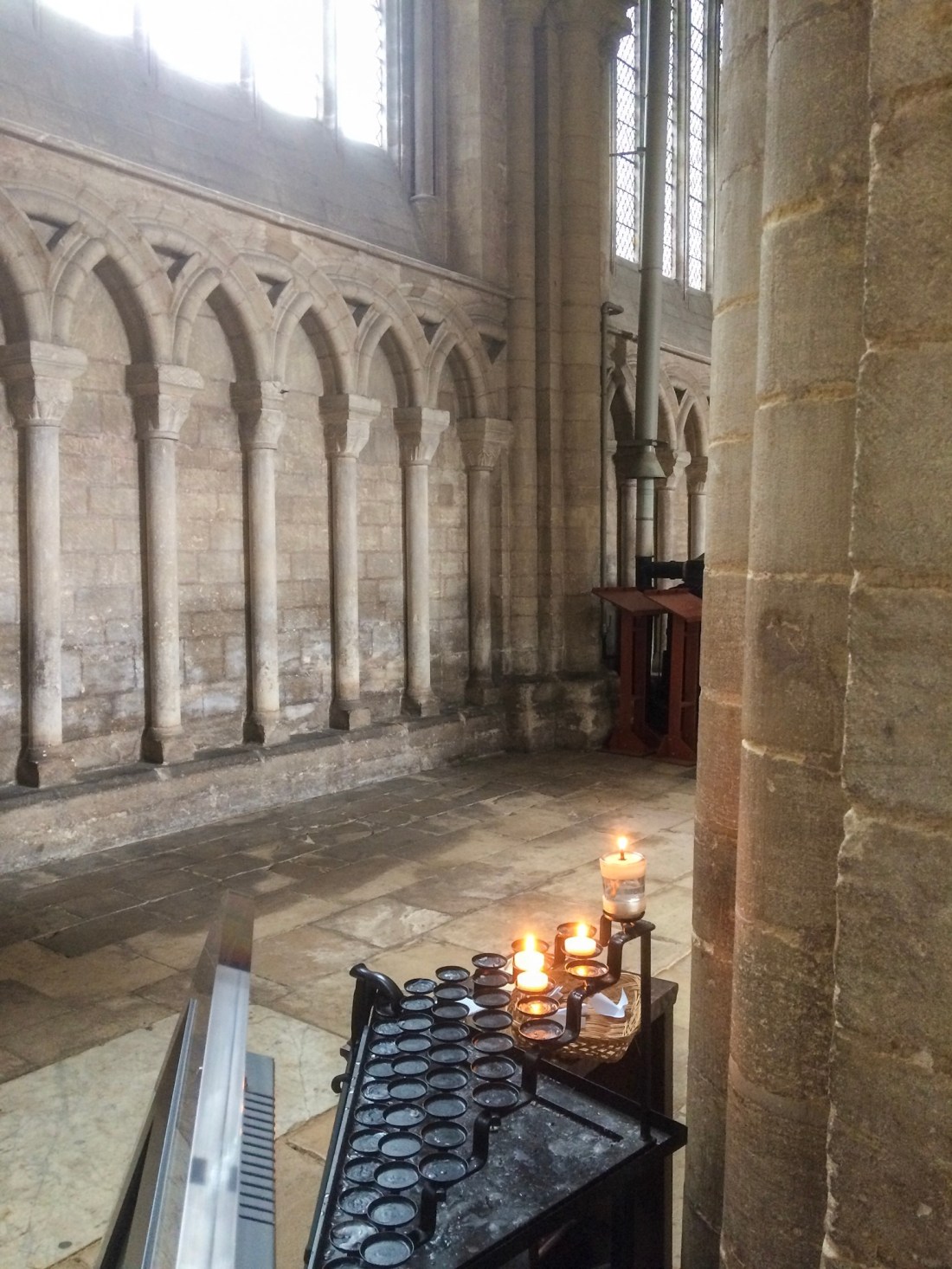
The cathedral is dominated by Norman and early English architecture, with numerous examples of Norman arches, such as these interlacing examples above.
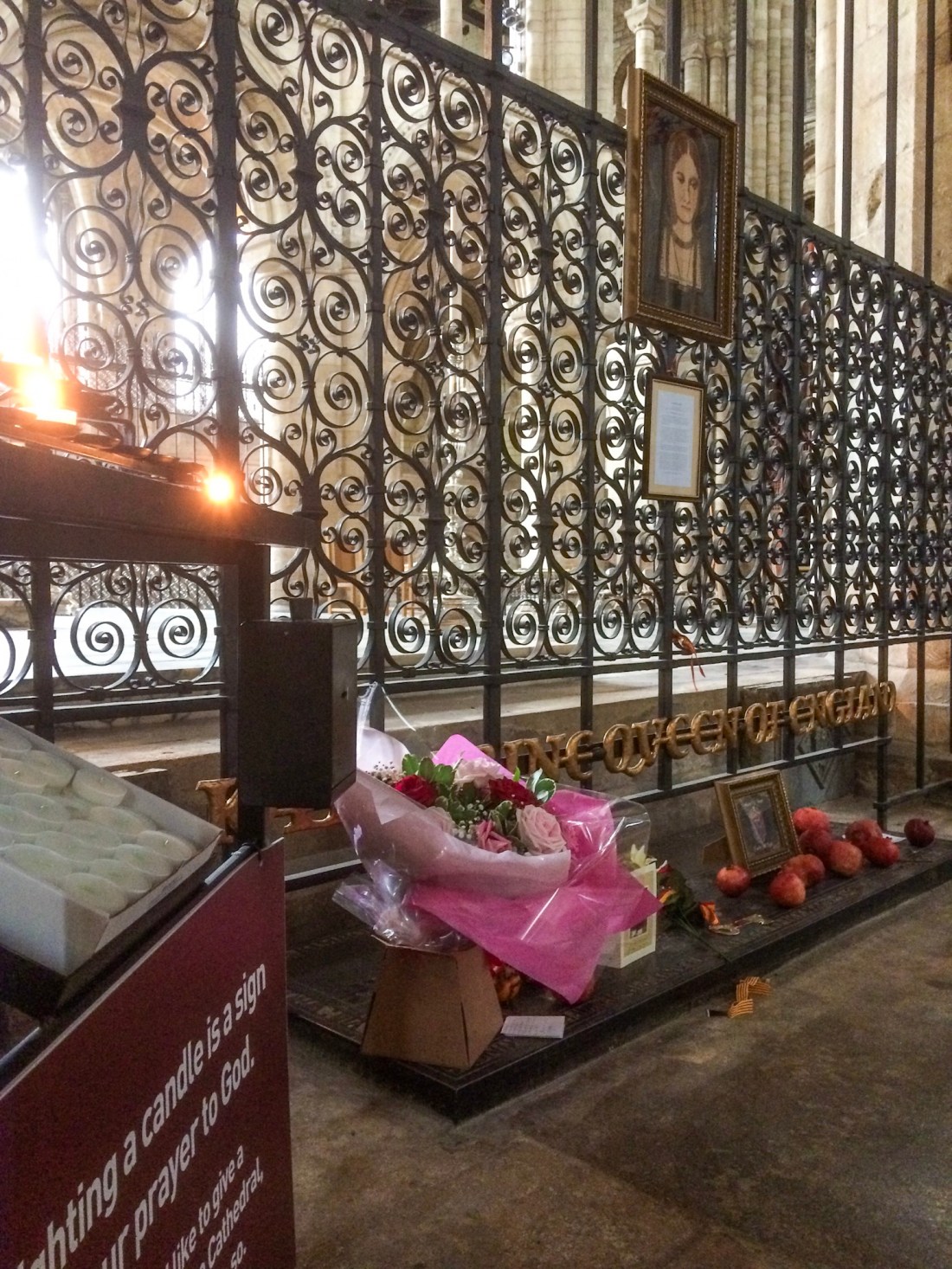
Catherine of Aragon, Queen of England, is buried here.
The cathedral is also notable for its association with two famous queens.
The first was Catherine of Aragon, Queen of England when she was married to Henry VIII. Catherine was buried here in 1536 and her tomb is still something of a shrine to her memory, with pomegranates very prominent as her symbol because the fruit appears on her badge. Pomegranates are an ancient symbol for fecundity and regeneration.
Catherine certainly suffered much during her husband’s long and protracted break with Rome, in which she was the innocent victim, her only crime it would seem was not being able to produce a living male heir for Henry to perpetuate the Tudor dynasty. This was how she was treated after being completely dutiful to the king, but Henry had to have his way. Her motto, which translates as ‘humble and loyal’, is a phrase she very much lived up to.
There is a portrait of Catherine by her tomb.Pomegranates have had a long association with Catherine of Aragon.
The second queen associated with Peterborough Cathedral is Mary Queen of Scots.
Mary inherited the Scottish throne after only a few days of being born, thrusting her into a world of political intrigue and shenanigans which she was never able to control.
She essentially became a pawn of more powerful rulers and some despicable characters. However, in 1559 she duly became Queen Consort to Francis II of France, solidifying Scotland’s long alliance with France.
Scottish symbols hang in honour of Mary who was initially buried here in 1587.
Sadly within 18 months the young kind died prematurely. Had he lived, Mary’s life would have turned out entirely differently. As it was, she became a teenage widow and a long series of political and personal disasters ensued when she returned to Scotland. Eventually she fled to England and came under Elizabeth’s control.
After many years’ imprisonment in England, during which the still substantial Catholic faction within England with aid from Spain continually conspired to depose Elizabeth and put Mary on the English throne, she was finally executed at nearby Fotheringhay Castle in 1587.
She was initially buried in Peterborough Cathedral, but her son, James I of England, had her remains transferred to Westminster Abbey in London.
words and photographs copyright Francis Barker 2019
Of course, the city of Peterborough’s greatest glory is its amazing cathedral, but that subject deserves a full article of its own.
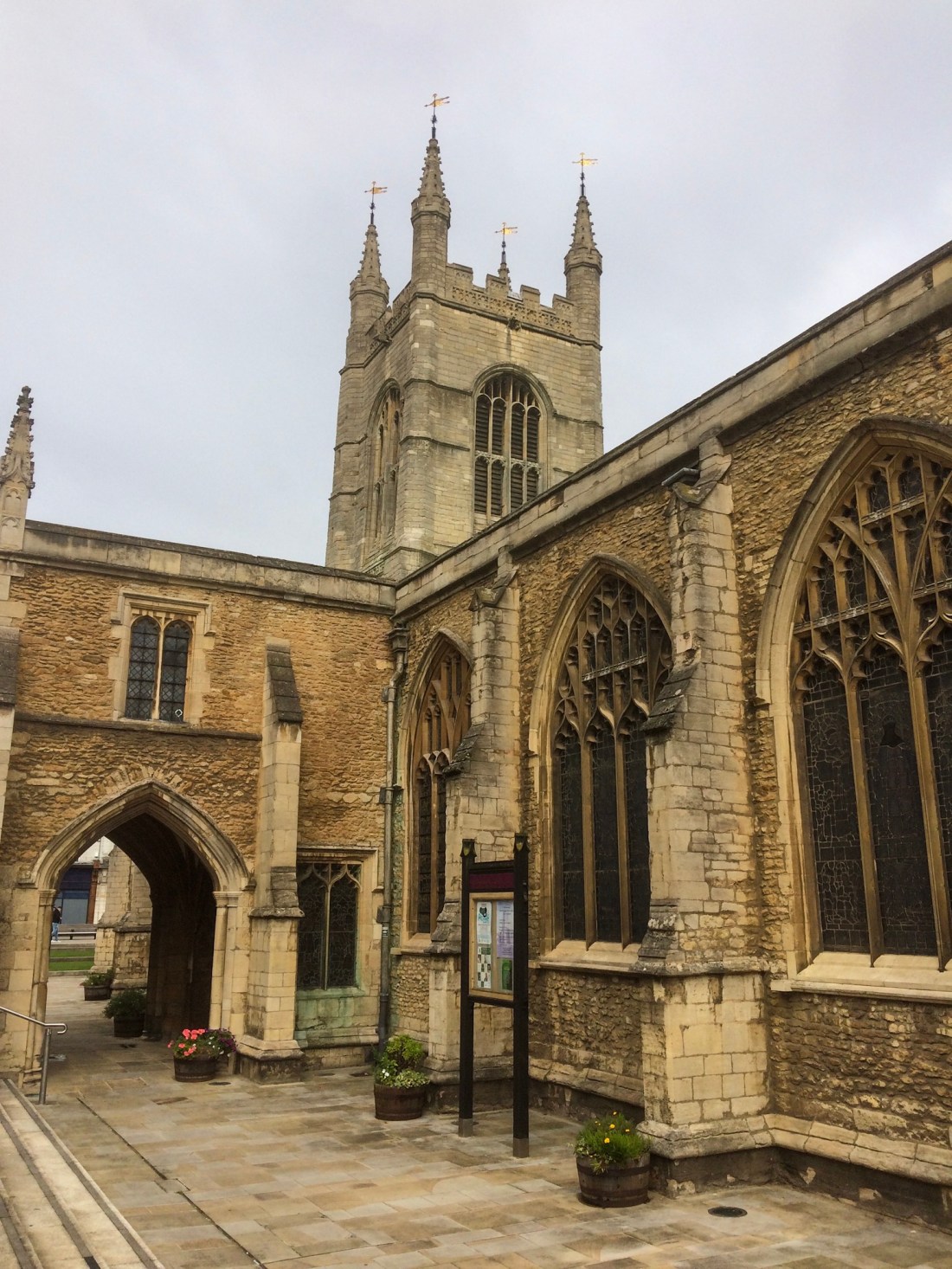
One of the overlooked features of Peterborough, a growing city in the east of England, is the Parish church of Saint John the Baptist around the cathedral square.
Consecrated in 1409 during the reign of Henry IV, its close proximity to the cathedral and the modern shopping mall attraction of Queensgate, probably detracts large numbers of visitors. However, it is well worth a visit, and as is quite usual in England’s medieval heritage buildings, there are often some wonderful ‘hidden’ gems.
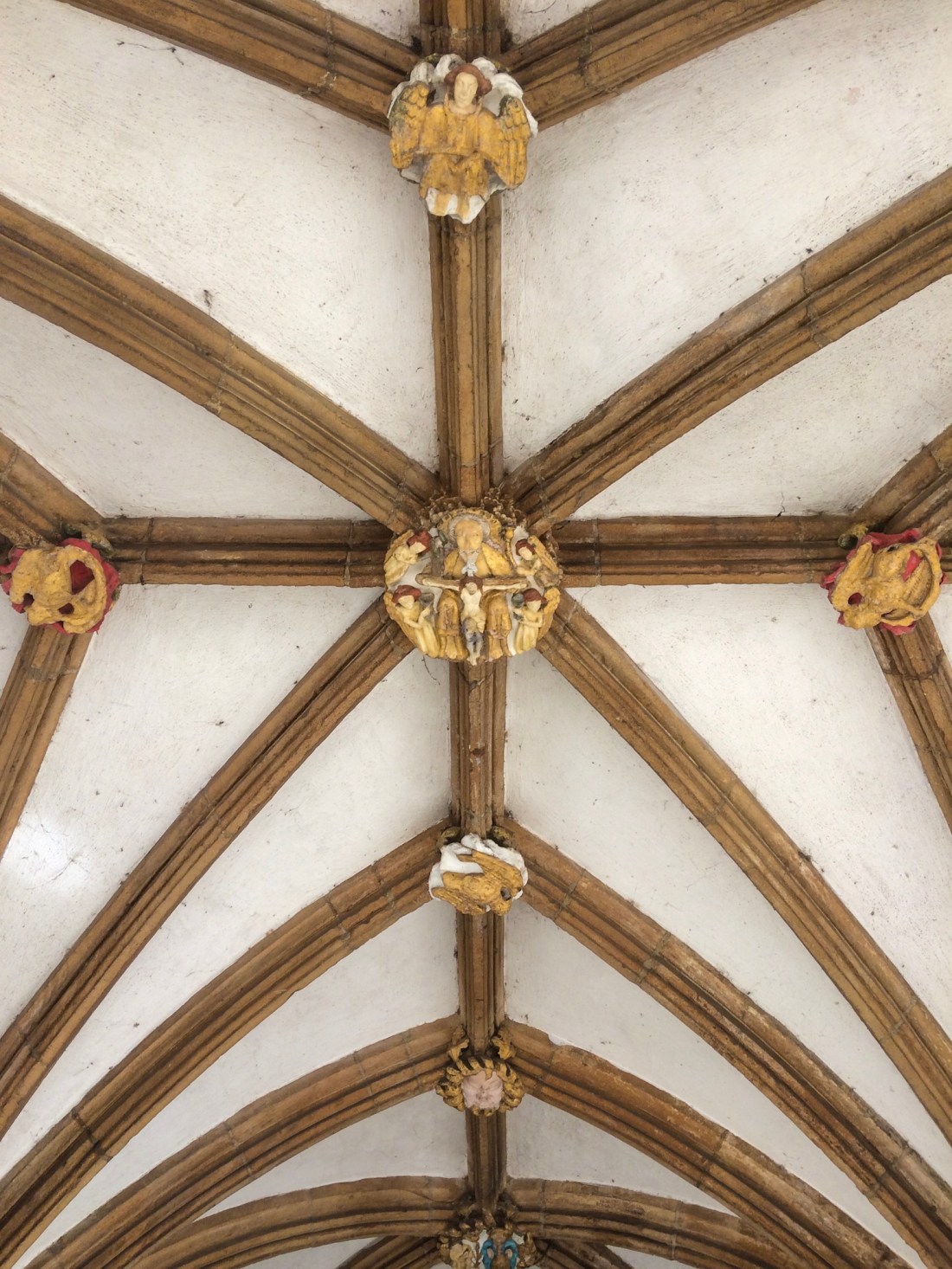
The south porch entrance is most interesting, particularly the roof in the above photograph.
The nave is very large and light with a rood screen.
There is also a wonderful reredos.
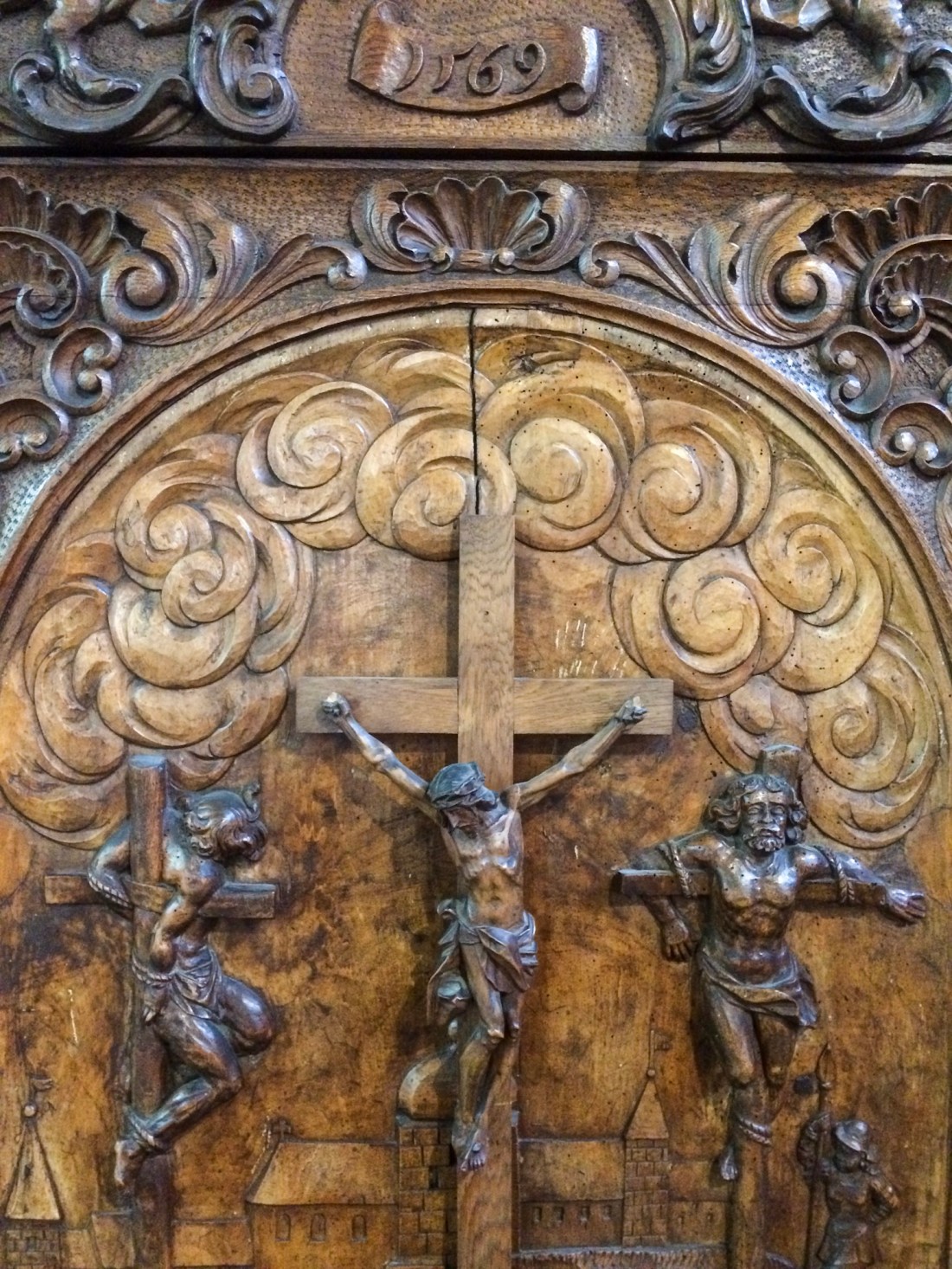
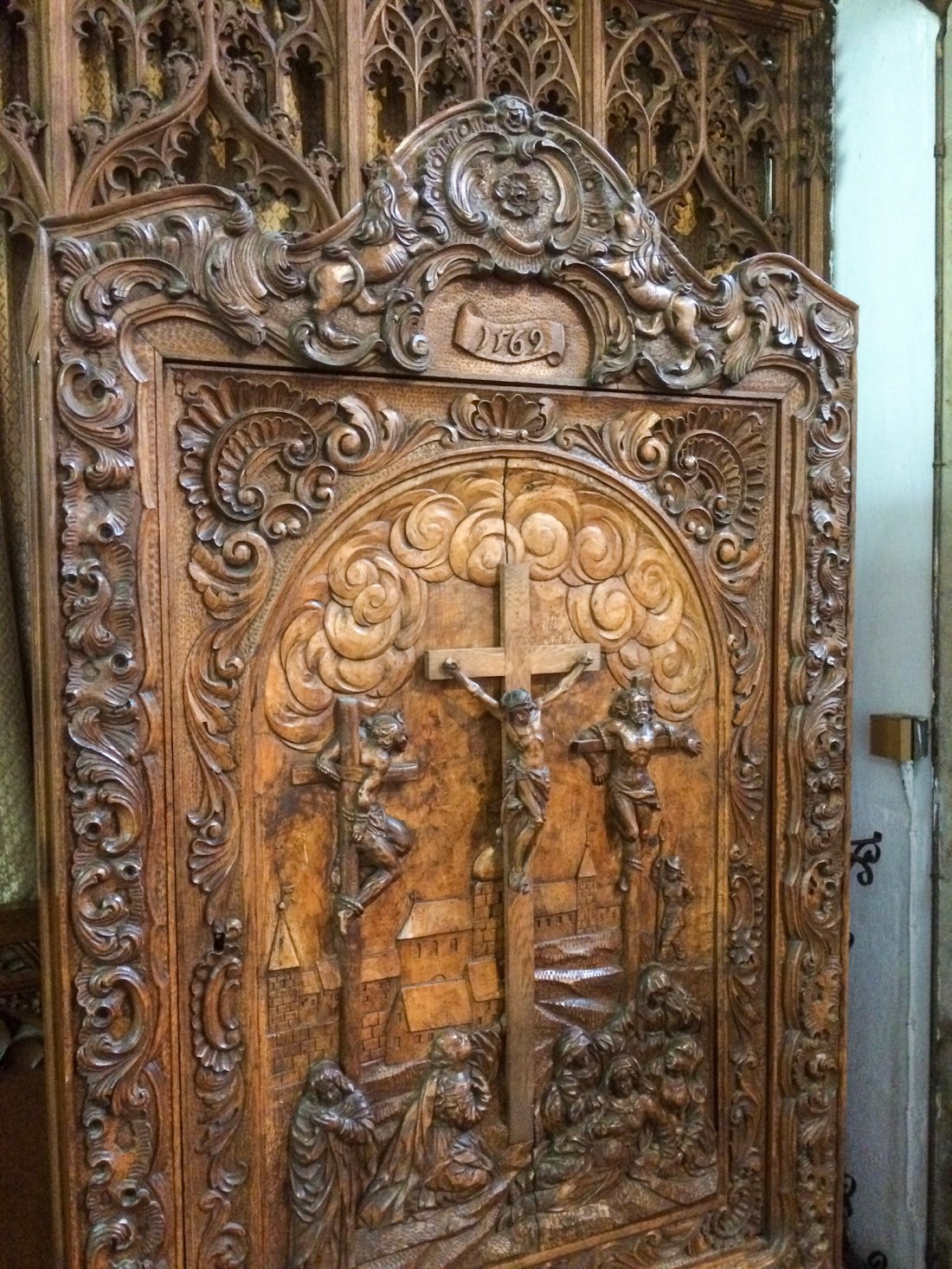
One of the most interesting features is this probable vestments cupboard, dated 1569, a wonderful piece of woodcarving, which I would think is limewood, similar in style to the plethora of such art produced in Germany during the same period.
The pulpit too had some intricate woodcarving, probably oak by the look of it, although I did not find a date on it, but I would assume it is later than the earlier piece.
There are even a couple of examples of medieval embroidery by the door.
words and photographs copyright Francis Barker 2019













 Ciscography