England’s Heritage, Peterborough Cathedral Part II – Two Famous Queens

IMG_1892 (1)

Peterborough Cathedral in the east of England is one of the country’s biggest and most beautiful churches, with an association with two famous queens.

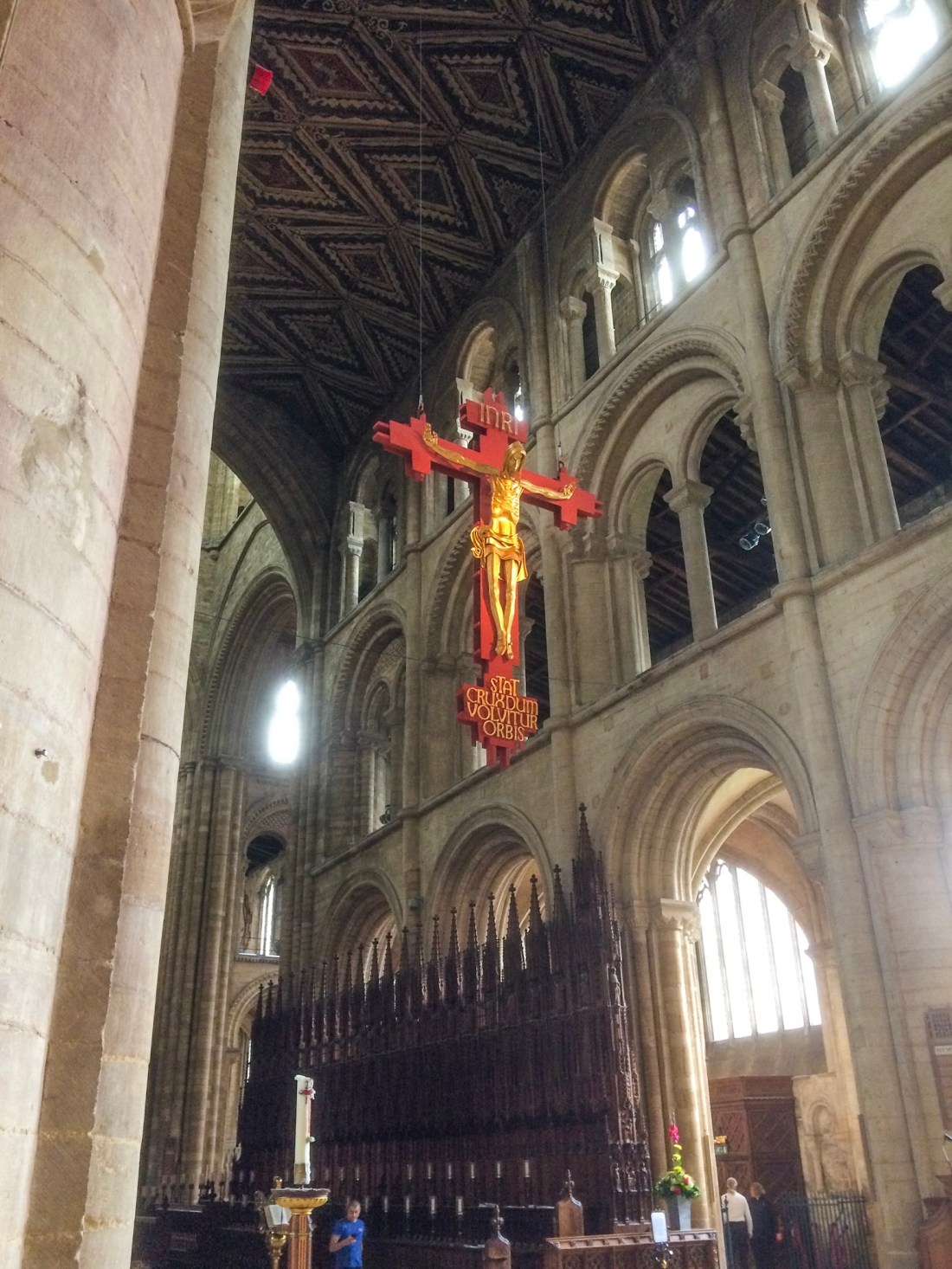
The long nave is quite stunning, with a beautiful roof and with a modern golden image of Christ suspended high as a focal point.
IMG_1893

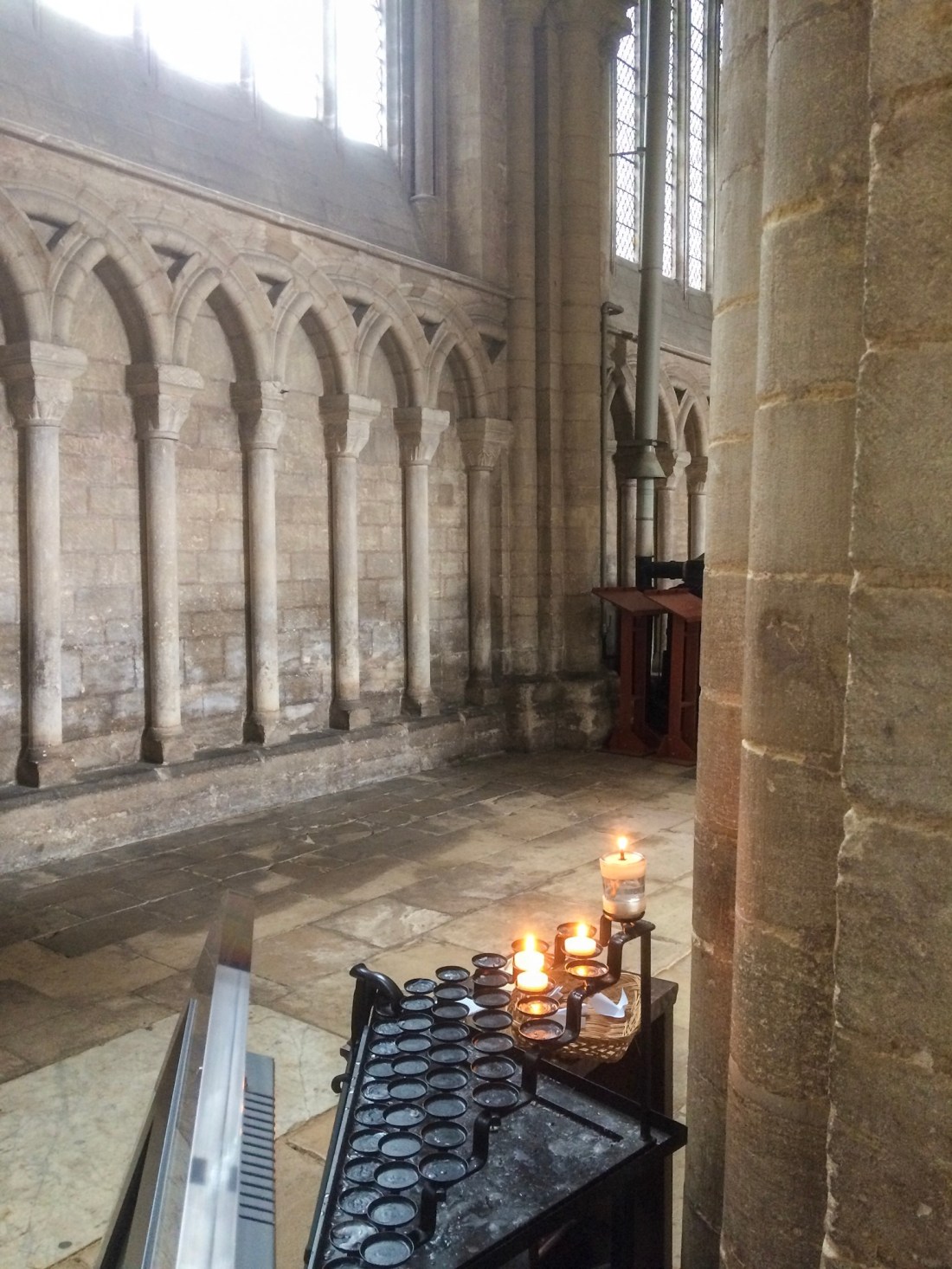
The cathedral is dominated by Norman and early English architecture, with numerous examples of Norman arches, such as these interlacing examples above.

IMG_1894 (1)
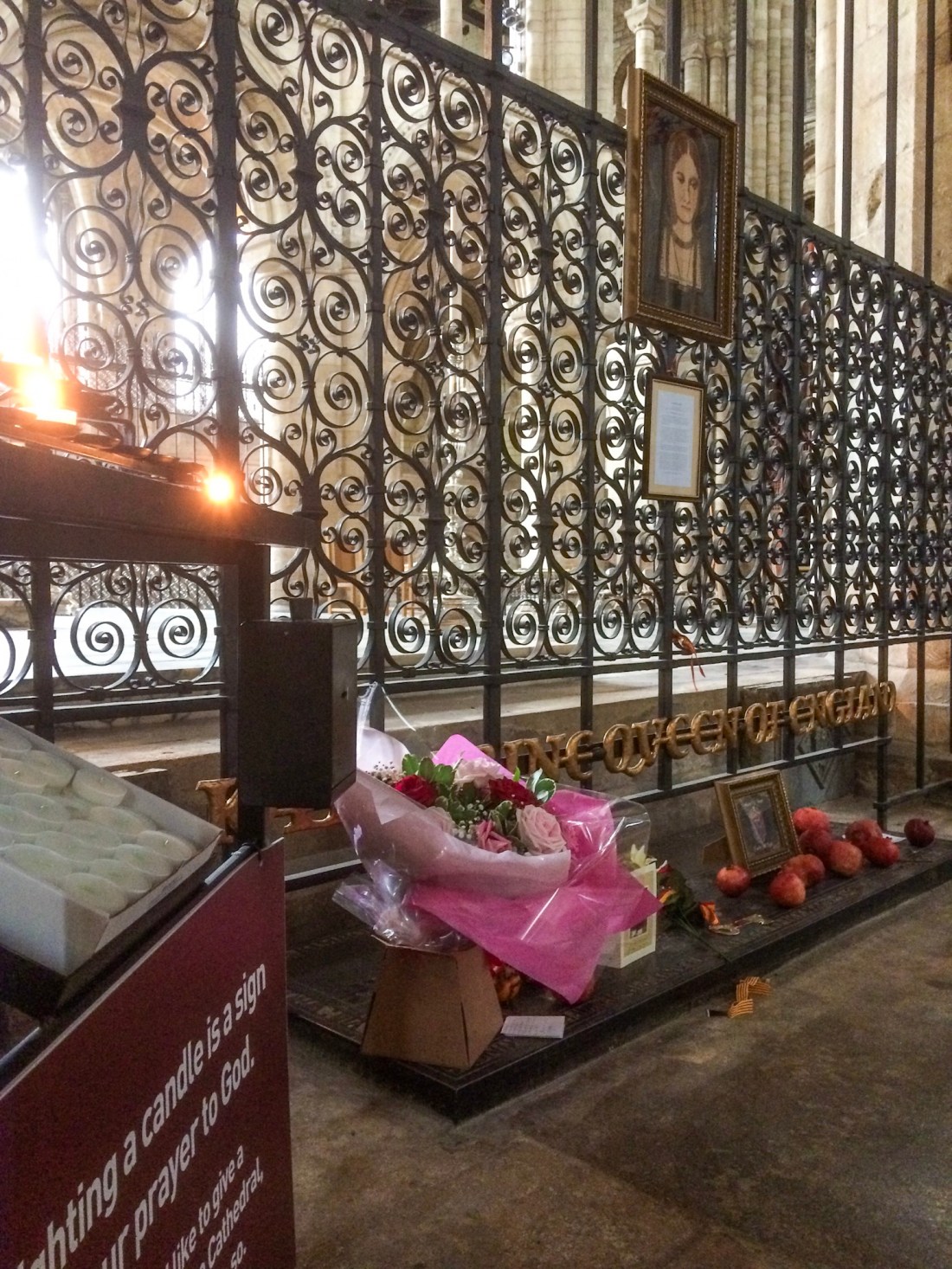
Catherine of Aragon, Queen of England, is buried here.

The cathedral is also notable for its association with two famous queens.

The first was Catherine of Aragon, Queen of England when she was married to Henry VIII. Catherine was buried here in 1536 and her tomb is still something of a shrine to her memory, with pomegranates very prominent as her symbol because the fruit appears on her badge. Pomegranates are an ancient symbol for fecundity and regeneration.

Catherine certainly suffered much during her husband’s long and protracted break with Rome, in which she was the innocent victim, her only crime it would seem was not being able to produce a living male heir for Henry to perpetuate the Tudor dynasty. This was how she was treated after being completely dutiful to the king, but Henry had to have his way. Her motto, which translates as ‘humble and loyal’, is a phrase she very much lived up to.
IMG_1895
There is a portrait of Catherine by her tomb.
IMG_1896 (1)
Pomegranates have had a long association with Catherine of Aragon.

The second queen associated with Peterborough Cathedral is Mary Queen of Scots.

Mary inherited the Scottish throne after only a few days of being born, thrusting her into a world of political intrigue and shenanigans which she was never able to control.

She essentially became a pawn of more powerful rulers and some despicable characters. However, in 1559 she duly became Queen Consort to Francis II of France, solidifying Scotland’s long alliance with France.

IMG_1900
Scottish symbols hang in honour of Mary who was initially buried here in 1587.

Sadly within 18 months the young kind died prematurely. Had he lived, Mary’s life would have turned out entirely differently. As it was, she became a teenage widow and a long series of political and personal disasters ensued when she returned to Scotland. Eventually she fled to England and came under Elizabeth’s control.

After many years’ imprisonment in England, during which the still substantial Catholic faction within England with aid from Spain continually conspired to depose Elizabeth and put Mary on the English throne, she was finally executed at nearby Fotheringhay Castle in 1587.

She was initially buried in Peterborough Cathedral, but her son, James I of England, had her remains transferred to Westminster Abbey in London.

words and photographs copyright Francis Barker 2019


England’s Heritage: Peterborough Cathedral Part 1

IMG_1886
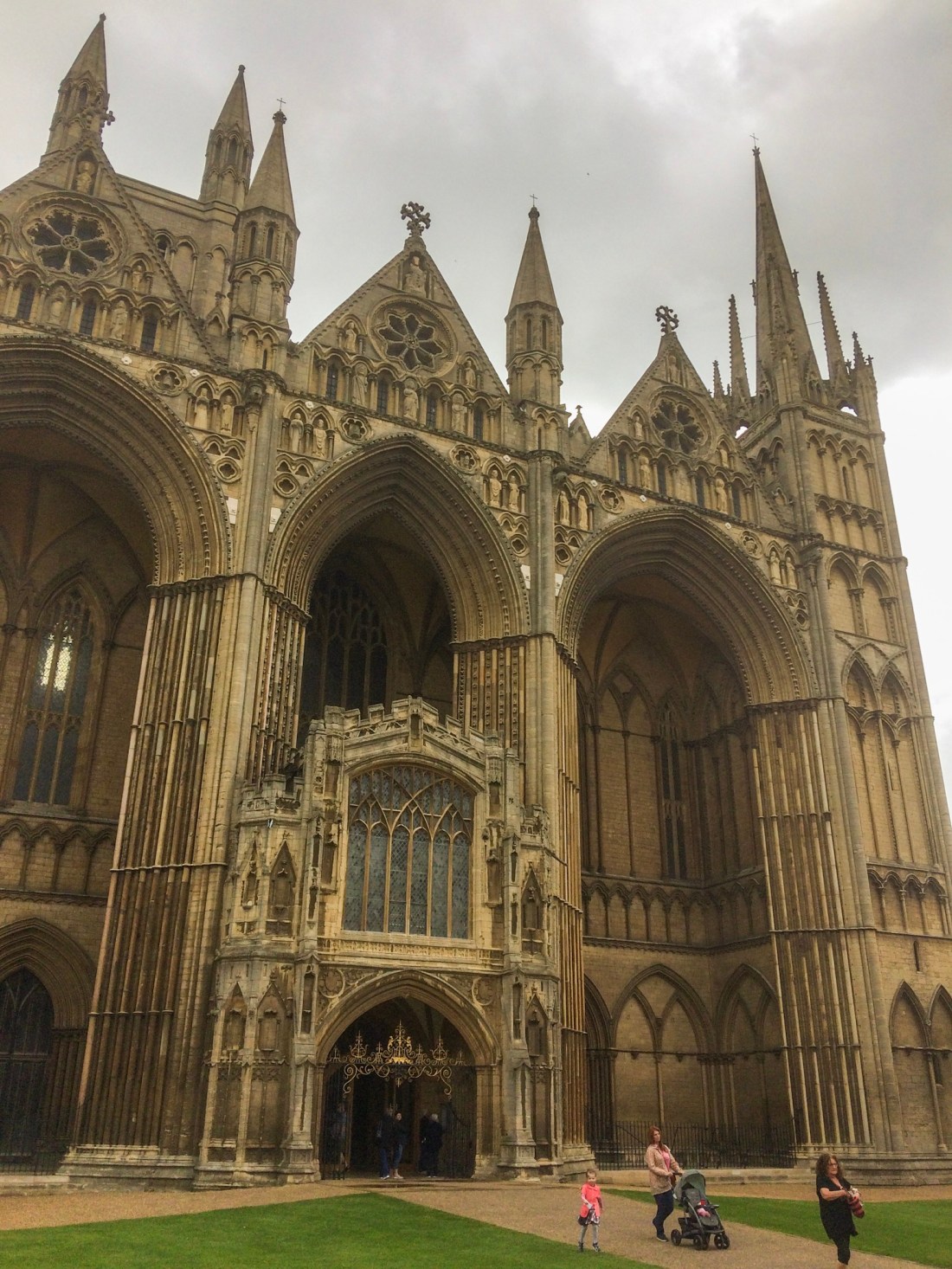
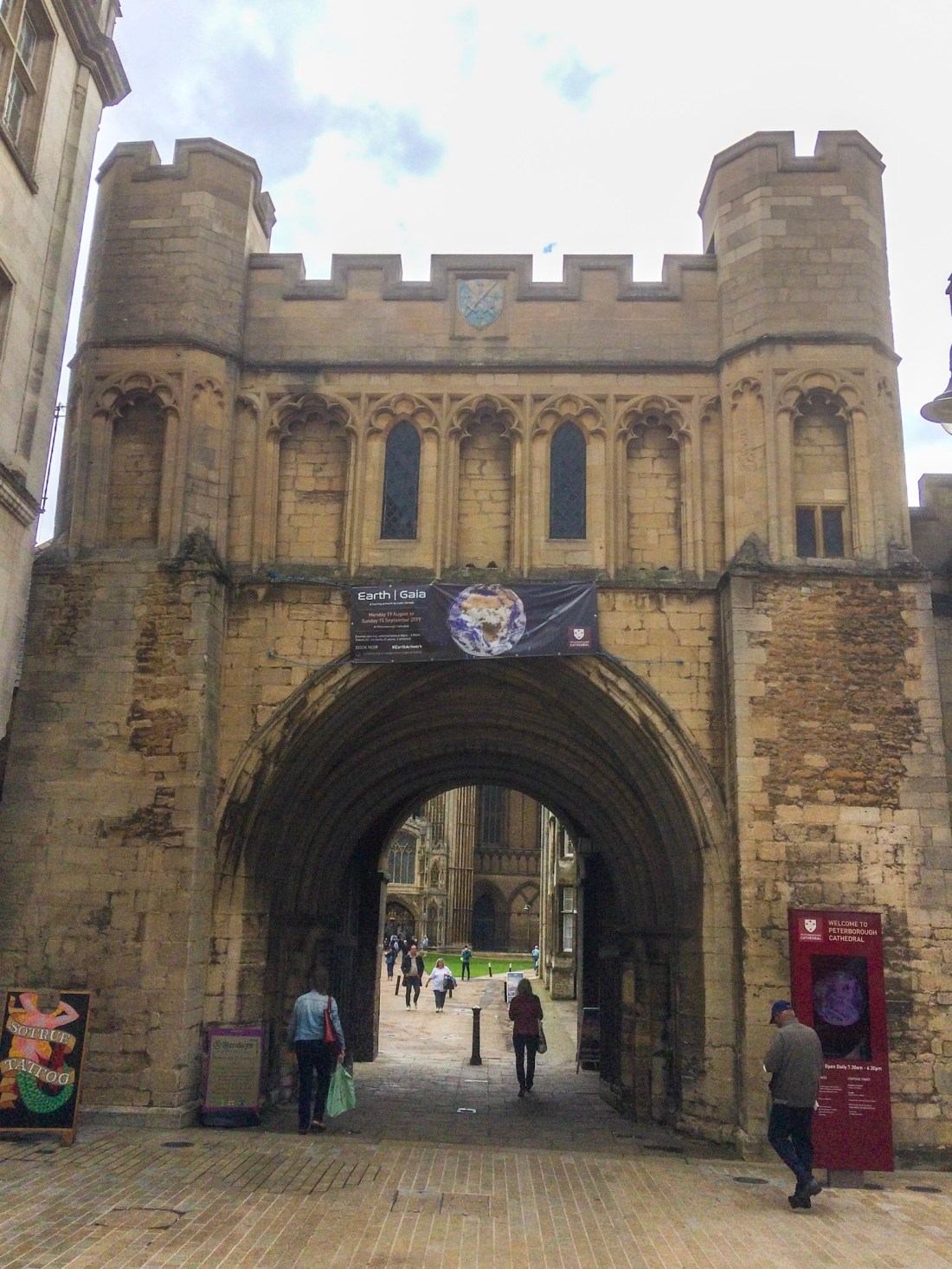
The west gate of Peterborough Cathedral.

Put simply, Peterborough Cathedral is one England’s best churches, though it is often not as well regarded as some others, like Lincoln, Ely and York.

This might be due in part to Lincoln’s prominent setting, Ely’s architectural distinctiveness and York’s admitted supreme grandeur.

Peterborough, by comparison, lies on the edge of the flat fens, yet in one of the primary areas of England for monastic development because of the remoteness of location. In its day, Peterborough Abbey was one of the most prominent in the whole of eastern England.

IMG_1888
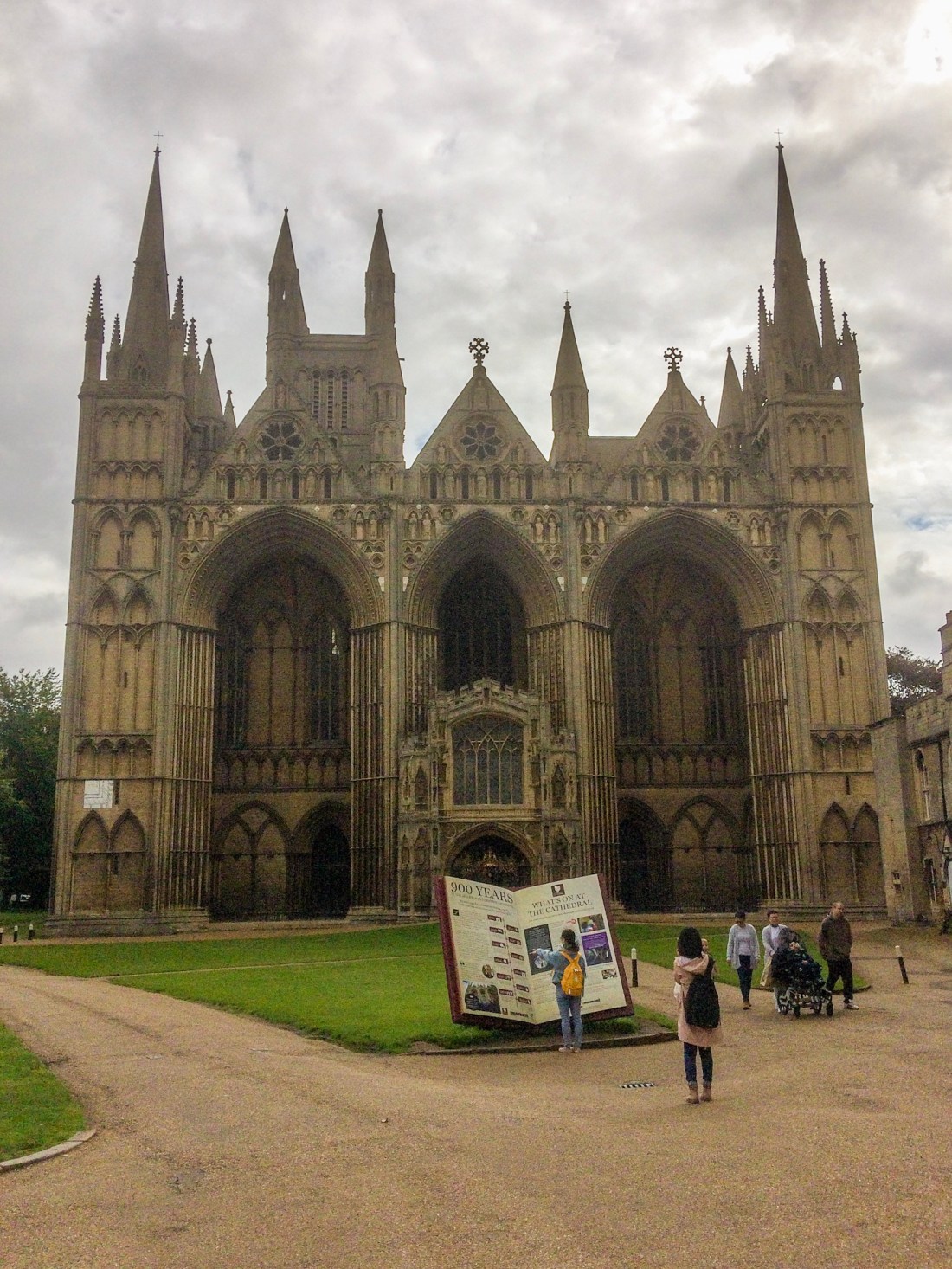
The wonderful west front of Peterborough Cathedral, completed in the 13th century.

Originally the abbey church of Saint Peter’s Abbey, Peterborough, in the east of England, the present church was granted cathedral status (and thereby preserved) by Henry VIII, self appointed head of the Church of England, during the Reformation in the 1530s, which saw many former monastic buildings taken down and sold off. For this at least we should be grateful to England’s most notorious monarch.

IMG_1889

words and photographs copyright Francis Barker 2019
England’s Heritage: Saint John the Baptist Parish Church, Peterborough

IMG_1871

Of course, the city of Peterborough’s greatest glory is its amazing cathedral, but that subject deserves a full article of its own.

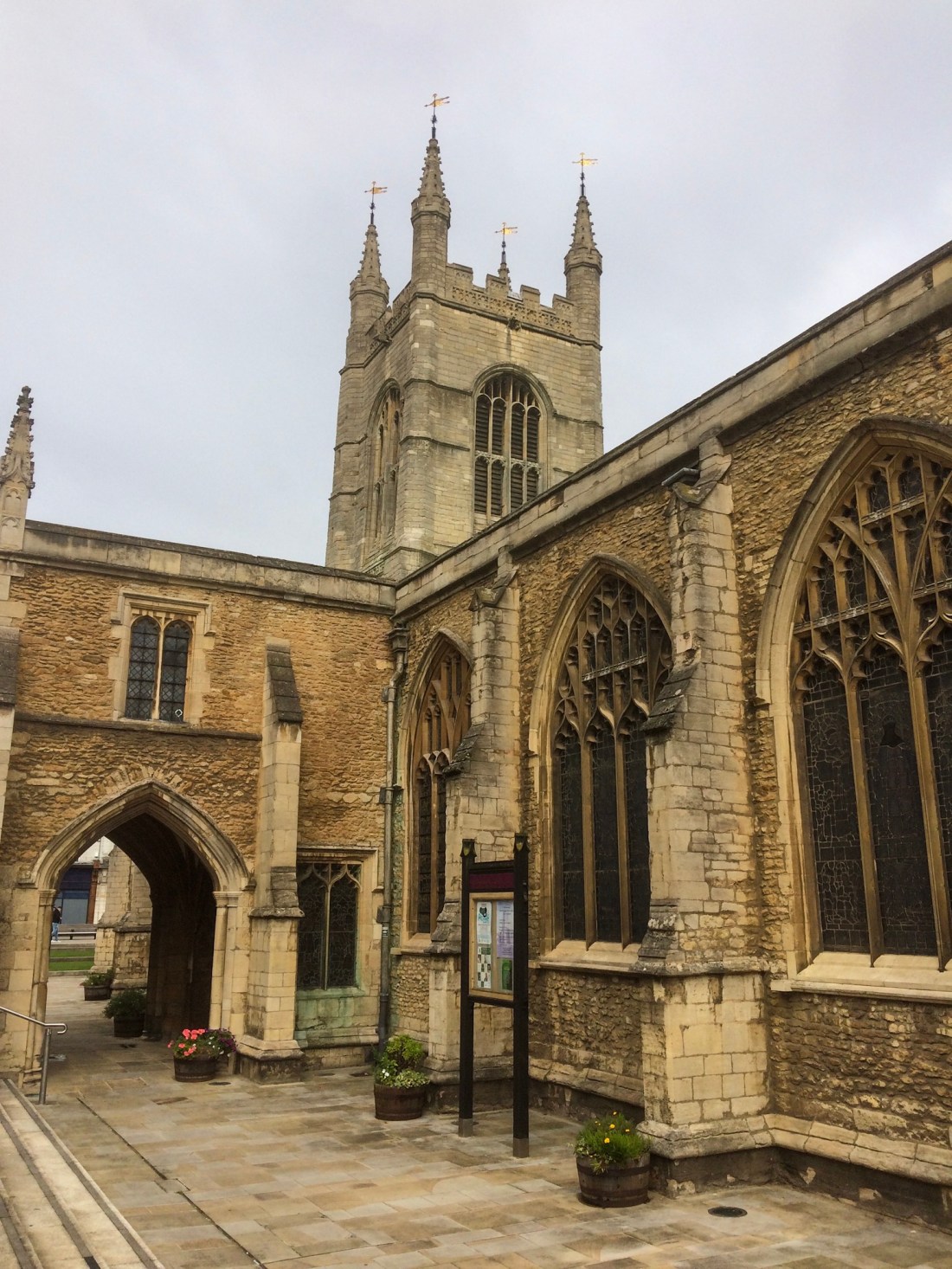
One of the overlooked features of Peterborough, a growing city in the east of England, is the Parish church of Saint John the Baptist around the cathedral square.

Consecrated in 1409 during the reign of Henry IV, its close proximity to the cathedral and the modern shopping mall attraction of Queensgate, probably detracts large numbers of visitors. However, it is well worth a visit, and as is quite usual in England’s medieval heritage buildings, there are often some wonderful ‘hidden’ gems.

IMG_1873

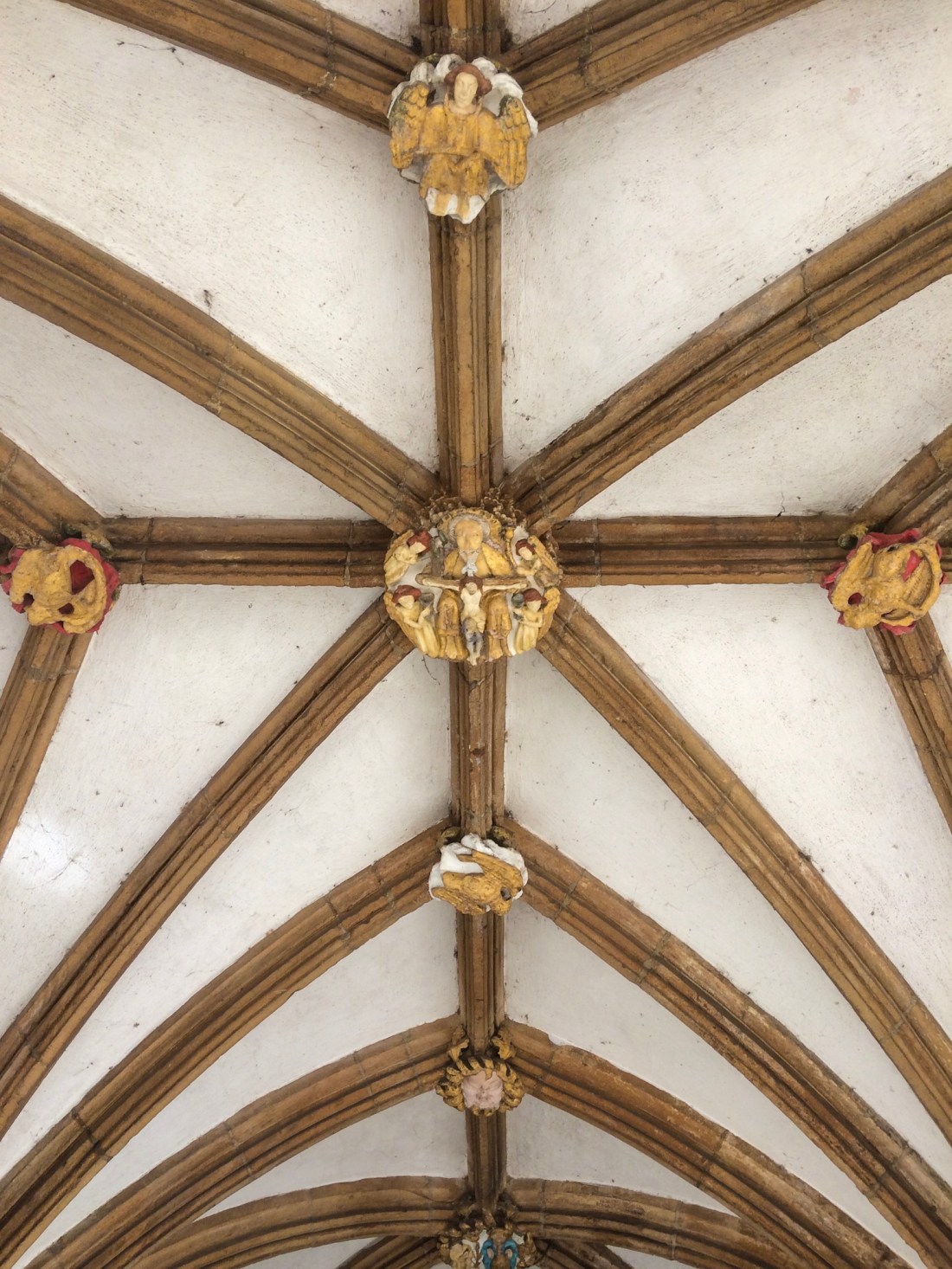
The south porch entrance is most interesting, particularly the roof in the above photograph.

IMG_1874

IMG_1876

The nave is very large and light with a rood screen.

IMG_1880

There is also a wonderful reredos.

IMG_1882

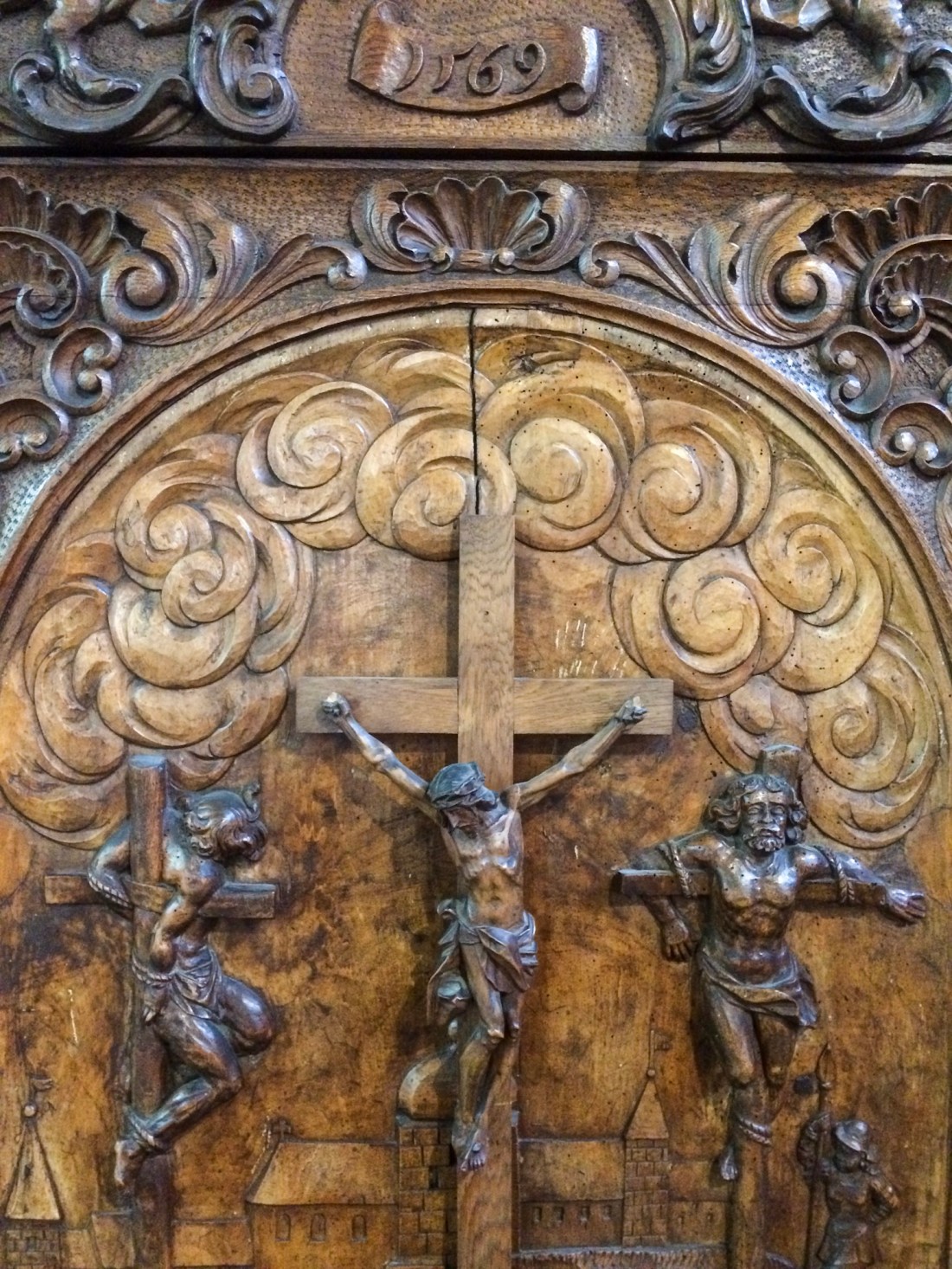
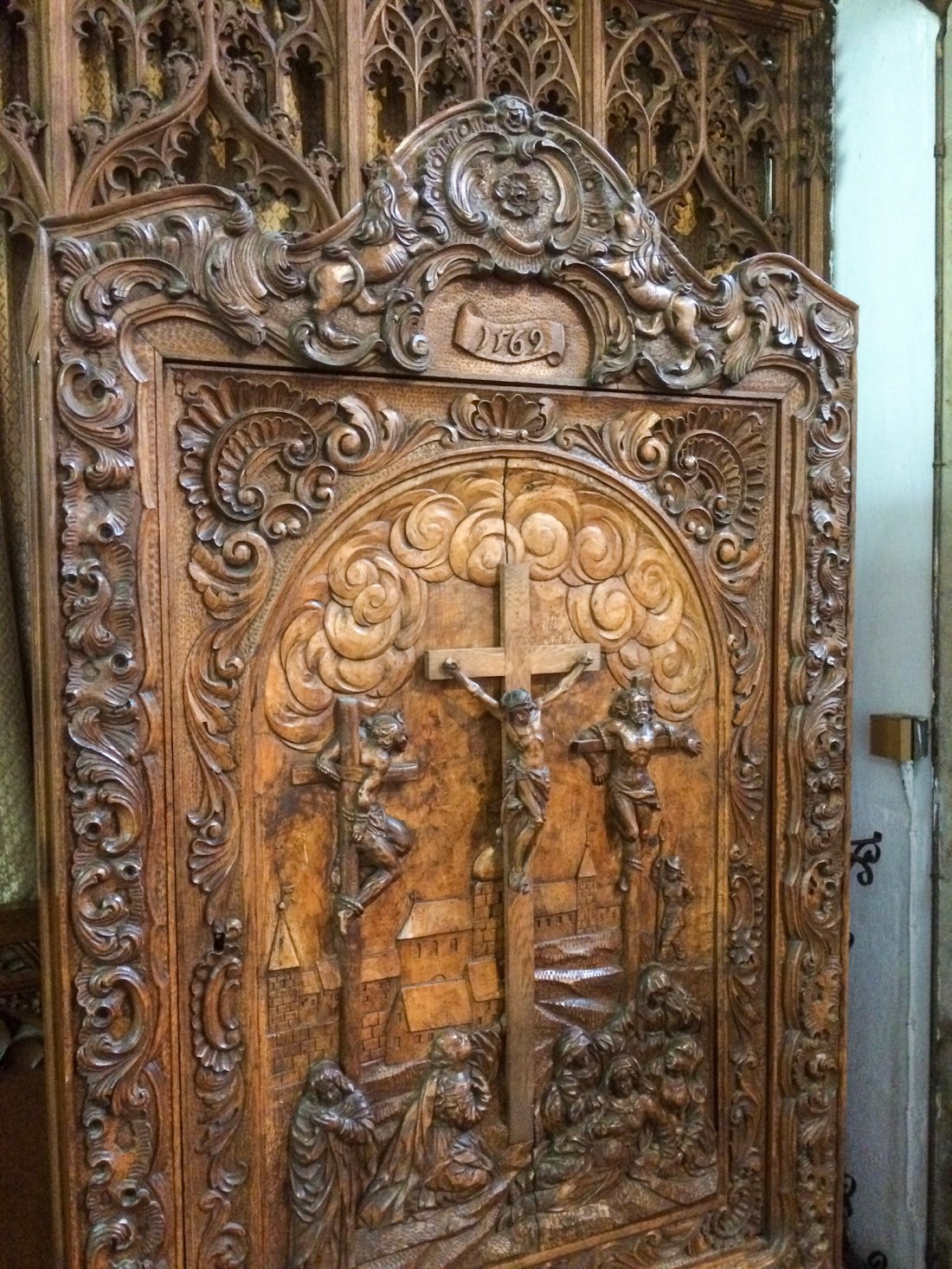
One of the most interesting features is this probable vestments cupboard, dated 1569, a wonderful piece of woodcarving, which I would think is limewood, similar in style to the plethora of such art produced in Germany during the same period.

IMG_1883

The pulpit too had some intricate woodcarving, probably oak by the look of it, although I did not find a date on it, but I would assume it is later than the earlier piece.

IMG_1885

There are even a couple of examples of medieval embroidery by the door.

words and photographs copyright Francis Barker 2019
Beautiful Medieval Wall Art, Castor Church, near Peterborough, England

DSC_0021 (1).JPG

We recently visited the beautiful church of Saint Kyneburgha, near Peterborough in the English midlands.

The church stands beautifully on a hill, on the site of an old Roman settlement and palace.

In fact, the name of Castor is derived directly from the Roman/Latin name for a fort or castle. This village is situated near to an important Roman settlement called Durobrivae, or Water Newton in Egnlish, just a few miles west of present day city of Peterborough.

DSC_0032 (2)

The church is noted for its surviving medieval wall art. Before the Reformation in the 16th century, all churches had such wall art, which was then whitewashed over. More recently, as in this example above, some of these illustrations have been revealed during restoration.

DSC_0041 (1)

DSC_0029

DSC_0036 (1)

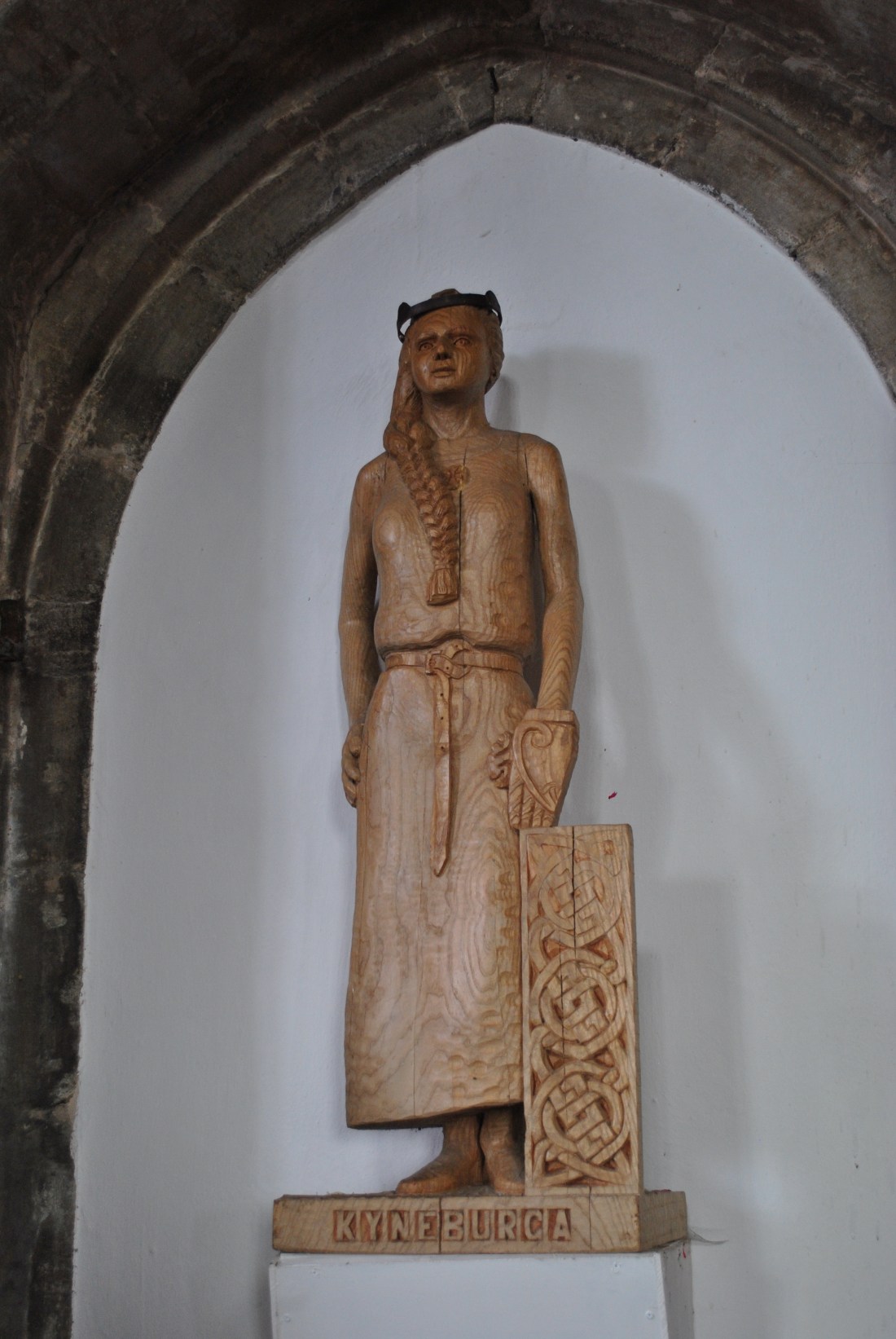
Castor church’s appellation is Saint Kyneburgha, who was the daughter of King Penda of Mercia, the last pagan king of that English kingdom in the midlands.

copyright Francis Barker 2019

Stockhausen: Neptune, Uranus and the Nature of Genius. Astrology Musings

red lights in line on black surface
Photo by Pixabay on Pexels.com

Karlheinz Stockhausen, one of the most important composers of the 20th century, was also one its most controversial. The outer planets, Uranus, Neptune and Pluto are generational in influence, but if one or more of them touch sensitive parts of our birth chart, they can put us in touch with powerful trans-personal energy.

According to his known birth data, he was born with Leo rising, with a Leo Sun exactly conjunct Neptune.

A fount of inspiration

Here is a powerful, creative individual, with a personal connection to the numinous through Neptune, with all the inspirational, spiritual qualities associated with that planet. He was certainly a major visionary in musical terms and has had a huge influence on jazz and popular music as well as classical.

As we have seen previously, Neptune is invariably prominent in some way in the birth charts of creative artists, but he was clearly no idle dreamer.

Practical application

With Mercury and Venus in Virgo in house 2, the latter trine Jupiter in Taurus in house 10, he was very keen to apply his undoubted inspiration practically, effectively, in detail, and to disseminate it, not only in way to earn a living, but in building a successful career out of it. Indeed, he was also a fine writer and communicator too, teaching his ideas successfully. Without this grounding effect, his genius may well have been lost to the world.

What is more, revolutionary Uranus was very close to the MC (midheaven) in Aries in house 9.

The shock of the new

This midheaven point is traditionally associated with the career or life direction and with Uranus in Aries activating this very personal angle of his chart, we can see the unusual, avant-garde, revolutionary and pioneering qualities he brought to bear in his career. Revolutionary literally means turning upside down: he essentially did this, being a pioneer in the sphere of electronic music.

More than once, his music has been described as ‘disruptive’ (Uranus) and unfathomable (Neptune). He also has Mars in good aspect to Uranus, bringing much supportive, instigating energy and (in Gemini) variability to his repertoire.

copyright Leofwine Tanner 2019