England’s Heritage, Peterborough Cathedral Part II – Two Famous Queens

IMG_1892 (1)

Peterborough Cathedral in the east of England is one of the country’s biggest and most beautiful churches, with an association with two famous queens.

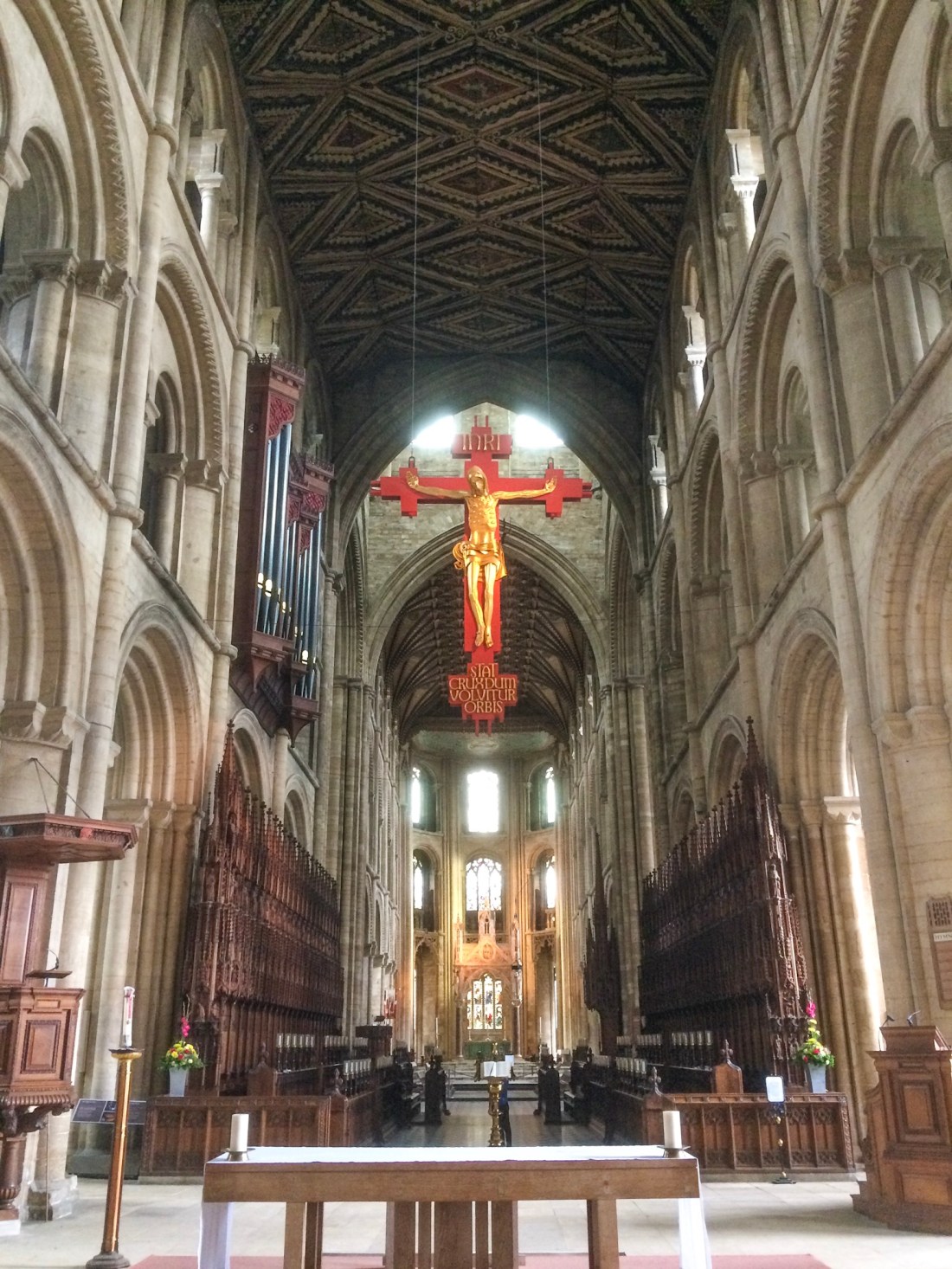
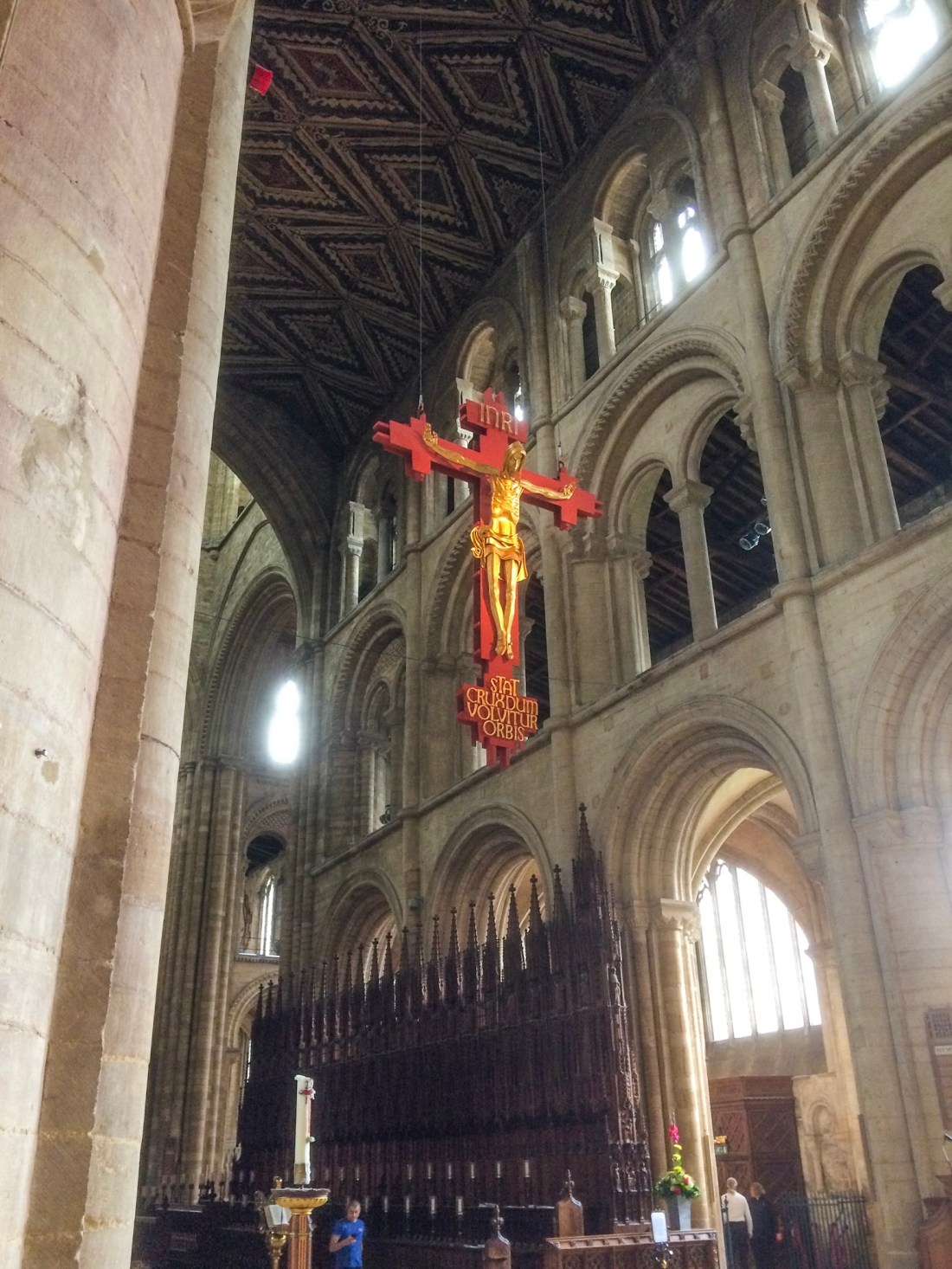
The long nave is quite stunning, with a beautiful roof and with a modern golden image of Christ suspended high as a focal point.
IMG_1893

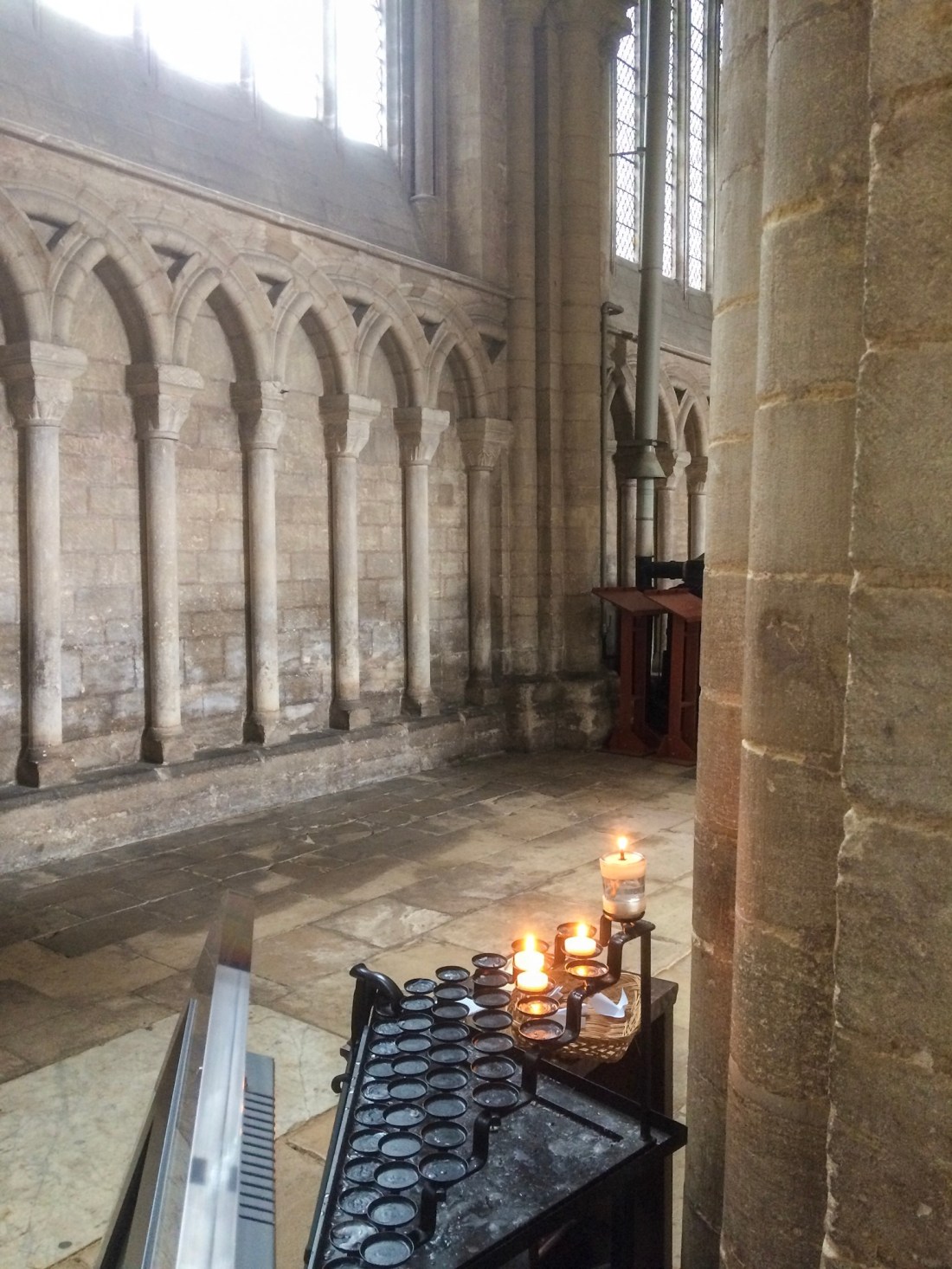
The cathedral is dominated by Norman and early English architecture, with numerous examples of Norman arches, such as these interlacing examples above.

IMG_1894 (1)
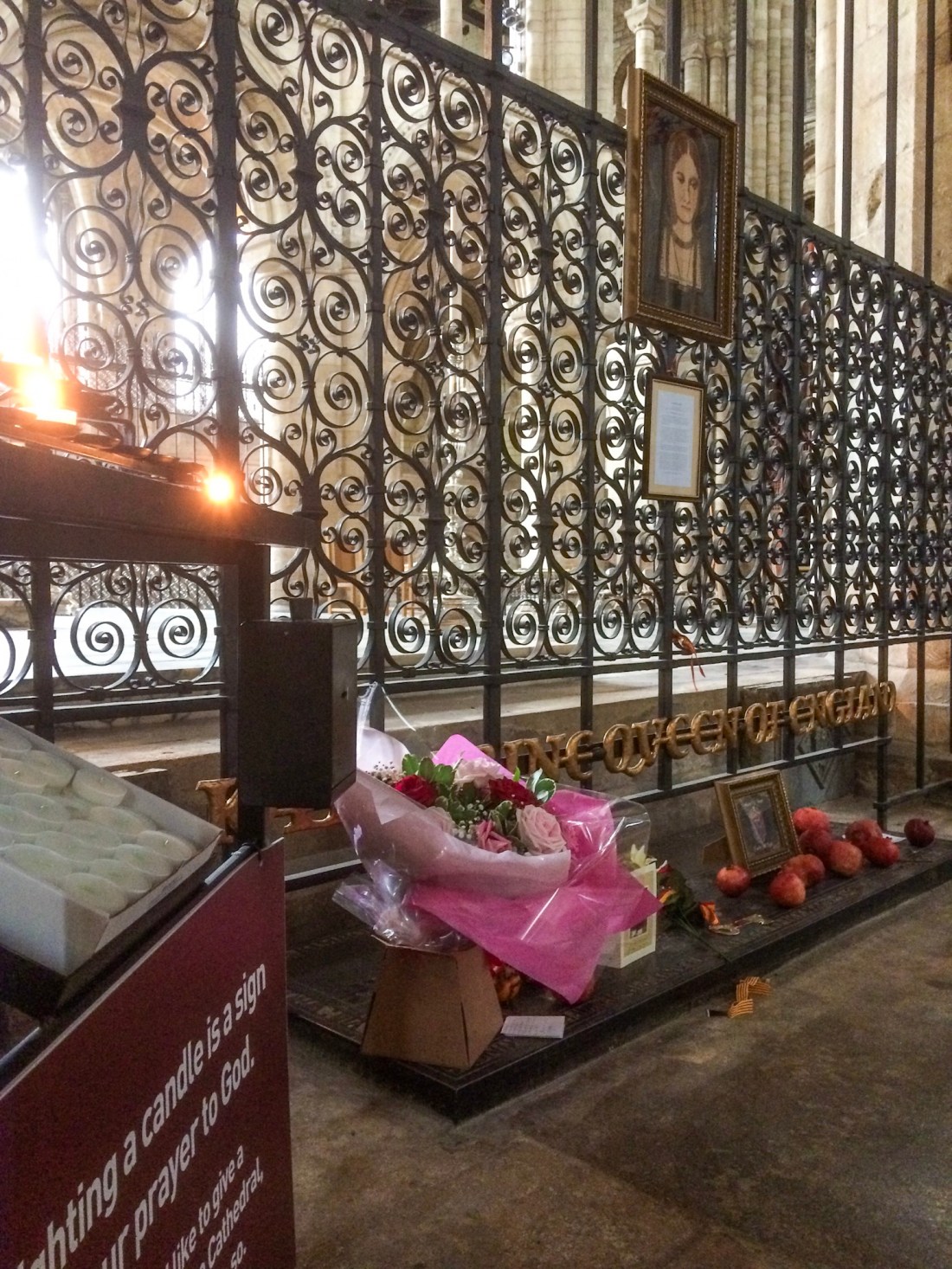
Catherine of Aragon, Queen of England, is buried here.

The cathedral is also notable for its association with two famous queens.

The first was Catherine of Aragon, Queen of England when she was married to Henry VIII. Catherine was buried here in 1536 and her tomb is still something of a shrine to her memory, with pomegranates very prominent as her symbol because the fruit appears on her badge. Pomegranates are an ancient symbol for fecundity and regeneration.

Catherine certainly suffered much during her husband’s long and protracted break with Rome, in which she was the innocent victim, her only crime it would seem was not being able to produce a living male heir for Henry to perpetuate the Tudor dynasty. This was how she was treated after being completely dutiful to the king, but Henry had to have his way. Her motto, which translates as ‘humble and loyal’, is a phrase she very much lived up to.
IMG_1895
There is a portrait of Catherine by her tomb.
IMG_1896 (1)
Pomegranates have had a long association with Catherine of Aragon.

The second queen associated with Peterborough Cathedral is Mary Queen of Scots.

Mary inherited the Scottish throne after only a few days of being born, thrusting her into a world of political intrigue and shenanigans which she was never able to control.

She essentially became a pawn of more powerful rulers and some despicable characters. However, in 1559 she duly became Queen Consort to Francis II of France, solidifying Scotland’s long alliance with France.

IMG_1900
Scottish symbols hang in honour of Mary who was initially buried here in 1587.

Sadly within 18 months the young kind died prematurely. Had he lived, Mary’s life would have turned out entirely differently. As it was, she became a teenage widow and a long series of political and personal disasters ensued when she returned to Scotland. Eventually she fled to England and came under Elizabeth’s control.

After many years’ imprisonment in England, during which the still substantial Catholic faction within England with aid from Spain continually conspired to depose Elizabeth and put Mary on the English throne, she was finally executed at nearby Fotheringhay Castle in 1587.

She was initially buried in Peterborough Cathedral, but her son, James I of England, had her remains transferred to Westminster Abbey in London.

words and photographs copyright Francis Barker 2019


England’s Heritage: Peterborough Cathedral Part 1

IMG_1886
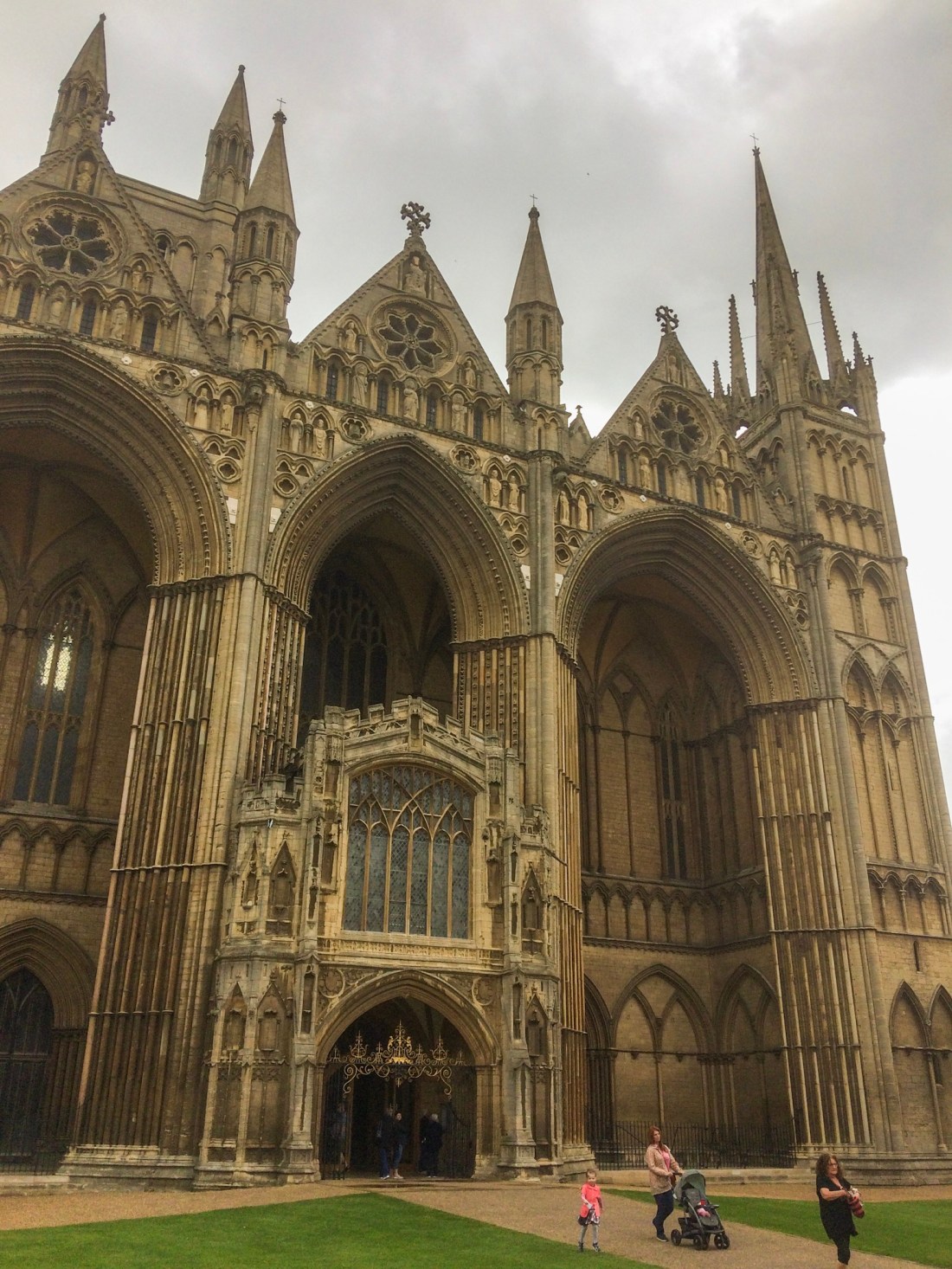
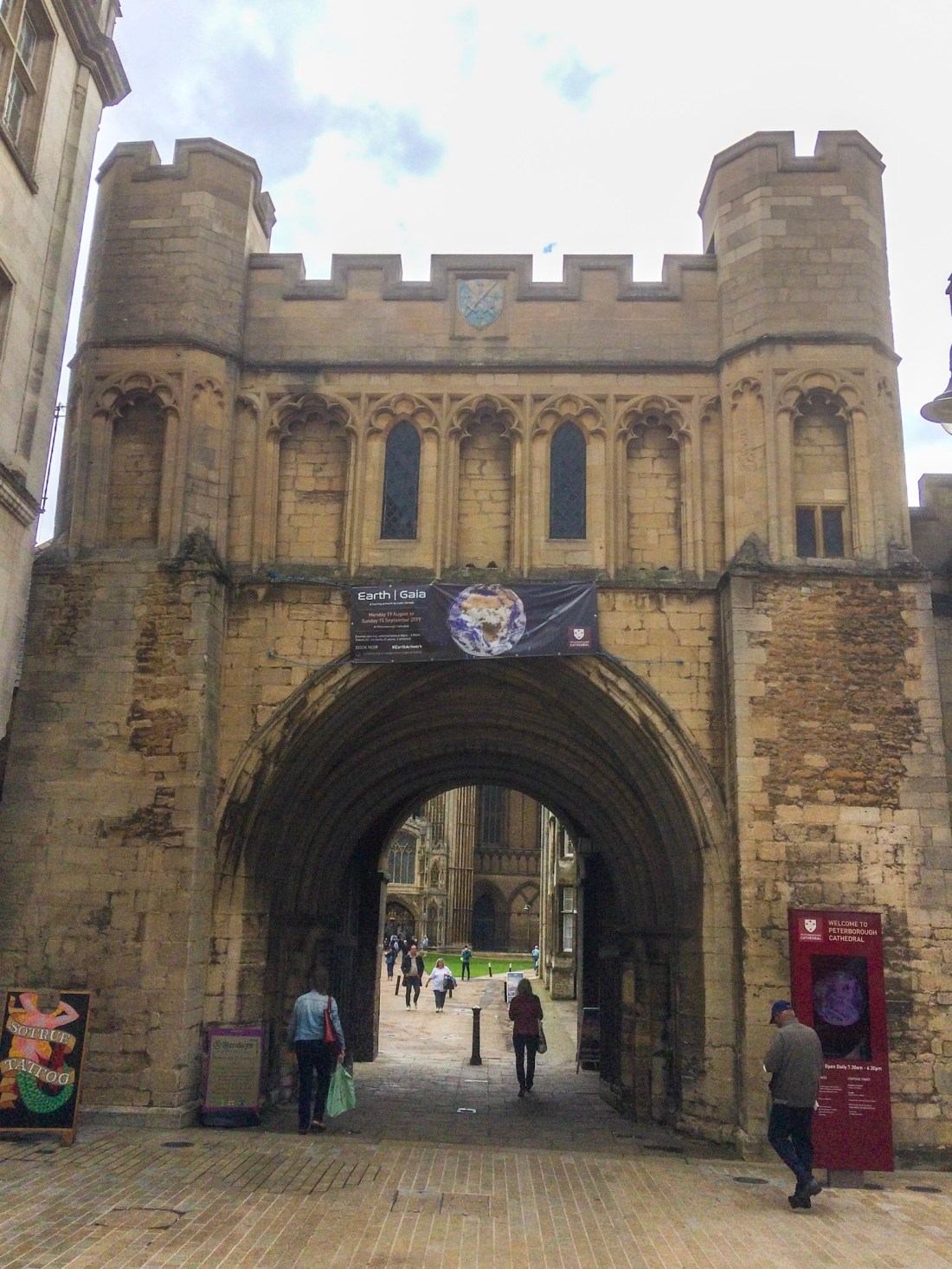
The west gate of Peterborough Cathedral.

Put simply, Peterborough Cathedral is one England’s best churches, though it is often not as well regarded as some others, like Lincoln, Ely and York.

This might be due in part to Lincoln’s prominent setting, Ely’s architectural distinctiveness and York’s admitted supreme grandeur.

Peterborough, by comparison, lies on the edge of the flat fens, yet in one of the primary areas of England for monastic development because of the remoteness of location. In its day, Peterborough Abbey was one of the most prominent in the whole of eastern England.

IMG_1888
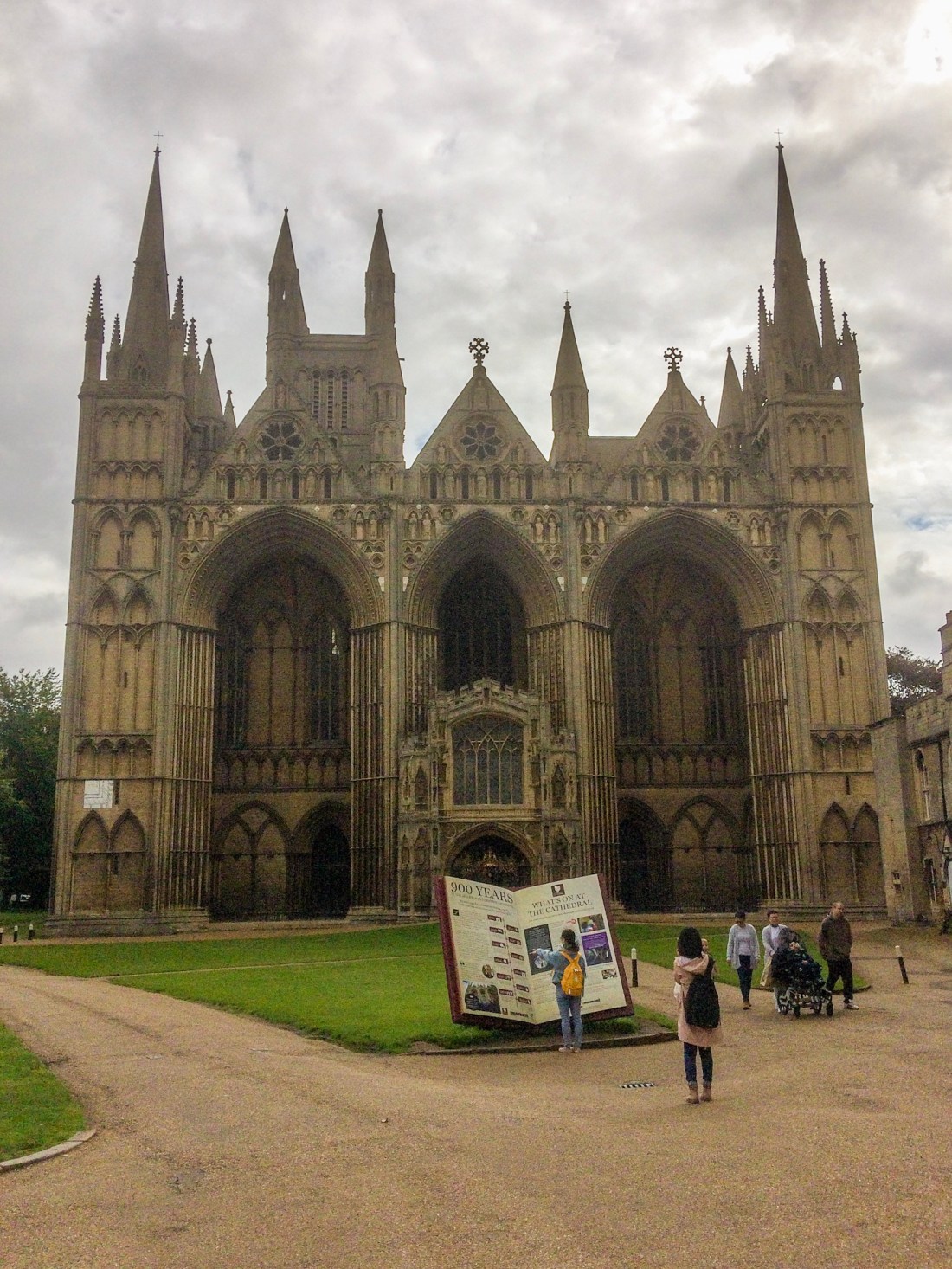
The wonderful west front of Peterborough Cathedral, completed in the 13th century.

Originally the abbey church of Saint Peter’s Abbey, Peterborough, in the east of England, the present church was granted cathedral status (and thereby preserved) by Henry VIII, self appointed head of the Church of England, during the Reformation in the 1530s, which saw many former monastic buildings taken down and sold off. For this at least we should be grateful to England’s most notorious monarch.

IMG_1889

words and photographs copyright Francis Barker 2019
Haiku: My DNA

people looking at laptop computer
Photo by Fox on Pexels.com

Celt Angle and Dane
Norman and Angevin too
Family branches

copyright Francis Barker 2019

England’s Heritage: Saint John the Baptist Parish Church, Peterborough

IMG_1871

Of course, the city of Peterborough’s greatest glory is its amazing cathedral, but that subject deserves a full article of its own.

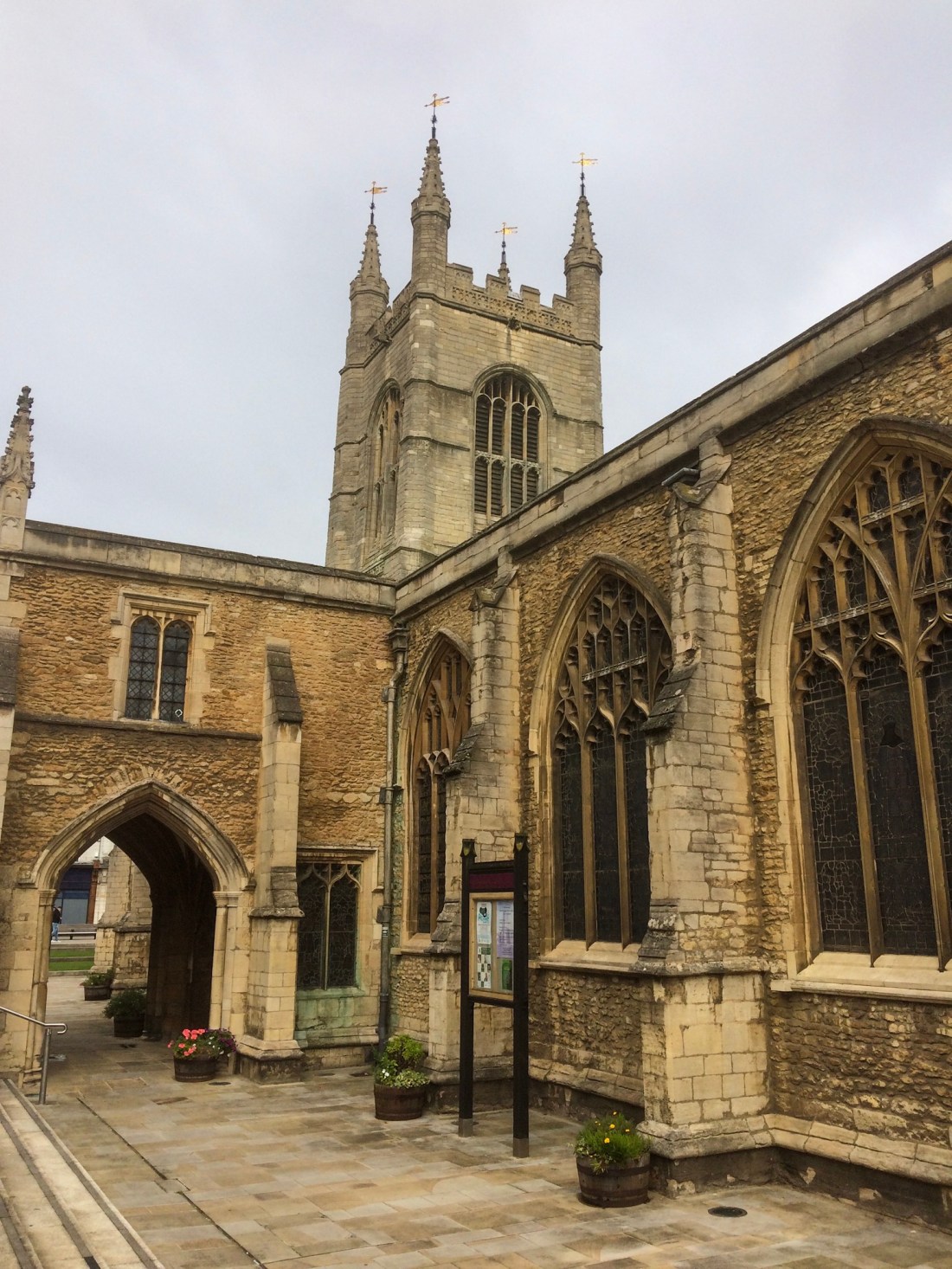
One of the overlooked features of Peterborough, a growing city in the east of England, is the Parish church of Saint John the Baptist around the cathedral square.

Consecrated in 1409 during the reign of Henry IV, its close proximity to the cathedral and the modern shopping mall attraction of Queensgate, probably detracts large numbers of visitors. However, it is well worth a visit, and as is quite usual in England’s medieval heritage buildings, there are often some wonderful ‘hidden’ gems.

IMG_1873

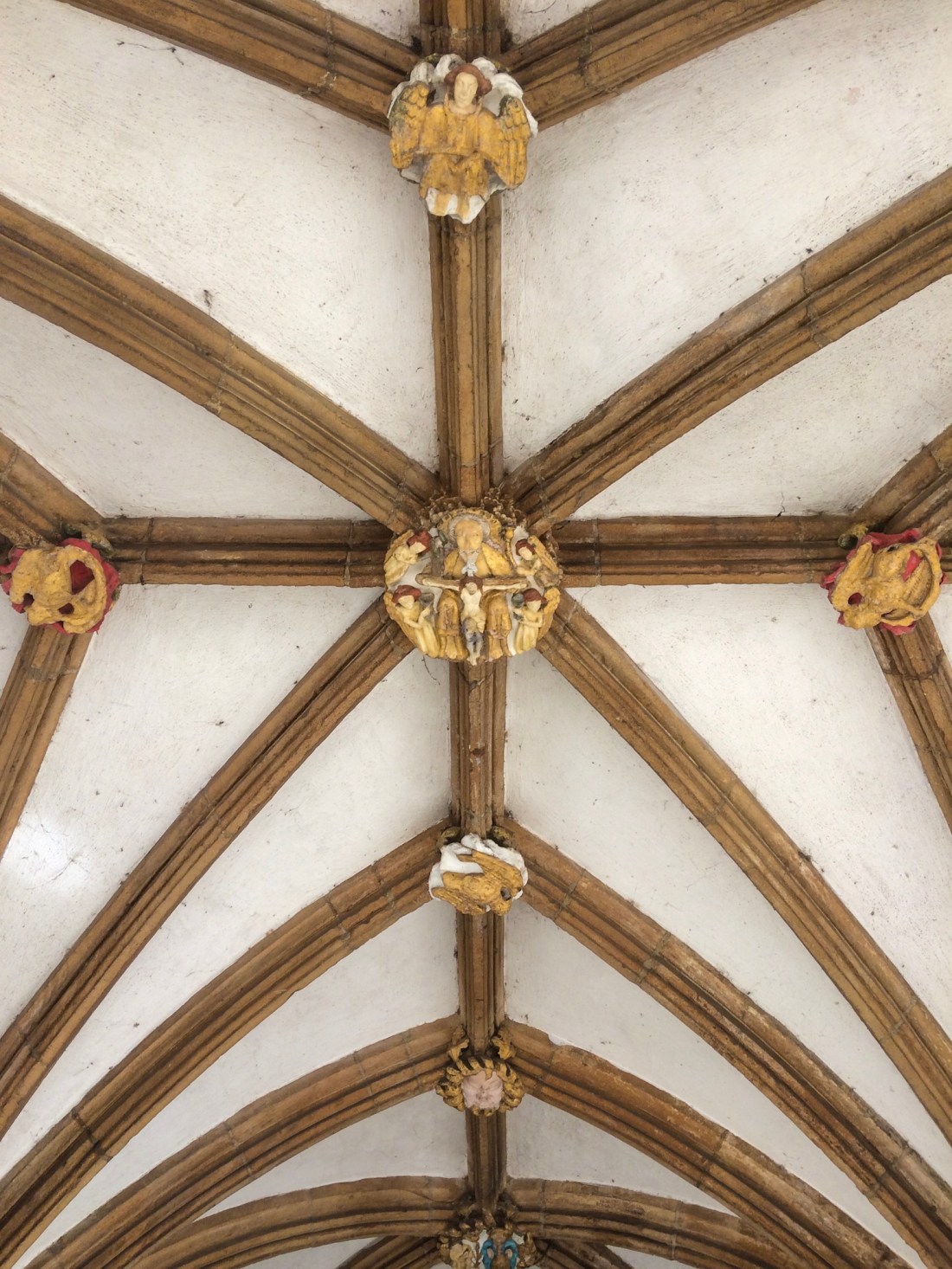
The south porch entrance is most interesting, particularly the roof in the above photograph.

IMG_1874

IMG_1876

The nave is very large and light with a rood screen.

IMG_1880

There is also a wonderful reredos.

IMG_1882

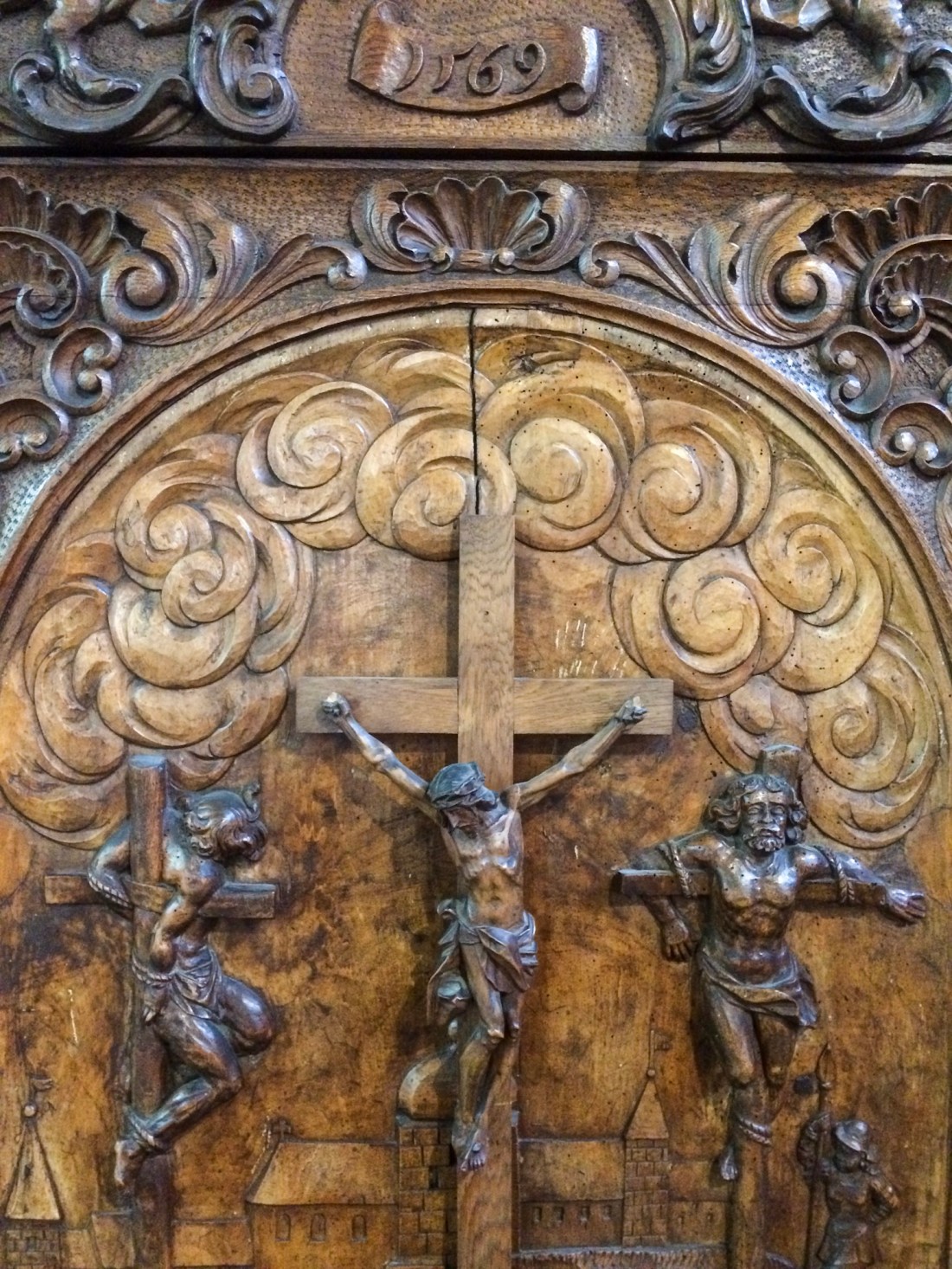
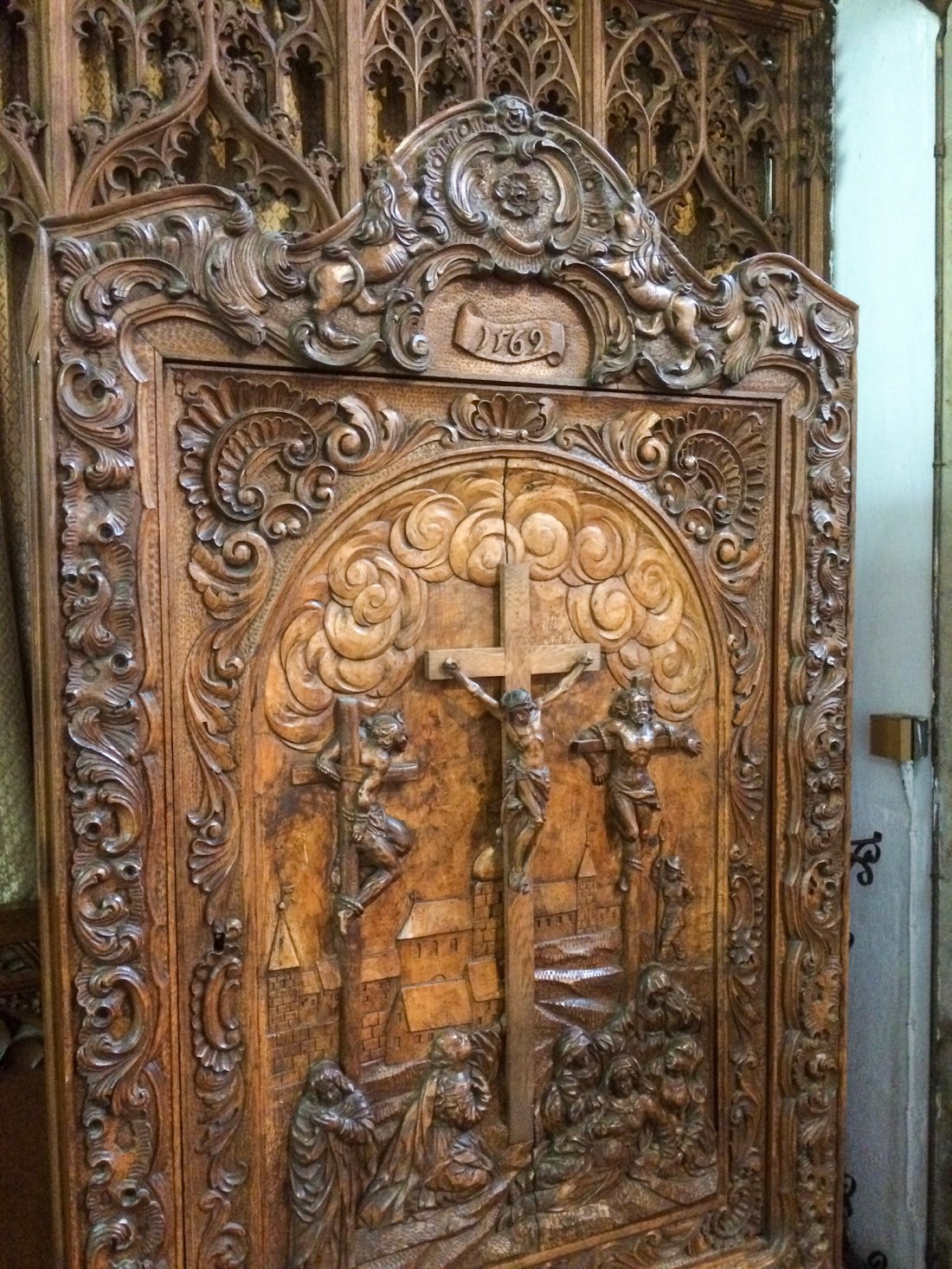
One of the most interesting features is this probable vestments cupboard, dated 1569, a wonderful piece of woodcarving, which I would think is limewood, similar in style to the plethora of such art produced in Germany during the same period.

IMG_1883

The pulpit too had some intricate woodcarving, probably oak by the look of it, although I did not find a date on it, but I would assume it is later than the earlier piece.

IMG_1885

There are even a couple of examples of medieval embroidery by the door.

words and photographs copyright Francis Barker 2019
Poem: Pomegranates

IMG_1891
Peterborough Cathedral, England

They smile when I shut the heavy, creaking door,
from behind their neat wooden kiosks
stuffed with pamphlets and insipid books.
Smiles of recognition, a nodding
acceptance as if to say –
‘Oh, it’s you!’ Volunteer women serving Christ
better than those above them in Church.

I walk along the emphatic southern aisle under
uber-Norman arches, at the far end of which
hangs a limp flag of Saint Andrew,
in honour of Mary Queen of France, Scotland
and some say of England, too.
Glancing to my left a young man kneels,
wringing hands beneath a life-size figure

of a crucified Jesus, hanging high in space.
He stares upwards, rocking gently back and forth,
as if imploring Him to be real,
to writhe, sweat, bleed, perhaps to save Himself
and then, somehow, to save him as well.
I’m here to light a candle outside
Saint Oswald’s shrine and to sit for a time

in silence inside the tidy chapel,
to pray for a poor boy in pain,
perhaps to ponder on those relics,
those bits of bodies and other things,
worshipped once and then dispersed,
despised in fractured minds,
to us now mostly objects of indifference.

Oswald’s arm must lie hereabouts,
known to someone who still believes
in its restorative power, like the monks
who consumed this place, where Domesday
came and went without event,
where the Chronicle of a people faded to grey
in an undrying ink. Still it awaits the next line.

In this fossil the dead are lucky.
They are dead but in faith, whereas I roam
restlessly among echoes of whispers,
a heartless void. I cut across through the choir
to find I’m not alone, where the true
Queen of Hearts lies. Letters of gold spell
her name to all, but for me she smiles

brighter than anyone alive,
a smile from scorched Iberian lands,
her fate to end up on this drab island
where fashioned pomegranates mark her spot,
from which she expects to rise
at some glorious hour, where, until then,
the anonymous faithful lay fresh fruit

and flowers to mark her special days.
I watch a tourist, a German tricolour sewn
onto his rucksack, as he reads
the commemorative words. A sudden,
unexpected pride washes over me
while he pauses on her ground to think –
where I was once intrigued.

Almost believing.

IMG_1894
Resting place of Catherine of Aragon, Queen of England. Peterborough Cathedral. Featured image at top of page are of pomegranates on her tomb.

copyright Francis Barker 2019