Album Review: ‘For The Roses’ Joni Mitchell – A Sleeper Masterpiece

IMG_2913

Any album which followed Joni Mitchell’s groundbreaking 1971 album ‘Blue’, still considered to be her best by many, would have difficulty in competing with such brilliant, heartfelt songs and musicianship.

Predictably, Mitchell’s 1972 release of ‘For The Roses’ (Asylum), did indeed seem to underwhelm by comparison. Even the title of the album does not exactly inspire one as much as the emphatic ‘Blue’, unless you happened to be a gardener or a seeker of some bucolic escape. Nevertheless, I have to say I find this album something of a sleeper.

Unfair Comparisons

I, like many, first became aware of Joni Mitchell with songs like ‘Big Yellow Taxi’, songs which made you stop, listen and take notice. Then along came ‘Blue’ and the plaudits, rightly, went bananas. Then, at least to me at the time, a youngster barely in his teens, there seemed to be a bit of a lull. Suddenly it was 1974 and the wondrous ‘Court and Spark’ was released, another groundbreaking collections of songs. Somewhere in the middle of all that came ‘For The Roses’. It has only been over the last fifteen years or so that I have come to appreciate how good this album is.

And it turns out the album’s name and character did indeed indicate the singer songwriter’s partial retreat from the hurly burly of superstar life. So here are songs perhaps less intense than ‘Blue’, but reflective of a different inner life, the beginning of her more observational, anecdotal story telling songs which have become so much a trademark of her later career.

Retreat

The opening track ‘Banquet’ sets the tone firmly, yet gently, indicating her retreat from all the pandemonium, stepping down towards the shoreline and taking a wider philosophical look at life and all its absurdities. Here too I can sense the true beginning of her more jazz-folk inspired trajectory, followed up in the next acoustic guitar driven track, ‘Cold Blue Steel and Sweet Fire’.

If the first two tracks evoke a certain subjective melancholy, track three, the more upbeat ‘Barangril’, really brings out Mitchell’s great gift of taking an everyday snippet of daily life and turning it into a timeless masterpiece of modern Americana.

‘Lesson in Survival’ returns to the reflective melancholy, but beautifully so. Few songwriters, one would imagine, have ever been so well read. The wish for escape is overpowering. ‘Let the Wind Carry Me’ continues with the theme, but gives us more than a glimpse of parental influences, how they seem to us as we age when we realise Mum and Dad were not perfect either. I love the little jazzy flourishes with the voices and wind instruments in this song, something she would continue to perfect in later albums. In this song they evoke the whistles of steamers.

Wild Canadian Expanse

It has been said before (probably by me previously too) that Russian composers like Rachmaninov can’t help but sound like the vastness of the Russian Steppes. I think the same goes for more contemporary Canadian composers too, particularly Joni Mitchell and Neil Young. In ‘Let the Wind Carry Me’ I can hear the vast open plains of central Canada where she was brought up and also the equally wide Pacific Ocean off California.

‘For the Roses’, the title track, is an understated guitar song of exquisite guitar work and minimal arrangement, critiquing the lifestyle she has become accustomed to and which she is now eschewing. ‘See You Sometime’ is more straightforward, reflecting on former loves, their lifestyles, in a major key, leaving open the possibility of staying friends.

Transition Period

‘Electricity’ is a beautiful guitar track, spanning this transition period. ‘You Turn Me On, I’m A Radio’ might also have appeared on an earlier album, but served the purpose of being a catchy hit single from this album.

‘Blonde in the Bleachers’ definitely looks forward, another anecdotal snippet finding meaning: It transforms beautifully in the middle to a more soft rock number with sophistication. ‘Woman of Heart of Mind’ really does sound to me like it was composed a year or so prior to the album’s release – it is, nevertheless, beautiful and understated.

The final track, Judgement of the Moon and Stars (Ludwig’s tune)’, is probably the most sophisticated piano based track on the album, Joni leaving us typically with a philosophical view based on much reflection. The arrangement of wind and strings is also tasteful.

Overall, this is still one of my ‘go to’ albums. It helps me relax and reflect, probably the desire of the composer at this particular juncture in her life. It is generally understated and certainly not her best offering – yet it is still a great album in my view.

copyright Francis Barker 2020

Me? In A Red Corvette?

IMG_2271

Our loft, apart from being a mess, can sometimes turn out to be a proverbial treasure trove. Well, not exactly!

We all love to look and dream about red sports cars, especially an iconic red Corvette, naturally, don’t we?

IMG_2277

I look at this red Corvette most days, pick it up and look at the lines, imagining I’m somewhere in the Mid West cruising along Route 66, or some long open highway with only mesas, inselbergs and the odd raptor for company, the shapes of distant mountains blue in the background.

IMG_2273

One day our dreams may become come to fruition.

img_2275.jpg

Copyright Francis Barker 2020


The Only Lamborghini I’ll Ever Own… Probably

IMG_2279

It’s funny what you find in your loft sometimes.

Toy cars are fun when your young and still fascinating when your not so spritely. They bring back a lot of memories, most of the fond ones anyway.

IMG_2283

I’m not sure whether this Lamborghini was ever actually my toy – it was probably my son’s. Nevertheless there’s something nice and classical about these Matchbox models. I won’t be parting with it.

IMG_2281

This one stems back a decade or two but it’s just lovely and sleek, a bit like the ‘real thing’ one would suppose.

IMG_2285

Beautiful, and it sets your imagination going too, You know – Monaco, St. Tropez, the Ligurian coast, Amalfi, Sorrento. Ah well.

copyright Francis Barker 2020
Rock Review: Yes, ‘Close to the Edge’ – Close to being perfect.

IMG_1685
The Classic 1972 Progressive Rock Album.

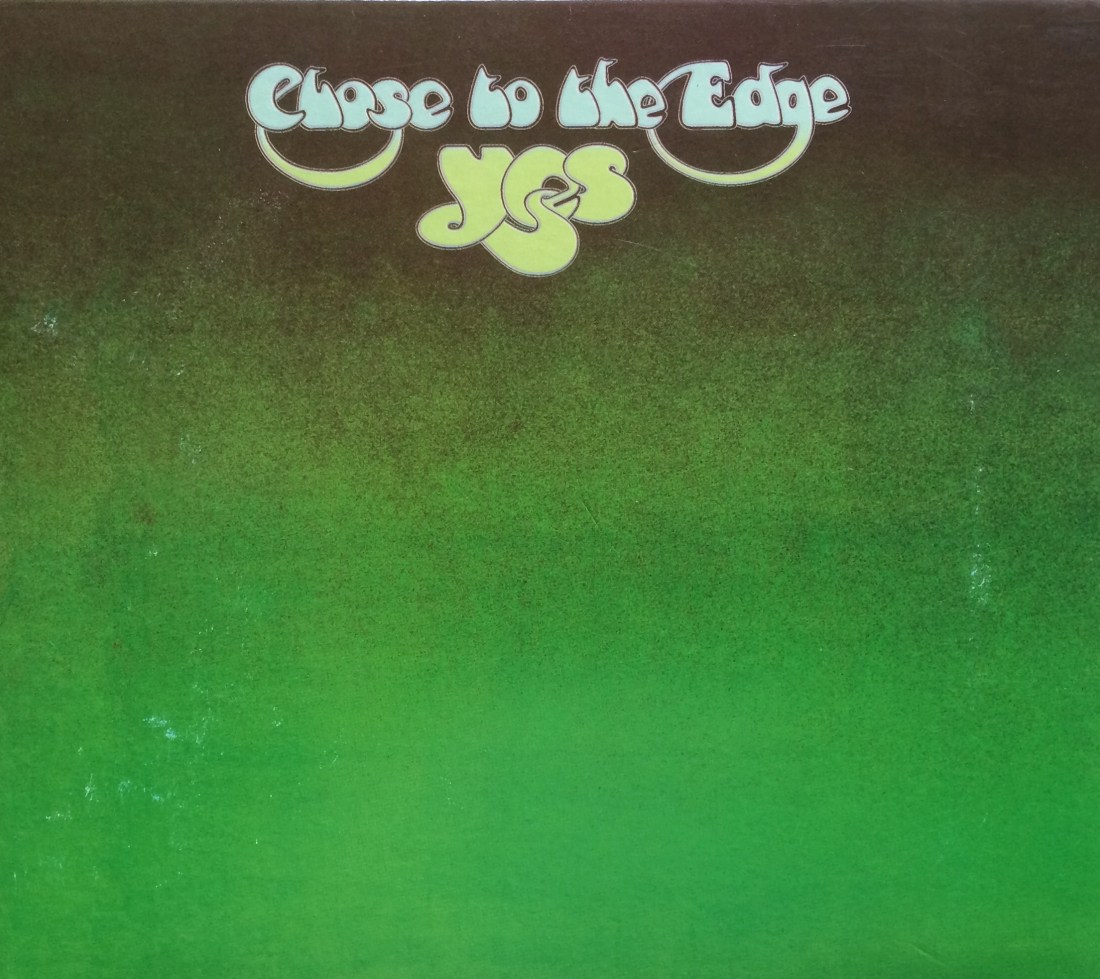
Probably my favourite all time prog rock album, ‘Close to the Edge’ (Elektra/Rhino CD) by Yes.

I was quite young when this came out in 1972 and didn’t actually hear it until later in the following year, when my elder brother brought it home. I think I had heard ‘Fragile’ by then too, the band’s 1971 release, which kicked off with ‘Roundabout’, one of Yes’ more ‘accessible’ numbers for a young boy. Nevertheless, I remember being pretty impressed by the whole album.

Spiritual sound

However, when my brother put ‘Close to the Edge’ on our family hi-fi, at first I wasn’t sure what to make of it. The slow start of planetary, naturalistic sound, the incredible weaving together of all the different movements of side one, took some time for me to appreciate, but now it’s like one epic poem, a vast spiritual movement of sound that is hard to describe, in words. It just has to be experienced, let it take you somewhere.

I still particularly like the ‘I Get Up I Get Down’ section, so beautiful, bringing together all the singing talents of the band, not just Jon Anderson, but also Steve Howe and Chris Squire.

Five virtuosos

Which leads me to a major point. Has there ever been a better example of five incredible talents working together, at the top of their game, producing such a masterpiece? I would doubt it.

Jon Anderson’s unique voice and inspirational lyricism; Bill Bruford’s peerless percussion; Steve Howe’s sheer virtuosity on six and twelve strings; Chris Squire’s uniquely lyrical bass and underrated singing; Rick Wakeman’s pure genius and dexterous flair.

It would prove to be a small window, sadly. Very soon, Bill Bruford would be on his way, followed soon after by Rick Wakeman. But what a beautiful, ornately made window it was. It was of its time.

Woven together

Side Two for me is equally impressive. I can still quite easily listen to ‘And You And I’ on repeat. I love the start, with Steve Howe hitting the harmonics on his twelve string, the way Rick’s synth plays over the top is so joyful, full of life. And like all Yes tracks, it’s difficult to envisage how they all put this together, so differing are the elements, but they come to together beautifully, woven by lyrics which are both hard to fathom, yet totally fitting – a Yes trademark.

And the final track, ‘Siberian Khatru’. Heaven knows what it’s about but if I had just one track to take to my desert island, I think it would be this.

Atmospheric

Great, catchy guitar riffs to start off and great rock playing by the whole band, but soon the wonderful group singing harmonies come in to play, adding a great atmospheric and naturalistic feel.

Then all the virtuosity of the band kicks in – indescribable. Especially, towards the end when they sing pairs of mysterious words with lots of reverb, which may, or may not, be related… but it works, it means something, though I don’t know what it is. And did I mention Steve Howe’s jazzy guitar on the outro?

Just how it should be, long reign the mystery.

copyright Leofwine Tanner 2019

The Giant’s Causeway, Northern Ireland

IMG_1472

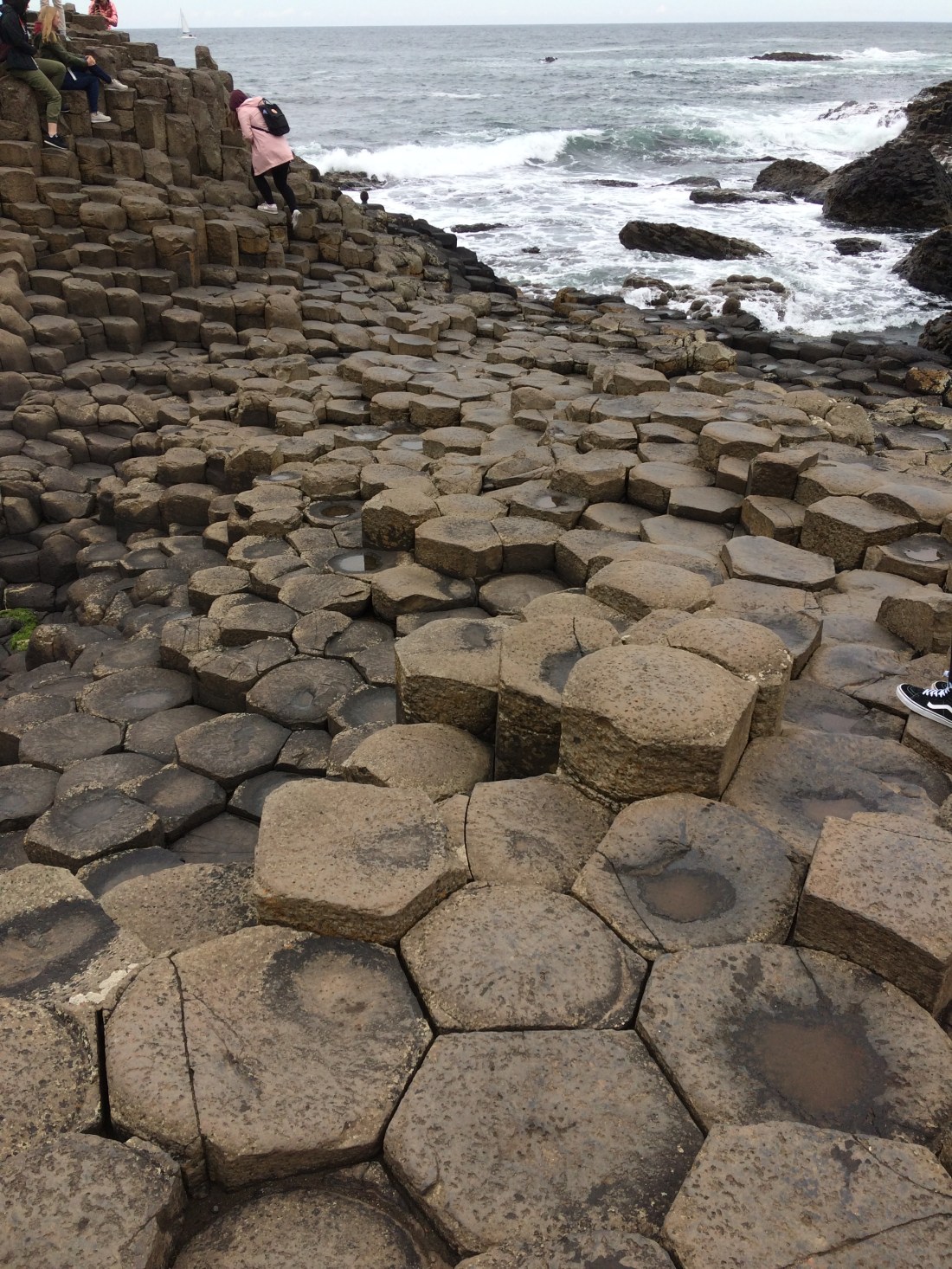
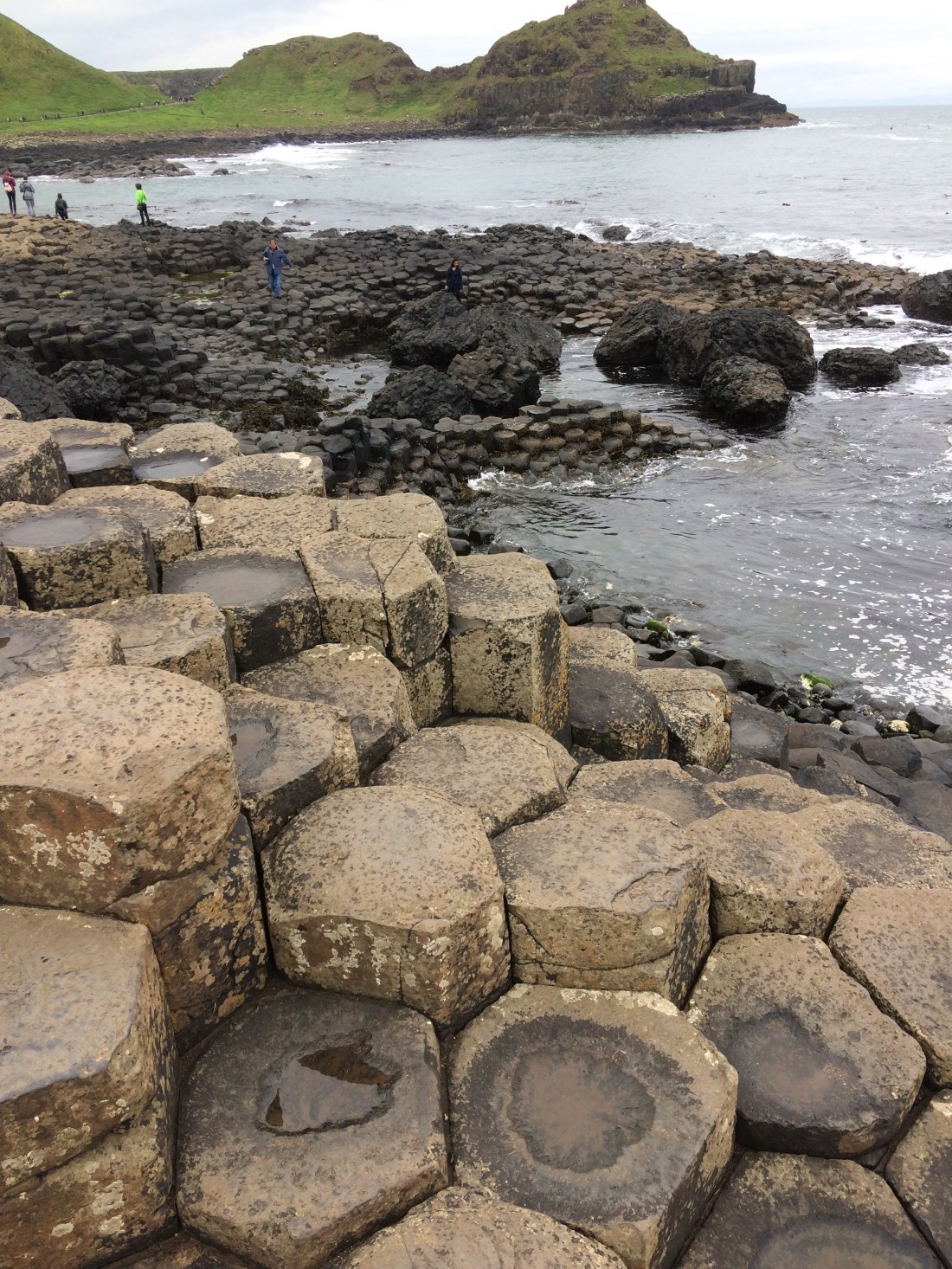
Part of our trip around Northern Ireland’s gorgeous County Antrim coast involved a stop at the world famous Giant’s Causeway.

I have to say that it was indeed everything I was expecting, from the cool, wet weather to the very touristy atmosphere.

Simply Stunning

That said, the place is simply stunning. Nothing can prepare you for walking over those truncated basalt columns, watching your step, while eyeing in disbelief that such a place actually exists, spreading out ahead of you towards the sea.

Made a World Heritage Site in 1986, the Giant’s Causeway lies right at the northern end of Northern Ireland.

Official Story

The official story is that it’s between 50 and 60 million years old. In a nutshell, it’s the result of strong volcanic activity causing lava flows which formed a plateau, cooling relatively quickly, resulting in the distinctive hexagonal columns.

IMG_1475 (1)

A similar process or effect occurs when mud dries in extreme heat, though you don’t get the height of the columns of course.

So much for the ‘official’ story. Any self respecting local here would tell you that’s all hogwash.

A Battle of Giants

What really happened, perhaps not that many generations ago, is that Finn MacCool, an Irish giant, was confronted by a Scottish giant challenger, called Benandonner. Finn, who couldn’t wait to tackle this upstart, built the causeway to get across the North Channel to Scotland.

IMG_1476

There are basically two versions of the story. In one, Finn beats Benandonner conclusively. In the other Finn runs away from Benandonner after realising that he’s even bigger than himself.

Feminine Guile

So, using some feminine guile, Finn’s wife, called Oonagh, makes out her husband to be a baby, even going to the extent of placing him in a cradle.

Benandonner is fooled by this, thinking that if the baby is this big, then how big is the father? In shock, Benandonner trudges back across the causeway, taking it down on the way so Finn cannot follow him.

Science versus ‘Myth’

Strangely enough, in the corresponding part of Scotland around Fingal’s Cave on the isle of Staffa, there are some very similar columns of basalt.

Now, the scientific community would have us believe that this is merely part of the same lava flow from many millions of years ago. Of course it is.

But I know which explanation I prefer.

copyright Leofwine Tanner 2019