The Outer Planets – To Use, or Not to Use

mountain and sky
Photo by Aviv Perets on Pexels.com

I may have touched upon this before, but I have been experimenting leaving out the outer planets in astrological interpretation.

I have to confess it has not been easy. The school which I studied with thirty years ago fully incorporated Uranus, Neptune and Pluto, if not some asteroids and Chiron.

So when I began to leave out these outer planets, it felt a little bit like riding bare back. It felt uncomfortable, as if I was missing something. Right now I’m not entirely sure which way to go, which isn’t good, because I want to affirm my astrological philosophy after all these years. But it is good to remain open minded.

Deleting?

However, I think I am gradually coming around to the decision to leave them out. What is the reason for this?

I have never been comfortable with the interpretation of the outer planets, their supposed influence. Of course, as far as we know, the ancients did not know about them, so they were not used.

Then boom! Uranus (called Herschel at first after the astronomer who had been tracking him) was discovered in the late 18th century, around the time of the American, French and Industrial Revolutions. Hm, so Uranus is associated with revolution, sudden change, right? Well, perhaps.

Revolution, Mysticism, Extremism

Then in the mid 19th century, Neptune was found, around the time of further revolutions around 1848 to do with socialism and what is now called Marxism. There was also a sudden surge of interest in the area of mysticism. Around 1850, it really did seem like a new world was being born.

Come 1930, little Pluto was discovered. And we know what was to follow after that. Pluto has ever since had dark, underground associations of hidden extreme power and violence.

Gradually each of these new planets were seen by many astrologers as higher octaves of the planets. Uranus was thought to be the higher octave of Mercury, the planet nearest the sun on our solar system model. Uranus was therefore was about mental breakthrough, inspiration, invention.

Higher Octaves

Similarly Neptune was seen as the higher octave of Venus (love, unity) through meditation and Pluto was associated with Mars (energy) in a more transformative pose. I have never been completely comfortable with this thinking.

For one thing, we know these luminaries are there but they are not visible to the human eye. Are we not in danger of ascribing them too much astrological influence? Yes, invisible things can be very powerful. But astrology is about luminaries, things you CAN see. Simplicity can be a blessing.

Some use the outer planets in a lesser way, see them as purely negative, revealing by sign and house position where we will experience problems, perhaps a bit like a negative fixed star. For example, Uranus might reveal where we feel alone, isolated; Neptune warns us of deception and confusion; Pluto where we might be in danger of self destruction. The difference, of course, is that you can see a fixed star.

Bad Influences

If we return to the time of the discovery of each of these planets, we could strongly argue that if the finding corresponded with a major shift in human activity as seen through the accepted historical narrative, such as revolution, then maybe these planets’ ‘influences’ are indeed negative.

And as well as all the above, didn’t the old ‘system’ with seven luminaries have a certain beauty, balance or resonance about it? The discovery of Uranus in 1781 and its incorporation into astrology, did indeed disrupt everything.

What is more, it is my contention that Uranus is not the ruler or even co-ruler of Aquarius. The nature of this sign has been subjugated over the last two hundred years, from a serious minded forward thinker, to a wacky professor or flower power hippy – all because of the so called cranky ruler Uranus. Aquarius is traditionally the sign of hopes, dreams and wishes and group objectives. How are these Uranian?

Difficult Associations

Similarly, mystical Neptune has been associated with ‘dreamy’ Pisces and powerful Pluto with the much maligned Scorpio. The tradition of assigning two signs each to the planets, Mercury through Saturn, is ancient. I now believe it should stay that way. Tradition is important whilst remaining open minded.

So at this juncture my purpose is to leave out the outer planets, including Chiron (which is what… a comet?), along with the asteroids.

With each interpretation, if any outer planet does indeed form a major aspect, I will consider mentioning it, but will not include it on the chart. Treating the outer planets a bit like fixed stars might indeed be the way to go – but that is not decry those clearly visible luminaries, which have had a place in many forms of astrology for millennia.

Nevertheless, I feel the outer planets do seem to have influence on us all in a transpersonal sense – though not necessarily in a benevolent fashion. I intend to highlight this is in a number of forthcoming articles.

Copyright Francis Barker 2020
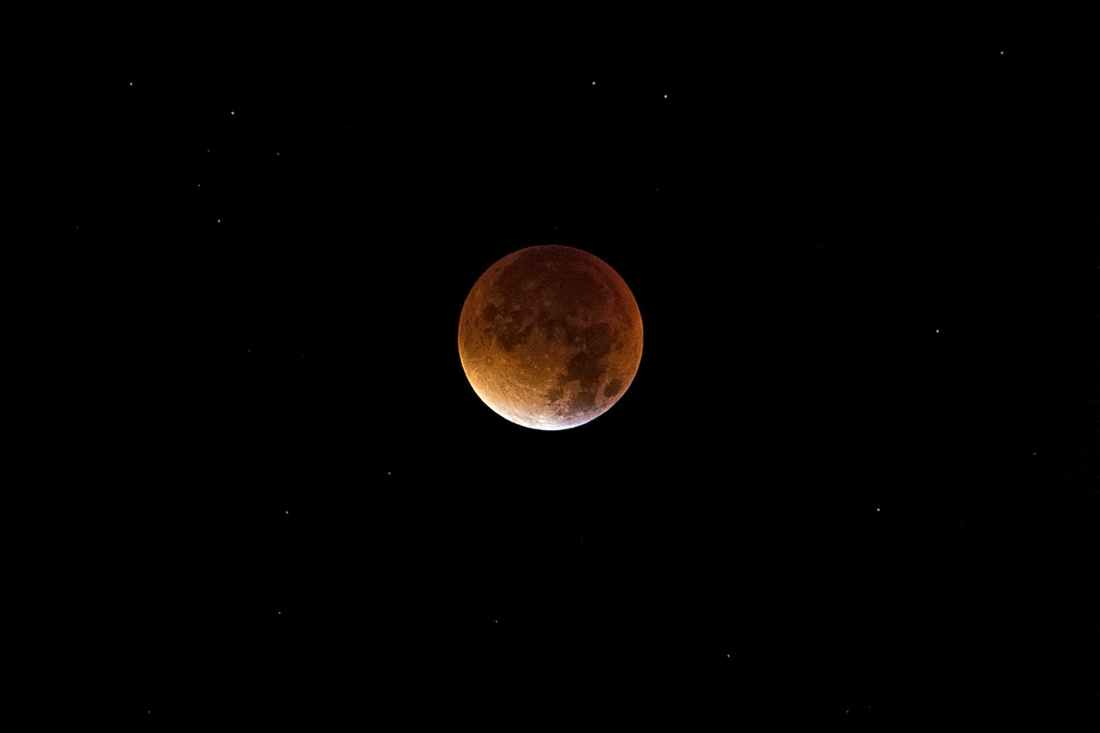
 

Lunar Eclipse, July 5 2020 – Tension, Change, Fireworks… and Healing?

lunar eclipse
Photo by Johannes Plenio on Pexels.com

The up and coming lunar eclipse on Sunday July 5 falls on a very sensitive point of the USA independence chart.

This will be almost exactly conjunct the Sun’s position in the eighth house in that 1776 chart, activating the important second and eighth house axis, which is all about national security, money, finance, investment, banking. The USA would appear to be at a significant point of change in these affairs.

Intriguingly, the Sun at this time is exactly conjunct the fixed star Sirius, Canis Major, or the ‘dog star’, which is thought to be largely beneficial, his effects ranging from guardianship (protection), honour, perhaps even to spiritual healing and rebirth, some believe. Sirius is obscured by the Sun from early July until the second week of August, these are the so called ‘dog days’.

This might be highly significant, especially as this period will last until Sirius’ rising at the beautifully termed Lion’s Gate in August. We could all do with some spiritual, mental and physical protection and healing right now.

Dichotomy

In the chart for the eclipse itself, set for Washington DC, the tenth and fourth houses are particularly activated, highlighting the dichotomy between the government and opposition in the United States, the Sun and Moon also squaring the ascending degree of the chart.

And talking of ascendants, Aries is rising and therefore Mars is the chart ruler, who happens to be powerfully placed in his own sign. The whole situation is therefore energised, even bellicose, so we might expect some ‘fireworks’. Mars is in difficult aspect to Mercury, so expect caustic commentary and irritation too.

Energised

That said, Mars is in positive aspect to Venus in Gemini the third house – potential here for some ‘good news’ – we could do with some of that.

Interestingly, the Sun and Moon make a positive aspect to Uranus in Taurus in the second house, indicating the potential for positive change in regard to the economy, money, finance and banking. There are likely to be a few surprises here.

It certainly has the potential to be a weekend we won’t easily forget.

Copyright Francis Barker 2020


This May Not Be The Aquarian Age, but…

round analog clock
Photo by Andrea Piacquadio on Pexels.com

The older among us may remember the clarion calls of the late Sixties, the so-called cultural revolution, pronouncements that the New Age of Aquarius was dawning, an age of peace, love and freedom. So what happened?

Furthermore, speaking as an Aquarian sun native myself, although I strongly recognise certain accepted traits of the fixed air sign within myself, such as detachment and forward thinking, I have never felt comfortable with some of the more eccentric and bizarre character associations of Aquarius and this supposed Aquarian Age.

In reality, no one knows when this Aquarian Age will begin. Maybe it already has. The dates suggested have ranged from late medieval times to anywhere as far ahead as 2300 AD. Not so precise, is it?

What’s It All About?

And what is it all about anyway? It’s all to do with the phenomena called the Precession of the Equinoxes. Each zodiac sign is a thirty degree segment of the ecliptic, which is the apparent path of the sun around the earth. There is a zodiac sign behind the very slowly receding point of the Vernal Equinox around March 21 every year. This is all part of The Great Year, a period of time of almost 2600 years, where each sign takes a bit over 2000 years to recede behind this Equinoctal point. This is caused by the earth’s ‘wobble’ as the sky spins at an angle of 23.4 degrees around the pole star, from our perspective.

At this present time, we are said to be somewhere around the transition of the sign of Pisces, the fishes, into Aquarius, the male watercarrier. The past 2000 years of the Age of Pisces have been dominated by the sign of the fishes, Christianity. Christ has often been symbolised by the fish, ichthys in ancient Greek, where each letter encapsulates the divinity of the Saviour. The fish symbol was important to early Christians hiding from authorities who regarded them as a danger, even subversives.

Controversial

Naturally, such a supposition of astrological signs ‘affecting’ human culture is controversial. Admittedly, there were plenty of other events going on in the world over the past 2000 years that were not tied to Christianity. Considering this, and the massive time window given to the threshold of this Aquarian Age, I have long since been cynical about this particular astrological theory.

But I am willing to concede I may be wrong. I am a practising astrologer. I am also a realist. To make prognostications as to whether we are in, or are about to enter the Age of Aquarius, we should surely be clear as to what we should expect to see. Firstly, I do not agree with all people’s interpretations as to the character of the sign of Aquarius. Peace, love, freedom and understanding may be all fine ideals, but are they Aquarian? And have we seen any of this since the late Sixties, for example? I will let you be the judge of that.

Uranian Upheaval

One of the problems is that since around 1781, with the discovery of Uranus, most astrologers have come to put this outer planet at least equal to, or above that of Aquarius’ traditional ruler, Saturn. I think this is a mistake. I concur that Uranus certainly does have a revolutionary influence, causes sudden changes, often turning things upside down in the process. But is this in any way Aquarius, the Fixed Air sign? I strongly contend it is not.

So I don’t believe Uranus has ‘rulership’ of any sign and neither do Neptune and Pluto. They are generational influences because they move slowly through the signs, Pluto taking around 248 years, influences we have become consciously aware of since their discovery (or perhaps rediscovery).

The Two Faces of Saturn

For me Saturn has two sides. After all, apart from the sun and Moon, every planet down to Saturn was given rulership over two signs: Mercury rules Gemini and Virgo, for instance. So on one level Saturn may be Satan, the Greater Malefic, virtually evil personified as in the ancient myth of Cronos (Saturn) devouring his own children. On another level, he is the symbol of limitation, for ages considered to be the outermost planet and therefore symbolising a kind of barrier, the furthest reach, where all things are stopped, crystalised and slowly brought back. He is a kind of brake, bringing things down to solid earth so they can be accounted for. The latter I suggest is the Capricornian Saturn, a necessary function of life.

The other side of Saturn is the one which has rulership of Aquarius, the more ‘positive’ side. Aquarius is traditionally the sign of hopes, dreams and wishes, in other words objectivity as opposed to Leo’s subjectivity of sheer life enhancement. If Leo is artistic, Aquarius is scientific, liking to rationalise, codify. The same fundamentally materialistic Saturn, which is associated with the cardinal earth sign of Capricorn, shows this more ‘positive face’ in Aquarius. He is objective, the planner of the future, a practical idealist, as befits the fixed air sign of serious communication and association. Aquarius is fundamentally human. The outright eccentricity often tagged to Aquarius is wrong in my opinion. Strong aspects from Uranus to the planets or angles in a personal chart, would most likely explain any eccentricities of nature.

So, if this indeed be the case, any age of Aquarius would reflect the serious, objective and associative qualities of that sign. These are conspicuous by their absence at the present time.

The Grand Conjunction

That said, what we do have towards the end of this year, 2020, is the Grand Conjunction of Jupiter and Saturn occurring at 0 degrees Aquarius. The Grand Conjunction of these two planets represents a cultural correction point every twenty years, setting a general theme for the up and coming period. This on top of the ‘earth shattering’ Saturn Pluto conjunctions earlier in the year, so symbolic of the nadir of political and economic turmoil and you have a year of major significance, a year of historic transition and migration, if you will. I feel this has nothing to do with entering any new astrological age ruled by Aquarius, with all the ill defined thresholds of each sign within the Great Astrological Year of about 2600 years.

The occurrence of this Grand Conjunction every twenty years or so, invariably, although not necessarily wholly, migrates from one element to another every 150 to 200 years. For the last 180 years, apart from 1980/1, the GC has occurred in earth signs. From this year of 2020, it will be within the air signs of Gemini, Libra and Aquarius for around 140 years. This will be a major transition, marking a cultural shift, a probable explosion of philosophical and spiritual thought and technological progress, as befits the communicative and expansive air signs.

So from 2020 right through well into next century, we will undoubtedly undergo a vast, and, I truly hope, positive transformation, perhaps akin to what we are told about in the Renaissance. Precursing that time, during the 13th and early 14th centuries, there was a similar preponderance of Grand Conjunctions occurring in air signs.

Momentous Times

I believe that right now, in 2020, as we are currently living through one of the most momentous times in ‘history’. We are indeed at the threshold of a new age, a new cycle, which bears much renewed hope for humanity. At a time in the near future, we will be able to look back at this hiatus point with a bit more Aquarian objectivity.

What is more, bearing in mind that by the middle of this decade we will see all the outer planets in ‘positive’ signs too, the world of 2025 and beyond is going to feel wholly different than right now. By then, Uranus will be in Gemini, bringing great invention to technology and all forms of communication. Neptune will be in Aries and Pluto will move in Aquarius, both lengthy transits forever changing our ideas about humanity and spirituality, who we are as individuals and how we relate to the collective ‘universe’ – and revealing the truth as to what that universe and this reality actually are.

The Age of Air

What I don’t believe is that this is the much vaunted Age of Aquarius. If anything, we are entering the Age of Air Signs and everything to do with that element, which on the face of it is far more positive than all the earth energy we have been experiencing over the last 180 years, a truly extended period of denseness and negativity. The Saturn Pluto conjunction of 2020 represents the death knell of this ‘dark age’, where gross materialism has ruled outright and brought us literally to our knees.

The Grand Conjunction’s cycle in Air signs from December 21 2020, marks the beginning of the free – freer, more candid, fairer communication and justice as expressed through Libra; the rolling out of advanced technology for the benefit of humanity and the planet, as expressed through Gemini; and, firstly, a more planned, objective approach to administering the world and its resources, as expressed through Aquarius and positive Saturn. Let’s make it so.

copyright Francis Barker 2020

Rethinking Astrology: A Yearning for Simplicity

blue-blue-sky-beautiful-sky-puffy-clouds-4423022
Photo by franpics from Pexels

Whilst there are long existing schools of astrology, most astrologers tend to be very individual with their own particular nuances and practices.

I have been fascinated by astrology since my mum brought home a women’s magazine from the sad clear out of grandma’s house back in the 1970s. The publication contained one of those very basic sun sign forecasts which we are all familiar with. The slight difference with this one, was the little write up at the top of the piece regarding ruling planets. From that point I was hooked.

Thanks Grandma

I’ve often thought it was Grandma who led me down this winding path, even if it was through her death. I did go on to study astrology in many varied ways, with two schools and digesting countless books and manuals. However, it is true to say that especially in later years, I too have developed my own approach, which does bear certain similarities to other modern astrological trends.

Firstly, I have become more interested in ‘traditional’ astrology, which is largely based on Hellenistic or Ancient Greek astrology. The reason for this is the often confusing plethora of house systems on offer these days, the use of fixed stars, asteroids etc. I crave simplicity. This is not to say that various house systems don’t have relevance, or that fixed stars and asteroids have no place. All I’m saying is they are not necessarily for me.

Whole Sign System

So today I invariably use the Whole Sign house system, which is in fact pretty much the original house system. This means that if Aries, for instance, is rising, the WHOLE of that sign becomes the first house beginning at 0 degrees. From that point each house proceeds in 30 degree segments. The actual ascending degree, let’s say 15 degrees Aries, remains an important point in the chart within that first house, as will the the other angles in theirs.

Now I did say that I did not utilise asteroids or minor planets. That said, I have come to realise Chiron’s usefulness as the ‘wounded healer’, so I usually use him.

birthcharttemplate (7)

Similarly, the Moon’s nodes certainly are a strong karmic pointer. And I still use Pluto, even though he has been degraded astronomically to the status of minor planet. That said, with the three outer planets, Uranus, Neptune and Pluto, I do not regard them as serious rulers of the signs Aquarius, Pisces and Scorpio. I still tend to favour the traditional rulers, purely because of the beauty of the original system of rulership, from the intimacy of the Moon ruling Cancer, to the far out, impersonal Saturn ruling Capricorn and Aquarius on the outer limits.

Orbs

And as far as the orbs of aspects, I tend to restrict them to a few degrees. For the sun and Moon, no more than five and for the planets no more than three. After all, the tighter the aspect the more powerful and obvious it will be.

I generally use this approach for both individual interpretations and for events, such as general elections and their like. Once again, if other astrologers wish to explore the use of minor planets, fixed stars etc to much greater levels, then so be it.

I also like to produce (although not always) the square ‘medieval’ or Renaissance looking charts. I don’t know why but there is something artistically comforting in displaying the information this way, even though it may not be technically or visually as accurate as a round one.

You see, my own particular Aquarian mind yearns for more simplicity the older it gets, a life that’s stripped down and straight forward. That to me seems like a good pointer to the future.

copyright Francis Barker 2020

Musings on Pluto’s Mask of Invisibility

Pluto_in_True_Color_-_High-Res
By NASA/Johns Hopkins University Applied Physics Laboratory/Southwest Research Institute/Alex Parker – Public Domain, https://commons.wikimedia.org/w/index.php?curid=71082408

I have done a little research on and off for a few years now regarding the ‘outer planet’ Pluto and his supposed effects. Put it this way, I have not been satisfied with terms like ‘transformation’.

I shall not go into it too much here as it is ongoing, but suffice it to say that I find I’m in agreement with many these days who think that Uranus, Neptune and Pluto, the so-called outer planets, only really come into serious play by their placement, their relationship if you will, by either being angular or in close aspect to the true planets, or both. I don’t believe (yes, it is a belief) that Pluto rules Scorpio, for instance.

Demotion

Of course Pluto was demoted from planet status several years ago, it being essentially classed a kind of minor binary system involving a sibling called Charon (the ferryman of Hades in myth), with whom Pluto does this merry dance in the remote, dark reaches of this solar system. Yet, despite this, there doesn’t seem to be any lack of interest in him in astrological circles.

Pluto was first discovered officially in 1930 and many have attributed the dark, ‘underground’, extreme forces that were appearing in the world at the time to the planet’s arrival in the mainstream.

Does he have a name?

Then of course we have the name of the planet. I mean why call him Pluto? The work of Percival Lowell led to the discovery of Pluto, and of course his initials are the first two letters of the name. Then of course we have Mickey Mouse’s dog, Pluto, named after him.

So the question is, did the recognition of each ‘outer planet’ reflect the time of its discovery?

I have seen it said that Uranus, discovered in the late 18th century, coincided with the American and French revolutions, plus the beginning of the Industrial Revolution. Well, I suppose Uranus has a reputation for turning things over.

Neptune was discovered in the mid 19th century, though it is far less clear what was going on then (spiritualism?) which we could call Neptunian – but maybe that’s just Neptune being Neptune, hard to make out really.

Synchronicity

And then Pluto around 1930 and the rise of fascism, communism: I get the point. Pluto is the Roman name for the Greek Hades, king of the Underworld. In mythology Hades had a helm, cap, or mask, which reputedly made him invisible, sometimes also called the Helm of Darkness. All these are what we might associate with Pluto. Either way, the mask allowed the wearer to disappear, or be undetectable, a bit like Pluto on his 248 year travail around us. I’m not sure I believe in synchronicity.

But the mask of invisibility only belongs to Pluto/Hades, others wore it to become undetectable, it is not Pluto himself. So maybe, to conjecture, in astrological terms Pluto by close aspect lends secrecy to whomever he is masking/aspecting? I don’t know, it’s something I’m looking at.

Can you keep a secret?

Nevertheless, we all know how dangerous and devastating secrecy can be, hiding true intent, a bit like the cloaking device used by the Klingons in Star Trek, or even like a ‘bird of prey’ using extreme speed (peregrine falcon for example) to disguise its final, devastating kill.

As an example, take a native with Mars closely conjunct Pluto, might the interpretation be that the Martian energy has the potential to be hidden, yet also potentially more focused and dangerous as a result? And if that energy is hidden, suppressed even, then there may be deep psychological implications too. If Neptune were conjunct Mars we might expect dissipation of that force; with Uranus we could see sudden, violent outbursts of energy.

I will leave the musings there but I intend to try and use living examples in later posts. I’m trying to keep an open mind, with the understanding that the whole truth can never be known. Thanks for your patience – these are just my musings.