She was sat
on the old porch, a piece
of me I’d left
behind
in some spring
long ago. I knew it
in an instant, as
soon as she looked up—
our minds dovetailing as if
nothing had happened
in those draining,
intervening years. A part
of me wanted
to leave,
to move on and deny
what my heart was insisting, but
the spark was still there,
some sweet, indefinable
thing.
She tapped
the space beside her and
I sat down
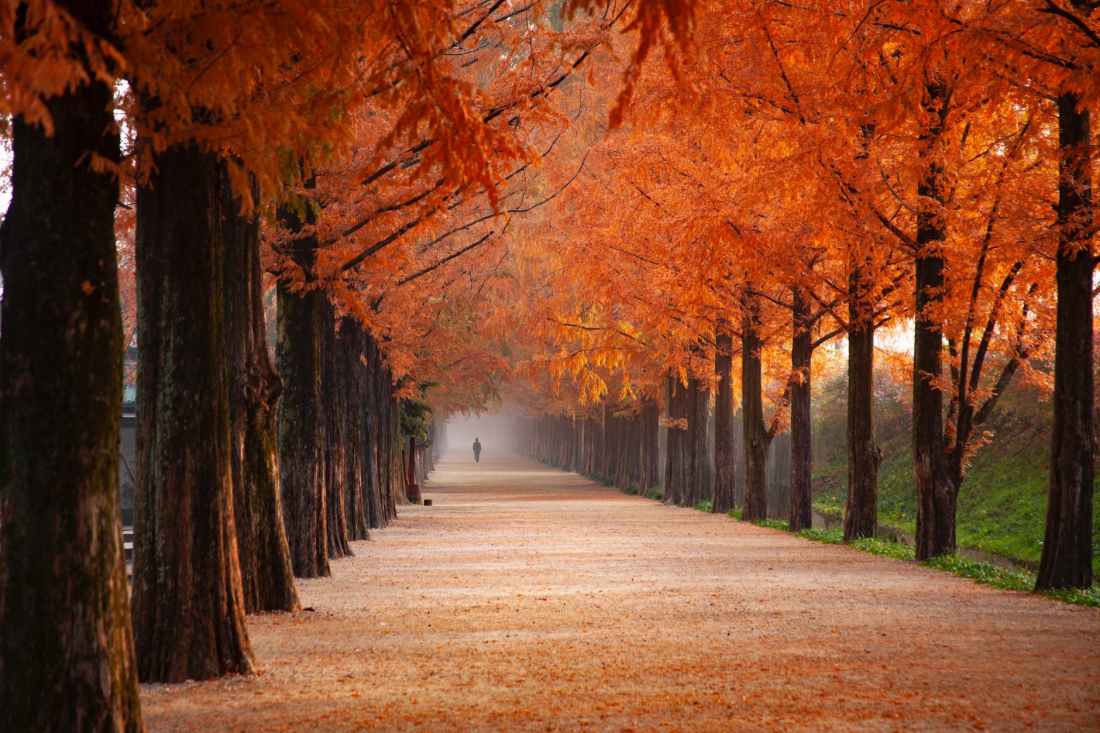
on the creaking pinewood. The air was
still,
a low September sun
buttering the track
in front of us
and the turning trees
all around us
and the pale skin
of her arms, her legs,
and that gentle,
dappled face.
“Do you remember
when we were spring?”
I nodded, watching
her lips break
into that dimpled smile. In
her eyes I saw again
the boats
and the blossom,
like promises, journeys
only taken in our minds
One of England’s greatest composers, Benjamin Britten composed some of the most memorable music of the 20th century.
So let’s take a quick look at his birth chart. He has Cancer rising, with a wide Mars Neptune conjunction near the ascending degree, the latter being closely trine his Sun and a retrograde Mercury on either side of the Scorpio/Sagittarius cusp. Sounds complicated?
Inspirational Neptune
As I have noted before, Neptune is very often prominent in some way in the charts of creative artists and composers.
I suspect this is the source of much inspiration. Britten was from Lowestoft in Suffolk in the east of England, he was brought up by the sea and had a strong connection to it. One of his most famous pieces, the opera ‘Peter Grimes’ was inspired by this.
Emotional force
Neptune in Cancer in his first house symbolises this, with the added emotional force of Mars, which may have been difficult to control at times.
In my own mind, I equate that wonderful sound in music of the rolling waves releasing on the beach from the ‘Four Sea Interludes‘ of ‘Peter Grimes’, to the Neptune Mars in Cancer conjunction. It’s beautiful, imaginative, and slightly disquieting. Neptune’s supportive connection to the Sun will give him further innate sensitivity.
Retrograde Mercury thinking out of the box
I am also interested by the Sun conjunct a retrograde Mercury bestriding the Scorpio Sagittarius cusp, in houses 5 and 6.
It’s almost like a confusion of identity here, where the mental processes are turned more inwardly, unusually, and ‘out of the box’, and where the sense of self (the Sun in last minute of Scorpio) is always looking beyond but never quite getting there.
In some sense this may have been another prime reason for him becoming a composer and musician, in that the challenges of expressing thought conventionally with the retrograde Mercury, can be given over to creative, musical inspiration, expressed through ways alluded to above.
Strong attachment to roots
Mars is also ruler of houses 5 and 10, giving much energetic support and a link between his creativity and career path. And it is interesting to note that he was a fine conductor and pianist too.
His ruler, the Moon, is in Virgo in house 3 but very close to the Nadir of the chart, trine to Jupiter. He clearly has a strong emotional connection to his roots, probably his mother, and he never lost that sense of ‘belonging’ to the Suffolk coast.
However, in Virgo the Moon is quite fastidious, supported by a more circumspect Jupiter in Capricorn, a quality which will certainly help the art of putting all that inspiration from Neptune down on paper.
I have heard it said, and have had much experience of it, that astrological birth charts speak for themselves. What does this mean?
Well, for example, I chart I did recently for ‘Lenny’ who was born with Pluto exactly on his Scorpio midheaven, a part of the chart which is traditionally associated with career direction. I am treating this particular position pretty much in isolation in this instance.
The deep trawl of Pluto/Hades
So symbolically we have Pluto with all his associations of the underworld (masks), drastic change, transformation, if you will, tenured in the sign which some say he rules, Scorpio, a sign associated (along with the eighth house) with sex, death, regeneration, deeply intense things.
Of course Pluto is in each sign for many years but when he touches a sensitive angle or makes an aspect to another planet, then these forces will be felt much more keenly and personally.
An accidental career?
Taking ‘Lenny’ here as an example, he spoke to me of his growing love of investigation, how he had, quite ‘by accident’, gradually moved into a career involving crime investigation at a deep, more serious level. He hadn’t even suspected, until recent years, that he would find it so interesting.
The fact that transiting Pluto was hovering about another important angle, was clearly quite significant too, perhaps acting like a ‘slow’ trigger.
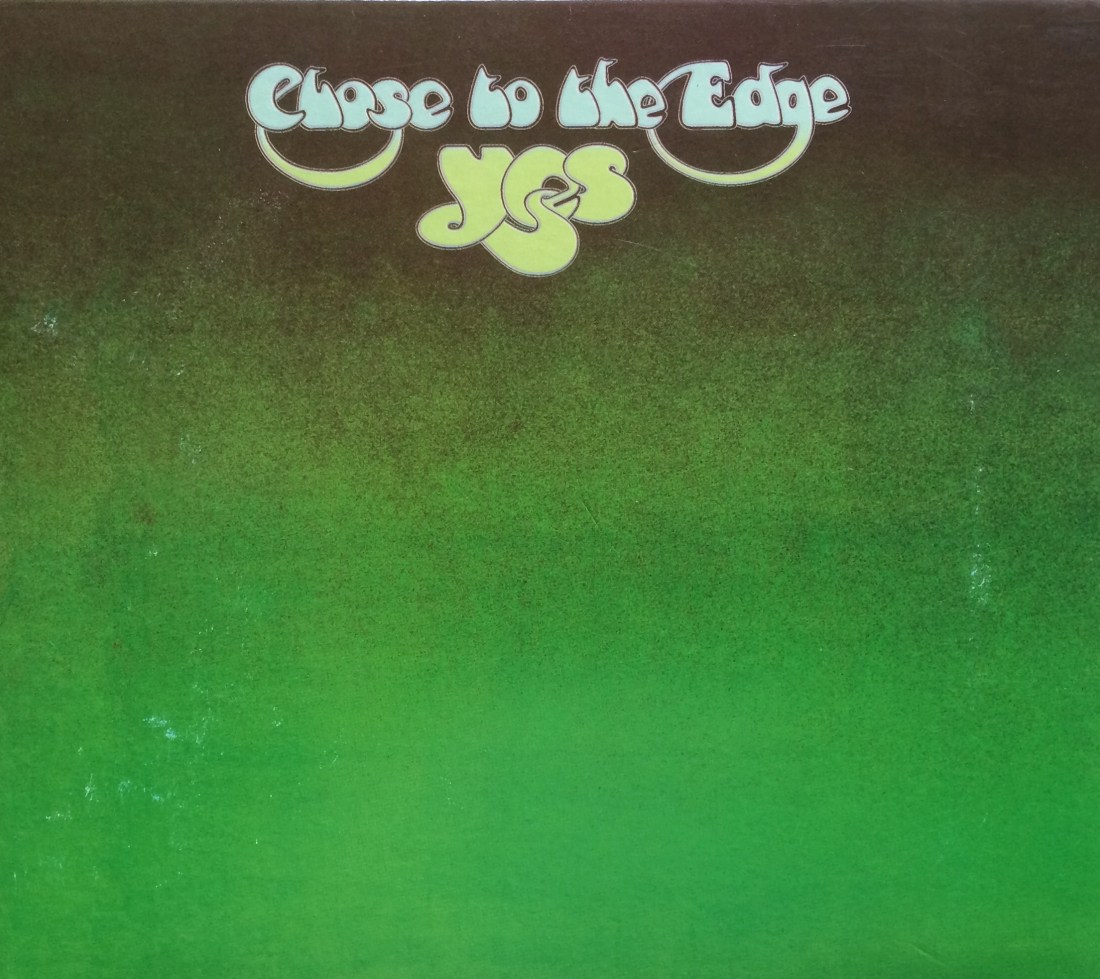
Probably my favourite all time prog rock album, ‘Close to the Edge’ (Elektra/Rhino CD) by Yes.
I was quite young when this came out in 1972 and didn’t actually hear it until later in the following year, when my elder brother brought it home. I think I had heard ‘Fragile’ by then too, the band’s 1971 release, which kicked off with ‘Roundabout’, one of Yes’ more ‘accessible’ numbers for a young boy. Nevertheless, I remember being pretty impressed by the whole album.
Spiritual sound
However, when my brother put ‘Close to the Edge’ on our family hi-fi, at first I wasn’t sure what to make of it. The slow start of planetary, naturalistic sound, the incredible weaving together of all the different movements of side one, took some time for me to appreciate, but now it’s like one epic poem, a vast spiritual movement of sound that is hard to describe, in words. It just has to be experienced, let it take you somewhere.
I still particularly like the ‘I Get Up I Get Down’ section, so beautiful, bringing together all the singing talents of the band, not just Jon Anderson, but also Steve Howe and Chris Squire.
Five virtuosos
Which leads me to a major point. Has there ever been a better example of five incredible talents working together, at the top of their game, producing such a masterpiece? I would doubt it.
Jon Anderson’s unique voice and inspirational lyricism; Bill Bruford’s peerless percussion; Steve Howe’s sheer virtuosity on six and twelve strings; Chris Squire’s uniquely lyrical bass and underrated singing; Rick Wakeman’s pure genius and dexterous flair.
It would prove to be a small window, sadly. Very soon, Bill Bruford would be on his way, followed soon after by Rick Wakeman. But what a beautiful, ornately made window it was. It was of its time.
Woven together
Side Two for me is equally impressive. I can still quite easily listen to ‘And You And I’ on repeat. I love the start, with Steve Howe hitting the harmonics on his twelve string, the way Rick’s synth plays over the top is so joyful, full of life. And like all Yes tracks, it’s difficult to envisage how they all put this together, so differing are the elements, but they come to together beautifully, woven by lyrics which are both hard to fathom, yet totally fitting – a Yes trademark.
And the final track, ‘Siberian Khatru’. Heaven knows what it’s about but if I had just one track to take to my desert island, I think it would be this.
Atmospheric
Great, catchy guitar riffs to start off and great rock playing by the whole band, but soon the wonderful group singing harmonies come in to play, adding a great atmospheric and naturalistic feel.
Then all the virtuosity of the band kicks in – indescribable. Especially, towards the end when they sing pairs of mysterious words with lots of reverb, which may, or may not, be related… but it works, it means something, though I don’t know what it is. And did I mention Steve Howe’s jazzy guitar on the outro?
It’s easily overlooked that Picasso was not merely a painter.
You can include sculptor, printmaker, ceramicist, stage designer, writer, poet and playwright to his considerable repertoire.
Even what he is best known for, Cubism, is like an attempt to solidify a two dimensional form.
With a Leo ascendant, there is a powerfully creative approach to life.
His ruler, the Sun, in Scorpio in house 4, anchors him deeply in the fathoms of psychology and in the ancestry, symbols and mythology of his and the collective genetic past.
Appreciation of beauty
So much has of course, rightly, been made of this. But he also has Venus in Libra in house 3.
Here is an appreciation of beauty (and women) and a need to express it verbally and through written form: writing and poetry.
This Venus is in a loose sextile to a house 5 Moon in Sagittarius, giving him wider creative expression for this trait.
Then there’s Mars, his sun ruler, in Cancer in house 12. Here is the emotive energy which can erupt from the subconscious through creativity, aided by the sextile to inspirational Neptune in Taurus in house 10.
Constructive transformation
But it’s his Taurus house 10 which is most interesting.
Here we have Saturn and Neptune in a loose conjunction, with Jupiter and Pluto doing the same later in the sign, opposed to Mercury in house 4.
Here is the purpose of strong physicality, the constructive approach, the need to transcend it, expand it and ultimately transform it into something else, the latter examined and inspected deeply, with great intensity.



 Ciscography