Fabulous Fairport Convention – Folk Rock at its Best

An Evening of Brilliant Music, Humour and Poignancy in Spalding.

On the Saturday evening of May 11, ‘folk rock’ band Fairport Convention once more graced the stage at Spalding’s Civic Centre.

Although the auditorium was not quite full, there was a good, convivial atmosphere, helped by the band members’ laid back approach, great sense of humour and also by the timeless quality of the music aided by a back catalogue of over fifty years, even though the subject matter of these songs is often anything but genteel.

Take the song ‘Matty Groves’, described by founder member Simon Nicol as having two chords and nineteen verses. The song itself is a traditional, lascivious and violent tale, originally adapted for Fairport’s landmark album, ‘Liege and Lief’ in 1969, and is delivered with a rocky, cutting edge, one of the best examples of ‘folk rock’ in my opinion.

Cutting Edge Rhythm Section

Throughout the performance, that cutting edge was amply provided by the deft skills of the highly experienced rhythm section, namely Gerry Conway on percussion and Dave Pegg, the latter’s dexterous familiarity with all of the neck of his bass guitar being a wonder to behold, as was the light hearted attitude he exuded. I have seldom seen a more lyrical example of great bass playing.

Not to be outdone, however, Gerry gave a stunning, virtuoso percussive performance which combined his conventional, rather minimal electronic set with what I understand to be a traditional Peruvian drum called a Cajon (Spanish for box) on which he actually sat all night. Simply remarkable.

And the evening was not all about the band’s older back catalogue either. For example, there were lovely performances of songs written more recently by multi-instrumentalist Chris Leslie, whose easy transition from fiddle to mandolin to guitar to tin whistle… was amazing.

Conversely, yet equally impressive, was the fiddle-dedicated Ric Sanders, whose unconventional, at times jazz influenced, reverb infused playing style, perfectly complemented the rest of the band.

What is more, there were the fantastic vocal harmonies too, adding to the overall richness and quality of the sound.

Leader of the Band

However, the undoubted leader of the band is founder member Simon Nicol, whose precise, often understated guitar playing could not be overlooked, especially by amateur guitarists like myself who appreciate exactly how well he does it.

Furthermore it was Simon who provided the most poignant parts of the evening. The band’s rendition of Sandy Denny’s ‘Fotheringay’ was a particular highlight, sung with deep feeling by Simon, the story of Mary Queen of Scots final hours in 1587.

IMG_1280
‘The Hiring’. Statue recently erected in Hall Place, Spalding

Equally moving and with some local interest too, was Ralph McTell’s beautiful song ‘The Hiring Fair’. Simon had clearly seen the statue ‘The Hiring’ recently erected in Hall Place in the town centre, giving a precis of how hiring fairs used to work throughout the country.

And so to the encore, which had to be the anthemic ‘Meet on the Ledge’, one of the band’s best known songs. It’s exactly fifty years since the tragic road accident which took the life of drummer Martin Lamble and Jeannie Franklyn, who was Richard Thompson’s girlfriend.

In the aftermath of the tragedy the band nearly split up. Thankfully for us and to continually honour those who died, they decided to carry on, though it was clear that the anniversary of the event was leaving its mark on what was a very enjoyable evening.

Finally, there is the Cropredy Convention which takes part every year in August over three days. If you missed them this year on their spring tour, why not try to catch them at Cropredy? There are many other bands and musicians to see and a good time will be had by all, that’s for sure.
Discover Spalding’s Ayscoughfee Hall No.1

IMG_1273

So how do you pronounce that?

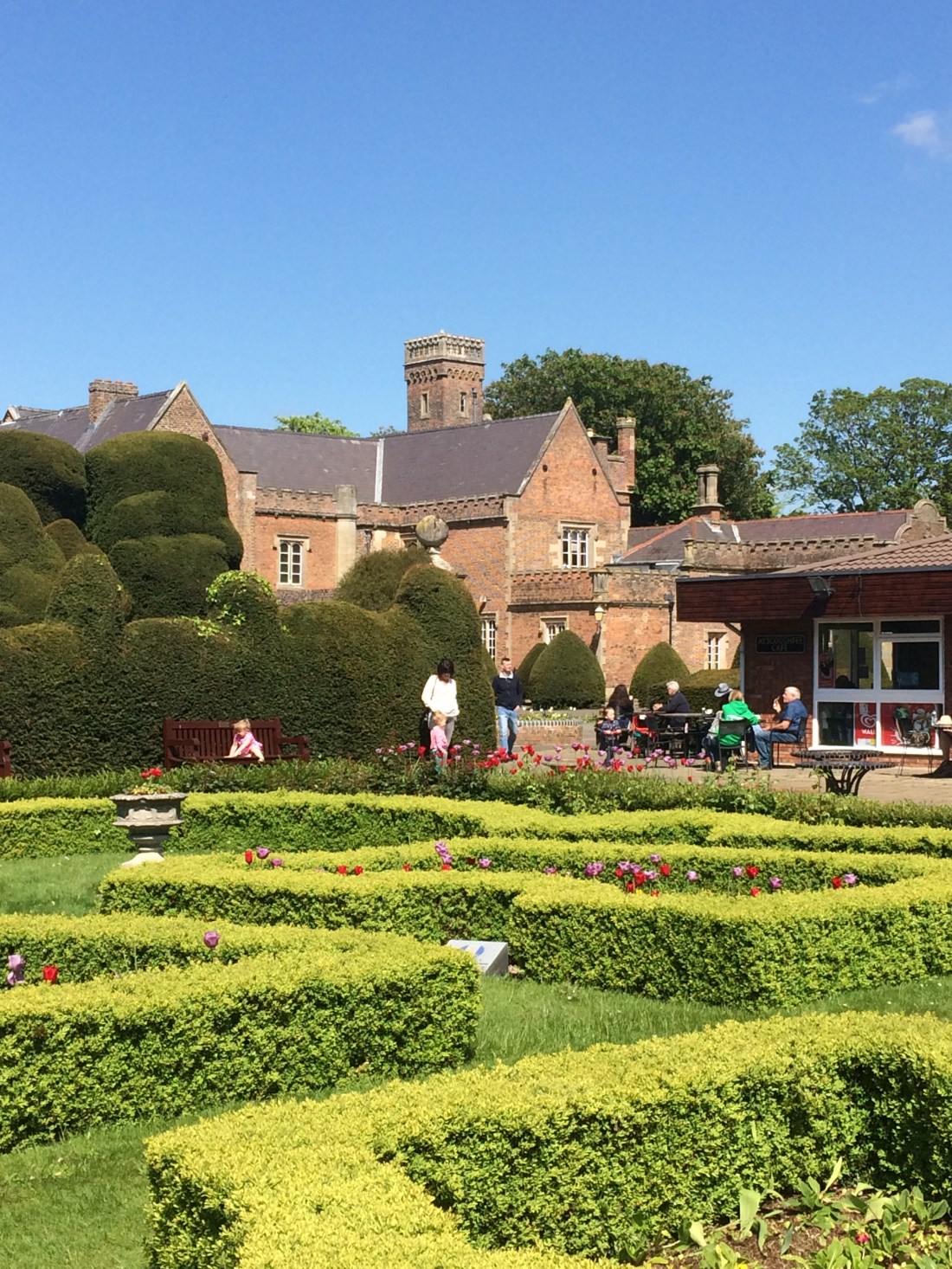
Visitors to Spalding in south Lincolnshire usually do a double take when they see the name, ‘Ayscoughfee’, relating to the wonderful late medieval building in the town centre.

Locals naturally all know it’s pronounced ‘Ascoffey’!

Once you get over that hurdle, there is much to admire in this Lincolnshire gem. There are wonderful gardens, monuments, an aviary, a museum and a cafe.

More pictures will follow soon.


The Elemental North Norfolk Coast

boatsoffcromer©dfbarker
Cromer, North Norfolk

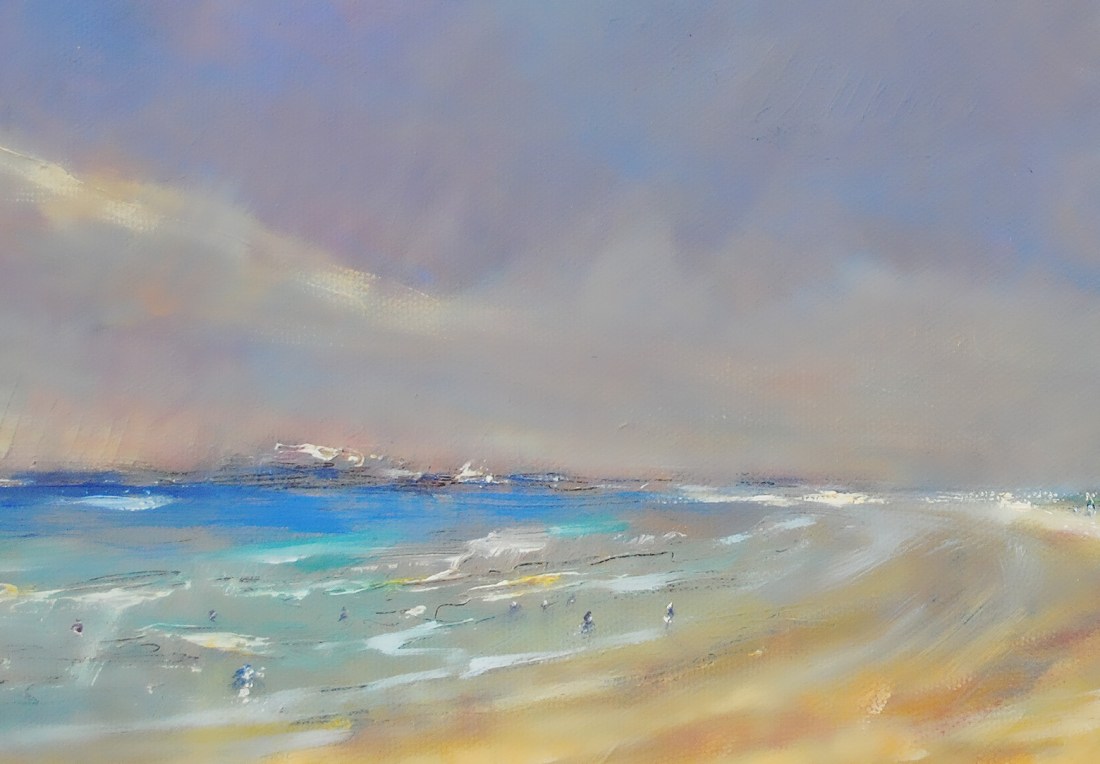
No excuses, just thought I’d share again a couple of my past impressions of one of my favourite places.

foam
Titchwell, North Norfolk

If I ever got serious about oil painting and painting in general again, I think I would have to visit more places abroad. Like the south of France where the light is glorious, so I am told!

Of course North Norfolk’s geographical position is almost unique in England, which gives it its particularly quality of light, strong blues; whereas in the Mediterranean, for example, the brighter colours predominate.

Amerigo Vespucci – What’s in a Name?

Portrait_of_Amerigo_Vespucci
By Officially unknown (poss. Cristofano dell’Altissimo) – Uffizi, Public Domain, https://commons.wikimedia.org/w/index.php?curid=18157134

We owe Italy quite a lot really, don’t we?

Pizza, pasta, risotto, fine wine, passion, flair, fashion style, not to mention the Romans (and yes, what did they ever do for us?) to name but a few. These are things our lives would be far less rich without.

Well, some say it was around this day in history, May 10 or 11, when someone else Italian set sail on a voyage to what we now term ‘the New World’, namely Amerigo Vespucci.

Born in Florence in 1454, Vespucci is famous for debunking Columbus’ notion that the West Indies and Brazil were in fact the other side of the world, actually the easternmost parts of Asia.

In other words, he envisioned the new discoveries as a completely new, separate landmass from Asia. Originally termed the New World, what the new continent lacked was a proper name. Step up Amerigo Vespucci once again, whose latinised Christian name reads as ‘Americus’.

It was only a small step from there to someone suggesting that this huge piece of earth should be called after him, but with a feminine ending – America – and why not? Are we still grateful to him and Italy?

PS. Of course, we know now that the Vikings founded what they termed ‘Vinland’ in what is now the north eastern seaboard of North America centuries before Columbus, but that’s another story…

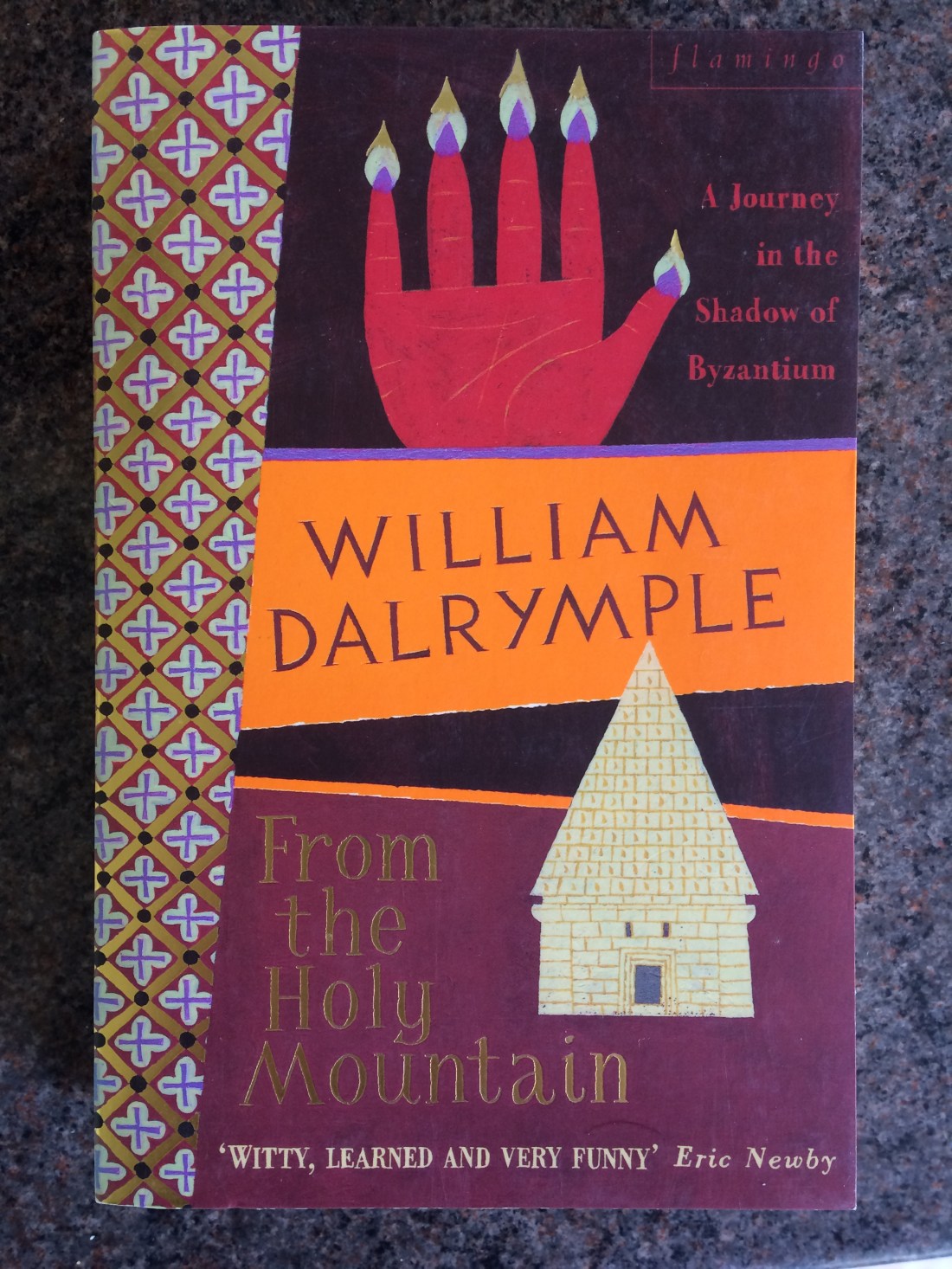
Leo’s Book Review: ‘From the Holy Mountain’

IMG_1248

‘A Journey in the Shadow of Byzantium’. By William Dalrymple.

I can’t tell how inspirational I found this book when I first read it.

At the time, around 1997, I was virtually reading nothing new beyond a few books on astrology or Buddhism, two subjects I was heavily into at the time.

Then one chance visit to a bookshop and this title seemed to shout out from the shelves, saying ‘Read Me!’ The cover and illustrations are simply stunning, produced by Dalrymple’s wife, Olivia Fraser. They fit hand in glove with the content in a way which leads you in with all the colourful and sensual allure of a Bazaar… but that would perhaps be an ironic observation, in that this book is a travelogue revealing the long slow demise of Orthodox Christianity in the Middle East.

Essentially the book is based on the journey of a Byzantine monk and historian, John Moschos, in 578 AD along the Silk Route which the author retraces, only to find that much of that culturally rich and colourful Christian soaked world has now gone and in further more rapid decline.

Humour and Grief

There are strong elements of humour, similar to Dalrymple’s earlier work ‘In Xandadu’ (which still leaves me in stitches when I re-read it), but ‘Holy Mountain’ is a much more serious, haunting book, leaving you practically grieving for the lost world of Byzantium, the continuation of the Roman Empire in the East.

From the first sentence, where the author describes in plain yet evocative prose the cell in which he is staying at the start of his journey from Mount Athos in Greece, you are led into another world, not only the rather fraught one of today within the author’s mind, but also this lost, remoter world, which somehow seems much more wholesome and meaningful than our own despite all the technology which allows me to write this.

Similarly his all-round historical knowledge of Byzantine and Islamic culture, plus his understanding of architectural detail are stunning, yet written succinctly in such a way as to not put you off with complication. It is a great gift.

Vestiges

In places he finds these vestiges of Orthodox Christianity, monasteries and churches barely holding on, plus apocalyptically minded priests, and his description of the characters he meets fills you with both hope and resignation too, a feeling that his generation might be the last to witness such places and people.

By the end, the author seems like a forlorn character, reminding me of Paul Morel in DH Lawrence’s ‘Sons and Lovers’, as he walks away after his mother had died. The sense of loss and hopelessness are overbearing at times.

In doing this review I have realised I must re-read this wonderful book once again. It was first published in the mid 1990s; I wonder how much of the world he describes is still there 22 years on?

So I can’t recommend this book enough, it brought back my love of reading.