England’s Heritage, Peterborough Cathedral Part II – Two Famous Queens

IMG_1892 (1)

Peterborough Cathedral in the east of England is one of the country’s biggest and most beautiful churches, with an association with two famous queens.

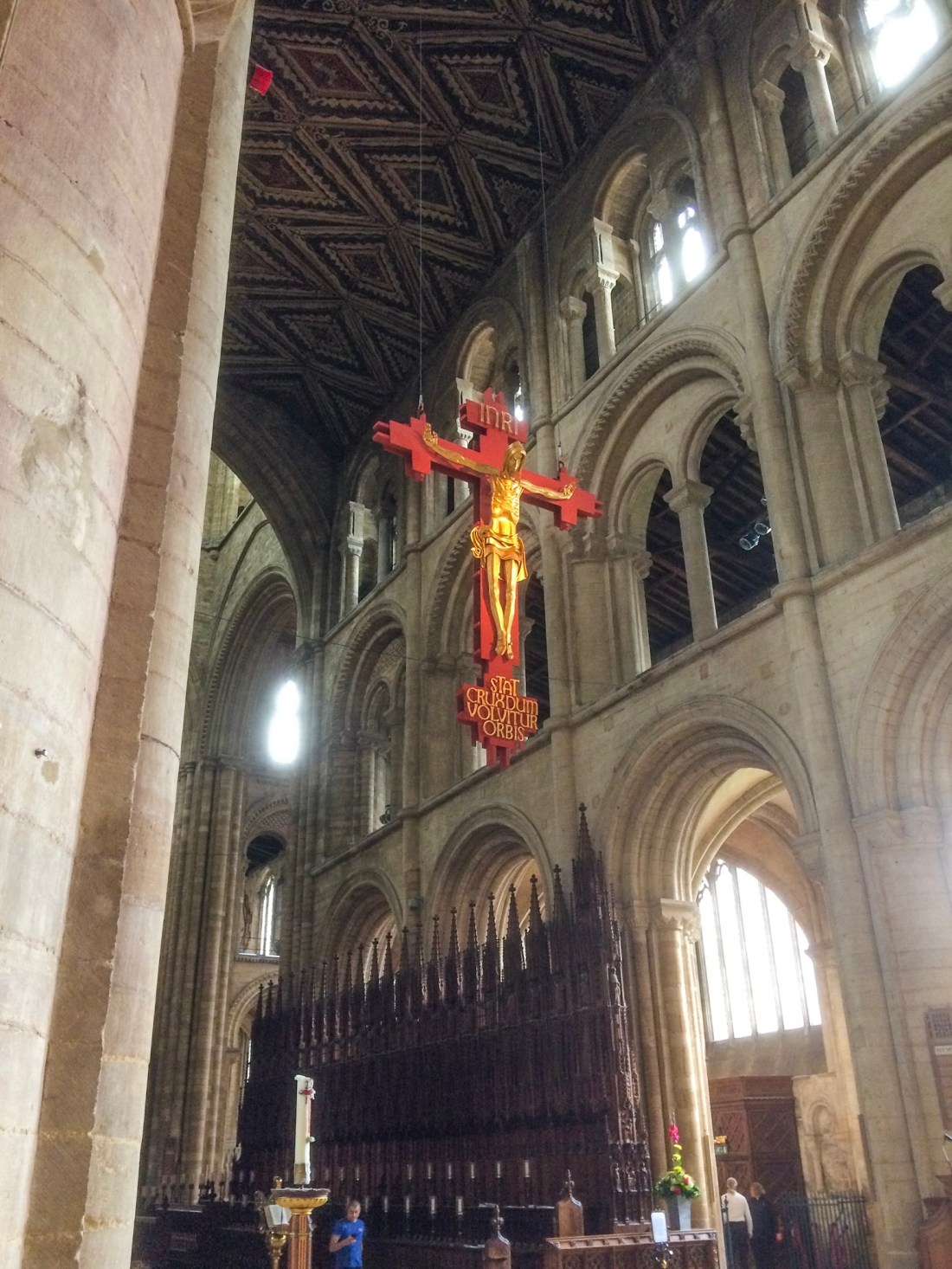
The long nave is quite stunning, with a beautiful roof and with a modern golden image of Christ suspended high as a focal point.
IMG_1893

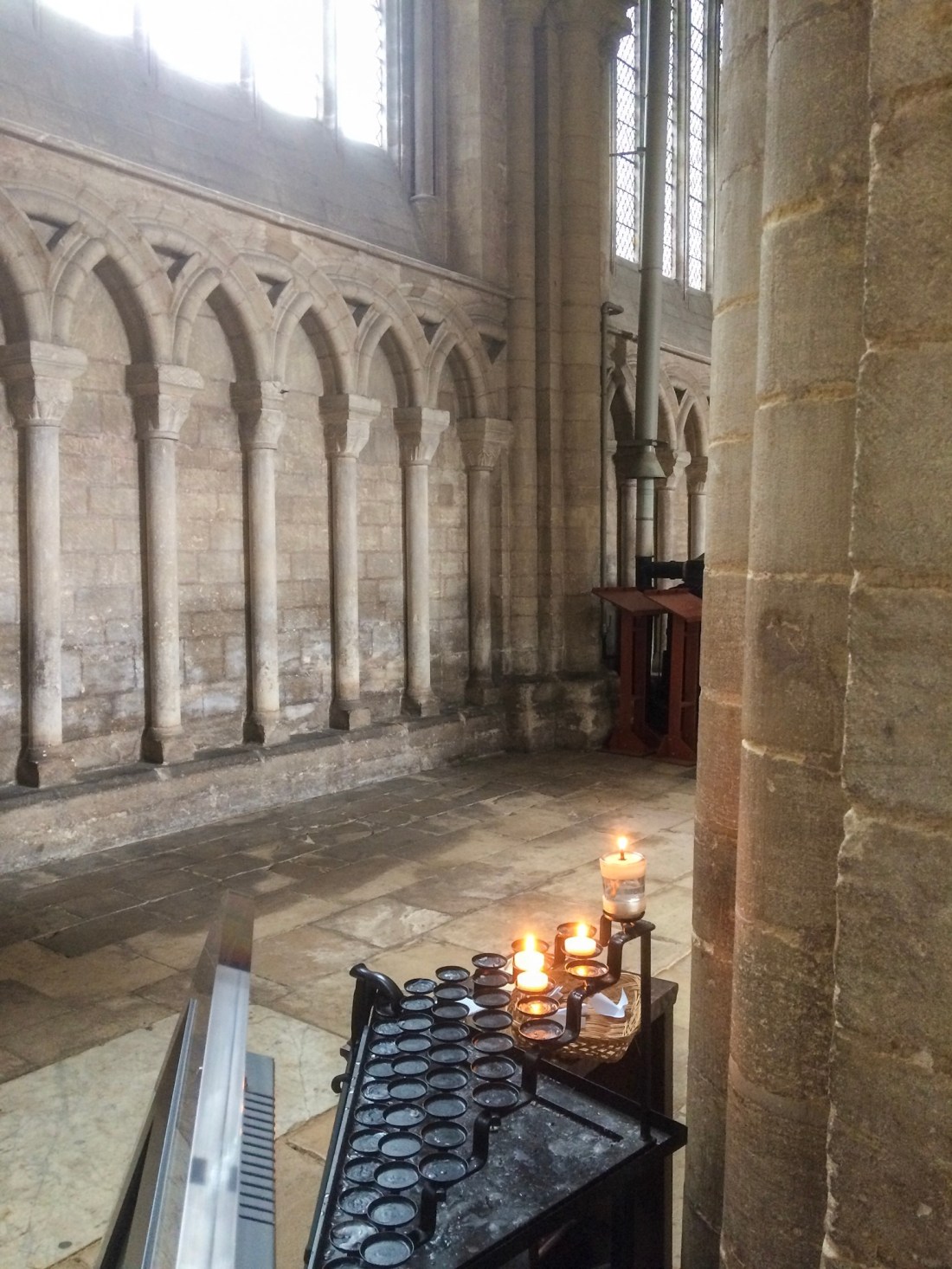
The cathedral is dominated by Norman and early English architecture, with numerous examples of Norman arches, such as these interlacing examples above.

IMG_1894 (1)
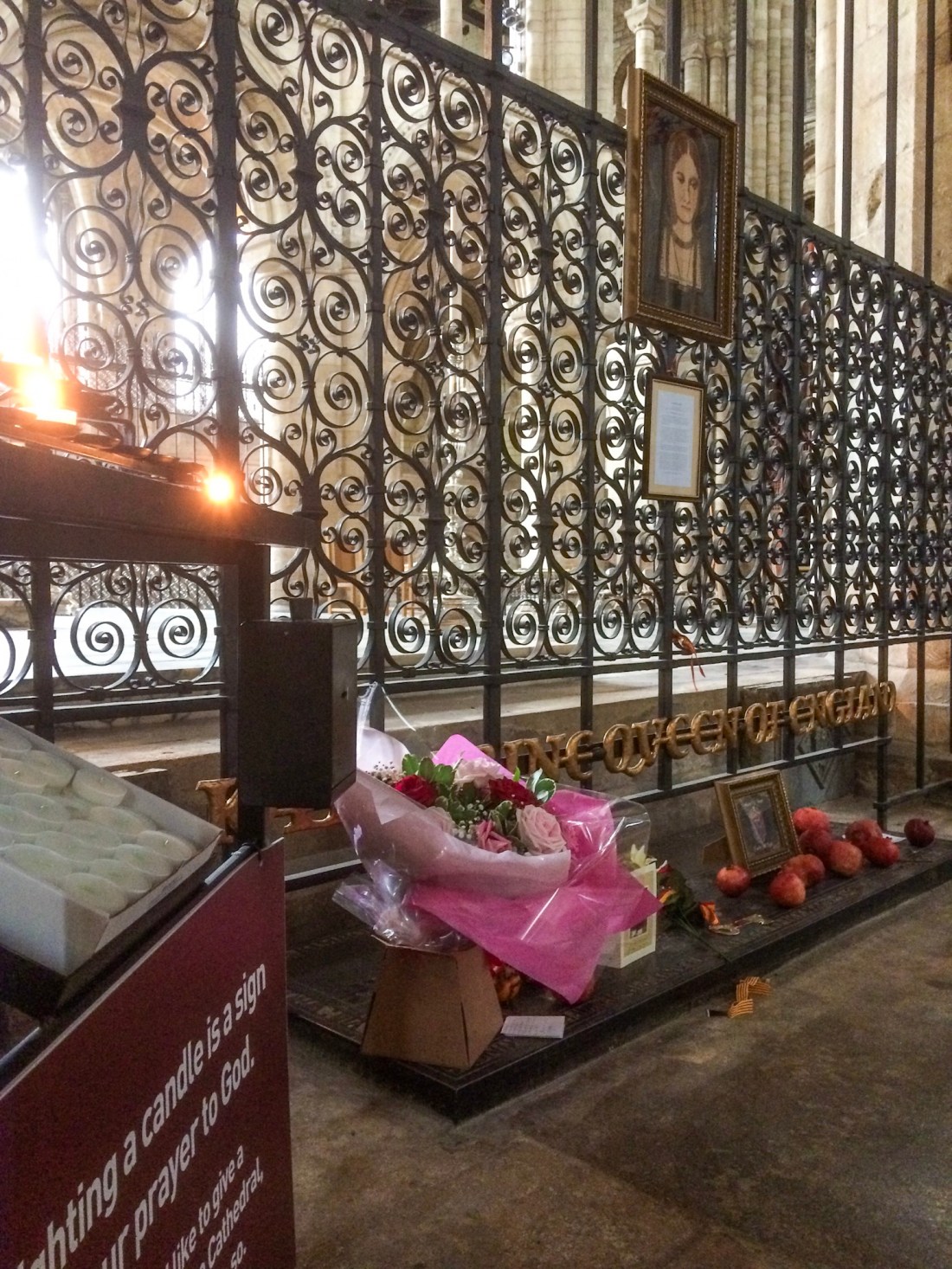
Catherine of Aragon, Queen of England, is buried here.

The cathedral is also notable for its association with two famous queens.

The first was Catherine of Aragon, Queen of England when she was married to Henry VIII. Catherine was buried here in 1536 and her tomb is still something of a shrine to her memory, with pomegranates very prominent as her symbol because the fruit appears on her badge. Pomegranates are an ancient symbol for fecundity and regeneration.

Catherine certainly suffered much during her husband’s long and protracted break with Rome, in which she was the innocent victim, her only crime it would seem was not being able to produce a living male heir for Henry to perpetuate the Tudor dynasty. This was how she was treated after being completely dutiful to the king, but Henry had to have his way. Her motto, which translates as ‘humble and loyal’, is a phrase she very much lived up to.
IMG_1895
There is a portrait of Catherine by her tomb.
IMG_1896 (1)
Pomegranates have had a long association with Catherine of Aragon.

The second queen associated with Peterborough Cathedral is Mary Queen of Scots.

Mary inherited the Scottish throne after only a few days of being born, thrusting her into a world of political intrigue and shenanigans which she was never able to control.

She essentially became a pawn of more powerful rulers and some despicable characters. However, in 1559 she duly became Queen Consort to Francis II of France, solidifying Scotland’s long alliance with France.

IMG_1900
Scottish symbols hang in honour of Mary who was initially buried here in 1587.

Sadly within 18 months the young kind died prematurely. Had he lived, Mary’s life would have turned out entirely differently. As it was, she became a teenage widow and a long series of political and personal disasters ensued when she returned to Scotland. Eventually she fled to England and came under Elizabeth’s control.

After many years’ imprisonment in England, during which the still substantial Catholic faction within England with aid from Spain continually conspired to depose Elizabeth and put Mary on the English throne, she was finally executed at nearby Fotheringhay Castle in 1587.

She was initially buried in Peterborough Cathedral, but her son, James I of England, had her remains transferred to Westminster Abbey in London.

words and photographs copyright Francis Barker 2019


England’s Heritage: Peterborough Cathedral Part 1

IMG_1886
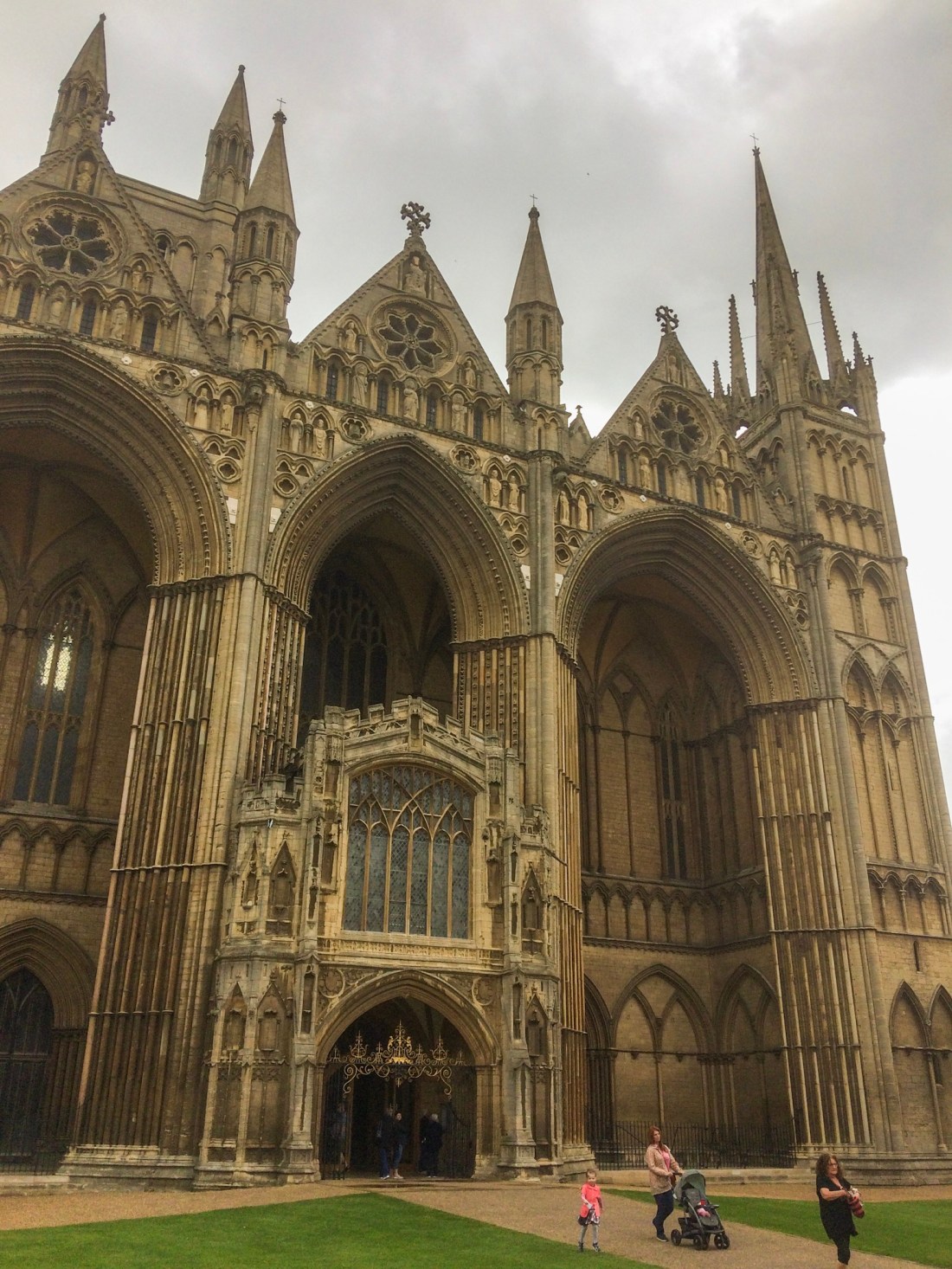
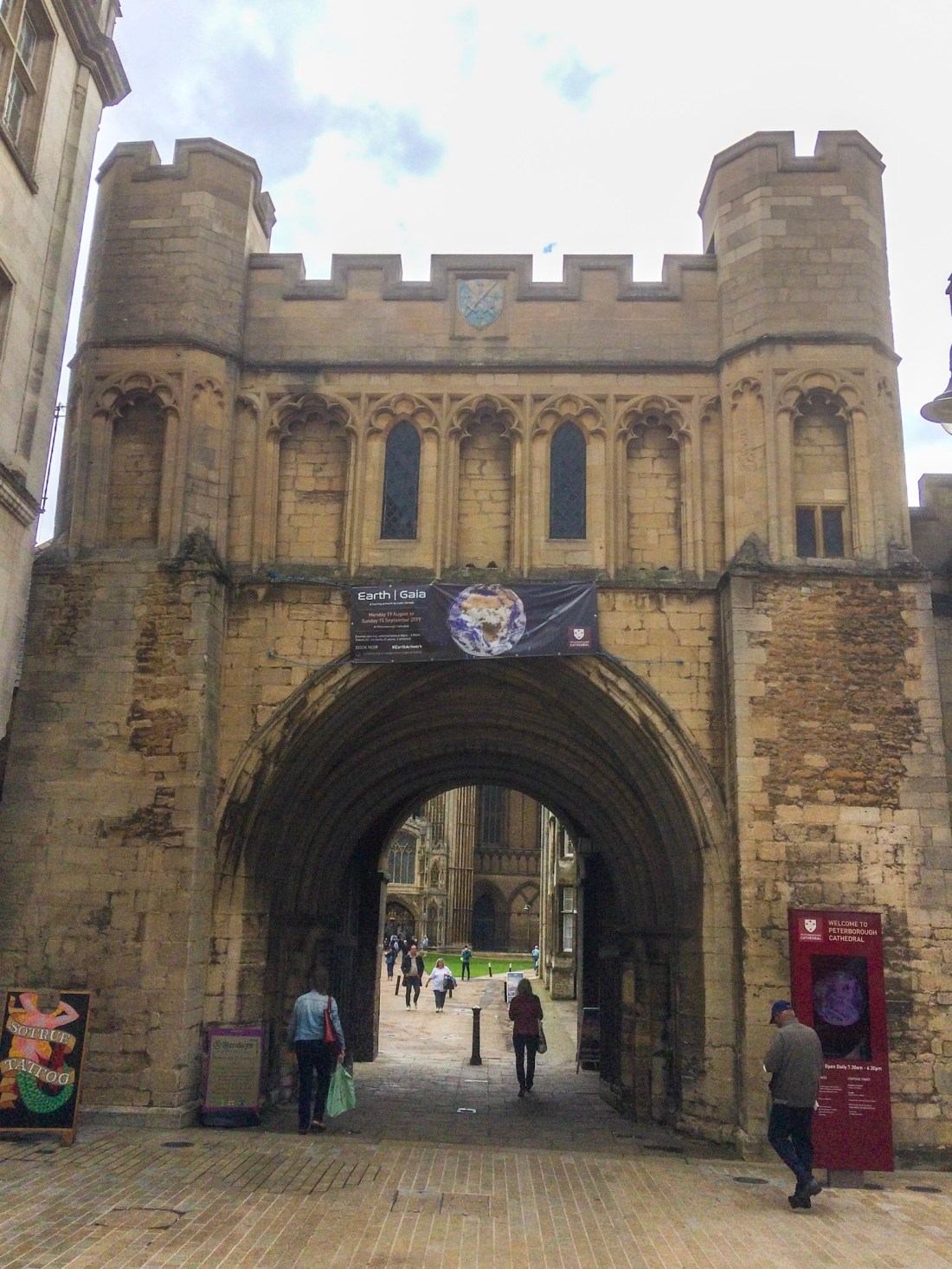
The west gate of Peterborough Cathedral.

Put simply, Peterborough Cathedral is one England’s best churches, though it is often not as well regarded as some others, like Lincoln, Ely and York.

This might be due in part to Lincoln’s prominent setting, Ely’s architectural distinctiveness and York’s admitted supreme grandeur.

Peterborough, by comparison, lies on the edge of the flat fens, yet in one of the primary areas of England for monastic development because of the remoteness of location. In its day, Peterborough Abbey was one of the most prominent in the whole of eastern England.

IMG_1888
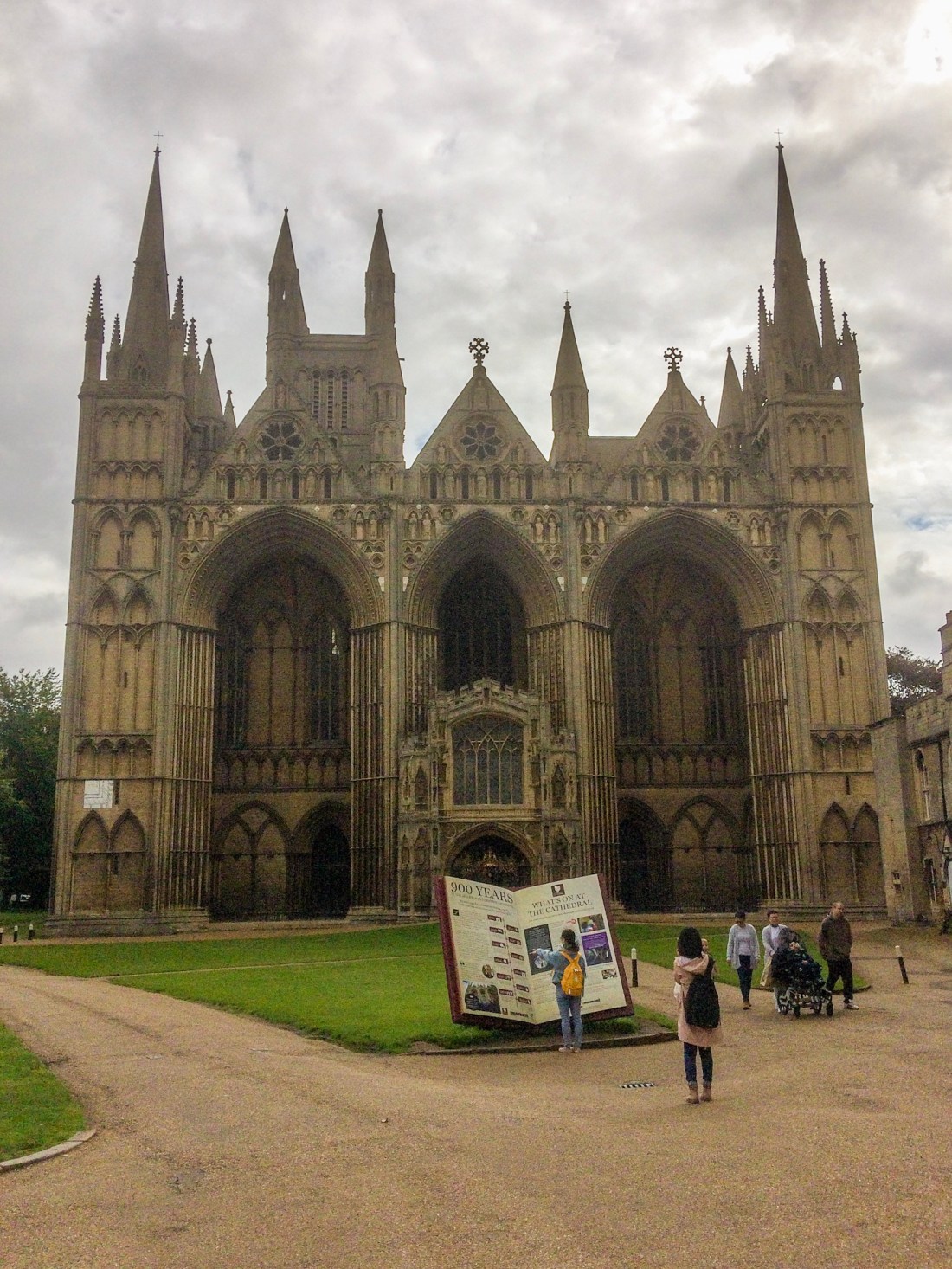
The wonderful west front of Peterborough Cathedral, completed in the 13th century.

Originally the abbey church of Saint Peter’s Abbey, Peterborough, in the east of England, the present church was granted cathedral status (and thereby preserved) by Henry VIII, self appointed head of the Church of England, during the Reformation in the 1530s, which saw many former monastic buildings taken down and sold off. For this at least we should be grateful to England’s most notorious monarch.

IMG_1889

words and photographs copyright Francis Barker 2019
England’s Heritage: Saint John the Baptist Parish Church, Peterborough

IMG_1871

Of course, the city of Peterborough’s greatest glory is its amazing cathedral, but that subject deserves a full article of its own.

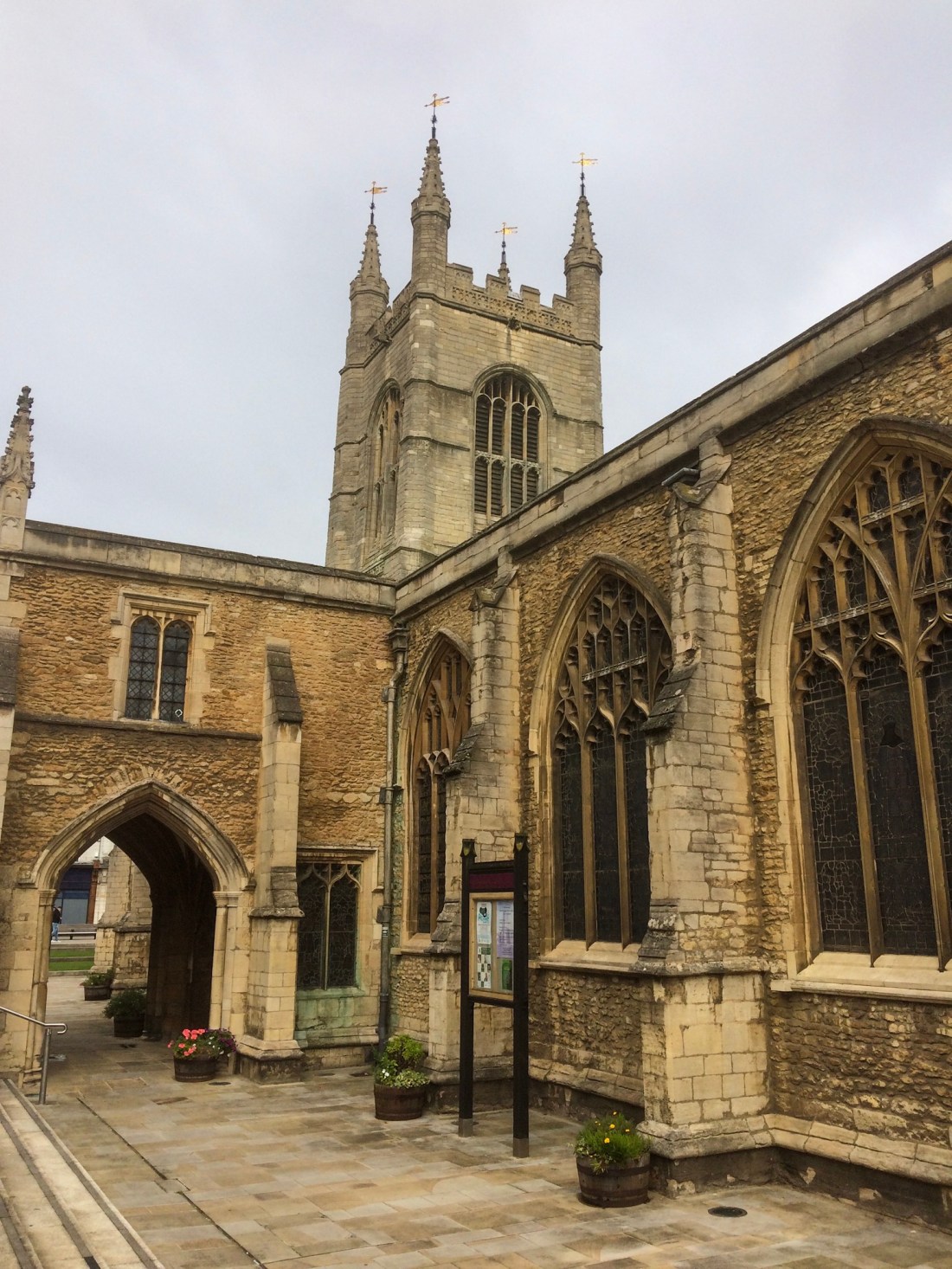
One of the overlooked features of Peterborough, a growing city in the east of England, is the Parish church of Saint John the Baptist around the cathedral square.

Consecrated in 1409 during the reign of Henry IV, its close proximity to the cathedral and the modern shopping mall attraction of Queensgate, probably detracts large numbers of visitors. However, it is well worth a visit, and as is quite usual in England’s medieval heritage buildings, there are often some wonderful ‘hidden’ gems.

IMG_1873

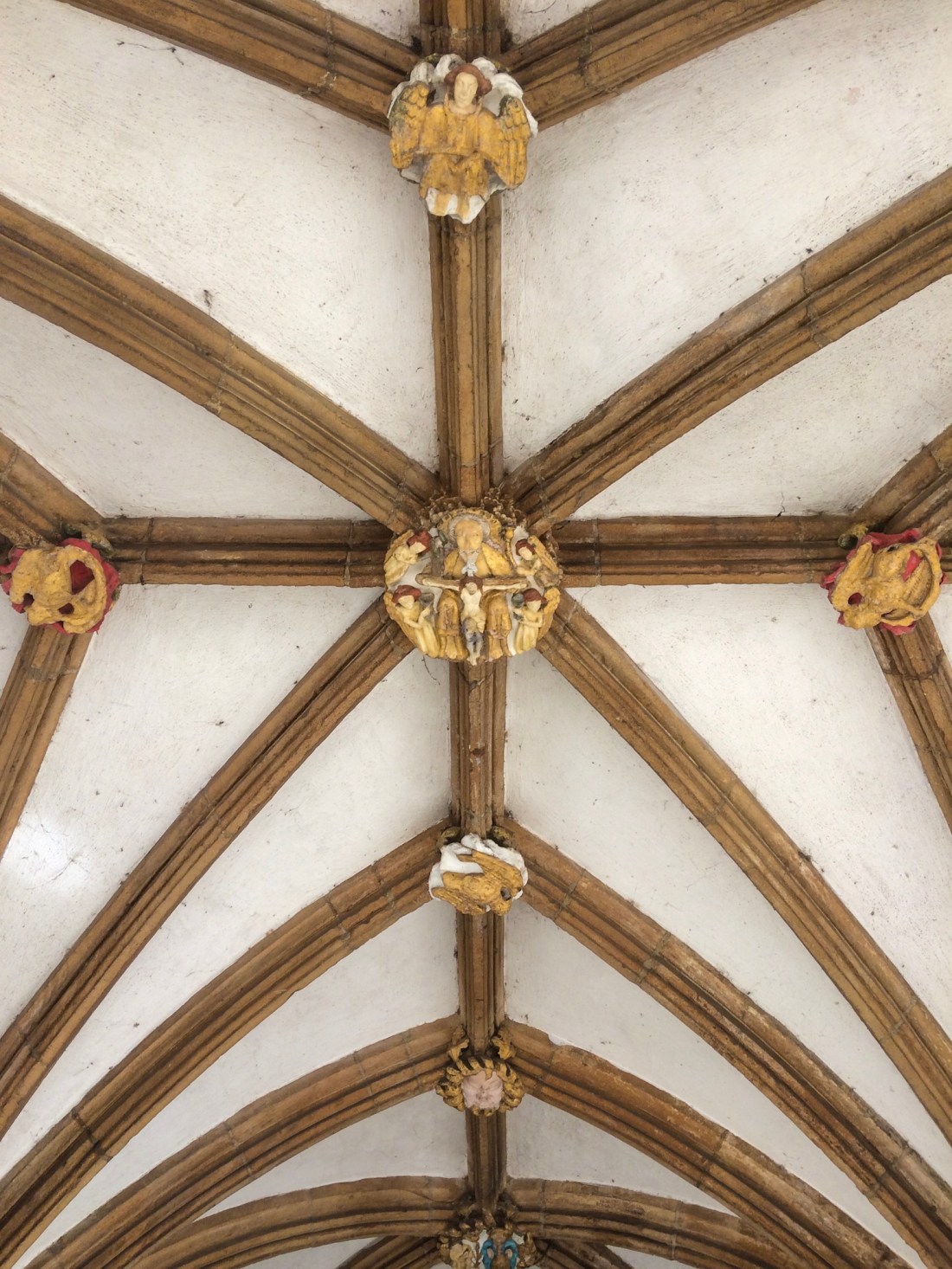
The south porch entrance is most interesting, particularly the roof in the above photograph.

IMG_1874

IMG_1876

The nave is very large and light with a rood screen.

IMG_1880

There is also a wonderful reredos.

IMG_1882

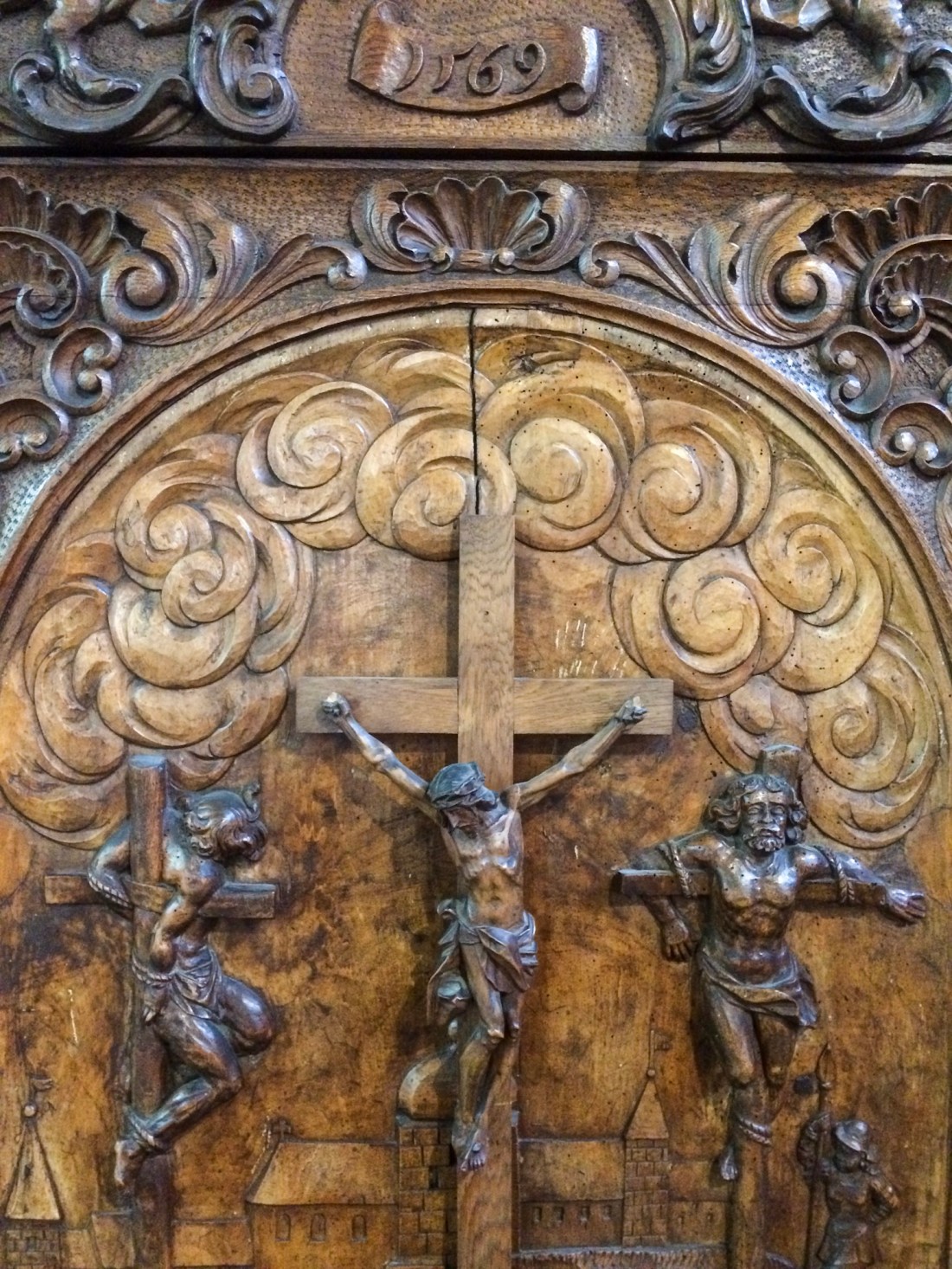
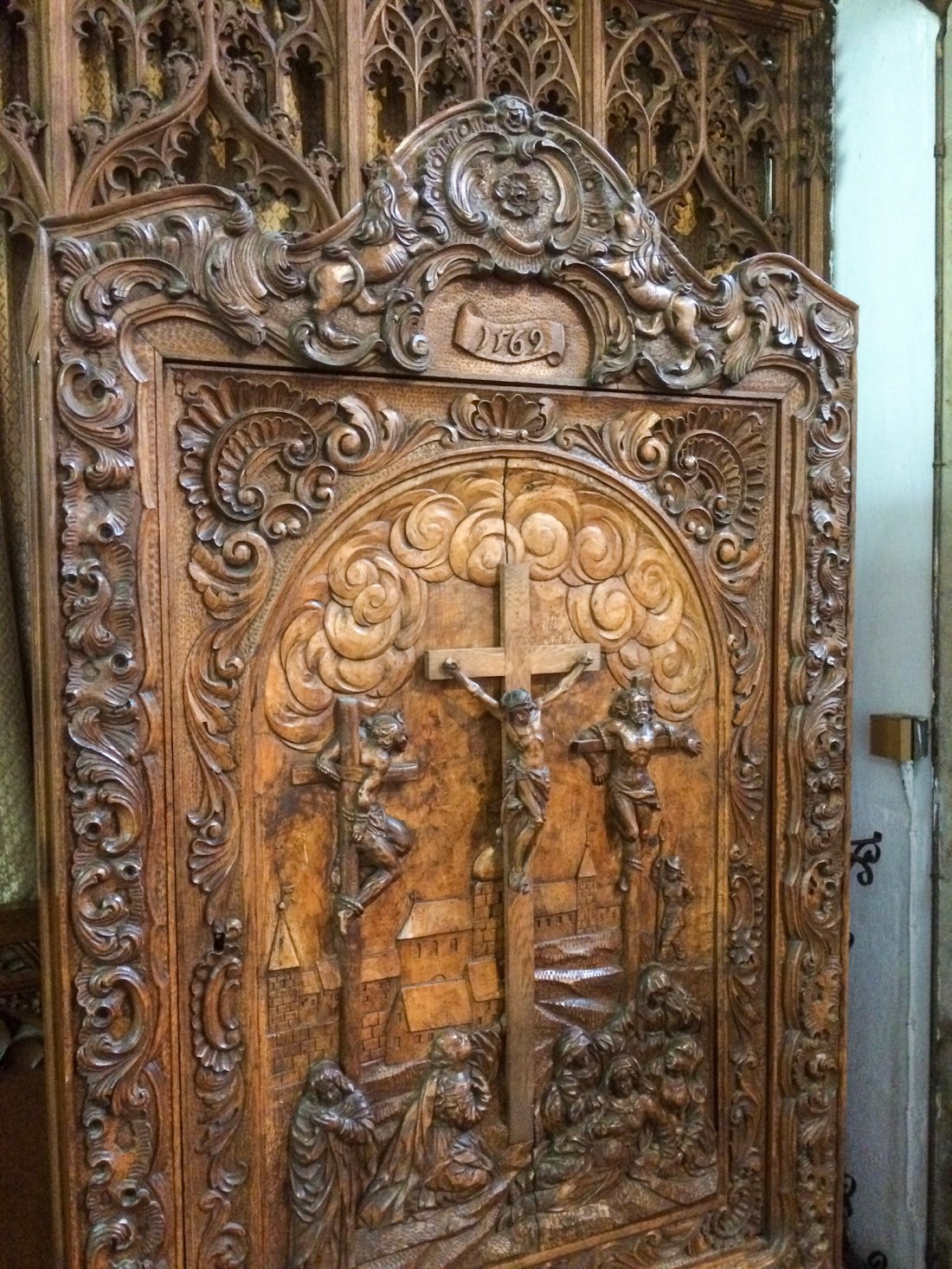
One of the most interesting features is this probable vestments cupboard, dated 1569, a wonderful piece of woodcarving, which I would think is limewood, similar in style to the plethora of such art produced in Germany during the same period.

IMG_1883

The pulpit too had some intricate woodcarving, probably oak by the look of it, although I did not find a date on it, but I would assume it is later than the earlier piece.

IMG_1885

There are even a couple of examples of medieval embroidery by the door.

words and photographs copyright Francis Barker 2019
Poem: The Church Is Closed

IMG_1863

It’s Sunday and the west door is locked.
I’ve tried it, checked my watch, the date.
Yes it’s true, I can’t go inside.
So I walk around, a facade, that’s all it is,
tall and beautiful it may be,
with some of the finest medieval stone work anywhere,
in a county already noted for its
ecclesiastical glories – but
it’s a fossil now of former faith,
where lip services are still carried out,
fed through the waterless canals of devotion,
enacted by the tired words of priests
standing before a withered congregation,
the last one leaving making sure the door
is locked behind them
to preserve the emptiness of our time

copyright Francis Barker 2019

King Edward VI, The Tragic Boy King with a Mind of His Own – Astrology Musings

belief bible book business
Photo by Pixabay on Pexels.com

King Edward VI had the misfortune to succeed his famous father on the throne of England, aged just 9.

Unlike his father, Edward was an avowed reformer and protestant, having been tutored by leading religious reformers of the day.

Staunch Protestant

What is more, Edward appears to have very much embraced the new religion, as well as being a keen student of it.

Astrologically, Edward was born with Virgo rising, with Venus and Saturn close to the ascendant. This reveals a very analytical, even highly exacting approach to life, a love of study and detail. Although not too much is known of him, he does appear to have had a somewhat ‘humourless personality’, yet it is difficult to be critical of someone so young.

A Serious Student with Strong Opinions

His ruling planet Mercury is in Scorpio in house 3, which deepens the mind considerably. Here is a penetrating mind, and probably a very good student who would get absorbed in his subjects. Like his father and sisters, he was very good at languages.

However, this Mercury is also square Mars in Leo in house 12, indicating that although he had a lot of mental energy for areas like intellectual debate, there was also tendency for it to show itself through excessive stubbornness or perhaps fits of anger, a tendency he may have inherited from his father.

Courteous

However, we must also bear in mind that he was a Sun Libran in house 2, so at heart he did have strong sense of companionship and courtesy.

It is known that despite the differences between himself and his eldest sister, Mary, especially in regard to her staunch Catholicism as opposed to his avowed Protestantism, he did show concern for her and wished they could at least get along, even though ultimately this proved to be extremely difficult.

Reticent, but Calculating

His Moon was in Capricorn square his Sun, which gave him a cool, even calculating disposition, which may have come across initially as reticence or shyness. This would underline the rather analytical and fastidious personality.

Once people got to know him, the essential charm would have become more obvious. This tendency might not have helped his reputation for being rather exacting and humourless, however, as mentioned above, and if he had lived to adulthood, he would almost certainly have had a ruthless, autocratic streak, capable of making difficult, unpopular decisions.

Practical Application of Philosophy 

Jupiter in Taurus in house 9 loosely trine his house 1 Saturn, implies an expansive, if rather conservative and very practical interest in philosophy.

After all, we have to remember that Protestantism, though in one sense revolutionary, was in essence a stripping away, an ultra conservative, radical approach to Christianity which resorted to scripture rather than saints.

He was keen to make sure that England’s Protestant transformation became permanent and took a keen interest on the detail, so much so that he agreed to the idea that Lady Jane Grey should succeed him and not his virulently Catholic sister Mary.

Social Upheaval Personally Felt

Around the time Edward was born, the Uranus Pluto cycle was in opposition, both in positive aspect to Neptune (spirituality).

This cycle is all about social change and around 1537, the fallout from the Dissolution of the Monasteries was beginning, with large numbers of monks and nuns being released into the communities and the former monasteries falling into the hands of the king.

Edward’s ruling planet Mercury and Mars are loosely connected to the Uranus Pluto opposition, forming a tense T-square, another strong indication that he was personally connected to (and took a strong interest in) the changing times he was born into the continuing change after that which enveloped the whole country.

What Might Have Been

Edward died aged only 15, probably from tuberculosis, although there were rumours of poisoning.

Had he reached maturity and lived a reasonably long life, say to around 56 like his father, it seems clear that England would have become a fully Protestant country much earlier, even though large parts of the country would remain strongly Catholic for a few generations more. This would almost certainly have led to religious turmoil.

What is more, judging from his birth chart, Edward would have taken a strong leading role in to seeing to the imposition of this new religion and would have been as vehemently Protestant as his sister was Catholic.

copyright Leofwine Tanner 2019