
Crow is in the Crown
The arch is in monarchy
Dark wings in the sky
copyright Francis Barker 2020
copyright Francis Barker 2020
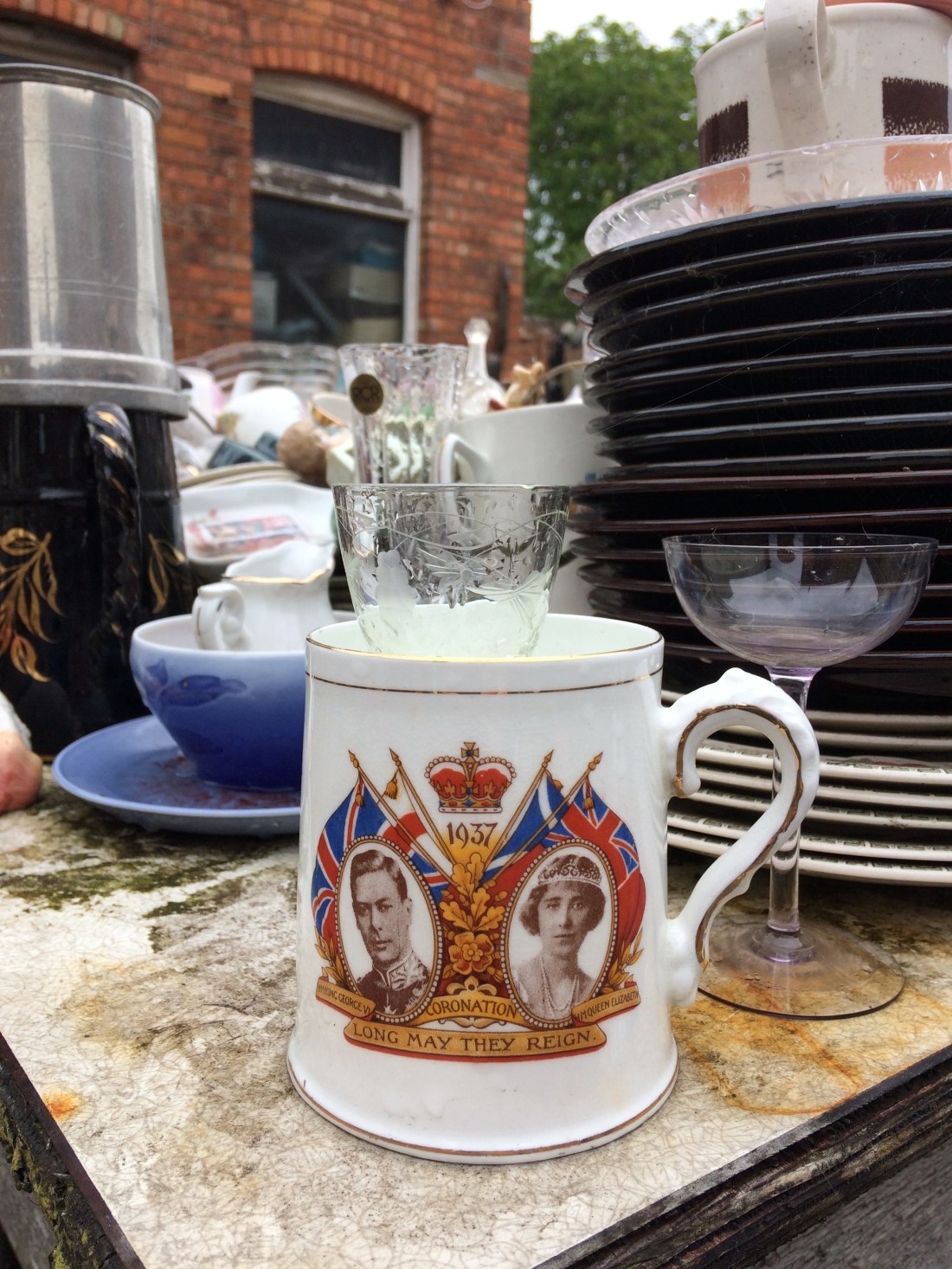
copyright Francis Barker 2020

Edward VIII officially gave up his kingship, his rule over an empire which spanned the earth, on which the sun never set. All because, we are famously told, for his love of an American divorcee, Wallis Simpson, a situation which could not be tolerated by the highly conservative establishment of the time. But of course it was a bit more complicated than that.
Like quite a few Britons at the time, Edward was an admirer of certain European dictators. After the abdication he became more than a mere acquaintance of one of them, something which didn’t go down too well in certain parts of the British establishment, as Europe and the world was led inexorably towards war.
As Prince of Wales he had been quite popular with his people back home and throughout the Empire and Commonwealth. He was able to relate to them despite the most privileged upbringing one could get. He was, however, quite shy and perhaps felt somewhat unworthy of the role fate had given him, something which led to several bouts of depression.
For these reasons and perhaps others too, he probably never felt he was not cut out for being a monarch of a vast and populous empire.
Falling in love with Mrs Simpson was only one reason among several which made him feel incapable of carrying on as king, a heavy responsibility which in the end he was forced to leave behind.
copyright Francis Barker 2019

James II of England had come to the throne in 1685 despite being a Catholic, a religion which was very much out of favour in Great Britain at the time due to the conflicts over the previous century and a half.
At first his monarchy was tolerated, perhaps because the populace did not want a repeat of the Civil War which had brought such destruction, resulting in the death of King Charles I in 1648/9.
However, probably due to the birth of an heir in 1688 and the possibility of the creation of a Catholic dynasty, public opinion soon began to turn against James II. His daughter Mary, who was married to his nephew William of Orange, were promoted as obvious replacements and this is how it eventually turned out.
The Battle of Reading itself provided the incongruous spectacle on English soil of King James’ Irish troops pitched against the Dutch forces of Prince William of Orange. Even so, the people of Reading did all they could to support the Dutch.
Casualties were relatively few despite the decisive victory of William, who was soon to become the second king of his name to win the throne of England via a foreign invasion, albeit a very different one.
King James very quickly saw the impossibility of his position and abdicated, fleeing the country for France and then Ireland, where he was still largely supported.
This was a major turning point for Great Britain, where the superiority of Parliament over the Monarchy was truly established. For good – or ill – the birth of modern Britain, politically, culturally, economically, can be traced to this period, and it relied on a Dutch ruler.
copyright Francis Barker 2019

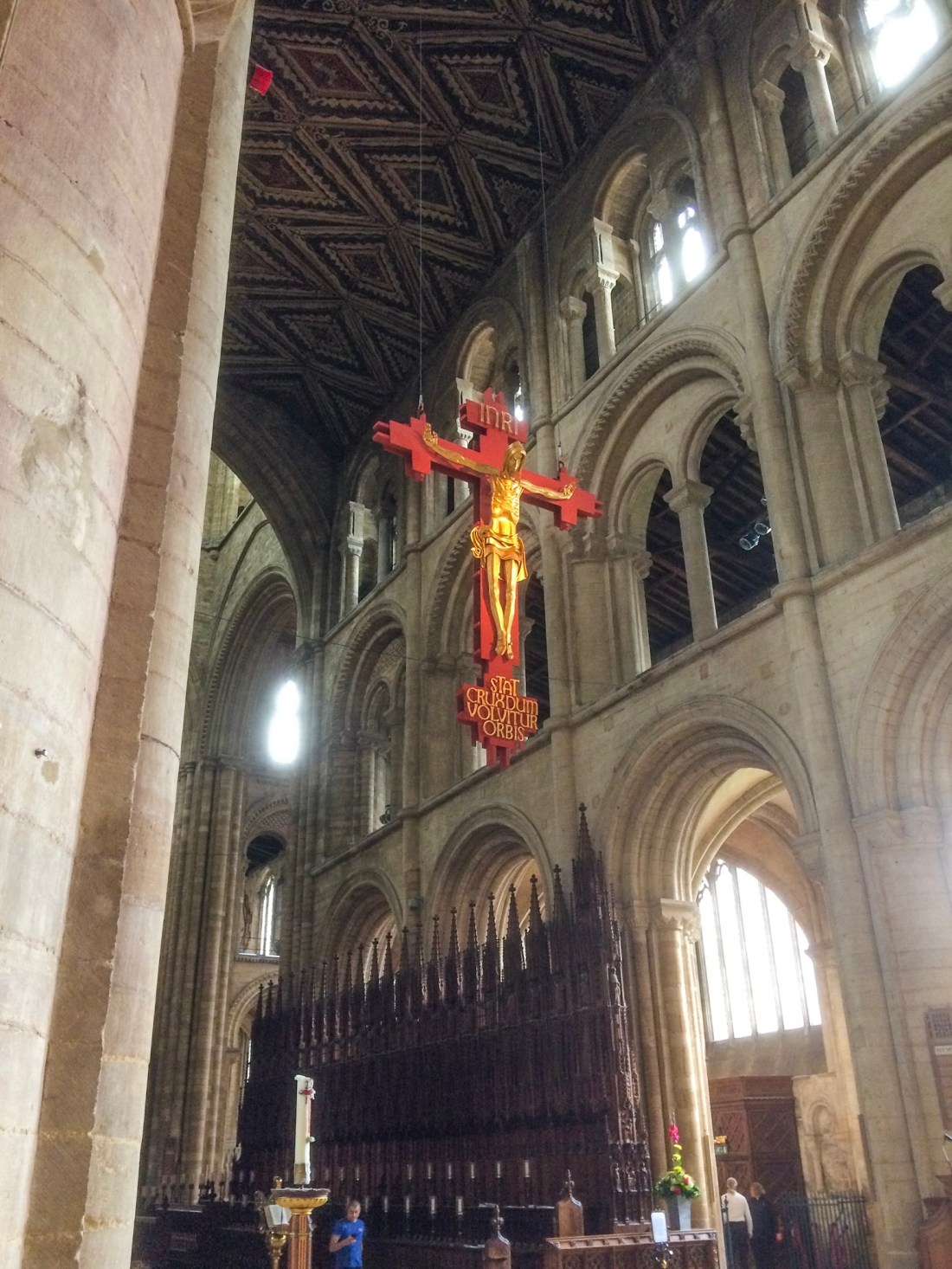
The long nave is quite stunning, with a beautiful roof and with a modern golden image of Christ suspended high as a focal point.

The cathedral is dominated by Norman and early English architecture, with numerous examples of Norman arches, such as these interlacing examples above.

The cathedral is also notable for its association with two famous queens.
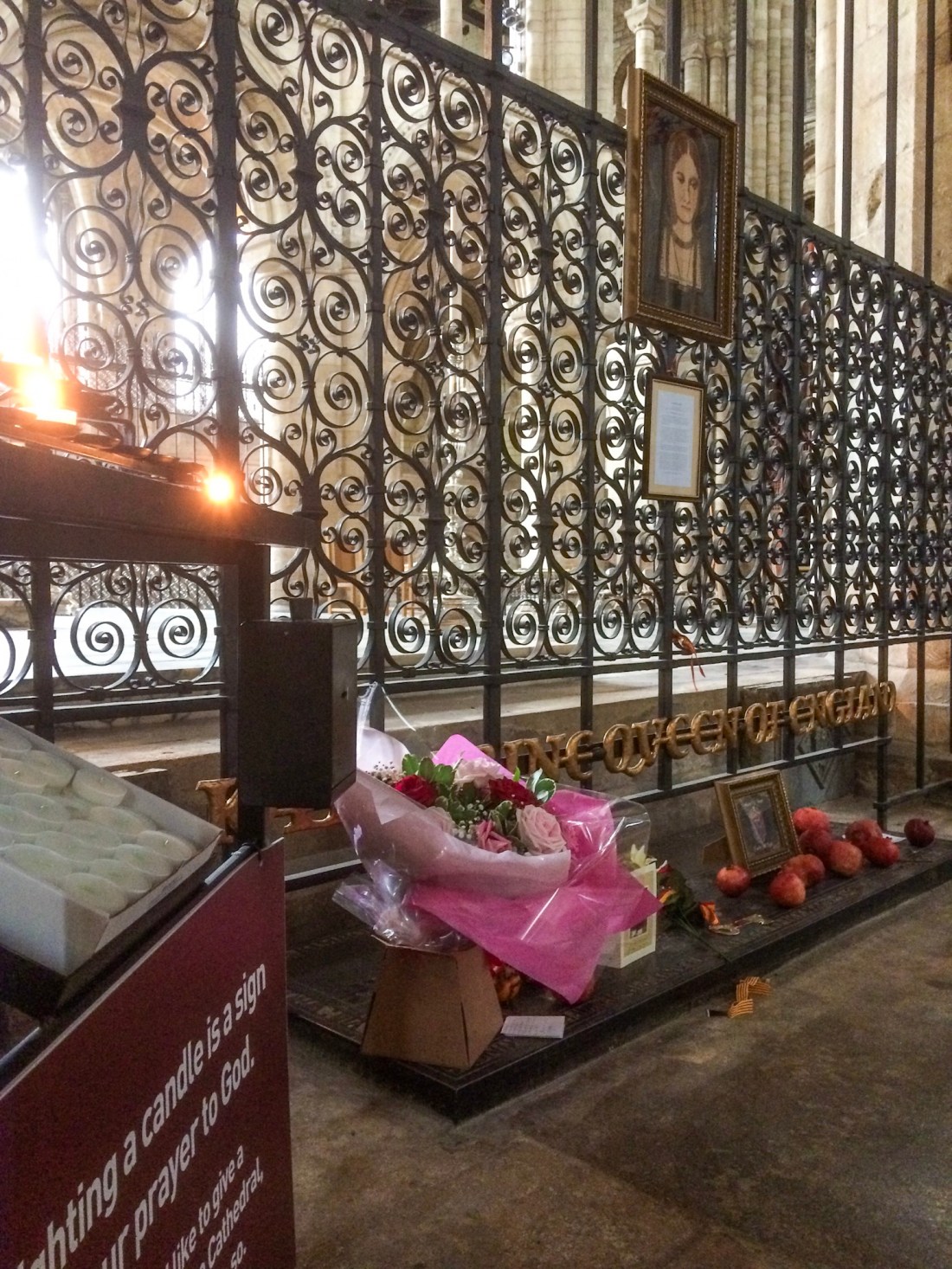
The first was Catherine of Aragon, Queen of England when she was married to Henry VIII. Catherine was buried here in 1536 and her tomb is still something of a shrine to her memory, with pomegranates very prominent as her symbol because the fruit appears on her badge. Pomegranates are an ancient symbol for fecundity and regeneration.
Catherine certainly suffered much during her husband’s long and protracted break with Rome, in which she was the innocent victim, her only crime it would seem was not being able to produce a living male heir for Henry to perpetuate the Tudor dynasty. This was how she was treated after being completely dutiful to the king, but Henry had to have his way. Her motto, which translates as ‘humble and loyal’, is a phrase she very much lived up to.

The second queen associated with Peterborough Cathedral is Mary Queen of Scots.
Mary inherited the Scottish throne after only a few days of being born, thrusting her into a world of political intrigue and shenanigans which she was never able to control.
She essentially became a pawn of more powerful rulers and some despicable characters. However, in 1559 she duly became Queen Consort to Francis II of France, solidifying Scotland’s long alliance with France.

Sadly within 18 months the young kind died prematurely. Had he lived, Mary’s life would have turned out entirely differently. As it was, she became a teenage widow and a long series of political and personal disasters ensued when she returned to Scotland. Eventually she fled to England and came under Elizabeth’s control.
After many years’ imprisonment in England, during which the still substantial Catholic faction within England with aid from Spain continually conspired to depose Elizabeth and put Mary on the English throne, she was finally executed at nearby Fotheringhay Castle in 1587.
She was initially buried in Peterborough Cathedral, but her son, James I of England, had her remains transferred to Westminster Abbey in London.
words and photographs copyright Francis Barker 2019
 Ciscography